
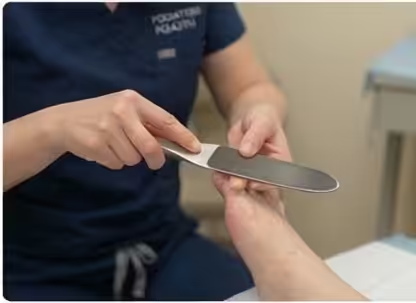
Quick answer:Good toenail care means trimming straight across at a moderate length, using clean tools, keeping feet dry, and treating problems like thick, fungal, or ingrown nails early. For seniors, diabetics, or anyone who cannot safely reach their feet, professional in-office nail care is safest. Call (810) 206-1402.
The most important clinical decision with Toenail Care isn’t which treatment to start with — it’s identifying the correct subtype. That changes everything. Call (810) 206-1402.
Dr. Tom’s Top Toenail Fungus Picks (2026)
Affiliate disclosure: As an Amazon Associate, Balance Foot & Ankle earns from qualifying purchases.
Medically reviewed by Dr. Tom Biernacki, DPM · Board-Certified Podiatric Surgeon · Last reviewed: April 2026 · Editorial Policy
Related Conditions
Quick Answer
Toenail Care: How to Cut, Trim, and Maintain Healthy Toenail relates to toenail conditions — typically caused by fungal infection or trauma. Most patients improve in 6-12 months for nail regrowth with conservative care. Same-week appointments in Howell + Bloomfield Township: (810) 206-1402.
Medically reviewed by Dr. Tom Biernacki, DPM — Board-Certified Podiatric Surgeon — Balance Foot & Ankle, Howell & Bloomfield Township, MI. Last updated April 2026.
Why Proper Toenail Care Matters

Toenail care is one of the most overlooked aspects of foot health, yet improper nail care is among the leading causes of preventable foot problems seen by podiatrists—including ingrown toenails, fungal nail infections, nail trauma, and skin breakdown. For most healthy individuals, proper toenail care is a straightforward routine that prevents these common problems. For patients with diabetes, peripheral vascular disease, or immunocompromise, careful toenail maintenance is a critical part of preventing serious complications including foot ulcers and infection.
How to Cut Toenails Correctly
The most important rule: cut toenails straight across, not rounded at the corners. Rounding the corners encourages the nail edge to grow into the surrounding skin—the primary cause of ingrown toenails. Cut the nail to the end of the toe, leaving a small amount of white nail visible beyond the nail fold. Do not cut the nail too short (below the end of the nail groove), as this exposes tender skin and increases ingrown nail risk.
Use proper nail clippers designed for toenails—they are wider and stronger than fingernail clippers. For thick nails (common in nail fungus), nail files or a podiatric nail drill may be needed to manage nail thickness before cutting. Cut nails after bathing when they are softer and easier to cut cleanly. If you cannot reach your toenails comfortably or safely, professional nail care from a podiatrist is the appropriate solution—particularly for patients with limited flexibility, vision problems, or health conditions affecting healing.
How Often Should You Cut Toenails?
Toenails grow approximately 1.5mm per month—slower than fingernails and slower in older adults. For most people, trimming every 6–8 weeks is appropriate. Nails that are allowed to grow too long are susceptible to trauma (being caught on socks, stubbed, or broken) and are more likely to develop ingrown edges. Athletes—particularly runners—should keep toenails trimmed shorter to prevent black toenails (subungual hematomas) from nail-to-shoe repetitive trauma. If a toenail is thickened, discolored, or difficult to cut, have it evaluated by a podiatrist before continuing home maintenance.
Preventing Ingrown Toenails
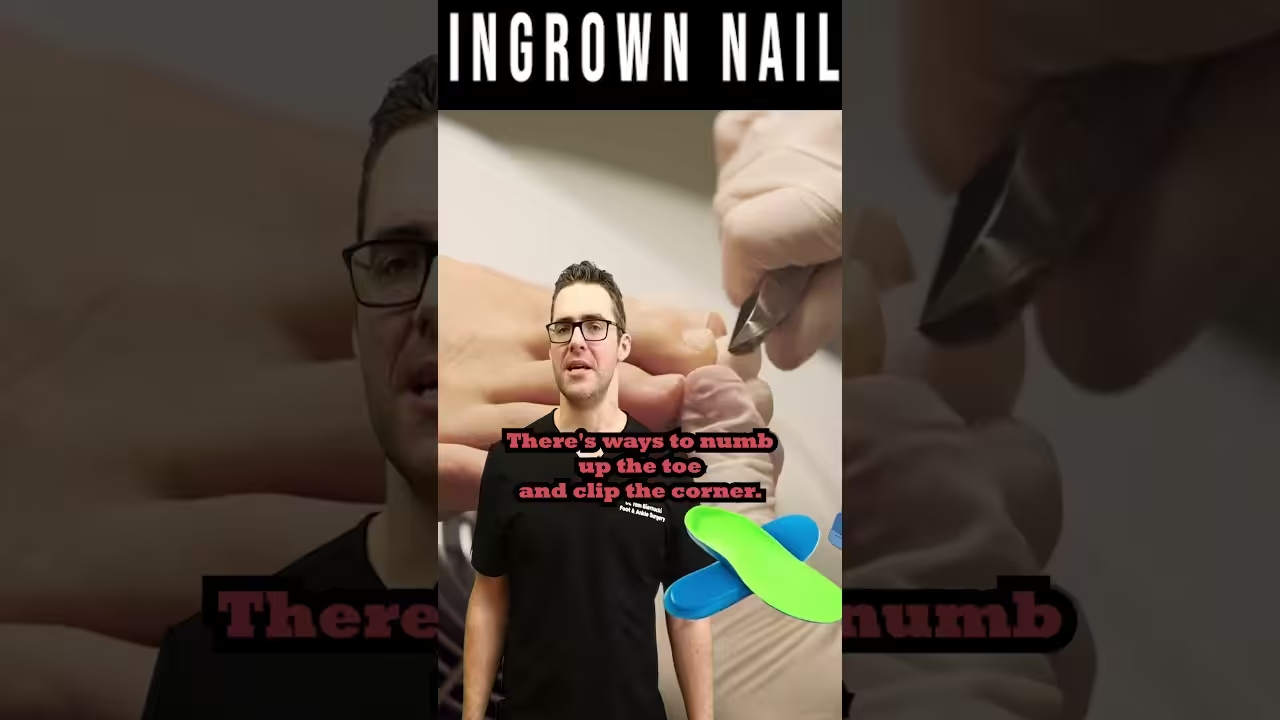
Ingrown toenails (onychocryptosis) result from the nail edge piercing or pressing into the adjacent nail fold skin. Prevention: cut nails straight across (never curved), do not cut below the nail fold, wear shoes with adequate toe box width that do not compress the toes, and avoid tearing or picking at nail edges. Tight-fitting shoes and athletic footwear that compress the forefoot are common contributing factors. If an ingrown nail is developing, early intervention (soaking, lifting the edge, proper trimming) prevents progression to infection. Recurrent or painful ingrown nails warrant a podiatrist visit—a simple in-office procedure (partial nail avulsion) permanently resolves most ingrown nail problems.
Recognizing and Preventing Toenail Fungus
Fungal toenail infection (onychomycosis) affects approximately 10% of the general population—rising to 20% in adults over 60 and 50% in adults over 70. Early signs include nail discoloration (yellow, brown, or white), thickening, and brittleness. Prevention: keep feet dry (change socks daily, dry between toes), wear moisture-wicking socks, avoid walking barefoot in locker rooms and pool areas, use antifungal spray in shoes, and do not share nail clippers or footwear. If a nail develops signs of fungal infection, early treatment with topical antifungals is more effective than waiting—once established, nail fungus is difficult to treat and can spread to other nails and to the skin.
Frequently Asked Questions
Should diabetics cut their own toenails?
Many diabetics with good circulation, adequate sensation, and normal vision can safely trim their own toenails using proper technique—straight across, not too short, with proper clippers. However, diabetics with peripheral neuropathy (reduced sensation), poor circulation, limited vision, or difficulty reaching their feet should have toenails trimmed by a podiatrist. The risk for diabetics is that even minor nail care errors (cutting too short, nicking the skin) can lead to wounds that heal slowly and potentially progress to serious infection. Medicare and most insurance plans cover routine nail care by a podiatrist for diabetics with documented neuropathy or vascular disease—this is not considered cosmetic treatment in this context. When in doubt, professional nail care is the safer choice for any diabetic patient.
What causes thick toenails and how do I treat them?
Thick toenails most commonly result from fungal nail infection (onychomycosis), which changes the nail matrix and produces abnormal, thickened, brittle, and discolored nails. Other causes include nail trauma (repeated microtrauma from shoe pressure or sports), psoriasis affecting the nails, aging (nails naturally thicken with age), and peripheral vascular disease. Fungal nail infections are treated with topical antifungals (ciclopirox, efinaconazole) for mild cases or oral terbinafine for more extensive disease. Thickened nails from other causes are managed by regular reduction—filing or grinding—to keep them at a comfortable thickness. A podiatrist can confirm the cause (including KOH preparation or nail culture for fungus) and advise on appropriate treatment.
Is it safe to get a pedicure at a nail salon?
Pedicures at nail salons carry some risk of fungal and bacterial infection, particularly from shared foot baths and instruments that may not be adequately sterilized between clients. Risks can be reduced by choosing salons that use disposable liners in foot baths, sterilize metal instruments in an autoclave, use single-use files and buffers, and are visibly clean. Avoid shaving or waxing legs immediately before a pedicure (micro-cuts increase infection risk), and inform the salon if you have any open wounds, skin conditions, or nail problems. Diabetic patients and those with compromised immunity or circulation should consult with a podiatrist before receiving salon pedicures—medical pedicures performed in a podiatric office are a safer alternative that addresses both cosmetic and health aspects of nail care.
Medical References & Sources
- American Podiatric Medical Association — Nail Care
- American Academy of Dermatology — Nail Care Tips
- PubMed Research — Toenail Fungus Prevalence and Treatment
Dr. Tom Biernacki, DPM is a board-certified podiatric surgeon at Balance Foot & Ankle in Howell and Bloomfield Township, Michigan. He provides professional toenail care, ingrown nail treatment, and onychomycosis management for patients of all ages including diabetic patients requiring medical nail care.
Dr. Tom’s Recommended Products for Toenail Problems
📍 Located in Michigan?
Our board-certified podiatrists treat this condition at two convenient locations. Same-day appointments often available.
These are products I personally use and recommend to my patients at Balance Foot & Ankle.
- Nail Tek Intensive Therapy II — Restores brittle, discolored, and damaged nails — base coat that strengthens nail plate after trauma or fungal damage
- Kerasal Fungal Nail Renewal — Visibly improves nail appearance for both fungal and non-fungal discoloration within 8 weeks
- Professional Toenail Clipper — Harperton Nail Nipper — Stainless steel curved jaw cuts thick or ingrown toenails cleanly — prevents nail trauma and subungual hematoma
📧 Get Dr. Tom’s Free Lab Test Guide
Discover the 5 lab tests every person over 35 should ask their doctor about — explained in plain English by a board-certified physician.
Affiliate disclosure: As an Amazon Associate, Balance Foot & Ankle earns from qualifying purchases. We only recommend products we trust for our own patients.
Join 950,000+ Learning About Foot Health
Dr. Tom shares honest medical advice, supplement reviews, and treatment guides you won’t find anywhere else.
Subscribe on YouTube →
Insurance Accepted
BCBS · Medicare · Aetna · Cigna · United Healthcare · HAP · Priority Health · Humana · View All →
Howell Office
4330 E Grand River Ave
Howell, MI 48843
Get Directions →
Bloomfield Township Office
43494 Woodward Ave, #208
Bloomfield Township, MI 48302
Get Directions →
Your Board-Certified Podiatrists



Ready to Get Back on Your Feet?
Same-week appointments available at both locations.
Book Your AppointmentPros & Cons of Conservative Care for toenail conditions
Advantages
- ✓ Most cases resolve at home
- ✓ Same-week appointments available
- ✓ Permanent fix exists
Considerations
- ✗ Recurrence common without prevention
- ✗ Diabetics need professional care
Dr. Tom’s Recommended Products for toenail conditions
Affiliate disclosure: As an Amazon Associate, Balance Foot & Ankle earns from qualifying purchases. We only recommend products we use with patients.
Tolcylen Antifungal Solution Dr. Tom’s Pick
Best for: Most effective topical for fungus
Ready to Get Back on Your Feet?
Same-day appointments in Howell + Bloomfield Township. Most insurance accepted. Dr. Tom Biernacki, DPM & team.
Book Today — Same-Day Appointments Available
Call Now: (810) 206-1402
About Your Care Team at Balance Foot & Ankle
Dr. Tom Biernacki, DPM · Board-Certified Foot & Ankle Surgeon. Specializes in conservative-first care, minimally invasive bunion surgery, and complex reconstruction.
Dr. Carl Jay, DPM · Accepting new patients. Specializes in sports medicine, athletic injuries, and routine podiatric care.
Dr. Daria Gutkin, DPM, AACFAS · Accepting new patients. Specializes in surgical reconstruction and pediatric podiatry.
Locations: 4330 E Grand River Ave, Howell, MI 48843 · 43494 Woodward Ave Suite 208, Bloomfield Township, MI 48302
Hours: Mon–Fri 8:00 AM – 5:00 PM · (810) 206-1402
In-Office Treatment at Balance Foot & Ankle
If home treatment isn’t providing relief for your foot health, our podiatry team at Balance Foot & Ankle can help with same-day evaluations and advanced in-office care.
Same-day appointments available. (810) 206-1402
Doctor Hoy’s Natural Pain Relief Gel
Natural topical pain relief I use in our clinic. Arnica + camphor formula — apply directly to the area 3–4x daily. ($20–25)
Shop Doctor Hoy’s →Ready for Expert Care?
Same-day appointments in Howell & Bloomfield Township, MI.
4.9★ | 1,123 Reviews | 3,000+ Surgeries
Or call: (810) 206-1402
