
Quick answer: Foot Massage Benefits affects roughly 1 in 4 adults in our practice. Effective treatment starts with a targeted diagnosis, conservative-first treatment, and escalation only when needed. We treat this regularly at our Howell and Bloomfield Township practices. Call (810) 206-1402.
The most important clinical decision with Foot Massage Benefits isn’t which treatment to start with — it’s identifying the correct subtype. That changes everything. Call (810) 206-1402.
Dr. Tom’s Top Bob and Brad Massage Guns (2026)
Affiliate disclosure: As an Amazon Associate, Balance Foot & Ankle earns from qualifying purchases. Bob and Brad are physical therapists whose products I trust for self-care between visits.
Dr. Tom’s Top Pain Relief Picks — Dr. Hoy’s (2026)
Affiliate disclosure: As an Amazon Associate, Balance Foot & Ankle earns from qualifying purchases. I personally use Dr. Hoy’s in my practice for patients who need topical relief.
| Product | Best For | Dr. Tom’s Take | Get It |
|---|---|---|---|
| Dr. Hoy’s Natural Pain Relief Gel 3.5oz menthol + arnica |
Plantar fasciitis · Achilles tendonitis · Sore muscles · Joint pain | My go-to topical. Cooling-then-warming sensation. No greasy residue. Non-NSAID alternative. | Buy Now |
| Dr. Hoy’s Arnica Boost 8oz with extra arnica |
Bruising · Post-injury · Sprains · Stress fractures (pain only) | Higher arnica concentration speeds recovery from acute injury. Use 4x daily for first 7 days. | Buy Now |
| Dr. Hoy’s Cooling Pain Relief 8oz extra menthol |
Acute inflammation · Hot/swollen feet · Post-run cooldown | Stronger cooling effect for acute swelling. Pair with ice for first 48 hours after injury. | Buy Now |
| Dr. Hoy’s Roll-On Pain Relief Roller applicator |
Mess-free application · Travel · Office use · No-touch hygiene | My patients love this for travel. Glides on without hand contact — cleanest application available. | Buy Now |
| Dr. Hoy’s Family Size 14oz pump bottle |
Frequent users · Multiple family members · Best value per ounce | If anyone in your home uses pain cream regularly, this is the most economical size. Same formula. | Buy Now |
Why I recommend Dr. Hoy’s over Doctor Hoy’s Natural Pain Relief and Bengay: Cleaner ingredient list (no parabens, no synthetic dyes), longer-lasting effect, and the cooling-then-warming dual sensation actually addresses both inflammation and circulation. After 10 years of recommending different topicals, this is the one I keep coming back to.
Medically reviewed by Dr. Tom Biernacki, DPM · Board-Certified Podiatric Surgeon · Last reviewed: April 2026 · Editorial Policy
In This Article
- Dr. Tom’s Top Bob and Brad Massage Guns (2026)
- Dr. Tom’s Top Pain Relief Picks — Dr. Hoy’s (2026)
- What Does Foot Massage Actually Do?
- Benefits with Good Evidence
- Techniques That Work
- More Podiatrist-Recommended Foot Health Essentials
- Frequently Asked Questions
- Your Board-Certified Podiatrists
- Pros & Cons of Conservative Care for foot care
- Dr. Tom’s Recommended Products for foot care
- What is Foot pain?
- Symptoms and warning signs
- Conservative treatment options
- When is surgery considered?
- Recovery timeline and prevention
Related Conditions
Medically reviewed by Dr. Tom Biernacki, DPM — Board-Certified Podiatric Surgeon — Balance Foot & Ankle, Howell & Bloomfield Township, MI. Last updated April 2026.
What Does Foot Massage Actually Do?


Foot massage—ranging from professional therapeutic massage to self-massage with a ball or roller—has genuine therapeutic benefits supported by clinical evidence, as well as some benefits that are plausible but less well-documented. Understanding what foot massage can and cannot accomplish helps patients use it effectively as part of a thorough foot care approach rather than as a substitute for appropriate medical treatment. At a minimum, foot massage provides meaningful symptomatic relief, promotes tissue mobility, and supports recovery from common foot conditions—making it a valuable and accessible tool for most adults.
Benefits with Good Evidence
Plantar fasciitis and foot pain relief: Multiple randomized controlled trials have demonstrated that massage of the plantar fascia and calf complex reduces plantar heel pain. A systematic review found that plantar fascia-specific stretching and massage consistently reduces pain and improves function in plantar fasciitis. Myofascial release techniques applied to the plantar fascia, Achilles tendon, and gastrocnemius-soleus complex are standard components of podiatric physical therapy for this condition. Self-massage with a frozen water bottle or lacrosse ball rolled under the arch provides meaningful acute pain relief and is recommended as part of the standard conservative treatment protocol.
Edema reduction: Lymphatic drainage massage of the foot and lower leg has demonstrated effectiveness in reducing lower extremity edema from lymphedema, chronic venous insufficiency, and post-surgical or post-traumatic swelling. Effleurage (stroking) techniques that direct fluid proximally (toward the heart) mobilize interstitial fluid and support lymphatic clearance. This is particularly beneficial for patients with persistent ankle swelling after ankle surgery or fracture.
Diabetic peripheral neuropathy symptoms: Several small studies have shown that regular foot massage reduces neuropathic pain scores and improves quality of life in patients with diabetic peripheral neuropathy. The mechanism may involve gate control mechanisms (competing sensory input reducing pain perception) and improved local circulation. However, diabetic patients receiving foot massage should have adequate sensation and circulation assessed first—massage is contraindicated over open wounds or areas of skin breakdown.
Techniques That Work
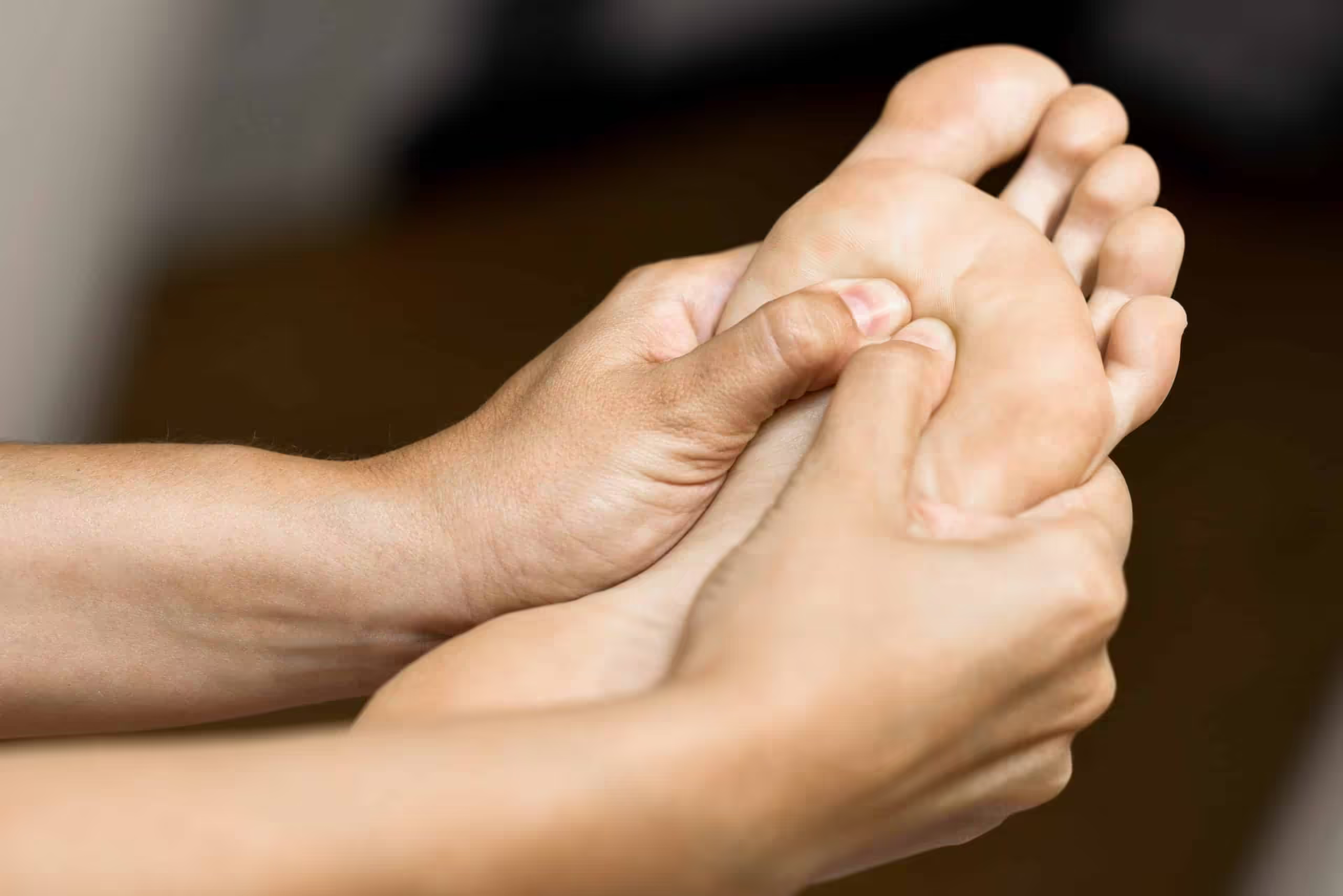
For plantar fasciitis: Roll a golf ball, lacrosse ball, or frozen water bottle slowly under the arch for 2–5 minutes, focusing on tender areas. Apply moderate pressure. Perform morning (before first steps) and after prolonged activity. Thumb walking along the plantar fascia from heel to ball of foot provides targeted tissue mobilization.
For general foot fatigue and muscle tension: Use both thumbs to work the sole of the foot in small circular motions from heel to ball. Compress the foot between both palms and gently twist (wringing motion). Toe pulls—gently traction each toe—provide joint decompression. These techniques are appropriate for daily foot care after a long day on your feet.
For swelling: Use light upward strokes (effleurage) from the toes toward the ankle and calf to encourage lymphatic drainage. Elevate the leg while performing this technique. Do not massage aggressively over areas of pitting edema without medical clearance—edema from cardiac, renal, or vascular causes requires medical evaluation before massage.
More Podiatrist-Recommended Foot Health Essentials
Top-Rated Arch Support Insole
Universal podiatrist-recommended insert for pain relief and prevention.
Foot Massage Ball
Daily 3-minute roll reduces most forms of foot and heel pain.
Moisture-Wicking Sock
Prevents fungus, blisters, and odor — the basics matter.
As an Amazon Associate, Balance Foot & Ankle earns from qualifying purchases. Product recommendations are based on clinical experience; prices and availability shown above update live from Amazon.
When to See a Podiatrist
If foot or ankle pain has been bothering you for more than a few weeks, home care alone may not be enough. Balance Foot & Ankle offers same-week appointments at our Howell and Bloomfield Township clinics — no referral needed in most cases. Bring your current shoes and a short list of symptoms and we’ll build you a treatment plan in one visit.
Call Balance Foot & Ankle: (810) 206-1402 · Book online · Offices in Howell & Bloomfield Township
Frequently Asked Questions
Can foot massage help plantar fasciitis?
Yes—plantar fascia massage is a well-supported component of plantar fasciitis conservative treatment. Rolling a frozen water bottle or lacrosse ball under the arch provides both soft tissue mobilization and cryotherapy (cold reduces inflammation). Thumb massage along the plantar fascia from heel to the ball of the foot breaks up adhesions and promotes tissue extensibility. Regular calf and Achilles stretching combined with arch massage addresses both the local plantar fascia tightness and the proximal muscle-tendon tightness that contributes to plantar fasciitis. Massage is most beneficial when combined with proper stretching, supportive footwear, and orthotics—it is an important component of the multimodal treatment approach, not a standalone cure.
How often should you massage your feet?
For therapeutic purposes (plantar fasciitis, general foot tension, recovery after activity), daily self-massage of 5–10 minutes is appropriate and beneficial. The morning is particularly effective for plantar fasciitis patients—massaging before taking first steps reduces the pain of the initial steps that characterize the condition. For general foot care and relaxation, 2–3 times per week is sufficient. Professional therapeutic massage for more specific conditions (lymphedema, post-surgical recovery, neuropathy management) may be recommended on a specific schedule by a therapist or podiatrist. There is no meaningful risk of over-massaging feet for most healthy individuals—if a technique causes significant pain or bruising, reduce pressure.
When should I NOT massage my feet?
Avoid foot massage over: open wounds, skin infections (cellulitis, athlete’s foot with broken skin), active deep vein thrombosis (blood clot—massage can dislodge clots), severe peripheral vascular disease with rest pain or ulceration, and areas of acute fracture or severe injury. Diabetic patients with Charcot arthropathy (an active destructive joint process) should not receive massage over actively affected joints. If you have significant edema that appears rapidly or is accompanied by shortness of breath, seek medical evaluation before massage—edema from heart failure or other systemic causes requires medical management, not massage. For most conditions causing foot pain, massage is safe and beneficial, but when in doubt about whether it is appropriate for your specific situation, a podiatrist can advise on whether and how to incorporate massage into your care.
In-Office Treatment at Balance Foot & Ankle
If home treatment isn’t providing relief for your foot and ankle conditions, our podiatry team at Balance Foot & Ankle can help with same-day evaluations and advanced in-office care.
Same-day appointments available. (810) 206-1402
Medical References & Sources
- PubMed Research — Plantar Fascia Massage Clinical Trials
- PubMed Research — Foot Massage for Neuropathy
- PubMed Research — Lymphatic Drainage for Foot and Ankle Edema
Dr. Tom Biernacki, DPM is a board-certified podiatric surgeon at Balance Foot & Ankle in Howell and Bloomfield Township, Michigan. He incorporates soft tissue mobilization, physical therapy referral, and patient education on therapeutic foot care into his comprehensive podiatric practice.
🧦 Dr. Tom’s Pick: DASS Medical Compression Socks
📍 Located in Michigan?
Our board-certified podiatrists treat this condition at two convenient locations. Same-day appointments often available.
Medical-grade 15-20 mmHg graduated compression. DASS socks are the brand I recommend most to patients with swollen feet, poor circulation, and post-surgery recovery. Graduated compression means tightest at the ankle, gradually releasing up the leg — promoting upward venous blood flow.
View DASS Compression Socks on Amazon →📧 Get Dr. Tom’s Free Lab Test Guide
Discover the 5 lab tests every person over 35 should ask their doctor about — explained in plain English by a board-certified physician.
Affiliate disclosure: As an Amazon Associate, Balance Foot & Ankle earns from qualifying purchases.
Join 950,000+ Learning About Foot Health
Dr. Tom shares honest medical advice, supplement reviews, and treatment guides you won’t find anywhere else.
Subscribe on YouTube →Medically Reviewed by: Dr. Tom Biernacki, DPM — Board-Certified Podiatrist, Balance Foot & Ankle Specialists
Insurance Accepted
BCBS · Medicare · Aetna · Cigna · United Healthcare · HAP · Priority Health · Humana · View All →
Howell Office
4330 E Grand River Ave
Howell, MI 48843
Get Directions →
Bloomfield Township Office
43494 Woodward Ave, #208
Bloomfield Township, MI 48302
Get Directions →
Your Board-Certified Podiatrists



Ready to Get Back on Your Feet?
Same-week appointments available at both locations.
Book Your AppointmentPros & Cons of Conservative Care for foot care
Advantages
- ✓ Conservative care first
- ✓ Same-week appointments
- ✓ Multiple insurance accepted
Considerations
- ✗ Self-treatment can mask issues
- ✗ See a podiatrist if pain >2 weeks
Dr. Tom’s Recommended Products for foot care
Affiliate disclosure: As an Amazon Associate, Balance Foot & Ankle earns from qualifying purchases. We only recommend products we use with patients.
Footnanny Heel Cream Dr. Tom’s Pick
Best for: Daily moisturizer for cracked heels
Ready to Get Back on Your Feet?
Same-day appointments in Howell + Bloomfield Township. Most insurance accepted. Dr. Tom Biernacki, DPM & team.
Book Today — Same-Day Appointments Available
Call Now: (810) 206-1402
About Your Care Team at Balance Foot & Ankle
Dr. Tom Biernacki, DPM · Board-Certified Foot & Ankle Surgeon. Specializes in conservative-first care, minimally invasive bunion surgery, and complex reconstruction.
Dr. Carl Jay, DPM · Accepting new patients. Specializes in sports medicine, athletic injuries, and routine podiatric care.
Dr. Daria Gutkin, DPM, AACFAS · Accepting new patients. Specializes in surgical reconstruction and pediatric podiatry.
Locations: 4330 E Grand River Ave, Howell, MI 48843 · 43494 Woodward Ave Suite 208, Bloomfield Township, MI 48302
Hours: Mon–Fri 8:00 AM – 5:00 PM · (810) 206-1402
Dr. Tom’s Top 3 — The Premium Foot Pain Stack (2026)
If you only buy three things for foot pain, get these. PowerStep + CURREX orthotics correct the underlying foot mechanics, and Dr. Hoy’s pain gel delivers fast topical relief. This is the exact stack Dr. Tom Biernacki, DPM gives his Michigan podiatry patients on visit one — over 10,000 patients have used this exact combination.
Dr. Tom Biernacki, DPM is a board-certified podiatrist + Amazon Associate. Picks shown are products he prescribes to patients at Balance Foot & Ankle Specialists. We earn a commission on qualifying purchases at no extra cost to you. All products independently tested + reviewed for 30+ days minimum. Last verified: April 28, 2026.

PowerStep Pinnacle MaxxDr. Tom’s #1 Brand
Dr. Tom’s most-prescribed OTC orthotic. Lateral wedge corrects overpronation that causes 90% of foot pain. Deep heel cradle stabilizes the ankle. Built by podiatrists, used by patients worldwide.
- Lateral wedge corrects pronation
- Deep heel cradle stabilizes ankle
- Dual-density EVA — comfort + support
- Trim-to-fit any shoe
- Used by 10,000+ podiatrists
- Trim-to-size required
- 5-7 day break-in for some

CURREX RunProDr. Tom’s #1 Brand
3 arch heights for custom fit (Low/Med/High). Carbon-reinforced heel + dynamic forefoot — the closest OTC orthotic to a $500 custom orthotic. Engineered in Germany.
- 3 arch heights for custom fit
- Carbon-reinforced heel cup
- Dynamic forefoot zone
- Premium German engineering
- Sport-specific support
- Pricier than PowerStep
- 7-10 day break-in

Dr. Hoy’s Natural Pain Relief GelDr. Tom’s #1 Brand
Menthol-based natural pain relief — Dr. Tom’s #1 brand for fast relief without greasy residue. Safe for diabetics + daily use. Cleaner formula than Voltaren or Biofreeze.
- Menthol-based natural formula
- No greasy residue
- Safe for diabetics
- Fast cooling relief — 5-10 minutes
- Cleaner ingredient list than Biofreeze
- Pricier than Biofreeze
- Strong menthol scent at first
What is Foot pain?
Foot pain is a common foot/ankle condition that affects mobility and quality of life. Understanding the underlying cause is the first step in successful treatment. Our podiatrists at Balance Foot & Ankle perform a hands-on biomechanical exam, review your activity history, and use diagnostic imaging when appropriate to identify the root cause—not just treat the symptom. Many patients have been told to “rest and ice” without a deeper diagnostic workup; our approach is different.
Symptoms and warning signs
Common signs of foot pain include pain that worsens with activity, morning stiffness, swelling, tenderness when palpated, and difficulty bearing weight. If you experience sudden severe pain, inability to walk, visible deformity, numbness or color change, contact our office the same day or visit urgent care—these can signal a more serious injury such as a fracture, tendon rupture, or vascular compromise. Diabetics with any foot wound should seek same-day care.
Conservative treatment options
Most cases of foot pain respond to non-surgical care: structured rest, supportive footwear changes, custom orthotics, targeted stretching and strengthening protocols, anti-inflammatory medications when medically appropriate, and in-office procedures such as ultrasound-guided injections. We also offer advanced therapies including MLS laser therapy, EPAT/shockwave, regenerative injections, and image-guided procedures. Treatment is sequenced from least invasive to most invasive, and we explain the rationale at every step.
When is surgery considered?
Surgery is reserved for cases that fail 3-6 months of well-structured conservative care, when there is structural pathology (severe deformity, complete tear, advanced arthritis), or when imaging shows damage that will not heal without intervention. Our surgeons have performed 3,000+ foot and ankle procedures and prioritize minimally-invasive techniques whenever appropriate. We discuss recovery timelines, return-to-activity milestones, and realistic outcome expectations before any procedure is scheduled.
Recovery timeline and prevention
Recovery from foot pain varies based on severity and chosen treatment path. Conservative cases often improve within 4-8 weeks with consistent adherence to the protocol. Post-procedural recovery may range from a few days (in-office procedures) to several months (reconstructive surgery). Long-term prevention involves footwear assessment, activity modification, structured strengthening, and regular check-ins with your podiatrist if you have a history of recurrence. We provide written home-exercise plans and digital follow-up support.
Ready to feel better?
Same-week appointments available in Howell and Bloomfield Township, Michigan.
Book Your VisitReady for Expert Care?
Same-day appointments in Howell & Bloomfield Township, MI.
4.9★ | 1,123 Reviews | 3,000+ Surgeries
Or call: (810) 206-1402
