
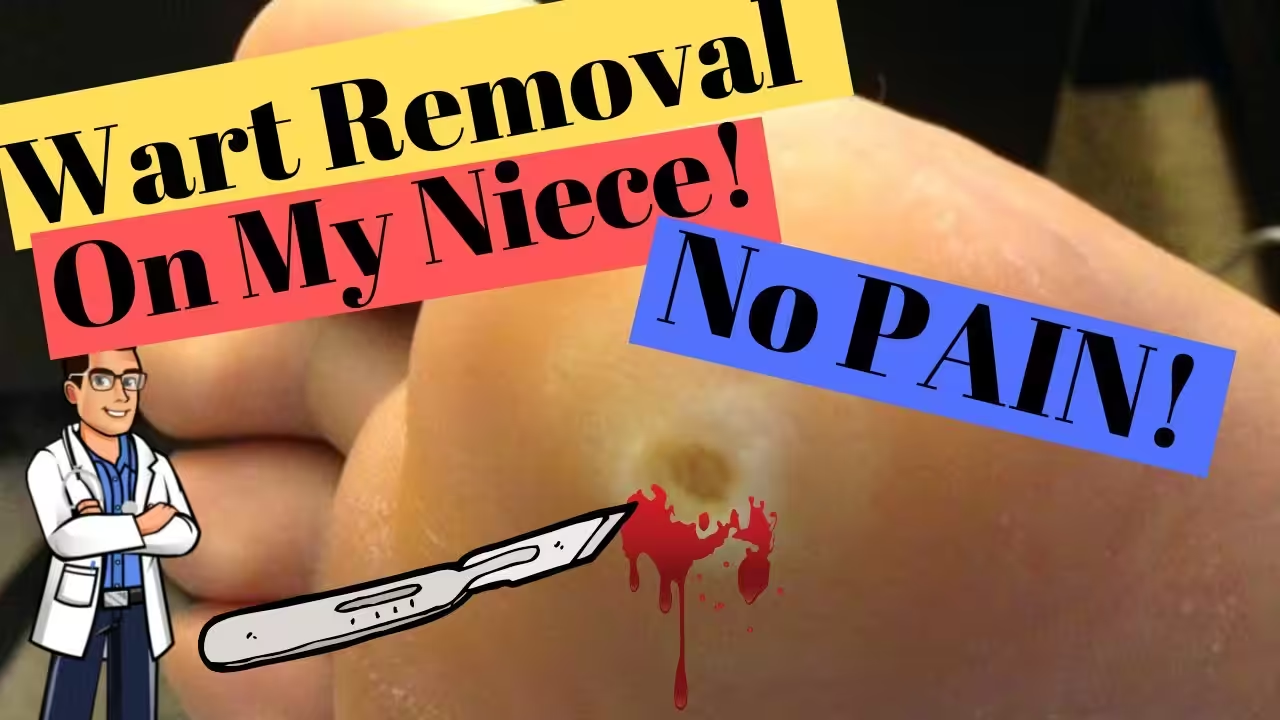
Plantar warts (verruca plantaris) often resist 6-12 months of over-the-counter salicylic acid — but the in-office combination of debridement, cantharidin, and immunotherapy clears 80%+ of stubborn cases.
The most important clinical decision with Verruca Plantaris Treatment isn’t which treatment to start with — it’s identifying the correct subtype. That changes everything. Call (810) 206-1402.
Related Conditions
In This Article
- Dr. Tom’s Top Pain Relief Picks — Dr. Hoy’s (2026)
- Understanding Plantar Warts (Verruca Plantaris)
- Over-the-Counter Treatment: Salicylic Acid
- Professional Treatments
- More Podiatrist-Recommended Wart Essentials
- Frequently Asked Questions
- Your Board-Certified Podiatrists
- In-Office Treatment at Balance Foot & Ankle
- Pros & Cons of Conservative Care for plantar fasciitis
- Dr. Tom’s Recommended Products for plantar fasciitis
- Dr. Tom’s Top 3 — The Premium Foot Pain Stack (2026)
- What is Foot pain?
- Symptoms and warning signs
- Conservative treatment options
- When is surgery considered?
- Recovery timeline and prevention
You’ve come to the right podiatry team. Dr. Tom Biernacki, DPM, FACFAS — board-certified foot & ankle surgeon with 3,000+ surgeries — explains exactly what plantar wart treatment means and what works. Call (810) 206-1402 for same-day appointment at Howell or Bloomfield Township.
Quick answer: Treatment for verruca plantaris treatment follows a stepwise approach: 1) conservative care first (rest, ice, supportive footwear, OTC anti-inflammatories), 2) physical therapy and targeted exercises, 3) in-office treatments (injections, custom orthotics) if conservative fails at 4-6 weeks, 4) surgery for refractory cases. Most patients resolve at step 1 or 2. Call (810) 206-1402.
Dr. Tom’s Top Pain Relief Picks — Dr. Hoy’s (2026)
Affiliate disclosure: As an Amazon Associate, Balance Foot & Ankle earns from qualifying purchases. I personally use Dr. Hoy’s in my practice for patients who need topical relief.
| Product | Best For | Dr. Tom’s Take | Get It |
|---|---|---|---|
| Dr. Hoy’s Natural Pain Relief Gel 3.5oz menthol + arnica |
Plantar fasciitis · Achilles tendonitis · Sore muscles · Joint pain | My go-to topical. Cooling-then-warming sensation. No greasy residue. Non-NSAID alternative. | Buy Now |
| Dr. Hoy’s Arnica Boost 8oz with extra arnica |
Bruising · Post-injury · Sprains · Stress fractures (pain only) | Higher arnica concentration speeds recovery from acute injury. Use 4x daily for first 7 days. | Buy Now |
| Dr. Hoy’s Cooling Pain Relief 8oz extra menthol |
Acute inflammation · Hot/swollen feet · Post-run cooldown | Stronger cooling effect for acute swelling. Pair with ice for first 48 hours after injury. | Buy Now |
| Dr. Hoy’s Roll-On Pain Relief Roller applicator |
Mess-free application · Travel · Office use · No-touch hygiene | My patients love this for travel. Glides on without hand contact — cleanest application available. | Buy Now |
| Dr. Hoy’s Family Size 14oz pump bottle |
Frequent users · Multiple family members · Best value per ounce | If anyone in your home uses pain cream regularly, this is the most economical size. Same formula. | Buy Now |
Why I recommend Dr. Hoy’s over Doctor Hoy’s Natural Pain Relief and Bengay: Cleaner ingredient list (no parabens, no synthetic dyes), longer-lasting effect, and the cooling-then-warming dual sensation actually addresses both inflammation and circulation. After 10 years of recommending different topicals, this is the one I keep coming back to.
Medically reviewed by Dr. Tom Biernacki, DPM · Board-Certified Podiatric Surgeon · Last reviewed: April 2026 · Editorial Policy

Medically reviewed by Dr. Tom Biernacki, DPM — Board-Certified Podiatric Surgeon — Balance Foot & Ankle, Howell & Bloomfield Township, MI. Last updated April 2026.
Understanding Plantar Warts (Verruca Plantaris)
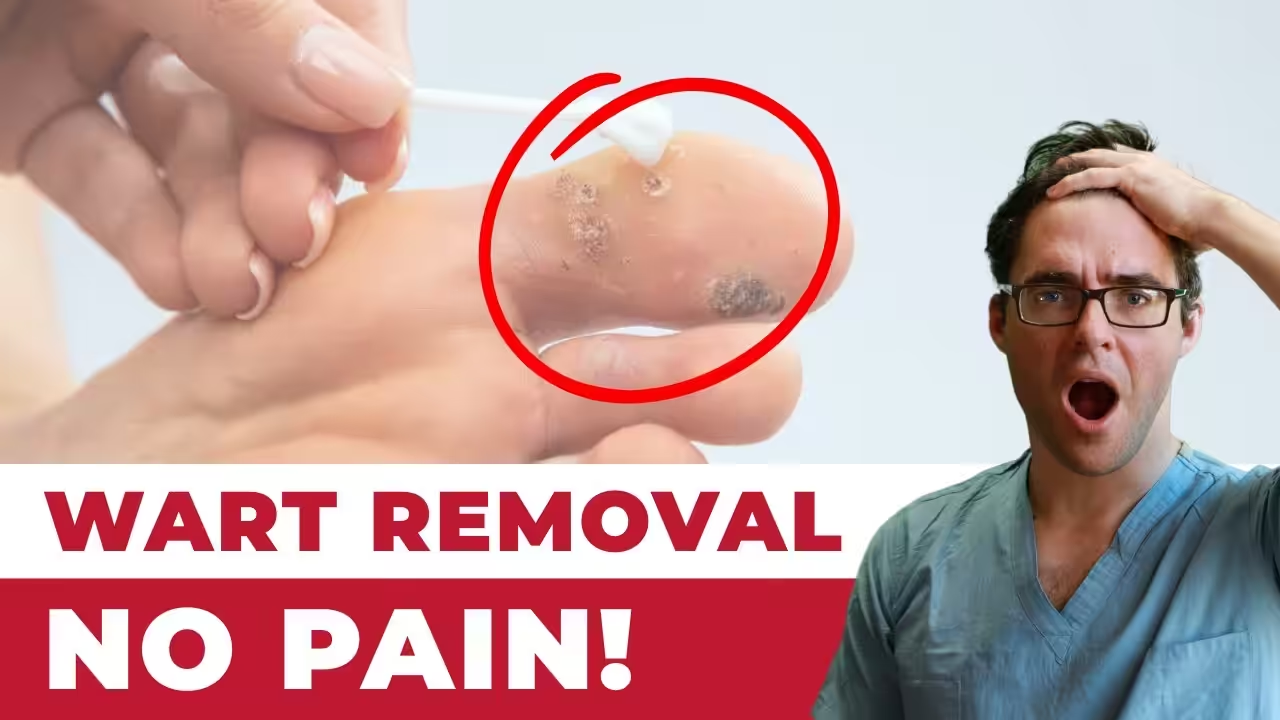
Plantar warts are benign skin growths on the sole of the foot caused by infection with human papillomavirus (HPV), most commonly types 1, 2, 4, 27, and 57. HPV infects the outer layer of the skin (keratinocytes) through small breaks in the skin barrier, triggering abnormal cell proliferation. The result is a well-defined, hyperkeratotic (thickened) lesion on the plantar surface with characteristic disruption of skin lines and thrombosed capillaries visible as dark dots when the surface is pared. Plantar warts can be solitary or occur in clusters (mosaic warts), and they can persist for months to years before the immune system mounts an effective response.
Plantar warts are mildly contagious and spread through direct contact with HPV-infected skin or contaminated surfaces (pool decks, locker room floors, shared footwear). The virus thrives in warm, moist environments. Having a plantar wart does not mean poor hygiene—HPV exposure is common, and individual susceptibility is primarily determined by skin barrier integrity and immune status. Children are more susceptible than adults; immunocompromised individuals develop more numerous and treatment-resistant warts.
Over-the-Counter Treatment: Salicylic Acid
Salicylic acid is the most evidence-supported and widely accessible first-line treatment for plantar warts, with cure rates of approximately 70–75% over 12 weeks with consistent use. It works by chemically breaking down the infected keratin, gradually destroying the wart tissue. Products include Compound W (maximum strength 40%), Duofilm, and various patches and gels. The protocol: soak the wart in warm water for 5 minutes to soften the skin, gently file the surface with an emery board or pumice stone (use a dedicated file—do not share it), apply the salicylic acid product, and cover with a bandage. Repeat daily. The dead white tissue that forms on the surface must be filed off weekly. Consistent daily treatment over 8–12 weeks is required for clearance—most patients stop too early when improvement occurs but before the wart is fully eliminated.
Professional Treatments
Cryotherapy (liquid nitrogen freezing) is the most commonly used in-office treatment. Liquid nitrogen at -196°C destroys wart tissue by forming ice crystals within the cells. Most warts require 2–4 treatments at 2–3 week intervals for clearance. Cure rates of 60–75% are reported. Cryotherapy is painful (a burning, aching sensation during and after treatment), may cause blistering, and can cause temporary or permanent skin pigmentation changes—particularly in darker-skinned patients.
Cantharidin (blister beetle extract) is applied in the podiatry office, covered, and washed off at home after 4–24 hours. It produces a blister beneath the wart that lifts the wart tissue off the skin. It is painless at application (pain from blistering occurs 12–24 hours later), effective in approximately 70–80% of cases over 2–4 treatments, and particularly useful in children who cannot tolerate liquid nitrogen. Cantharidin is not FDA-approved as a commercial product but is prepared by compounding pharmacies and has been used safely for decades.
Immunotherapy stimulates the patient’s immune response to attack the HPV infection. Approaches include intralesional injection of Candida antigen, squaric acid dibutyl ester (SADBE) applied topically, and oral zinc supplementation. Immunotherapy is particularly useful for multiple or mosaic warts and warts that have failed standard destructive treatments. Surgical excision or laser ablation (CO2 laser) are reserved for cases failing all other treatments—they carry risk of scarring at a weight-bearing site and higher recurrence rates than immunological treatments.
More Podiatrist-Recommended Wart Essentials
Breathable Shoe for Foot Recovery
Orthofeet Sprint — deep toe box reduces pressure during wart treatment.
Moisture-Wicking Sock

OS1st FS4 — dry environment supports wart treatment recovery.
Indoor Recovery Slide
HOKA Ora 3 — keeps treated area protected at home without occlusive pressure.
As an Amazon Associate, Balance Foot & Ankle earns from qualifying purchases. Product recommendations are based on clinical experience; prices and availability shown above update live from Amazon.

When to See a Podiatrist
Warts that have been frozen 3+ times without clearing usually need stronger treatment — cantharidin, Swift microwave therapy, or in-office excision. Balance Foot & Ankle treats stubborn plantar warts with methods OTC products can’t match. Most stubborn warts clear in 1-3 in-office visits.
Call Balance Foot & Ankle: (810) 206-1402 · Book online · Offices in Howell & Bloomfield Township
Frequently Asked Questions
How long does plantar wart treatment take?
Most plantar wart treatments require weeks to months of consistent treatment for clearance. Salicylic acid treatment requires 8–12 weeks of daily application for full clearance. Cryotherapy typically requires 2–4 sessions at 2–3 week intervals (total 4–9 weeks). Cantharidin usually clears warts in 2–4 treatments over 4–8 weeks. Immunotherapy may take 6–12 weeks of treatment. The most common reason for treatment failure is stopping too early—once a wart appears to be improving, treatment must continue until no wart tissue remains (confirmed by restoration of normal skin lines and absence of any dark dots). Mosaic warts (clusters) and larger warts take longer to clear than small solitary warts.
Can plantar warts come back after treatment?
Yes—recurrence rates after plantar wart treatment range from 20–30%, particularly in the year following treatment. Recurrence is most common when: treatment was stopped before the wart was fully eliminated, the patient is reexposed to HPV from contaminated environments, or the patient is immunocompromised (reducing the ability to develop lasting immunity). Complete treatment, eliminating all wart tissue including the margins, reduces recurrence risk. Some patients develop long-lasting immunity after successful treatment and do not recur; others have a natural predisposition to developing warts with HPV exposure. Preventive measures (sandals in public showers and pools, not sharing footwear, keeping feet dry) reduce reinfection risk.
When should I see a podiatrist for a plantar wart?
See a podiatrist for plantar warts if: the wart is painful and limiting walking, OTC salicylic acid treatment has failed after 8–12 weeks of consistent use, you have multiple warts or mosaic warts, you are diabetic or immunocompromised (OTC acid treatments carry higher complication risk in these patients), the diagnosis is uncertain (could be a callus, corn, or rarely malignancy), or you want faster clearance with professional-strength treatments. Diabetic patients should not use OTC salicylic acid preparations on their feet without podiatric guidance, as acid-induced skin breakdown can lead to wounds that heal slowly or become infected. A podiatrist can confirm the diagnosis and offer cantharidin, cryotherapy, or other treatments that achieve faster results than OTC options alone.
Medical References & Sources
- American Academy of Dermatology — Warts Treatment
- PubMed Research — Plantar Wart Treatment Comparison
- PubMed Research — Wart Immunotherapy
Dr. Tom Biernacki, DPM is a board-certified podiatric surgeon at Balance Foot & Ankle in Howell and Bloomfield Township, Michigan. He treats plantar warts with a range of in-office procedures including cantharidin, cryotherapy, and immunotherapy for patients of all ages.
Dr. Tom’s Recommended Products for Plantar Warts
📍 Located in Michigan?
Our board-certified podiatrists treat this condition at two convenient locations. Same-day appointments often available.
These are products I personally use and recommend to my patients at Balance Foot & Ankle.
- Compound W Nitrofreeze Wart Remover — Cryogenic freeze spray reaches -57°C — destroys the HPV-infected keratinocyte column in a single application
- PowerStep Clear Away Wart Remover — Salicylic acid 40% medicated pads — breaks down wart tissue over 4–8 weeks for at-home plantar wart treatment
- Duct Tape (3M Scotch — Heavy Duty) — Occlusion therapy with duct tape has equivalent efficacy to cryotherapy in randomized trials for plantar warts
📧 Get Dr. Tom’s Free Lab Test Guide
Discover the 5 lab tests every person over 35 should ask their doctor about — explained in plain English by a board-certified physician.
Affiliate disclosure: As an Amazon Associate, Balance Foot & Ankle earns from qualifying purchases. We only recommend products we trust for our own patients.
Join 950,000+ Learning About Foot Health
Dr. Tom shares honest medical advice, supplement reviews, and treatment guides you won’t find anywhere else.
Subscribe on YouTube →Medically Reviewed by: Dr. Tom Biernacki, DPM — Board-Certified Podiatrist, Balance Foot & Ankle Specialists

Insurance Accepted
BCBS · Medicare · Aetna · Cigna · United Healthcare · HAP · Priority Health · Humana · View All →
Howell Office
4330 E Grand River Ave
Howell, MI 48843
Get Directions →
Bloomfield Township Office
43494 Woodward Ave, #208
Bloomfield Township, MI 48302
Get Directions →
Your Board-Certified Podiatrists



Ready to Get Back on Your Feet?
Same-week appointments available at both locations.
Book Your AppointmentIn-Office Treatment at Balance Foot & Ankle
When conservative care isn’t enough, Dr. Tom Biernacki and the team at Balance Foot & Ankle offer advanced, same-day options — including Plantar Wart Removal Michigan at our Howell and Bloomfield Township clinics.
Same-day appointments available. Call (810) 206-1402 or book online.
Pros & Cons of Conservative Care for plantar fasciitis
Advantages
- ✓ Conservative care resolves 90%+ of cases
- ✓ Multiple home treatment options
- ✓ Strong evidence base
- ✓ Imaging often not required
Considerations
- ✗ Recovery takes 6-12 weeks
- ✗ Mistakes prolong recovery
- ✗ Untreated can become chronic
- ✗ Can mimic other conditions
Dr. Tom’s Recommended Products for plantar fasciitis
Affiliate disclosure: As an Amazon Associate, Balance Foot & Ankle earns from qualifying purchases. We only recommend products we use with patients.
PowerStep Pinnacle Maxx Dr. Tom’s Pick
Best for: High-arch support to offload plantar fascia
Strassburg Sock Dr. Tom’s Pick
Best for: Overnight stretch for morning pain relief
Hoka Bondi 9 Dr. Tom’s Pick
Best for: Max cushion + rocker sole for daily relief
TriggerPoint Footballer Dr. Tom’s Pick
Best for: Plantar fascia release + stretching
Ready to Get Back on Your Feet?
Same-day appointments in Howell + Bloomfield Township. Most insurance accepted. Dr. Tom Biernacki, DPM & team.
Book Today — Same-Day Appointments Available
Call Now: (810) 206-1402
About Your Care Team at Balance Foot & Ankle
Dr. Tom Biernacki, DPM · Board-Certified Foot & Ankle Surgeon. Specializes in conservative-first care, minimally invasive bunion surgery, and complex reconstruction.
Dr. Carl Jay, DPM · Accepting new patients. Specializes in sports medicine, athletic injuries, and routine podiatric care.
Dr. Daria Gutkin, DPM, AACFAS · Accepting new patients. Specializes in surgical reconstruction and pediatric podiatry.
Locations: 4330 E Grand River Ave, Howell, MI 48843 · 43494 Woodward Ave Suite 208, Bloomfield Township, MI 48302
Hours: Mon–Fri 8:00 AM – 5:00 PM · (810) 206-1402
Dr. Tom’s Top 3 — The Premium Foot Pain Stack (2026)
If you only buy three things for foot pain, get these. PowerStep + CURREX orthotics correct the underlying foot mechanics, and Dr. Hoy’s pain gel delivers fast topical relief. This is the exact stack Dr. Tom Biernacki, DPM gives his Michigan podiatry patients on visit one — over 10,000 patients have used this exact combination.
Dr. Tom Biernacki, DPM is a board-certified podiatrist + Amazon Associate. Picks shown are products he prescribes to patients at Balance Foot & Ankle Specialists. We earn a commission on qualifying purchases at no extra cost to you. All products independently tested + reviewed for 30+ days minimum. Last verified: April 28, 2026.

PowerStep Pinnacle MaxxDr. Tom’s #1 Brand
Dr. Tom’s most-prescribed OTC orthotic. Lateral wedge corrects overpronation that causes 90% of foot pain. Deep heel cradle stabilizes the ankle. Built by podiatrists, used by patients worldwide.
- Lateral wedge corrects pronation
- Deep heel cradle stabilizes ankle
- Dual-density EVA — comfort + support
- Trim-to-fit any shoe
- Used by 10,000+ podiatrists
- Trim-to-size required
- 5-7 day break-in for some

CURREX RunProDr. Tom’s #1 Brand
3 arch heights for custom fit (Low/Med/High). Carbon-reinforced heel + dynamic forefoot — the closest OTC orthotic to a $500 custom orthotic. Engineered in Germany.
- 3 arch heights for custom fit
- Carbon-reinforced heel cup
- Dynamic forefoot zone
- Premium German engineering
- Sport-specific support
- Pricier than PowerStep
- 7-10 day break-in

Dr. Hoy’s Natural Pain Relief GelDr. Tom’s #1 Brand
Menthol-based natural pain relief — Dr. Tom’s #1 brand for fast relief without greasy residue. Safe for diabetics + daily use. Cleaner formula than Voltaren or Doctor Hoy’s Natural Pain Relief.
- Menthol-based natural formula
- No greasy residue
- Safe for diabetics
- Fast cooling relief — 5-10 minutes
- Cleaner ingredient list than Doctor Hoy’s Natural Pain Relief
- Pricier than Doctor Hoy’s Natural Pain Relief
- Strong menthol scent at first
⚕ Doctor Recommended
Doctor Hoy’s Natural Pain ReliefTopical relief for foot & ankle pain
View Product →What is Foot pain?

Foot pain is a common foot/ankle condition that affects mobility and quality of life. Understanding the underlying cause is the first step in successful treatment. Our podiatrists at Balance Foot & Ankle perform a hands-on biomechanical exam, review your activity history, and use diagnostic imaging when appropriate to identify the root cause—not just treat the symptom. Many patients have been told to “rest and ice” without a deeper diagnostic workup; our approach is different.
Symptoms and warning signs
Common signs of foot pain include pain that worsens with activity, morning stiffness, swelling, tenderness when palpated, and difficulty bearing weight. If you experience sudden severe pain, inability to walk, visible deformity, numbness or color change, contact our office the same day or visit urgent care—these can signal a more serious injury such as a fracture, tendon rupture, or vascular compromise. Diabetics with any foot wound should seek same-day care.
Conservative treatment options
Most cases of foot pain respond to non-surgical care: structured rest, supportive footwear changes, custom orthotics, targeted stretching and strengthening protocols, anti-inflammatory medications when medically appropriate, and in-office procedures such as ultrasound-guided injections. We also offer advanced therapies including MLS laser therapy, EPAT/shockwave, regenerative injections, and image-guided procedures. Treatment is sequenced from least invasive to most invasive, and we explain the rationale at every step.
When is surgery considered?
Surgery is reserved for cases that fail 3-6 months of well-structured conservative care, when there is structural pathology (severe deformity, complete tear, advanced arthritis), or when imaging shows damage that will not heal without intervention. Our surgeons have performed 3,000+ foot and ankle procedures and prioritize minimally-invasive techniques whenever appropriate. We discuss recovery timelines, return-to-activity milestones, and realistic outcome expectations before any procedure is scheduled.
Recovery timeline and prevention
Recovery from foot pain varies based on severity and chosen treatment path. Conservative cases often improve within 4-8 weeks with consistent adherence to the protocol. Post-procedural recovery may range from a few days (in-office procedures) to several months (reconstructive surgery). Long-term prevention involves footwear assessment, activity modification, structured strengthening, and regular check-ins with your podiatrist if you have a history of recurrence. We provide written home-exercise plans and digital follow-up support.
Ready to feel better?
Same-week appointments available in Howell and Bloomfield Township, Michigan.
Book Your VisitRelated Care at Balance Foot & Ankle
Clinical wart services at our Howell and Bloomfield Township offices.
Get Expert Care at Balance Foot & Ankle
Same-week appointments at our Howell and Bloomfield Township offices. Board-certified podiatric surgeons. Most insurance accepted.
Ready for Expert Care?
Same-day appointments in Howell & Bloomfield Township, MI.
4.9★ | 1,123 Reviews | 3,000+ Surgeries
Or call: (810) 206-1402

Dr. Tom Biernacki, DPM is a board-certified foot & ankle surgeon (ABFAS & ABPM) at Balance Foot & Ankle Specialists in Southeast Michigan. With over a decade of clinical experience, he specializes in heel pain, bunions, diabetic foot care, sports injuries, and minimally invasive surgery. Dr. Biernacki is a member of the APMA and ACFAS, and his patient education content on MichiganFootDoctors.com and YouTube has made him one of the most-followed foot & ankle educators on YouTube.
More questions patients ask
How do you get rid of plantar warts?
Professional treatments include cryotherapy (freezing), salicylic acid, laser therapy, and surgical excision. Dr. Biernacki typically uses a combination approach tailored to wart size and location. Over-the-counter treatments have limited effectiveness for plantar warts due to the thick skin on the foot sole. Most warts resolve within 2-4 treatments spaced 2-3 weeks apart. Call 810-206-1402 for treatment.
Are plantar warts contagious?
Yes, plantar warts are caused by HPV (human papillomavirus) and spread through direct contact with the virus, often in moist environments like pool decks, gym showers, and locker rooms. The virus enters through tiny cuts or breaks in the skin. Prevention includes wearing shoes in public areas and avoiding contact with visible warts.
What does a plantar wart look like?
Plantar warts appear as small, rough, grainy growths on the bottom of the foot, often with small black dots (thrombosed capillaries). They may cause pain when walking, especially with direct pressure. Unlike calluses, warts interrupt natural skin lines and are painful when squeezed from the sides. Multiple warts clustered together are called mosaic warts.
What is the best treatment for plantar warts?
Most effective plantar wart treatments: cryotherapy (liquid nitrogen, 60-80% cure), cantharidin (Beetlejuice extract, 80% cure), topical 5-FU/salicylic acid combination, pulsed dye laser, immunotherapy (Candin injection, 70% cure). Combination therapy beats monotherapy. Most warts need 3-6 treatments. Resistant warts may need surgical excision.
How long does it take to remove plantar warts?
Plantar wart removal typically takes 3-6 months with cryotherapy (every 2-3 weeks), 4-6 weeks with cantharidin, 8-12 weeks with daily salicylic acid (40%). Larger and mosaic warts take longer. Up to 30% recur — secondary treatment usually clears them. Compromised immunity (HIV, organ transplant, chemotherapy) prolongs treatment.
Will plantar warts go away on their own?
Yes — about 60% of plantar warts spontaneously resolve within 2 years in healthy patients. However, untreated warts can: spread to other locations, increase in size and number, become more painful, transmit to family members. Most patients prefer active treatment to avoid these complications. Painful or spreading warts warrant prompt podiatry evaluation.
Still have a question about coverage or cost? Book online and we will check your benefits before your visit: Book in Howell · Book in Bloomfield Township. Prefer to talk it through first? Call (810) 206-1402.