
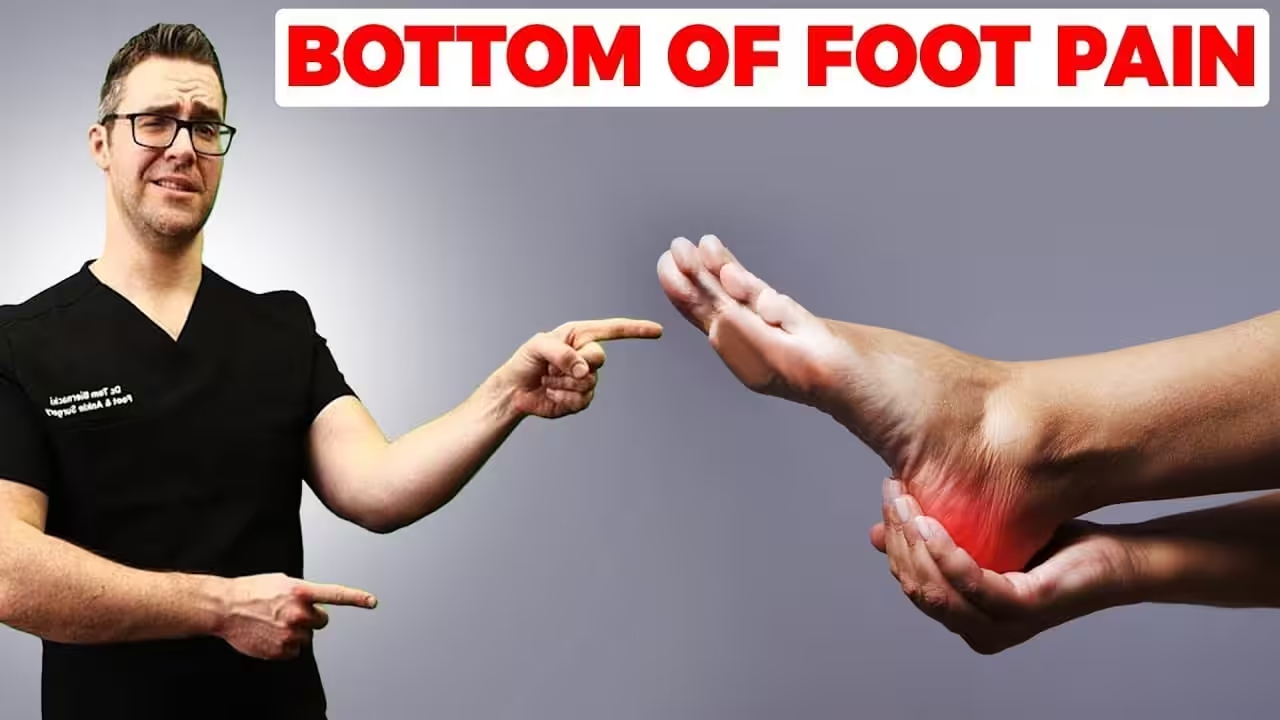
Medically reviewed by Dr. Daria Gutkin, DPM
Board-certified podiatrist | Balance Foot & Ankle
Last reviewed: April 2026
Quick answer: Heel fat pad syndrome occurs when the specialized cushioning layer under your heel bone thins, atrophies, or shifts — leaving the calcaneus exposed to impact forces. Unlike plantar fasciitis (sharp morning pain at the front of the heel), fat pad syndrome causes a deep, bruise-like ache directly in the center of the heel that worsens with prolonged standing on hard surfaces. Treatment focuses on cushioning: gel heel cups, thick-soled shoes, and activity modification.
If the bottom of your heel hurts with a deep, bruise-like ache — especially when standing on hard floors — you might be dealing with heel fat pad syndrome rather than plantar fasciitis. These two conditions are frequently confused because they both cause heel pain, but they involve different structures and require different treatment approaches. At Balance Foot & Ankle, correctly distinguishing between the two is one of the first things we do at your appointment.
What Is Heel Fat Pad Syndrome?
The heel fat pad is a remarkable anatomical structure — a specialized cushion made of tightly packed fat cells organized within fibrous chambers (called fascial septae). These chambers act like tiny shock absorbers, distributing and absorbing the impact forces of walking and running. A healthy heel fat pad is approximately 18–20mm thick and can absorb forces equivalent to 110% of body weight during normal walking.
Heel fat pad syndrome occurs when this cushioning layer loses its thickness, elasticity, or structural integrity. The fat cells atrophy (shrink), the fibrous chambers break down, and the pad may shift laterally — leaving the calcaneus (heel bone) with less protection against ground impact. The result is a deep, aching pain directly in the center of the heel, as if you’re walking on a stone.
Fat Pad Syndrome vs. Plantar Fasciitis
This distinction is critical because the treatments differ significantly. Here’s how to tell them apart:
- Pain location: Fat pad syndrome hurts in the center of the heel; plantar fasciitis hurts at the front-inside edge where the fascia attaches
- Morning pain: Plantar fasciitis causes sharp “first-step” pain that improves with walking; fat pad syndrome produces consistent aching that doesn’t have a dramatic morning pattern
- Surface sensitivity: Fat pad syndrome is significantly worse on hard surfaces (tile, concrete) and better on soft surfaces (carpet, grass); plantar fasciitis is less surface-dependent
- Barefoot response: Both hurt barefoot, but fat pad syndrome is dramatically worse because there’s no cushioning between bone and floor
- Palpation: Fat pad syndrome produces pain with direct downward pressure on the center of the heel; plantar fasciitis produces pain when pressing on the medial calcaneal tubercle (front-inside of heel)
- Age: Fat pad atrophy is more common after age 50; plantar fasciitis peaks at 40–60
Causes & Risk Factors
Age-related atrophy: The heel fat pad naturally thins with aging. Studies show a 30% reduction in fat pad thickness between ages 20 and 70. This is the most common cause of heel fat pad syndrome.
Repeated cortisone injections: Corticosteroids, while effective for plantar fasciitis, can accelerate fat pad atrophy when injected into the heel. This is a key reason podiatrists limit the number of heel injections — the very treatment for fasciitis can create a new problem.
High-impact activities: Running on hard surfaces, jumping sports, and occupations requiring prolonged standing on concrete (warehouse workers, factory workers, nurses) subject the heel pad to repetitive damage over years.
Other factors: Obesity increases heel loading, diabetes can alter fat pad composition, peripheral neuropathy prevents you from sensing damage, and certain medications (long-term corticosteroids) can thin the fat pad systemically. High-arched feet concentrate force on a smaller heel contact area, accelerating pad breakdown.
Symptoms
- Deep, bruise-like aching in the center of the heel
- Pain that’s worst on hard surfaces (tile, concrete, hardwood) and better on soft surfaces
- The sensation of walking on a pebble or directly on bone
- Pain increases with prolonged standing and worsens throughout the day
- Visible thinning of the heel pad — you can feel the heel bone more prominently
- Minimal morning start-up pain (unlike plantar fasciitis)
How We Diagnose It
At Balance Foot & Ankle, we differentiate fat pad syndrome from plantar fasciitis through targeted examination. We measure fat pad thickness using diagnostic ultrasound — normal is 12–20mm; anything below 12mm suggests significant atrophy. We reproduce your symptoms with direct calcaneal pressure (positive in fat pad syndrome) versus medial calcaneal tubercle pressure (positive in plantar fasciitis). X-rays rule out stress fractures and calcaneal bone abnormalities. In many patients, both conditions coexist — requiring a dual treatment approach.
Treatment Options
Gel heel cups: The most immediately effective treatment. Silicone or gel heel cups placed inside your shoes replicate the shock-absorbing function of the thinned fat pad. They should be deep enough to cradle the heel (keeping the remaining fat pad compressed under the calcaneus rather than allowing it to spread laterally). This is often the only treatment needed for mild to moderate cases.
Cushioned footwear: Shoes with thick, cushioned midsoles (HOKA, Brooks, New Balance) are essential. The right shoes provide external cushioning that compensates for the lost internal padding. HOKA shoes are particularly beneficial because their oversized midsole geometry provides maximum impact absorption. Never walk barefoot on hard surfaces — keep OOFOS recovery sandals by your bed.
Custom orthotics with heel cushioning: For patients who need more than off-the-shelf solutions, custom orthotics with a deep heel cup and cushioned heel post provide personalized shock absorption and prevent the fat pad from spreading laterally.
Taping: Low-Dye taping technique compresses the fat pad under the calcaneus, improving its cushioning efficiency. Your podiatrist can demonstrate this technique and determine if it provides meaningful relief — if it does, orthotics that replicate the taping effect are indicated.
Home Care
- Gel heel cups in all shoes — the single most important step
- Thick-soled, cushioned shoes at all times — even at home
- Never walk barefoot on hard floors, tile, or concrete
- Reduce high-impact activities — switch to cycling, swimming, or elliptical
- Ice after activity — 15 minutes with a frozen water bottle under the heel
- Padded floor mats at workstations if you stand for long periods
- Maintain healthy weight — every pound of body weight adds 3 pounds of force to the heel
Advanced Treatments
Fat grafting / dermal fillers: For severe fat pad atrophy, injectable treatments can restore cushioning directly. Autologous fat grafting (transplanting fat from another body area) and injectable dermal fillers have shown promising results in small studies. A 2025 pilot study in Foot & Ankle Surgery reported significant pain improvement in 78% of patients who received injectable cross-linked hyaluronic acid. These treatments are still considered investigational but offer hope for refractory cases.
Platelet-rich plasma (PRP): PRP injections may stimulate fat pad regeneration by delivering concentrated growth factors. Emerging research shows potential, but larger clinical trials are needed. We offer this option for patients who haven’t responded to conservative cushioning measures.
Podiatrist-Recommended Products
These products are recommended by our podiatrists at Balance Foot & Ankle based on clinical experience.
- PowerStep Pinnacle Insoles — Firm arch support with cushioned heel for daily shoe use
- OOFOS Recovery Sandals — Essential house shoe with 37% more impact absorption than traditional foam
- Brooks Ghost Running Shoes — Excellent all-around cushioned shoe with 12mm drop
- HOKA Bondi 8 — Maximum cushioning shoe, ideal for severe fat pad atrophy
Affiliate disclosure: We may earn a commission at no extra cost to you. Every product listed is tested or recommended in our clinic.
Frequently Asked Questions
Can heel fat pad atrophy be reversed?
Unfortunately, once the heel fat pad has atrophied, it doesn’t regenerate on its own. Treatment focuses on compensating for the lost cushioning with external support (gel heel cups, cushioned shoes, orthotics). Emerging treatments like fat grafting and dermal fillers show promise for restoring cushioning, but these are still considered investigational for this application.
How do I know if I have heel fat pad syndrome or plantar fasciitis?
The key differences: plantar fasciitis causes sharp pain at the front-inside of the heel, worst with first steps in the morning; fat pad syndrome causes deep aching in the center of the heel, worst on hard surfaces without a prominent morning pattern. Many patients actually have both conditions simultaneously. A podiatrist can differentiate them through physical examination and ultrasound.
Do cortisone injections cause heel fat pad atrophy?
Yes — repeated corticosteroid injections into the heel can accelerate fat pad atrophy, which is why podiatrists limit heel injections. A single injection rarely causes significant atrophy, but multiple injections over time can thin the pad. This is one reason we always combine injections with stretching, orthotics, and footwear changes rather than relying on injections alone.
What’s the best shoe for heel fat pad syndrome?
The ideal shoe for fat pad syndrome has a thick, cushioned midsole with maximum shock absorption. HOKA Bondi 8 provides the most cushioning of any running shoe. Brooks Ghost 16 offers excellent all-around cushioning with moderate support. Both should be paired with gel heel cups for optimal padding. Avoid thin-soled shoes, firm leather-soled shoes, and going barefoot on hard surfaces.
The Bottom Line
Heel fat pad syndrome is an underdiagnosed cause of heel pain that’s often mistaken for plantar fasciitis. The treatment is fundamentally different — cushioning and shock absorption rather than stretching and anti-inflammatories. If your heel pain feels like a deep bruise in the center of the heel, worsens on hard surfaces, and doesn’t follow the classic morning-pain pattern of plantar fasciitis, you may have fat pad syndrome. Our podiatrists at Balance Foot & Ankle can confirm the diagnosis with ultrasound and get you on the right treatment path immediately.
Heel Pain Not Responding to Treatment?
Same-week appointments in Howell & Bloomfield Hills, MI. Three board-certified podiatrists.
4.9★ | 1,100+ Reviews | 3,000+ Surgeries
Or call: (810) 206-1402

Dr. Tom Biernacki, DPM is a double board-certified podiatrist and foot & ankle surgeon at Balance Foot & Ankle Specialists in Southeast Michigan. With over a decade of clinical experience, he specializes in heel pain, bunions, diabetic foot care, sports injuries, and minimally invasive surgery. Dr. Biernacki is a member of the APMA and ACFAS, and his patient education content on MichiganFootDoctors.com and YouTube has reached over one million views.