

Quick answer: How to break in shoes the right way: 1) prepare the area properly, 2) use the correct technique demonstrated by a podiatrist, 3) avoid the common mistakes that worsen the problem. We see complications in clinic from improper home care. The full step-by-step guide below shows the right method. Call (810) 206-1402.
Medically reviewed by Dr. Tom Biernacki, DPM · Board-Certified Podiatric Surgeon · Last reviewed: April 2026 · Editorial Policy
✅ Medically reviewed by Dr. Tom Biernacki, DPM — Board-Certified Podiatrist · Last updated April 6, 2026
How to Break in Shoes [New shoes, Leather or Running Shoes & MORE!]
How long does it take to break in shoes? We review how to break in shoes FAST: Running shoes, leather shoes & MORE!
How to break in new shoes FAST video:
![How to Make Small Shoes Bigger [How to Stretch A Shoe at HOME!]](https://www.michiganfootdoctors.com/wp-content/cache/flying-press/f81af76129f49734736ee6f810e7428e.jpg)
How to quickly break in shoe video Summary:
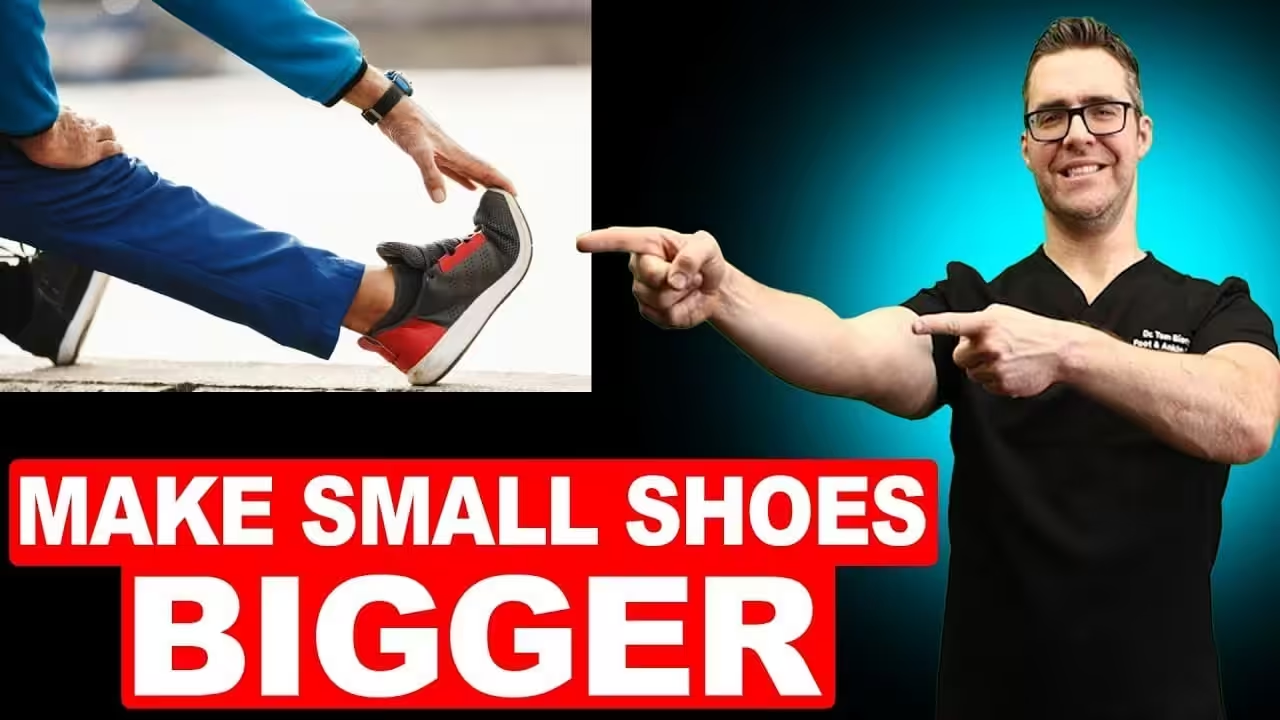
🦶Do you have a shoe too small and want to make your shoe bigger?🦶 We will show you how to stretch a shoe at home and make a small shoe bigger! Whether you have new sneakers, new shoes, or cowboy boots:
- we will show you how to expand your shoes, stretch your shoes, and make your small shoes bigger!
These new shoe break-in methods will work for:
- How to break in leather shoes
- How to break in running shoes
- How to break in pointe shoes
- How to break in new running shoes
- How to break in climbing shoes
- How to break in basketball shoes
- How to quickly break in shoes
- How to break in Dansko shoes
- How to break in leather boat shoes
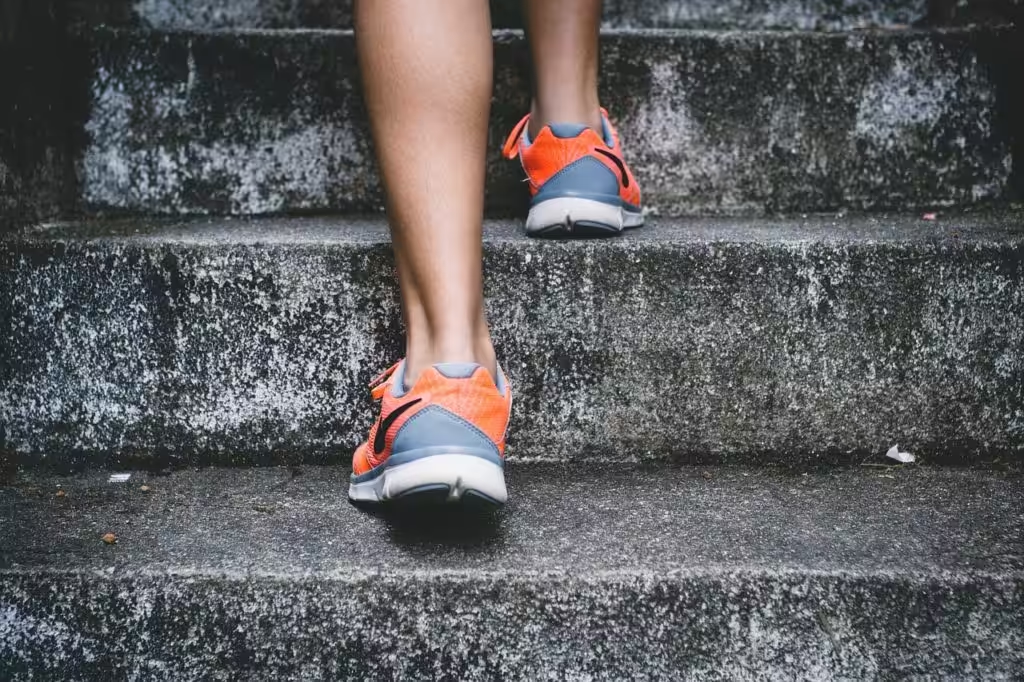
It is natural for you to wear and show off a new pair of shoes that you bought right away. But most shoes that are new require a gentle breaking time period. This will allow the material of your shoe to soften and gradually adjust to your feet.
How to break in new shoes?
Breaking in new shoes need patience because it usually takes some time. If you hurry through this process, it can lead to sore feet and even painful blisters. Surely you don’t want that to happen, after spending so much on your new pair of shoes. Let’s see how we can make this a stress-free and painless experience by following these precautionary measures.
- Ensure that you got the correct shoe size –
Isn’t this obvious? But some of us may look at the size and the appearance of the shoe and buy it. You may consider this as a time saver. But in the long run, it may not be so. You must always ensure that you get the right fit because that’s the most important point to consider when buying new shoes. If it does not fit well, too tight or too loose, how much time and effort you take to break them in will be in vain. Because they will continue to give you long-term problems and will not be effective at all and the money you spent will be such a waste.
- Slowly break shoes in –
Wear your new shoes for short periods of time at first. It will help with the process of breaking your shoes in. avoid wearing them for a full day in the beginning. To begin with, you can wear them in and around your house. You will be able to take them off if your feet start aching or if they start to rub against your feet. Make sure that the blisters are prevented by not wearing them too long at the beginning. Because if you develop painful blisters, the break-in process will slow down further. The material of your new shoes will loosen with time and natural stretch, allowing a more comfortable fit over time.
How do you protect your feet from blisters?
Certain parts of the shoes, such as the sides of your toes and back of the heel, are stiffer than other parts of the shoes. They naturally take a longer time to break in. These parts tend to rub on your feet more, leading to blisters. Try using petroleum jelly or a good moisturizer to hydrate the skin of your feet. Moisturizing will reduce the friction between your feet and the shoes. Well, hydrated feet are less likely to rub against the shoe.
- Tie your shoes uptight –
Do not loosen the laces to allow your feet more space to move and breathe. Although it is tempting, please do not do it when breaking into shoes. Tie them up well and tight enough as you would when wearing them normally. This will help to stretch the material and speed up the process of breaking in.
- Wearing thick socks –
You may think that wearing a thick pair of socks will not compliment your new shoes. However, try this at home as it is indeed helpful to break in shoes faster. Thick socks will create a thick and padded layer between the shoes and your feet, preventing blisters from rubbing and forming. Thick socks will make your feet bulkier. It will help to stretch the fabric of your new shoes.
- Alternate your footwear –
Now that you have broken your new shoes in and you find them comfortable enough to wear them out for prolonged periods of time, still, you must continue to alternate them with other shoes until the new shoes become comfortable enough and that you no longer worry about rubbing and blisters.
- Carry a spare pair of well-worn shoes with you for some time –
In the beginning, it is better to carry a pair of well-worn shoes with you to change, in case you feel uncomfortable with your newly broken-in shoes. By following the above steps to break in new shoes, you should be able to wear them comfortably out and about in no time at all.
How long does it take to break in new shoes?
The time taken to break into new shoes depends on many factors. Such as;
- The shape of your shoe
- The construction of your shoe
- The stiffness of the fabric of the shoe
- The thickness of the sole
Stiff leather shoes with thick soles will take a longer time to break in. May be few weeks. At the same time, shoes made of soft fabric with rubber soles will take only a little time to break-in.
How to break in shoes fast?
Usually, breaking in a new pair of shoes takes time. But here is a secret, you can try this to break in your new shoes faster.
- Use a hairdryer and blast one shoe all over for a minute or two until it is warm and soft.
- Wear thick socks.
- Put that shoe on.
- Repeat the same for the other shoe and put it on.
- Walk around the house for some time, at least till your shoes cool down. The longer you can keep them on your feet, the better outcome.
- Repeat the same process 3 to 4 times if time permits. You will notice that your new shoes are now molded well to your feet.
How to break in leather shoes?
Leather shoes with thick soles take time to break in since the material is stiff. Many of you would have suffered sore feet and even blisters while trying to break in new leather shoes. A new pair of leather shoes just out of the box is like a wild horse not tamed yet. Until you tame him, you might face many hardships and injuries. But once you tame that horse, you will enjoy the ride immensely. New leather shoes are also like that. Once you break them in properly, they can be the best fitting and most comfortable shoes out of all shoes in your collection. A high-quality pair of leather shoes will eventually adjust to the shape of your feet. With time leather stretches and changes shape and creates a shoe molded to your foot. But until you get there, your shoe fit may not feel right. This is the breaking-in period. New leather is usually tougher than worn-in leather. You will get pain around the ankles, sole, or the bend above your toes and the sides. Let’s see how we can break in leather shoes;
- First of all, you must buy a pair of well-fitting shoes that matches your foot shape. Don’t go for a bigger size or a shoe which is too tight. Tie them normally and walk around the showroom before you pay. Always buy a good quality pair.
Here is a tip… It is better to buy your shoes at the end of the day because they expand a little if you have been walking a lot or on your feet throughout the day. Now let’s break in that new pair;
- Wear comfortable socks to protect your feet.
- Pad spots that may rub on your feet. Band-aids will help.
- Rotate shoes – allow your feet and your shoes to recover after wearing new shoes.
- Until your shoes break-in and are comfortable, always carry a comfortable spare pair. You can change into them if your feet feel uncomfortable.
- Don’t wear new leather shoes for long trips at the beginning. Start with short walks. Continue to wear them gradually by extending the time period each time. Even if it hurts a little, do not give up.
- Avoid softening them in washing machines because they can damage your shoes.
How long does it take to break in new leather shoes?
It may take 3 – 4 weeks or 3 to 4 years to break in a quality pair of leather shoes.
How to break in new running shoes?
So, you bought a new pair of running shoes. Your first instinct is to start running. Even if you tried them on at the store, do not be in a hurry. Break them in first for a happier, more comfortable run. Here is how you do it;
- Take it slow
- Lace-up your shoes and walk around your house. Let your feet get to know your new running shoes.
- The next day does a short run, a maximum of 30 minutes, and see how your feet feel—test whether there is any pain or discomfort.
- You can gradually increase the running time and intensity over the next 1 -2 weeks.
- Wear a good pair of running socks.
- Once your new pair is broken in, still do not be in a hurry to get rid of your old pair. Rotate between your new pair and the old one to help your feet recover, distribute pressure, and lessen the strain on your feet. A study found that runners who used multiple pairs of running shoes had a 39% lower chance of running-related injuries when compared with runners who used only a single pair.
How long does it take to break in new running shoes?
Properly fitted good quality running shoes may not require a considerable break-in period. Starting from the first run, you must feel relatively comfortable. That doesn’t mean you should do a marathon taken out from the box on the first day. So, start gradually and increase your running time. Break-in may take 1 to 2 weeks for new running shoes. See the video above for further stretching and break-in advice for your new running shoes.
How to break in shoes that rub your heel?
New shoes are sometimes harsh. They can rub the heels of your feet, giving you a burning sensation whenever you walk or run. Some might give you blisters or rub your heels raw. Here is how you break in a pair that rubs on your heel;
- Using heat – this can be done with a hairdryer for leather or suede shoes. Soften the back of the heel of the shoe by applying the heat from a distance. Wear a thick pair of socks, wear the heated shoe, and walk around the house until the shoes cool down. You will notice that the shoes have taken a shape that is comfortable for your feet. Do not overdo the heating as it can damage and make your shoes bigger.
- You can spray it with rubbing alcohol and wear it with thick socks on until it dries. This is best for shoes made of leather, suede, or cloth.
- You can use a shoe stretching spray for leather shoes that rub against your heels. It will relax the fibers making them stretch easily.
- You can bend and twist the heel area of your shoes – this will relax and stretch the material to prevent it from rubbing on your heels.
- Rub an underside of a spoon along the inside of your shoes and apply pressure. It will stretch the heel area.
- You can apply moleskin to the parts of the shoe which are rubbing. After a few days, the shoes will conform and be more comfortable.
How to break in basketball shoes?
Basketball shoes can be broken in by simply wearing them for 10 – 15 minutes a day, but for light activity first. Do not play physical games right away. Make sure to wear socks to protect your feet. For more tips on how to break in basketball shoes, watch the video above!
How to break in climbing shoes or rock climbing shoes:
The same techniques from the video above can be an efficient way to break into rock climbing shoes. Once you select the correct size, attempt a bit of climbing, making sure to take them off between climbs regularly. Walking too much in your climbing shoes is not recommended because they are not built for walking. The downturned camber in your climbing shoes can be ruined by excessive walking. After 3 -5 short climbing sessions, they are broken in, and you will have a pair of perfectly fitting climbing shoes. We have had great success using moist paper towels overnight to stretch out our rock climbing shoes.
How to break in pointe shoes properly?
New pointe shoes must be broken in very carefully. Wear the shoe and lean heavily into the foot en pointe. Repeat it several times, remove the shoe. Gently bend the shoe with your hands, following the shape your arch has made on the shoe. Do the same for the other shoe. By holding on to the barre, do rises through your foot to soften it. Over time, heat and perspiration will continue to mold the shoe as you dance. This technique will also work for how to break in pointe shoes bloch. You need to give it time and follow the correct technique. This is our favorite way how to break in pointe shoes fast. Whatever your shoe is after proper breaking in, you will be able to enjoy your new shoes to the fullest.
How to make a big shoe fit smaller:
![How to Make Big Shoes Fit Smaller! [Top 10 Hacks]](https://www.michiganfootdoctors.com/wp-content/cache/flying-press/446aa1b6121150b48b66f244a3d4bcea.jpg)
Make your big shoes fit smaller video summary:
How to break in shoes that rub your ankle? If a shoe is too loose, it can also rub your ankle or the back of your heel. If the shoe is too small please follow the video above, but if the shoe is too loose watch this video. Are your shoes too big? We will show you how to make big shoes fit smaller. These are the top 10 hacks for shoes too big! We will show you the best ways to make big shoes fit smaller without getting shoe repair! So we have you covered for shoe help and footwear tips! So we can’t make bigger shoes, but we can make big shoes fit smaller at home!
More Podiatrist-Recommended Shoes Essentials
Hoka Clifton 10

Max-cushion neutral runner — podiatrist favorite for all-day comfort.
Brooks Adrenaline GTS 25
Stability runner for overpronators — great for flat feet and bunions.
New Balance 990v6
Premium walking shoe with wide toe box — bunion and flat-foot friendly.
As an Amazon Associate, Balance Foot & Ankle earns from qualifying purchases. Product recommendations are based on clinical experience; prices and availability shown above update live from Amazon.
When to See a Podiatrist
The right shoe shape, last, and stability category is more important than brand. Balance Foot & Ankle evaluates your foot type (neutral, pronator, supinator, high-arched) and recommends specific shoe models that match. Bringing in your current pair lets us spot wear patterns that reveal gait issues — a free 5-minute assessment that can prevent years of foot pain.
Call Balance Foot & Ankle: (810) 206-1402 · Book online · Offices in Howell & Bloomfield Hills
Frequently Asked Questions:
how long to break in running shoes how to quickly break in shoes how to break in Dansko shoes how to break in leather boat shoes how to break in pointe shoes properly how to break in work shoes how long does it take to break in converse shoes how long does it take to break shoes in how to break in patent leather shoes how to break in Sperry boat shoes how to break in a pair of shoes how to break in ballet pointe shoes how to break in boat shoes how to break in hiking shoes how to break in trail running shoes how to break in character shoes how to break in native shoes how to break in rock climbing shoes how to break in shoes at home how to break in shoes for wide feet how to break in shoe heel how to break in shoes that are too small how to break in shoes that give blisters how to break in shoes that rub your ankle
Related Treatment Guides
- Sports Foot & Ankle Injury Treatment
- Plantar Fasciitis & Heel Pain Treatment
- Custom 3D Orthotics
- Bunion Treatment
In-Office Treatment at Balance Foot & Ankle
If home treatment isn’t providing relief for your foot and ankle conditions, our podiatry team at Balance Foot & Ankle can help with same-day evaluations and advanced in-office care.
Same-day appointments available. (810) 206-1402
Doctor Hoy’s Natural Pain Relief Gel
Natural topical pain relief I use in our clinic. Arnica + camphor formula — apply directly to the area 3–4x daily. ($20–25)
Shop Doctor Hoy’s →Medical References & Sources
- American Podiatric Medical Association — Patient Education
- American Orthopaedic Foot & Ankle Society — Foot Conditions

📋 Dr. Tom Also Recommends
Podiatrist Recommended Orthotics 2026: Dr. Tom’s Top 10 Insoles & Arch Supports
A podiatrist’s complete clinical guide to the best insoles — custom orthotics, OTC picks, and what actually works for plantar fasciitis, flat feet, neuropathy & more.
Read the Full Guide →Insurance Accepted
BCBS · Medicare · Aetna · Cigna · United Healthcare · HAP · Priority Health · Humana · View All →
Howell Office
4330 E Grand River Ave
Howell, MI 48843
Get Directions →
Bloomfield Hills Office
43494 Woodward Ave, #208
Bloomfield Township, MI 48302
Get Directions →
Your Board-Certified Podiatrists



Ready to Get Back on Your Feet?
Same-week appointments available at both locations.
Book Your Appointment👟 Dr. Tom’s Complete Footwear Library
Podiatrist-Approved Guides for Every Foot Type & Condition
Clinically reviewed by Dr. Tom Biernacki, DPM — Board-Certified Podiatrist
All guides are written and reviewed by licensed podiatrists. Schedule an appointment →
Pros & Cons of Conservative Care for footwear
Advantages
- ✓ Right shoe = pain reduction
- ✓ Multiple price points
- ✓ Fast adjustment
Considerations
- ✗ Trial-and-error
- ✗ Replace every 400 miles
- ✗ Custom orthotics often needed
Dr. Tom’s Recommended Products for footwear
Affiliate disclosure: As an Amazon Associate, Balance Foot & Ankle earns from qualifying purchases. We only recommend products we use with patients.
Brooks Ghost 17 Dr. Tom’s Pick
Best for: Neutral runner
Check Price on Amazon
Brooks Adrenaline GTS 23 Dr. Tom’s Pick
Best for: Stability for flat feet
Check Price on Amazon
Altra Torin 8 Dr. Tom’s Pick
Best for: Zero-drop wide toe box
Check Price on Amazon
Ready to Get Back on Your Feet?
Same-day appointments in Howell + Bloomfield Hills. Most insurance accepted. Dr. Tom Biernacki, DPM & team.
Book Today — Same-Day Appointments Available
Call Now: (810) 206-1402
About Your Care Team at Balance Foot & Ankle
Dr. Tom Biernacki, DPM · Board-Certified Foot & Ankle Surgeon. Specializes in conservative-first care, minimally invasive bunion surgery, and complex reconstruction.
Dr. Carl Jay, DPM · Accepting new patients. Specializes in sports medicine, athletic injuries, and routine podiatric care.
Dr. Daria Gutkin, DPM, AACFAS · Accepting new patients. Specializes in surgical reconstruction and pediatric podiatry.
Locations: 4330 E Grand River Ave, Howell, MI 48843 · 43494 Woodward Ave Suite 208, Bloomfield Township, MI 48302
Hours: Mon–Fri 8:00 AM – 5:00 PM · (810) 206-1402
What is Foot pain?
Foot pain is a common foot/ankle condition that affects mobility and quality of life. Understanding the underlying cause is the first step in successful treatment. Our podiatrists at Balance Foot & Ankle perform a hands-on biomechanical exam, review your activity history, and use diagnostic imaging when appropriate to identify the root cause—not just treat the symptom. Many patients have been told to “rest and ice” without a deeper diagnostic workup; our approach is different.
Symptoms and warning signs
Common signs of foot pain include pain that worsens with activity, morning stiffness, swelling, tenderness when palpated, and difficulty bearing weight. If you experience sudden severe pain, inability to walk, visible deformity, numbness or color change, contact our office the same day or visit urgent care—these can signal a more serious injury such as a fracture, tendon rupture, or vascular compromise. Diabetics with any foot wound should seek same-day care.
Conservative treatment options
Most cases of foot pain respond to non-surgical care: structured rest, supportive footwear changes, custom orthotics, targeted stretching and strengthening protocols, anti-inflammatory medications when medically appropriate, and in-office procedures such as ultrasound-guided injections. We also offer advanced therapies including MLS laser therapy, EPAT/shockwave, regenerative injections, and image-guided procedures. Treatment is sequenced from least invasive to most invasive, and we explain the rationale at every step.
When is surgery considered?
Surgery is reserved for cases that fail 3-6 months of well-structured conservative care, when there is structural pathology (severe deformity, complete tear, advanced arthritis), or when imaging shows damage that will not heal without intervention. Our surgeons have performed 3,000+ foot and ankle procedures and prioritize minimally-invasive techniques whenever appropriate. We discuss recovery timelines, return-to-activity milestones, and realistic outcome expectations before any procedure is scheduled.
Recovery timeline and prevention
Recovery from foot pain varies based on severity and chosen treatment path. Conservative cases often improve within 4-8 weeks with consistent adherence to the protocol. Post-procedural recovery may range from a few days (in-office procedures) to several months (reconstructive surgery). Long-term prevention involves footwear assessment, activity modification, structured strengthening, and regular check-ins with your podiatrist if you have a history of recurrence. We provide written home-exercise plans and digital follow-up support.
Ready to feel better?
Same-week appointments available in Howell and Bloomfield Hills, Michigan.
Book Your VisitGet Expert Care at Balance Foot & Ankle
Same-week appointments at our Howell and Bloomfield Hills offices. Board-certified podiatric surgeons. Most insurance accepted.

Dr. Tom Biernacki, DPM is a board-certified foot & ankle surgeon (ABFAS & ABPM) at Balance Foot & Ankle Specialists in Southeast Michigan. With over a decade of clinical experience, he specializes in heel pain, bunions, diabetic foot care, sports injuries, and minimally invasive surgery. Dr. Biernacki is a member of the APMA and ACFAS, and his patient education content on MichiganFootDoctors.com and YouTube has made him one of the most-followed foot & ankle educators on YouTube.