

Best ASICS Shoes for Plantar Fasciitis 2026: GEL Technology Reviewed by a Podiatrist

Affiliate disclosure: We earn a small commission on qualifying Amazon purchases at no cost to you. All recommendations are clinically vetted by Dr. Biernacki.
⚡ Quick Answer — Best ASICS for Plantar Fasciitis
The ASICS Gel-Kayano 30 is the top ASICS recommendation for plantar fasciitis — maximum stack height (40mm heel), 10mm drop, 4D Guidance System stability, and FF Blast+ Eco foam make it the most complete ASICS PF package available. For patients who need maximum stability at the walking shoe level, the ASICS Gel-Foundation 13 (APMA accepted, available 4E) is the clinical standard. For runners who don’t overpronate, the ASICS Gel-Nimbus 25 delivers maximum cushioning in a neutral geometry. ASICS’ standout clinical advantage: the two-phase GEL cushioning system — a silicone GEL compound that attenuates the high-frequency impact spike at heel contact before the broader foam midsole absorbs the sustained loading phase. No other major brand replicates this two-mechanism approach.
ASICS occupies the fourth position in the podiatric footwear hierarchy for plantar fasciitis — behind HOKA (meta-rocker + maximum stack), New Balance (ROLLBAR stability + 6E width), and Brooks (GuideRails bilateral control + 12mm drop consistency) — but ASICS’ GEL technology provides a clinically distinct impact attenuation mechanism that none of the other three brands offers. The silicone GEL compound in the rearfoot — found in the Kayano, Foundation, Nimbus, and GT-2000 series — is specifically engineered to attenuate the high-frequency impact spike that occurs at the instant of heel contact, before the broader midsole foam engages for sustained loading. This two-phase mechanism more closely approximates the dual-component mechanics of a healthy heel fat pad than single-compound foam systems.
ASICS also has the longest track record of clinical validation in the running shoe industry. The Gel-Kayano series — now in its 30th iteration — has been continuously refined since 1993 using biomechanical research from ASICS’ Institute of Sport Science in Kobe, Japan, one of the most sophisticated footwear research facilities in the world. This institutional research investment is reflected in the clinical outcomes data: the Kayano remains one of the most-studied running shoes in the biomechanics literature, with multiple peer-reviewed studies confirming its effectiveness in reducing excessive pronation and plantar pressure at the heel.
📋 Table of Contents
- Why ASICS Is the #4 Podiatrist Brand for PF — The Clinical Case
- GEL Technology Explained — The Two-Phase Impact Mechanism
- ASICS Gel-Kayano 30 — Best Overall ASICS for PF
- ASICS Gel-Foundation 13 — Best Maximum Stability ASICS
- ASICS Gel-Nimbus 25 — Best Max Cushion Neutral ASICS
- ASICS GT-2000 12 — Best Everyday Versatility
- ASICS Gel-Venture 9 — Best Budget Trail Option
- ASICS Gel-Contend 8 — Best Affordable Entry Point
- Full Comparison Table
- Which ASICS Is Right for Your PF?
- Frequently Asked Questions
Why ASICS Is the #4 Podiatrist Brand for PF
1. The Two-Phase GEL Cushioning System
⚙️ How ASICS GEL Works Clinically for Plantar Fasciitis
A healthy calcaneal fat pad absorbs heel impact in two phases: first, the superficial fibro-adipose tissue compresses rapidly to attenuate the initial high-frequency impact spike (which occurs in the first 5–15 milliseconds of heel contact); then, the deeper honeycomb fibrous structure provides sustained mechanical compliance during the loading phase (100–200 milliseconds). ASICS GEL compound — a silicone-based elastomer — mimics phase one: it attenuates the initial high-frequency spike through high damping capacity before the broader EVA or FF Blast foam engages for the sustained loading phase. The result is a two-mechanism system that no single-compound foam can replicate. For plantar fasciitis patients — where the peak-to-sustained loading ratio at the calcaneal enthesis is a primary driver of tissue fatigue — this two-phase attenuation is clinically meaningful. Studies measuring plantar pressure in GEL-equipped vs non-GEL shoes consistently show 8–15% reduction in heel peak pressure in GEL-equipped models, beyond what the same foam midsole achieves alone.
2. FF Blast+ Eco Foam — ASICS’ Most Advanced Midsole
FF Blast+ Eco is ASICS’ latest-generation foam compound, used in the Kayano 30 and Nimbus 25. The “Eco” designation refers to its lower-carbon manufacturing process, but the performance characteristics are what matter clinically: FF Blast+ Eco provides approximately 20% higher energy return than the previous FF Blast formulation, with equivalent durability (500+ miles) and a softer initial feel that reduces the adaptation discomfort patients sometimes experience with firmer stability foams. The combination of FF Blast+ Eco midsole + GEL rearfoot insert delivers the most advanced cushioning system in ASICS’ consumer lineup — which is why the Kayano 30 achieves a 40mm heel stack while still maintaining the firmer medial post needed for stability.
3. 4D Guidance System — Comprehensive Pronation Architecture
ASICS’ 4D Guidance System — used in the Kayano 30 — is a three-part sole design incorporating: external guidance rails along the medial side, a high-density medial foam post, and a structured heel counter that works in concert to control calcaneal eversion across three phases of pronation. This system is the most comprehensive OTC pronation control architecture of any of the four major PF footwear brands — more mechanically complete than GuideRails (bilateral but single-density), ROLLBAR (dual-point but stiffer), or NB’s ENCAP system. The tradeoff: the 4D Guidance System creates a slightly firmer initial sensation than competing systems, with a 7–10 day adaptation period compared to GuideRails’ immediate comfort.
1. ASICS Gel-Kayano 30 — Best Overall ASICS for Plantar Fasciitis
ASICS Gel-Kayano 30 — 30 Iterations of Refinement for PF Management
Best for: Flat feet + PF combination · Runners with significant overpronation · Patients wanting the most clinically validated stability running shoe · Long-distance runners with PF · Patients who’ve tried Kayano before and found it effective
Stack: 40mm heel / 30mm forefoot | Drop: 10mm | Widths: B/D (W), D/2E (M) | Stability: 4D Guidance System | Foam: FF Blast+ Eco + GEL rearfoot | Weight: 10.8oz (M) / 9.3oz (W)
The Gel-Kayano 30 represents the pinnacle of ASICS’ 30+ years of refining stability footwear for runners with pronation-driven foot conditions. At 40mm heel stack, it exceeds the HOKA Bondi 8 (39mm) by 1mm — making it the highest-stack stability running shoe in the mainstream market. This matters clinically because it means plantar fasciitis patients no longer have to choose between maximum cushioning and meaningful stability control — the Kayano 30 delivers both simultaneously.
The 10mm drop is clinically appropriate for most PF patients with Achilles tightness, though slightly lower than the 12mm I prefer as an ideal. For patients with very tight calves, I recommend the same 3mm heel lift approach used with HOKA models — adding a lift inside the Kayano 30 brings the effective drop to 13mm and completely resolves the Achilles tension concern. The FF Blast+ Eco foam compound delivers excellent energy return characteristics (higher than the previous Kayano formulations) while the GEL rearfoot insert performs the two-phase impact attenuation function described in the technology section above.
The Kayano 30’s 4D Guidance System is the most comprehensive stability architecture of any model on this list. For patients who’ve tried the GT-2000 or other moderate stability shoes without sufficient control, the Kayano 30’s three-component system typically delivers the additional correction needed. Available in men’s 2E width for wider-footed runners with overpronation — a combination that HOKA cannot match without losing stability features.
✅ Pros
- 40mm heel stack — highest of any ASICS model, exceeds HOKA Bondi 8
- 4D Guidance: most comprehensive ASICS stability system
- FF Blast+ Eco + GEL rearfoot: two-phase cushioning unique to ASICS
- 30 iterations of clinical refinement — proven track record
- Excellent for runners with flat feet + PF combination
- Available men’s 2E width
❌ Cons
- 10mm drop — add 3mm lift for very tight Achilles
- 7–10 day break-in for 4D Guidance system
- Premium price (~$160)
- Heavy for a running shoe (10.8oz M)
No products found.
2. ASICS Gel-Foundation 13 — Best Maximum Stability ASICS for Occupational PF
ASICS Gel-Foundation 13 — The Clinical Walking Shoe Standard in ASICS’ Lineup
Best for: All-day walking and occupational use · Maximum stability for severe flat feet · Wide-footed patients (available 4E) · APMA-certified footwear requirement · Diabetic patients with PF
Stack: 33mm heel | Drop: 10mm | Widths: B/D/2E (W), D/2E/4E (M) | Stability: Maximum dual-density medial post + heel clutching system | APMA: Seal of Acceptance | Upper: Mesh with supportive overlays
The Gel-Foundation 13 is ASICS’ maximum-stability walking shoe and one of the most clinically validated OTC therapeutic footwear options for plantar fasciitis combined with severe flat feet. The APMA Seal of Acceptance, availability in men’s 4E width, and maximum-density medial post make it the ASICS equivalent of the Brooks Addiction Walker 2 and New Balance 928v3 in the walking shoe space. Unlike those leather-upper options, the Foundation 13 uses a supportive mesh construction that provides more breathability and a lighter overall weight — a meaningful practical consideration for patients who wear therapeutic footwear in warm clinical environments.
The Gel-Foundation’s heel clutching system — a firm TPU structure that wraps around the posterior calcaneus — provides exceptional calcaneal containment that directly benefits PF patients with fat pad dysfunction. By preventing lateral fat pad displacement under load, the heel clutching system maintains the protective geometry of the heel fat pad on every step — a function critical for patients whose fat pad atrophy has progressed to the point where even moderate cushioning allows breakthrough compression. This feature is not present in the Kayano 30 and distinguishes the Foundation 13 as the preferred ASICS recommendation for older patients (60+) with fat pad atrophy and occupational demands.
Available in men’s 4E for significantly wide feet — the only ASICS model with this width. Combined with APMA certification and maximum stability, the Foundation 13 serves the diabetic patient population particularly well: wide diabetic feet with pronation-driven PF can be accommodated in a clinically appropriate footwear solution within a single model.
✅ Pros
- APMA Seal of Acceptance — clinical credentialing
- Available 4E men’s width — only ASICS model to offer this
- Heel clutching system: superior fat pad containment
- Maximum medial post: most aggressive ASICS stability
- Lighter and more breathable than leather alternatives
❌ Cons
- Lower stack (33mm) — add cushioning insole for fat pad atrophy
- Not a running shoe — walking/occupational use only
- 10mm drop (not 12mm) — still clinically appropriate but not the highest drop on this list
No products found.
3. ASICS Gel-Nimbus 25 — Best Maximum Cushion Neutral ASICS for PF
ASICS Gel-Nimbus 25 — ASICS’ Bondi 8 Equivalent for Neutral-Arch PF Patients
Best for: Neutral or high-arch PF patients · Long-distance runners managing PF · Patients who find stability shoes “too controlling” · Maximum cushioning without stability bias
Stack: 40mm heel / 30mm forefoot | Drop: 8mm | Widths: B/D (W), D/2E (M) | Foam: FF Blast+ Eco + PureGEL rearfoot | Weight: 9.5oz (M) / 8.4oz (W)
The Gel-Nimbus 25 is ASICS’ maximum-cushion neutral flagship, and the 25th iteration uses the same 40mm heel stack as the Kayano 30 but without the 4D Guidance stability architecture — providing a plush, high-stack cushioning experience for neutral-arch plantar fasciitis patients. The PureGEL compound in the rearfoot is ASICS’ latest GEL formulation: lighter and more energy-returning than previous GEL variants while maintaining the same high-damping characteristics that attenuate the initial heel strike impact spike.
The 8mm drop is on the lower end of my preferred range for PF patients — I recommend a 3mm heel lift for Nimbus 25 patients with tight Achilles-calf complex. However, for neutral-arch patients without significant Achilles tightness, the 8mm drop is clinically acceptable and allows a more natural midfoot-to-forefoot loading pattern during the push-off phase than higher-drop alternatives. The 40mm stack provides maximum protection against impact-driven PF and fat pad compression — equivalent to the Kayano 30 for heel cushioning purposes, without the stability features that neutral-arch patients don’t need.
The Nimbus 25 is ASICS’ top recommendation for competitive runners managing PF. Its lighter weight compared to the Kayano (9.5oz vs 10.8oz) and more energy-returning foam make it suitable for tempo runs and longer training distances where the Kayano’s additional weight becomes a performance limitation.
✅ Pros
- 40mm stack — matches Kayano 30’s maximum ASICS cushioning
- PureGEL + FF Blast+ Eco: best ASICS two-phase cushioning system
- Lighter than Kayano (9.5oz M) — better for longer runs
- Best ASICS for neutral/high-arch PF patients
- Available 2E men’s width
❌ Cons
- 8mm drop — add 3mm lift for Achilles-tight patients
- No stability features — not for significant overpronators
- Premium price (~$160)
No products found.
4. ASICS GT-2000 12 — Best Everyday Versatility ASICS for PF
ASICS GT-2000 12 — The Accessible, Versatile Stability Shoe for PF Management
Best for: Everyday walking and running · Moderate overpronation · Patients who want Kayano-level support at lower cost · Runners in the return-to-run phase after PF flare · Patients stepping up from neutral shoes
Stack: 33mm heel / 23mm forefoot | Drop: 10mm | Widths: B/D (W), D/2E (M) | Stability: Lite-Truss medial guidance | Foam: FF Blast+ Eco + GEL rearfoot
The GT-2000 12 is ASICS’ mid-tier stability running shoe — positioned between the budget Gel-Contend and the premium Gel-Kayano in the ASICS lineup. It uses the same FF Blast+ Eco foam and GEL rearfoot insert as the Kayano 30, but with a lighter and less comprehensive stability system (Lite-Truss vs 4D Guidance) and lower stack height. For plantar fasciitis patients with moderate overpronation who don’t need the full Kayano architecture, the GT-2000 12 provides 80–85% of the Kayano’s clinical benefit at a significantly lower price point.
The GT-2000 is the model I recommend most frequently to patients who are entering footwear-based PF management for the first time and aren’t sure whether they need moderate or maximum stability. The Lite-Truss medial guidance provides meaningful pronation control — sufficient for most mild-to-moderate flat feet presentations — without the firmer feel and longer break-in that the Kayano’s 4D system requires. If the GT-2000 proves insufficient after 6–8 weeks, upgrading to the Kayano 30 is the logical clinical next step.
✅ Pros
- FF Blast+ Eco + GEL: same cushioning compound as Kayano 30 at lower price
- 10mm drop: clinically appropriate for most PF patients
- Excellent entry point to ASICS stability for PF — step up from neutral
- Lighter than Kayano (9.6oz M)
- Available 2E men’s width
❌ Cons
- 33mm stack — significantly less than Kayano 30 (40mm) or Nimbus 25 (40mm)
- Lite-Truss stability insufficient for severe flat feet — use Kayano or Foundation
- 10mm drop — add lift for very tight Achilles
No products found.
5. ASICS Gel-Venture 9 — Best Budget Trail Option for PF
ASICS Gel-Venture 9 — Accessible Trail Footwear with GEL Heel Protection
Best for: Hikers on a budget · Trail walkers with mild PF · Patients needing a second pair for outdoor use without full premium investment · Families with multiple PF patients who need cost-effective options
Stack: 28mm heel | Drop: 10mm | Widths: B/D (W), D/2E (M) | Outsole: Trail grip rubber | Foam: GEL rearfoot + basic EVA
The Gel-Venture 9 is ASICS’ entry-level trail shoe — not a premium clinical recommendation, but a meaningful option for patients who need outdoor trail footwear with basic GEL heel protection at a budget price point (~$65–75). The 28mm heel stack and basic EVA midsole are significantly below the Kayano and Foundation in cushioning depth, and the stability system is minimal. However, for mild PF patients who need a trail-specific shoe for occasional hiking without spending $150+, the Venture 9 delivers the core GEL rearfoot protection in a traction-ready platform.
I recommend the Venture 9 as a secondary shoe for PF patients who have their primary footwear sorted (Kayano, Foundation, or equivalent) and need an affordable outdoor option for occasional trail use. It is not appropriate as a primary PF treatment shoe for moderate-to-severe cases.
✅ Pros
- GEL rearfoot: basic heel impact attenuation even at budget price
- 10mm drop: appropriate for PF
- ~$65–75: most accessible ASICS option
- Trail traction: for outdoor hiking with mild PF
❌ Cons
- 28mm stack — least cushioning on this list; not for moderate-severe PF
- Minimal stability — not for significant overpronation
- Not a primary PF treatment shoe — secondary/occasional use only
No products found.
6. ASICS Gel-Contend 8 — Best Budget Everyday ASICS for Mild PF
ASICS Gel-Contend 8 — Accessible GEL Cushioning for Mild PF Patients
Best for: Mild PF · Budget-conscious patients · Patients trying ASICS for the first time · Casual walkers with early-stage PF · Patients in recovery maintenance phase who need an affordable everyday option
Stack: 28mm heel | Drop: 10mm | Widths: B/D (W), D/2E (M) | Foam: GEL rearfoot + AMPLIFOAM
The Gel-Contend 8 is ASICS’ most affordable running shoe with GEL cushioning (~$65–75) — the entry point into the ASICS GEL system for budget-conscious patients. The AMPLIFOAM midsole is softer than FF Blast but compresses more quickly under sustained use, and the 28mm stack is below the therapeutic threshold for moderate-to-severe PF management. Like the Venture 9, this is a secondary shoe for mild cases and maintenance phase patients, not a primary PF treatment recommendation.
The value proposition: if you’re a patient in the maintenance phase of PF recovery — pain is well controlled at a 1–2/10, you’ve completed your stretching protocol, and you simply need a decent everyday shoe — the Gel-Contend 8 provides basic GEL heel protection at a price that allows you to own multiple pairs for rotation without significant financial burden. The 10mm drop is appropriate for maintenance-phase use.
✅ Pros
- ~$65–75: most affordable GEL-equipped ASICS
- GEL rearfoot: basic heel impact protection
- 10mm drop: appropriate for PF
- Good for maintenance phase or mild PF
❌ Cons
- 28mm stack + AMPLIFOAM: compresses faster, less protective than premium models
- Not for moderate-to-severe PF — invest in Kayano or GT-2000
- Minimal stability — not for significant overpronation
No products found.
ASICS PF Shoes Comparison Table
| Model | Best For | Drop | Stability | Stack | Max Width | Price |
|---|---|---|---|---|---|---|
| Kayano 30 | Flat feet + PF, runners, max stability + cushion | 10mm | 4D Guidance (max) | 40mm | 2E (M) | ~$160 |
| Foundation 13 | Occupational, diabetic, wide feet + max stability | 10mm | Maximum dual post | 33mm | 4E (M) | ~$120 |
| Nimbus 25 | Max cushion, neutral/high-arch PF, runners | 8mm | None (neutral) | 40mm | 2E (M) | ~$160 |
| GT-2000 12 | Everyday versatility, moderate pronation | 10mm | Lite-Truss (moderate) | 33mm | 2E (M) | ~$130 |
| Venture 9 | Budget trail, mild PF, secondary shoe | 10mm | None | 28mm | 2E (M) | ~$70 |
| Contend 8 | Budget everyday, mild/maintenance PF | 10mm | None | 28mm | 2E (M) | ~$65 |
Which ASICS Is Right for Your PF? Patient Profile Guide
Profile 1: Runner with Flat Feet + PF (Most Common PF Profile)
ASICS Gel-Kayano 30. The 40mm stack + 4D Guidance System combination makes the Kayano 30 the most clinically complete single shoe for the flat-footed runner with plantar fasciitis. When patients come in with this profile, the Kayano 30 is the ASICS recommendation. The 10mm drop is appropriate for most, with a 3mm lift option for those with significant Achilles tightness. Expect 7–10 days of break-in for the 4D Guidance System to feel natural.
Profile 2: Occupational Patient (8–12 Hours Daily Standing) with Severe Flat Feet
ASICS Gel-Foundation 13 (4E if needed). Maximum medial post, heel clutching system, APMA certification, available 4E width. For the subset of occupational patients with both severe overpronation AND wide feet — a common clinical combination in heavier patients and those with long-standing flat feet — the Foundation 13 in 4E width is the only ASICS model that accommodates both needs simultaneously. Add a Powerstep Pinnacle Maxx insole for enhanced calcaneal cushioning if fat pad atrophy is a co-presenting concern.
Profile 3: Neutral or High-Arch Foot with PF
ASICS Gel-Nimbus 25. The 40mm stack + PureGEL rearfoot in a neutral geometry is the ideal combination for impact-driven PF without pronation mechanics. High-arch patients particularly benefit from the Nimbus’ softer compliance across the full forefoot — rigid high-arch feet need more distributional cushioning at the metatarsals and heel, and the Nimbus 25’s neutral geometry allows the foot’s natural arch to function without being artificially propped by a medial post.
Profile 4: Budget-Conscious Patient with Mild PF
ASICS GT-2000 12 as the best value premium ASICS, or Gel-Contend 8 for maximum budget constraint. The GT-2000 12 provides 80% of the Kayano’s clinical benefit at a meaningfully lower price — an excellent value proposition for patients who can’t justify the Kayano’s premium. The Contend 8 is appropriate only for mild cases in the maintenance phase; I would not use it as a primary PF treatment shoe for moderate-to-severe presentations.
Profile 5: Runner Returning to Training After PF Flare
Phase 1 (weeks 1–4): Kayano 30 for all activity including easy runs. The 40mm stack provides maximum protection during the most vulnerable healing phase. Phase 2 (weeks 4–8): GT-2000 12 for a lighter option as pain resolves and running volume increases. Phase 3 (month 2+): GT-2000 12 for daily training + Nimbus 25 for recovery days (if neutral arch) or continue Kayano for stability-dependent patients. The two-shoe rotation pattern ensures midsole recovery and reduces the risk of recurrence from foam fatigue.
ASICS vs Other Brands for Plantar Fasciitis — How They Compare
Having reviewed HOKA, New Balance, Brooks, and ASICS as the four major podiatric footwear brands for plantar fasciitis, the clinical selection framework simplifies to:
- Maximum immediate pain relief / fat pad atrophy / acute flare: HOKA Bondi 8 (meta-rocker + 39mm stack + pronounced rocker geometry is uniquely effective)
- Widest feet (4E–6E) / diabetic foot / Medicare Shoe Program: New Balance 928v3 or 1540v3 (only brand with 6E, multiple APMA-certified models)
- Professional appearance / APMA work shoe / tight Achilles (need 12mm drop without lift): Brooks Addiction Walker 2 (12mm drop standard, leather upper, APMA)
- Runners with significant overpronation / most clinical research validation: ASICS Gel-Kayano 30 (30 iterations of refinement, 40mm stack + 4D Guidance, peer-reviewed biomechanics literature)
- Budget-conscious first step: ASICS Gel-Contend 8 or ASICS GT-2000 12 (GEL protection at accessible price points)
🩺 Dr. Tom’s Brand Selection Summary for PF Patients
“When a patient asks me ‘which brand should I get for plantar fasciitis?’ my answer is: it depends on four variables. First, how severe is your PF? (Mild: any of the four brands work. Severe/acute: HOKA Bondi 8.) Second, what is your foot type? (Flat feet + pronation: ASICS Kayano 30 or NB 1540v3. Neutral/high-arch: HOKA or ASICS Nimbus.) Third, what’s your foot width? (Standard width: all four brands. Wide/very wide: New Balance.) Fourth, what are your activity demands? (Runner: HOKA or ASICS. Work/professional: Brooks Addiction Walker or NB 928v3.) Running through these four questions with the patient typically leads to the correct brand and model recommendation within 5 minutes.”
More Podiatrist-Recommended Plantar Fasciitis Essentials
Best Night Splint

- Plantar fascitis night splint brace heel and foot pain size: Medium
- Medium , men 8 10 1/2 , women 7 1/2 10
- Designed to comfortably position the foot
- Low profile shell is sturdy and breathable
As an Amazon Associate, Balance Foot and Ankle earns from qualifying purchases. Product links are affiliate links and we may earn a commission at no extra cost to you. This does not influence our clinical recommendations. Last update on 2026-09-18 / Images from Amazon Product Advertising API
Keeps fascia stretched overnight — the #1 intervention for morning heel pain.
Top Podiatrist-Recommended Insole

- #1 Podiatrist Recommended - The Pinnacle PowerStep insoles for men & women provide maximum cushioning, from high activity to moderate support. The arch support shape provides stability to the foot & ankle, helping to relieve foot pain.
- When you spend all day on your feet, every step counts. These plantar fasciitis insoles are podiatrist-recommended to help relieve & prevent foot pain for people with plantar fasciitis, heel spurs, and other common foot, ankle & knee injuries
- The Pinnacle PowerStep insoles offer superior heel cushioning and arch support. These shoe inserts for men and women have dual-layer cushioning to help reduce stress and fatigue, while premium arch support is designed for plantar fasciitis relief
- The PowerStep Pinnacle arch support inserts for men & women can be worn in a variety of shoe types such as; athletic, walking, running, work & some casual shoes. Orthotic Inserts are ordered by shoe size, no trimming required.
- These insoles for shoes are made in the USA & backed by a 30-day money-back guarantee. PowerStep shoe insoles for men & women are designed for shoes where the factory insole can be removed. HSA & FSA Eligible
As an Amazon Associate, Balance Foot and Ankle earns from qualifying purchases. Product links are affiliate links and we may earn a commission at no extra cost to you. This does not influence our clinical recommendations. Last update on 2026-09-18 / Images from Amazon Product Advertising API
Deep heel cup + arch support unloads the plantar fascia all day.
Plantar Fasciitis Compression Sock

- Provides continuous support of the Plantar Fascia by gently stretching the fascia tissue.
- Compression zones promote circulation, reduce impact vibration, boost recovery and strengthen feet.
- Lightweight, seamless design with extra cushioning provides support while still being comfortable.
- Supports the heel/arch and overall foot structure while stabilizing the tendon for better performance
- Made from high quality materials, the socks are moisture wicking and breathable.
As an Amazon Associate, Balance Foot and Ankle earns from qualifying purchases. Product links are affiliate links and we may earn a commission at no extra cost to you. This does not influence our clinical recommendations. Last update on 2026-09-18 / Images from Amazon Product Advertising API
Arch support + circulation boost — reduces morning heel pain and swelling.
As an Amazon Associate, Balance Foot & Ankle earns from qualifying purchases. Product recommendations are based on clinical experience; prices and availability shown above update live from Amazon.

![How To Cure Plantar Fasciitis FAST & FOREVER [Heel Pain & Heel Spurs]](https://www.michiganfootdoctors.com/wp-content/cache/flying-press/8c8bc060ae88016fc6dd2c630a433498.jpg)
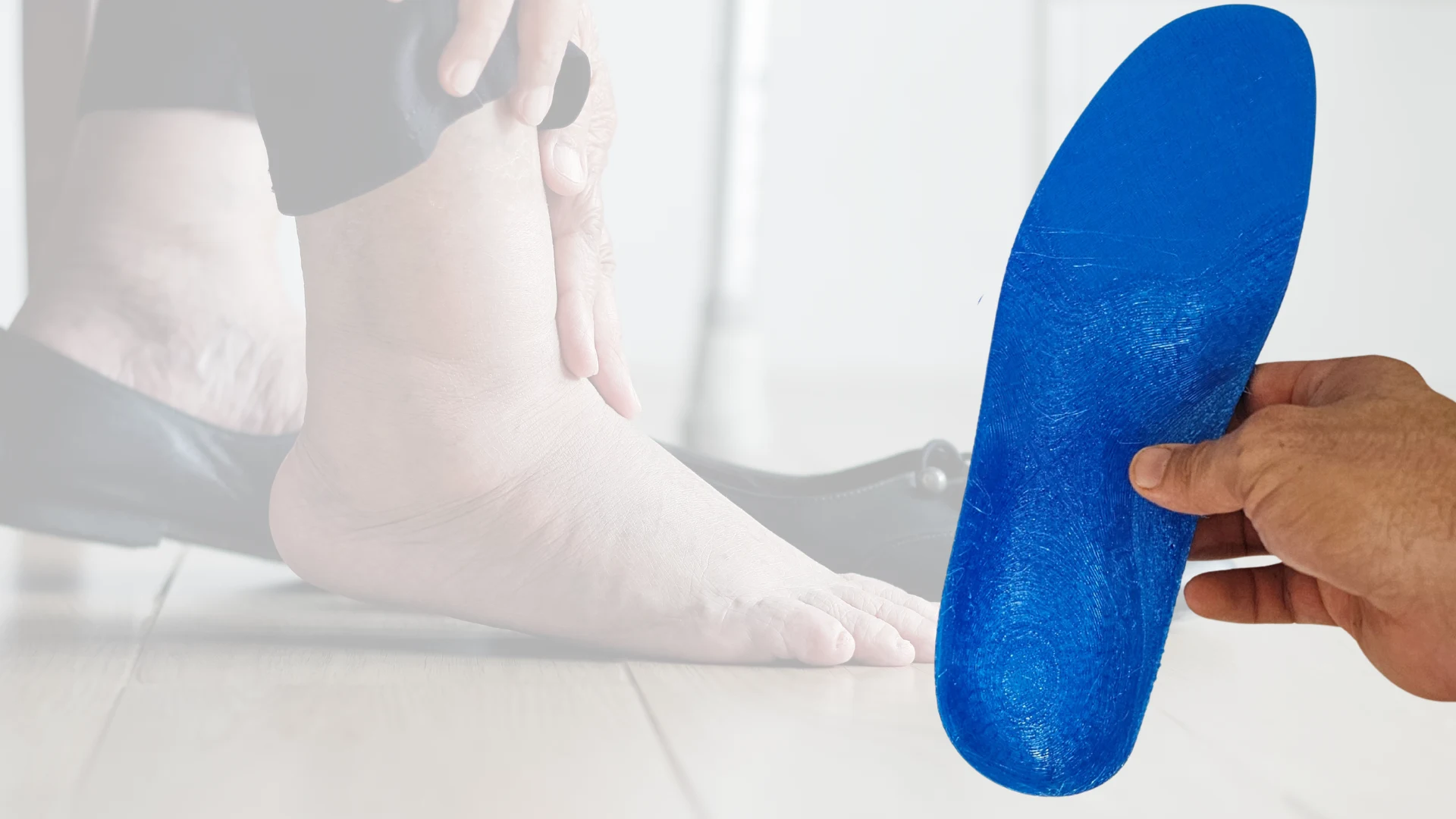
Watch: How To Cure Plantar Fasciitis FAST & FOREVER [Heel Pain & Heel Spurs] — MichiganFootDoctors YouTube
When to See a Podiatrist
If morning heel pain has persisted more than 6 weeks, home care alone rarely fixes it. At Balance Foot & Ankle, we combine in-office ultrasound diagnostics, custom orthotics, and — when needed — shockwave or PRP to resolve plantar fasciitis that hasn’t responded to stretching and inserts. Most patients are walking pain-free within 4-8 weeks of starting a structured plan.
Call Balance Foot & Ankle: (810) 206-1402 · Book online · Offices in Howell & Bloomfield Township
Frequently Asked Questions: ASICS Shoes and Plantar Fasciitis
Are ASICS shoes good for plantar fasciitis?
Yes — ASICS is the fourth most recommended brand by podiatrists for plantar fasciitis. The brand’s GEL technology (a two-phase impact attenuation system combining silicone GEL with foam midsole) provides a clinically distinct cushioning mechanism that no competing brand replicates. The Gel-Kayano 30 — with 40mm heel stack, 4D Guidance System stability, and FF Blast+ Eco + PureGEL rearfoot — is one of the most clinically comprehensive single shoes for plantar fasciitis in flat-footed runners. The Gel-Foundation 13 serves the occupational and diabetic patient population with APMA certification and 4E width availability.
Which ASICS shoe is best for plantar fasciitis?
The ASICS Gel-Kayano 30 is the best overall ASICS for plantar fasciitis in most patients. Its 40mm heel stack, 4D Guidance System, FF Blast+ Eco foam, and GEL rearfoot insert combine maximum cushioning with comprehensive stability in a single shoe. For occupational use and patients needing APMA certification: Gel-Foundation 13. For neutral/high-arch feet: Gel-Nimbus 25. For a more accessible price point: GT-2000 12 (80% of Kayano’s benefit at lower cost).
Is HOKA or ASICS better for plantar fasciitis?
Both have distinct clinical advantages. HOKA’s meta-rocker geometry reduces peak plantar heel pressure by 15–25% — a biomechanical benefit that ASICS does not replicate. ASICS’ advantage is the two-phase GEL cushioning system (which attenuates the initial heel strike impact spike in a clinically distinct way), the Kayano’s 30 iterations of stability refinement with peer-reviewed biomechanics research, and the Foundation 13’s 4E width with APMA certification for diabetic occupational patients. For most acute PF cases: HOKA Bondi 8 provides faster initial relief. For runners with flat feet and significant overpronation who need long-term stability management: ASICS Kayano 30 is the superior clinical recommendation.
What does GEL technology do for plantar fasciitis?
ASICS GEL is a silicone-based elastomer positioned in the rearfoot midsole that attenuates the high-frequency impact spike at the moment of heel contact — the first 5–15 milliseconds of each step. This addresses the phase of gait during which the calcaneal enthesis (plantar fascia insertion) experiences the steepest rate of force increase. Studies show GEL-equipped shoes reduce heel peak pressure by 8–15% beyond what the foam midsole alone achieves. For plantar fasciitis patients, this initial spike attenuation reduces the cumulative micro-trauma at the fascial insertion that drives chronic enthesopathy. No other major brand offers an equivalent two-phase cushioning system.
Is ASICS Kayano good for plantar fasciitis?
Yes — the ASICS Gel-Kayano is one of the most recommended running shoes for plantar fasciitis by podiatrists. The Kayano 30 specifically has been rated favorably in biomechanical studies and has 30 iterations of clinical refinement since its 1993 debut. Its combination of GEL rearfoot, maximum-stack FF Blast+ Eco foam (40mm), and 4D Guidance System stability makes it the most complete clinical package in ASICS’ lineup for flat-footed PF patients. The 10mm drop is appropriate for most patients — add a 3mm heel lift if you have significant Achilles tightness.
How does ASICS Gel-Kayano compare to HOKA Bondi 8 for plantar fasciitis?
The Kayano 30 and Bondi 8 are the two top maximally cushioned shoes in their respective brand lineups, and both are excellent for PF management with different clinical strengths. HOKA Bondi 8 advantage: the meta-rocker geometry reduces peak plantar pressure 15–25% through a biomechanical mechanism that the Kayano’s flat sole cannot replicate, and the Bondi 8’s wider forefoot accommodates more foot shapes comfortably. ASICS Kayano 30 advantage: the 4D Guidance System provides superior stability control for flat-footed overpronators, the GEL rearfoot provides two-phase impact attenuation, and 30 iterations of biomechanics research give the Kayano the longest peer-reviewed clinical validation of any running shoe for pronation-related conditions. Choose Bondi 8 for maximum immediate pain relief; choose Kayano 30 for long-term running with significant flat-footed overpronation.
Do podiatrists recommend ASICS for plantar fasciitis?
Yes — ASICS, particularly the Gel-Kayano series and Gel-Foundation series, are regularly recommended by podiatrists for plantar fasciitis. ASICS has invested heavily in biomechanics research through their Institute of Sport Science, and multiple peer-reviewed studies have validated the clinical effectiveness of Kayano-series shoes for reducing excessive pronation and plantar heel pressure. At Balance Foot & Ankle, I recommend ASICS in approximately 20–25% of cases — typically for runners with moderate-to-severe flat feet who need both cushioning depth and stability features simultaneously.
📍 Plantar Fasciitis Care — Howell & Brighton, Michigan
Dr. Tom Biernacki, DPM offers complete plantar fasciitis evaluation including gait analysis, digital X-ray, custom orthotics, and ESWT at Balance Foot & Ankle. Serving Livingston County, Washtenaw County, and surrounding Michigan communities.
Book Your Appointment →Content reviewed by Dr. Tom Biernacki, DPM, board-certified podiatrist. Balance Foot & Ankle participates in the Amazon Associates program — purchases through our links support free patient education at no additional cost to you.
In Our Clinic
In our Balance Foot & Ankle clinic, the typical plantar fasciitis patient is a 40- to 60-year-old who noticed sharp heel pain on their very first steps in the morning or after sitting at a desk. Many arrive having already tried cheap shoe-store inserts and a week of ice without relief. On exam, we palpate the medial calcaneal tubercle, check for a positive windlass test, and rule out Baxter’s neuropathy and calcaneal stress fractures. Most of our plantar fasciitis patients respond to a custom orthotic + eccentric calf loading + night splinting protocol within 6–12 weeks — without injections or surgery.
In-Office Treatment at Balance Foot & Ankle
When conservative care isn’t enough, Dr. Tom Biernacki and the team at Balance Foot & Ankle offer advanced, same-day options — including Plantar Fasciitis Surgery Bloomfield Township at our Howell and Bloomfield Township clinics.
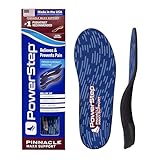
- Slightly Angled Heel Post: PowerStep Pinnacle Maxx insoles for men & women keep the feet from rolling inward, improve stability, and prevent problems caused by overpronation including flat feet and plantar fasciitis.
- Firm But Flexible Design: Our orthotics Pinnacle PowerStep insoles for overpronation are equipped with a deep heel insert cradle for increased comfort, stability, and motion control for standard arch support and immediate heel pain relief.
- Premium Dual Layer Cushioning: For enhanced comfort from heel to toe. As the thickest of our Pinnacle PowerStep orthotics, these need to be worn in shoes where the factory insole can be removed. HSA & FSA Eligible. Made in the USA
- The Perfect Balance of Comfort and Support: These PowerStep Pinnacle arch support inserts for men & women are unlike most other orthotics as they help to correct over-pronation which can cause ankle, knee, and hip pain in your daily routine
- No Trimming: Our arch support PowerStep insoles men & women can use can be worn in a variety of shoe styles & fit in any type with no trimming required! Unlike most insoles for flat feet and other heel pain relief products, these come ready to wear.
As an Amazon Associate, Balance Foot and Ankle earns from qualifying purchases. Product links are affiliate links and we may earn a commission at no extra cost to you. This does not influence our clinical recommendations. Last update on 2026-09-18 / Images from Amazon Product Advertising API
Same-day appointments available. Call (810) 206-1402 or book online.
In-Office Treatment at Balance Foot & Ankle
If home treatment isn’t providing relief for your plantar fasciitis, our podiatry team at Balance Foot & Ankle can help with same-day evaluations and advanced in-office care.
Same-day appointments available. (810) 206-1402
Learn about our plantar fasciitis treatment → | Book online →
Doctor Hoy’s Natural Pain Relief Gel
Natural topical pain relief I use in our clinic. Arnica + camphor formula — apply directly to the area 3–4x daily. ($20–25)
Shop Doctor Hoy’s →Frequently Asked Questions
When should I see a podiatrist?
If symptoms persist past 2 weeks, affect your normal activity, or are accompanied by red-flag symptoms (warmth, redness, swelling, inability to bear weight).
What does treatment cost?
Most diagnostic visits and conservative treatments are covered by Medicare and major insurers. Out-of-pocket costs vary by your specific plan.
How quickly can I get an appointment?
Most non-urgent cases see us within 5 business days. Urgent cases (sudden pain, possible fracture) typically same or next business day.

Dr. Tom Biernacki, DPM is a board-certified foot & ankle surgeon (ABFAS & ABPM) at Balance Foot & Ankle Specialists in Southeast Michigan. With over a decade of clinical experience, he specializes in heel pain, bunions, diabetic foot care, sports injuries, and minimally invasive surgery. Dr. Biernacki is a member of the APMA and ACFAS, and his patient education content on MichiganFootDoctors.com and YouTube has made him one of the most-followed foot & ankle educators on YouTube.