
Best Brooks Shoes for Plantar Fasciitis 2026: Every Model Reviewed by a Podiatrist

Affiliate disclosure: We earn a small commission on qualifying Amazon purchases at no cost to you. All recommendations are clinically vetted by Dr. Biernacki.
⚡ Quick Answer — Best Brooks for Plantar Fasciitis
The Brooks Adrenaline GTS 23 is the top overall Brooks recommendation for plantar fasciitis — GuideRails support system, 12mm drop, DNA LOFT v3 foam, and available in wide widths make it the clinical workhorse for everyday PF management. For the most severe overpronation, the Brooks Beast 20 delivers maximum stability. For all-day occupational use in a professional setting, the Brooks Addiction Walker 2 (APMA accepted, leather upper) is unmatched. For runners wanting maximum cushioning without stability features, the Brooks Glycerin 20 is Brooks’ answer to HOKA’s Bondi 8. Brooks’ standout clinical advantage over HOKA and New Balance: the GuideRails system’s bilateral support architecture — supporting both medial and lateral deviation, not just inward rolling.
Brooks occupies the third position in the podiatric footwear hierarchy — behind HOKA (which pioneered the meta-rocker + maximum stack approach) and New Balance (which leads on width availability and ROLLBAR stability) — but Brooks has a clinical differentiation that neither competitor matches: the GuideRails support system. GuideRails is architecturally unique because it provides bilateral stability guidance — supporting not just the medial (inward) deviation that causes flat-footed overpronation, but also the lateral (outward) deviation that occurs during the push-off phase of gait. For patients with unpredictable pronation patterns — runners who alternate between under- and overpronating based on fatigue, speed, or terrain — this bilateral approach provides more comprehensive movement control than traditional unilateral medial posts.
Brooks is also the brand I recommend when a patient says “I want the best shoe for plantar fasciitis that isn’t HOKA” — because it’s the most complete non-HOKA lineup for PF patients, covering the full spectrum from maximum cushion (Glycerin) to maximum stability motion control (Beast) to professional work footwear (Addiction Walker) within a single clinically validated brand. Each model has a specific, well-defined clinical application, and Brooks’ foam technology (DNA LOFT, DNA AMP, DNA FLASH) has matured to deliver both durable cushioning and meaningful impact attenuation across the lineup.
📋 Table of Contents
- Why Brooks Is the #3 Podiatrist Brand for PF — Clinical Analysis
- GuideRails Explained — How It Differs from Traditional Stability
- Brooks PF Lineup Overview
- Brooks Adrenaline GTS 23 — Best Overall Brooks for PF
- Brooks Beast 20 — Best for Maximum Stability
- Brooks Addiction Walker 2 — Best Occupational/Work Shoe
- Brooks Glycerin 20 — Best Brooks Cushion for Neutral Arches
- Brooks Ghost 15 — Best Everyday Neutral Runner
- Brooks Addiction Walker 2 Women’s — Best Women’s Work/Walking Shoe
- Full Comparison Table
- Which Brooks Is Right for Your PF?
- Dr. Tom’s Brooks PF Protocol
- Frequently Asked Questions
Why Brooks Is the #3 Podiatrist Brand for PF
Three clinical strengths define Brooks’ position in plantar fasciitis footwear management:
1. GuideRails: Bilateral Movement Control
⚙️ GuideRails: The Clinical Difference from Traditional Medial Posts
A traditional medial post (used by ASICS, New Balance 860, and most stability shoes) is a denser foam wedge on the inner side of the midsole. It resists calcaneal eversion (the heel rolling inward). GuideRails goes further: it places firmer foam on BOTH the medial and lateral aspects of the heel, creating a channel that guides the heel within a range of motion rather than simply blocking inward motion. Clinically, this means GuideRails engages only when the foot is moving outside its optimal motion path — either inward or outward — rather than constantly loading a medial post on every step. Patients often describe GuideRails shoes as “supportive but not stiff” — which is an accurate reflection of the architecture. The bilateral engagement also makes GuideRails appropriate for patients who both overpronate and supinate at different phases of their gait cycle — a situation where a simple medial post would be insufficient or inappropriate.
2. DNA Foam Technology — Engineered for Durability and PF-Appropriate Cushioning
Brooks uses three distinct foam formulations across its lineup: DNA LOFT (softer, used in Glycerin and Adrenaline for plush cushioning), DNA AMP (stiffer, energy-return focused, used in performance models), and DNA FLASH (nitrogen-injected for extreme lightness, used in racing models). For plantar fasciitis patients, DNA LOFT v3 — used in the Adrenaline GTS 23 and Glycerin 20 — is the most clinically relevant: it maintains cushioning integrity through 500+ miles, resisting the compression that causes midsole degradation and the loss of protective properties that leads to PF recurrence in patients who wear out their shoes. This durability is measurably superior to standard EVA compounds, which typically compress 15–20% permanently by 300 miles.
3. Consistent 12mm Drop in Therapeutic Models
Brooks’ Addiction Walker 2 and Beast 20 both feature 12mm heel-to-toe drop — my preferred range for plantar fasciitis patients with Achilles tightness, which is the most common mechanical co-factor in clinical PF presentations. The Adrenaline GTS 23 has a 12mm drop as well. This consistency means Brooks’ therapeutic lineup doesn’t require the heel lift additions I routinely recommend for HOKA models (4–6mm drop) or some NB running models (6–8mm drop). For PF patients with severely tight calves — the population most likely to have recurrent PF — Brooks’ 12mm drop standard provides immediate functional benefit without aftermarket modification.
1. Brooks Adrenaline GTS 23 — Best Overall Brooks for Plantar Fasciitis
Brooks Adrenaline GTS 23 — The Clinical Workhorse for PF Management
Best for: Everyday PF management · Light to moderate overpronation · Teachers, nurses, retail workers · Runners and walkers · First-time Brooks buyers
Stack: 36mm heel / 24mm forefoot | Drop: 12mm | Stability: GuideRails | Foam: DNA LOFT v3 | Weight: 10.3oz (M) / 9.2oz (W) | Widths: B/D (W), D/2E/4E (M)
The Adrenaline GTS 23 is the best-selling stability running shoe in the United States and, in my clinical opinion, the best all-purpose Brooks recommendation for plantar fasciitis across the widest range of patient profiles. The GuideRails bilateral support architecture provides meaningful pronation control without the stiffness of maximum-stability designs, making it comfortable from day one without the 2-week break-in period that ROLLBAR and Beast-level shoes require. The 12mm drop is the highest of any stability running shoe in the mainstream market — a clinically significant differentiator for PF patients with Achilles tightness.
DNA LOFT v3 foam is the key upgrade in the GTS 23 versus the GTS 22: the updated compound is 25% softer with the same durability profile — maintaining >85% of cushioning performance through 500 miles. For occupational patients wearing this shoe 8–10 hours daily, this durability means the shoe provides consistent PF protection through the full year of recommended use before replacement. The 36mm heel stack is below HOKA Bondi 8 (39mm) but delivers clinically meaningful cushioning — particularly when the GuideRails system maintains the heel in proper alignment so that the full cushioning column is engaged consistently on each step.
Available in men’s 2E and 4E widths, and women’s D width (wide), the Adrenaline GTS 23 accommodates a broader range of foot widths than most stability running shoes, though it doesn’t match New Balance’s 6E maximum width for extreme cases.
✅ Pros
- GuideRails: bilateral support — medial AND lateral guidance
- 12mm drop: clinically ideal for Achilles-tight PF patients
- DNA LOFT v3: plush, durable cushioning — 500+ mile integrity
- Best-selling stability shoe in US: proven clinical track record
- Available 4E men’s width
- Versatile: running, walking, all-day standing
❌ Cons
- 36mm stack — less cushioning depth than HOKA Bondi 8 (39mm)
- GuideRails is moderate stability — severe overpronators need Beast 20
- 10.3oz (M) — heavier than HOKA Clifton 9 for runners
No products found.
2. Brooks Beast 20 — Best Brooks for Maximum Stability
Brooks Beast 20 — Brooks’ Motion Control Standard for Severe Overpronation + PF
Best for: Severe flat feet + PF · Patients whose other stability shoes haven’t been enough · Heavier patients (>250 lbs) where standard stability is insufficient · Post-posterior tibial tendon dysfunction · Patients who require maximum medial control
Stack: 32mm heel | Drop: 12mm | Stability: Extended Progressive Diagonal Rollbar + GuideRails | Foam: BioMoGo DNA | Weight: 12.5oz (M) | Widths: D/2E/4E (M)
The Beast 20 is the most stable Brooks model in active production and the shoe I recommend when a patient tells me “the Adrenaline GTS wasn’t enough.” Where the Adrenaline GTS uses GuideRails alone, the Beast 20 combines GuideRails with an extended progressive diagonal rollbar — a thermoplastic TPU stability device that runs from the lateral heel through the medial arch to the medial forefoot. This is Brooks’ equivalent of New Balance’s ROLLBAR, providing rigid structural support at multiple points in the pronation sequence.
The 12mm drop on the Beast 20 is the highest on this list, and combined with maximum medial stability, it’s the clinical choice for PF patients with both severe overpronation AND tight Achilles-calf complex — the full expression of the most common PF risk factor profile. The BioMoGo DNA foam compound is firmer than DNA LOFT, providing the structural base needed for maximum motion control without foam compliance that would allow the stability architecture to be “compressed through.”
The Beast 20 is available in men’s D, 2E, and 4E widths. There is no women’s Beast — the equivalent women’s model is the Brooks Ariel, which carries the same motion-control architecture. Available men’s 4E width makes this the option for wider-footed severe overpronators who need both maximum stability and a wider platform. I recommend this shoe for patients who have been told by other podiatrists that they need custom orthotics — the Beast 20 often provides sufficient correction that some of these patients can delay or avoid orthotic fabrication.
✅ Pros
- Maximum stability: diagonal rollbar + GuideRails combination
- 12mm drop: ideal for severe PF + Achilles tightness
- Available 4E width for wider severe overpronators
- Often sufficient to delay/avoid custom orthotic need
- Excellent durability — motion control construction outlasts standard running shoes
❌ Cons
- Heaviest Brooks on this list (12.5oz M) — not a running shoe
- Men’s only — women need Brooks Ariel for equivalent control
- Firm break-in period (10–14 days)
- Not appropriate for neutral or high-arch feet
No products found.
3. Brooks Addiction Walker 2 (Men’s) — Best Occupational Brooks for PF
Brooks Addiction Walker 2 — Maximum Stability in a Professional Leather Upper
Best for: Healthcare workers · Business-casual professional settings · Teachers, managers, service professionals · Patients needing APMA-accepted footwear · Diabetic patients with PF in professional settings
Stack: 32mm heel | Drop: 12mm | Stability: Extended progressive diagonal rollbar | Upper: Full-grain leather | APMA: Seal of Acceptance | Weight: 12.5oz (M) | Widths: D/2E/4E (M)
The Addiction Walker 2 is the single most clinically useful model in Brooks’ entire lineup for the population I see most frequently in practice: working adults who spend 8–12 hours on hard floors, need professional-appearing footwear, and have plantar fasciitis that has been unresponsive to the thin, unsupportive dress shoes their workplace environment demands. The Addiction Walker 2 solves this problem definitively: maximum motion control (same diagonal rollbar as the Beast 20) in a full-grain leather upper that passes in virtually any professional environment short of formal business attire.
The APMA Seal of Acceptance carries specific clinical weight for workplace contexts. Many healthcare facilities and some corporate environments require footwear with recognized clinical support credentials — the APMA seal satisfies this requirement. The 12mm drop is the highest of any Brooks walking shoe, providing maximum Achilles tension reduction for the tight-calf PF patients who most commonly develop their condition through occupational standing demands.
The full-grain leather upper — rather than the mesh uppers common in athletic shoes — provides superior lateral containment. For PF patients with co-existing bunions or hammertoes, the leather’s structural resistance to deformation prevents the soft-wall collapse of mesh uppers that allows bony prominences to push through and create secondary pain points. Available in men’s 4E width, with a leather upper that molds somewhat to the foot over 3–5 days of break-in.
✅ Pros
- Professional leather upper — workplace appropriate
- APMA Seal of Acceptance — clinically credentialed
- Maximum diagonal rollbar stability — same as Beast 20
- 12mm drop: optimal for Achilles-tight PF patients
- Available 4E width
- Excellent durability — leather upper outlasts mesh 2–3x
❌ Cons
- Heavy (12.5oz) — not for running
- 3–5 day leather break-in required
- Lower cushion depth than running models — add insole for fat pad pain
- Men’s model reviewed here — see Women’s Addiction Walker 2 below
No products found.
4. Brooks Glycerin 20 — Best Brooks Maximum Cushion for Neutral/High Arches
Brooks Glycerin 20 — Brooks’ Answer to Maximum-Stack Cushioning
Best for: Neutral-arch PF patients · High-arch rigid feet with PF · Runners who overpronate but whose PF is primarily impact-driven rather than mechanics-driven · Patients who find GuideRails feels “too controlling”
Stack: 38mm heel / 26mm forefoot | Drop: 10mm | Stability: None (neutral) | Foam: DNA LOFT v3 | Weight: 9.8oz (M) / 8.5oz (W) | Widths: B/D (W), D/2E (M)
The Glycerin 20 is Brooks’ maximum-cushion flagship and their most direct competitor to HOKA’s Bondi 8 and New Balance’s 1080v13. At 38mm heel stack, it approaches HOKA Bondi 8 territory (39mm) while using the DNA LOFT v3 foam compound — the same formula in the Adrenaline GTS 23 but applied across a full-height neutral geometry for maximum compliance. For plantar fasciitis patients who have neutral or high-arch foot types and whose primary PF driver is impact overload rather than pronation mechanics, the Glycerin 20 delivers a clinically effective cushioning intervention without the GuideRails or stability post that would be counterproductive for these foot types.
The 10mm drop is slightly lower than Brooks’ stability models (12mm) but still well within the therapeutic range for PF. For high-arch patients who supinate, the lower drop is actually preferable — high-drop shoes can exacerbate supination tendencies by encouraging a rear-foot-heavy strike pattern on a rigid, non-pronating foot. The Glycerin 20’s 10mm drop provides a middle-ground position that works for both mildly pronating and mildly supinating neutral feet.
The wide toe box of the Glycerin 20 — wider than the Adrenaline GTS — accommodates forefoot splay naturally, reducing metatarsal crowding that frequently co-occurs with PF in patients who have been wearing constrictive footwear. This is a clinical benefit that isn’t immediately obvious from the specifications but makes a meaningful difference in overall foot comfort, particularly in patients with co-existing metatarsalgia.
✅ Pros
- 38mm stack — near HOKA Bondi 8 level cushioning
- DNA LOFT v3: plush, durable, 500+ mile integrity
- Best Brooks for neutral/high-arch PF patients
- Wide toe box: reduces metatarsal crowding co-occurring with PF
- 10mm drop: works for both slight pronators and supinators
❌ Cons
- No stability features — not for significant overpronators
- 10mm drop vs 12mm on stability models — slightly less Achilles benefit
- Women’s only available to D (wide) — not extra-wide
- Men’s only to 2E — less width range than Beast or Addiction Walker
No products found.
5. Brooks Ghost 15 — Best Everyday Neutral Runner for Mild PF
Brooks Ghost 15 — The Accessible Entry Point into Brooks PF Footwear
Best for: Mild PF in neutral-arch runners · Patients who can’t afford or don’t want the premium price of Glycerin · Return-to-run after PF flare in neutral-arch patients · Everyday walking with mild PF
Stack: 34mm heel / 22mm forefoot | Drop: 12mm | Stability: Minimal (neutral) | Foam: DNA LOFT | Weight: 9.4oz (M) / 8.1oz (W) | Widths: B/D (W), D/2E/4E (M)
The Ghost is Brooks’ best-selling shoe globally — the model that the majority of recreational runners and casual walkers reach for when choosing Brooks. The Ghost 15 is not the clinical powerhouse of the Glycerin 20 or the Adrenaline GTS 23, but its 34mm heel stack, 12mm drop, and DNA LOFT cushioning make it a solid PF management option for patients with mild plantar fasciitis who don’t require the full therapeutic architecture of higher-end Brooks models. For patients at the early stages of PF, or in the maintenance phase after successful treatment, the Ghost 15 provides adequate support at a lower price point.
The 12mm drop — matching the Adrenaline GTS 23 and Addiction Walker 2 — is the Ghost’s most significant clinical feature. For a neutral shoe, this drop level is unusually high (most neutral running shoes are 6–10mm), which makes the Ghost 15 the best-drop neutral running shoe option for PF patients with tight Achilles who also don’t overpronate. This combination of neutral geometry + 12mm drop is relatively rare and serves a specific patient profile: tight calves, neutral arch, mild PF, runner or casual walker.
Available in men’s 4E width — unusual for a neutral running shoe — which expands the Ghost 15’s clinical applicability to wider-footed patients who don’t want or need stability features but do need width accommodation.
✅ Pros
- 12mm drop on a neutral shoe — rare and valuable for tight-calf PF patients
- 34mm stack: adequate for mild PF
- Available men’s 4E width
- Lighter than Adrenaline GTS (9.4oz M) — better for running
- Lower price than Glycerin — accessible entry to Brooks PF footwear
❌ Cons
- 34mm stack — less than Glycerin 20 (38mm); not for severe PF or fat pad atrophy
- No GuideRails — not for overpronators
- Not the clinical first-choice for PF — step up to Adrenaline GTS or Glycerin for primary treatment
No products found.
6. Brooks Addiction Walker 2 Women’s — Best Women’s Work/Walking Shoe for PF
Brooks Addiction Walker 2 Women’s — Clinical-Grade Support for Professional Women with PF
Best for: Female healthcare workers · Women in professional settings with PF · Women who overpronate significantly and need leather work footwear · Women with wide feet needing APMA-certified options
Stack: 30mm heel | Drop: 12mm | Stability: Extended diagonal rollbar | Upper: Full-grain leather | APMA: Seal of Acceptance | Widths: B/D/2E (W)
The women’s Addiction Walker 2 provides the same maximum-stability diagonal rollbar and APMA-certified leather construction as the men’s model, sized and last-shaped for women’s foot geometry. The B-width (standard) women’s version accommodates the average women’s foot width, while the 2E option (extra-wide women’s) addresses the significant population of women with wider feet — wider Q-angle (hip alignment) means women’s feet tend to pronate and spread more under load than men’s, creating a higher incidence of flat-footed presentations that require wide-width accommodation.
For female nurses, teachers, and retail professionals with plantar fasciitis — the most common demographic I see with occupational PF — the Addiction Walker 2 women’s resolves the perennial clinical challenge of “how do I get the support I need without looking like I’m wearing athletic shoes?” The shoe’s leather upper and low-profile walking shoe aesthetic fits virtually any professional environment, while the clinical-grade rollbar stability provides PF management equivalent to a prescription stability orthosis in many patients.
Women with PF who also have diabetic foot changes should specifically ask their podiatrist about the APMA certification and Medicare Therapeutic Shoe Program eligibility for this model — the documentation process can make this shoe available at no out-of-pocket cost for qualifying patients.
✅ Pros
- Same clinical architecture as men’s Addiction Walker 2 — professional leather + max stability
- APMA Seal of Acceptance
- 12mm drop: ideal for Achilles-tight women’s PF
- Available wide (D) and extra-wide (2E) women’s
- Professional appearance suitable for virtually all workplace environments
❌ Cons
- 30mm stack — add cushioning insole for fat pad atrophy patients
- Leather break-in period 3–5 days
- Not a running shoe — for walking/occupational use only
No products found.
Full Brooks PF Comparison Table
| Model | Best For | Drop | Stability | Max Width | Stack | Price |
|---|---|---|---|---|---|---|
| Adrenaline GTS 23 | Everyday PF, moderate overpronation, versatility | 12mm | GuideRails | 4E (M) | 36mm | ~$140 |
| Beast 20 | Severe flat feet, maximum motion control | 12mm | Rollbar + Rails (max) | 4E (M) | 32mm | ~$170 |
| Addiction Walker 2 M | Work/professional, leather, APMA | 12mm | Diagonal rollbar | 4E (M) | 32mm | ~$140 |
| Glycerin 20 | Max cushion, neutral/high-arch PF | 10mm | None (neutral) | 2E (M) | 38mm | ~$160 |
| Ghost 15 | Mild PF, neutral runner, return-to-run | 12mm | Minimal | 4E (M) | 34mm | ~$130 |
| Addiction Walker 2 W | Women’s work/professional, APMA | 12mm | Diagonal rollbar | 2E (W) | 30mm | ~$130 |
Which Brooks Is Right for Your PF? Patient Profile Guide
Profile 1: Everyday Recreational Walker/Runner, Mild-Moderate Overpronation
Adrenaline GTS 23. This is the right starting point for approximately 70% of Brooks-seeking PF patients. If you overpronate, the GuideRails provides appropriate control. If your foot mechanics are more neutral, the GuideRails engages only when needed and doesn’t feel intrusive. The 12mm drop handles Achilles tightness. The DNA LOFT v3 provides durable cushioning. The 4E width option accommodates wider feet. There is almost no profile for which the Adrenaline GTS 23 is contraindicated — it’s only outperformed when you have needs at the extreme end of the spectrum (severe flat feet → Beast 20; neutral arch maximum cushion → Glycerin 20).
Profile 2: Severe Flat Feet + PF (Tried Other Stability Shoes Without Sufficient Relief)
Brooks Beast 20 (men’s) or Brooks Ariel (women’s — equivalent model). If you’ve tried the Adrenaline GTS, the Brooks Addiction Walker, ASICS Kayano, or New Balance Adrenaline GTS equivalents and still have significant pronation-driven PF pain, the Beast 20’s diagonal rollbar + GuideRails combination is the step up you need. This is also the recommendation for patients who have been specifically told by a podiatrist or physical therapist that they need a “motion control” shoe. Expect a genuine 10–14 day break-in period — the stiffness you feel initially is the biomechanical correction working, not a fit problem.
Profile 3: Occupational PF (Healthcare, Teaching, Retail)
Brooks Addiction Walker 2 (men’s or women’s). For any patient whose PF is primarily driven by prolonged standing on hard floors — the most common occupational presentation — the Addiction Walker 2 is the clinical answer. It’s the only Brooks model that combines maximum-level stability (diagonal rollbar), leather professional upper, APMA certification, and 12mm drop in a single package. For healthcare workers specifically: the leather upper is far easier to clean and disinfect than mesh uppers, which is a practical clinical consideration that patients rarely think of until they’ve ruined a pair of mesh shoes with medical-grade disinfectants.
Profile 4: Neutral or High-Arch Foot with PF
Brooks Glycerin 20. The common clinical misconception is that all plantar fasciitis is caused by overpronation, making stability shoes universally appropriate. In reality, approximately 20–25% of PF patients have neutral or high-arch foot types where the PF driver is impact overload (insufficient shock absorption) rather than mechanics (excessive pronation). For these patients, a stability shoe with medial posting actually creates a biomechanically inappropriate foot position — it pushes the already-neutral or supinating foot further into supination, which concentrates ground reaction forces on the lateral heel rather than distributing them. The Glycerin 20’s maximum cushion + neutral geometry is the correct prescription for this subset of PF patients.
Profile 5: Runner Returning from PF Flare
Phase 1 (acute, first 2–4 weeks): Adrenaline GTS 23 for all runs, reduced to 50% of normal volume. Phase 2 (weeks 4–8): Ghost 15 for an accessible, lighter neutral option once acute pain is controlled. Phase 3 (month 2+): the Ghost 15 or Adrenaline GTS 23 as primary training shoe, depending on the degree of pronation. Key principle: do not rush back to your pre-injury mileage, shoe type, or surface until you’ve completed 8–10 weeks of consistent stretching and conservative management with minimal symptoms.
Profile 6: Diabetic Patient with PF in Professional Setting
Brooks Addiction Walker 2 with APMA documentation. The Addiction Walker 2’s APMA certification supports Medicare Therapeutic Shoe Program eligibility for qualifying diabetic patients. Combined with its leather construction (appropriate for diabetic foot sensitivity), maximum rollbar stability (reduces calcaneal valgus stress that can cause diabetic plantar ulcers at the medial heel), and 12mm drop (reduces Achilles tension loading), it addresses the full clinical picture of diabetic PF comprehensively. Consult your podiatrist for eligibility determination and HCPCS A5500 documentation.
Dr. Tom’s Brooks Protocol: Getting Maximum Benefit from Brooks Footwear
The GuideRails Adaptation Period
GuideRails shoes (Adrenaline GTS series) can be worn at full activity from day one — the bilateral support architecture is forgiving enough that patients typically don’t experience the stiffness adaptation required by ROLLBAR or diagonal rollbar shoes. However, patients switching from a neutral shoe to a GuideRails shoe for the first time sometimes experience medial arch awareness in the first 5–7 days as the foot adjusts to the corrected position. This is normal and expected — it’s not pain, it’s proprioceptive adjustment to the new foot mechanics. If it persists beyond 2 weeks or converts to genuine pain, consult your podiatrist to verify the stability level is appropriate for your foot type.
The Diagonal Rollbar Adaptation (Beast 20, Addiction Walker)
The diagonal rollbar in the Beast 20 and Addiction Walker 2 requires a genuine break-in protocol. Start with 2 hours of wear on day one, increasing by 30–60 minutes per day. Do not wear these shoes for a full workday in the first week — the thermoplastic polymer bridge creates a meaningful alteration in foot mechanics that the lower extremity musculature (especially tibialis posterior, peroneal muscles, and gastrocnemius-soleus complex) needs time to adapt to. Skipping the break-in period is the most common reason patients report these shoes as “uncomfortable” — a complaint that disappears after proper adaptation.
Combining Brooks with OTC Insoles
Brooks stability models (Adrenaline GTS, Beast 20, Addiction Walker 2) are designed to be used with the factory insole in place. Unlike some stability shoes where the factory insole provides minimal cushioning over the stability architecture, Brooks’ factory insoles are integral to the cushioning profile of the midsole system. If you want to add an OTC insole for enhanced cushioning (e.g., Powerstep Pinnacle Maxx for fat pad protection in the Addiction Walker 2), remove the factory insole first and use the OTC insole as a direct replacement — not as an addition on top of the factory insole. This maintains proper internal shoe volume and heel cup depth.
Shoe Rotation for Occupational Patients
For patients wearing Brooks Addiction Walker 2 or Adrenaline GTS 23 in occupational settings: own at least two pairs and rotate on alternating days. DNA LOFT foam requires approximately 24 hours of unloaded rest to recover >90% of its cushioning capacity. Healthcare workers who wear the same Brooks shoes every day for a 5-day workweek are effectively wearing significantly compressed midsole foam on days 4 and 5. The $140 investment in a second pair provides weeks of additional effective cushioning per year compared to wearing a single pair daily — a mathematically sound investment for serious occupational users.
Watch Dr. Biernacki’s full plantar fasciitis treatment video — covers footwear selection, stretching protocol, and when to escalate from conservative care to clinical intervention.
When to See a Podiatrist: Escalation from Brooks Footwear to Clinical Treatment
Brooks footwear — like all OTC footwear recommendations — is the starting point of PF treatment, not the complete treatment. Evaluate your progress at the 6-week mark:
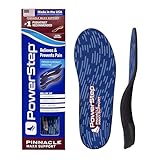
- Slightly Angled Heel Post: PowerStep Pinnacle Maxx insoles for men & women keep the feet from rolling inward, improve stability, and prevent problems caused by overpronation including flat feet and plantar fasciitis.
- Firm But Flexible Design: Our orthotics Pinnacle PowerStep insoles for overpronation are equipped with a deep heel insert cradle for increased comfort, stability, and motion control for standard arch support and immediate heel pain relief.
- Premium Dual Layer Cushioning: For enhanced comfort from heel to toe. As the thickest of our Pinnacle PowerStep orthotics, these need to be worn in shoes where the factory insole can be removed. HSA & FSA Eligible. Made in the USA
- The Perfect Balance of Comfort and Support: These PowerStep Pinnacle arch support inserts for men & women are unlike most other orthotics as they help to correct over-pronation which can cause ankle, knee, and hip pain in your daily routine
- No Trimming: Our arch support PowerStep insoles men & women can use can be worn in a variety of shoe styles & fit in any type with no trimming required! Unlike most insoles for flat feet and other heel pain relief products, these come ready to wear.
As an Amazon Associate, Balance Foot and Ankle earns from qualifying purchases. Product links are affiliate links and we may earn a commission at no extra cost to you. This does not influence our clinical recommendations. Last update on 2026-10-18 / Images from Amazon Product Advertising API
- Pain reduced 50%+ at 6 weeks: Continue current protocol. Add calf stretching twice daily if not already doing so. Expect full resolution by weeks 8–12.
- Pain reduced 20–50% at 6 weeks: Schedule podiatric evaluation. Gait analysis may reveal that the stability level of your current shoe is either insufficient or excessive. Custom orthotics or a different Brooks model may be needed.
- Pain unchanged or worsened at 6 weeks: Immediate podiatric evaluation. Rule out: calcaneal stress fracture, tarsal tunnel syndrome, bilateral PF suggesting systemic etiology, nerve entrapment. Do not continue conservative self-management without professional diagnosis when pain is not improving.
⚠️ Red Flags — Seek Prompt Evaluation:
- Pain worst at night or at rest (not morning first-step pattern) — may indicate stress fracture or bone tumor
- Both heels affected simultaneously — suggests systemic inflammatory arthritis, not isolated PF
- Numbness, tingling, or burning — suggests tarsal tunnel syndrome, not simple PF
- Swelling, warmth, redness at the heel — may indicate gout, infection, or inflammatory arthritis
- Rapid onset (<2 weeks to severe pain) — may indicate calcaneal stress fracture
📍 Plantar Fasciitis Specialist — Howell & Brighton, Michigan
Dr. Tom Biernacki, DPM at Balance Foot & Ankle offers comprehensive PF evaluation: gait analysis, digital X-ray, custom orthotics, and ESWT for chronic cases. Serving Livingston County and surrounding Michigan communities.
Schedule Your Consultation →More Podiatrist-Recommended Plantar Fasciitis Essentials
Best Night Splint

- Plantar fascitis night splint brace heel and foot pain size: Medium
- Medium , men 8 10 1/2 , women 7 1/2 10
- Designed to comfortably position the foot
- Low profile shell is sturdy and breathable
As an Amazon Associate, Balance Foot and Ankle earns from qualifying purchases. Product links are affiliate links and we may earn a commission at no extra cost to you. This does not influence our clinical recommendations. Last update on 2026-10-18 / Images from Amazon Product Advertising API
Keeps fascia stretched overnight — the #1 intervention for morning heel pain.
Top Podiatrist-Recommended Insole

- #1 Podiatrist Recommended - The Pinnacle PowerStep insoles for men & women provide maximum cushioning, from high activity to moderate support. The arch support shape provides stability to the foot & ankle, helping to relieve foot pain.
- When you spend all day on your feet, every step counts. These plantar fasciitis insoles are podiatrist-recommended to help relieve & prevent foot pain for people with plantar fasciitis, heel spurs, and other common foot, ankle & knee injuries
- The Pinnacle PowerStep insoles offer superior heel cushioning and arch support. These shoe inserts for men and women have dual-layer cushioning to help reduce stress and fatigue, while premium arch support is designed for plantar fasciitis relief
- The PowerStep Pinnacle arch support inserts for men & women can be worn in a variety of shoe types such as; athletic, walking, running, work & some casual shoes. Orthotic Inserts are ordered by shoe size, no trimming required.
- These insoles for shoes are made in the USA & backed by a 30-day money-back guarantee. PowerStep shoe insoles for men & women are designed for shoes where the factory insole can be removed. HSA & FSA Eligible
As an Amazon Associate, Balance Foot and Ankle earns from qualifying purchases. Product links are affiliate links and we may earn a commission at no extra cost to you. This does not influence our clinical recommendations. Last update on 2026-10-18 / Images from Amazon Product Advertising API
Deep heel cup + arch support unloads the plantar fascia all day.
Plantar Fasciitis Compression Sock

- Provides continuous support of the Plantar Fascia by gently stretching the fascia tissue.
- Compression zones promote circulation, reduce impact vibration, boost recovery and strengthen feet.
- Lightweight, seamless design with extra cushioning provides support while still being comfortable.
- Supports the heel/arch and overall foot structure while stabilizing the tendon for better performance
- Made from high quality materials, the socks are moisture wicking and breathable.
As an Amazon Associate, Balance Foot and Ankle earns from qualifying purchases. Product links are affiliate links and we may earn a commission at no extra cost to you. This does not influence our clinical recommendations. Last update on 2026-10-18 / Images from Amazon Product Advertising API
Arch support + circulation boost — reduces morning heel pain and swelling.
As an Amazon Associate, Balance Foot & Ankle earns from qualifying purchases. Product recommendations are based on clinical experience; prices and availability shown above update live from Amazon.

![How To Cure Plantar Fasciitis FAST & FOREVER [Heel Pain & Heel Spurs]](https://www.michiganfootdoctors.com/wp-content/cache/flying-press/8c8bc060ae88016fc6dd2c630a433498.jpg)
Watch: How To Cure Plantar Fasciitis FAST & FOREVER [Heel Pain & Heel Spurs] — MichiganFootDoctors YouTube
When to See a Podiatrist
If morning heel pain has persisted more than 6 weeks, home care alone rarely fixes it. At Balance Foot & Ankle, we combine in-office ultrasound diagnostics, custom orthotics, and — when needed — shockwave or PRP to resolve plantar fasciitis that hasn’t responded to stretching and inserts. Most patients are walking pain-free within 4-8 weeks of starting a structured plan.
Call Balance Foot & Ankle: (810) 206-1402 · Book online · Offices in Howell & Bloomfield Township
Frequently Asked Questions: Brooks Shoes and Plantar Fasciitis
Are Brooks shoes good for plantar fasciitis?
Yes — Brooks is the third most recommended brand by podiatrists for plantar fasciitis management, after HOKA and New Balance. Brooks’ clinical strengths include the GuideRails bilateral support system (which guides movement rather than simply blocking inward motion), the consistent 12mm drop across therapeutic models (ideal for PF patients with Achilles tightness), DNA LOFT foam’s superior cushioning durability, and multiple APMA-certified models including the Addiction Walker 2. The Adrenaline GTS 23 is the most clinically versatile Brooks recommendation, suitable for the majority of PF patients across activity levels and foot types.
Which Brooks shoe is best for plantar fasciitis?
The Brooks Adrenaline GTS 23 is the best overall Brooks for plantar fasciitis — GuideRails bilateral stability, 12mm drop, DNA LOFT v3 cushioning, available in 4E width, and versatile enough for running, walking, and occupational standing. For severe overpronation, the Beast 20 (men’s) or Ariel (women’s) delivers maximum motion control. For occupational/work settings, the Addiction Walker 2 is the APMA-certified leather standard. For neutral or high-arch PF, the Glycerin 20 provides maximum cushioning without stability features.
Is HOKA or Brooks better for plantar fasciitis?
Both have distinct clinical strengths. HOKA’s meta-rocker geometry and maximum stack height (up to 39mm) deliver superior immediate pain relief and are the first-line recommendation for most acute severe PF cases. Brooks’ advantages are: GuideRails bilateral stability (more comprehensive than HOKA’s wide-base geometry for significant overpronators), consistent 12mm drop across therapeutic models (vs HOKA’s 4–6mm requiring heel lifts), APMA certification on multiple models, and the Addiction Walker 2’s professional leather work shoe option (HOKA has no equivalent). For most patients with acute severe PF, HOKA provides faster initial relief. For occupational patients, severe overpronators, or those needing APMA-certified professional footwear, Brooks often has the clinical edge.
What is GuideRails and why does it matter for plantar fasciitis?
GuideRails is Brooks’ bilateral stability system — firmer foam on both the medial (inner) and lateral (outer) aspects of the midsole heel that guides the foot within its natural motion range without forcing it into a corrected position on every step. For plantar fasciitis patients, GuideRails matters because it addresses calcaneal eversion (heel rolling inward) that stretches the plantar fascia beyond its tissue tolerance — but only when the foot is deviating outside its optimal path, not constantly like a traditional medial post. This “on-demand” engagement reduces the total fascial loading while feeling more natural than rigid posting, which is why many patients describe GuideRails shoes as “supportive but comfortable.”
Is Brooks Adrenaline GTS good for plantar fasciitis?
Yes — the Brooks Adrenaline GTS (currently GTS 23) is one of the most commonly recommended shoes for plantar fasciitis by podiatrists. Its combination of GuideRails support, 12mm drop, DNA LOFT v3 cushioning, and wide width availability (up to 4E men’s) addresses the four key footwear requirements for PF management: arch support/pronation control, appropriate heel-to-toe drop, heel cushioning, and width accommodation. It’s my most-reached-for Brooks recommendation across patient profiles.
Are Brooks Addiction Walker 2 shoes good for plantar fasciitis?
Yes — the Addiction Walker 2 is one of the most clinically validated walking shoes for plantar fasciitis. Its APMA Seal of Acceptance, maximum-stability diagonal rollbar, 12mm drop, leather upper, and availability in widths up to 4E make it the top recommendation for plantar fasciitis patients in professional or occupational settings. It’s particularly valuable for nurses, teachers, retail workers, and other standing professionals who cannot wear athletic shoes at work but need clinical-grade foot support. For patients who also have diabetic foot considerations, ask your podiatrist about Medicare Therapeutic Shoe Program documentation for this model.
How long do Brooks shoes last for plantar fasciitis?
Brooks’ DNA LOFT foam maintains >85% of its cushioning performance through 500 miles — superior to standard EVA compounds that compress significantly by 300 miles. For runners logging 20–30 miles per week, this translates to approximately 16–25 weeks before replacement. For occupational walkers (5,000–8,000 steps/day), a good pair of Brooks can last 12–18 months. Key replacement indicators: visible midsole compression lines, reduced cushioning feel, heel counter softening, or return of PF symptoms that were previously controlled. DNA LOFT’s durability is one of the reasons Brooks maintains its clinical credibility — patients who replace their shoes on schedule rarely see the PF recurrence that occurs when patients wear shoes beyond their functional lifespan.
Can I use custom orthotics with Brooks shoes?
Yes — Brooks stability models have removable factory insoles that can be replaced with custom or OTC orthotics. The GuideRails structure in the Adrenaline GTS and the diagonal rollbar in the Addiction Walker and Beast 20 remain active in the midsole even after the insole is removed, so the shoe’s stability features continue to function with your orthotic in place. For most PF patients using custom orthotics, the Adrenaline GTS 23 is the preferred Brooks base — its GuideRails adds a layer of bilateral guidance that complements rather than conflicts with the orthotic’s medial correction. Remove the factory insole before inserting your custom orthotic to maintain proper internal shoe volume.
Do podiatrists recommend Brooks for plantar fasciitis?
Yes — Brooks is regularly recommended by podiatrists for plantar fasciitis, particularly the Adrenaline GTS series (most commonly recommended stability running shoe in the US) and the Addiction Walker 2 (most commonly recommended OTC work shoe for PF with professional appearance requirements). Brooks’ clinical credibility is supported by multiple APMA Seals of Acceptance, consistent 12mm drop across therapeutic models, and the GuideRails system’s evidence base for reducing excessive pronation-related fascial loading. At Balance Foot & Ankle, I recommend Brooks in approximately 30–40% of cases where a stability or walking shoe is clinically appropriate.
Content written and reviewed by Dr. Tom Biernacki, DPM, board-certified podiatrist at Balance Foot & Ankle Specialists, Howell and Brighton, Michigan. Balance Foot & Ankle participates in the Amazon Associates program — purchases through our links support free patient education content at no additional cost to you.
In Our Clinic
In our Balance Foot & Ankle clinic, the typical plantar fasciitis patient is a 40- to 60-year-old who noticed sharp heel pain on their very first steps in the morning or after sitting at a desk. Many arrive having already tried cheap shoe-store inserts and a week of ice without relief. On exam, we palpate the medial calcaneal tubercle, check for a positive windlass test, and rule out Baxter’s neuropathy and calcaneal stress fractures. Most of our plantar fasciitis patients respond to a custom orthotic + eccentric calf loading + night splinting protocol within 6–12 weeks — without injections or surgery.
In-Office Treatment at Balance Foot & Ankle
When conservative care isn’t enough, Dr. Tom Biernacki and the team at Balance Foot & Ankle offer advanced treatment options — including Plantar Fasciitis Surgery Bloomfield Township at our Howell and Bloomfield Township clinics.
Book online 24/7. Call (810) 206-1402 or book online.
In-Office Treatment at Balance Foot & Ankle
If home treatment isn’t providing relief for your plantar fasciitis, our podiatry team at Balance Foot & Ankle can help with expert evaluations and advanced in-office care.
Book online 24/7. (810) 206-1402
Learn about our plantar fasciitis treatment → | Book online →
VitaMedica Arnica Gel
Arnica gel plus 15 plant compounds for sore feet, plantar fasciitis flares and post-activity soreness. Apply a thin layer to the sore area.
Shop VitaMedica Arnica Gel →
Dr. Tom Biernacki, DPM is a board-certified foot & ankle surgeon (ABFAS & ABPM) at Balance Foot & Ankle Specialists in Southeast Michigan. With over a decade of clinical experience, he specializes in heel pain, bunions, diabetic foot care, sports injuries, and minimally invasive surgery. Dr. Biernacki is a member of the APMA and ACFAS, and his patient education content on MichiganFootDoctors.com and YouTube has made him one of the most-followed foot & ankle educators on YouTube.