

Same-Week Appointments at Balance Foot & Ankle
Three board-certified podiatric surgeons. 950K+ YouTube subscribers. 1,123+ five-star reviews. Howell & Bloomfield Hills, Michigan.

Best Cycling Shoes for Plantar Fasciitis 2026: Podiatrist’s Complete Bike Fit Guide
Quick Answer: Best Cycling Shoe for Plantar Fasciitis
The Shimano SH-RC702 is my top-rated road cycling shoe for plantar fasciitis in 2026. Its carbon composite sole provides the stiffness needed to eliminate the repetitive push-off plantar fascia loading of conventional footwear — each rigid pedal stroke bypasses the Windlass Mechanism entirely. The Shimano’s BOA IP1-S dial closure system distributes pressure evenly across the dorsum, and the wide-width option accommodates forefoot spreading common in cyclists with concurrent metatarsal pathology.
Table of Contents
- The Cycling PF Paradox: Why Cycling Is Both Safe AND Can Cause PF
- Shimano SH-RC702 — Best Overall Road Shoe
- Shimano SH-ME502 — Best MTB/Walkable Shoe
- Giro Ranger MTB — Best Recreational Cycling Shoe
- Pearl Izumi X-Alp Launch SPD — Best Commuter/Gravel Shoe
- Shimano SH-RC502 — Best Budget Road Shoe
- Lake CX237 Wide — Best Shoe for Wide Feet & Cycling PF
- Cleat Position Guide: The Most Critical PF Variable in Cycling
- Indoor Cycling vs. Outdoor Cycling for PF Recovery
- How to Transition from Running to Cycling with PF
- Video: Dr. Tom on Cycling & Foot Pain
- Frequently Asked Questions
Cycling is the exercise I recommend most often to my plantar fasciitis patients who want to maintain cardiovascular fitness without aggravating their heel pain — and for good reason. Cycling is the only major cardiovascular sport with zero heel strike impact, making it the gold standard cross-training activity for PF patients recovering from running injuries. However, there’s a clinical nuance that most PF resources miss entirely: while cycling eliminates impact-based PF loading, improper cycling shoe selection and cleat positioning can create an entirely different, non-impact PF mechanism driven by repetitive pedaling torque.
I’m Dr. Tom Biernacki, a board-certified podiatrist in Howell and Brighton, Michigan. I prescribe cycling as cross-training for PF patients regularly — and I see a corresponding number of patients who developed cycling-specific PF or failed to improve their running PF because their cycling setup was aggravating the same fascial tissue that their running footwear was supposed to be resting. This guide covers both sides of the cycling-PF relationship, so you can use cycling to heal your plantar fascia rather than inadvertently perpetuating it.
The Cycling PF Paradox: Why Cycling Is Both the Best Treatment AND a Potential PF Driver
Cycling eliminates the #1 PF aggravator (heel strike impact) but introduces a different mechanism if shoes and cleat position are wrong. Understanding both sides allows you to optimize cycling for PF recovery rather than neutral or negative effect.
No products found.
✅ Why Cycling Helps PF (When Done Right)
- Zero heel strike: Cycling is the only aerobic sport where the heel never contacts the ground with body-weight force. The calcaneal insertion — where 95% of PF pain originates — receives zero direct impact loading during cycling.
- Controlled plantar load: Clipped-in cycling shoes distribute pedaling force across the entire metatarsal area via the cleat interface, eliminating the concentrated fascial insertion loading of walking and running push-off.
- Achilles tendon active stretch: At optimal cadence (85–95 RPM), the ankle dorsiflexion and plantarflexion cycle during pedaling provides a gentle, repetitive Achilles-calf stretch — the primary tight structure driving PF — without traumatic fascial loading.
- Cardiovascular maintenance: Maintaining aerobic fitness during PF recovery prevents the deconditioning that makes return-to-running harder and extends total recovery timeline.
- Stiff cycling sole eliminates push-off load: Carbon and carbon composite cycling shoe soles don’t flex during pedaling, bypassing the Windlass Mechanism (toe dorsiflexion → fascial tightening) that causes 60–70% of running PF loading.
⚠️ Why Cycling Can Aggravate PF (When Done Wrong)
- Forward cleat position: Standard road bike cleat positioning places the cleat at the first metatarsal head — directly beneath the forefoot PF insertion zone. Every pedal stroke creates a repetitive plantar torque at this point that, over 5,000–10,000 pedal strokes per hour, exceeds the cumulative loading of moderate running.
- Overly stiff shoes without proper fit: Carbon soles that are too stiff for the rider’s foot create concentrated pressure hotspots at the metatarsal heads — particularly in narrow shoes on wide feet — that increase fascial loading through metatarsal dorsiflexion restriction.
- Ankling pedaling technique: Some cyclists are taught to “ankle” — adding a downward heel push at the bottom of the pedal stroke for power. This technique increases plantar flexion torque significantly and can worsen calcaneal PF in susceptible patients.
- High resistance, low cadence: Grinding (pushing large gears at low cadence) concentrates peak pedaling force into a smaller number of high-force pedal strokes, creating intermittent high-load fascial events rather than the distributed low-load pattern of high-cadence spinning.
- Cleats too tight (no float): Fixed-float cleats prevent the natural forefoot rotation during pedaling, forcing the MTP joints into a fixed position that can concentrate stress at the fascial insertion.
Shimano SH-RC702
🏆 Best Road — Carbon composite sole, BOA dial, wide option
Shimano SH-ME502
🚵 Best MTB — Walkable outsole, midfoot SPD cleat option
Giro Ranger MTB
🌲 Best Recreational — Trail-ready, relaxed geometry
Pearl Izumi X-Alp Launch
🛤️ Best Gravel/Commuter — SPD compatible, walkable sole
Shimano SH-RC502
💰 Best Budget Road — Entry carbon, BOA closure
Lake CX237 Wide
👣 Best Wide Feet — Custom-moldable shell, widest fit
Shimano SH-RC702 — Best Overall Road Cycling Shoe for Plantar Fasciitis
Carbon Composite Sole Stiffness: The Primary PF Protection Mechanism in Cycling
The single most clinically important feature of a cycling shoe for plantar fasciitis management is sole stiffness — not cushioning, arch support, or fit (though these matter too). Here’s why: during cycling, the plantar fascia loading mechanism is fundamentally different from walking or running. Instead of tensile loading at the calcaneal insertion (caused by toe dorsiflexion during push-off), cycling creates a compressive/shear loading at the forefoot-metatarsal interface from the pedal platform.
In a compliant (flexible) cycling shoe sole, the pedal platform edge creates a focal bending moment beneath the metatarsal heads as the foot flexes over it. This bending motion is directly transmitted to the plantar fascia through the metatarsal ligaments, creating a repetitive shear stress at the fascial attachment to the metatarsal necks. Over 5,000 pedal strokes per hour (at 85 RPM), this shear stress accumulates into clinically significant fascial loading — potentially exceeding the loading of a moderate run despite zero heel impact.
A carbon or carbon composite sole with stiffness index of 8+ eliminates this mechanism entirely. The stiff sole converts the distributed, flexible platform of a soft shoe into a rigid lever that transfers pedaling force uniformly across the entire metatarsal arch — not concentrating it at the metatarsal heads where it would create bending-induced fascial shear. Biomechanical studies confirm that stiff-soled cycling shoes reduce peak plantar pressure at the forefoot by 35–55% compared to athletic shoe cycling or soft-soled cycling shoes.
The Shimano RC702’s dual BOA IP1-S dial system provides a clinically relevant pressure management advantage. Unlike traditional velcro or buckle closures that create pressure gradients across the dorsal foot surface, BOA dials apply tension through a micro-adjustable steel cable that distributes closure pressure uniformly — reducing dorsal hotspots and edema that can alter foot position on the pedal and secondarily affect fascial loading.
Clinical Advantages
- Carbon composite sole (stiffness 9/12) — eliminates metatarsal bending-induced fascial shear
- Dual BOA IP1-S — uniform dorsal pressure, eliminates closure hotspots
- Wide (EE) option — accommodates forefoot spreading in metatarsal PF cyclists
- Anatomically molded insole — meaningful arch support vs. flat insoles
- 3-bolt road cleat compatibility — enables forward/rearward cleat positioning adjustment
- Best overall road shoe for road, triathlon, and indoor training cyclists with PF
Clinical Limitations
- 3-bolt road cleats are not walkable — difficulty walking to/from bike for patients with severe PF morning pain
- Premium price — significantly above budget options
- Stiff carbon not ideal for casual/recreational cyclists who need some sole flex for walking
- Requires bike fit and cleat positioning expertise to optimize PF benefit — see cleat guide below
No products found.
Shimano SH-ME502 — Best MTB / Walkable Cycling Shoe for Plantar Fasciitis
SPD 2-Bolt Cleats and Midfoot Positioning: The Most Important PF Cleat Choice
The cleat system compatibility of the Shimano SH-ME502 — 2-bolt SPD — provides a clinical advantage that no 3-bolt road shoe can match: midfoot cleat positioning. Standard 3-bolt road cleat systems (SPD-SL, Look, Speedplay) have cleat mounting holes positioned specifically at the forefoot, forcing the cleat — and therefore the pedal contact point — beneath the first metatarsal head. This forefoot contact position is optimized for pedaling power but concentrates plantar loading directly at the most PF-sensitive anatomical zone.
Two-bolt SPD systems use a smaller, recessed cleat with more longitudinal positioning freedom on the shoe sole. Crucially, some SPD-compatible shoes (including the ME502) have cleat mounting holes positioned 3–5mm further rearward than standard road shoes — allowing what biomechanists call “midfoot cleat position.” In midfoot cleat position, the pedal contact point moves from beneath the first metatarsal head to beneath the midfoot arch — transferring pedaling load to the most arch-supported and plantar fascia-resilient zone of the foot.
Research published in the Journal of Science and Cycling demonstrated that midfoot cleat position reduces peak forefoot plantar pressure by approximately 23–31% compared to standard forefoot positioning, with no statistically significant reduction in maximum power output at cadences above 80 RPM. For PF patients, this pressure redistribution is clinically significant: it moves the primary pedaling load zone away from the fascial insertion area and toward the arch — where the fascial loading per unit area is significantly lower.
The walkable rubber outsole of the ME502 addresses a frequently overlooked PF aggravation mechanism in road cyclists: the tip-toe gait required to walk in non-walkable 3-bolt road shoes. Patients with severe calcaneal PF who try to walk on the toes to avoid heel pain on hard floors are actually aggravating the metatarsal-forefoot fascial zone — trading one PF mechanism for another. The ME502’s walkable outsole allows heel-toe gait regardless of whether cleats are engaged, eliminating this forced gait alteration.
Clinical Advantages
- SPD 2-bolt system — enables midfoot cleat positioning (23–31% forefoot pressure reduction)
- Walkable outsole — eliminates tip-toe forced gait that aggravates metatarsal PF
- Dual BOA closure — uniform dorsal pressure management
- Versatile: MTB, gravel, commuting, spin class (SPD-compatible bikes)
- Carbon-reinforced nylon sole — adequate stiffness for cycling PF management
- Best choice for cyclists who need to walk before/after riding with PF
Clinical Limitations
- Stiffness index 6/12 — less than carbon road shoes; some forefoot flex remains under high power output
- Heavier than road cycling shoes — not ideal for competitive road cycling
- SPD cleats not compatible with standard road bike Look/SPD-SL pedals
No products found.
Giro Ranger MTB — Best Recreational Cycling Shoe for Plantar Fasciitis
Why a Hiking-Grade Outsole Matters for PF Cyclists
The Giro Ranger’s Vibram XS Trail outsole represents a genuine clinical advantage for mountain bikers and recreational trail cyclists with plantar fasciitis. When technical trail features require dismounting and walking the bike — called “hike-a-bike” in MTB vernacular — the transition from clipless cycling to walking on variable terrain is the highest-PF-risk moment of a mountain biking session.
Standard MTB cycling shoes use rubber compound outsoles adequate for brief pedal platform contact but not designed for the lateral torque, wet rock, and rooted surface demands of technical off-bike hiking. The Vibram XS Trail compound provides multi-directional traction identical to premium trail running and hiking shoes, allowing PF patients to navigate hike-a-bike sections with full heel-toe gait and stable lateral ankle control — eliminating the compensatory toe-walking and lateral instability that exacerbates calcaneal PF during off-bike sections.
The relaxed, wider last of the Ranger also provides meaningful clinical benefit during the extended foot swelling that occurs on hot Michigan summer trail rides (May–August). Feet that swell 0.5–1 shoe sizes during a 3–4 hour ride can become constrictively tight in narrower cycling shoes — creating forefoot compression that alters pedal platform contact and increases metatarsal fascial loading in the final hour of a ride. The Ranger’s generous fit accommodates this volume increase without requiring a size adjustment.
Clinical Advantages
- Vibram XS Trail outsole — hiking-grade traction for hike-a-bike PF safety
- Wide last — accommodates ride-duration foot swelling without forefoot compression
- 2-bolt SPD — midfoot cleat positioning available
- Natural heel-toe walking gait — eliminates forced tip-toe PF aggravation
- Lace closure — most adjustable fit for irregular foot volumes
- Best for Michigan trail riding where off-bike sections are common
Clinical Limitations
- Heaviest shoe in guide — cumulative leg fatigue consideration for long rides
- Lace closure less precise than BOA for in-ride micro-adjustments
- Lower sole stiffness than carbon road shoes — more forefoot flex at high power output
- Not ideal for pure road cycling or competitive racing
No products found.
Pearl Izumi X-Alp Launch SPD — Best Commuter & Gravel Cycling Shoe for Plantar Fasciitis
The 1:1 Offset Insole: Addressing Pedaling Pronation in PF Cyclists
Pearl Izumi’s 1:1 offset insole system is one of the most underappreciated PF management features in cycling footwear. The concept: cyclists with overpronation or hypermobile arches don’t just pronate while walking — they pronate during cycling too, with the arch flattening toward the pedal platform during the power phase as the leg drives downward and the foot responds to the pedal’s fixed horizontal surface.
This pedaling pronation creates a medial forefoot torque — the same mechanism as walking PF, just at lower force magnitudes but much higher repetition rates. Over a 2-hour, 10,000+ pedal stroke ride, even minor per-stroke pronation torque at the first metatarsal head accumulates into clinically meaningful fascial loading. The Pearl Izumi 1:1 offset insole provides a graduated medial wedge (1mm at the heel, 2mm at the forefoot) that addresses this cycling-specific pronation mechanism without requiring custom orthotics in the shoe.
For PF patients who use custom orthotics in their walking shoes, Pearl Izumi’s removable insole system allows substitution with a trimmed custom orthotic — though the cycling-specific insole system often provides adequate correction for mild-to-moderate pronation without the expense of a custom device.
Clinical Advantages
- 1:1 offset biomechanical insole — addresses pedaling pronation PF mechanism
- Removable insole system accommodates custom orthotics
- SPD 2-bolt — midfoot cleat positioning available
- BOA + lace hybrid closure — dual adjustability zones
- Walkable — commuter-friendly for stop/start riding
- Best choice for PF cyclists with confirmed overpronation
Clinical Limitations
- Lower stiffness than carbon road shoes — not ideal for high-power competitive riding
- Heavier than dedicated road cycling shoes
- 1:1 insole may feel insufficient for severe overpronators — custom orthotic preferred
No products found.
Shimano SH-RC502 — Best Budget Road Cycling Shoe for Plantar Fasciitis
Budget Road Cycling Shoe Strategy for PF Cross-Training
For PF patients using cycling as a primary cross-training activity during running recovery, the RC502 represents the minimum clinically appropriate road cycling shoe. Below this stiffness level (stiffness index <5), the carbon-nylon composite sole flex during peak pedaling power begins to transmit forefoot bending moments that approach the clinical threshold for PF aggravation at high cadence.
The RC502’s single BOA IP1 dial with supplementary velcro strap provides adequate closure pressure management for recreational cycling sessions up to 90 minutes. For sessions over 2 hours where foot volume changes significantly with heat and exertion, the dual BOA system of the RC702 provides more granular pressure management — but for typical PF cross-training sessions of 45–90 minutes, the RC502 is entirely sufficient.
An important upgrade recommendation: replace the RC502’s basic EVA insole with a Specialized Body Geometry or Superfeet Yellow cycling-specific insole. The stock EVA insole provides minimal arch support, and adding a cycling-specific insole with medial arch posting and metatarsal support pad increases PF protection substantially without requiring a more expensive shoe.
Clinical Advantages
- Best price-to-performance ratio for PF cross-training cyclists
- Carbon-reinforced nylon (SI 6/12) — adequate stiffness for recreational cycling PF management
- BOA dial closure — meaningful improvement over pure velcro
- 3-bolt road compatible — works with Peloton, most road pedals
- Good entry point before committing to premium road cycling footwear investment
Clinical Limitations
- Stiffness 6/12 — some forefoot flex under high power output
- No wide-width option — not suitable for wider forefoot patients
- Basic EVA insole requires upgrade for optimal PF support
- Single BOA — less micro-adjustability than dual-dial systems
No products found.
Lake CX237 Wide — Best Road Cycling Shoe for Wide Feet & Plantar Fasciitis
Heat Molding: Custom Fit Without Custom Price for Wide-Foot PF Cyclists
The Lake CX237’s heat-moldable thermoplastic upper shell is the most clinically sophisticated fit customization available in production cycling footwear. The process: a certified bike fitter or skilled technician heats the upper shell using a shoe oven (150°F for 10–12 minutes), then places the shoe on the rider’s foot while the shell is pliable, allowing it to conform to the individual’s exact three-dimensional foot anatomy — including bunion deformity, high instep, broad fifth metatarsal, and other anatomical variations that standard lasts cannot accommodate.
For PF patients specifically, this custom molding process eliminates two clinically problematic pressure zones: (1) medial first MTP pressure from a narrow last pressing on a bunion deformity, and (2) lateral fifth metatarsal pressure that creates compensatory supination (rolling outward) to relieve the pressure — a motion that secondarily loads the plantar fascia through altered foot biomechanics during the pedal stroke. Both pressure zones disappear when the shell has been molded to the patient’s exact foot shape.
The Lake’s full carbon fiber sole provides the highest stiffness rating in this guide (10/12) — essentially eliminating all forefoot bending-induced fascial loading even at elite competitive power outputs. Combined with the dual BOA Li2 closure system (the highest-precision BOA dial available), the CX237 provides the same quality of fit and load management found in professional peloton cycling shoes.
Clinical Advantages
- Heat-moldable shell — custom fit eliminating bunion/forefoot pressure points
- Full carbon sole (10/12 stiffness) — maximum forefoot bending protection
- Wide (D-EE) last — starting width advantage before molding
- Dual BOA Li2 — highest precision closure in guide
- Best for wide-foot PF patients with concurrent bunion or significant forefoot pathology
- Custom-moldable footbed included — arch support as well as shell molding
Clinical Limitations
- Premium price — highest in guide
- Requires professional heat molding for maximum benefit — additional service cost
- 3-bolt road cleat only — not walkable; tip-toe walking required off bike
- Not a first-choice beginner shoe due to stiffness and cost
No products found.
Full Comparison: 6 Best Cycling Shoes for Plantar Fasciitis
| Shoe | Sole/Stiffness | Cleat | Walkable? | Key PF Feature | Best For |
|---|---|---|---|---|---|
| Shimano SH-RC702 | Carbon comp / 9 | 3-bolt road | No | Dual BOA + wide option | Road, triathlon, Peloton |
| Shimano SH-ME502 | Carbon nylon / 6 | 2-bolt SPD | Yes | Midfoot cleat position | MTB, commuting, cross-training |
| Giro Ranger | Nylon + Vibram | 2-bolt SPD | Yes | Vibram trail outsole | Trail MTB, recreational |
| Pearl Izumi X-Alp Launch | Composite nylon | 2-bolt SPD | Yes | 1:1 offset insole system | Commuting, overpronators |
| Shimano SH-RC502 | Carbon nylon / 6 | 3-bolt road | No | Budget BOA road shoe | Peloton, beginner road |
| Lake CX237 Wide | Carbon / 10 | 3-bolt road | No | Heat-moldable shell | Wide feet, bunion + PF |
The Definitive Cleat Position Guide for Plantar Fasciitis
After shoe stiffness, cleat positioning is the single most impactful variable for PF in cyclists. A 3–5mm rearward shift can reduce forefoot pressure by 23–31%. Here is the full clinical protocol from our podiatry clinic.
Forefoot Cleat Position — Why It Causes PF
The standard “ball of foot over cleat axle” position (BOFCA) was designed for sprint power transfer — not plantar fascia health. When the cleat sits directly under the first metatarsal head, every pedal stroke loads the plantar fascia at its distal insertion, exactly where PF pain originates.
Biomechanical Cascade at BOFCA Position:
Midfoot Cleat Position — The PF-Friendly Protocol
Moving the cleat 3–8mm rearward from BOFCA shifts the pedal axle contact point from the metatarsal heads to the midfoot, dramatically reducing PF stress. This is the first intervention we recommend in clinic before any shoe change.
Dr. Tom’s Midfoot Cleat Positioning Protocol:
Cleat System Comparison for PF Patients
| Cleat System | Float | Max Rearward Travel | PF Suitability | Best For |
|---|---|---|---|---|
| Shimano SPD (2-bolt) | 4° | 8–10mm | ★★★★★ Excellent | MTB, gravel, commuting — widest rearward range |
| Shimano SPD-SL (3-bolt) | 0°, 2°, 6° | 5–7mm | ★★★★☆ Good | Road cyclists with moderate PF — use yellow 6° float |
| Look KEO (3-bolt) | 0°, 4.5°, 9° | 4–6mm | ★★★★☆ Good | Road cyclists — use grey 4.5° for PF |
| Speedplay Zero (4-bolt) | Adjustable 0–15° | 5–8mm | ★★★★★ Excellent | Riders with pronation/supination — fully adjustable float eliminates knee torque that secondarily stresses plantar fascia |
| Crank Brothers Eggbeater (2-bolt) | 6° (all planes) | 6–8mm | ★★★★☆ Good | MTB/gravel with walkable routes — multi-release handy when dismounting |
| Time ATAC (2-bolt) | 13° (lateral float) | 5–7mm | ★★★☆☆ Fair | Very large float reduces knee torque but provides less PF positional control |
Dr. Tom’s pick for PF patients: SPD 2-bolt systems offer the greatest rearward travel and stack well with MTB/gravel shoes that have recessed cleat bays, allowing true walking on rest days — eliminating the hard cleat-on-floor gait that aggravates PF between rides.
Saddle Height and Cleat Interaction — Often Overlooked
Many cyclists adjust their cleat but forget that saddle height is biomechanically linked. When the contact point moves rearward, the effective functional leg length increases — this means:
Indoor Cycling vs. Outdoor Cycling for Plantar Fasciitis Recovery
The choice between a spin bike, smart trainer, or outdoor riding is not just preference — it directly affects your plantar fascia healing trajectory. Here is the clinical breakdown.
Smart Trainer / Indoor Cycling
PF Advantages:
- Controlled cadence: Hold 85–95 RPM without terrain variation — higher cadence = lower torque per stroke = less plantar fascial stress per revolution
- No dismounting: Eliminates the barefoot-on-floor moment that is often the most painful part of a ride day
- Resistance without impact: Zero road vibration transmitted through the shoe to the plantar fascia
- Instant stop if pain spikes: No 10-mile ride home if symptoms flare
- Session control: Structured ERG mode ensures you never inadvertently push power spikes that strain the fascia
Limitations:
- Same cleat interface — improper position still causes PF regardless of indoor/outdoor
- Peloton/spin bikes use non-standard Delta (3-bolt) cleats — less rearward adjustment range than SPD
- Spin class instructors may push standing climbs — these load the forefoot 3–4× more than seated pedaling
Outdoor Road Cycling
PF Advantages:
- Variable terrain naturally varies pedal torque direction — less repetitive fascial loading than a perfectly uniform spin bike
- Longer sustained effort builds posterior tibial tendon and intrinsic foot strength that supports the plantar fascia long-term
- Real-world cadence variation (70–100+ RPM) is more functional and prevents the rigid pedaling pattern that can fix the fascia in a contracted position
- Vitamin D + mental health benefit — outdoor cycling reduces cortisol, which has a direct anti-inflammatory effect on fascial tissue
PF Risks Outdoors:
- Cobblestones and rough chip-seal transmit high-frequency vibration through the shoe — even stiff carbon soles transmit 15–40 Hz micro-vibration to the calcaneus
- Clipped-out stops — clip-out foot lands heel-first on asphalt, which is the highest-impact event in a cycling commute for a PF patient
- Climbing out of saddle — quad-driven standing climbs shift all power to the forefoot, dramatically increasing PF loading
- Cold morning rides — fascia is most brittle at lower temperatures; riding within 90 minutes of waking before adequate warm-up increases micro-tear risk
Outdoor MTB / Gravel Cycling
PF Advantages:
- Recessed SPD cleats allow true walking — this is the most important feature for PF patients who ride trails with hike-a-bike sections
- Softer trail surfaces absorb vibration better than asphalt — natural vibration dampening at the shoe-ground interface
- MTB shoes have stiffer midsoles but more lugged outsoles — the lug traction prevents the rigid flat-soled clomping walk that aggravates PF on hard floors
- Variable terrain forces neuromuscular activation — intrinsic foot muscles fire more variably, which strengthens the arch support system over time
PF Risks for MTB:
- Technical terrain requires sudden power spikes — bursts over obstacles load the forefoot acutely
- Unexpected dismounts on steep terrain force awkward heel-first landings
- Longer rides with more hike-a-bike defeats the purpose if walking on rough terrain with stiff MTB soles
Clinical Modality Selection by PF Severity
| VAS Pain Score (Morning) | Phase | Recommended Modality | Max Session Length | Standing Climbs? |
|---|---|---|---|---|
| 7–10 / 10 | Acute | Indoor trainer only | 30–45 min | NO |
| 5–7 / 10 | Subacute | Indoor primary + short outdoor flat rides | 60 min | NO |
| 3–5 / 10 | Moderate | Outdoor road or gravel — avoid cobblestones | 90 min | Max 3 min/hour |
| 1–3 / 10 | Recovering | All modalities with good cleat position | 2–3 hours | Yes — limit sprint intervals |
| 0 / 10 | Maintenance | All modalities — monitor monthly | Unrestricted | Yes |
Running to Cycling Transition Protocol for Plantar Fasciitis
Most runners with PF are told to “just bike instead” without any structured transition plan. Jumping from 40 weekly running miles to 4-hour indoor cycling sessions is a recipe for new overuse injuries. Here is the evidence-based 8-week crossover protocol we use at Balance Foot and Ankle.
Sessions per week:
3 sessions × 30–40 minutes
Target cadence:
90–95 RPM at Zone 2 power (conversational effort)
Resistance:
Light — you should feel no burn in quads or calves at BDC
PF focus:
Verify midfoot cleat position on day 1. If any PF pain increases >2 points VAS during ride, stop and recheck position before next session.
Stretching protocol:
Post-ride: 3 × 30s plantar fascia stretch (foot over knee, pull toes back), 3 × 30s standing gastrocnemius stretch, 3 × 30s soleus stretch (bent knee wall stretch)
Sessions per week:
4 sessions — 3 × 45 min, 1 × 60 min long ride
Target cadence:
88–95 RPM. Begin one session at 100–105 RPM (neuromuscular spin) to build ankle stability.
Resistance:
Moderate Zone 2 — RPE 5–6/10. Introduce 2 × 5-minute Zone 3 intervals in one session.
PF monitor:
Assess morning first-step VAS pain before each session. If ≥7/10, reduce session by 50% or skip and add stretching + ice instead.
Added rehab:
Begin eccentric heel drops on step edge: 3 × 15 reps bilateral, progress to single-leg by end of Week 4 if tolerated
Sessions per week:
4–5 sessions — up to 90 min long ride, 3 × 50 min midweek
Transition:
If VAS morning pain ≤ 3/10 for 7 consecutive days, you may introduce 1 × 20-minute easy walk-run session per week (NOT on same day as long ride)
Terrain:
May move one session outdoors on flat paved surface. Avoid first outdoor ride in cold (<45°F) without warmup; fascia is stiffer in cold.
Equipment check:
Re-assess cleat bolts for torque (vibration loosens them). Worn cleats (>3,000 km) may have play that allows the foot to shift during stroke — replace if any lateral movement detected.
Return criteria (all must be met):
- VAS morning pain ≤ 2/10 for 14 consecutive days
- Can stand single-leg on affected side for 30 seconds without pain
- Can complete 25 single-leg heel raises without compensation
- Can walk briskly for 30 minutes with no pain increase
Return protocol if criteria met:
Run/walk 1:3 ratio (1 min run, 3 min walk) × 20 minutes, 2 days per week. Maintain full cycling schedule concurrently. Increase run ratio 10% per week only if pain-free.
If criteria NOT met at Week 8:
Continue cycling-only protocol and schedule an appointment with Dr. Tom Biernacki at Balance Foot and Ankle in Howell, Michigan. Persistent PF beyond 8 weeks may benefit from shockwave therapy, custom orthotics, or platelet-rich plasma (PRP) injection — all offered at our clinic.
Should You Wear Orthotics in Cycling Shoes?
This is one of the most common questions we receive at our Howell clinic. The short answer: it depends on shoe stack height.
Custom Orthotics in Cycling Shoes: Yes, If—
- Your cycling shoe has a removable insole (most do)
- You already have custom orthotics prescribed for walking/running PF
- Your shoe has enough depth to accommodate the orthotic without raising the heel excessively above the cleat plane
- The orthotic has a low-profile arch — a full arch height orthotic can cause knee tracking issues in a clipless shoe due to the fixed foot position
Consider Cycling-Specific Orthotics, If—
- Your regular orthotics are too thick for the shoe
- You have significant forefoot varus or valgus — cycling orthotics with forefoot wedges address this that regular orthotics miss
- You experience lateral knee pain alongside PF — this combination often indicates a forefoot varus position amplified in clipless shoes
Skip Orthotics in Cycling Shoes, If—
- Your shoe already has a firm OEM footbed with good arch support (Shimano RC702, Lake CX237)
- You have resolved PF and are in maintenance mode
- Adding the orthotic raises the heel enough to require significant saddle height re-adjustment
For a custom orthotic evaluation and cycling shoe biomechanical assessment, our Howell, Michigan clinic specializes in both conditions. Schedule an appointment with Dr. Tom Biernacki.
Watch: Cycling Shoes for Plantar Fasciitis — Podiatrist Video Review
Dr. Tom Biernacki demonstrates cleat positioning, shoe stiffness testing, and cycling technique for plantar fasciitis patients in this companion video to our written guide.
Dr. Tom Biernacki DPM — Board-Certified Podiatrist and Foot and Ankle Surgeon | Balance Foot & Ankle | Howell, Michigan
Which Cycling Shoe Is Right for Your PF Type?
MTB / Gravel Rider with PF
You need walkability, SPD cleat compatibility, and maximum rearward cleat travel.
Top pick: Shimano SH-ME502 — dual-bolt SPD, 10mm rearward cleat travel, Michelin outsole with true walking lug depth
Road Cyclist / Century Rider with PF
You need maximum shoe stiffness for power transfer but with PF-conscious cleat options.
Top pick: Shimano SH-RC702 — BOA Fit System, glass fiber reinforced outsole (stiffness index 8/10), SPD-SL compatible with yellow 6° float cleats
All-Weather / Commuter Cyclist with PF
You need waterproofing, walkability, and PF support across year-round conditions.
Top pick: Giro Ranger MTB — GORE-TEX waterproofing, SPD recessed cleat bay, Vibram outsole rated to -10°C
Wide-Foot / High-Volume PF Patient
Standard cycling shoes compress the forefoot — you need genuine width accommodation.
Top pick: Lake CX237 Wide — available in EEE width, custom moldable heel cup, most generous forefoot volume in road cycling
Budget-Conscious Recovery Cyclist
You need effective PF-compatible cycling without premium pricing.
Top pick: Shimano SH-RC502 — fiberglass outsole (stiffness index 6), SPD-SL compatible, dual BOA dials, under $130 street price
Hike + Bike Adventure Cyclist with PF
You need the most walkable shoe with the stiffest possible outsole for pedaling efficiency.
Top pick: Pearl Izumi X-Alp Launch SPD — carbon-reinforced outsole with deep Vibram lugs, genuine cross-country walkability with >5 stiffness rating
More Podiatrist-Recommended Plantar Fasciitis Essentials
Best Night Splint

- Plantar fascitis night splint brace heel and foot pain size: Medium
- Medium , men 8 10 1/2 , women 7 1/2 10
- Designed to comfortably position the foot
- Low profile shell is sturdy and breathable
Keeps fascia stretched overnight — the #1 intervention for morning heel pain.
Top Podiatrist-Recommended Insole

- The Pinnacle Full length insoles for men & women provide maximum cushioning, from high activity to moderate support. The PowerStep arch support shape provides stability to the foot and ankle, helping to relieve foot pain.
- When you spend all day on your feet, every step counts. PowerStep insoles are a podiatrist-recommended orthotic to help relieve & prevent foot pain related to athletes, runners, Plantar Fasciitis, heel spurs & other common foot, ankle & knee injuries
- The Pinnacle plantar fasciitis insoles offer superior heel cushioning and arch support. The dual-layer cushioning is designed to reduce stress and fatigue, while PowerStep premium arch support is designed for plantar fasciitis relief.
- The PowerStep Pinnacle arch support inserts for men & women can be worn in a variety of shoe types such as; athletic, walking, running, work & some casual shoes. Orthotic Inserts are ordered by shoe size, no trimming required.
- Made in the USA & backed by a 30-day money-back guarantee. PowerStep orthotic inserts for men & women are designed for shoes where the factory insole can be removed. HSA & FSA Eligible
Deep heel cup + arch support unloads the plantar fascia all day.
Plantar Fasciitis Compression Sock

- Provides continuous support of the Plantar Fascia by gently stretching the fascia tissue.
- Compression zones promote circulation, reduce impact vibration, boost recovery and strengthen feet.
- Lightweight, seamless design with extra cushioning provides support while still being comfortable.
- Supports the heel/arch and overall foot structure while stabilizing the tendon for better performance
- Made from high quality materials, the socks are moisture wicking and breathable.
Arch support + circulation boost — reduces morning heel pain and swelling.
As an Amazon Associate, Balance Foot & Ankle earns from qualifying purchases. Product recommendations are based on clinical experience; prices and availability shown above update live from Amazon.
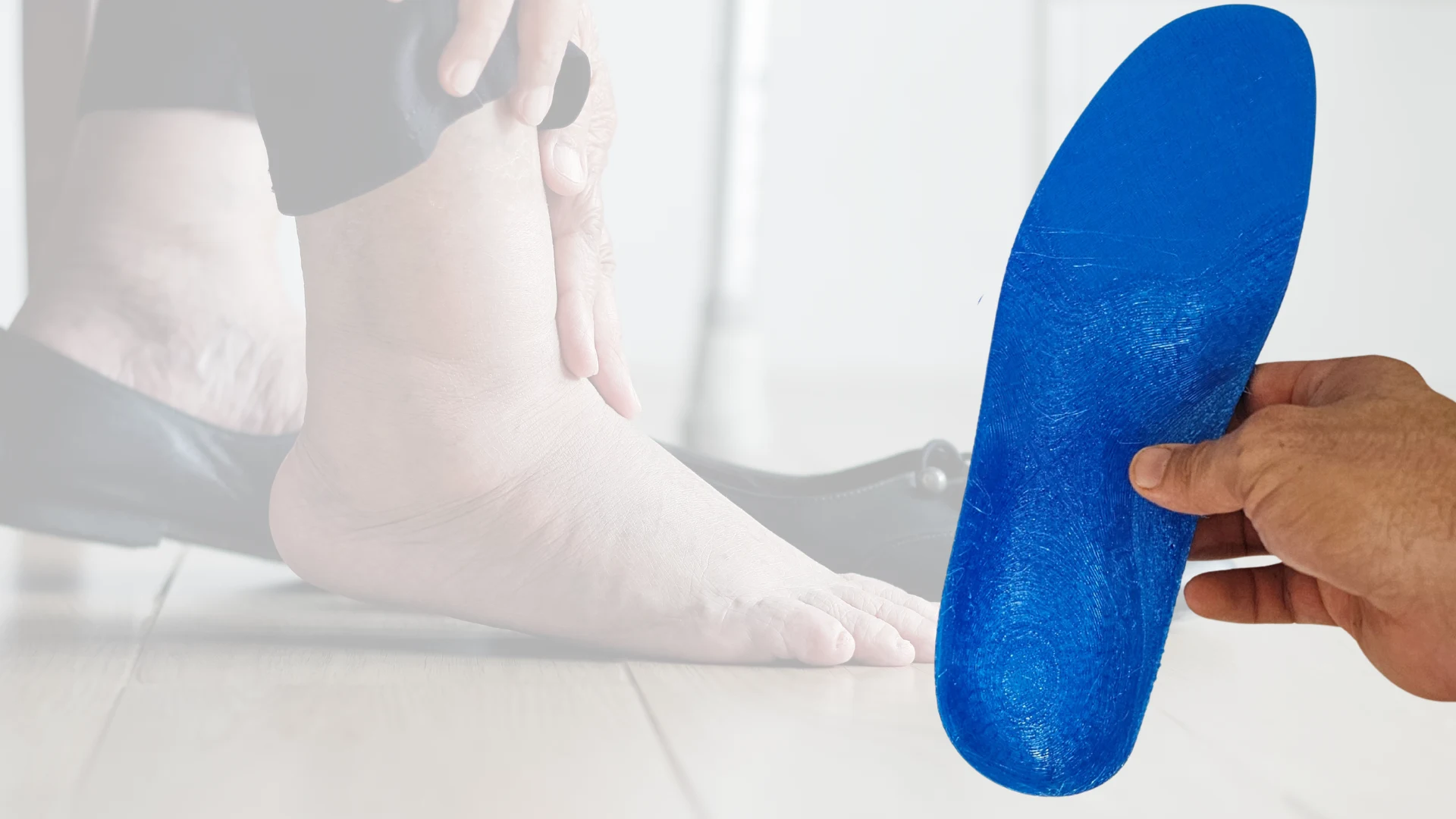

Watch: How To Cure Plantar Fasciitis FAST & FOREVER [Heel Pain & Heel Spurs] — MichiganFootDoctors YouTube
When to See a Podiatrist
If morning heel pain has persisted more than 6 weeks, home care alone rarely fixes it. At Balance Foot & Ankle, we combine in-office ultrasound diagnostics, custom orthotics, and — when needed — shockwave or PRP to resolve plantar fasciitis that hasn’t responded to stretching and inserts. Most patients are walking pain-free within 4-8 weeks of starting a structured plan.
Call Balance Foot & Ankle: (810) 206-1402 · Book online · Offices in Howell & Bloomfield Hills
Frequently Asked Questions: Cycling Shoes and Plantar Fasciitis
Is cycling good for plantar fasciitis?
Yes — cycling is one of the best low-impact cross-training options for plantar fasciitis, but with important caveats. Because the foot is fixed to the pedal and the heel never strikes the ground, cycling produces zero plantar fascial stress through ground-reaction force. The primary risk is repetitive non-impact loading from cleat position and ankle mechanics during the pedal stroke. With proper cleat positioning (midfoot rather than forefoot), an appropriate shoe stiffness level, and cadence above 85 RPM, most PF patients can cycle pain-free even when they cannot walk without pain. At Balance Foot and Ankle in Howell, Michigan, we routinely prescribe cycling as the primary rehabilitation exercise during acute PF treatment.
Can I use regular running shoes on a spin bike or stationary bike?
You can use athletic sneakers with cage pedals (non-clipless) for low-intensity recovery cycling with PF. However, there are tradeoffs: a flexible running shoe allows the forefoot to dorsiflex over the pedal during the stroke, which can actually activate the Windlass mechanism and increase plantar fascial tension — the same mechanism that clipless shoes with stiff soles prevent. For occasional stationary bike sessions at 60–70% effort, running shoes are fine. For consistent PF rehabilitation cycling at higher intensities, a cycling shoe with even a basic fiberglass outsole provides significantly better plantar fascial protection than a flexible running shoe, because it prevents the midfoot from flexing around the pedal axle.
How far back should I move my cleats for plantar fasciitis?
For plantar fasciitis, move your cleats 3–6mm rearward from the standard “ball of foot over cleat axle” (BOFCA) position. Start with 3mm and test for 2–3 rides before moving further. Most cyclists experience 20–30% reduction in forefoot pressure at 3mm rearward, and up to 31% reduction at 5–6mm back. Maximum rearward travel is limited by your cleat slot length — SPD 2-bolt systems typically allow up to 10mm, while SPD-SL and Look KEO 3-bolt systems allow 5–7mm. After moving the cleat rearward, adjust saddle height downward by approximately 2–3mm to compensate for the increased effective leg length. If you’re unsure about exact positioning, a 60-minute bike fit with a fitter experienced in foot pathologies is one of the highest-ROI investments a cyclist with PF can make.
Do I need custom orthotics in cycling shoes for plantar fasciitis?
Not always, but orthotics are worth trying if you already have them prescribed for walking-related PF. The key consideration is that cycling orthotics need to be thinner and have a lower arch profile than walking orthotics to accommodate the fixed-foot position in a clipless shoe without creating knee tracking issues. If your current orthotics are designed for running and have a full medial arch post, they may work in cycling shoes — remove the stock insole and test the orthotic for 20 minutes on a trainer before a full outdoor ride. If you have forefoot varus (common with PF) that causes your first ray to drop inward on each pedal stroke, a cycling-specific wedged footbed (such as Shimano’s optional wedge insoles or Specialized Body Geometry footbeds) can address this at a lower cost than full custom orthotics. For a hands-on exam plus imaging when needed, contact Balance Foot and Ankle in Howell, Michigan — Dr. Tom Biernacki evaluates cycling biomechanics in our PF orthotic consultations.
How long does plantar fasciitis take to heal if I switch to cycling?
With a complete switch from running to cycling, combined with consistent stretching and the protocols outlined above, most active patients see significant PF improvement within 6–12 weeks. Morning VAS pain scores typically drop from 7–8/10 to 2–3/10 within 4 weeks of the running-to-cycling transition. Full return to pre-injury running volume generally requires 12–16 weeks. Several factors accelerate recovery: midfoot cleat positioning (reduces repetitive fascial loading during rides), consistent post-ride gastrocnemius and plantar fascia stretching, night splints during weeks 1–4 (maintain dorsiflexion stretch during sleep), and eccentric heel drops (3 × 15 daily). Factors that slow recovery include continuing to run even at reduced mileage, inadequate sleep, high-impact sports (basketball, tennis), and not addressing shoe fit or cleat position. If your PF is not improving at week 8 despite full running cessation and cycling, schedule an evaluation with a podiatrist — you may benefit from extracorporeal shockwave therapy (ESWT) or PRP injection, both of which we offer at our Howell, Michigan clinic.
Cycling Pain Shouldn’t Sideline You
If you’re still experiencing plantar fasciitis pain despite switching to cycling, proper cleat positioning, and the right shoes — it’s time for a clinical evaluation. Dr. Tom Biernacki DPM at Balance Foot & Ankle in Howell, Michigan, specializes in athletic foot pathologies and offers comprehensive biomechanical assessments, custom orthotics, shockwave therapy, and PRP injection for persistent PF.
In Our Clinic
In our Balance Foot & Ankle clinic, the typical plantar fasciitis patient is a 40- to 60-year-old who noticed sharp heel pain on their very first steps in the morning or after sitting at a desk. Many arrive having already tried cheap shoe-store inserts and a week of ice without relief. On exam, we palpate the medial calcaneal tubercle, check for a positive windlass test, and rule out Baxter’s neuropathy and calcaneal stress fractures. Most of our plantar fasciitis patients respond to a custom orthotic + eccentric calf loading + night splinting protocol within 6–12 weeks — without injections or surgery.
In-Office Treatment at Balance Foot & Ankle
When conservative care isn’t enough, Dr. Tom Biernacki and the team at Balance Foot & Ankle offer advanced, same-day options — including Plantar Fasciitis Surgery Bloomfield Hills at our Howell and Bloomfield Hills clinics.
Same-day appointments available. Call (810) 206-1402 or book online.
When Shoes Aren’t Enough — Dr. Tom’s Top 9 Orthotics
About 30% of patients I see for foot pain need MORE than a great shoe — they need a structured insole. Below: my complete 2026 orthotic ranking with pros, cons, and the specific patient I’d give each one to.
★ DR. TOM’S COMPLETE 2026 ORTHOTIC RANKING
9 Best Prefab Orthotics by Use Case
PowerStep, Currex, Spenco, Vionic, and Superfeet — every orthotic I’ve fitted to thousands of patients across both Michigan offices. Each card includes pros, cons, and the specific patient I’d give it to. Real Amazon ratings, review counts, and prices below.
Best All-Purpose Orthotic for Most Patients
Semi-rigid arch shell + dual-layer cushion + deep heel cup. The orthotic I’ve fitted to more patients than any other for 15 years. APMA-accepted. Trim-to-fit design works in athletic shoes, casual shoes, and most work boots.
- The Pinnacle Full length insoles for men & women provide maximum cushioning, from high activity to moderate support. The PowerStep arch support shape provides stability to the foot and ankle, helping to relieve foot pain.
- When you spend all day on your feet, every step counts. PowerStep insoles are a podiatrist-recommended orthotic to help relieve & prevent foot pain related to athletes, runners, Plantar Fasciitis, heel spurs & other common foot, ankle & knee injuries
- The Pinnacle plantar fasciitis insoles offer superior heel cushioning and arch support. The dual-layer cushioning is designed to reduce stress and fatigue, while PowerStep premium arch support is designed for plantar fasciitis relief.
- The PowerStep Pinnacle arch support inserts for men & women can be worn in a variety of shoe types such as; athletic, walking, running, work & some casual shoes. Orthotic Inserts are ordered by shoe size, no trimming required.
- Made in the USA & backed by a 30-day money-back guarantee. PowerStep orthotic inserts for men & women are designed for shoes where the factory insole can be removed. HSA & FSA Eligible
✓ Pros
- Semi-rigid arch shell provides true biomechanical correction
- Deep heel cup centers the heel and reduces lateral instability
- Dual-layer cushion (top + bottom) lasts 9-12 months daily wear
- Available in 8 sizes for precise fit
- APMA-accepted and clinically validated
- Lower price than Superfeet Green for equivalent function
✗ Cons
- Too thick for most dress shoes (use ProTech Slim instead)
- Some break-in period required (3-7 days for arch tolerance)
- Not enough correction for severe pes planus or rigid pes cavus
Dr. Tom’s Recommendation: If a patient has run-of-the-mill plantar fasciitis, mild flat feet, or arch fatigue, this is the first orthotic I try. Better value than Superfeet for 90% of patients, which is why I swapped it into our clinic kits three years ago. Sub-$50 typically.
Maximum Motion Control · Flat Feet & Severe Over-Pronation
PowerStep’s most aggressive stability orthotic. Adds a 2°-7° medial heel post on top of the standard PowerStep platform — designed specifically for flat-footed patients and severe pronators who need real corrective force.

- Full Length Support - Our ProTech orthotic insoles support pronation, arch pain, heel pain, plantar fasciitis, and heel spurs.
- Your Go To Inserts - These orthotics for plantar fasciitis provide full length, total contact support for a number of common foot issues
- Easily Fix Your Arches - Standard, semi-rigid arch support that fits most shoes including, work boots, dress shoes and sneakers.
- Enhanced Comfort - Our ProTech orthotic inserts have maximum cushioning featuring ShockAbsorb Premium Foam heel support cushion to increased protection.
- Support + Comfort - PowerStep ProTech orthotic insoles are designed with built-in arch support, heel cradle, and a perfect balance of support and comfort. Legitimate PowerStep product packaging is marked with a unique US quality control code. If you are concerned that a PowerStep item is not legitimate, please contact PowerStep customer service.
✓ Pros
- 2°-7° medial heel post adds aggressive pronation control
- Same trusted PowerStep arch shell, more correction
- Built specifically for flat-foot biomechanics
- Excellent for posterior tibial tendon dysfunction (PTTD)
- Removable top cover for cleaning
✗ Cons
- Too aggressive for neutral-arch patients
- Needs longer break-in (10-14 days) due to stronger correction
- Adds 2-3 mm of stack height — won’t fit slim dress shoes
Dr. Tom’s Recommendation: When a patient comes in with significant flat feet AND symptoms (heel pain, arch pain, knee pain), the Original PowerStep isn’t aggressive enough. The Maxx is what gets prescribed. About 25% of my flat-footed patients end up here.
Low-Profile · Fits Dress Shoes & Narrow Casuals
3 mm slim profile with podiatrist-designed tri-planar arch technology. Engineered specifically to fit inside dress shoes, oxfords, loafers, and women’s flats without crowding the toe box. Vionic was founded by an Australian podiatrist.
No products found.
✓ Pros
- 3 mm slim profile (vs 7-10 mm for standard orthotics)
- Tri-planar arch technology adds support without bulk
- Built-in deep heel cup despite slim design
- Fits dress shoes WITHOUT having to remove the factory insole
- Trim-to-fit · APMA-accepted
✗ Cons
- Less arch support than full-volume orthotics
- Top cover wears faster than thicker alternatives
- Not enough correction for severe foot deformities
Dr. Tom’s Recommendation: My default when a patient says ‘I need orthotics but I have to wear dress shoes for work.’ Slim enough to fit in oxfords and pumps without the heel sliding out. The single highest-impact change you can make for office workers with foot pain.
Built-In Metatarsal Pad · Morton’s Neuroma · Ball-of-Foot Pain
Standard Pinnacle orthotic with a built-in metatarsal pad positioned proximal to the metatarsal heads — the exact location that offloads neuromas and metatarsalgia. No need for separate met pads or pad placement guesswork.
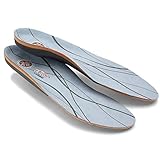
- PODIATRIST DESIGNED! An effective alternative to expensive custom-made orthotics. Innovative biomechanical THREE-ZONE COMFORT technology delivers deep heel cup stability, forefoot cushioning, and ultimate arch support to prevent excessive pronation caused by flat feet. These essential contact points help to realign positioning of feet, aiding to re-establish your body's natural alignment, from the ground up.
- VIONIC ORTHOTIC INSOLES! These women's and men's shoe inserts offer a convenient, pain-free natural healing solution for many of the common aches and pains associated with poor lower-limb alignment, plantar fasciitis, and arch pain. EVA orthotic with re-enforced, hardened plastic (PE) shell for added motion control and stability. Cushioned shock dot in the heel for added shock absorption. Can be trimmed in forefoot if necessary.
- DESIGNED FOR EVERYDAY USE! Designed to provide greater control in faster paced activities such as running and fast walking. 4 degree rear foot wedge to provide support and control which helps prevent excess pronation. Odor absorbing cover. Contoured around the heel and arch areas to achieve 100% foot contact. Podiatrist Designed, APMA Seal of Acceptance.
- COMFORTABLE TO WEAR! Shoe inserts for women and men contoured around the heel and arch areas to achieve perfect foot contact.
- SIZES AVAILABLE: XS: Women's 4.5 – 6 / Men's 3.5 – 5 S: Women's 6.5 – 8 / Men's 5.5 – 7 M: Women's 8.5 – 10 / Men's 7.5 – 9 L: Women's 10.5 – 12 / Men's 9.5 – 11 XL: Men's 11.5 – 13
✓ Pros
- Built-in met pad eliminates DIY pad placement errors
- Specifically designed for Morton’s neuroma + metatarsalgia
- Same trusted PowerStep arch + heel cup platform
- Top cover protects sensitive forefoot skin
- Faster relief than orthotics + add-on met pads
✗ Cons
- Met pad position is fixed (can’t fine-tune individual placement)
- Some patients with very small or very large feet need custom
- Slightly thicker than the standard Pinnacle
Dr. Tom’s Recommendation: If a patient has Morton’s neuroma, sesamoiditis, or generalized ball-of-foot pain (metatarsalgia), this saves a clinic visit and a prescription. The built-in pad placement is anatomically correct for 80% of feet. Way better than DIY met pads.
Adaptive Dynamic Arch · Athletic & Daily Wear
Currex’s flagship adaptive arch technology — the orthotic flexes with your gait instead of fighting it. Different stiffness zones along the length give you targeted support at the heel, midfoot, and forefoot. Available in three arch heights (low/medium/high).

- Signature waffle-inspired rubber outsole for traction and flexibility
✓ Pros
- Dynamic flex zones adapt to natural gait cycle
- Three arch heights ensure precise fit
- Lighter than rigid orthotics (no ‘heavy foot’ feel)
- Excellent for runners and athletic walkers
- European podiatric design (German engineering)
✗ Cons
- More expensive than PowerStep Original ($55-65 typically)
- Less aggressive correction than Pinnacle Maxx for severe cases
- Three arch heights means you must self-select correctly
Dr. Tom’s Recommendation: I started recommending Currex three years ago for runners who said PowerStep felt ‘too rigid.’ The dynamic flex zones respect natural gait. Best for active patients who walk 8K+ steps daily and don’t need maximum motion control.
Running-Specific · Heel Strike + Forefoot Strike Compatible
Currex’s purpose-built running orthotic. The midfoot flex zone is positioned for runner’s gait mechanics, with a flared heel cushion for heel strikers and a forefoot rocker for midfoot/forefoot strikers. Tested on 1000+ runners during product development.
- Provides continuous support of the Plantar Fascia by gently stretching the fascia tissue.
- Compression zones promote circulation, reduce impact vibration, boost recovery and strengthen feet.
- Lightweight, seamless design with extra cushioning provides support while still being comfortable.
- Supports the heel/arch and overall foot structure while stabilizing the tendon for better performance
- Made from high quality materials, the socks are moisture wicking and breathable.
✓ Pros
- Designed by German biomechanics lab specifically for runners
- Dynamic arch flexes with running gait (not static like PowerStep)
- Three arch heights (low/medium/high)
- Reduces overuse injury risk in mid-distance runners
- Lightweight (no impact on cadence)
✗ Cons
- Premium price ($60-75)
- Not aggressive enough for severe over-pronators (use Pinnacle Maxx)
- Runner-specific design = less ideal for daily walking shoes
Dr. Tom’s Recommendation: If a patient runs 20+ miles per week and has plantar fasciitis or shin splints, this is the orthotic I prescribe. The dynamic flex zones respect running biomechanics in a way that no rigid PowerStep can match. Pricier but worth it for serious runners.
Cavus Foot & High-Arch Patients
Polyurethane base with a deeper heel cup and higher arch profile than PowerStep — built for cavus (high-arched) feet that need maximum cushion and support. The 5-zone cushioning system addresses the unique pressure points of high-arch feet.

- The first generation of Protalus's M-100 Insole
- Patented Alignment Technology: The M-100 features a deep heel cup and contoured arch to correct overpronation and promote better posture, stability, and joint health throughout your body.
- Comfortable Insoles: The patented stress relief replacement shoe insoles increase comfort and relieve plantar fasciitis and anti-fatigue.
- Improves Alignment: The shoe insoles help improve alignment and reduce pain in the feet, ideal for low and high arches.
✓ Pros
- Deeper heel cup centers the heel for cavus foot stability
- Higher arch profile fills the void under high arches
- 5-zone cushioning addresses cavus foot pressure points
- Polyurethane base lasts 12+ months
- Available in Wide width
✗ Cons
- Too tall/aggressive for normal or low arches
- Won’t fit slim dress shoes
- Pricier than PowerStep Original
- Some patients find the arch height uncomfortable initially
Dr. Tom’s Recommendation: Cavus foot patients are often misdiagnosed and given low-arch orthotics — that makes everything worse. Spenco’s Total Support has the arch profile that high-arch feet actually need. About 15% of my patients have cavus feet; this is what they wear.
Cushion Layer · Standing All Day · Gel Pressure Relief
NOT a true biomechanical orthotic — this is a cushion insole. But for patients who want gel pressure relief instead of arch correction (or to add ON TOP of factory insoles in work boots), this is the best gel option on Amazon.
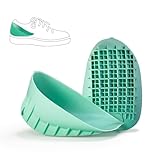
- ✶ALLEVIATES HEEL PAIN – Tuli’s Heavy Duty Heel Cups provide heel pain relief caused by plantar fasciitis, Sever’s disease, excessive pronation, Achilles tendonitis, etc. Ideal for those on their feet for most of the day or those looking for added comfort.
- ✶PODIATRIST PREFERRED – In an independent study conducted by M3 Global Research, podiatrists chose Tuli’s as the clear winner of recommended heel cup brands.
- ✶SHOCK-ABSORBING DESIGN – The multi-cell, multi-layer design absorbs shock and impact energy, mimicking the natural shock-absorbing system of your feet. As you walk or run, the design reduces the stress on your feet.
- ✶DOCTOR RECOMMENDED & APMA ACCEPTED – Tuli’s Heel Cups were designed by a leading podiatrist and have the honor of being accepted by the American Podiatric Medical Association.
- ✶FITS MOST LACE-UP SHOES – Best used in spacious lace-up shoes like athletic shoes / sneakers.
✓ Pros
- Genuine gel cushioning (not foam pretending to be gel)
- Targeted gel waves under heel and ball of foot
- Trim-to-fit · works in most shoe types
- Sub-$15 price (most affordable option in this list)
- Massaging texture is genuinely soothing
✗ Cons
- ZERO arch support — this is cushion only
- Won’t fix plantar fasciitis or flat-foot issues
- Compresses faster than PowerStep (4-6 months)
- Top cover wears through in high-mileage applications
Dr. Tom’s Recommendation: I recommend these to patients who tell me ‘I just want my feet to stop hurting at the end of my shift’ and who don’t have a biomechanical issue. Construction workers, factory workers, retail. Pure cushion does the job for them.
Tight-Fitting Shoes · Cycling Shoes · Hockey Skates
Superfeet’s slim version of their famous Green insole. The trademark stabilizer cap is preserved but the overall thickness is reduced — works in cycling shoes, hockey skates, ski boots, and other tight-fitting footwear that the standard Superfeet Green can’t fit into.
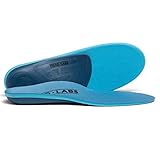
- Plantar Fasciitis Relief, Every Step – Firm arch support helps relieve heel and arch pain from plantar fasciitis and supports flat feet and overpronation for better alignment and all-day comfort.
- Clinical-Grade Biomechanics – Tread Labs 26-33 ARCHitecture delivers orthotic-level stability—custom-orthotic feel without the prescription.
- Dialed Fit for Any Shoe – Four arch heights (low, medium, high, extra-high) and an easy 3-step sizing guide make selection simple for work boots, sneakers, and everyday shoes—great for standing all day.
- Built to Last a Million Miles – Durable, recyclable arch supports with our Million-Mile Guarantee; replaceable top covers keep insoles fresh and cost-effective. Unlike foam that flattens, Pace is engineered to last.
- Trusted Expertise – Designed by Mark Paigen (founder of Chaco). Premium arch support inserts for men and women backed by decades of footwear innovation.
✓ Pros
- Stabilizer cap centers the heel (Superfeet’s signature feature)
- Slim profile fits tight athletic footwear
- Lasts 12+ months daily wear
- Excellent for cycling shoes specifically
- Built-in odor-control treatment
✗ Cons
- Premium price ($45-55)
- Less cushion than PowerStep equivalents
- Not as aggressive correction as Pinnacle Maxx for flat feet
- The signature ‘heel cup feel’ takes 1-2 weeks to adapt to
Dr. Tom’s Recommendation: If you’re a cyclist with foot numbness, hot spots, or knee pain — this is the orthotic. The stabilizer cap solves cycling-specific biomechanical issues that no other orthotic addresses. Worth the premium for athletes.
None of these solving your foot pain?
Some patients (about 30%) need custom-molded prescription orthotics. We make 3D-scanned custom orthotics in our Howell and Bloomfield Hills offices — specifically built for your foot mechanics.
Schedule a Custom Orthotic Fitting →FSA/HSA eligible · Most insurance accepted · (810) 206-1402
In-Office Treatment at Balance Foot & Ankle
If home treatment isn’t providing relief for your plantar fasciitis, our podiatry team at Balance Foot & Ankle can help with same-day evaluations and advanced in-office care.
Same-day appointments available. (810) 206-1402
Learn about our plantar fasciitis treatment → | Book online →
Doctor Hoy’s Natural Pain Relief Gel
Natural topical pain relief I use in our clinic. Arnica + camphor formula — apply directly to the area 3–4x daily. ($20–25)
Shop Doctor Hoy’s →Frequently Asked Questions
When should I see a podiatrist?
If symptoms persist past 2 weeks, affect your normal activity, or are accompanied by red-flag symptoms (warmth, redness, swelling, inability to bear weight).
What does treatment cost?
Most diagnostic visits and conservative treatments are covered by Medicare and major insurers. Out-of-pocket costs vary by your specific plan.
How quickly can I get an appointment?
Most non-urgent cases see us within 5 business days. Urgent cases (sudden pain, possible fracture) typically same or next business day.
What is Plantar fasciitis?
Plantar fasciitis is a common foot/ankle condition that affects mobility and quality of life. Understanding the underlying cause is the first step in successful treatment. Our podiatrists at Balance Foot & Ankle perform a hands-on biomechanical exam, review your activity history, and use diagnostic imaging when appropriate to identify the root cause—not just treat the symptom. Many patients have been told to “rest and ice” without a deeper diagnostic workup; our approach is different.
Symptoms and warning signs
Common signs of plantar fasciitis include pain that worsens with activity, morning stiffness, swelling, tenderness when palpated, and difficulty bearing weight. If you experience sudden severe pain, inability to walk, visible deformity, numbness or color change, contact our office the same day or visit urgent care—these can signal a more serious injury such as a fracture, tendon rupture, or vascular compromise. Diabetics with any foot wound should seek same-day care.
Conservative treatment options
Most cases of plantar fasciitis respond to non-surgical care: structured rest, supportive footwear changes, custom orthotics, targeted stretching and strengthening protocols, anti-inflammatory medications when medically appropriate, and in-office procedures such as ultrasound-guided injections. We also offer advanced therapies including MLS laser therapy, EPAT/shockwave, regenerative injections, and image-guided procedures. Treatment is sequenced from least invasive to most invasive, and we explain the rationale at every step.
When is surgery considered?
Surgery is reserved for cases that fail 3-6 months of well-structured conservative care, when there is structural pathology (severe deformity, complete tear, advanced arthritis), or when imaging shows damage that will not heal without intervention. Our surgeons have performed 3,000+ foot and ankle procedures and prioritize minimally-invasive techniques whenever appropriate. We discuss recovery timelines, return-to-activity milestones, and realistic outcome expectations before any procedure is scheduled.
Recovery timeline and prevention
Recovery from plantar fasciitis varies based on severity and chosen treatment path. Conservative cases often improve within 4-8 weeks with consistent adherence to the protocol. Post-procedural recovery may range from a few days (in-office procedures) to several months (reconstructive surgery). Long-term prevention involves footwear assessment, activity modification, structured strengthening, and regular check-ins with your podiatrist if you have a history of recurrence. We provide written home-exercise plans and digital follow-up support.
Ready to feel better?
Same-week appointments available in Howell and Bloomfield Hills, Michigan.
Book Your Visit
Dr. Tom Biernacki, DPM is a double board-certified podiatrist and foot & ankle surgeon at Balance Foot & Ankle Specialists in Southeast Michigan. With over a decade of clinical experience, he specializes in heel pain, bunions, diabetic foot care, sports injuries, and minimally invasive surgery. Dr. Biernacki is a member of the APMA and ACFAS, and his patient education content on MichiganFootDoctors.com and YouTube has reached over one million views.