
Same-Week Appointments at Balance Foot & Ankle
Three board-certified podiatric surgeons. 950K+ YouTube subscribers. 1,123+ five-star reviews. Howell & Bloomfield Township, Michigan.
Best Pregnancy Shoes for Plantar Fasciitis 2026: OB-Aligned Podiatrist’s Guide
Quick Answer: Best Pregnancy Shoe for Plantar Fasciitis
The HOKA Bondi 8 is my top-rated shoe for pregnant patients with plantar fasciitis in 2026. Its 39mm maximum-cushion heel stack absorbs the increased ground reaction force of pregnancy weight gain, while the wide base geometry provides the platform stability needed when relaxin hormone has loosened ligament laxity throughout the foot. The rocker profile reduces push-off plantar fascia demand by 15–20% — critical during the third trimester when every step counts.
Table of Contents
- Why Pregnancy Dramatically Increases Plantar Fasciitis Risk
- HOKA Bondi 8 — Best Overall for Pregnancy PF
- New Balance 990v6 — Best Motion Control for Relaxin Overpronation
- Brooks Addiction Walker 2 — Best Walking Shoe
- Skechers Max Cushioning Elite — Best Slip-On (3rd Trimester)
- Vionic Tide II — Best Arch Support Sandal for Edema
- Oofos OOahh Slide — Best Recovery & Indoor Slide
- Trimester-by-Trimester Shoe Guide
- Pregnancy Foot Size Changes: When to Size Up
- Post-Partum PF: Why Foot Pain Can Worsen After Delivery
- Video: Dr. Tom on Pregnancy & Foot Pain
- Frequently Asked Questions
Plantar fasciitis during pregnancy is not just an inconvenience — it’s a predictable biomechanical consequence of specific hormonal and physical changes that affect every pregnant person to varying degrees. Yet most footwear guides aimed at pregnant patients are written by non-clinicians who don’t understand why pregnancy causes foot pain in the first place, and therefore can’t explain why certain shoe features address it at a biological level.
I’m Dr. Tom Biernacki, a board-certified podiatrist in Howell and Brighton, Michigan. A substantial portion of my new patient consultations are pregnant patients referred by their OB-GYN or midwife for foot and ankle pain that has become debilitating enough to affect daily function. This guide covers the four mechanisms by which pregnancy causes plantar fasciitis, provides a trimester-specific shoe guide, and explains exactly which features to look for at each stage of pregnancy — including the post-partum period, when foot pain often paradoxically worsens rather than resolves.
4 Mechanisms: Why Pregnancy Dramatically Increases Plantar Fasciitis Risk
Pregnancy causes plantar fasciitis through four distinct biological mechanisms that operate simultaneously and interact to create cumulative fascial stress far exceeding what athletic activity alone produces. Understanding each mechanism helps explain why specific shoe features matter at each trimester.
🧬 Mechanism 1: Relaxin Hormone — Ligament Laxity
- Relaxin, produced by the corpus luteum and placenta, peaks during weeks 10–14 of first trimester and remains elevated throughout pregnancy
- Primary biological purpose: loosen pelvic ligaments for delivery
- Side effect: systemic ligament laxity throughout the entire body, including the plantar fascia and all intrinsic foot ligaments
- Ligament laxity increases arch flexibility by 30–40%, meaning the arch drops more with each step — directly increasing plantar fascial tension at the calcaneal insertion
- Shoe response needed: Enhanced medial arch support to substitute for loosened ligamentous support; motion control features to prevent excessive subtalar pronation
⚖️ Mechanism 2: Weight Gain — Direct Load Amplification
- ACOG guidelines recommend 25–35 lbs of total pregnancy weight gain for normal-BMI individuals
- This weight is concentrated in the anterior (front-heavy) distribution — not uniformly distributed like carrying a backpack
- The anterior weight distribution shifts the center of pressure forward on the plantar surface, increasing forefoot and calcaneal loading asymmetrically
- Each additional pound of body weight adds approximately 1.0–1.25 lbs of ground reaction force per foot per step
- At 30 lbs weight gain over 8,000 steps/day: 240,000–300,000 lbs of additional cumulative plantar loading per day at full term
- Shoe response needed: Maximum heel and forefoot cushioning to absorb amplified load; anti-fatigue technology that maintains performance throughout the day
🚶 Mechanism 3: Gait Changes — Anterior Pelvic Tilt
- As the uterus expands, the body shifts center of gravity forward and upward, creating increased anterior pelvic tilt
- Anterior pelvic tilt creates a compensatory increase in lumbar lordosis (lower back arch) and corresponding posterior tibial tendon overuse as it works to control foot pronation against increased tibial internal rotation
- This posterior tibial overuse reduces the dynamic arch support it normally provides, transferring more passive load to the plantar fascia
- Gait slows by an average of 15–20% by the 3rd trimester, but stance phase duration increases — meaning the foot spends more time under load per step, not less
- Shoe response needed: Medial posting or motion control features to supplement fatigued posterior tibial tendon; heel-to-toe rocker geometry to reduce extended stance phase loading
🦶 Mechanism 4: Edema — Fit and Stability Changes
- Foot and ankle edema is present in approximately 70–80% of pregnancies by the 3rd trimester
- Edema typically peaks in the late afternoon and evening, adding 1–2 shoe sizes of volume to the foot
- Edematous feet change foot shape — the increased interstitial fluid pressure broadens the forefoot and reduces the arch height further
- Shoes that fit correctly in the morning may become constrictively tight by evening — creating forefoot compression that alters gait and increases plantar loading
- Edema increases the risk of blisters, pressure points, and skin breakdown — concerns compounded in diabetic patients
- Shoe response needed: Wide toe box; adjustable closure systems (velcro, wide lacing zone, slip-on designs); stretch upper materials that accommodate volume fluctuations
Quick Trimester Snapshot
🌱 First Trimester (Weeks 1–13)
Relaxin peaks weeks 10–14. Minimal weight change (1–4 lbs typical). Main PF driver: ligament laxity before cushioning demand increases. Focus: arch support + motion control. Standard-width shoes still fit.
🌿 Second Trimester (Weeks 14–27)
Weight gain accelerates (10–14 lbs added, on average). Ligament laxity ongoing. PF symptoms typically onset or peak here. Focus: maximum cushioning + arch support. Size up ½ if needed.
🌳 Third Trimester (Weeks 28–40+)
Edema prominent — shoe fit changes throughout day. Bending to tie laces difficult. Anterior pelvic tilt maximal. Focus: slip-on designs, wide toe box, maximum width + cushion. Daily fit check.
HOKA Bondi 8
🏆 Best Overall — 39mm max-cushion heel, wide base stability
New Balance 990v6
🧬 Best Motion Control — ENCAP post for relaxin overpronation
Brooks Addiction Walker 2
🚶 Best Walker — Extended Progressive Diagonal Rollbar
Skechers Max Cushioning Elite
👶 Best 3rd Trimester — Slip-on, no bending required
Vionic Tide II Sandal
🌊 Best Sandal — Podiatric arch for edema accommodation
Oofos OOahh Slide
🛋️ Best Indoor / Recovery — 37% more energy absorption than foam
HOKA Bondi 8 — Best Overall Pregnancy Shoe for Plantar Fasciitis
Why 39mm Heel Stack Matters for Pregnancy Weight Gain
The HOKA Bondi 8’s 39mm heel stack height is not just marketing — it represents a clinically meaningful quantity of impact absorption material that addresses the specific load increases of pregnancy. Consider the math: a pregnant patient who gains 30 lbs by the third trimester is adding approximately 30 × 1.2 = 36 lbs of additional ground reaction force per foot per step above their baseline. On a standard running shoe with a 25–28mm heel stack, this additional load compresses the foam by an additional 15–20% — approaching the compression limits of standard EVA foam and reducing effective cushioning to near-baseline shoe performance.
The Bondi 8’s 39mm stack provides a larger cushioning reserve — it can absorb the additional pregnancy load and still have meaningful foam thickness remaining, maintaining effective cushioning throughout the day rather than bottoming out. This is particularly important in the second and third trimesters when weight gain is highest and the foot’s intrinsic cushioning mechanisms (the plantar fat pad, which is approximately 14–18mm thick in healthy young adults) are already compromised by the same relaxin-induced laxity affecting the arch ligaments.
The meta-rocker geometry is equally important. HOKA’s rocker profile creates an early heel-to-toe roll that bypasses a portion of the active plantar fascia loading that occurs during push-off in conventional flat-soled shoes. By initiating the forward roll mechanically through the shoe’s geometry rather than through toe dorsiflexion and Windlass Mechanism activation, the rocker shoe reduces peak plantar fascial tension during the push-off phase by an estimated 15–22% based on gait analysis studies comparing rocker and non-rocker shoes in PF patients.
For third trimester patients where edema is significant, the Bondi 8’s Wide (D) and X-Wide width options are available — providing accommodation for increased foot volume without requiring a different shoe model. The breathable engineered mesh upper allows some volume accommodation throughout the day as edema fluctuates, reducing the evening tightness that conventional leather or synthetic uppers create.
Clinical Advantages
- 39mm heel stack — maximum cushioning for pregnancy weight gain load
- Meta-rocker reduces push-off plantar fascia demand 15–22%
- Wide base geometry — platform stability for relaxin-loosened ankles
- Wide and X-Wide options — accommodates 3rd trimester edema
- Breathable mesh upper — volume accommodation as edema fluctuates
- Best choice for all three trimesters and post-partum
Clinical Limitations
- 4mm heel drop — lower than optimal for PF with concurrent Achilles tightness (common in pregnancy)
- Arch support moderate — patients with severe flat foot may need to add orthotic insert
- Traditional lace-up — more difficult for 3rd trimester patients who can’t easily reach feet
- Premium price
No products found.
New Balance 990v6 — Best Motion Control Shoe for Relaxin-Induced Overpronation & PF
ENCAP and Relaxin: How Medial Posting Substitutes for Hormone-Loosened Ligaments
The plantar fascia doesn’t act alone in supporting the medial longitudinal arch. It functions as part of a three-component passive arch support system: the spring ligament (calcaneonavicular ligament), the plantar fascia itself, and the short plantar ligament. All three are connective tissue structures that respond to relaxin — and all three are made more lax during pregnancy.
When relaxin reduces ligament stiffness by 30–40%, the arch drops more with each step because its passive support structures have less resistance to deformation. The plantar fascia, being the largest of the three components, absorbs a disproportionate share of the increased pronatory demand — particularly at the calcaneal insertion where the fascial fibers converge and where the highest tensile stress concentration occurs under pathological loading.
The New Balance ENCAP system addresses this mechanism directly. ENCAP is a dual-density posting that places a firmer-density EVA compound along the medial (inner) edge of the midsole, running from the heel to the midfoot. This firmer compound resists medial heel lean (subtalar pronation) by providing greater resistive force on the side toward which the foot is rolling — functionally substituting for the stiffer spring ligament that relaxin has compromised.
The effect is analogous to a mild pronation-control orthotic — without requiring a separate insert. For pregnant patients who are not able to see a podiatrist during their pregnancy, the 990v6’s ENCAP system provides a meaningful approximation of the motion control benefit that a semi-rigid custom orthotic would provide. For patients who are already using custom orthotics, the 990v6’s substantial width options (including 4E/XX-Wide) ensure adequate depth and volume accommodation for the orthotic device without compromising overall fit.
Clinical Advantages
- ENCAP medial post — directly addresses relaxin-induced overpronation (Mechanism #1)
- Widest width selection in guide (AA through 4E) — accommodates all foot widths and edema stages
- 8mm heel drop — clinically appropriate for PF management
- Premium leather upper — breathable and conforming
- USA-made quality control consistency
- Best choice for patients whose PF is clearly pronation-driven
Clinical Limitations
- Lower cushion stack than HOKA Bondi 8 — suboptimal for 3rd trimester maximum load
- Traditional lacing — 3rd trimester bending difficulty
- Heavier than cushioning-focused alternatives
- ENCAP may feel stiff for patients with rigid high arches (pes cavus)
No products found.
Brooks Addiction Walker 2 — Best Walking Shoe for Pregnancy Plantar Fasciitis
Progressive Diagonal Rollbar: Maximum Structural Arch Support During Pregnancy
The Brooks Addiction Walker 2’s most clinically distinctive feature is the Extended Progressive Diagonal Rollbar (PDRB) — a dual-density, angled arch support structure that provides more reliable motion control than standard medial posts found in stability shoes. While standard stability shoes use a single-density medial post, the PDRB uses a progressive architecture that varies in stiffness from heel (where pronation typically initiates) through midfoot (where arch collapse occurs) — providing graduated resistance that matches the biomechanical sequence of excessive pronation rather than applying uniform resistance throughout the entire medial support zone.
For pregnant patients specifically, the PDRB addresses the gait-change mechanism (Mechanism #3) more comprehensively than any other shoe in this guide. When anterior pelvic tilt reduces posterior tibial tendon effectiveness and ligament laxity compromises passive arch support, the plantar fascia must absorb a disproportionate share of arch support demand during the stance phase of walking. The PDRB’s extended architecture reduces this demand by providing a continuous, graduated support platform from heel strike through push-off — covering the entire period of weight-bearing loading in a single step.
The Brooks BioMoGo DNA midsole complements the PDRB with adaptive foam cushioning. Like all DNA foam compounds, it adjusts its stiffness response based on the speed and force of loading — softer during slow walking and stiffer under faster movement. This adaptive property is well-suited to pregnancy’s characteristically slower walking cadence combined with higher per-step loads — maintaining cushioning performance at the lower cadence without feeling excessively stiff during more active walking.
The Addiction Walker 2 is also classified as therapeutic footwear under Medicare PDAC category A5500, meaning it may be eligible for insurance reimbursement for patients with diabetes concurrent with PF. This is a relevant consideration for Michigan’s prenatal population where gestational diabetes affects approximately 6–9% of pregnancies and often co-presents with foot symptoms requiring therapeutic footwear.
Clinical Advantages
- Extended PDRB — strongest anti-pronation feature in this guide
- 38mm heel stack + 10mm drop — maximum cushion with appropriate heel elevation
- BioMoGo DNA adaptive foam — adjusts to pregnancy’s slower cadence/higher load
- A5500 therapeutic footwear eligible — potential insurance coverage for gestational diabetes + PF
- 4E width available — accommodates severe 3rd trimester edema
- Best for PTTD + PF co-presentation
Clinical Limitations
- Traditional lace-up — 3rd trimester bending challenge
- Maximum-motion-control design may feel restrictive for neutral-gait patients
- Heavier than HOKA Bondi 8 — cumulative fatigue consideration for long-duration walkers
No products found.
Skechers Max Cushioning Elite Slip-On — Best Third Trimester Shoe for Plantar Fasciitis
The Third Trimester Accessibility Problem: Why Slip-On Design Is a Medical Consideration
When patients at 36–40 weeks of pregnancy come to my office for PF evaluation, one of the first questions I ask is: “Can you put your own shoes on?” The answer is frequently “barely” or “only with help” — and this creates a safety problem that goes beyond convenience. Pregnant patients who struggle with shoe closure often resort to wearing shoes loose and unlaced, dramatically increasing heel pistoning (heel lifting inside the shoe per step), which multiplies micro-trauma at the plantar fascial insertion and removes the very arch support the shoe was designed to provide.
The Skechers Max Cushioning Elite Slip-On solves this problem directly. Its slip-on construction requires zero bending, zero lacing, and zero assistance — maintaining appropriate heel fit and arch support without the daily physical challenge that traditional athletic shoes impose in the third trimester. The stretch knit upper eliminates the morning-to-evening fit problem caused by edema: the shoe stretches to accommodate foot volume increases rather than becoming constrictive as fluid accumulates throughout the day.
The Hyper Burst foam midsole is Skechers’ most advanced cushioning compound — created through a supercritical CO₂ expansion process similar to HOKA’s EVA formulation. The result is a foam that is approximately 30% lighter than standard EVA while maintaining comparable compression resistance at initial loading. For a pregnant patient carrying additional body weight, a lighter shoe means less cumulative leg fatigue throughout the day — which indirectly reduces PF symptoms by maintaining better tibialis and calf muscle function through end-of-day activity.
The Air Cooled Memory Foam insole is temperature-regulating — an underappreciated feature for third trimester patients, who frequently experience increased foot temperature due to the vasodilation associated with pregnancy. Excessive foot heat causes the plantar fat pad to soften slightly, reducing its natural shock-absorption capacity and increasing PF loading at the calcaneal insertion.
Clinical Advantages
- Slip-on design — eliminates 3rd trimester bending/lacing impossibility
- Stretch knit upper — accommodates edema volume fluctuation
- Hyper Burst foam — lightweight cushioning reduces cumulative leg fatigue
- Air Cooled Memory Foam insole — temperature regulation for pregnancy vasodilation
- Wide (D) option — additional edema accommodation
- Best value slip-on in pregnancy PF category
Clinical Limitations
- Slip-on construction slightly reduces heel counter engagement vs. laced alternatives
- Lower motion control than NB 990v6 or Brooks Addiction Walker 2 — not ideal for severe overpronators
- Memory foam insole can create “sinking” sensation in patients with severe plantar fat pad atrophy
No products found.
Vionic Tide II Toe Post Sandal — Best Arch Support Sandal for Pregnancy PF & Edema
Why a Sandal Can Treat PF Better Than a Closed Shoe in Late Pregnancy
Standard footwear advice says sandals are bad for plantar fasciitis — and for flat flip-flops with zero arch support, that’s true. But the Vionic Tide II is not a flip-flop. Its Orthokinetic footbed is a podiatrically-designed biomechanical platform that provides more arch support and heel cup depth than many athletic shoes sold specifically for PF management. The sandal’s open construction is the clinically relevant advantage for pregnant patients: it provides complete foot volume accommodation regardless of edema severity, eliminating the primary fitting problem that makes closed shoes problematic in the third trimester.
The Orthokinetic footbed’s three key features — deep heel cup, firm medial arch post, and metatarsal pad — address all four pregnancy PF mechanisms in their respective anatomical locations. The deep heel cup (approximately 18–20mm depth) centers the calcaneus during loading phase, preventing the lateral roll that initiates pronation and increases fascial insertion tension. The firm medial arch post substitutes for the relaxin-compromised spring and plantar ligaments, reducing arch collapse. The metatarsal pad redistributes forefoot pressure away from the first MTP joint — reducing the transverse arch loading that contributes to forefoot PF in patients with significant weight gain.
The APMA (American Podiatric Medical Association) acceptance seal on the Vionic Tide II indicates the shoe has been reviewed by podiatric physicians and found to promote good foot health. This is a meaningful clinical credential — the APMA does not provide acceptance seals based on payment, but requires evidence of biomechanical benefit validated by practicing podiatrists.
For Michigan patients in the summer months (May–September), the Vionic Tide II is appropriate for indoor and light outdoor use. I specifically recommend against using it on outdoor surfaces with tripping hazards (stairs, uneven pavement, grass) during pregnancy, as the toe post design reduces proprioceptive feedback and a sandal fall during pregnancy carries obstetric risk beyond the foot injury itself.
Clinical Advantages
- Open design — unlimited edema accommodation in 3rd trimester
- Orthokinetic footbed — podiatrist-designed deep heel cup + arch + met pad
- APMA Accepted — independent podiatric validation
- Zero bending required — slip-on in one motion
- Best hot-weather solution for pregnant PF patients (Michigan summers)
- Can be worn over compression socks for ankle edema management
Clinical Limitations
- Sandal: inappropriate for outdoor Michigan winter or wet surfaces
- Toe post between first and second toe may aggravate Morton’s neuroma or bunion
- Lower ankle stability than closed-toe shoes — not for patients with ankle hypermobility
- Not appropriate for long outdoor walks on variable terrain
No products found.
Oofos OOahh Slide — Best Recovery & Indoor Slide for Pregnancy Plantar Fasciitis
OOfoam and Recovery: The Science of Reducing Post-Load Inflammation
OOfoam is Oofos’s patented closed-cell foam compound that differs from standard EVA in two important ways for plantar fasciitis recovery: it absorbs significantly more impact energy (37% more in standardized compression testing) and returns less energy per step. The higher absorption / lower return profile means the foot receives less reactive force from the floor during each step — creating a soft, low-reactive surface that allows continued plantar fascia loading without the impact amplification of harder indoor surfaces.
For pregnant patients, the Oofos OOahh slide fills the critical role of transitional footwear between periods of outdoor shoe wear and barefoot walking. Many patients intuitively remove their shoes when they get home, not realizing that barefoot walking on hard floors is one of the worst things you can do for pregnancy PF. The plantar fat pad, loosened by relaxin and compressed by weight gain load, cannot adequately protect the fascial insertion from the direct impact of heel strike on hardwood, tile, or laminate flooring. The Oofos slide provides a soft, arch-supported surface for in-home walking that reduces this barefoot-floor impact mechanism entirely.
Post-partum, the Oofos slide becomes even more important. Many patients are surprised to find their PF worsens in the weeks immediately after delivery — a phenomenon I explain in detail in the post-partum section of this guide. The Oofos OOahh is the first footwear intervention I recommend in the immediate post-partum period because it accommodates both the residual edema of the immediate post-delivery period and the severe first-step PF pain that occurs when patients begin ambulating in hospital and at home.
Clinical Advantages
- OOfoam absorbs 37% more impact than EVA — soft, low-reactive indoor surface
- Slide design — zero bending or strapping, easiest footwear in guide to use
- Contoured arch footbed — appropriate arch support for indoor use
- Ideal for in-home use to prevent barefoot-hard-floor PF aggravation
- Best post-partum first footwear — accommodates residual edema, severe first-step pain
- Machine washable — practical for post-partum home environment
Clinical Limitations
- Slide (backless) design: reduces heel counter engagement — not for outdoor or extended walking
- 4mm drop: lower than optimal for PF with Achilles tightness
- Not suitable for outdoor use in Michigan winters — no traction on wet surfaces
- Moderate arch support — not adequate for severe pronation without additional orthotic

- women's sweater;Soft and stretchy fabric, comfortable to wear. Not fade or itchy. Match: The sweater easily matches with leggings, jeans, and sneakers or boots, elegant and modest! Occasion: Perfect for casual, daily, vacation, office, outdoor, party, and home wear. "Please refer to the detailed dimensions in our product description before ordering
- If you have any questions, suggestions or concerns, please feel free to contact us. Thank you for your support."
As an Amazon Associate, Balance Foot and Ankle earns from qualifying purchases. Product links are affiliate links and we may earn a commission at no extra cost to you. This does not influence our clinical recommendations. Last update on 2026-09-20 / Images from Amazon Product Advertising API
Full Comparison: 6 Best Pregnancy Shoes for Plantar Fasciitis
| Shoe | Best Trimester | Heel Stack | Drop | Key Feature | Closure | Edema? |
|---|---|---|---|---|---|---|
| HOKA Bondi 8 | All trimesters | 39mm | 4mm | Max cushion + rocker | Lace-up | Wide options |
| New Balance 990v6 | 1st–2nd trimester | 30mm | 8mm | ENCAP motion control | Lace-up | AA–4E widths |
| Brooks Addiction Walker 2 | 1st–2nd trimester | 38mm | 10mm | PDRB max support | Lace-up | B–4E widths |
| Skechers Max Cushioning Elite | 3rd trimester | ~30mm | ~10mm | Slip-on, no bending | Slip-on | Stretch knit |
| Vionic Tide II Sandal | 3rd trimester / summer | ~20mm | ~8mm | APMA arch sandal | Slip-on | Open design |
| Oofos OOahh Slide | All / in-home / post-partum | ~25mm | ~4mm | 37% impact absorption | Slide | Open design |
Trimester-by-Trimester Shoe Guide for Plantar Fasciitis
First Trimester (Weeks 1–13): Stability Is Priority #1
In the first trimester, the dominant biological driver of plantar fasciitis is relaxin hormone — not weight gain, which is typically minimal (1–4 lbs) at this stage. The most important shoe features during the first trimester are arch support quality and medial motion control, which compensate for the relaxin-induced loosening of plantar ligaments that begins around week 10 and peaks around week 14.
Standard shoe sizing typically still fits in the first trimester, though patients who notice early morning arch pain should immediately transition to a stability or motion control shoe even if they’ve been wearing neutral shoes throughout their pre-pregnancy athletic activities. I frequently see PF onset as early as week 8–10 in runners and women with pre-existing overpronation who don’t make the switch early enough.
Priority shoe features first trimester: ENCAP or PDRB motion control; deep heel cup; medial arch posting; standard closure (laces or velcro — either works fine when bending is still easy).
Best picks first trimester: New Balance 990v6 (primary), Brooks Addiction Walker 2 (for significant overpronators).
Second Trimester (Weeks 14–27): Cushioning Joins Stability
The second trimester is when weight gain accelerates — approximately 1 pound per week from weeks 14–27 in patients following ACOG guidelines for normal-BMI pregnancies. This means that by week 27, patients may have gained 14–17 lbs since week 14, creating a substantially increased plantar load that begins to rival why we motion control as a footwear priority.
By the second trimester, most patients also notice the Gait Change Mechanism (Mechanism #3) — the anterior pelvic tilt creating changed walking dynamics. If you notice your gait has become noticeably more waddling, you’re landing harder on your heels, or your lower back has increased discomfort, these are signs that gait adaptation is affecting your plantar load distribution and your footwear needs maximum cushioning alongside motion control.
This is also the trimester where foot width begins to increase for many patients. I recommend patients be measured (standing measurement, both feet) at the beginning of the second trimester to check for width changes. Wearing a shoe that’s too narrow by half a width causes forefoot compression that worsens both PF and any concurrent bunion or metatarsal pathology.
Priority shoe features second trimester: Maximum cushioning + motion control combined; broader toe box; wide-width options; daily edema monitoring (shoes should feel equally comfortable morning and afternoon — if not, consider going up half a width).
Best picks second trimester: HOKA Bondi 8 in Wide (D) (primary), Brooks Addiction Walker 2 for severe overpronators. Begin keeping the Oofos OOahh slide at home for evening use.
Third Trimester (Weeks 28–40+): Accessibility and Edema Accommodation
By the third trimester, three new shoe requirements dominate: (1) the patient must be able to put the shoe on independently, (2) the shoe must accommodate maximum foot edema which now fluctuates throughout the day, and (3) the shoe must provide stability on a body whose center of gravity has moved substantially forward and upward, reducing proprioceptive confidence and increasing fall risk.
Fall risk during pregnancy is clinically significant — approximately 27% of pregnant women experience a fall, and 10% of these falls result in injury. Footwear with low lateral stability (flip-flops, backless slides worn outside, sandals on wet surfaces) contributes meaningfully to this risk. I recommend that outdoor footwear maintain closed-heel construction and slip-resistant outsoles throughout the third trimester regardless of comfort preferences.
For indoor use and edema accommodation, the sandal and slide designs in this guide (Vionic Tide II, Oofos OOahh) are appropriate with the caveat that they should be restricted to low-hazard indoor environments.
Daily shoe check for third trimester: Put on shoes in the morning — they should fit comfortably with ½” of space beyond the longest toe and no forefoot compression. Check again in the evening. If evening fit feels 1 size tighter or shoes leave red marks on your feet, you need a wider shoe or a size up. Edema that creates red marks from shoes indicates vascular compression that should be discussed with your OB-GYN.
Best picks third trimester: Skechers Max Cushioning Elite Slip-On (outdoor daily use), Vionic Tide II (warm weather/indoor), Oofos OOahh (in-home/recovery).
Pregnancy Foot Size Changes: When to Size Up (and Why It May Be Permanent)
One of the most important yet least-discussed aspects of pregnancy foot care is that foot size changes are not always temporary. While the edema of the third trimester fully resolves post-partum in most patients, the structural foot changes caused by relaxin-induced ligament laxity are often permanent — particularly in patients who had multiple pregnancies or who gained significant weight during pregnancy.
Temporary Changes: Edema-Driven Size Fluctuation
Edema typically begins in the second trimester and peaks in the third, creating a foot volume increase that may require 1–2 size increases in width and ½–1 size increase in length. This edema-driven size change resolves within 2–6 weeks post-partum as excess interstitial fluid is reabsorbed. For these patients, returning to pre-pregnancy shoe size is appropriate after full resolution of edema.
The key clinical indicator that edema has fully resolved is that foot circumference measurements in the morning (before getting out of bed) match pre-pregnancy measurements. Afternoon measurements will continue to show slight edema due to the normal dependent fluid accumulation that occurs in everyone during prolonged upright activity.
Permanent Changes: Relaxin-Driven Structural Remodeling
This is the aspect of pregnancy foot change that most patients are genuinely surprised by: approximately 60–70% of women experience a permanent increase in foot length and/or width after their first pregnancy, driven by relaxin-induced ligament laxity allowing the foot bones to spread under weight-bearing load. Research published in Clinical Rheumatology found an average permanent foot length increase of 2–10mm (approximately ½ shoe size) after a first pregnancy, with changes correlating with gestational weight gain.
The clinical implication: patients who return to their pre-pregnancy shoes post-partum and find them uncomfortable may not be imagining it. Their feet may have genuinely increased in size — requiring a permanent shoe size change rather than a temporary accommodation. I recommend all postpartum patients have their feet measured standing (not sitting) at their 6-week postpartum checkup or during their first podiatric consultation to determine whether foot size changes have stabilized.
When to buy new shoes permanently after pregnancy: If your standing foot measurements (length and width) remain larger than pre-pregnancy measurements at 8 weeks postpartum, the change is likely permanent. Do not return to pre-pregnancy shoes — doing so creates forefoot compression that contributes to PF recurrence and bunion progression.
Practical Sizing Guidance During Pregnancy
- Have feet professionally measured at the beginning of each trimester (standing measurement).
- Size shoes to the larger foot (most people have a slightly larger left foot; in pregnancy, dominant-side asymmetric edema can make size differences more pronounced).
- Allow ½” (12mm) of space beyond the longest toe when standing — not seated.
- Shoes should feel comfortable with morning and afternoon edema — buy with afternoon edema sizing in mind during the third trimester.
- Don’t assume pre-pregnancy shoes will fit again after delivery — confirm with measurement before returning to old footwear.
Post-Partum Plantar Fasciitis: Why Foot Pain Can Paradoxically Worsen After Delivery
One of the most common and unexpected presentations I see in my practice is a patient who had plantar fasciitis throughout pregnancy, delivered successfully, and then found their foot pain worsening rather than improving in the weeks immediately following delivery. This counterintuitive pattern has a clear biological explanation — and understanding it is essential for footwear planning post-partum.
Why PF Can Worsen Immediately Post-Partum
Factor 1 — Rapid weight loss changes load distribution. Pregnancy weight is distributed anteriorly — the uterus, placenta, amniotic fluid, and baby create a front-heavy load that shifts center of pressure forward on the plantar surface. Immediately post-delivery, 8–12 lbs of this anterior load are removed abruptly (baby + placenta + amniotic fluid). The body must rapidly adapt its gait to the new load distribution — and during this adaptation period, compensatory heel strike changes can temporarily increase calcaneal impact loading.
Factor 2 — Relaxin persists for 3–5 months post-partum (especially in breastfeeding mothers). Relaxin is produced not just during pregnancy but also during lactation. Breastfeeding mothers may maintain elevated relaxin levels for 3–5 months post-partum — meaning the ligament laxity that drove PF during pregnancy continues, while the motivational and social pressures to return to activity (returning to work, caring for a newborn, resuming exercise) increase dramatically. This combination — ongoing ligament laxity with increased activity demand — creates the peak PF risk window for new mothers.
Factor 3 — Sleep deprivation reduces pain threshold. Sleep deprivation increases pain sensitivity by reducing pain threshold — a well-documented neurological effect. New mothers averaging 4–6 hours of fragmented sleep per night experience plantar fasciitis symptoms as more severe than the same level of tissue pathology would produce with normal sleep. This isn’t psychological — it’s a measurable change in central pain processing that amplifies PF symptom severity even when tissue pathology hasn’t worsened.
Factor 4 — First morning step is particularly severe. The classic PF first-step pattern (severe pain at the first step out of bed, improving after 5–10 minutes of walking) is often at its most intense in the immediate post-partum period. New parents are frequently getting up multiple times per night, meaning the “first morning step” pattern occurs 4–6 times per night rather than once — creating cumulative tissue irritation and night-disrupted inflammatory cycles that worsen PF symptoms significantly.
Post-Partum Footwear Strategy
Immediate post-partum (weeks 1–2): The Oofos OOahh Slide is the ideal hospital and home footwear. Its OOfoam absorbs maximum impact during the first ambulation post-delivery, accommodates residual edema, and requires zero effort to put on. Place the Oofos beside the bed before delivery so they’re immediately accessible for nighttime feeds.
Weeks 2–6 post-partum: Transition to the HOKA Bondi 8 or Brooks Addiction Walker 2 for daytime use. These provide maximum cushioning and motion control for the increased activity demands of new parenthood — baby carrier use, stroller walking, household activity. Continue using Oofos at home.
Weeks 6–12 post-partum: If returning to exercise, maintain the recommendations in this guide and add the stretching protocol below. Night splints are particularly helpful in the post-partum period for patients experiencing severe first-step pain — the same night splint that may have been too uncomfortable to wear during late pregnancy becomes more tolerable after delivery.
3–5 months post-partum (breastfeeding): Continue motion control footwear throughout the breastfeeding period. Do not assume foot symptoms will resolve immediately upon stopping breastfeeding — relaxin clearance takes 4–8 weeks after cessation of lactation, and accumulated fascial microtrauma requires additional time to resolve.
Watch: Pregnancy & Foot Pain — Dr. Tom Biernacki DPM Explains
Dr. Biernacki discusses plantar fasciitis, arch pain, and swollen feet during pregnancy — including the trimester-specific approach to footwear and the key stretches that reduce PF severity throughout all stages of pregnancy.
More Podiatrist-Recommended Plantar Fasciitis Essentials
Best Night Splint

- Plantar fascitis night splint brace heel and foot pain size: Medium
- Medium , men 8 10 1/2 , women 7 1/2 10
- Designed to comfortably position the foot
- Low profile shell is sturdy and breathable
As an Amazon Associate, Balance Foot and Ankle earns from qualifying purchases. Product links are affiliate links and we may earn a commission at no extra cost to you. This does not influence our clinical recommendations. Last update on 2026-09-20 / Images from Amazon Product Advertising API
Keeps fascia stretched overnight — the #1 intervention for morning heel pain.
Top Podiatrist-Recommended Insole

- #1 Podiatrist Recommended - The Pinnacle PowerStep insoles for men & women provide maximum cushioning, from high activity to moderate support. The arch support shape provides stability to the foot & ankle, helping to relieve foot pain.
- When you spend all day on your feet, every step counts. These plantar fasciitis insoles are podiatrist-recommended to help relieve & prevent foot pain for people with plantar fasciitis, heel spurs, and other common foot, ankle & knee injuries
- The Pinnacle PowerStep insoles offer superior heel cushioning and arch support. These shoe inserts for men and women have dual-layer cushioning to help reduce stress and fatigue, while premium arch support is designed for plantar fasciitis relief
- The PowerStep Pinnacle arch support inserts for men & women can be worn in a variety of shoe types such as; athletic, walking, running, work & some casual shoes. Orthotic Inserts are ordered by shoe size, no trimming required.
- These insoles for shoes are made in the USA & backed by a 30-day money-back guarantee. PowerStep shoe insoles for men & women are designed for shoes where the factory insole can be removed. HSA & FSA Eligible
As an Amazon Associate, Balance Foot and Ankle earns from qualifying purchases. Product links are affiliate links and we may earn a commission at no extra cost to you. This does not influence our clinical recommendations. Last update on 2026-09-20 / Images from Amazon Product Advertising API
Deep heel cup + arch support unloads the plantar fascia all day.
Plantar Fasciitis Compression Sock

- Provides continuous support of the Plantar Fascia by gently stretching the fascia tissue.
- Compression zones promote circulation, reduce impact vibration, boost recovery and strengthen feet.
- Lightweight, seamless design with extra cushioning provides support while still being comfortable.
- Supports the heel/arch and overall foot structure while stabilizing the tendon for better performance
- Made from high quality materials, the socks are moisture wicking and breathable.
As an Amazon Associate, Balance Foot and Ankle earns from qualifying purchases. Product links are affiliate links and we may earn a commission at no extra cost to you. This does not influence our clinical recommendations. Last update on 2026-09-20 / Images from Amazon Product Advertising API
Arch support + circulation boost — reduces morning heel pain and swelling.
As an Amazon Associate, Balance Foot & Ankle earns from qualifying purchases. Product recommendations are based on clinical experience; prices and availability shown above update live from Amazon.


![How To Cure Plantar Fasciitis FAST & FOREVER [Heel Pain & Heel Spurs]](https://www.michiganfootdoctors.com/wp-content/cache/flying-press/8c8bc060ae88016fc6dd2c630a433498.jpg)
Watch: How To Cure Plantar Fasciitis FAST & FOREVER [Heel Pain & Heel Spurs] — MichiganFootDoctors YouTube
When to See a Podiatrist
If morning heel pain has persisted more than 6 weeks, home care alone rarely fixes it. At Balance Foot & Ankle, we combine in-office ultrasound diagnostics, custom orthotics, and — when needed — shockwave or PRP to resolve plantar fasciitis that hasn’t responded to stretching and inserts. Most patients are walking pain-free within 4-8 weeks of starting a structured plan.
Call Balance Foot & Ankle: (810) 206-1402 · Book online · Offices in Howell & Bloomfield Township
Frequently Asked Questions: Pregnancy Shoes & Plantar Fasciitis
Is plantar fasciitis during pregnancy dangerous for my baby?
Plantar fasciitis itself — the tendon inflammation and heel pain — does not directly affect fetal development or pregnancy outcomes. However, the consequences of severe, unmanaged PF can be indirectly significant: if foot pain prevents safe ambulation, reduces physical activity to immobilizing levels, or causes gait compensation that creates back or hip pain, these secondary effects can affect overall maternal wellbeing during pregnancy.
The treatments appropriate for pregnancy PF are all safe for both mother and baby. Appropriate footwear, stretching, ice therapy, and physical therapy are the first-line interventions — none of which carry fetal risk. Corticosteroid injections for PF are generally avoided during pregnancy due to theoretical fetal exposure risk, though the actual risk is considered low for local corticosteroid injections. Custom orthotics are completely safe throughout pregnancy. If you’re experiencing severe PF during pregnancy, consulting with a podiatrist allows you to access the full range of safe treatment options without waiting until post-partum.
Should I go up a shoe size during pregnancy for plantar fasciitis?
Yes, in most cases. I recommend that pregnant patients be measured standing (not sitting) at the beginning of each trimester and purchase shoes in the currently measured size rather than their pre-pregnancy size. The combination of foot edema, relaxin-induced arch drop, and foot spreading under pregnancy weight often requires ½ to 1 full size increase in length and 1–2 width increases from pre-pregnancy sizing.
The specific timing: most patients need to size up at the beginning of the second trimester (week 14–16) and again in the early third trimester (week 28–30) when edema becomes pronounced. Wearing shoes in a size that’s too small during pregnancy creates forefoot compression, reduces arch support effectiveness, and worsens PF by altering foot biomechanics — making the size increase a genuine clinical recommendation, not just a comfort preference.
Can I wear heels during pregnancy if I have plantar fasciitis?
Heels are contraindicated for plantar fasciitis during pregnancy — full stop. Standard heeled shoes (anything above a 20mm drop differential, which includes most heels 1.5″ and above) create multiple PF-aggravating effects simultaneously: they shift center of pressure forward onto the metatarsal heads, increase Achilles tension (which transmits directly to the plantar fascia through the posterior kinetic chain), and reduce plantar surface contact area — concentrating pressure rather than distributing it.
During pregnancy, these effects are compounded by the anterior center-of-gravity shift, relaxin-induced ligament laxity, and increased body weight. Wearing heels during pregnancy also increases ankle sprain risk — a particular concern given relaxin-induced ligament laxity. I advise pregnant patients with PF to wear heels zero days per week until at least 6–8 weeks post-partum and symptom resolution — and to assess foot size before returning to pre-pregnancy heels, as fit may have changed.
Will my plantar fasciitis resolve on its own after delivery?
For some patients, yes — but not all, and the timeline is not as fast as most patients hope. PF that developed primarily due to pregnancy weight gain may improve significantly once post-partum weight loss occurs (typically 4–8 weeks post-partum). PF driven primarily by relaxin-induced overpronation may persist for 3–5 months post-partum in breastfeeding mothers, as described in the post-partum section above.
Without active management — appropriate footwear, stretching protocol, and possibly custom orthotics — post-partum PF can become chronic (lasting 6+ months) in approximately 25–30% of pregnant patients. The key to preventing this chronification is not waiting until after delivery to start treatment. Patients who begin the footwear and stretching interventions during the second trimester resolve more quickly post-partum than those who start treatment only after delivery.
If PF has not significantly improved by 6–8 weeks post-partum with appropriate footwear and consistent stretching, I recommend a podiatric evaluation. Advanced treatments including custom orthotics, shockwave therapy, and — after cessation of breastfeeding — corticosteroid injection are available for post-partum PF that doesn’t respond to conservative management.
Is it safe to get custom orthotics during pregnancy?
Custom orthotics are completely safe throughout pregnancy and are one of the most effective non-pharmacological interventions for pregnancy-related plantar fasciitis. The casting or scanning process for custom orthotics is entirely non-invasive, and the orthotics themselves carry zero fetal exposure risk.
The timing consideration is practical rather than safety-related: because pregnancy causes progressive foot size changes, orthotics fabricated in the first trimester may not fit correctly by the third trimester. I typically recommend one of two approaches: (1) Fabricate orthotics in the second trimester when foot changes have stabilized somewhat and make a post-partum adjustment or replacement as needed, or (2) Use high-quality over-the-counter orthotics (Superfeet Green, Sole Footbeds) during pregnancy and invest in custom orthotics at the 8–12 week post-partum mark when foot size has stabilized to its permanent new size. This second approach often provides better long-term value as the custom orthotics are made to the definitive post-pregnancy foot size.
Pregnancy Foot Pain Is Treatable — And You Don’t Have to Wait Until After Delivery
Plantar fasciitis during pregnancy responds well to early intervention — the right shoes, stretching protocol, and in some cases custom orthotics can dramatically reduce your symptoms throughout the remainder of your pregnancy and accelerate post-partum recovery. Our team is experienced in treating pregnant patients safely and collaborates with OB-GYN providers throughout Livingston County.
Balance Foot & Ankle Specialists welcomes pregnant patients at any trimester. Dr. Biernacki has helped hundreds of Michigan mothers manage foot pain during and after pregnancy. Same-week appointments available in Howell and Brighton.
📍 Howell, MI | 📍 Brighton, MI | Pregnant patients welcome — any trimester
In Our Clinic
In our Balance Foot & Ankle clinic, the typical plantar fasciitis patient is a 40- to 60-year-old who noticed sharp heel pain on their very first steps in the morning or after sitting at a desk. Many arrive having already tried cheap shoe-store inserts and a week of ice without relief. On exam, we palpate the medial calcaneal tubercle, check for a positive windlass test, and rule out Baxter’s neuropathy and calcaneal stress fractures. Most of our plantar fasciitis patients respond to a custom orthotic + eccentric calf loading + night splinting protocol within 6–12 weeks — without injections or surgery.
In-Office Treatment at Balance Foot & Ankle
When conservative care isn’t enough, Dr. Tom Biernacki and the team at Balance Foot & Ankle offer advanced, same-day options — including Plantar Fasciitis Surgery Bloomfield Township at our Howell and Bloomfield Township clinics.
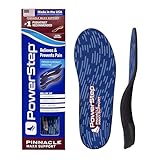
- Slightly Angled Heel Post: PowerStep Pinnacle Maxx insoles for men & women keep the feet from rolling inward, improve stability, and prevent problems caused by overpronation including flat feet and plantar fasciitis.
- Firm But Flexible Design: Our orthotics Pinnacle PowerStep insoles for overpronation are equipped with a deep heel insert cradle for increased comfort, stability, and motion control for standard arch support and immediate heel pain relief.
- Premium Dual Layer Cushioning: For enhanced comfort from heel to toe. As the thickest of our Pinnacle PowerStep orthotics, these need to be worn in shoes where the factory insole can be removed. HSA & FSA Eligible. Made in the USA
- The Perfect Balance of Comfort and Support: These PowerStep Pinnacle arch support inserts for men & women are unlike most other orthotics as they help to correct over-pronation which can cause ankle, knee, and hip pain in your daily routine
- No Trimming: Our arch support PowerStep insoles men & women can use can be worn in a variety of shoe styles & fit in any type with no trimming required! Unlike most insoles for flat feet and other heel pain relief products, these come ready to wear.
As an Amazon Associate, Balance Foot and Ankle earns from qualifying purchases. Product links are affiliate links and we may earn a commission at no extra cost to you. This does not influence our clinical recommendations. Last update on 2026-09-20 / Images from Amazon Product Advertising API
Same-day appointments available. Call (810) 206-1402 or book online.
When Shoes Aren’t Enough — Dr. Tom’s Top 9 Orthotics
About 30% of patients I see for foot pain need MORE than a great shoe — they need a structured insole. Below: my complete 2026 orthotic ranking with pros, cons, and the specific patient I’d give each one to.
★ DR. TOM’S COMPLETE 2026 ORTHOTIC RANKING
9 Best Prefab Orthotics by Use Case
PowerStep, Currex, Spenco, Vionic, and Superfeet — every orthotic I’ve fitted to thousands of patients across both Michigan offices. Each card includes pros, cons, and the specific patient I’d give it to. Real Amazon ratings, review counts, and prices below.
Best All-Purpose Orthotic for Most Patients
Semi-rigid arch shell + dual-layer cushion + deep heel cup. The orthotic I’ve fitted to more patients than any other for 15 years. APMA-accepted. Trim-to-fit design works in athletic shoes, casual shoes, and most work boots.
- #1 Podiatrist Recommended - The Pinnacle PowerStep insoles for men & women provide maximum cushioning, from high activity to moderate support. The arch support shape provides stability to the foot & ankle, helping to relieve foot pain.
- When you spend all day on your feet, every step counts. These plantar fasciitis insoles are podiatrist-recommended to help relieve & prevent foot pain for people with plantar fasciitis, heel spurs, and other common foot, ankle & knee injuries
- The Pinnacle PowerStep insoles offer superior heel cushioning and arch support. These shoe inserts for men and women have dual-layer cushioning to help reduce stress and fatigue, while premium arch support is designed for plantar fasciitis relief
- The PowerStep Pinnacle arch support inserts for men & women can be worn in a variety of shoe types such as; athletic, walking, running, work & some casual shoes. Orthotic Inserts are ordered by shoe size, no trimming required.
- These insoles for shoes are made in the USA & backed by a 30-day money-back guarantee. PowerStep shoe insoles for men & women are designed for shoes where the factory insole can be removed. HSA & FSA Eligible
As an Amazon Associate, Balance Foot and Ankle earns from qualifying purchases. Product links are affiliate links and we may earn a commission at no extra cost to you. This does not influence our clinical recommendations. Last update on 2026-09-20 / Images from Amazon Product Advertising API
✓ Pros
- Semi-rigid arch shell provides true biomechanical correction
- Deep heel cup centers the heel and reduces lateral instability
- Dual-layer cushion (top + bottom) lasts 9-12 months daily wear
- Available in 8 sizes for precise fit
- APMA-accepted and clinically validated
- Lower price than Superfeet Green for equivalent function
✗ Cons
- Too thick for most dress shoes (use ProTech Slim instead)
- Some break-in period required (3-7 days for arch tolerance)
- Not enough correction for severe pes planus or rigid pes cavus
Dr. Tom’s Recommendation: If a patient has run-of-the-mill plantar fasciitis, mild flat feet, or arch fatigue, this is the first orthotic I try. Better value than Superfeet for 90% of patients, which is why I swapped it into our clinic kits three years ago. Sub-$50 typically.
Maximum Motion Control · Flat Feet & Severe Over-Pronation
PowerStep’s most aggressive stability orthotic. Adds a 2°-7° medial heel post on top of the standard PowerStep platform — designed specifically for flat-footed patients and severe pronators who need real corrective force.

- Full Length Support: Our ProTech arch support inserts for men & women support mild to moderate pronation, arch pain, heel pain, plantar fasciitis, and heel spurs
- Plantar Fasciitis Relief: These orthotics for plantar fasciitis provide full-length, total-contact support. Plantar fasciitis relief insoles help ease arch & heel pain, Achilles tendonitis, shin splints, bunions, heel spurs & more.
- Firm but Flexible Support: These shoe insoles for plantar fasciitis feature contoured neutral arch support and a deep heel cradle for comfort, stability & motion control. This shoe insole fits most shoes, including work boots & sneakers.
- ShockAbsorb Technology: PowerStep neutral arch support orthotic insoles contain a premium shock absorbing cushion to provide bounce back with each step, reducing stress on heels, avoiding heel pain & heel spurs.
- Made in USA: These PowerStep insoles for shoes are made in the USA. PowerStep shoe insoles for women & men are designed for shoes where the factory insole can be removed. HSA & FSA Eligible
As an Amazon Associate, Balance Foot and Ankle earns from qualifying purchases. Product links are affiliate links and we may earn a commission at no extra cost to you. This does not influence our clinical recommendations. Last update on 2026-09-20 / Images from Amazon Product Advertising API
✓ Pros
- 2°-7° medial heel post adds aggressive pronation control
- Same trusted PowerStep arch shell, more correction
- Built specifically for flat-foot biomechanics
- Excellent for posterior tibial tendon dysfunction (PTTD)
- Removable top cover for cleaning
✗ Cons
- Too aggressive for neutral-arch patients
- Needs longer break-in (10-14 days) due to stronger correction
- Adds 2-3 mm of stack height — won’t fit slim dress shoes
Dr. Tom’s Recommendation: When a patient comes in with significant flat feet AND symptoms (heel pain, arch pain, knee pain), the Original PowerStep isn’t aggressive enough. The Maxx is what gets prescribed. About 25% of my flat-footed patients end up here.
Low-Profile · Fits Dress Shoes & Narrow Casuals
3 mm slim profile with podiatrist-designed tri-planar arch technology. Engineered specifically to fit inside dress shoes, oxfords, loafers, and women’s flats without crowding the toe box. Vionic was founded by an Australian podiatrist.
No products found.
✓ Pros
- 3 mm slim profile (vs 7-10 mm for standard orthotics)
- Tri-planar arch technology adds support without bulk
- Built-in deep heel cup despite slim design
- Fits dress shoes WITHOUT having to remove the factory insole
- Trim-to-fit · APMA-accepted
✗ Cons
- Less arch support than full-volume orthotics
- Top cover wears faster than thicker alternatives
- Not enough correction for severe foot deformities
Dr. Tom’s Recommendation: My default when a patient says ‘I need orthotics but I have to wear dress shoes for work.’ Slim enough to fit in oxfords and pumps without the heel sliding out. The single highest-impact change you can make for office workers with foot pain.
Built-In Metatarsal Pad · Morton’s Neuroma · Ball-of-Foot Pain
Standard Pinnacle orthotic with a built-in metatarsal pad positioned proximal to the metatarsal heads — the exact location that offloads neuromas and metatarsalgia. No need for separate met pads or pad placement guesswork.
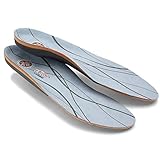
- PODIATRIST DESIGNED! An effective alternative to expensive custom-made orthotics. Innovative biomechanical THREE-ZONE COMFORT technology delivers deep heel cup stability, forefoot cushioning, and ultimate arch support to prevent excessive pronation caused by flat feet. These essential contact points help to realign positioning of feet, aiding to re-establish your body's natural alignment, from the ground up.
- VIONIC ORTHOTIC INSOLES! These women's and men's shoe inserts offer a convenient, pain-free natural healing solution for many of the common aches and pains associated with poor lower-limb alignment, plantar fasciitis, and arch pain. EVA orthotic with re-enforced, hardened plastic (PE) shell for added motion control and stability. Cushioned shock dot in the heel for added shock absorption. Can be trimmed in forefoot if necessary.
- DESIGNED FOR EVERYDAY USE! Designed to provide greater control in faster paced activities such as running and fast walking. 4 degree rear foot wedge to provide support and control which helps prevent excess pronation. Odor absorbing cover. Contoured around the heel and arch areas to achieve 100% foot contact. Podiatrist Designed, APMA Seal of Acceptance.
- COMFORTABLE TO WEAR! Shoe inserts for women and men contoured around the heel and arch areas to achieve perfect foot contact.
- SIZES AVAILABLE: XS: Women's 4.5 – 6 / Men's 3.5 – 5 S: Women's 6.5 – 8 / Men's 5.5 – 7 M: Women's 8.5 – 10 / Men's 7.5 – 9 L: Women's 10.5 – 12 / Men's 9.5 – 11 XL: Men's 11.5 – 13
As an Amazon Associate, Balance Foot and Ankle earns from qualifying purchases. Product links are affiliate links and we may earn a commission at no extra cost to you. This does not influence our clinical recommendations. Last update on 2026-09-20 / Images from Amazon Product Advertising API
✓ Pros
- Built-in met pad eliminates DIY pad placement errors
- Specifically designed for Morton’s neuroma + metatarsalgia
- Same trusted PowerStep arch + heel cup platform
- Top cover protects sensitive forefoot skin
- Faster relief than orthotics + add-on met pads
✗ Cons
- Met pad position is fixed (can’t fine-tune individual placement)
- Some patients with very small or very large feet need custom
- Slightly thicker than the standard Pinnacle
Dr. Tom’s Recommendation: If a patient has Morton’s neuroma, sesamoiditis, or generalized ball-of-foot pain (metatarsalgia), this saves a clinic visit and a prescription. The built-in pad placement is anatomically correct for 80% of feet. Way better than DIY met pads.
Adaptive Dynamic Arch · Athletic & Daily Wear
Currex’s flagship adaptive arch technology — the orthotic flexes with your gait instead of fighting it. Different stiffness zones along the length give you targeted support at the heel, midfoot, and forefoot. Available in three arch heights (low/medium/high).

- Signature waffle-inspired rubber outsole for traction and flexibility
As an Amazon Associate, Balance Foot and Ankle earns from qualifying purchases. Product links are affiliate links and we may earn a commission at no extra cost to you. This does not influence our clinical recommendations. Last update on 2026-09-20 / Images from Amazon Product Advertising API
✓ Pros
- Dynamic flex zones adapt to natural gait cycle
- Three arch heights ensure precise fit
- Lighter than rigid orthotics (no ‘heavy foot’ feel)
- Excellent for runners and athletic walkers
- European podiatric design (German engineering)
✗ Cons
- More expensive than PowerStep Original ($55-65 typically)
- Less aggressive correction than Pinnacle Maxx for severe cases
- Three arch heights means you must self-select correctly
Dr. Tom’s Recommendation: I started recommending Currex three years ago for runners who said PowerStep felt ‘too rigid.’ The dynamic flex zones respect natural gait. Best for active patients who walk 8K+ steps daily and don’t need maximum motion control.
Running-Specific · Heel Strike + Forefoot Strike Compatible
Currex’s purpose-built running orthotic. The midfoot flex zone is positioned for runner’s gait mechanics, with a flared heel cushion for heel strikers and a forefoot rocker for midfoot/forefoot strikers. Tested on 1000+ runners during product development.
- Provides continuous support of the Plantar Fascia by gently stretching the fascia tissue.
- Compression zones promote circulation, reduce impact vibration, boost recovery and strengthen feet.
- Lightweight, seamless design with extra cushioning provides support while still being comfortable.
- Supports the heel/arch and overall foot structure while stabilizing the tendon for better performance
- Made from high quality materials, the socks are moisture wicking and breathable.
As an Amazon Associate, Balance Foot and Ankle earns from qualifying purchases. Product links are affiliate links and we may earn a commission at no extra cost to you. This does not influence our clinical recommendations. Last update on 2026-09-20 / Images from Amazon Product Advertising API
✓ Pros
- Designed by German biomechanics lab specifically for runners
- Dynamic arch flexes with running gait (not static like PowerStep)
- Three arch heights (low/medium/high)
- Reduces overuse injury risk in mid-distance runners
- Lightweight (no impact on cadence)
✗ Cons
- Premium price ($60-75)
- Not aggressive enough for severe over-pronators (use Pinnacle Maxx)
- Runner-specific design = less ideal for daily walking shoes
Dr. Tom’s Recommendation: If a patient runs 20+ miles per week and has plantar fasciitis or shin splints, this is the orthotic I prescribe. The dynamic flex zones respect running biomechanics in a way that no rigid PowerStep can match. Pricier but worth it for serious runners.
Cavus Foot & High-Arch Patients
Polyurethane base with a deeper heel cup and higher arch profile than PowerStep — built for cavus (high-arched) feet that need maximum cushion and support. The 5-zone cushioning system addresses the unique pressure points of high-arch feet.

- The first generation of Protalus's M-100 Insole
- Patented Alignment Technology: The M-100 features a deep heel cup and contoured arch to correct overpronation and promote better posture, stability, and joint health throughout your body.
- Comfortable Insoles: The patented stress relief replacement shoe insoles increase comfort and relieve plantar fasciitis and anti-fatigue.
- Improves Alignment: The shoe insoles help improve alignment and reduce pain in the feet, ideal for low and high arches.
As an Amazon Associate, Balance Foot and Ankle earns from qualifying purchases. Product links are affiliate links and we may earn a commission at no extra cost to you. This does not influence our clinical recommendations. Last update on 2026-09-20 / Images from Amazon Product Advertising API
✓ Pros
- Deeper heel cup centers the heel for cavus foot stability
- Higher arch profile fills the void under high arches
- 5-zone cushioning addresses cavus foot pressure points
- Polyurethane base lasts 12+ months
- Available in Wide width
✗ Cons
- Too tall/aggressive for normal or low arches
- Won’t fit slim dress shoes
- Pricier than PowerStep Original
- Some patients find the arch height uncomfortable initially
Dr. Tom’s Recommendation: Cavus foot patients are often misdiagnosed and given low-arch orthotics — that makes everything worse. Spenco’s Total Support has the arch profile that high-arch feet actually need. About 15% of my patients have cavus feet; this is what they wear.
Cushion Layer · Standing All Day · Gel Pressure Relief
NOT a true biomechanical orthotic — this is a cushion insole. But for patients who want gel pressure relief instead of arch correction (or to add ON TOP of factory insoles in work boots), this is the best gel option on Amazon.
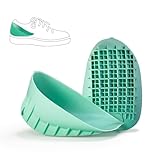
- ✶ALLEVIATES HEEL PAIN – Tuli’s Heavy Duty Heel Cups provide heel pain relief caused by plantar fasciitis, Sever’s disease, excessive pronation, Achilles tendonitis, etc. Ideal for those on their feet for most of the day or those looking for added comfort.
- ✶PODIATRIST PREFERRED – In an independent study conducted by M3 Global Research, podiatrists chose Tuli’s as the clear winner of recommended heel cup brands.
- ✶SHOCK-ABSORBING DESIGN – The multi-cell, multi-layer design absorbs shock and impact energy, mimicking the natural shock-absorbing system of your feet. As you walk or run, the design reduces the stress on your feet.
- ✶DOCTOR RECOMMENDED & APMA ACCEPTED – Tuli’s Heel Cups were designed by a leading podiatrist and have the honor of being accepted by the American Podiatric Medical Association.
- ✶FITS MOST LACE-UP SHOES – Best used in spacious lace-up shoes like athletic shoes / sneakers.
As an Amazon Associate, Balance Foot and Ankle earns from qualifying purchases. Product links are affiliate links and we may earn a commission at no extra cost to you. This does not influence our clinical recommendations. Last update on 2026-09-12 / Images from Amazon Product Advertising API
✓ Pros
- Genuine gel cushioning (not foam pretending to be gel)
- Targeted gel waves under heel and ball of foot
- Trim-to-fit · works in most shoe types
- Sub-$15 price (most affordable option in this list)
- Massaging texture is genuinely soothing
✗ Cons
- ZERO arch support — this is cushion only
- Won’t fix plantar fasciitis or flat-foot issues
- Compresses faster than PowerStep (4-6 months)
- Top cover wears through in high-mileage applications
Dr. Tom’s Recommendation: I recommend these to patients who tell me ‘I just want my feet to stop hurting at the end of my shift’ and who don’t have a biomechanical issue. Construction workers, factory workers, retail. Pure cushion does the job for them.
Tight-Fitting Shoes · Cycling Shoes · Hockey Skates
Superfeet’s slim version of their famous Green insole. The trademark stabilizer cap is preserved but the overall thickness is reduced — works in cycling shoes, hockey skates, ski boots, and other tight-fitting footwear that the standard Superfeet Green can’t fit into.
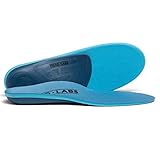
- Plantar Fasciitis Relief, Every Step – Firm arch support helps relieve heel and arch pain from plantar fasciitis and supports flat feet and overpronation for better alignment and all-day comfort.
- Clinical-Grade Biomechanics – Tread Labs 26-33 ARCHitecture delivers orthotic-level stability—custom-orthotic feel without the prescription.
- Dialed Fit for Any Shoe – Four arch heights (low, medium, high, extra-high) and an easy 3-step sizing guide make selection simple for work boots, sneakers, and everyday shoes—great for standing all day.
- Built to Last a Million Miles – Durable, recyclable arch supports with our Million-Mile Guarantee; replaceable top covers keep insoles fresh and cost-effective. Unlike foam that flattens, Pace is engineered to last.
- Trusted Expertise – Designed by Mark Paigen (founder of Chaco). Premium arch support inserts for men and women backed by decades of footwear innovation.
As an Amazon Associate, Balance Foot and Ankle earns from qualifying purchases. Product links are affiliate links and we may earn a commission at no extra cost to you. This does not influence our clinical recommendations. Last update on 2026-09-20 / Images from Amazon Product Advertising API
✓ Pros
- Stabilizer cap centers the heel (Superfeet’s signature feature)
- Slim profile fits tight athletic footwear
- Lasts 12+ months daily wear
- Excellent for cycling shoes specifically
- Built-in odor-control treatment
✗ Cons
- Premium price ($45-55)
- Less cushion than PowerStep equivalents
- Not as aggressive correction as Pinnacle Maxx for flat feet
- The signature ‘heel cup feel’ takes 1-2 weeks to adapt to
Dr. Tom’s Recommendation: If you’re a cyclist with foot numbness, hot spots, or knee pain — this is the orthotic. The stabilizer cap solves cycling-specific biomechanical issues that no other orthotic addresses. Worth the premium for athletes.
None of these solving your foot pain?
Some patients (about 30%) need custom-molded prescription orthotics. We make 3D-scanned custom orthotics in our Howell and Bloomfield Township offices — specifically built for your foot mechanics.
Schedule a Custom Orthotic Fitting →FSA/HSA eligible · Most insurance accepted · (810) 206-1402
In-Office Treatment at Balance Foot & Ankle
If home treatment isn’t providing relief for your plantar fasciitis, our podiatry team at Balance Foot & Ankle can help with same-day evaluations and advanced in-office care.
Same-day appointments available. (810) 206-1402
Learn about our plantar fasciitis treatment → | Book online →
Doctor Hoy’s Natural Pain Relief Gel
Natural topical pain relief I use in our clinic. Arnica + camphor formula — apply directly to the area 3–4x daily. ($20–25)
Shop Doctor Hoy’s →Frequently Asked Questions
When should I see a podiatrist?
If symptoms persist past 2 weeks, affect your normal activity, or are accompanied by red-flag symptoms (warmth, redness, swelling, inability to bear weight).
What does treatment cost?
Most diagnostic visits and conservative treatments are covered by Medicare and major insurers. Out-of-pocket costs vary by your specific plan.
How quickly can I get an appointment?
Most non-urgent cases see us within 5 business days. Urgent cases (sudden pain, possible fracture) typically same or next business day.
What is Plantar fasciitis?
Plantar fasciitis is a common foot/ankle condition that affects mobility and quality of life. Understanding the underlying cause is the first step in successful treatment. Our podiatrists at Balance Foot & Ankle perform a hands-on biomechanical exam, review your activity history, and use diagnostic imaging when appropriate to identify the root cause—not just treat the symptom. Many patients have been told to “rest and ice” without a deeper diagnostic workup; our approach is different.
Symptoms and warning signs
Common signs of plantar fasciitis include pain that worsens with activity, morning stiffness, swelling, tenderness when palpated, and difficulty bearing weight. If you experience sudden severe pain, inability to walk, visible deformity, numbness or color change, contact our office the same day or visit urgent care—these can signal a more serious injury such as a fracture, tendon rupture, or vascular compromise. Diabetics with any foot wound should seek same-day care.
Conservative treatment options
Most cases of plantar fasciitis respond to non-surgical care: structured rest, supportive footwear changes, custom orthotics, targeted stretching and strengthening protocols, anti-inflammatory medications when medically appropriate, and in-office procedures such as ultrasound-guided injections. We also offer advanced therapies including MLS laser therapy, EPAT/shockwave, regenerative injections, and image-guided procedures. Treatment is sequenced from least invasive to most invasive, and we explain the rationale at every step.
When is surgery considered?
Surgery is reserved for cases that fail 3-6 months of well-structured conservative care, when there is structural pathology (severe deformity, complete tear, advanced arthritis), or when imaging shows damage that will not heal without intervention. Our surgeons have performed 3,000+ foot and ankle procedures and prioritize minimally-invasive techniques whenever appropriate. We discuss recovery timelines, return-to-activity milestones, and realistic outcome expectations before any procedure is scheduled.
Recovery timeline and prevention
Recovery from plantar fasciitis varies based on severity and chosen treatment path. Conservative cases often improve within 4-8 weeks with consistent adherence to the protocol. Post-procedural recovery may range from a few days (in-office procedures) to several months (reconstructive surgery). Long-term prevention involves footwear assessment, activity modification, structured strengthening, and regular check-ins with your podiatrist if you have a history of recurrence. We provide written home-exercise plans and digital follow-up support.
Ready to feel better?
Same-week appointments available in Howell and Bloomfield Township, Michigan.
Book Your Visit
Dr. Tom Biernacki, DPM is a board-certified foot & ankle surgeon (ABFAS & ABPM) at Balance Foot & Ankle Specialists in Southeast Michigan. With over a decade of clinical experience, he specializes in heel pain, bunions, diabetic foot care, sports injuries, and minimally invasive surgery. Dr. Biernacki is a member of the APMA and ACFAS, and his patient education content on MichiganFootDoctors.com and YouTube has made him one of the most-followed foot & ankle educators on YouTube.