
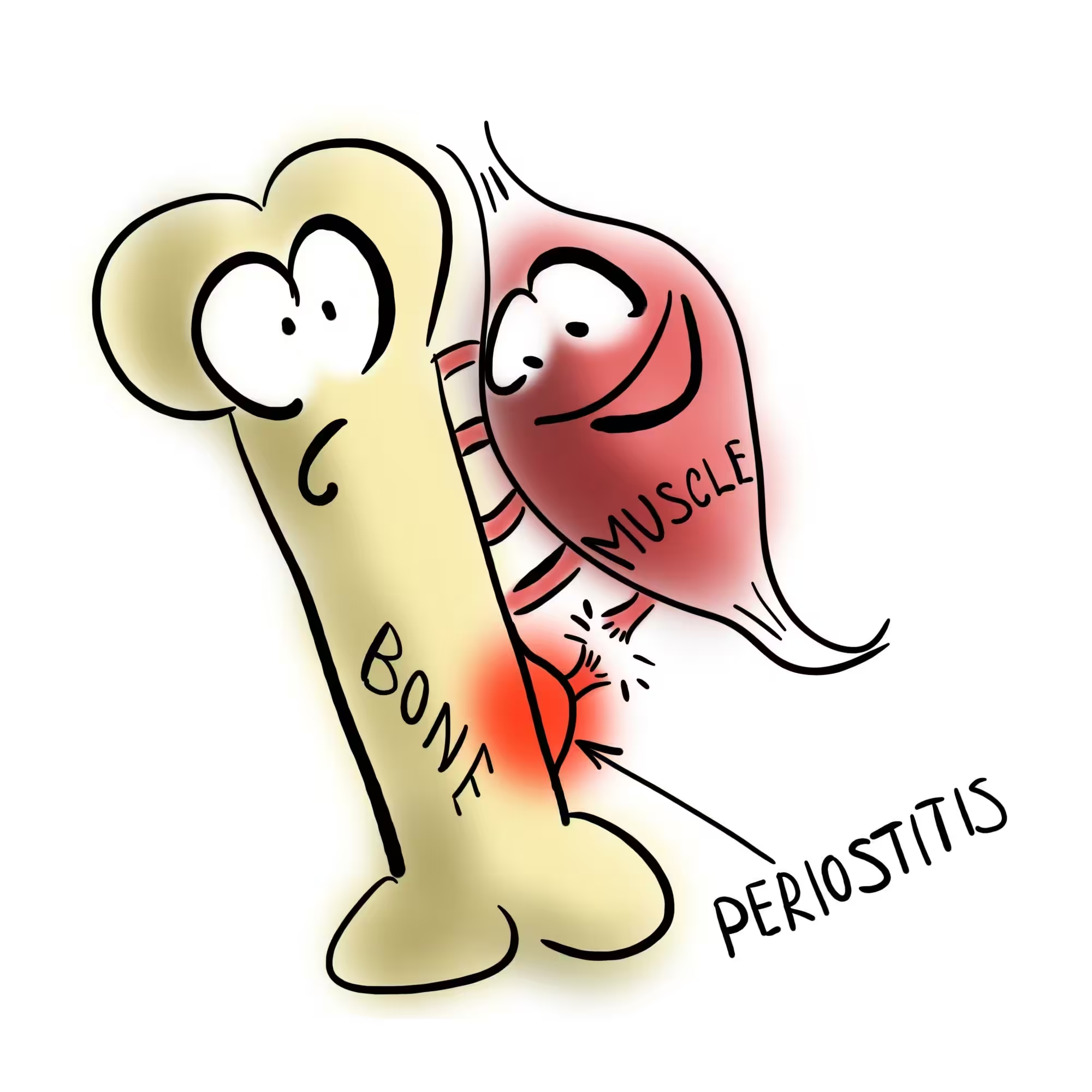

Quick answer: Treatment for shin splints treatment follows a stepwise approach: 1) conservative care first (rest, ice, supportive footwear, OTC anti-inflammatories), 2) physical therapy and targeted exercises, 3) in-office treatments (injections, custom orthotics) if conservative fails at 4-6 weeks, 4) surgery for refractory cases. Most patients resolve at step 1 or 2. Call (810) 206-1402.

Medically Reviewed by Dr. Tom Biernacki, DPM, FACFAS — Board-certified podiatrist & foot surgeon, Howell & Bloomfield Township, MI | Last updated: May 2026
Shin splints (medial tibial stress syndrome) are caused by repetitive impact overloading the tibia and surrounding musculature. Most cases resolve in 4–8 weeks with rest, ice, proper footwear, and a graduated return to activity. Overpronation is present in roughly 60% of cases — custom orthotics dramatically accelerate recovery. See a podiatrist if pain is sharp, localised to one spot, or persists beyond 6 weeks.
⚠️ See a podiatrist if you have:
- Shin pain that persists even at rest or during non-impact activities
- A specific, pinpoint area of tenderness rather than diffuse shin soreness
- Swelling, redness, or warmth along the shin bone
- Pain severe enough to force you to stop activity immediately
- Shin pain that doesn’t improve after 2–3 weeks of rest
PowerStep Pinnacle Arch Support Insole
⭐ DPM’s #1 Prevention Tool for Shin Splints
Overpronation is the single most common biomechanical cause of medial tibial stress syndrome. As the arch collapses inward with each footfall, the tibialis posterior and soleus muscles contract eccentrically to control the collapse — producing the repetitive traction stress on the shin bone’s periosteum that causes shin splints. PowerStep insoles eliminate this pronation trigger.
⭐ Best Brace for Shin Splint Mechanics Control
For athletes who can’t fully rest from training, the Active Ankle T2 limits the excessive ankle eversion and internal tibial rotation that transmit damaging forces to the shin bone. This allows continuation of modified training while the periosteum heals, and significantly reduces the risk of progressing from shin splints to a true tibial stress fracture.
Ready to Get Relief? Same-Day Appointments Available
Board-certified podiatrist | Howell & Bloomfield Township, MI | Most Insurance Accepted
4.9★ | 1,123 Reviews | 3,000+ Surgeries
Or call: (810) 206-1402
The most important clinical decision with Shin Splints Treatment isn’t which treatment to start with — it’s identifying the correct subtype. That changes everything. Call (810) 206-1402.
Shin Splints vs. Stress Fracture — Know the Difference
Medically reviewed by Dr. Tom Biernacki, DPM
Board-certified podiatric surgeon | Balance Foot & Ankle
Last reviewed: May 2026
| Feature | Shin Splints (MTSS) | Stress Fracture |
|---|---|---|
| Pain location | Diffuse along inner shin | Sharp, focal point tenderness |
| Pain with rest | Usually resolves quickly | May persist at rest or night |
| X-ray findings | Normal initially | May show periosteal reaction |
| MRI needed? | Rarely | Often for confirmation |
| Return to sport | 4–8 weeks | 8–16 weeks |
How We Treat Shin Splints at Balance Foot & Ankle
Effective shin splint treatment targets both the symptom (periosteal inflammation) and the root cause (mechanical overload from poor foot mechanics). Our protocol:
- Gait analysis & biomechanical assessment — identifies overpronation, limb length discrepancy, and muscle imbalances driving overload
- Custom orthotics — reduce tibial torsion stress and correct arch collapse; most significant single intervention for recurrent MTSS
- MLS laser therapy — reduces periosteal inflammation and accelerates healing 2–3× faster than rest alone
- Graduated loading protocol — structured return to activity preventing re-injury; replaces abrupt rest-to-return patterns
- Footwear guidance — stability running shoes, proper cushioning match for surface type
- Calf and tibialis posterior strengthening — addresses the muscular fatigue component
Watch: Medial Tibial Stress Syndrome — Causes & Fix
The most common mistake patients make is returning to full training the moment the pain disappears. Shin splints resolve symptomatically well before the underlying periosteal stress has healed — resuming hard mileage too early causes a stress fracture, a far more serious injury requiring boot immobilisation or even surgery. Always follow a graduated return-to-run protocol and address foot mechanics before ramping up again.
Frequently Asked Questions About Shin Splints
How long does it take for shin splints to heal?
Most cases of medial tibial stress syndrome resolve in 4–8 weeks with proper rest, biomechanical correction, and a graduated return to activity. Severe or recurrent cases — especially those with underlying overpronation — may take 10–12 weeks. Continuing to train through pain typically doubles recovery time and increases stress fracture risk.
Can I run with shin splints?
Running through moderate shin pain is generally not advisable and risks progressing MTSS to a stress fracture. Low-impact cross-training (swimming, cycling, elliptical) maintains fitness without tibial loading. Once pain-free at rest, a supervised graduated return protocol with shorter, slower runs on softer surfaces is the safest path back.
Do orthotics help shin splints?
Yes — custom orthotics are one of the most effective interventions for recurrent shin splints. Approximately 60% of MTSS cases involve overpronation, which increases tibial torsional stress with each footstrike. Custom orthotics correct this mechanics problem at the source, reducing recurrence rates significantly compared to rest alone or generic insoles.
What is the difference between shin splints and a stress fracture?
Shin splints produce diffuse, aching pain along the inner lower leg that improves with warm-up. Stress fractures cause sharp, focal pain at a specific point on the bone that worsens with activity and may persist at rest or at night. A stress fracture requires imaging (X-ray or MRI) to confirm and typically requires 8–16 weeks of protected weight-bearing.
When should I see a podiatrist for shin splints?
See a podiatrist if shin pain is sharp or focal rather than diffuse, lasts beyond 6 weeks despite rest, returns with every new training cycle, or is accompanied by swelling. Balance Foot & Ankle offers same-day appointments at both our Howell and Bloomfield Township locations — call (810) 206-1402.
Shin Pain That Won’t Go Away? We Can Help Today.
Dr. Tom Biernacki, DPM, FACFAS — same-day appointments in Howell & Bloomfield Township, MI. Gait analysis, custom orthotics, and MLS laser therapy for shin splints and stress fractures.
Related: Overpronation treatment · Stress fracture foot · Custom orthotics Michigan · Plantar fasciitis stretches · Achilles tendinitis
🩺 Dr. Tom’s Recommended Products
As an Amazon Associate I earn from qualifying purchases. These are products I personally use and recommend to patients.
The OTC orthotic I recommend most. Sub-$50 before custom orthotics.
View on Amazon →
Natural menthol + arnica topical. FSA-eligible — what I switched my family to from Doctor Hoy’s Natural Pain Relief Gel.
View on Amazon →
In-Office Treatment at Balance Foot & Ankle
If home treatment isn’t providing relief for your foot and ankle conditions, our podiatry team at Balance Foot & Ankle can help with same-day evaluations and advanced in-office care.
Same-day appointments available. (810) 206-1402
Learn about our orthotic and supportive care → | Book online →
Related Conditions

Dr. Tom Biernacki, DPM is a board-certified foot & ankle surgeon (ABFAS & ABPM) at Balance Foot & Ankle Specialists in Southeast Michigan. With over a decade of clinical experience, he specializes in heel pain, bunions, diabetic foot care, sports injuries, and minimally invasive surgery. Dr. Biernacki is a member of the APMA and ACFAS, and his patient education content on MichiganFootDoctors.com and YouTube has made him one of the most-followed foot & ankle educators on YouTube.