
Medically reviewed by Dr. Tom Biernacki, DPM
Board-certified podiatric surgeon | Balance Foot & Ankle, Howell & Bloomfield Hills, MI
Last reviewed: May 2026

Quick answer: For wide feet, podiatrists recommend shoes with structured arch support, deep heel cup, and forefoot rocker. Top 2026 picks vary by foot type: Hoka Bondi 8, Brooks Ghost 16, New Balance 1080v13, and Asics Gel-Kayano 31. Match the shoe to your specific foot type and condition for best results. Call (810) 206-1402.
Wide feet are one of the most common foot complaints I see at Balance Foot & Ankle. Most shoe brands design around a medium (D/B) width, which means people with wide feet are constantly forcing their feet into shoes that weren’t made for them — leading to bunions, blisters, neuromas, and chronic forefoot pain.
The good news: several brands now make excellent wide and extra-wide options that don’t sacrifice style or support. Here’s exactly what to look for and which shoes consistently perform best for wide feet.
The most important clinical decision with Best Shoes Wide Feet isn’t which treatment to start with — it’s identifying the correct subtype. That changes everything. Call (810) 206-1402.
What Makes a Shoe Right for Wide Feet
Width sizing in shoes follows a letter system: B (narrow women’s), D (standard men’s/wide women’s), 2E (wide men’s), 4E (extra-wide). When shopping for wide feet, always verify the width code — a shoe that looks wide in photos may still come only in standard width.
The key features to evaluate in any shoe for wide feet:
- Toe box width at the widest point — should be at least as wide as your foot at the metatarsal heads (ball of foot). Shoes that taper sharply squeeze the toes together.
- Upper material — knit mesh and soft leather stretch more than stiff synthetic; this matters for bunions and hammertoes.
- Removable insole — allows you to insert a custom or OTC orthotic without the shoe feeling tighter.
- Heel fit — wide feet sometimes come with narrow heels; look for brands with segmented lacing so you can tighten the heel without crushing the forefoot.
Best Walking Shoes for Wide Feet
New Balance 990v6 (2E and 4E widths) — The 990 series has been a podiatrist staple for decades. The 990v6 maintains NB’s traditional wide toe box, adds a dual-density foam midsole, and comes in four widths. It’s the gold standard for everyday walking and standing jobs.
Brooks Addiction Walker 2 — Specifically engineered for overpronators and people who need maximum arch support. Available in wide and extra-wide for both men and women. The extended Progressive Diagonal Rollbar controls excessive motion without being rigid.
New Balance 847v4 — Slightly narrower at the heel than the 990 but with a more forgiving forefoot. Great for people who have a true wide forefoot but not a wide heel.
Best Running Shoes for Wide Feet
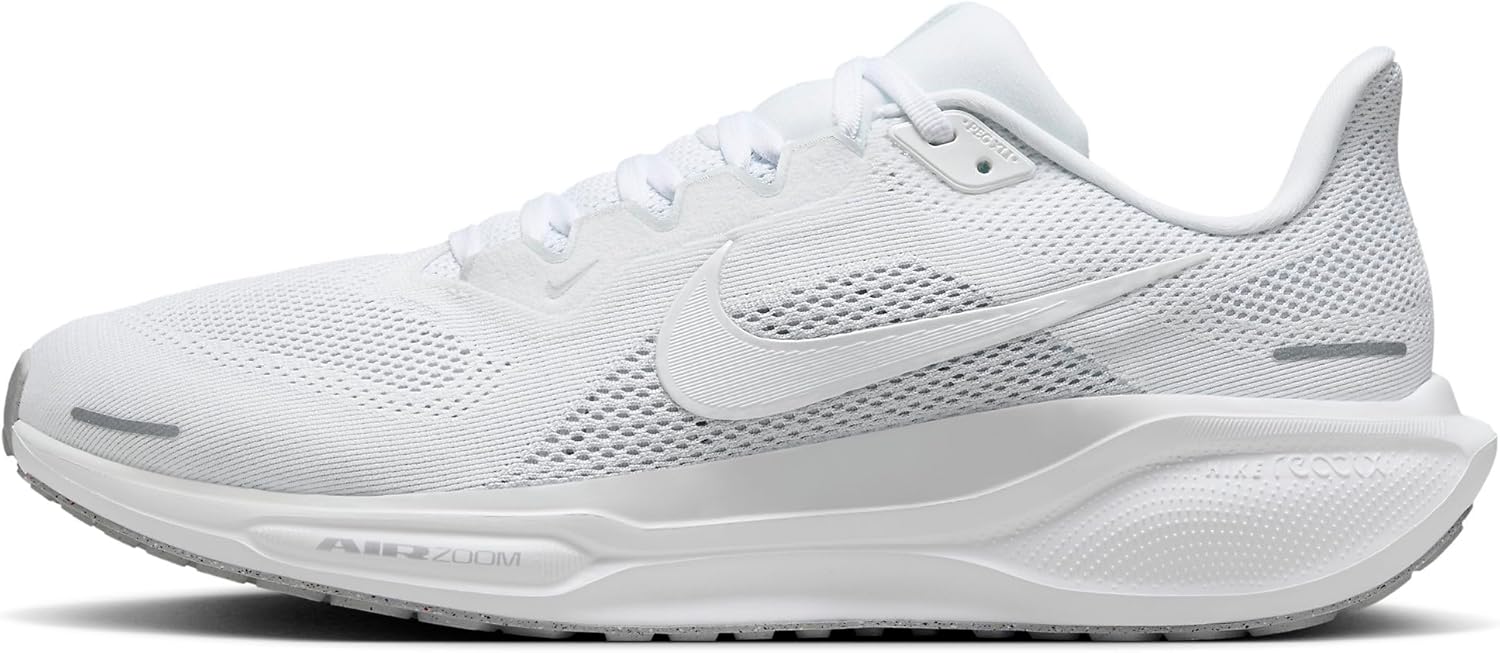
HOKA Bondi 8 Wide — Maximal cushioning and a rounded rocker sole reduce peak pressure across the ball of foot. The wide version adds 5-7mm across the forefoot compared to standard. Excellent for plantar fasciitis + wide feet combination.
Altra Paradigm 7 — Zero-drop (heel-to-toe height = 0) with a FootShape toe box that fans outward to match the natural shape of the foot. Altra’s entire line is built wide by design, making it the best brand for truly wide feet runners.
Saucony Omni 22 Wide — Stability shoe with a wider base, 10mm drop, and PWRRUN cushioning. Works well for wide feet with low arches who overpronate. The wide version is genuinely wider than the standard model (not just labeled differently).
Best Dress Shoes for Wide Feet
Dress shoes are the hardest category for wide feet because fashion prioritizes narrow silhouettes. Here’s where wide-width options actually exist:
Propét LifeWalker Strap (women’s) — Mary-Jane style with velcro closure, available 2E-6E width. Surprisingly stylish with slacks or skirts. Podiatrist-approved for post-surgical and diabetic patients.
Rockport Total Motion (men’s) — Available in W (wide) and XW (extra-wide), leather upper, genuine oxford silhouette. Adiprene cushioning in the heel. Works for office settings where appearance matters.
Drew Shoes (men’s and women’s) — Medical footwear brand offering depths up to 8E. Understated styling with diabetic-grade construction. Often covered by insurance for qualifying diagnoses.
Wide Feet in Children — What Parents Should Know
Children’s feet are naturally wider in proportion to their length than adult feet. Most children’s shoes are built with slightly more room, but as kids reach school age and wear more fashionable shoes, width problems emerge. Signs a child’s shoes are too narrow: seams leaving marks on the skin, toes pressed together after removal, complaints of burning or tingling after an hour of wear. New Balance Kids and Stride Rite both offer wide widths in children’s sizes.
⚠️ When to see a podiatrist about wide feet:
- Bunions or hammertoes forming — these worsen if shoes remain too narrow
- Persistent burning or tingling across the ball of foot (possible neuroma)
- Callus buildup on the outside of the big toe or pinky toe
- You can’t find shoes that fit — a podiatrist can measure true width and recommend prescription footwear
- Diabetic or neuropathic feet — proper width is critical to prevent ulcers
Do Wide-Footed People Need Orthotics?
Wide feet and flat feet often go together — the arch collapses outward, spreading the foot. If your foot measures wide but didn’t always, a fallen arch is the likely cause. A custom orthotic can redistribute weight off the ball of foot and, combined with a wide shoe, dramatically reduce pain.
For OTC orthotics, PowerStep Pinnacle Wide comes in wide widths specifically. CURREX RunPro is another podiatrist-recommended option with a wider base profile.
In-Office Treatment at Balance Foot & Ankle
If you’re struggling to find shoes that fit and experiencing pain, a podiatric evaluation can identify the root cause — whether it’s true structural width, a flat arch, bunion deformity, or neuroma. We provide professional foot measurements, custom orthotic fabrication with our 3D digital scanning system, and recommendations for prescription-depth footwear covered by insurance.
Same-day appointments available. (810) 206-1402 | Book online
Frequently Asked Questions
What shoe width is considered wide for men and women?
For men, D is standard, 2E is wide, and 4E is extra-wide. For women, B is standard, D is wide, and 2E is extra-wide. When a shoe is labeled “wide” without a letter code, it typically corresponds to 2E for men or D for women. Measure your foot at the widest point (metatarsal heads) in the afternoon when feet are slightly swollen for the most accurate sizing.
Can wide feet be corrected or do I always need wide shoes?
Structural wide feet (wide bones) cannot be reduced in size. However, if your width comes from a collapsed arch causing the foot to splay, custom orthotics can partially restore arch height and reduce functional width — meaning you may be able to wear a slightly narrower shoe comfortably with orthotics in place. A podiatrist can distinguish structural from functional wide feet with a simple weight-bearing exam.
Are wide shoes bad for narrow feet?
Yes — a shoe that’s too wide for your foot causes the foot to slide side-to-side, creating blisters, instability, and excessive pronation. Wear the width closest to your actual foot measurement. If standard widths are too narrow but wide widths are too loose, try a wider toe box shoe in standard width — some brands (Altra, Topo) have naturally wide toe boxes without requiring a wide width code.
Bottom line: Wide feet need proper width-coded shoes — not just “roomy” shoes. New Balance 990v6, Altra Paradigm, and HOKA Bondi Wide consistently earn top marks. If pain persists despite proper footwear, a podiatric evaluation for flat arch correction or custom orthotics is the next step.
![Best Shoes For Your Orthotics [ Benefits: Peripheral Neuropathy, Ball Of Foot Pain, Bunions & More]](https://www.michiganfootdoctors.com/wp-content/cache/flying-press/ac55298f4ba6a8dc5502c6cadc0b0c61.jpg)
👉 Subscribe on YouTube for weekly foot health videos from Dr. Biernacki
When Shoes Aren’t Enough — Dr. Tom’s Top 9 Orthotics
About 30% of patients I see for foot pain need MORE than a great shoe — they need a structured insole. Below: my complete 2026 orthotic ranking with pros, cons, and the specific patient I’d give each one to.




What is Foot pain?
Foot pain is a common foot/ankle condition that affects mobility and quality of life. Understanding the underlying cause is the first step in successful treatment. Our podiatrists at Balance Foot & Ankle perform a hands-on biomechanical exam, review your activity history, and use diagnostic imaging when appropriate to identify the root cause—not just treat the symptom. Many patients have been told to “rest and ice” without a deeper diagnostic workup; our approach is different.
Symptoms and warning signs
Common signs of foot pain include pain that worsens with activity, morning stiffness, swelling, tenderness when palpated, and difficulty bearing weight. If you experience sudden severe pain, inability to walk, visible deformity, numbness or color change, contact our office the same day or visit urgent care—these can signal a more serious injury such as a fracture, tendon rupture, or vascular compromise. Diabetics with any foot wound should seek same-day care.
Conservative treatment options
Most cases of foot pain respond to non-surgical care: structured rest, supportive footwear changes, custom orthotics, targeted stretching and strengthening protocols, anti-inflammatory medications when medically appropriate, and in-office procedures such as ultrasound-guided injections. We also offer advanced therapies including MLS laser therapy, EPAT/shockwave, regenerative injections, and image-guided procedures. Treatment is sequenced from least invasive to most invasive, and we explain the rationale at every step.
When is surgery considered?
Surgery is reserved for cases that fail 3-6 months of well-structured conservative care, when there is structural pathology (severe deformity, complete tear, advanced arthritis), or when imaging shows damage that will not heal without intervention. Our surgeons have performed 3,000+ foot and ankle procedures and prioritize minimally-invasive techniques whenever appropriate. We discuss recovery timelines, return-to-activity milestones, and realistic outcome expectations before any procedure is scheduled.
Recovery timeline and prevention
Recovery from foot pain varies based on severity and chosen treatment path. Conservative cases often improve within 4-8 weeks with consistent adherence to the protocol. Post-procedural recovery may range from a few days (in-office procedures) to several months (reconstructive surgery). Long-term prevention involves footwear assessment, activity modification, structured strengthening, and regular check-ins with your podiatrist if you have a history of recurrence. We provide written home-exercise plans and digital follow-up support.
Ready to Get Relief?
Same-day appointments available in Howell & Bloomfield Hills, MI
4.9★ | 1,123 Reviews | 3,000+ Surgeries
Or call: (810) 206-1402

Dr. Tom Biernacki, DPM is a board-certified foot & ankle surgeon (ABFAS & ABPM) at Balance Foot & Ankle Specialists in Southeast Michigan. With over a decade of clinical experience, he specializes in heel pain, bunions, diabetic foot care, sports injuries, and minimally invasive surgery. Dr. Biernacki is a member of the APMA and ACFAS, and his patient education content on MichiganFootDoctors.com and YouTube has made him one of the most-followed foot & ankle educators on YouTube.