Best Waterproof Trail Running Shoes with Ankle Support 2026 | Podiatrist
You are in the right place. Dr. Tom Biernacki, DPM, FACFAS — board-certified foot & ankle surgeon with 3,000+ surgeries — explains exactly what best waterproof trail running shoes means and what works. Call (810) 206-1402 for same-day appointment at Howell or Bloomfield Township.
Medically reviewed by Dr. Tom Biernacki, DPM — Board-certified foot & ankle surgeon, 3,000+ surgeries performed. Updated April 2026 with current clinical evidence. This article reflects real practice experience from Balance Foot & Ankle Specialists in Howell and Bloomfield Township, Michigan.
MICHIGAN PODIATRIST INSIGHT
The most important clinical decision with Best Waterproof Trail Running Shoes Ankle Support 2026 isn’t which treatment to start with — it’s identifying the correct subtype. That changes everything. Call (810) 206-1402.
Quick Answer
Most foot and ankle problems respond to conservative care — proper footwear, supportive inserts, activity modification, and targeted stretching — within 4-8 weeks. Persistent pain beyond that window, or any symptom that prevents walking, warrants a podiatric evaluation to rule out fracture, tendon tear, or systemic cause.
A podiatrist’s complete clinical guide to the best insoles — custom orthotics, OTC picks, and what actually works for plantar fasciitis, flat feet, neuropathy & more.
Medically Reviewed by Dr. Tom Biernacki, DPM — Board-Certified Podiatrist, Balance Foot & Ankle Specialists, Michigan. Last updated April 2026.
Michigan trail runners face wet conditions 8 months of the year — a waterproof trail shoe with adequate ankle support is not optional, it is injury prevention. Dr. Tom Biernacki, DPM, at Balance Foot & Ankle in Michigan, recommends the following waterproof trail running shoes based on clinical outcomes in patients who have returned to trail running after ankle sprains, stress fractures, and plantar fasciitis.
Quick Answer: What to Look for in Waterproof Trail Shoes
For Michigan trail running: look for Gore-Tex or equivalent waterproof lining (not “water resistant” splash protection), aggressive lugs of 4–6mm for wet mud and leaves, heel-to-toe drop of 6–10mm for Achilles protection, a wide enough toe box to accommodate foot swelling on long efforts, and a rock plate for rocky terrain. Ankle support in a trail shoe comes primarily from a higher collar and firmer lateral heel counter — not from rigidity. Avoid maximally cushioned shoes on technical terrain; they increase the risk of ankle sprain by reducing proprioceptive feedback from the trail surface.
The Brooks Cascadia 17 GTX is our most recommended waterproof trail shoe for Michigan conditions. The Gore-Tex Invisible Fit construction wraps the entire upper without internal booties, eliminating the common point of failure — seam leakage — of other waterproof designs. The TrailTack rubber compound maintains grip on wet roots and leaves at temperatures down to 14°F, critical for Michigan’s spring and fall seasons. The 8mm drop is appropriate for all running styles. The Cascadia 17’s rock plate is engineered to flex naturally on technical terrain while blocking sharp rock bruising. Available in standard and wide widths.
2. Salomon Speedcross 6 GTX — Best for Mud and Technical Terrain
For Michigan’s late fall and spring mud seasons — October–November and March–May — the Salomon Speedcross 6 GTX with its 6mm crosshatch lugs provides the best traction of any waterproof trail shoe available. The aggressive lug pattern self-cleans in mud rather than packing, maintaining grip throughout a muddy run. The Sensifit upper wraps the foot for a precision fit that reduces internal foot movement — a significant ankle sprain risk factor when the shoe is too loose. The OrthoLite insole provides adequate arch support for mild overpronators. Note: the Speedcross 6 GTX runs narrow — order a half-size up and consider the wide variant if you have bunions or wide forefoot. View Salomon Speedcross 6 GTX on Amazon →
3. HOKA Speedgoat 5 GTX — Best for Long Distances with Cushion
Ultra-distance trail runners managing plantar fasciitis or recent stress fractures need maximum cushion underfoot — the HOKA Speedgoat 5 GTX provides a 37mm heel stack in a trail shoe with Gore-Tex protection. The Vibram® Megagrip outsole performs consistently in wet conditions while the wider 4-lug pattern handles Michigan’s mixed terrain (packed dirt, leaves, roots, occasional rock). The 5mm drop is lower than we typically recommend for Achilles patients — use with a 6mm heel lift internally if managing active Achilles tendinopathy. For runners returning from plantar fasciitis after 6+ weeks of offloading, the Speedgoat 5 GTX is the preferred re-introduction shoe. View HOKA Speedgoat 5 GTX on Amazon →
4. Altra Lone Peak 8 with Waterproof Treatment — Best for Wide Feet
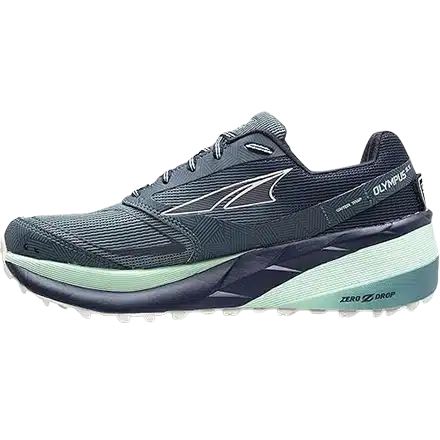
Altra’s Lone Peak 8 is the only mainstream trail shoe with a foot-shaped toe box (zero taper), meaning the shoe is as wide at the toes as the foot — important for bunion, hammertoe, and Morton’s neuroma patients who cannot tolerate the tapered toe boxes of all other trail shoes. The FootShape last significantly reduces toenail blackening on descents by allowing the toes to spread naturally rather than compress. Note: the Lone Peak 8 is zero-drop (0mm), which is contraindicated during active Achilles tendinopathy recovery. Use only after Achilles symptoms have fully resolved for 8+ weeks and you have gradually reintroduced lower-drop footwear. The waterproof version uses a Gore-Tex bootie construction. View Altra Lone Peak 8 GTX on Amazon →
The Merrell Moab Speed 2 GTX provides legitimate Gore-Tex waterproofing and TrailProtect rock plate in a versatile trail/hiking hybrid under $140. The FloatPro foam is adequate for trail running up to half-marathon distance. The 8mm drop is appropriate for all foot types. The Moab platform is slightly stiffer than dedicated running shoes, which is a benefit for hikers and trail/hike runners but may feel sluggish to competitive runners. Recommended for occasional trail runners (1–2 times per week) who want one shoe that handles both trails and day hikes. View Merrell Moab Speed 2 GTX on Amazon →
Ankle Sprain Prevention on Trails: The Shoe Is Only Part of the Answer
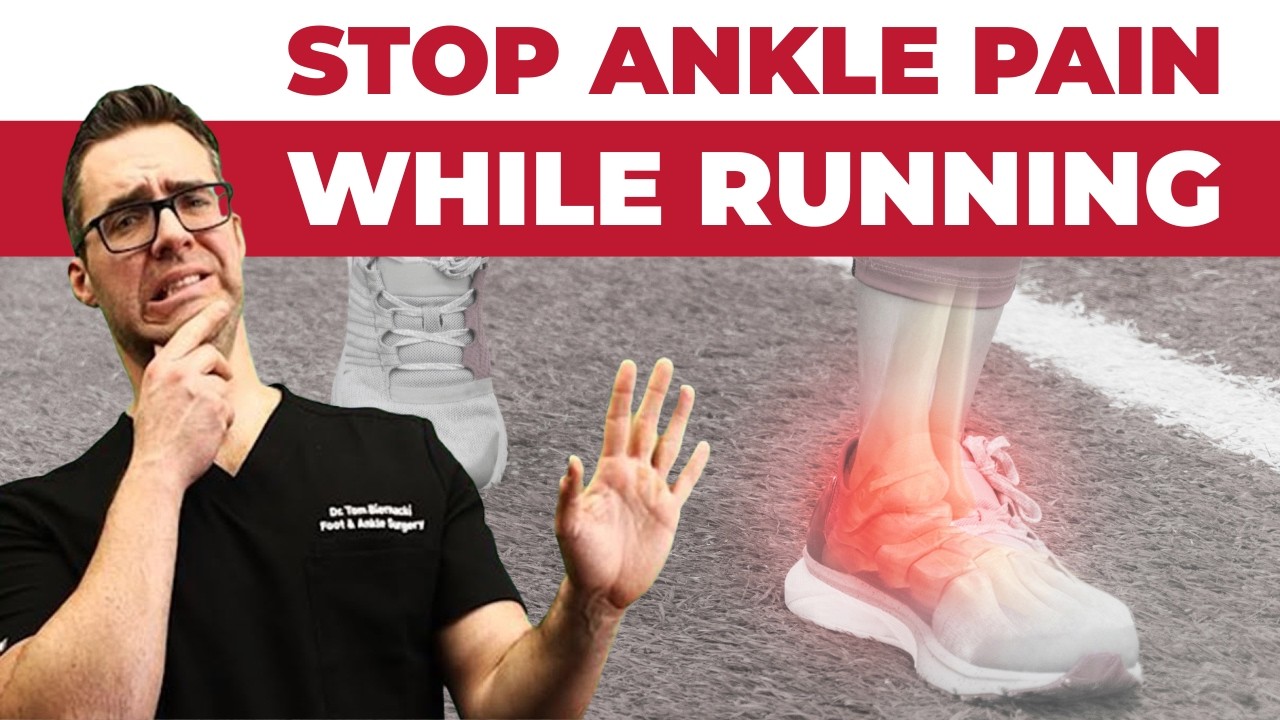
Shoe selection reduces ankle sprain risk but does not eliminate it. Complementary ankle sprain prevention strategies for trail runners: (1) Single-leg balance training — 3×30 seconds eyes closed, 3×/week — improves the proprioceptive reflex that prevents rolling on uneven terrain; (2) Peroneal strengthening — resisted ankle eversion 3×15 — strengthens the primary dynamic ankle stabilizers; (3) Lace appropriately — a loose heel counter allows the talus to rock inside the shoe on uneven ground; (4) Use trekking poles on technical descents if you have prior ankle instability; (5) Slow down on wet roots and bridge planking — proprioception drops significantly on slick surfaces. Patients from the Clarkston, Brighton, or Howell trail systems who have had recurrent ankle sprains should be evaluated for chronic ankle instability — call (810) 206-1402.
When to See a Podiatrist After a Trail Running Injury
Trail running injuries that require podiatric evaluation: ankle sprain with inability to bear weight or point tenderness over the fibular tip (Ottawa Ankle Rules — X-ray required); foot pain that started gradually over several weeks of trail training and is now present on every run (possible stress fracture — MRI required); black toenail that is painful and spreading (subungual hematoma requiring nail trephination); and any ankle that “gives way” on uneven terrain (possible chronic ankle instability requiring ligament assessment). Dr. Tom Biernacki, DPM, sees trail running injuries at Balance Foot & Ankle — same-day appointments in Howell and Bloomfield Township. Call (810) 206-1402 or
Disclosure:As an Amazon Associate, Balance Foot & Ankle earns from qualifying purchases. All product recommendations are based on clinical experience and are independent of affiliate relationships.
Medically reviewed by Dr. Tom Biernacki, DPM — podiatric physician and surgeon, Howell and Bloomfield Township, Michigan.
Dr. Tom’s Recommended Insoles
PowerStep is the brand I prescribe most — medical-grade OTC support without the custom orthotic price tag.
PowerStep Pulse Insoles — Performance insoles for runners — flexible arch support with shock absorption for high-mileage athletes.
PowerStep Pinnacle Insoles — The #1 podiatrist-recommended OTC insole — firm arch support with dual-layer cushioning for all-day wear.
Affiliate disclosure: As an Amazon Associate, Balance Foot & Ankle earns from qualifying purchases. We only recommend products we trust for our own patients.
Dr. Tom’s Pick: Performance Running Insoles
CURREX RunPro insoles are what I recommend to serious runners — available in 3 arch profiles tuned for your specific gait pattern.
CURREX RunPro Insoles — Dynamic arch system with 3 profiles (low/medium/high). Reduces repetitive stress injuries and improves energy return. Choose your arch type at checkout.
Affiliate disclosure: As an Amazon Associate, Balance Foot & Ankle earns from qualifying purchases.
👟 Dr. Tom’s Pick: FLAT SOCKS for Minimalist & Zero-Drop Shoes
Ultra-thin flat-knit socks designed specifically for zero-drop, barefoot, and minimalist shoes. No bunching, no seams — just foot-contact-the-ground feel with moisture control.
View FLAT SOCKS on Amazon →
Affiliate disclosure: As an Amazon Associate, Balance Foot & Ankle earns from qualifying purchases.
Join 950,000+ Learning About Foot Health
Dr. Tom shares honest medical advice, supplement reviews, and treatment guides you won’t find anywhere else.
Max-cushion neutral runner — podiatrist favorite for all-day comfort.
Brooks Adrenaline GTS 25
Stability runner for overpronators — great for flat feet and bunions.
New Balance 990v6
Premium walking shoe with wide toe box — bunion and flat-foot friendly.
As an Amazon Associate, Balance Foot & Ankle earns from qualifying purchases. Product recommendations are based on clinical experience; prices and availability shown above update live from Amazon.
When to See a Podiatrist
The right shoe shape, last, and stability category is more important than brand. Balance Foot & Ankle evaluates your foot type (neutral, pronator, supinator, high-arched) and recommends specific shoe models that match. Bringing in your current pair lets us spot wear patterns that reveal gait issues — a free 5-minute assessment that can prevent years of foot pain.
If home care isn’t resolving your your foot or ankle concern, a visit with a board-certified podiatrist is the fastest path to accurate diagnosis and a personalized plan. At Balance Foot & Ankle Specialists, Dr. Tom Biernacki, Dr. Carl Jay, and Dr. Daria Gutkin offer same-day and next-day appointments at both our Howell and Bloomfield Township offices. We perform on-site diagnostic ultrasound, digital X-ray, conservative care, advanced regenerative treatments, and minimally invasive surgery when indicated.
The most common mistake we see is: Waiting too long before seeking care. Fix: any foot pain lasting more than 4 weeks, or any sudden severe symptom, deserves a professional evaluation rather than more rest.
Warning Signs That Need Same-Day Care
Seek immediate evaluation at Balance Foot & Ankle if you experience any of the following:
Dr. Tom Biernacki, DPM · Board-Certified Foot & Ankle Surgeon. Specializes in conservative-first care, minimally invasive bunion surgery, and complex reconstruction.
Dr. Carl Jay, DPM · Accepting new patients. Specializes in sports medicine, athletic injuries, and routine podiatric care.
Dr. Daria Gutkin, DPM, AACFAS · Accepting new patients. Specializes in surgical reconstruction and pediatric podiatry.
Locations: 4330 E Grand River Ave, Howell, MI 48843 · 43494 Woodward Ave Suite 208, Bloomfield Township, MI 48302
Dr. Tom Biernacki, DPM is a board-certified foot & ankle surgeon (ABFAS & ABPM) at Balance Foot & Ankle Specialists in Southeast Michigan. With over a decade of clinical experience, he specializes in heel pain, bunions, diabetic foot care, sports injuries, and minimally invasive surgery. Dr. Biernacki is a member of the APMA and ACFAS, and his patient education content on MichiganFootDoctors.com and YouTube has made him one of the most-followed foot & ankle educators on YouTube.
Balance Foot & Ankle surgeons are affiliated with Trinity Health Michigan, Corewell Health, and Henry Ford Health — three of Michigan’s largest health systems.