
What Is a Calcaneal Fracture?
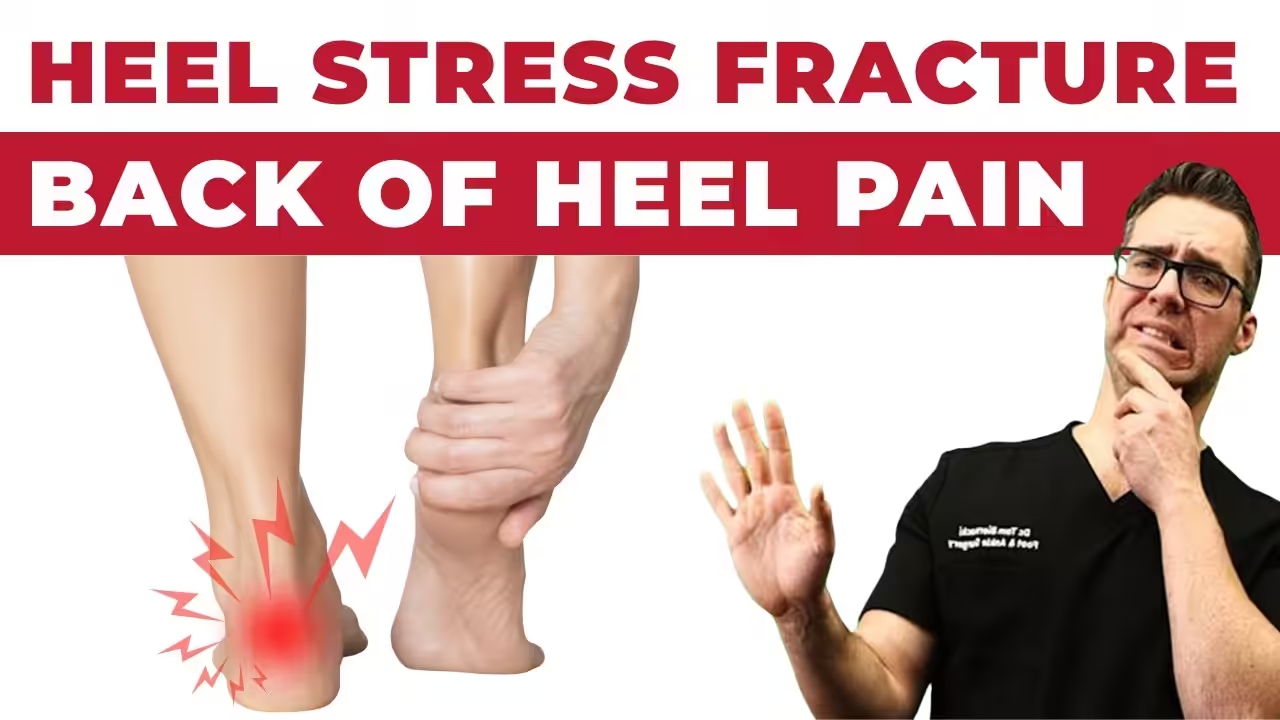
A calcaneal fracture is a break in the calcaneus—the heel bone, which is the largest bone in the foot and the foundation of the hindfoot. Calcaneal fractures are serious injuries associated with significant morbidity and prolonged recovery. They account for approximately 2% of all fractures and 60% of tarsal bone fractures. The classic mechanism is an axial load injury—falling from a height and landing on the heel—though calcaneal fractures also occur from motor vehicle accidents and rarely from stress. The impact drives the talus (ankle bone) down into the calcaneus like a wedge, shattering the heel bone.
Because falls from height can also cause fractures of the lumbar spine and tibial plateau, calcaneal fractures are sometimes described as “the fracture with the bad news”—the calcaneal fracture is often the most obvious injury, but the other injuries must be ruled out. Any patient with a calcaneal fracture should have imaging of the lumbar spine and opposite extremity.
Intra-articular vs. Extra-articular Fractures
The critical classification distinction is whether the fracture extends into the subtalar joint (intra-articular) or not (extra-articular). Intra-articular fractures—approximately 75% of calcaneal fractures—are more complex, involve the joint surface, and are associated with higher risk of subtalar arthritis and long-term disability. The Sanders classification based on CT scan describes the number and location of fracture lines within the posterior facet of the subtalar joint, guiding surgical planning (Types I–IV, with increasing complexity).
Extra-articular fractures (including anterior process fractures, sustentaculum fractures, and tuberosity avulsion fractures) generally have better prognoses and may be managed conservatively in a walking boot with progressive weight-bearing over 6–8 weeks.
Surgery vs. Conservative Treatment
The treatment of displaced intra-articular calcaneal fractures remains one of the most debated topics in foot and ankle surgery. Traditional open reduction and internal fixation (ORIF) with a large lateral plate aims to restore the subtalar joint surface and calcaneal height, reducing post-traumatic arthritis risk. However, wound complications (wound dehiscence, infection, flap necrosis) occur in 10–25% of cases—particularly in smokers, diabetics, and patients with swelling who undergo surgery too early.
Non-surgical management (non-weight-bearing for 6–10 weeks) avoids wound complications but accepts residual deformity—flattening of the heel, widening, and subtalar incongruity—which produces subtalar arthritis requiring subsequent fusion in a significant proportion. More recently, minimally invasive techniques (percutaneous fixation, sinus tarsi approach) reduce wound complication rates while achieving acceptable joint reduction, and are increasingly used for appropriate fracture patterns. The decision between surgical approaches and conservative management involves fracture type, patient health, activity level, and surgeon expertise.
Recovery Timeline
Calcaneal fracture recovery is among the most prolonged in foot surgery. Conservative treatment: non-weight-bearing for 8–12 weeks, then gradual progressive weight-bearing over 4–6 weeks, with return to work (sedentary) at 3–4 months and return to manual labor at 6–12 months. Surgical treatment: non-weight-bearing for 10–12 weeks after ORIF to allow wound and bone healing, then progressive weight-bearing, return to work at 4–6 months, and return to full activity at 12 months or longer. Subtalar joint stiffness and pain are nearly universal initially and improve over 12–24 months. Some patients develop symptomatic subtalar arthritis requiring fusion years after the initial fracture—even with good surgical reduction.
Frequently Asked Questions
How long does a calcaneal fracture take to heal?
The bony healing of a calcaneal fracture takes approximately 10–12 weeks. However, functional recovery—return to comfortable weight-bearing, meaningful activity, and work—takes considerably longer. Return to regular walking is typically at 3–4 months. Return to prolonged standing or light labor occurs at 4–6 months. Return to heavy manual labor may take 9–12 months or longer. Full recovery—including maximum improvement in pain and function—takes 18–24 months for complex intra-articular fractures. Some degree of permanent limitation is common with severe fractures, particularly stiffness in subtalar motion and residual pain with prolonged weight-bearing. The recovery is longer than most patients expect, and managing expectations appropriately from the beginning is important.
Will I need subtalar fusion after a calcaneal fracture?
Subtalar arthritis requiring fusion is a possible long-term complication of intra-articular calcaneal fractures, occurring in 15–30% of patients within 5–10 years. Risk factors include more severe initial fracture (higher Sanders grade), inadequate reduction of the joint surface, obesity, and heavy manual labor. Symptoms of post-traumatic subtalar arthritis—progressively worsening hindfoot pain, stiffness, difficulty on uneven terrain—develop gradually over years. When conservative treatment of subtalar arthritis fails, subtalar fusion reliably relieves pain and allows return to most activities, though with reduced hindfoot motion. Patients should understand that even with successful initial fracture treatment, follow-up over years is appropriate to monitor for arthritis development.
What exercises help after a calcaneal fracture?
Physical therapy after calcaneal fracture focuses on restoring range of motion (subtalar inversion/eversion, ankle dorsiflexion/plantarflexion), rebuilding calf and intrinsic foot strength, normalizing gait pattern, and proprioceptive retraining. Range-of-motion work begins as soon as weight-bearing is established—earlier if non-weight-bearing but cleared for exercises. Pool walking and cycling are excellent low-impact activities during early weight-bearing. Progressive calf strengthening reduces fatigue with activity. Scar massage and soft tissue mobilization around the surgical incision (if present) improves tissue mobility. A custom orthotic or accommodative insole helps manage the residual heel shape changes. Physical therapy is a critical component of calcaneal fracture recovery and should not be skipped even when bone healing is complete.
Medical References & Sources
- American Orthopaedic Foot & Ankle Society — Calcaneal Fractures
- PubMed Research — Calcaneal Fracture Surgery vs. Conservative Care
- PubMed Research — Calcaneal Fracture and Subtalar Arthritis
📧 Get Dr. Tom’s Free Lab Test Guide
Discover the 5 lab tests every person over 35 should ask their doctor about — explained in plain English by a board-certified physician.
Dr. Tom Biernacki, DPM is a board-certified podiatric surgeon at Balance Foot & Ankle in Howell and Bloomfield Hills, Michigan. He treats calcaneal fractures with conservative management and surgical approaches, and manages post-traumatic subtalar arthritis including subtalar fusion.
Join 950,000+ Learning About Foot Health
Dr. Tom shares honest medical advice, supplement reviews, and treatment guides you won’t find anywhere else.
Subscribe on YouTube →📍 Located in Michigan?
Our board-certified podiatrists treat this condition at two convenient locations. Same-day appointments often available.

Dr. Tom Biernacki, DPM is a double board-certified podiatrist and foot & ankle surgeon at Balance Foot & Ankle Specialists in Southeast Michigan. With over a decade of clinical experience, he specializes in heel pain, bunions, diabetic foot care, sports injuries, and minimally invasive surgery. Dr. Biernacki is a member of the APMA and ACFAS, and his patient education content on MichiganFootDoctors.com and YouTube has reached over one million views.
Related Treatments at Balance Foot & Ankle
Our board-certified podiatrists offer advanced treatments at our Bloomfield Hills and Howell locations.