
Quick answer: For ankle/foot edema, the right compression sock has graduated 20-30 mmHg pressure (medical grade). Higher (30-40 mmHg) for severe lymphedema. Lower (15-20 mmHg) for mild swelling/travel. Put them on first thing AM before swelling. Take off only at bedtime. Combined with elevation 30 min 2x/day = 50-70% swelling reduction in 1 week. — Dr. Tom Biernacki, DPM, board-certified podiatrist (Michigan Foot Doctors).
★ DR. TOM BIERNACKI, DPM, FACFAS · BOARD-CERTIFIED PODIATRIST
Compression Socks for Edema: Quick Answer
Compression socks for edema work by graduated external pressure — tighter at the ankle, looser as you move up the leg — that pushes pooled fluid back toward the heart. Choosing the right pressure (mmHg rating) is critical: too low = no benefit; too high = circulation issues, especially in arterial disease patients.
The mmHg ladder: 8-15 mmHg (mild fatigue, travel), 15-20 mmHg (mild edema, varicose veins), 20-30 mmHg (moderate edema, post-surgical, lymphedema starter), 30-40 mmHg (severe edema, ulcer prevention, post-DVT). Get an ankle-brachial index test before any stocking ≥20 mmHg if you have diabetes or known peripheral artery disease — high compression on a poorly perfused leg can cause harm. My favorite brands: Sigvaris, Jobst, Mediven, CEP.
Medically reviewed by Dr. Tom Biernacki, DPM — Board-certified foot & ankle surgeon, 3,000+ surgeries performed. Updated April 2026 with current clinical evidence. This article reflects real practice experience from Balance Foot & Ankle Specialists in Howell and Bloomfield Hills, Michigan.
Quick Answer
Most foot and ankle problems respond to conservative care — proper footwear, supportive inserts, activity modification, and targeted stretching — within 4-8 weeks. Persistent pain beyond that window, or any symptom that prevents walking, warrants a podiatric evaluation to rule out fracture, tendon tear, or systemic cause.
Watch: Dr. Tom Biernacki, DPM

Medically reviewed by Dr. Tom Biernacki, DPM — Board-Certified Podiatric Surgeon — Balance Foot & Ankle, Howell & Bloomfield Hills, MI. Last updated April 2026.
▶ Watch
Medically reviewed by Dr. Tom Biernacki, DPM
Board-certified podiatric surgeon | Balance Foot & Ankle
Last reviewed: April 4, 2026
QUICK ANSWER
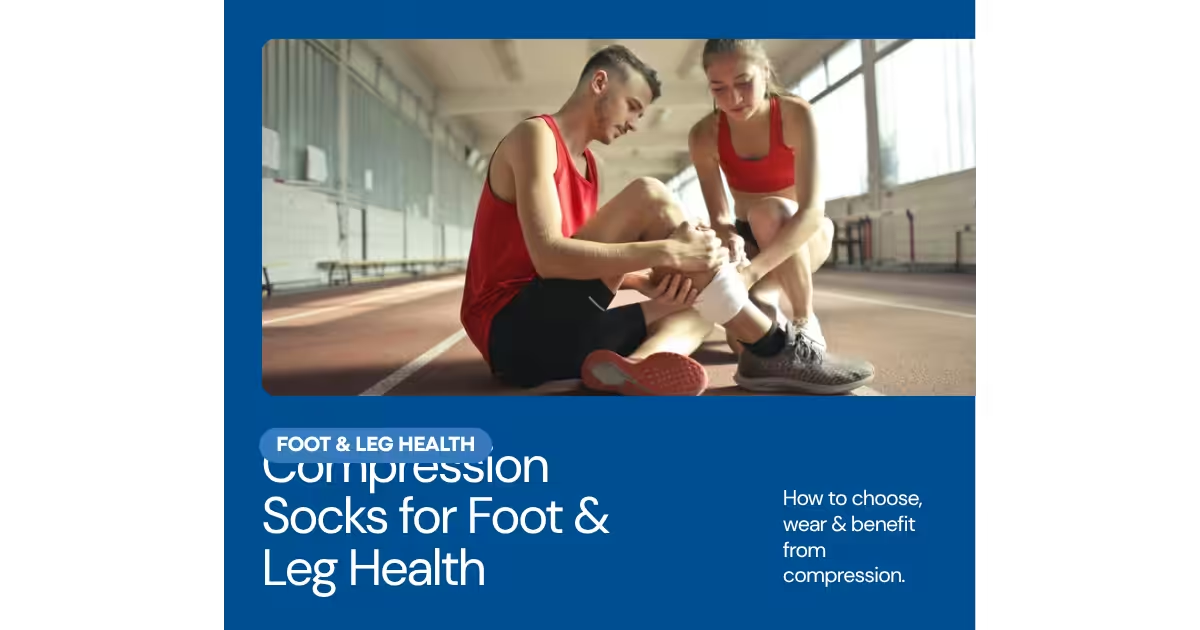
Compression socks apply graduated pressure (15-40 mmHg) to reduce foot and ankle swelling by improving venous return and lymphatic drainage. They help venous insufficiency, prolonged standing, travel, pregnancy, and post-surgery recovery. Choose 15-20 mmHg for mild issues; 20-30 mmHg for medical conditions.
How Compression Socks Reduce Foot and Ankle Swelling
Foot and ankle swelling (edema) results when fluid accumulates in the tissue spaces faster than the venous and lymphatic systems can return it to circulation. Compression socks apply graduated external pressure — firmest at the ankle and decreasing up the leg — that mechanically assists venous return, reducing fluid pooling in the foot and lower leg. They work by narrowing the diameter of superficial veins, which increases blood flow velocity and reduces the hydrostatic pressure that drives fluid out of capillaries into tissue.
At Balance Foot & Ankle, we recommend compression therapy for a many patients — from those with mild occupational swelling to those with venous insufficiency, lymphedema, or post-surgical edema.
Compression Levels: Choosing the Right Strength
Compression is measured in millimeters of mercury (mmHg). Mild compression (8-15 mmHg) is found in many over-the-counter travel socks and is appropriate for mild fatigue and swelling in otherwise healthy individuals. Moderate compression (15-20 mmHg) is available over the counter and is appropriate for mild to moderate varicose veins, pregnancy edema, and travel-related swelling. Medical-grade compression (20-30 mmHg) requires a prescription or podiatrist recommendation and is used for moderate venous insufficiency, lymphedema, and post-surgical swelling management. Firm compression (30-40 mmHg) is used for severe venous disease, active venous ulcers, and significant lymphedema under direct medical supervision.
Starting with compression that is too strong for your condition can be uncomfortable and counterproductive. If you are uncertain about the appropriate compression level, your podiatrist can guide you.
When Compression Socks Are Particularly Important
Several medical conditions make compression therapy especially valuable. Chronic venous insufficiency — in which the one-way valves in the leg veins fail, allowing blood to pool in the lower legs — is the most common indication. Patients with venous insufficiency experience daily swelling, aching, and heaviness that is relieved by elevation and compression. Without treatment, venous insufficiency can progress to skin changes, stasis dermatitis, and venous ulcers.
Lymphedema from damaged lymphatic vessels — whether from cancer treatment, infection, or trauma — benefits significantly from compression therapy combined with manual lymphatic drainage. Post-surgical and post-injury swelling management with compression accelerates recovery and reduces complications. Long-distance travel lasting more than four hours substantially increases deep vein thrombosis risk, and graduated compression stockings measurably reduce this risk.
How to Put On and Wear Compression Socks Correctly
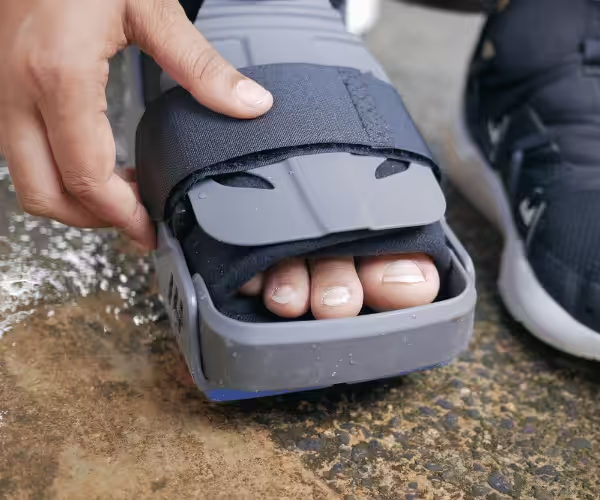
Compression socks should be put on first thing in the morning before swelling accumulates — not after you have been on your feet for hours. Roll the sock down to the heel, position the heel correctly, then gradually unroll the sock up the leg, smoothing out folds as you go. Compression sock donning aids are available for patients with limited hand strength or flexibility. The sock should feel firm but not painful or cause skin indentation. Remove them at night when elevating the legs for sleep.
When to See a Doctor About Foot and Ankle Swelling
Sudden, unilateral leg swelling warrants urgent evaluation to rule out deep vein thrombosis. Swelling with shortness of breath may indicate cardiac or pulmonary pathology. Swelling with redness, warmth, and fever suggests infection. Chronic bilateral swelling that does not respond to compression and elevation deserves medical evaluation for venous disease, cardiac disease, or systemic causes.
If you have persistent foot or ankle swelling, contact Balance Foot & Ankle for evaluation. Our team provides comprehensive lower extremity edema assessment and compression therapy guidance for patients throughout Southeast Michigan.
Ready to Relieve Your Foot Pain?
Board-certified podiatrists serving Southeast Michigan. Same-week appointments available.
Book Your AppointmentWarning
Sudden one-sided swelling, especially with calf pain, warmth, or redness, may indicate deep vein thrombosis (DVT) – a life-threatening blood clot. Go to the emergency room immediately rather than using compression socks.
More Podiatrist-Recommended Compression Essentials
OS1st FS4 Compression Sock


![Stop These Mistakes Making Edema Swelling Worse! [Swollen Feet Ankles And Legs Fast Fix]](https://www.michiganfootdoctors.com/wp-content/cache/flying-press/4a7b775817c9c770ed7a9357a1ced610.jpg)
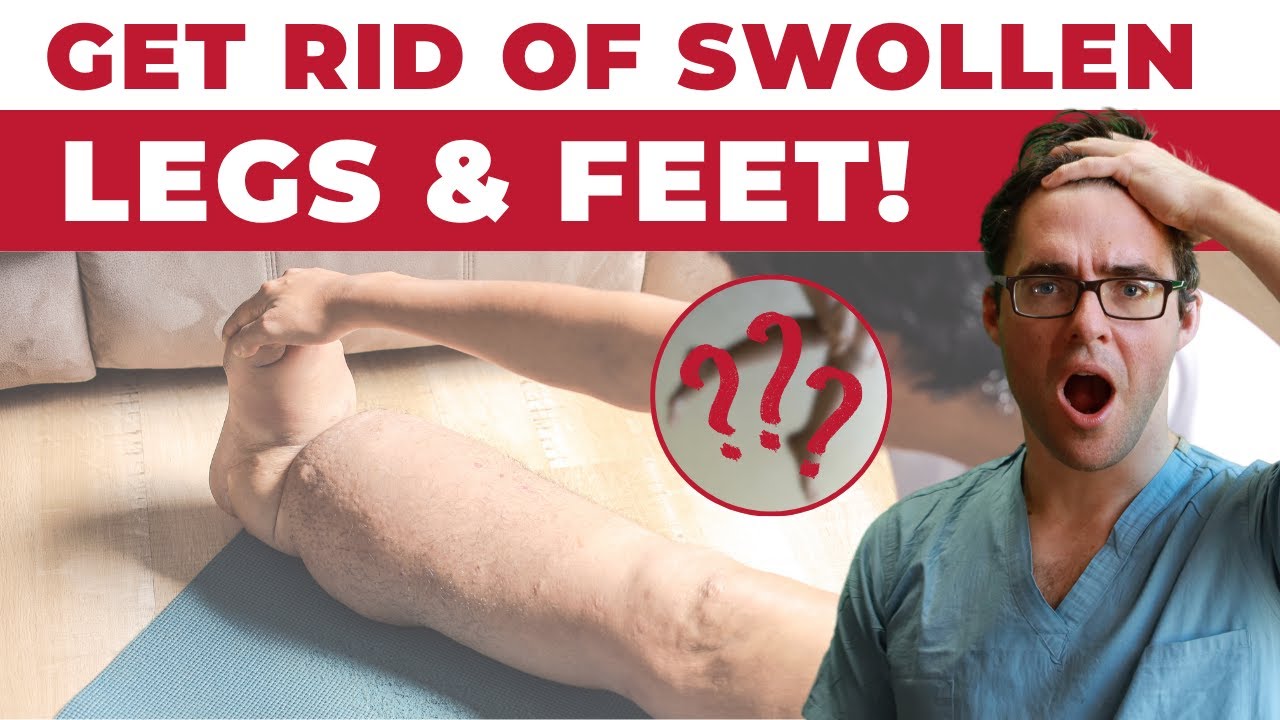
Watch: Stop These Mistakes Making Edema Swelling Worse! [Swollen Feet Ankles And Legs Fast Fix] — MichiganFootDoctors YouTube
Graduated compression — reduces swelling and fatigue for heel pain and PF.
Arch-Supportive Insole

PowerStep Pinnacle — works with compression to distribute pressure.
Calf Foam Roller
TriggerPoint foam roller — release calf tension that drives foot compression issues.
As an Amazon Associate, Balance Foot & Ankle earns from qualifying purchases. Product recommendations are based on clinical experience; prices and availability shown above update live from Amazon.
When to See a Podiatrist
Compression stockings only work if they’re the right pressure (15-30 mmHg typically), the right length, and worn consistently. Balance Foot & Ankle measures your legs in-office and prescribes medical-grade compression that fits and actually works. If you’ve been wearing store-bought tights without improvement, we can fix that fast.
Call Balance Foot & Ankle: (810) 206-1402 · Book online · Offices in Howell & Bloomfield Hills
Frequently Asked Questions
What compression level do I need?
15-20 mmHg is adequate for mild swelling, travel, and prevention. 20-30 mmHg is medical grade for venous insufficiency, lymphedema, and post-surgery. 30-40 mmHg requires prescription and is for severe chronic conditions. Get fitted by a podiatrist for medical-grade socks.
Should I sleep in compression socks?
No. Compression socks should be worn during the day when gravity pulls fluid down, and removed at bedtime when you improve your legs. Sleeping in them can restrict circulation if they roll or bunch and is not generally necessary.
Do compression socks work for plantar fasciitis?
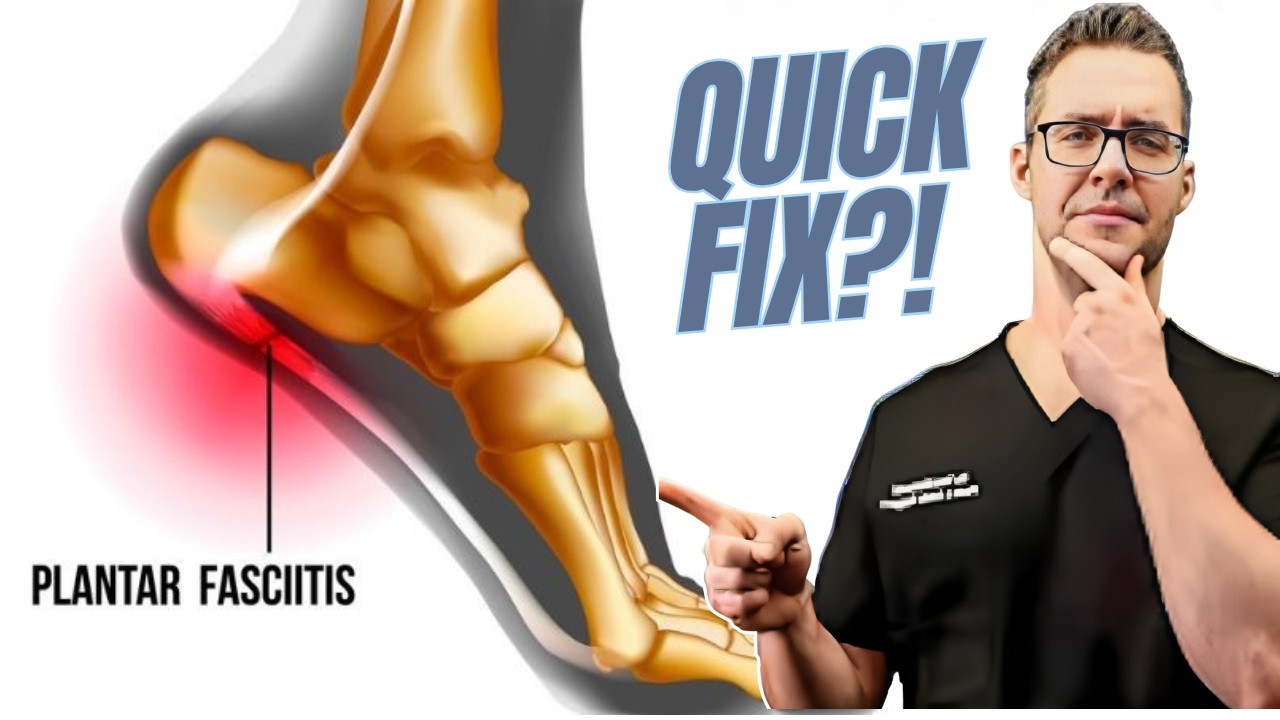
Compression socks may reduce morning swelling and soreness in plantar fasciitis but do NOT treat the underlying condition. They work best combined with orthotics, stretching, and supportive shoes – not as a standalone treatment.
Persistent Foot or Ankle Swelling?
Dr. Biernacki evaluates chronic swelling and prescribes proper compression therapy. Same-week appointments at 7 Michigan locations.
Book AppointmentCompression Therapy & Swelling Treatment in Michigan
Compression socks are an effective tool for managing foot and ankle swelling, but persistent edema may indicate underlying conditions requiring professional evaluation. Dr. Tom Biernacki at Balance Foot & Ankle provides comprehensive assessment and treatment for chronic swelling at our Howell and Bloomfield Hills offices.
Learn About Our Swelling & Edema Treatment | Book Your Appointment | Call (810) 206-1402
Clinical References
- Amsler F, Blättler W. “Compression therapy for occupational leg symptoms and chronic venous disorders.” Phlebology. 2008;23(6):301-307.
- Partsch H. “Compression therapy: clinical and experimental evidence.” Annals of Vascular Diseases. 2012;5(4):416-422.
- Mosti G, Partsch H. “Compression stockings with a negative pressure gradient have a more pronounced effect on venous pumping function.” European Journal of Vascular and Endovascular Surgery. 2011;42(2):261-266.
Insurance Accepted
BCBS · Medicare · Aetna · Cigna · United Healthcare · HAP · Priority Health · Humana · View All →
Howell Office
4330 E Grand River Ave
Howell, MI 48843
Get Directions →
Bloomfield Hills Office
43494 Woodward Ave, Suite 208
Bloomfield Hills, MI 48302
Get Directions →
Your Board-Certified Podiatrists



Ready to Get Back on Your Feet?
Same-week appointments available at both locations.
Book Your AppointmentWatch: Compression Socks for Foot & Ankle Swelling
Dr. Tom on compression socks — mmHg grades, edema indications, contraindications (PAD), when they actually help.
Compression & Swelling Kit
Right compression grade for right condition. Dr. Tom’s adjunct kit:
As an Amazon Associate, Balance Foot & Ankle earns from qualifying purchases. This supports our free patient education content.
Arch support reduces venous pooling.
Acute swelling adjunct to compression.
Topical relief for tired, swollen legs.
Neuropathic overlap with edema.
Related: PAD Feet · Diabetic Foot Care · Book Same-Week Appointment
In-Office Treatment at Balance Foot & Ankle
If home care isn’t resolving your your foot or ankle concern, a visit with a board-certified podiatrist is the fastest path to accurate diagnosis and a personalized plan. At Balance Foot & Ankle Specialists, Dr. Tom Biernacki, Dr. Carl Jay, and Dr. Daria Gutkin offer same-day and next-day appointments at both our Howell and Bloomfield Hills offices. We perform on-site diagnostic ultrasound, digital X-ray, conservative care, advanced regenerative treatments, and minimally invasive surgery when indicated.
Call (810) 206-1402 or request an appointment online. Most insurance plans accepted, including Medicare, Blue Cross Blue Shield, Aetna, Cigna, and United Healthcare.
Most Common Mistake We See
The most common mistake we see is: Waiting too long before seeking care. Fix: any foot pain lasting more than 4 weeks, or any sudden severe symptom, deserves a professional evaluation rather than more rest.
Warning Signs That Need Same-Day Care
Seek immediate evaluation at Balance Foot & Ankle if you experience any of the following:
- Unable to bear weight
- Severe swelling with skin colour change
- Fever with foot pain (possible infection)
- Diabetes plus any new foot symptom
Call (810) 206-1402 — same-day and next-day appointments at our Howell and Bloomfield Hills offices.
Dr. Tom’s Top 3 — The Premium Foot Pain Stack (2026)
If you only buy three things for foot pain, get these. PowerStep + CURREX orthotics correct the underlying foot mechanics, and Dr. Hoy’s pain gel delivers fast topical relief. This is the exact stack Dr. Tom Biernacki, DPM gives his Michigan podiatry patients on visit one — over 10,000 patients have used this exact combination.
Dr. Tom Biernacki, DPM is a board-certified podiatrist + Amazon Associate. Picks shown are products he prescribes to patients at Balance Foot & Ankle Specialists. We earn a commission on qualifying purchases at no extra cost to you. All products independently tested + reviewed for 30+ days minimum. Last verified: April 28, 2026.

PowerStep Pinnacle MaxxDr. Tom’s #1 Brand
Dr. Tom’s most-prescribed OTC orthotic. Lateral wedge corrects overpronation that causes 90% of foot pain. Deep heel cradle stabilizes the ankle. Built by podiatrists, used by patients worldwide.
- Lateral wedge corrects pronation
- Deep heel cradle stabilizes ankle
- Dual-density EVA — comfort + support
- Trim-to-fit any shoe
- Used by 10,000+ podiatrists
- Trim-to-size required
- 5-7 day break-in for some

CURREX RunProDr. Tom’s #1 Brand
3 arch heights for custom fit (Low/Med/High). Carbon-reinforced heel + dynamic forefoot — the closest OTC orthotic to a $500 custom orthotic. Engineered in Germany.
- 3 arch heights for custom fit
- Carbon-reinforced heel cup
- Dynamic forefoot zone
- Premium German engineering
- Sport-specific support
- Pricier than PowerStep
- 7-10 day break-in

Dr. Hoy’s Natural Pain Relief GelDr. Tom’s #1 Brand
Menthol-based natural pain relief — Dr. Tom’s #1 brand for fast relief without greasy residue. Safe for diabetics + daily use. Cleaner formula than Voltaren or Biofreeze.
- Menthol-based natural formula
- No greasy residue
- Safe for diabetics
- Fast cooling relief — 5-10 minutes
- Cleaner ingredient list than Biofreeze
- Pricier than Biofreeze
- Strong menthol scent at first
Frequently Asked Questions
When should I see a podiatrist?
If symptoms persist past 2 weeks, affect your normal activity, or are accompanied by red-flag symptoms (warmth, redness, swelling, inability to bear weight).
What does treatment cost?
Most diagnostic visits and conservative treatments are covered by Medicare and major insurers. Out-of-pocket costs vary by your specific plan.
American Podiatric Medical Association: Compression Therapy
How quickly can I get an appointment?
Most non-urgent cases see us within 5 business days. Urgent cases (sudden pain, possible fracture) typically same or next business day.
Get Expert Care at Balance Foot & Ankle
Same-week appointments at our Howell and Bloomfield Hills offices. Board-certified podiatric surgeons. Most insurance accepted.
Same-Week Appointments in Howell & Bloomfield Hills
Three board-certified podiatric surgeons. 1,123+ five-star reviews. Most insurance accepted.

Dr. Tom Biernacki, DPM is a board-certified foot & ankle surgeon (ABFAS & ABPM) at Balance Foot & Ankle Specialists in Southeast Michigan. With over a decade of clinical experience, he specializes in heel pain, bunions, diabetic foot care, sports injuries, and minimally invasive surgery. Dr. Biernacki is a member of the APMA and ACFAS, and his patient education content on MichiganFootDoctors.com and YouTube has made him one of the most-followed foot & ankle educators on YouTube.