
Why the Fifth Toe Gets Corns
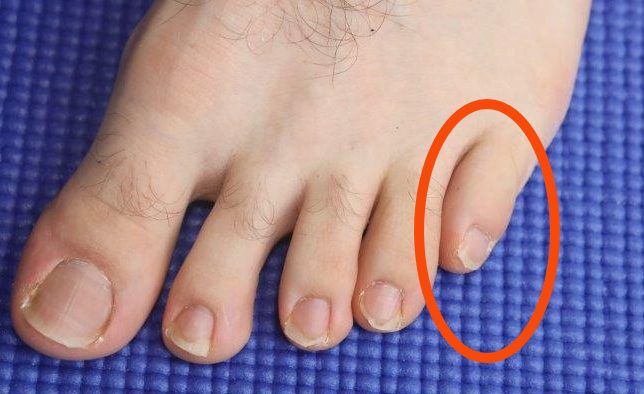
The fifth toe (pinky toe) is the most common location for hard corns on the toes, and the reason comes down to anatomy and footwear. The fifth toe is the outermost toe—it bears the brunt of lateral shoe pressure from the toe box. When the fifth toe has a hammertoe or underlapping deformity (where the toe curls downward or crosses under adjacent toes), two bony prominences are exposed to shoe friction: the dorsal aspect of the PIP joint (the first knuckle) and the lateral (outer) surface of the toe. The repetitive pressure stimulates skin thickening—hyperkeratosis—in the form of a corn (heloma durum), which is a focused, nucleated plug of dead skin that presses painfully into underlying tissue.
The fifth toe is also subject to “soft corns” (heloma molle) in the fourth interspace—the web space between the fourth and fifth toes—where the toes press against each other in moist conditions. Soft corns appear white and macerated rather than dry and hard. They are particularly painful and prone to secondary infection, requiring careful management separate from hard corns.
Conservative Treatment: Reducing Pressure and Removing the Corn
Footwear Modification
The most important conservative treatment is eliminating the pressure causing the corn. A wider toe box reduces lateral pressure on the fifth toe. Shoes with a seamless or soft upper over the fifth toe area eliminate direct abrasion. A shoe stretcher can locally stretch leather or fabric uppers over the corn area. Many patients achieve complete corn resolution simply by changing to appropriate footwear—though the corn will regrow if tight footwear is resumed. Sandals and open-toe shoes are the most definitive footwear solution but are impractical year-round in Michigan’s climate.
Padding
Donut-shaped foam or gel pads placed around the corn distribute pressure away from the corn nucleus, providing immediate relief. Lamb’s wool wrapped around the fifth toe or placed between toes cushions both hard and soft corn areas. Tube foam toe sleeves (silicone or foam cylinders sized for the fifth toe) provide circumferential protection without adhesives. These pads must be used consistently—they relieve pain while in use but do not eliminate the underlying deformity causing the corn.
Corn Removal
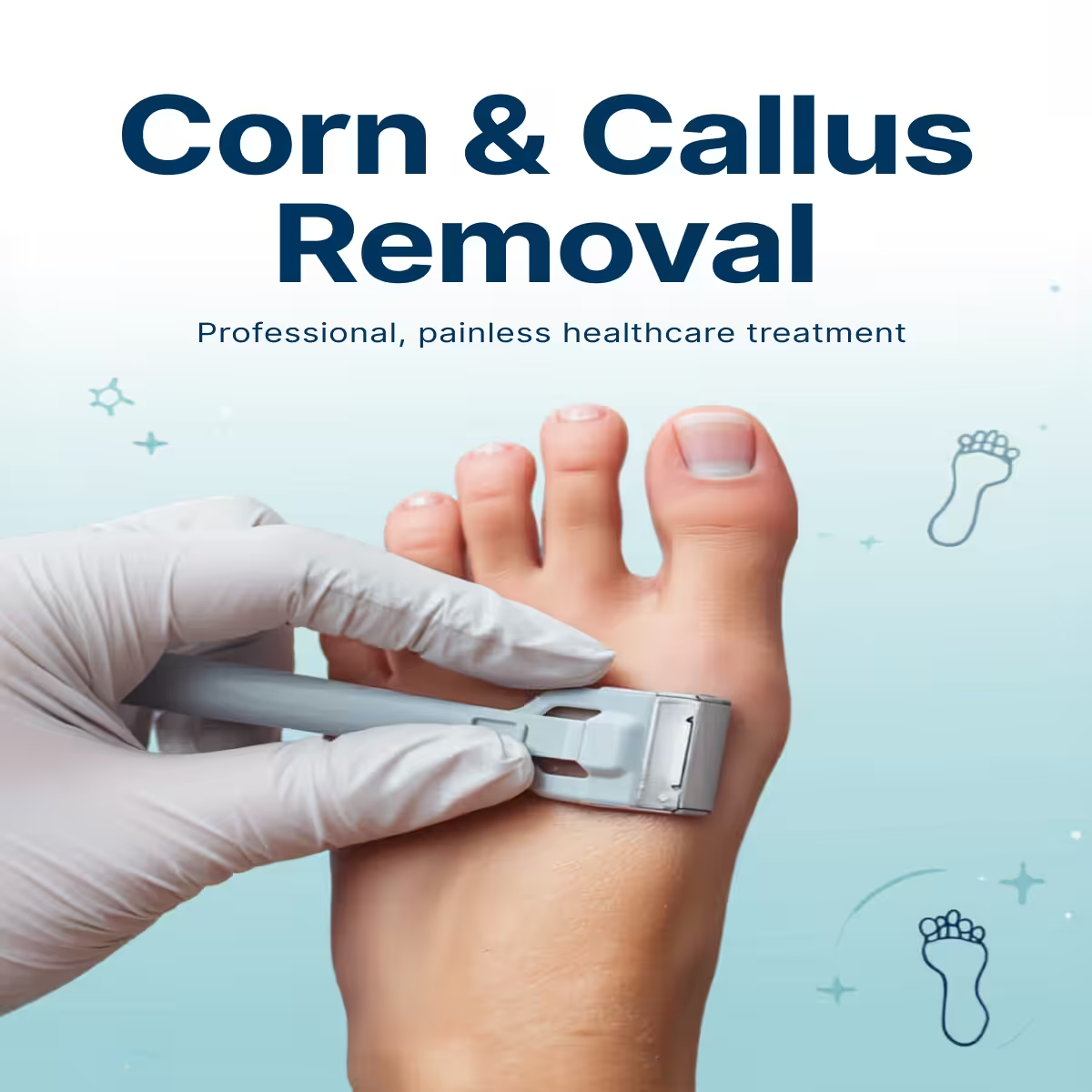
Podiatric debridement—professional trimming of the corn with a sterile blade—provides immediate pain relief. The corn nucleus is identified and removed, reducing the painful pressure point. Debridement is not a cure (the corn regrows in weeks to months if the pressure source remains) but provides relief during conservative management. Over-the-counter salicylic acid corn pads can thin the corn over time but carry risks of chemical burns on surrounding normal skin, particularly in patients with diabetes, poor circulation, or sensitive skin—use with caution and never in patients with neuropathy.
When Surgery Corrects the Problem Permanently
Corns that recur persistently despite conservative care, that are painful despite optimal footwear, or that develop in patients who cannot consistently wear wide shoes (professional requirements, athletic participation) often require surgical correction of the underlying toe deformity to eliminate the bony prominence causing the pressure.
For hammertoe-related corns on the dorsal fifth toe PIP joint, a digital arthroplasty (partial joint resection) removes the prominent condyle creating the pressure. For lateral fifth toe corns, a condylectomy (removal of the bony prominence on the outer aspect of the toe) is a simple procedure with rapid recovery. These are typically performed as outpatient procedures under local anesthesia, with return to wide shoes in 2–4 weeks. For more complex deformities like underlapping fifth toe (congenital curly fifth toe), soft tissue procedures (syndactyly, Butler procedure) or bone procedures may be required. The goal is permanently eliminating the bony prominence, so the skin can normalize without continued pressure stimulus.
Frequently Asked Questions
How do I get rid of a corn on my pinky toe permanently?
Permanent elimination of a fifth toe corn requires either eliminating the pressure source (changing to footwear with sufficient width and depth to remove all shoe contact from the corn area) or surgically correcting the bony prominence causing the corn. Conservative measures—padding, debridement, footwear changes—manage symptoms but do not permanently resolve the corn if the underlying deformity remains. If you cannot tolerate the footwear modifications required to prevent corn recurrence (many patients need to wear wider shoes exclusively), surgical correction of the deformity is the most reliable long-term solution. The minor surgical procedures for fifth toe corn correction are among the simpler foot operations with rapid recovery.
Is a corn on the fifth toe a sign of a bigger problem?
A corn on the fifth toe usually indicates an underlying structural issue—hammertoe deformity, a prominent bone spur, an abnormal toe position—combined with footwear that compresses the deformity. This is a biomechanical problem, not a systemic health concern. However, in patients with diabetes, peripheral neuropathy, or peripheral arterial disease, any corn represents a significant risk: the disrupted skin is a portal for bacterial infection, and impaired sensation means the patient may not notice worsening. A diabetic patient with a corn should be seen by a podiatrist for debridement and management rather than attempting self-treatment. For otherwise healthy patients, a corn on the fifth toe is a mechanical problem amenable to conservative treatment or straightforward surgical correction.
What is the difference between a corn and a callus on the toe?
Both corns and calluses are areas of thickened skin (hyperkeratosis) from friction and pressure. The key difference is focus: a corn (heloma) has a central nucleus—a deep, cone-shaped core of compressed skin that points inward toward the underlying tissue and creates sharp, localized pain. A callus (tyloma) is diffuse thickened skin without a central nucleus—it tends to be broader, flatter, and more evenly distributed over a pressure area. Corns typically occur on the bony prominences of toes (dorsal surface, tips); calluses typically occur on the plantar (bottom) surface of the foot over pressure-bearing areas. Corns cause more focal pain when pressed; calluses cause aching or burning over a broader area. Both are treated similarly—pressure elimination, padding, debridement—but surgical treatment for a corn targets the specific bony prominence causing the focal pressure.
Medical References & Sources
- PubMed Research — Toe Corn Treatment and Surgical Outcomes
- American Podiatric Medical Association — Corns and Calluses
- PubMed Research — Fifth Toe Deformity Correction
Dr. Tom Biernacki, DPM is a board-certified podiatric surgeon at Balance Foot & Ankle in Howell and Bloomfield Hills, Michigan. He treats corns, calluses, and the underlying toe deformities causing them with padding, debridement, orthotics, and surgical correction.
Dr. Tom’s Recommended Products for Calluses & Corns
📍 Located in Michigan?
Our board-certified podiatrists treat this condition at two convenient locations. Same-day appointments often available.
These are products I personally use and recommend to my patients at Balance Foot & Ankle.
- Amope Pedi Perfect Electronic Foot File — Micro-abrasion rollers remove callus layers painlessly — the most effective at-home alternative to office debridement
- Dr. Scholl’s Corn Cushions — Medicated pads with salicylic acid dissolve corn tissue while donut pad offloads pressure
- Urea 40% Foot Cream (Gold Bond Rough & Bumpy) — 40% urea dissolves hard callus keratin — clinically effective for thick skin reduction between podiatry visits
📧 Get Dr. Tom’s Free Lab Test Guide
Discover the 5 lab tests every person over 35 should ask their doctor about — explained in plain English by a board-certified physician.
Affiliate disclosure: As an Amazon Associate, Balance Foot & Ankle earns from qualifying purchases. We only recommend products we trust for our own patients.
Join 950,000+ Learning About Foot Health
Dr. Tom shares honest medical advice, supplement reviews, and treatment guides you won’t find anywhere else.
Subscribe on YouTube →
Dr. Tom Biernacki, DPM is a double board-certified podiatrist and foot & ankle surgeon at Balance Foot & Ankle Specialists in Southeast Michigan. With over a decade of clinical experience, he specializes in heel pain, bunions, diabetic foot care, sports injuries, and minimally invasive surgery. Dr. Biernacki is a member of the APMA and ACFAS, and his patient education content on MichiganFootDoctors.com and YouTube has reached over one million views.