
Quick answer: Treatment for crossover toe mtp synovitis second toe treatment follows a stepwise approach: 1) conservative care first (rest, ice, supportive footwear, OTC anti-inflammatories), 2) physical therapy and targeted exercises, 3) in-office treatments (injections, custom orthotics) if conservative fails at 4-6 weeks, 4) surgery for refractory cases. Most patients resolve at step 1 or 2. Call (810) 206-1402.
Medically reviewed by Dr. Tom Biernacki, DPM — Board-Certified Podiatric Surgeon — Balance Foot & Ankle, Howell & Bloomfield Hills, MI. Last updated April 2026.
▶ Watch
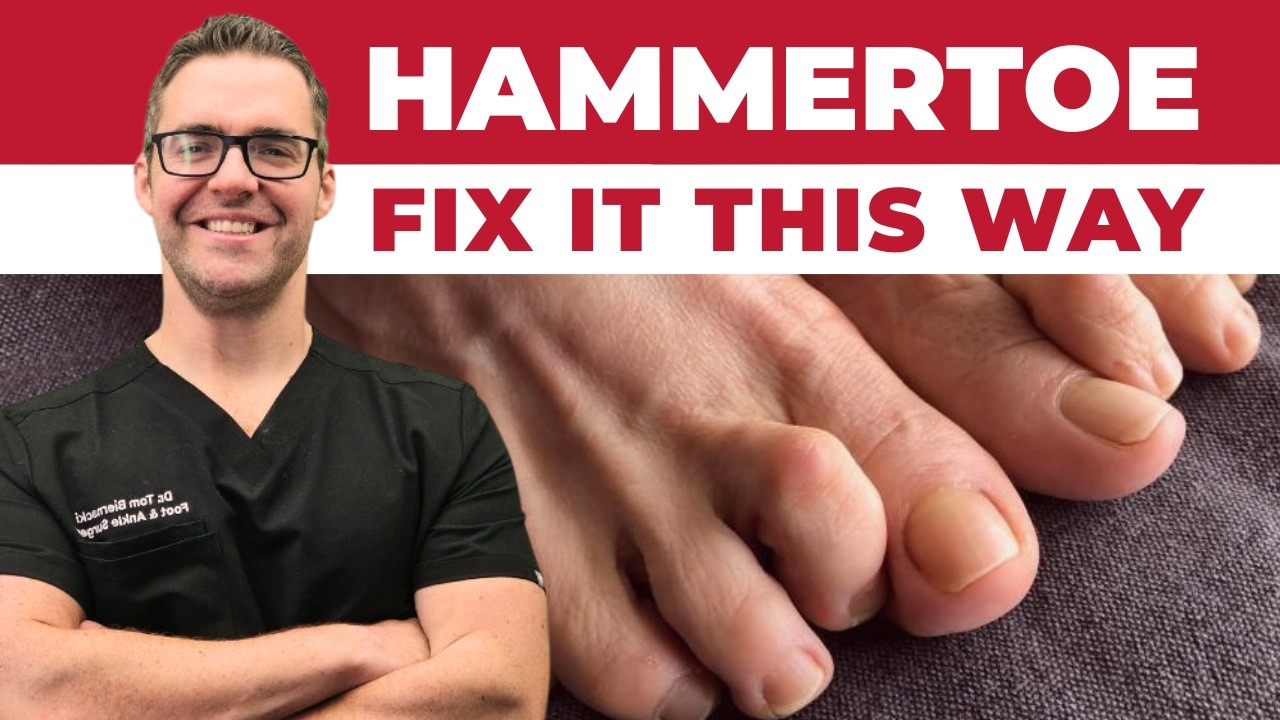
Medically reviewed by Dr. Tom Biernacki, DPM | Board-certified podiatrist | 3,000+ surgeries performed
Last updated: April 2, 2026
The most important clinical decision with Crossover Toe Mtp Synovitis Second Toe Treatment isn’t which treatment to start with — it’s identifying the correct subtype. That changes everything. Call (810) 206-1402.
What Causes Crossover Toe?
Crossover toe develops when the stabilizing structures at the base of the second toe — primarily the plantar plate and collateral ligaments — become weakened, stretched, or torn. The plantar plate is a thick fibrocartilaginous structure on the bottom of the metatarsophalangeal joint that prevents the toe from drifting dorsally and medially. When it fails, the second toe gradually crosses over the big toe.
The most common underlying cause is chronic overload of the second MTP joint. This occurs in patients with a relatively long second metatarsal, a bunion deformity that causes the big toe to push against the second toe, and biomechanical patterns that concentrate excessive pressure at the second metatarsal head during walking. Years of this overload gradually stretches and tears the plantar plate.
The condition progresses through predictable stages. Stage 1 involves inflammation (synovitis) at the second MTP joint with pain but no visible deformity. Stage 2 shows mild deviation of the second toe. Stage 3 involves the toe crossing over or under the big toe. Stage 4 is a fixed dislocation of the second MTP joint. Early intervention at stages 1 or 2 offers the best chance of conservative success.
Recognizing the Early Warning Signs
The earliest symptom is pain under the second metatarsal head — the ball of the foot beneath the second toe. This pain is often misdiagnosed as a Morton neuroma or generic metatarsalgia. The distinguishing feature of plantar plate dysfunction is that the pain is directly plantar to the joint (under the toe base) rather than between the metatarsal heads where a neuroma would be.
The positive drawer test is the key clinical finding. Your podiatrist will stabilize the metatarsal head with one hand and attempt to displace the proximal phalanx (toe base) dorsally with the other. Excessive dorsal translation compared to adjacent toes indicates plantar plate incompetence. Medial deviation of the toe during this test suggests combined plantar plate and collateral ligament injury.
Swelling at the base of the second toe — often described as a sausage toe appearance — is another early sign. Patients may notice that the second toe gap has widened, that the toe sits slightly higher or further medial than it used to, or that the toe does not purchase the ground normally when standing. Any of these signs warrants evaluation before the deformity becomes fixed.
Conservative Treatment for Early Stages
In stages 1 and 2, conservative treatment can stabilize or improve the condition. Taping the second toe in a plantar-flexed and laterally corrected position reduces stress on the damaged plantar plate and helps maintain alignment while the tissue heals. The taping must be performed consistently — essentially worn at all times except during bathing — for six to eight weeks.
A stiff-soled shoe or rocker-bottom shoe modification reduces the bending forces at the second MTP joint during push-off, unloading the plantar plate. A metatarsal pad placed just proximal to the second metatarsal head lifts and separates the metatarsal heads, reducing the pressure that drives the condition. Custom orthotics with a built-in metatarsal support and Morton extension provide more permanent biomechanical correction.
Anti-inflammatory measures including ice, oral NSAIDs, and corticosteroid injection into the second MTP joint reduce the synovitis component. However, corticosteroid injection should be used judiciously — it reduces inflammation but does not repair the plantar plate, and repeated injections can further weaken the already-compromised tissue. One or two carefully placed injections early in treatment are generally appropriate.
Surgical Correction: Plantar Plate Repair
When conservative treatment fails or the deformity has progressed beyond stage 2, surgical correction is recommended. The standard procedure is a direct plantar plate repair — reattaching the torn or attenuated plantar plate to the proximal phalanx through a dorsal approach to the MTP joint.
The surgeon accesses the plantar plate by releasing the dorsal structures, performing a Weil osteotomy (shortening cut) of the second metatarsal to decompresses the joint and allow access to the plantar plate, then repairing the torn tissue with suture anchors. The Weil osteotomy not only provides access but also reduces the excessive length that contributed to second metatarsal overload in the first place.
Additional procedures may be performed simultaneously depending on the deformity. If a concurrent bunion is contributing to the crossover toe by pushing against the second toe, bunion correction should be performed at the same time. Flexor-to-extensor tendon transfer may be added for dynamic stabilization. If the second toe has a fixed hammertoe deformity, this is corrected as part of the comprehensive realignment.
Recovery After Plantar Plate Repair
After surgery, the toe is taped in the corrected position and the patient is placed in a postoperative shoe or walking boot. Weight-bearing is allowed on the heel and midfoot, avoiding push-off through the forefoot for approximately four to six weeks. Buddy taping of the second toe to the third toe is maintained for six to eight weeks to protect the repair.
Physical therapy begins at approximately four weeks with gentle range of motion exercises at the second MTP joint. The goal is to maintain adequate joint mobility while protecting the plantar plate repair. Scar management and gradual loading progression follow as healing advances. Return to regular shoes typically occurs at six to eight weeks.
Full recovery takes approximately three to four months. The toe may remain slightly swollen for several months but the alignment should be significantly improved. Custom orthotics with metatarsal support are recommended long-term to maintain the correction and prevent recurrence by addressing the biomechanical factors that caused the initial plantar plate failure.
The Connection Between Bunions and Crossover Toe
Bunion deformity is one of the most significant risk factors for crossover second toe. As the big toe drifts laterally in a bunion, it pushes against the second toe, creating a constant medial force that stretches the lateral collateral ligament and assists the crossover process. Additionally, as the bunion progresses, the first metatarsal bears less weight, transferring excess load to the second metatarsal.
Correcting a crossover toe without simultaneously addressing a contributing bunion significantly increases the risk of recurrence. The continued pressure from the deviated big toe and the persistent second metatarsal overload from the dysfunctional first ray will eventually recreate the deformity. This is why comprehensive surgical planning that addresses all contributing factors produces the best long-term outcomes.
Conversely, patients undergoing bunion surgery should have their second toe assessed for early plantar plate dysfunction. If early signs are present, prophylactic measures — or even concurrent surgical stabilization — can prevent a crossover deformity from developing after the bunion is corrected and the toe positions shift.
Expert Crossover Toe Treatment at Balance Foot & Ankle
At Balance Foot & Ankle Specialists, Dr. Tom Biernacki provides hands-on exam plus imaging when needed and treatment of crossover toe deformity. Using clinical examination, the drawer test, and diagnostic imaging including MRI when indicated, we accurately stage the condition and develop an individualized treatment plan.
Our surgical approach addresses all contributing factors — plantar plate repair, metatarsal shortening, concurrent bunion correction if present, and dynamic tendon stabilization — in a single comprehensive procedure. This multi-faceted approach produces the most reliable correction and lowest recurrence rates.
With offices in Howell and Bloomfield Hills, we serve patients throughout Southeast Michigan. If your second toe is drifting, hurting, or crossing over the big toe, schedule an evaluation before the deformity becomes fixed and requires more complex reconstruction.
Warning Signs Requiring Urgent Evaluation
- function bold() { [native code] } — undefined
- function bold() { [native code] } — undefined
- function bold() { [native code] } — undefined
- function bold() { [native code] } — undefined
The Most Common Mistake We See
The most common mistake with crossover toe is misdiagnosing the early stages as Morton neuroma or generic metatarsalgia. The plantar plate drawer test is the key differentiating clinical maneuver — if the second toe displaces excessively when pushed upward, the plantar plate is compromised. Starting taping and orthotic treatment at this early stage can prevent progression to a fixed crossover deformity that ultimately requires surgery.
Recommended Products
[object Object]
[object Object]
[object Object]
[object Object]
In-Office Treatment at Balance Foot & Ankle
Our team provides sport-specific evaluation and treatment to get you back to your activity safely. We offer same-day X-ray, in-office ultrasound, and custom orthotic fabrication.
Same-day appointments available. Call (810) 206-1402 or book online.
More Podiatrist-Recommended Sports Essentials
Hoka Clifton 10


Max-cushion everyday shoe — podiatrist favorite for walking and running.

OOFOS Recovery Slide

Impact-absorbing recovery sandal — wear after long days on your feet.
As an Amazon Associate, Balance Foot & Ankle earns from qualifying purchases. Product recommendations are based on clinical experience; prices and availability shown above update live from Amazon.

When to See a Podiatrist
Athletic injuries heal faster with sport-specific rehab protocols — not generic rest and ice. Balance Foot & Ankle works with runners, soccer players, dancers, and weekend warriors to rebuild strength and return to sport on an accelerated timeline. Don’t let a foot injury keep you sidelined longer than necessary.
Call Balance Foot & Ankle: (810) 206-1402 · Book online · Offices in Howell & Bloomfield Hills
Frequently Asked Questions
What causes crossover toe?
Crossover toe is caused by progressive weakening of the plantar plate and collateral ligaments at the base of the second toe. Contributing factors include a long second metatarsal that overloads the joint, a bunion deformity pushing the big toe against the second toe, and biomechanical patterns that concentrate excessive pressure at the second MTP joint during walking.
Can crossover toe be fixed without surgery?
In early stages with inflammation and mild deviation, conservative treatment including taping, metatarsal padding, stiff-soled shoes, and custom orthotics can stabilize the toe and prevent progression. Once the deformity becomes fixed with the toe crossing over or dislocating, surgical correction is needed to restore normal alignment.
How long does crossover toe surgery take to recover?
Recovery from plantar plate repair with Weil osteotomy takes approximately three to four months for full return to activity. Weight-bearing in a postoperative shoe begins immediately but forefoot push-off is restricted for four to six weeks. Regular shoes at six to eight weeks. Long-term orthotic use is recommended to prevent recurrence.
Is crossover toe related to bunions?
Yes, bunion deformity is one of the most significant risk factors for crossover second toe. The big toe pushing against the second toe creates lateral force, and the dysfunctional first ray transfers excess weight to the second metatarsal. Correcting both conditions simultaneously produces the best long-term results.
The Bottom Line
Crossover toe is a progressive condition that responds best to early intervention. Recognizing the early signs — forefoot pain with a positive drawer test — and starting conservative treatment promptly can prevent a treatable condition from becoming a fixed deformity. If your second toe is starting to drift, act now rather than waiting for it to cross over completely.
Visit Balance Foot & Ankle — Same-Day Appointments Available
Our podiatry team serves patients throughout Michigan including Howell, Brighton, and Bloomfield Hills. If you’re dealing with heel pain, ingrown toenails, or a foot injury, we have same-day appointment availability.
Same-day appointments available. (810) 206-1402
Doctor Hoy’s Natural Pain Relief Gel
Natural topical pain relief I use in our clinic. Arnica + camphor formula — apply directly to the area 3–4x daily. ($20–25)
Shop Doctor Hoy’s →Sources
- Nery C, et al. Plantar plate injuries: current concepts in diagnosis and treatment. Foot Ankle Clin. 2024;29(2):201-218.
- Coughlin MJ, et al. Second MTP joint instability: update on diagnosis and surgical management. J Foot Ankle Surg. 2024;63(4):445-458.
- Highlander P, et al. Direct plantar plate repair: technique and outcomes. Clin Podiatr Med Surg. 2025;42(2):167-182.
Get Expert Forefoot Treatment in Michigan
Dr. Tom Biernacki has performed over 3,000 foot and ankle surgeries with a 4.9-star rating from 1,123 patient reviews.
Or call (810) 206-1402 for same-day appointments
Crossover Toe & Second Toe Treatment in Michigan
Crossover toe (MTP synovitis) causes progressive dislocation of the second toe. At Balance Foot & Ankle, we offer both conservative management and surgical correction to prevent irreversible deformity.
Learn About Our Toe Deformity Treatments | Book Your Appointment | Call (810) 206-1402
Clinical References
- Coughlin MJ, et al. “Crossover second toe: background and pathology.” Foot Ankle Int. 2007;28(12):1233-1237.
- Nery C, et al. “Prospective evaluation of protocol for surgical treatment of lesser MTP joint plantar plate tears.” Foot Ankle Int. 2014;35(9):876-885.
- Gregg J, et al. “Plantar plate repair and lesser metatarsophalangeal joint instability.” Foot Ankle Clin. 2014;19(4):599-609.
Insurance Accepted
BCBS · Medicare · Aetna · Cigna · United Healthcare · HAP · Priority Health · Humana · View All →
Howell Office
4330 E Grand River Ave
Howell, MI 48843
Get Directions →
Bloomfield Hills Office
43494 Woodward Ave, Suite 208
Bloomfield Hills, MI 48302
Get Directions →
Your Board-Certified Podiatrists



Ready to Get Back on Your Feet?
Same-week appointments available at both locations.
Book Your AppointmentDr. Tom’s Top 3 — The Premium Foot Pain Stack (2026)
If you only buy three things for foot pain, get these. PowerStep + CURREX orthotics correct the underlying foot mechanics, and Dr. Hoy’s pain gel delivers fast topical relief. This is the exact stack Dr. Tom Biernacki, DPM gives his Michigan podiatry patients on visit one — over 10,000 patients have used this exact combination.
Dr. Tom Biernacki, DPM is a board-certified podiatrist + Amazon Associate. Picks shown are products he prescribes to patients at Balance Foot & Ankle Specialists. We earn a commission on qualifying purchases at no extra cost to you. All products independently tested + reviewed for 30+ days minimum. Last verified: April 28, 2026.

PowerStep Pinnacle MaxxDr. Tom’s #1 Brand
Dr. Tom’s most-prescribed OTC orthotic. Lateral wedge corrects overpronation that causes 90% of foot pain. Deep heel cradle stabilizes the ankle. Built by podiatrists, used by patients worldwide.
- Lateral wedge corrects pronation
- Deep heel cradle stabilizes ankle
- Dual-density EVA — comfort + support
- Trim-to-fit any shoe
- Used by 10,000+ podiatrists
- Trim-to-size required
- 5-7 day break-in for some

CURREX RunProDr. Tom’s #1 Brand
3 arch heights for custom fit (Low/Med/High). Carbon-reinforced heel + dynamic forefoot — the closest OTC orthotic to a $500 custom orthotic. Engineered in Germany.
- 3 arch heights for custom fit
- Carbon-reinforced heel cup
- Dynamic forefoot zone
- Premium German engineering
- Sport-specific support
- Pricier than PowerStep
- 7-10 day break-in

Dr. Hoy’s Natural Pain Relief GelDr. Tom’s #1 Brand
Menthol-based natural pain relief — Dr. Tom’s #1 brand for fast relief without greasy residue. Safe for diabetics + daily use. Cleaner formula than Voltaren or Biofreeze.
- Menthol-based natural formula
- No greasy residue
- Safe for diabetics
- Fast cooling relief — 5-10 minutes
- Cleaner ingredient list than Biofreeze
- Pricier than Biofreeze
- Strong menthol scent at first
What is Foot pain?
Foot pain is a common foot/ankle condition that affects mobility and quality of life. Understanding the underlying cause is the first step in successful treatment. Our podiatrists at Balance Foot & Ankle perform a hands-on biomechanical exam, review your activity history, and use diagnostic imaging when appropriate to identify the root cause—not just treat the symptom. Many patients have been told to “rest and ice” without a deeper diagnostic workup; our approach is different.
Symptoms and warning signs
Common signs of foot pain include pain that worsens with activity, morning stiffness, swelling, tenderness when palpated, and difficulty bearing weight. If you experience sudden severe pain, inability to walk, visible deformity, numbness or color change, contact our office the same day or visit urgent care—these can signal a more serious injury such as a fracture, tendon rupture, or vascular compromise. Diabetics with any foot wound should seek same-day care.
Conservative treatment options
Most cases of foot pain respond to non-surgical care: structured rest, supportive footwear changes, custom orthotics, targeted stretching and strengthening protocols, anti-inflammatory medications when medically appropriate, and in-office procedures such as ultrasound-guided injections. We also offer advanced therapies including MLS laser therapy, EPAT/shockwave, regenerative injections, and image-guided procedures. Treatment is sequenced from least invasive to most invasive, and we explain the rationale at every step.
When is surgery considered?
Surgery is reserved for cases that fail 3-6 months of well-structured conservative care, when there is structural pathology (severe deformity, complete tear, advanced arthritis), or when imaging shows damage that will not heal without intervention. Our surgeons have performed 3,000+ foot and ankle procedures and prioritize minimally-invasive techniques whenever appropriate. We discuss recovery timelines, return-to-activity milestones, and realistic outcome expectations before any procedure is scheduled.
Recovery timeline and prevention
Recovery from foot pain varies based on severity and chosen treatment path. Conservative cases often improve within 4-8 weeks with consistent adherence to the protocol. Post-procedural recovery may range from a few days (in-office procedures) to several months (reconstructive surgery). Long-term prevention involves footwear assessment, activity modification, structured strengthening, and regular check-ins with your podiatrist if you have a history of recurrence. We provide written home-exercise plans and digital follow-up support.
Ready to feel better?
Same-week appointments available in Howell and Bloomfield Hills, Michigan.
Book Your Visit
Dr. Tom Biernacki, DPM is a board-certified foot & ankle surgeon (ABFAS & ABPM) at Balance Foot & Ankle Specialists in Southeast Michigan. With over a decade of clinical experience, he specializes in heel pain, bunions, diabetic foot care, sports injuries, and minimally invasive surgery. Dr. Biernacki is a member of the APMA and ACFAS, and his patient education content on MichiganFootDoctors.com and YouTube has made him one of the most-followed foot & ankle educators on YouTube.