
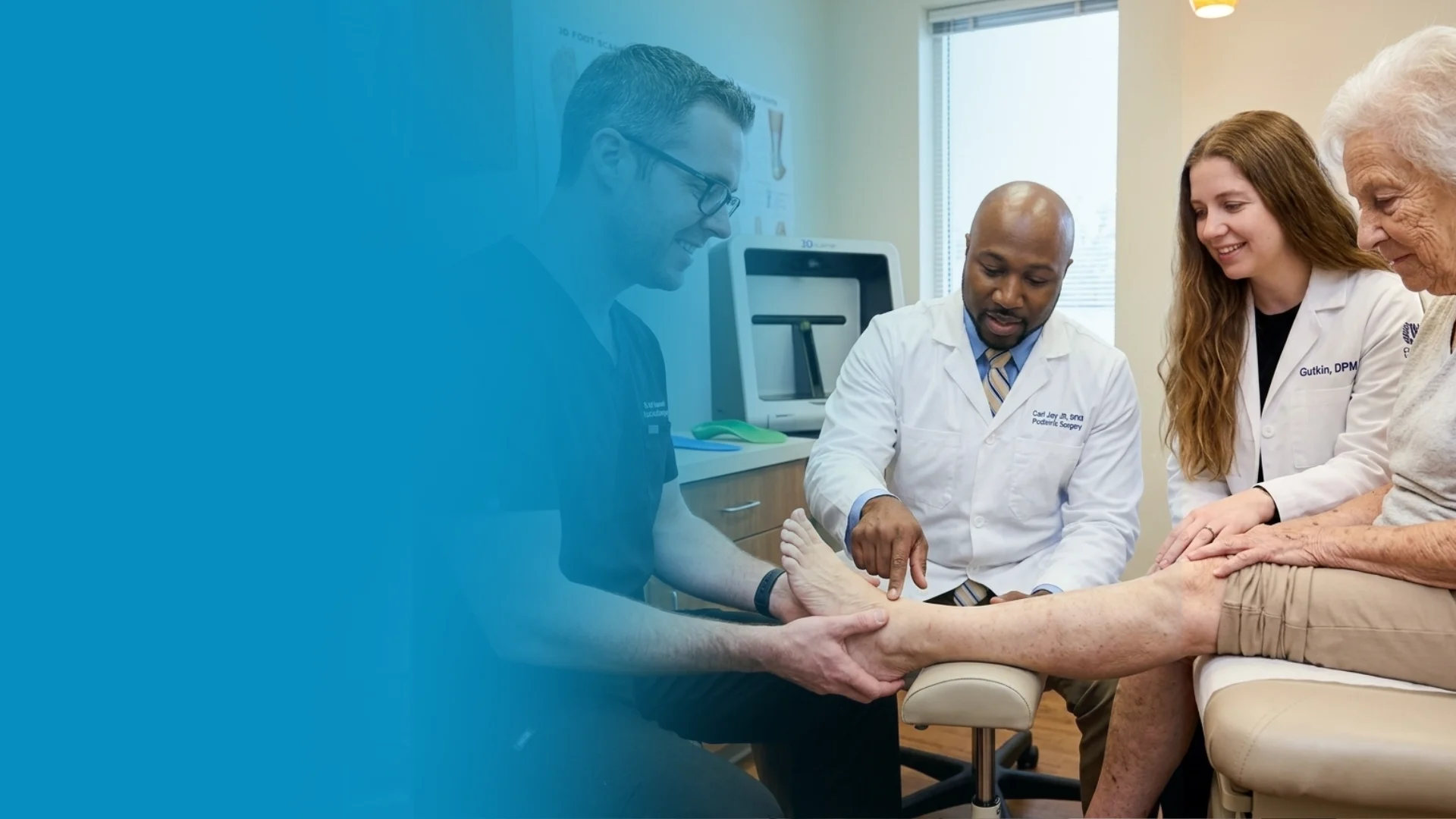
What to Expect at Your First Podiatry Appointment: A Complete Patient Guide
What Happens at Your First Podiatry Visit
Many people are unsure what to expect at a podiatry appointment — whether to bring imaging, how much of the visit will involve examination versus conversation, or what level of detail they should provide about their symptoms. Knowing what to expect removes uncertainty and helps you arrive prepared to make the most of the appointment.
Before the Appointment
Gather your relevant medical history including a list of current medications, known allergies, and relevant systemic conditions such as diabetes, rheumatoid arthritis, peripheral vascular disease, or any history of lower extremity surgery. Bring any prior imaging — X-rays, MRI, or ultrasound reports — related to your foot complaint. If you have insurance, bring your insurance card and photo ID. Wear or bring the shoes you wear most frequently — the podiatrist will want to examine them for wear patterns that reveal gait mechanics. If you use orthotics, bring them.
The Medical History Interview
The visit begins with a structured history of your chief complaint. The podiatrist will ask when the pain started, what makes it better or worse, how it has changed over time, what treatments you have already tried, and how it affects your daily activities. Be specific — noting that pain is worse with the first steps after rest (classic plantar fasciitis), during specific activities like running, or in certain shoe types provides diagnostic information that shapes the examination and treatment plan.
The Physical Examination
The podiatrist will examine both feet even if only one is symptomatic, as comparison is diagnostically important. You will be asked to stand, walk, and sit so the foot can be assessed in weight-bearing and non-weight-bearing positions. The examination typically includes visual inspection of skin, nails, and deformities; palpation to identify areas of specific tenderness; range of motion testing of ankle, subtalar, and toe joints; neurovascular assessment including pulses and sensation testing; and gait observation. Specific clinical tests — the windlass test for plantar fasciitis, the single heel-rise test for posterior tibial tendon function, the Thompson squeeze test for Achilles integrity — are performed as indicated by the history.
Imaging During or After the Visit
Many podiatry offices have on-site digital X-ray capabilities, allowing weight-bearing X-rays to be taken and reviewed during the same visit. This is particularly efficient for conditions where bony alignment, heel spur assessment, or fracture evaluation is relevant. If MRI or ultrasound is needed, a referral for imaging is provided and results are reviewed at a follow-up appointment or communicated by phone or patient portal.
The Treatment Discussion
After examination, the podiatrist presents findings and discusses the diagnosis, the range of treatment options from most conservative to most interventional, the expected timeline for improvement, and what to do if initial treatment does not produce adequate relief. This is your opportunity to ask questions — about the diagnosis, about treatment alternatives, about activity restrictions, and about what red flags would warrant an earlier return visit. A good first appointment leaves you with a clear understanding of what is wrong, what you are doing about it, and what to expect.
Follow-Up Expectations
For acute conditions, follow-up is typically scheduled 4 to 6 weeks after initiating treatment to assess response. For chronic or complex conditions, more frequent follow-up may be needed. If you are dispensed orthotics, a follow-up break-in period and adjustment appointment is standard. Keep a record of your symptoms between appointments — noting what improved, what did not change, and any new symptoms helps make follow-up visits efficient and productive.
Scheduling Your First Podiatry Appointment at Balance Foot & Ankle in Michigan
Patients scheduling their first appointment at Balance Foot & Ankle can expect a smooth, organized experience from first contact to checkout. When you call (810) 206-1402, our scheduling team will collect basic information, verify your insurance before the appointment, and send you a new patient intake form you can complete electronically before arriving — saving time at check-in. At the appointment, your podiatrist will take a complete foot and ankle history, perform a thorough examination, review any relevant imaging, and explain their findings clearly before discussing treatment options. There is no pressure to commit to a treatment plan on the first visit — your podiatrist will provide you with a written summary of their assessment and recommendations that you can review at home. Balance Foot & Ankle has two convenient Michigan locations: Howell at 4330 E Grand River and Bloomfield Hills at 43494 Woodward Ave #208. New patients from throughout Livingston and Oakland counties are welcome to call (810) 206-1402 to schedule.
Related Treatment Guides
- Foot & Ankle Arthritis Treatment
- Plantar Fasciitis & Heel Pain Treatment
- Custom 3D Orthotics
- Sports Foot & Ankle Injury Treatment
Michigan patients experiencing foot or ankle problems can schedule an appointment at Balance Foot & Ankle — with locations in Howell (4330 E Grand River) and Bloomfield Hills (43494 Woodward Ave #208). Call (810) 206-1402 for same-week availability.
Medical References & Sources
- American Podiatric Medical Association — Patient Education
- American Orthopaedic Foot & Ankle Society — Foot Conditions
Join 950,000+ Learning About Foot Health
Dr. Tom shares honest medical advice, supplement reviews, and treatment guides you won’t find anywhere else.
Subscribe on YouTube →📍 Located in Michigan?
Our board-certified podiatrists treat this condition at two convenient locations. Same-day appointments often available.

Dr. Tom Biernacki, DPM is a double board-certified podiatrist and foot & ankle surgeon at Balance Foot & Ankle Specialists in Southeast Michigan. With over a decade of clinical experience, he specializes in heel pain, bunions, diabetic foot care, sports injuries, and minimally invasive surgery. Dr. Biernacki is a member of the APMA and ACFAS, and his patient education content on MichiganFootDoctors.com and YouTube has reached over one million views.