

Quick answer: Treatment for foot blisters treatment follows a stepwise approach: 1) conservative care first (rest, ice, supportive footwear, OTC anti-inflammatories), 2) physical therapy and targeted exercises, 3) in-office treatments (injections, custom orthotics) if conservative fails at 4-6 weeks, 4) surgery for refractory cases. Most patients resolve at step 1 or 2. Call (810) 206-1402.
Blisters on the feet are the body’s answer to one specific problem: friction against skin. The fluid-filled bubble that forms is actually a protective mechanism — your body separating damaged skin layers and filling the space with lymph to cushion the area and give new cells time to grow. Understanding this changes how you treat a blister, and more importantly, how you prevent the next one.
If you’re training for a marathon, broke in new dress shoes, or just did too much walking in the wrong socks, this guide covers the complete blister treatment and prevention protocol from a podiatric perspective.
Why Foot Blisters Form
Medically reviewed by Dr. Tom Biernacki, DPM
Board-certified podiatric surgeon | Balance Foot & Ankle, Howell & Bloomfield Township, MI
Last reviewed: May 2026
A blister forms when repetitive friction or shear force separates the epidermis from the dermis (or separates layers within the epidermis), creating a space that fills with interstitial fluid (serum). The process requires three conditions working together:
- Friction: Repetitive rubbing between the skin and a surface (shoe, sock, ground)
- Heat: Friction generates heat; elevated skin temperature makes tissue more susceptible to shear damage
- Moisture: Wet skin (from sweat or external moisture) increases the friction coefficient significantly — wet skin has 5× more friction than dry skin at the same contact forces
This explains why blisters form in predictable locations: heels (shoe counter friction), balls of feet (ground friction during push-off), toes (inter-toe friction and shoe-tip friction), and between toes (moisture accumulation + skin-to-skin friction). Breaking in new shoes accelerates blister formation because stiff materials generate higher friction forces before they conform to the foot.
Key takeaway: Distance athletes know this: most race-day blisters don’t come from the shoes themselves but from new socks, slightly different shoe fit after foot swelling, or changed running mechanics under fatigue. Train in the exact conditions you race in.
Blister Types and How to Identify Them
Clear Fluid Blister (Serum)
The most common type — fluid is clear or slightly yellow. This is normal interstitial fluid (serum) that has accumulated to cushion the damaged area. These are benign and heal well with proper care.
Bloody Blister (Blood Blister)
Red or dark red fluid indicates that the shear force extended deeper into the dermis, rupturing blood vessels. Blood blisters are typically more painful than serum blisters. The same treatment principles apply but with extra care — torn blood blisters are more likely to become infected.
White/Cloudy Blister
Cloudy or white fluid suggests the blister may be infected. White pus-filled blisters require careful drainage, thorough cleaning, and antibiotic ointment. If surrounded by spreading redness, warmth, or red streaking, the blister has progressed to cellulitis requiring oral antibiotics or medical evaluation.
Friction Callus vs. Blister
Chronic repeated low-level friction causes the skin to respond by thickening (callus formation) rather than blistering — the body’s long-term adaptation to repetitive friction. Athletes who regularly run in the same shoes eventually develop callus where they once got blisters. Blister formation typically means the friction exceeds what the skin has adapted to handle.
Step-by-Step Blister Treatment
Small Blisters Under 1cm — Leave Intact
Small blisters that are not significantly painful and are not at risk of tearing should be left intact. The blister roof provides the best possible wound covering. Apply a protective dressing over it and reduce activity that caused it.
Best dressing for intact blisters: Hydrocolloid dressings (Compeed, Band-Aid Advanced Healing) create a moist healing environment, adhere securely, reduce pain by cushioning, and can stay in place for several days without changing.
Large or Painful Blisters — Drain with Care
Large blisters (>1cm) that are tense, very painful, or in a location likely to tear with normal activity benefit from controlled drainage:
- Wash your hands thoroughly with soap and water
- Clean the blister and surrounding skin with povidone-iodine or isopropyl alcohol
- Using a sterile needle (from a sealed package — or sterilize with alcohol and flame), make one small puncture at the lowest edge of the blister
- Let the fluid drain out gently — do not squeeze the roof or press down hard
- Leave the roof completely intact — do not trim or remove it
- Apply antibiotic ointment over the entire blister
- Cover with a hydrocolloid or non-stick sterile dressing
- Change dressing daily; keep dry
Torn Blisters
When the roof has already torn — from pressure, accidental puncture, or normal activity — treat the exposed dermis as a superficial wound:
- Gently clean with saline or mild soap and water — do not scrub
- Trim any loose, hanging skin with clean scissors (loose skin harbors bacteria)
- Apply antibiotic ointment (bacitracin, Neosporin)
- Cover with a non-stick dressing (Telfa, silicone) — standard adhesive bandages stick to exposed dermis painfully
- Change dressing daily until re-epithelialized (typically 5–10 days)
Warning: Seek medical evaluation for blisters that:
- Show spreading redness, warmth, or swelling beyond the blister edges
- Have red streaking up the foot or leg (lymphangitis — a medical emergency)
- Have pus or foul odor
- Are not healing after 2 weeks
- Occur in a diabetic patient, immunocompromised patient, or patient with peripheral vascular disease
- Are accompanied by fever or chills
Blister Prevention: The Complete Protocol
Sock Selection — The Most Overlooked Factor
The right socks prevent more blisters than any other intervention:
- Material: Merino wool or synthetic moisture-wicking fabrics (CoolMax, Drymax). Cotton holds moisture and increases friction — avoid for athletic use.
- Seamless or flat-seam construction: Prominent seams directly cause blisters at toe tips and on dorsal toe joints
- Double-layer socks: Two layers slide against each other rather than against your skin (Wrightsock, Thor-Lo) — excellent for blister-prone runners
- Thickness: Thicker socks provide more padding but can make shoes too tight. Fit shoes wearing your intended sock thickness.
Shoe Fit and Break-In
Most blister-causing shoe problems come down to fit:
- Length: Thumb’s width between longest toe and shoe end (feet swell during activity)
- Width: Toe box should not compress any toe
- Break-in period: Wear new shoes for short distances first — never debut in a race or long hike
- Lacing: Runner’s loop (heel lock) technique reduces heel slippage — the most common cause of heel blisters in running
Friction Reduction Products
Applied to high-risk areas before activity:
- Body Glide, BodyGlide For Her, or Squirrel’s Nut Butter: Anti-friction balm sticks that significantly reduce friction at high-risk areas
- Vaseline (petroleum jelly): Classic, inexpensive, and effective — apply liberally to heels and between toes for long activities
- 2Toms BlisterShield: Powder that reduces friction and moisture simultaneously
- Silicone toe separators: For inter-toe blisters from toe-on-toe friction
Blister-Prone Area Pre-Taping
Athletes who consistently blister at specific locations benefit from prophylactic taping before activity. Leukotape P or Fixomull stretch tape applied directly to clean, dry skin before running creates a durable slip surface that dramatically reduces blister formation. This technique is used extensively in ultra-marathon and military populations.
Special Populations
Diabetic Patients
Any blister in a diabetic patient requires same-day professional evaluation. Neuropathy means blisters may be larger and deeper than they appear, and peripheral vascular disease means healing is impaired. Infected diabetic foot blisters can progress to osteomyelitis within days. Do not attempt home treatment beyond a clean bandage while arranging a same-week appointment.
Hikers and Backpackers
Multi-day hikers should: apply anti-friction products to all high-risk areas before starting each day, monitor feet at every rest stop, drain and dress tense painful blisters promptly (hiking on a tense blister causes it to tear in a dirty environment), carry a blister kit (sterile needles, hydrocolloid dressings, Leukotape) as a trail essential.
Military Personnel
Foot blisters are among the leading causes of lost training days in military populations. Evidence-based protocols used by military units: pre-tape high-risk areas with polyurethane film, double-layer socks, ensure proper boot fit (common problem: wearing boots too small to appear ‘regulation’), and address blisters same-day during field operations before moisture and dirt drive infection.
In-Office Treatment at Balance Foot & Ankle
If home treatment isn’t providing relief for your foot skin condition, our podiatry team at Balance Foot & Ankle can help with same-week evaluations and advanced in-office care.
Frequently Asked Questions
Should you pop a blister or leave it?
Leave small intact blisters alone — the roof is your best protection. For large, tense blisters that are very painful or likely to tear, controlled drainage with a sterile needle (leaving the roof intact) is appropriate. Never tear the roof off or remove it — exposed dermis heals more slowly, hurts more, and is far more susceptible to infection than skin covered by even a torn blister roof.
How long does a foot blister take to heal?
Small intact blisters typically heal in 3–7 days as the underlying skin regenerates and the fluid reabsorbs. Drained blisters and torn blisters take 5–14 days depending on size and depth. Blood blisters typically take longer — 10–21 days. Any blister that has not healed within 2 weeks should be evaluated for infection, underlying structural problem, or in diabetic patients, non-healing wound.
What is a friction blister vs a burn blister?
Friction blisters result from mechanical shear force (shoe friction, repetitive rubbing) and form at the skin surface. Burn blisters result from thermal injury and can extend deeper into the dermis. Both are treated with similar principles — protect the roof, keep clean, cover with a non-stick dressing. Burn blisters from walking barefoot on hot pavement (common in diabetics with neuropathy) or contact with hot objects should be evaluated medically as they can extend quite deep.
Why do I keep getting blisters in the same spot?
Recurrent blisters in the same location almost always indicate a persistent mechanical problem: the shoe is pressing on that spot, there’s a structural foot issue creating abnormal pressure (hammertoe, bunion, bony prominence), your sock is bunching at that point, or you have a gait pattern creating repeated friction at that specific location. A podiatrist can evaluate your mechanics and footwear to identify the specific cause.
Are foot blisters ever a sign of a medical condition?
Most foot blisters are purely mechanical (friction). However, blistering conditions affecting the feet include: dyshidrotic eczema (clear blisters on the soles and sides of feet, associated with allergies and stress), bullous pemphigoid (an autoimmune blistering condition), and pemphigus vulgaris. These conditions cause blisters without the mechanical trigger of friction and often have characteristic patterns. Blisters that appear without any friction injury warrant dermatological evaluation.
Sources
- Knapik JJ et al. Friction blisters: pathophysiology, prevention, and treatment. Sports Med. 1995;20(3):136-147.
- Brennan FH. Managing blisters in competitive athletes. Curr Sports Med Rep. 2002;1(6):319-322.
- Herring KM, Richie DH. Friction blisters and sock fiber composition. J Am Podiatr Med Assoc. 1990;80(2):63-71.
- Worthing RM et al. Prevention of friction blisters in outdoor pursuits. Wilderness Environ Med. 2017;28(2):139-149.
When Shoes Aren’t Enough — Dr. Tom’s Top 9 Orthotics
About 30% of patients I see for foot pain need MORE than a great shoe — they need a structured insole. Below: my complete 2026 orthotic ranking with pros, cons, and the specific patient I’d give each one to.

PowerStep Pinnacle Insoles, Orthotics for Plantar Fasciitis Relief, Made in USA Orthotic Insoles, Arch Support Inserts with Moderate Pronation, #1 Podiatrist Recommended (M 14-15)
- The Pinnacle Full length insoles for men & women provide maximum cushioning, from high activity to moderate support. The PowerStep arch support shape provides stability to the foot and ankle, helping to relieve foot pain.
- When you spend all day on your feet, every step counts. PowerStep insoles are a podiatrist-recommended orthotic to help relieve & prevent foot pain related to athletes, runners, Plantar Fasciitis, heel spurs & other common foot, ankle & knee injuries
- The Pinnacle plantar fasciitis insoles offer superior heel cushioning and arch support. The dual-layer cushioning is designed to reduce stress and fatigue, while PowerStep premium arch support is designed for plantar fasciitis relief.
- The PowerStep Pinnacle arch support inserts for men & women can be worn in a variety of shoe types such as; athletic, walking, running, work & some casual shoes. Orthotic Inserts are ordered by shoe size, no trimming required.
- Made in the USA & backed by a 30-day money-back guarantee. PowerStep orthotic inserts for men & women are designed for shoes where the factory insole can be removed. HSA & FSA Eligible

PowerStep ProTech Full Length Orthotic Insoles – Medical Grade Arch Support Inserts for Plantar Fasciitis Relief, Heel Pain, Maximum Cushioning, Memory Foam Orthotics, Made in the USA
- Full Length Support – Our ProTech orthotic insoles support pronation, arch pain, heel pain, plantar fasciitis, and heel spurs.
- Your Go To Inserts – These orthotics for plantar fasciitis provide full length, total contact support for a number of common foot issues
- Easily Fix Your Arches – Standard, semi-rigid arch support that fits most shoes including, work boots, dress shoes and sneakers.
- Enhanced Comfort – Our ProTech orthotic inserts have maximum cushioning featuring ShockAbsorb Premium Foam heel support cushion to increased protection.
- Support + Comfort – PowerStep ProTech orthotic insoles are designed with built-in arch support, heel cradle, and a perfect balance of support and comfort. Legitimate PowerStep product packaging is marked with a unique US quality control code. If you are concerned that a PowerStep item is not legitimate, please contact PowerStep customer service.
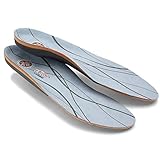
Vionic Unisex Full Length Active Orthotic Shoe Insole-Comfort, Cushion, Arch Support, Heel Pain Relief, Plantar Fasciitis, Large: Women’s 10.5-12 / Men’s 9.5-11
- PODIATRIST DESIGNED! An effective alternative to expensive custom-made orthotics. Innovative biomechanical THREE-ZONE COMFORT technology delivers deep heel cup stability, forefoot cushioning, and ultimate arch support to prevent excessive pronation caused by flat feet. These essential contact points help to realign positioning of feet, aiding to re-establish your body’s natural alignment, from the ground up.
- VIONIC ORTHOTIC INSOLES! These women’s and men’s shoe inserts offer a convenient, pain-free natural healing solution for many of the common aches and pains associated with poor lower-limb alignment, plantar fasciitis, and arch pain. EVA orthotic with re-enforced, hardened plastic (PE) shell for added motion control and stability. Cushioned shock dot in the heel for added shock absorption. Can be trimmed in forefoot if necessary.
- DESIGNED FOR EVERYDAY USE! Designed to provide greater control in faster paced activities such as running and fast walking. 4 degree rear foot wedge to provide support and control which helps prevent excess pronation. Odor absorbing cover. Contoured around the heel and arch areas to achieve 100% foot contact. Podiatrist Designed, APMA Seal of Acceptance.
- COMFORTABLE TO WEAR! Shoe inserts for women and men contoured around the heel and arch areas to achieve perfect foot contact.
- SIZES AVAILABLE: XS: Women’s 4.5 – 6 / Men’s 3.5 – 5 S: Women’s 6.5 – 8 / Men’s 5.5 – 7 M: Women’s 8.5 – 10 / Men’s 7.5 – 9 L: Women’s 10.5 – 12 / Men’s 9.5 – 11 XL: Men’s 11.5 – 13

Nike Men’s Pegasus 41 White/White/Pure Platinum 10.5 Medium
- Signature waffle-inspired rubber outsole for traction and flexibility

OS1st FS4 Plantar Fasciitis No Show Socks relieves plantar fasciitis, heel/arch pain and improves circulation
- Provides continuous support of the Plantar Fascia by gently stretching the fascia tissue.
- Compression zones promote circulation, reduce impact vibration, boost recovery and strengthen feet.
- Lightweight, seamless design with extra cushioning provides support while still being comfortable.
- Supports the heel/arch and overall foot structure while stabilizing the tendon for better performance
- Made from high quality materials, the socks are moisture wicking and breathable.

Protalus M100 Original – Patented Stress Relief Replacement Shoe Inserts, Increase Comfort, Relieve Plantar Fasciitis, Anti-Fatigue, Alignment Improving Shoe Insoles
- The first generation of Protalus’s M-100 Insole
- Patented Alignment Technology: The M-100 features a deep heel cup and contoured arch to correct overpronation and promote better posture, stability, and joint health throughout your body.
- Comfortable Insoles: The patented stress relief replacement shoe insoles increase comfort and relieve plantar fasciitis and anti-fatigue.
- Improves Alignment: The shoe insoles help improve alignment and reduce pain in the feet, ideal for low and high arches.
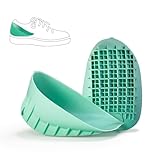
Tuli’s Heavy Duty Heel Cups, Shock-Absorbing Cushion Insert for Plantar Fasciitis, Sever’s Disease, and Heel Pain, Green, 1 Pair, Large
- ✶ALLEVIATES HEEL PAIN – Tuli’s Heavy Duty Heel Cups provide heel pain relief caused by plantar fasciitis, Sever’s disease, excessive pronation, Achilles tendonitis, etc. Ideal for those on their feet for most of the day or those looking for added comfort.
- ✶PODIATRIST PREFERRED – In an independent study conducted by M3 Global Research, podiatrists chose Tuli’s as the clear winner of recommended heel cup brands.
- ✶SHOCK-ABSORBING DESIGN – The multi-cell, multi-layer design absorbs shock and impact energy, mimicking the natural shock-absorbing system of your feet. As you walk or run, the design reduces the stress on your feet.
- ✶DOCTOR RECOMMENDED & APMA ACCEPTED – Tuli’s Heel Cups were designed by a leading podiatrist and have the honor of being accepted by the American Podiatric Medical Association.
- ✶FITS MOST LACE-UP SHOES – Best used in spacious lace-up shoes like athletic shoes / sneakers.
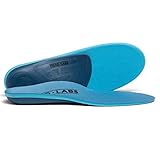
Tread Labs Pace Insoles for Plantar Fasciitis Relief & Flat Feet – Firm Arch Support Inserts for Men & Women – Replaceable Top Covers, Million-Mile Guarantee
- Plantar Fasciitis Relief, Every Step – Firm arch support helps relieve heel and arch pain from plantar fasciitis and supports flat feet and overpronation for better alignment and all-day comfort.
- Clinical-Grade Biomechanics – Tread Labs 26-33 ARCHitecture delivers orthotic-level stability—custom-orthotic feel without the prescription.
- Dialed Fit for Any Shoe – Four arch heights (low, medium, high, extra-high) and an easy 3-step sizing guide make selection simple for work boots, sneakers, and everyday shoes—great for standing all day.
- Built to Last a Million Miles – Durable, recyclable arch supports with our Million-Mile Guarantee; replaceable top covers keep insoles fresh and cost-effective. Unlike foam that flattens, Pace is engineered to last.
- Trusted Expertise – Designed by Mark Paigen (founder of Chaco). Premium arch support inserts for men and women backed by decades of footwear innovation.
Ready to Get Relief?
Same-week appointments available in Howell & Bloomfield Township, MI
4.9★ | 1,123 Reviews | 3,000+ Surgeries
Or call: (810) 206-1402

Dr. Tom Biernacki, DPM is a board-certified foot & ankle surgeon (ABFAS & ABPM) at Balance Foot & Ankle Specialists in Southeast Michigan. With over a decade of clinical experience, he specializes in heel pain, bunions, diabetic foot care, sports injuries, and minimally invasive surgery. Dr. Biernacki is a member of the APMA and ACFAS, and his patient education content on MichiganFootDoctors.com and YouTube has made him one of the most-followed foot & ankle educators on YouTube.