

Medically reviewed by Dr. Tom Biernacki, DPM
Board-certified podiatric surgeon | Balance Foot & Ankle
Last reviewed: May 2026
Quick answer: Foot Care During Pregnancy Swelling Arch Pain has multiple potential causes including mechanical, neurological, vascular, and inflammatory. The most common causes we identify are overuse, ill-fitting shoes, and biomechanical imbalance. Red flags requiring urgent evaluation: warmth/redness (infection), inability to bear weight (fracture), and unilateral swelling without injury (DVT). Call (810) 206-1402.
Watch: Stop These Mistakes Making Edema Swelling Worse! [Swollen Feet Ankles And Legs Fast Fix] — MichiganFootDoctors YouTube
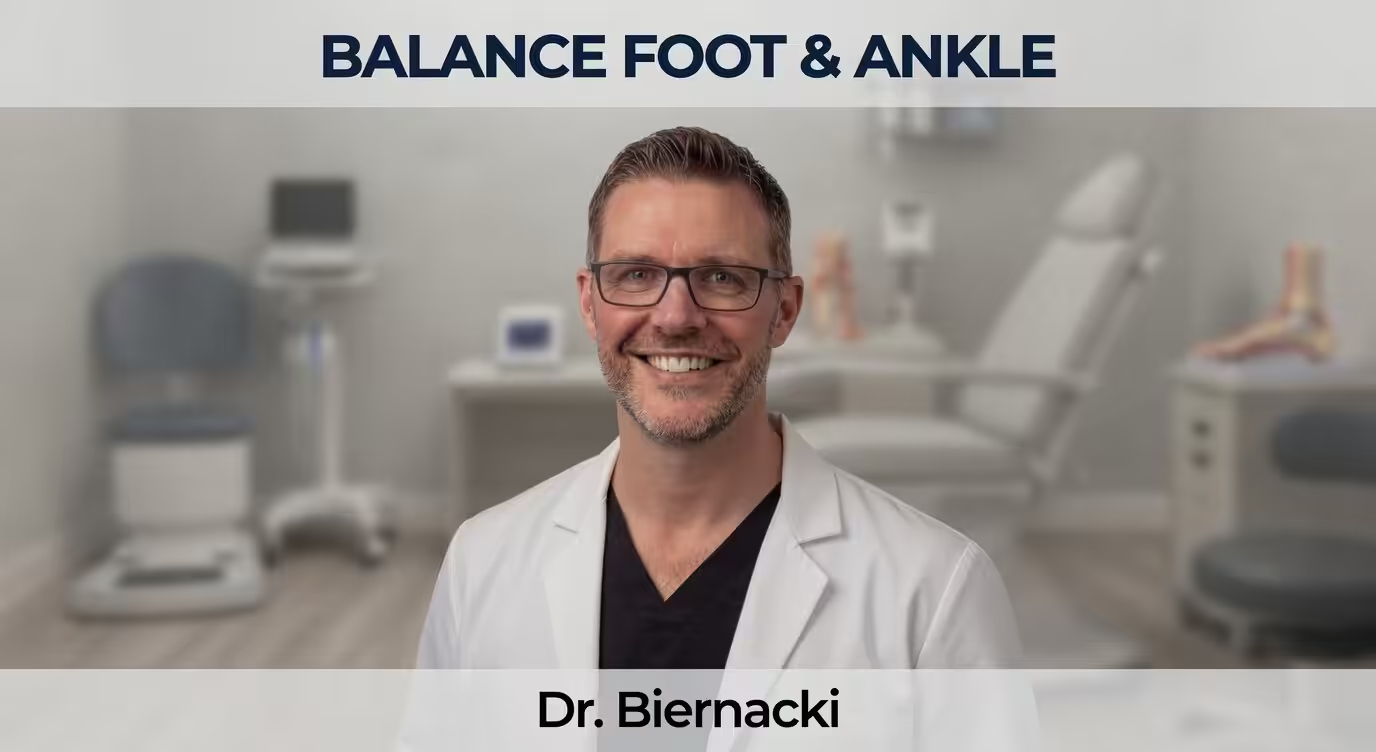
Medically Reviewed by Dr. Tom Biernacki, DPM, FACFAS — Board-certified podiatrist & foot surgeon | Balance Foot & Ankle | Last updated: May 2026
Quick Answer: Foot Care During Pregnancy
Foot swelling (edema), arch pain, and increased shoe size are extremely common during pregnancy — affecting up to 75% of pregnant women. The causes are hormonal (relaxin loosens ligaments), mechanical (weight gain increases arch strain), and circulatory (reduced venous return from the growing uterus). Safe treatments include compression stockings, supportive footwear, custom orthotics, foot elevation, and gentle stretching. Most symptoms resolve postpartum, but some structural changes — including foot lengthening — may be permanent.
Why Pregnancy Changes Your Feet
Pregnancy triggers a notable cascade of physiological changes that directly affect the feet. Understanding these mechanisms helps explain why nearly every pregnant woman experiences some degree of foot discomfort — and what can be done about it safely.
The hormone relaxin, produced throughout pregnancy, loosens the ligaments and connective tissue throughout the body in preparation for childbirth. While this is essential for pelvic flexibility, relaxin also loosens the ligaments of the foot — particularly those supporting the arch. Combined with a weight gain of 25–35 pounds (the average for a healthy pregnancy), this creates dramatically increased load on a mechanically compromised arch.
Most Common Foot Problems During Pregnancy
| Condition | Trimester Most Common | Cause | Safe Treatment |
|---|---|---|---|
| Foot edema (swelling) | 2nd–3rd trimester | Reduced venous return, fluid retention | Compression socks, elevation, walking |
| Arch pain / flat feet | 2nd trimester onward | Relaxin + weight gain → arch collapse | Supportive shoes, custom orthotics |
| Plantar fasciitis | 2nd–3rd trimester | Arch strain, weight gain, tight calves | Stretching, arch support, night splint |
| Shoe size increase | Throughout pregnancy | Arch lowering, ligament laxity | Wide-width footwear; may be permanent |
| Varicose veins / leg heaviness | 2nd–3rd trimester | Uterine pressure on pelvic veins | Compression 15–20 mmHg, side-lying |
| Leg cramps / calf pain | 3rd trimester | Electrolyte shift, nerve compression | Magnesium, calf stretching, hydration |
Compression Stockings During Pregnancy: A Podiatrist’s Recommendation
Medical-grade graduated compression stockings (15–20 mmHg for mild-moderate swelling; 20–30 mmHg for significant edema) are one of the safest and most effective interventions available during pregnancy. They work by mechanically improving venous return from the lower extremities, reducing fluid accumulation in the feet and ankles.
The key is putting compression stockings on before getting out of bed in the morning — before gravity begins pulling fluid into the lower extremities. Many pregnant women make the mistake of applying them mid-morning after swelling has already accumulated, reducing their effectiveness significantly.
Footwear and Orthotics During Pregnancy
Supportive footwear becomes critically important during pregnancy. High heels should be avoided entirely — they shift body weight forward onto the forefoot, increase fall risk with altered center of gravity, and accelerate arch strain. Flat unsupported footwear (flip flops, ballet flats) is equally problematic, offering no arch support to a ligament-lax foot bearing 30+ additional pounds.
The ideal pregnancy shoe has a low, stable heel (1–1.5 inches), wide toe box, rigid midsole with built-in arch support, and a non-slip outsole. Custom orthotics can be fitted during pregnancy — they are safe, require no medication, and significantly reduce arch pain, plantar fasciitis symptoms, and lower limb fatigue. They can typically be transferred to postpartum footwear if the foot size stabilizes.
⚠️ Most Common Mistake During Pregnancy Foot Care
The most common — and most damaging — mistake is continuing to wear pre-pregnancy shoes once the foot has widened and the arch has dropped. Forcing a broader, flatter foot into a narrower shoe creates bunion pressure, metatarsalgia, and ingrown toenails on top of already-stressed feet. Buy appropriately sized footwear during pregnancy — a half to full size up is normal. If budget is a concern, prioritize one good pair of supportive walking shoes over multiple pairs of fashion footwear. Your feet (and lower back) will thank you.
Frequently Asked Questions About Foot Care During Pregnancy
Is foot pain during pregnancy normal?
Yes — foot pain is extremely common during pregnancy, affecting up to 75% of pregnant women to some degree. The combination of relaxin-induced ligament laxity, weight gain, altered gait mechanics, and fluid retention creates ideal conditions for arch pain, plantar fasciitis, and foot swelling. While common, pregnancy foot pain is not something you simply have to endure — effective, pregnancy-safe treatments including orthotics, compression, and footwear modifications can dramatically reduce symptoms throughout pregnancy.
Will my feet go back to normal after pregnancy?
Swelling and edema typically resolve within days to weeks after delivery. However, the structural changes from arch lowering are often permanent — particularly after the first pregnancy. Studies show that average foot length increases by approximately 2–10mm during pregnancy, with flat-footed collapse being a contributing factor. Wearing supportive footwear and orthotics throughout pregnancy can minimize — but not always prevent — permanent arch changes. Many women need to buy shoes in a larger size after their first pregnancy.
Are custom orthotics safe to wear during pregnancy?
Yes — custom orthotics are completely safe during pregnancy. They contain no medication, chemical, or biological agent. They work purely mechanically to support the arch and redistribute pressure. Orthotics are one of the most effective interventions for pregnancy-related arch pain and plantar fasciitis because they address the biomechanical root cause — arch collapse under increased load — rather than masking symptoms. They can be fitted at any point during pregnancy and transferred to postpartum footwear.
When should I see a podiatrist during pregnancy?
See a podiatrist if: heel pain is severe enough to affect your gait in the morning, swelling is asymmetric (one foot much more swollen than the other — this warrants urgent evaluation for DVT), you develop a new ingrown toenail or nail infection (these need professional treatment; do not attempt home cutting of nails with compromised circulation), or if foot pain is preventing comfortable walking. We treat many pregnant patients and are experienced in pregnancy-safe approaches to every common foot condition.
What compression stocking level is safe during pregnancy?
For typical pregnancy-related edema, 15–20 mmHg graduated compression is the standard recommendation and is safe throughout pregnancy. For women with a history of varicose veins, previous DVT, or significant lower limb edema, 20–30 mmHg may be appropriate — discuss with your OB or podiatrist. Compression stockings should be worn from when you get up until you go to bed, and applied before standing up in the morning. Knee-high are sufficient for foot and ankle swelling; thigh-high provide better coverage for leg varicosities.
Foot Pain or Swelling During Pregnancy?
Dr. Tom Biernacki provides pregnancy-safe foot care at Balance Foot & Ankle in Howell and Bloomfield Township. Custom orthotics, compression guidance, and expert footwear advice — all without medication.
Book an Appointment → (810) 206-1402Related Resources
- Plantar Fasciitis Treatment in Michigan
- Custom Orthotics in Michigan
- Swollen Feet — Causes & Treatment
- Flat Feet Treatment in Michigan
- Podiatrist-Recommended Supportive Shoes
Visit Balance Foot & Ankle — Same-Week Appointments Available
Our podiatry team serves patients throughout Michigan including Howell, Brighton, and Bloomfield Township. If you’re dealing with heel pain, ingrown toenails, or a foot injury, we have same-week appointment availability.
Same-week appointments available. (810) 206-1402
Doctor Hoy’s Natural Pain Relief Gel
Natural topical pain relief I use in our clinic. Arnica + camphor formula — apply directly to the area 3–4x daily. ($20–25)
Shop Doctor Hoy’s →Frequently Asked Questions

When should I see a doctor?
See a podiatrist if pain persists past 2 weeks, prevents normal activity, or is accompanied by red-flag symptoms (warmth, swelling, numbness, inability to bear weight).
Can I treat this at home?
Mild cases respond to RICE protocol (rest, ice, compression, elevation), supportive shoes, and OTC anti-inflammatories. Persistent symptoms need professional evaluation.
How long does it take to heal?
Most soft tissue injuries resolve in 2-6 weeks with appropriate care. Bone injuries take 6-12 weeks. Chronic conditions need longer-term management.

Dr. Tom Biernacki, DPM is a board-certified foot & ankle surgeon (ABFAS & ABPM) at Balance Foot & Ankle Specialists in Southeast Michigan. With over a decade of clinical experience, he specializes in heel pain, bunions, diabetic foot care, sports injuries, and minimally invasive surgery. Dr. Biernacki is a member of the APMA and ACFAS, and his patient education content on MichiganFootDoctors.com and YouTube has made him one of the most-followed foot & ankle educators on YouTube.