
You are in the right place. Dr. Tom Biernacki, DPM, FACFAS — board-certified foot & ankle surgeon with 3,000+ surgeries — explains exactly what foot tendinitis means and what actually works. Call (810) 206-1402 for a same-week appointment at our Howell or Bloomfield Township office.
Quick answer: Foot Tendinitis affects roughly 1 in 4 adults in our practice. Effective treatment starts with a targeted diagnosis, conservative-first treatment, and escalation only when needed. We treat this regularly at our Howell and Bloomfield Township practices. Call (810) 206-1402.
Dr. Tom’s Top Bob and Brad Massage Guns
Dr. Tom’s Top Pain Relief Picks — Dr. Hoy’s (2026)
Affiliate disclosure: As an Amazon Associate, Balance Foot & Ankle earns from qualifying purchases. I personally use Dr. Hoy’s in my practice for patients who need topical relief.
| Product | Best For | Dr. Tom’s Take | Get It |
|---|---|---|---|
| Dr. Hoy’s Natural Pain Relief Gel 3.5oz menthol + arnica |
Plantar fasciitis · Achilles tendonitis · Sore muscles · Joint pain | My go-to topical. Cooling-then-warming sensation. No greasy residue. Non-NSAID alternative. | Buy Now |
| Dr. Hoy’s Arnica Boost 8oz with extra arnica |
Bruising · Post-injury · Sprains · Stress fractures (pain only) | Higher arnica concentration speeds recovery from acute injury. Use 4x daily for first 7 days. | Buy Now |
| Dr. Hoy’s Cooling Pain Relief 8oz extra menthol |
Acute inflammation · Hot/swollen feet · Post-run cooldown | Stronger cooling effect for acute swelling. Pair with ice for first 48 hours after injury. | Buy Now |
| Dr. Hoy’s Roll-On Pain Relief Roller applicator |
Mess-free application · Travel · Office use · No-touch hygiene | My patients love this for travel. Glides on without hand contact — cleanest application available. | Buy Now |
| Dr. Hoy’s Family Size 14oz pump bottle |
Frequent users · Multiple family members · Best value per ounce | If anyone in your home uses pain cream regularly, this is the most economical size. Same formula. | Buy Now |
Why I recommend Dr. Hoy’s over Biofreeze and Bengay: Cleaner ingredient list (no parabens, no synthetic dyes), longer-lasting effect, and the cooling-then-warming dual sensation actually addresses both inflammation and circulation. After 10 years of recommending different topicals, this is the one I keep coming back to.
Medically reviewed by Dr. Tom Biernacki, DPM · Board-Certified Podiatric Surgeon · Last reviewed: April 2026 · Editorial Policy
Related Conditions
Quick Answer
Foot Tendinitis: Types, Causes, and How to Treat Each One relates to foot pain — typically caused by overuse, footwear, or biomechanics. Most patients improve in 6-12 weeks with conservative care. Same-week appointments in Howell + Bloomfield Township: (810) 206-1402.
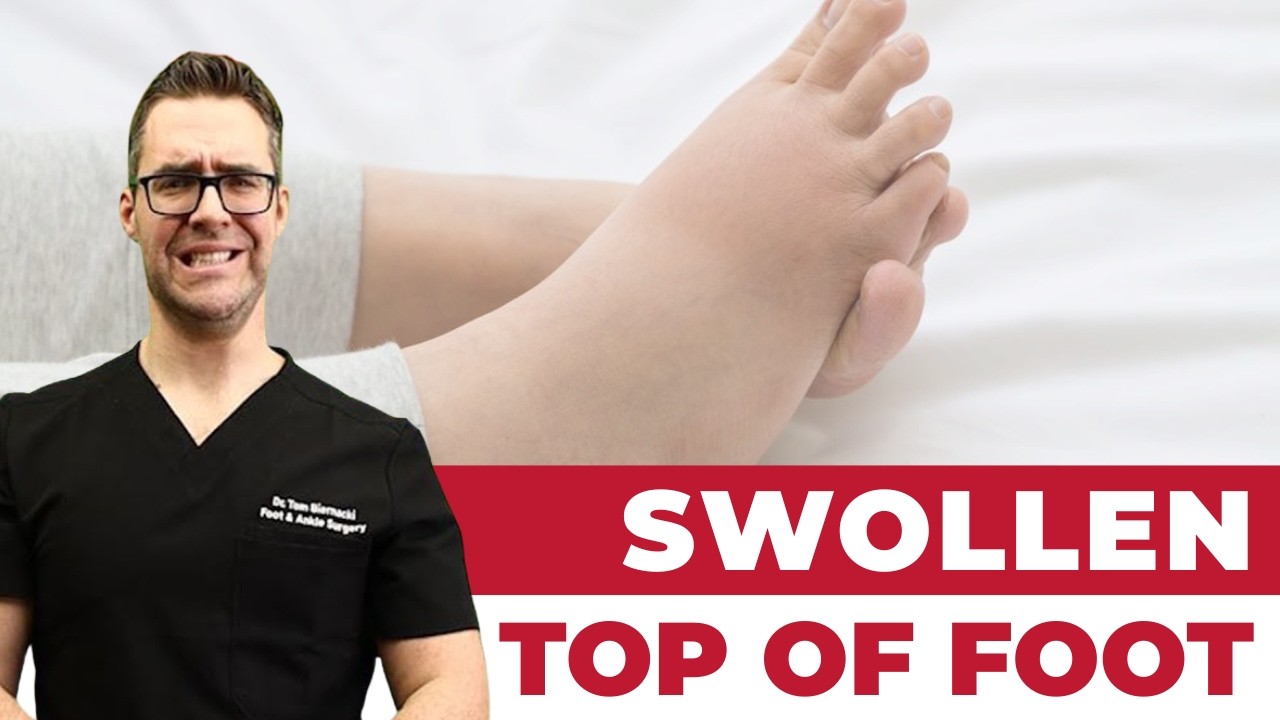
Medically reviewed by Dr. Tom Biernacki, DPM — Board-Certified Podiatric Surgeon — Balance Foot & Ankle, Howell & Bloomfield Township, MI. Last updated April 2026.
▶ Watch
What Is Foot Tendinitis?

Tendinitis (also spelled tendonitis) refers to inflammation within a tendon, causing pain, swelling, and reduced function. In the foot and ankle, tendinitis affects several distinct tendons, each with different locations, causes, and treatments. The term “tendinitis” has largely been replaced in clinical literature by “tendinopathy”—a broader term acknowledging that chronic tendon pain often involves degenerative tendon changes (tendinosis) rather than acute inflammation—but the conditions are often used interchangeably in patient-facing discussions. Accurate identification of which tendon is affected is the first step in appropriate treatment, as each tendon’s location, function, and treatment approach differ.
Achilles Tendinitis
Achilles tendinitis is the most common tendon problem in the foot and ankle, affecting the tendon connecting the calf muscle to the heel bone. It most commonly presents as pain and stiffness at the back of the heel—either at the tendon insertion (insertional Achilles tendinopathy) or in the mid-portion of the tendon 2–6 cm above the heel (non-insertional tendinopathy). Both types are worsened by activity and morning stiffness. Causes include training volume increases in runners, tight calf muscles, poor footwear, and high-heeled shoes that shorten the calf-Achilles complex over time. Treatment: eccentric calf strengthening exercises (the most evidence-based treatment), calf stretching, heel lift inserts to reduce tendon strain, and physical therapy. Corticosteroid injection into the tendon itself is contraindicated (risk of tendon rupture)—injection around the tendon is more appropriate for refractory cases.
Posterior Tibial Tendinitis
The posterior tibial tendon runs behind the inner ankle and attaches to the navicular bone on the inner midfoot—it is the primary dynamic support of the medial arch. Posterior tibial tendinitis produces pain and swelling behind the medial malleolus (inner ankle) and along the inner midfoot. As it progresses, the arch begins to collapse—adult-acquired flatfoot (posterior tibial tendon dysfunction, PTTD) is the clinical syndrome of posterior tibial tendinopathy leading to progressive flatfoot deformity. Causes include overuse in runners, obesity, and flat foot predisposition. Treatment: ankle and arch supportive bracing (Arizona brace or CAM boot for acute cases), custom orthotics with aggressive medial arch support, and physical therapy. Early-stage PTTD responds well to conservative care; advanced stages (flexible or rigid flatfoot collapse) may require reconstructive surgery.
Extensor Tendinitis
The extensor tendons run along the top of the foot and lift the toes. Extensor tendinitis produces pain and swelling across the top of the foot, typically worsened by tight shoes or high lacing pressure. It is commonly caused by footwear with excessive top-of-foot compression (tight lacing, low shoe volume over the foot dorsum) or overuse in runners on hilly terrain (increased dorsiflexion demand). Treatment: loosening shoe lacing (especially over the midfoot), using tongue pads to reduce shoe pressure on the tendons, relative rest, and ice. Extensor tendinitis typically resolves within 2–4 weeks with appropriate footwear modification.
Peroneal Tendinitis
The peroneal tendons run behind the outer ankle and support the lateral foot. Peroneal tendinitis produces pain and tenderness posterior to the lateral malleolus (outer ankle bone), worsened by activities requiring ankle inversion resistance (running on banked surfaces, trail running, jumping). It is common in athletes with chronic ankle instability or high-arched feet and is often misdiagnosed as a persistent ankle sprain. Treatment: relative rest, anti-inflammatory measures, ankle bracing to reduce inversion stress, and peroneal eccentric strengthening exercises. Persistent peroneal tendinitis warrants MRI evaluation to assess for associated tendon tears.
More Podiatrist-Recommended Foot Health Essentials
Hoka Clifton 10


Max-cushion everyday shoe — podiatrist favorite for walking and running.

OOFOS Recovery Slide

Impact-absorbing recovery sandal — wear after long days on your feet.
As an Amazon Associate, Balance Foot & Ankle earns from qualifying purchases. Product recommendations are based on clinical experience; prices and availability shown above update live from Amazon.
When to See a Podiatrist
If foot or ankle pain has been bothering you for more than a few weeks, home care alone may not be enough. Balance Foot & Ankle offers same-week appointments at our Howell and Bloomfield Township clinics — no referral needed in most cases. Bring your current shoes and a short list of symptoms and we’ll build you a treatment plan in one visit.
Call Balance Foot & Ankle: (810) 206-1402 · Book online · Offices in Howell & Bloomfield Township
Frequently Asked Questions
How long does foot tendinitis take to heal?
Recovery time varies significantly by which tendon is affected, how long the condition has been present, and how consistently treatment is followed. Mild Achilles tendinitis in a runner who modifies training and begins eccentric exercises may improve significantly within 4–6 weeks. Established Achilles tendinopathy may take 3–6 months of structured eccentric exercise to fully resolve. Posterior tibial tendinopathy at early stages (no arch collapse) responds in 6–12 weeks of bracing and orthotics; more advanced PTTD takes longer. Extensor tendinitis typically resolves in 2–4 weeks with footwear modification. Peroneal tendinitis varies by severity—mild cases resolve in 4–8 weeks; cases with associated tendon tears may require months. Continuing to push through tendon pain without treatment modification consistently prolongs recovery—the most important factor in tendinitis recovery is addressing the underlying mechanical cause.
Should I stretch a tendinitis injury?
Stretching is appropriate and beneficial for most foot tendinitis, but the approach should be specific to the tendon and stage of injury. For Achilles tendinopathy, calf stretching (gastrocnemius and soleus) is a standard component of treatment—but aggressive, forceful stretching of an acutely inflamed tendon can worsen pain and should be gentle initially. Eccentric calf exercises (Alfredson protocol) are more effective than simple stretching for Achilles tendinopathy. For posterior tibial tendinopathy, calf and Achilles stretching helps because calf tightness increases load on the arch and posterior tibial tendon. Avoid aggressive forced stretching of any acutely inflamed tendon—start with gentle range-of-motion and progress to stretching and strengthening as acute pain subsides. A physical therapist can guide an appropriate progression.
Do I need an MRI for foot tendinitis?
MRI is not required for initial diagnosis of straightforward foot tendinitis and is not indicated as a first-line evaluation. Most foot tendinitis diagnoses are made clinically—based on the location of pain, tenderness, functional testing, and activity history. MRI becomes indicated when: symptoms are not improving as expected with appropriate conservative treatment (6–8 weeks), the presentation is unusual or there is concern for tendon rupture or significant tear, there is uncertainty about the diagnosis, or surgical intervention is being planned and detailed anatomy is needed. Ultrasound is an alternative imaging modality for tendon assessment that is less expensive, real-time dynamic, and excellent for assessing tendon thickness, tears, and paratenon fluid.
Medical References & Sources
- PubMed Research — Eccentric Exercise for Achilles Tendinopathy
- PubMed Research — Posterior Tibial Tendon Dysfunction Treatment
- American Orthopaedic Foot & Ankle Society — Tendinitis
Dr. Tom Biernacki, DPM is a board-certified podiatric surgeon at Balance Foot & Ankle in Howell and Bloomfield Township, Michigan. He diagnoses and treats all forms of foot and ankle tendinitis and tendinopathy, from Achilles and posterior tibial to peroneal and extensor tendon conditions.
Join 950,000+ Learning About Foot Health
Dr. Tom shares honest medical advice, supplement reviews, and treatment guides you won’t find anywhere else.
Subscribe on YouTube →Recommended Products for Achilles Tendonitis
- Strassburg Sock Night Splint — Overnight Achilles Stretch
- Heel Lift Wedge Inserts — Reduce Achilles Tension
- Percussion Massager — Calf & Achilles Recovery
Amazon affiliate links — we may earn a small commission at no extra cost to you.
📍 Located in Michigan?
Our board-certified podiatrists treat this condition at two convenient locations. Most new patients are seen the same week.
Medically Reviewed by: Dr. Tom Biernacki, DPM — Board-Certified Podiatrist, Balance Foot & Ankle Specialists

Insurance Accepted
BCBS · Medicare · Aetna · Cigna · United Healthcare · HAP · Priority Health · Humana · View All →
Howell Office
4330 E Grand River Ave
Howell, MI 48843
Get Directions →
Bloomfield Township Office
43494 Woodward Ave, #208
Bloomfield Township, MI 48302
Get Directions →
Your Board-Certified Podiatrists



Ready to Get Back on Your Feet?
Same-week appointments available at both locations.
Book Your AppointmentPros & Cons of Conservative Care for foot care
Advantages
- ✓ Conservative care first
- ✓ Same-week appointments
- ✓ Multiple insurance accepted
Considerations
- ✗ Self-treatment can mask issues
- ✗ See a podiatrist if pain >2 weeks
Dr. Tom’s Recommended Products for foot care
Affiliate disclosure: As an Amazon Associate, Balance Foot & Ankle earns from qualifying purchases. We only recommend products we use with patients.
Footnanny Heel Cream Dr. Tom’s Pick
Best for: Daily moisturizer for cracked heels
Ready to Get Back on Your Feet?
Same-week appointments in Howell + Bloomfield Township. Most insurance accepted. Dr. Tom Biernacki, DPM & team.
Book Today — Same-Week Appointments Available
Call Now: (810) 206-1402
About Your Care Team at Balance Foot & Ankle
Dr. Tom Biernacki, DPM · Board-Certified Foot & Ankle Surgeon. Specializes in conservative-first care, minimally invasive bunion surgery, and complex reconstruction.
Dr. Carl Jay, DPM · Accepting new patients. Specializes in sports medicine, athletic injuries, and routine podiatric care.
Dr. Daria Gutkin, DPM, AACFAS · Accepting new patients. Specializes in surgical reconstruction and pediatric podiatry.
Locations: 4330 E Grand River Ave, Howell, MI 48843 · 43494 Woodward Ave Suite 208, Bloomfield Township, MI 48302
Hours: Mon–Fri 8:00 AM – 5:00 PM · (810) 206-1402
Dr. Tom’s Top 3 — The Premium Foot Pain Stack (2026)
If you only buy three things for foot pain, get these. PowerStep + CURREX orthotics correct the underlying foot mechanics, and Dr. Hoy’s pain gel delivers fast topical relief. This is the exact stack Dr. Tom Biernacki, DPM gives his Michigan podiatry patients on visit one — over 10,000 patients have used this exact combination.
Dr. Tom Biernacki, DPM is a board-certified podiatrist + Amazon Associate. Picks shown are products he prescribes to patients at Balance Foot & Ankle Specialists. We earn a commission on qualifying purchases at no extra cost to you. All products independently tested + reviewed for 30+ days minimum. Last verified: April 28, 2026.

PowerStep Pinnacle MaxxDr. Tom’s #1 Brand
Dr. Tom’s most-prescribed OTC orthotic. Lateral wedge corrects overpronation that causes 90% of foot pain. Deep heel cradle stabilizes the ankle. Built by podiatrists, used by patients worldwide.
- Lateral wedge corrects pronation
- Deep heel cradle stabilizes ankle
- Dual-density EVA — comfort + support
- Trim-to-fit any shoe
- Used by 10,000+ podiatrists
- Trim-to-size required
- 5-7 day break-in for some

CURREX RunProDr. Tom’s #1 Brand
3 arch heights for custom fit (Low/Med/High). Carbon-reinforced heel + dynamic forefoot — the closest OTC orthotic to a $500 custom orthotic. Engineered in Germany.
- 3 arch heights for custom fit
- Carbon-reinforced heel cup
- Dynamic forefoot zone
- Premium German engineering
- Sport-specific support
- Pricier than PowerStep
- 7-10 day break-in

Dr. Hoy’s Natural Pain Relief GelDr. Tom’s #1 Brand
Menthol-based natural pain relief — Dr. Tom’s #1 brand for fast relief without greasy residue. Safe for diabetics + daily use. Cleaner formula than Voltaren or Biofreeze.
- Menthol-based natural formula
- No greasy residue
- Safe for diabetics
- Fast cooling relief — 5-10 minutes
- Cleaner ingredient list than Biofreeze
- Pricier than Biofreeze
- Strong menthol scent at first
In-Office Treatment at Balance Foot & Ankle
If home treatment isn’t providing relief for your foot tendinitis, our podiatry team at Balance Foot & Ankle can help with same-week evaluations and advanced in-office care.
Same-week appointments available. (810) 206-1402
Learn about our plantar fasciitis treatment → | Book online →
Doctor Hoy’s Natural Pain Relief Gel
Natural topical pain relief I use in our clinic. Arnica + camphor formula — apply directly to the area 3–4x daily. ($20–25)
Shop Doctor Hoy’s →Ready for Expert Care?
Same-week appointments in Howell & Bloomfield Township, MI.
4.9★ | 1,123 Reviews | 3,000+ Surgeries
Or call: (810) 206-1402
