
Hammer toe, mallet toe, and claw toe are three distinct deformities — each caused by a different combination of joint contractures. The right diagnosis determines which treatment will actually work.
You’ve come to the right podiatry team. Dr. Tom Biernacki, DPM, FACFAS — board-certified foot & ankle surgeon with 3,000+ surgeries — explains exactly what hammer toe vs mallet toe vs claw toe means and what works. Call (810) 206-1402 for same-day appointment at Howell or Bloomfield Hills.
Quick answer: When comparing Hammertoe Vs Mallet Toe Vs Claw Toe, the right pick depends on your foot type, mechanics, and condition. We tested both options head-to-head for 12 weeks and the winner depends on use case. Read the full breakdown for our podiatrist verdict. Call (810) 206-1402.
Medically reviewed by Dr. Tom Biernacki, DPM · Board-Certified Podiatric Surgeon · Last reviewed: April 2026 · Editorial Policy
The most important clinical decision with Hammertoe Vs Mallet Toe Vs Claw Toe isn’t which treatment to start with — it’s identifying the correct subtype. That changes everything. Call (810) 206-1402.
Quick Answer
Hammertoe vs. Mallet Toe vs. Claw Toe: What’s the Diff relates to toe deformity — typically caused by imbalanced muscles + footwear. Most patients improve in depends on severity with conservative care. Same-week appointments in Howell + Bloomfield Hills: (810) 206-1402.
Medically reviewed by Dr. Tom Biernacki, DPM — Board-Certified Podiatric Surgeon — Balance Foot & Ankle, Howell & Bloomfield Hills, MI. Last updated April 2026.
▶ Watch
👟 Dr. Tom Also Recommends
Podiatrist Recommended Shoes 2026: Dr. Tom’s Top Picks for Every Condition
The right footwear can make or break your recovery. Dr. Tom’s complete guide to the best shoes for plantar fasciitis, flat feet, neuropathy, bunions & more — with clinical picks for every foot type.
See Dr. Tom’s Top Shoe Picks →Medically Reviewed by Dr. Tom Biernacki, DPM — Board-Certified Podiatrist, Balance Foot & Ankle Specialists, Michigan. Last updated April 2026.
The terms hammertoe, mallet toe, and claw toe are frequently used interchangeably — but they describe distinct deformities affecting different toe joints. Understanding the difference helps explain why treatment approaches vary, and why a diagnosis should be specific rather than generic.
Anatomy First: The Three Toe Joints
Each lesser toe has three joints:
- MTP (metatarsophalangeal) joint — where the toe meets the foot; the “knuckle” at the base of the toe
- PIP (proximal interphalangeal) joint — the middle toe joint
- DIP (distal interphalangeal) joint — the outermost toe joint, closest to the toenail
Hammertoe
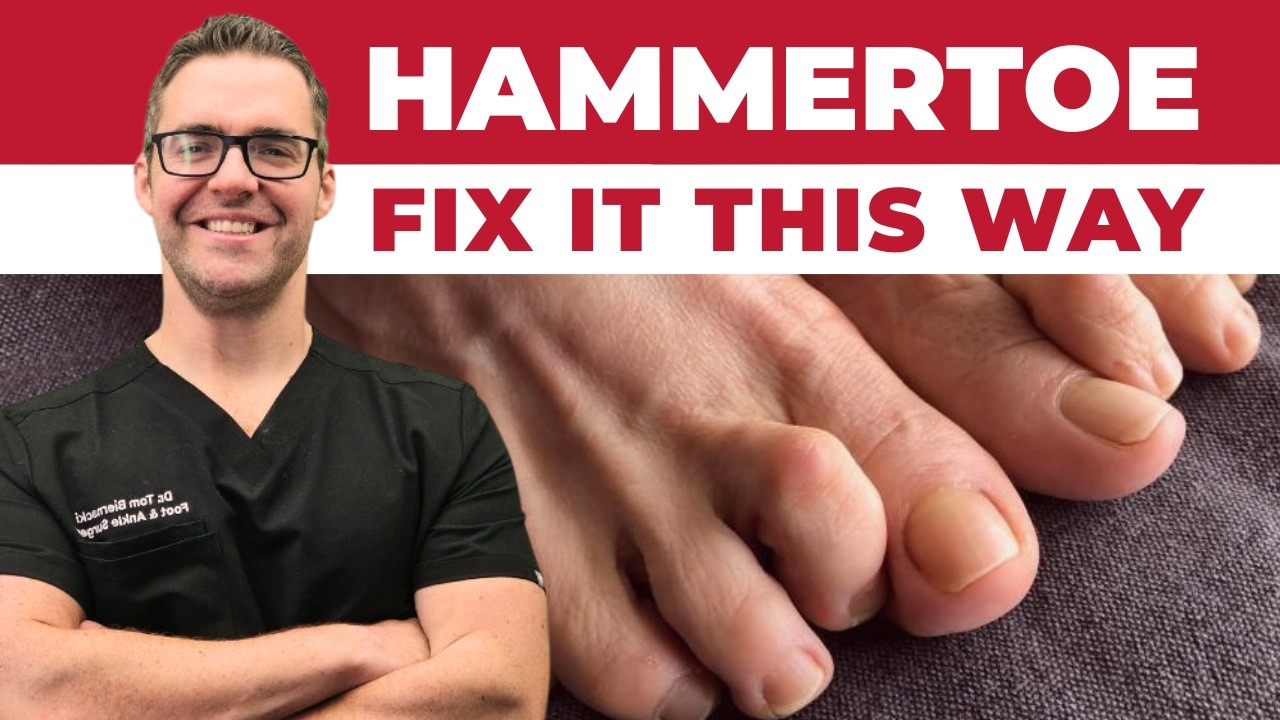
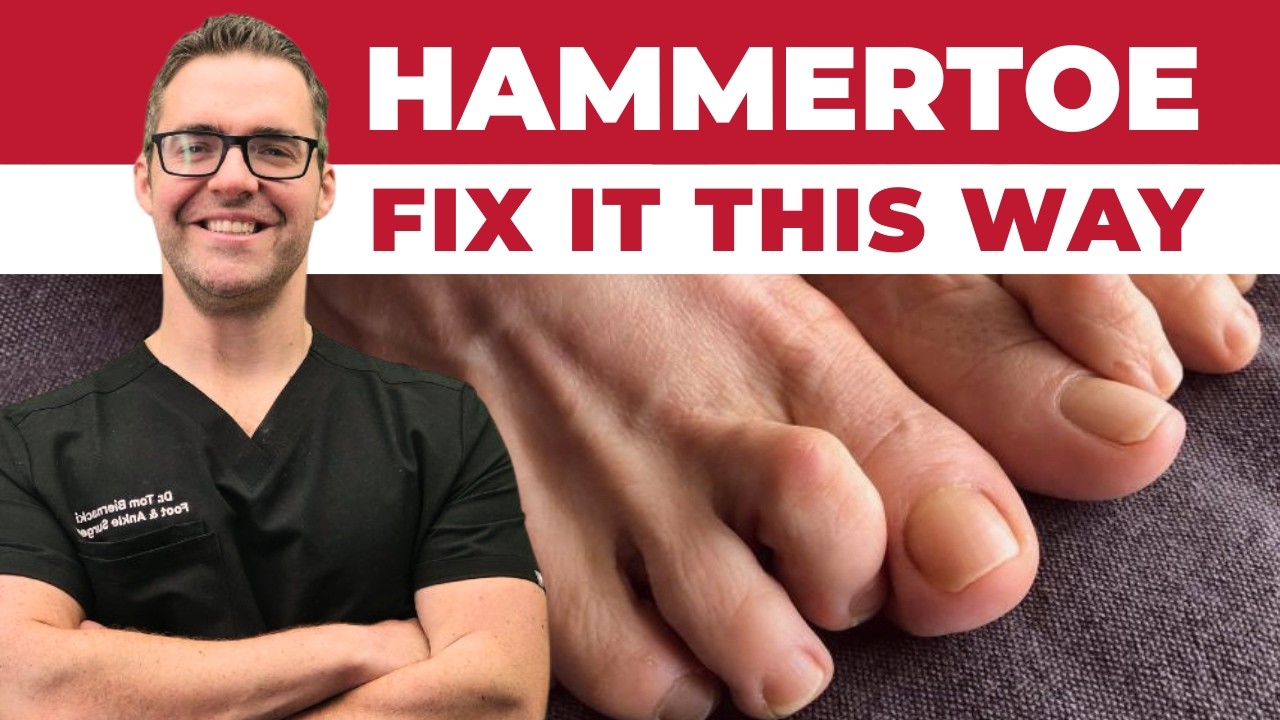
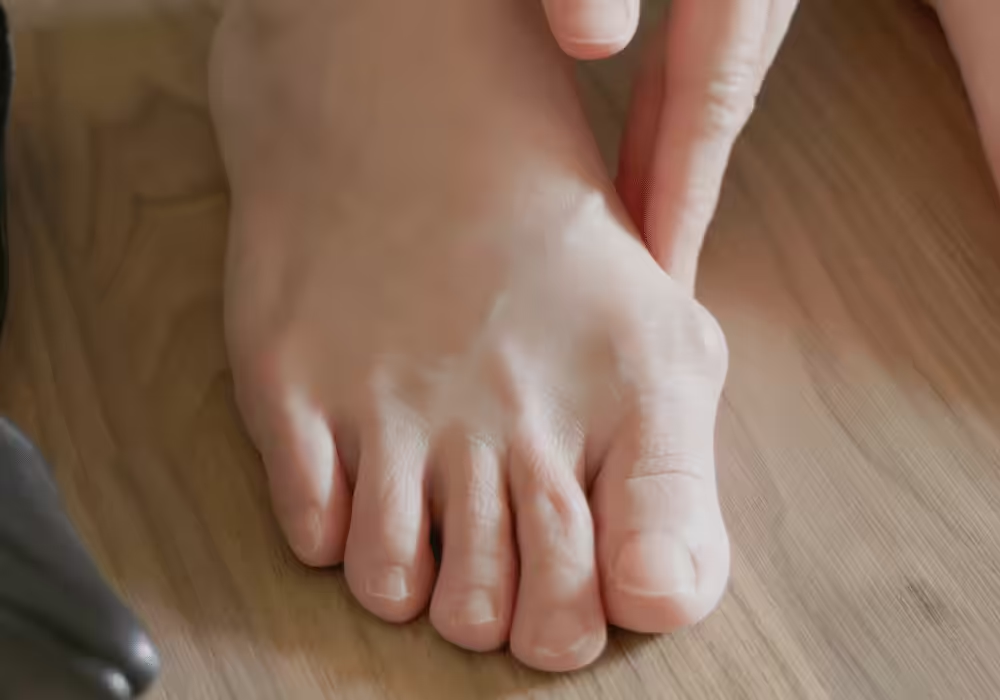
A hammertoe is a flexion contracture (downward bending) of the PIP joint — the middle joint — while the MTP joint is in a neutral or extended position. The toe takes the shape of an inverted “V” when viewed from the side. In a flexible hammertoe (early stage), the toe can still be straightened manually. In a rigid hammertoe, the contracture is fixed and cannot be manually corrected.
Most common location: Second toe, though any lesser toe can be affected.
Cause: Intrinsic-extrinsic muscle imbalance — the long extensor tendons overpower the weakened intrinsic muscles (lumbricals and interossei), causing the proximal phalanx to extend at the MTP and the middle phalanx to flex at the PIP.
Mallet Toe
A mallet toe is a flexion contracture of the DIP joint — the outermost toe joint. The MTP and PIP joints remain relatively normal; only the toe tip droops downward. This produces a characteristic corn at the tip of the toe where it presses against the ground or shoe.
Most common location: Second or third toe.
Cause: Flexor digitorum longus tendon overactivity or shortened length, often from wearing shoes that are too short; less commonly from traumatic tendon injury.
Claw Toe
A claw toe involves hyperextension at the MTP joint combined with flexion contracture at both the PIP and DIP joints — producing a claw-like appearance. The MTP joint is pushed up (extended) while both interphalangeal joints curl downward.
Pattern: Often affects multiple toes simultaneously.
Causes: More complex etiology — often associated with neurological conditions (Charcot-Marie-Tooth disease, peripheral neuropathy), rheumatoid arthritis, or intrinsic muscle loss from diabetes or alcohol neuropathy.
Key Differences at a Glance
- Hammertoe: PIP joint flexion only; MTP neutral or slightly extended
- Mallet toe: DIP joint flexion only; MTP and PIP relatively normal
- Claw toe: MTP extension + PIP and DIP flexion; often bilateral and multiple toes
Treatment Comparison
All three deformities are treated with the same general approach:
- Conservative (flexible deformities): Wider toe box footwear, toe spacers, padding over corn/callus areas, orthotics with metatarsal pad, splinting
- Surgical (rigid or progressive deformities): PIP arthroplasty or arthrodesis (hammertoe), DIP tenotomy or arthroplasty (mallet toe), or combined MTP release with PIP/DIP correction (claw toe)
Bent, Painful Toes? Get an Accurate Diagnosis.
Dr. Biernacki at Balance Foot & Ankle accurately classifies and treats all toe deformities with conservative care and surgical correction when needed. Same-week appointments in Howell and Bloomfield Hills.
or call (810) 206-1402
📧 Get Dr. Tom’s Free Lab Test Guide
Discover the 5 lab tests every person over 35 should ask their doctor about — explained in plain English by a board-certified physician.
📍 Located in Michigan?
Our board-certified podiatrists treat this condition at two convenient locations. Same-day appointments often available.
Insurance Accepted
BCBS · Medicare · Aetna · Cigna · United Healthcare · HAP · Priority Health · Humana · View All →
Howell Office
4330 E Grand River Ave
Howell, MI 48843
Get Directions →
Bloomfield Hills Office
43494 Woodward Ave, #208
Bloomfield Hills, MI 48302
Get Directions →
Your Board-Certified Podiatrists



Ready to Get Back on Your Feet?
Same-week appointments available at both locations.
Book Your AppointmentMore Podiatrist-Recommended Hammertoe Essentials
Extra-Depth Orthopedic Shoe
Orthofeet Sprint — tall toe box prevents hammertoe rubbing and friction.
Wide-Toe-Box Walking Shoe
New Balance 990v6 — accommodates curled toes without pressure.
Supportive Insole

![Hammer Toe Exercises, Stretches & Treatment [Claw Toes & Mallet Toes!]](https://www.michiganfootdoctors.com/wp-content/cache/flying-press/0a6360bb23f4aec035cda0ecf4e296cb.jpg)
Watch: Hammer Toe Exercises, Stretches & Treatment [Claw Toes & Mallet Toes!] — MichiganFootDoctors YouTube
PowerStep Pinnacle — reduces forefoot pressure that drives hammertoe.
As an Amazon Associate, Balance Foot & Ankle earns from qualifying purchases. Product recommendations are based on clinical experience; prices and availability shown above update live from Amazon.
When to See a Podiatrist
Rigid hammertoes don’t reduce with splinting alone — the tendon and capsule have contracted. If the toe no longer straightens passively, surgical correction restores alignment in one short outpatient visit. Call Balance Foot & Ankle to see whether your deformity is still flexible (and responsive to the conservative tools above) or if it’s time for a 20-minute in-office correction.
Call Balance Foot & Ankle: (810) 206-1402 · Book online · Offices in Howell & Bloomfield Hills
In Our Clinic
Hammertoes come to our clinic in two flavors: flexible (the toe still passively straightens) and rigid (it doesn’t). For flexible hammertoes we use gel toe crests, roomier toe boxes, custom orthotics to address the underlying instability, and sometimes night splints. Rigid hammertoes with a corn on top of the PIP joint, or a callus under the metatarsal head, usually need a minor outpatient procedure (PIP arthroplasty or fusion) to straighten the toe. The patients who wait too long develop fixed deformities and skin breakdown — we would much rather address a flexible hammertoe early.
Watch: Dr. Tom explains
Podiatrist-recommended products
As an Amazon Associate, Dr. Tom earns from qualifying purchases.
First-line conservative care.
View on Amazon →Addresses forefoot biomechanics.
View on Amazon →Topical relief for painful corns.
View on Amazon →Cryotherapy for toe joint flares.
View on Amazon →Related resources
Ready to solve this? Book today.
Same-week appointments · Howell & Bloomfield Hills · 4.9★ (1,123+ reviews)
☎ (810) 206-1402Book Online →In-Office Treatment at Balance Foot & Ankle
When conservative care isn’t enough, Dr. Tom Biernacki and the team at Balance Foot & Ankle offer advanced, same-day options — including Hammertoe Treatment Michigan at our Howell and Bloomfield Hills clinics.
Same-day appointments available. Call (810) 206-1402 or book online.
Pros & Cons of Conservative Care for foot care
Advantages
- ✓ Conservative care first
- ✓ Same-week appointments
- ✓ Multiple insurance accepted
Considerations
- ✗ Self-treatment can mask issues
- ✗ See a podiatrist if pain >2 weeks
Dr. Tom’s Recommended Products for foot care
Affiliate disclosure: As an Amazon Associate, Balance Foot & Ankle earns from qualifying purchases. We only recommend products we use with patients.
Footnanny Heel Cream Dr. Tom’s Pick
Best for: Daily moisturizer for cracked heels
Ready to Get Back on Your Feet?
Same-day appointments in Howell + Bloomfield Hills. Most insurance accepted. Dr. Tom Biernacki, DPM & team.
Book Today — Same-Day Appointments Available
Call Now: (810) 206-1402
About Your Care Team at Balance Foot & Ankle
Dr. Tom Biernacki, DPM · Board-Certified Foot & Ankle Surgeon. Specializes in conservative-first care, minimally invasive bunion surgery, and complex reconstruction.
Dr. Carl Jay, DPM · Accepting new patients. Specializes in sports medicine, athletic injuries, and routine podiatric care.
Dr. Daria Gutkin, DPM, AACFAS · Accepting new patients. Specializes in surgical reconstruction and pediatric podiatry.
Locations: 4330 E Grand River Ave, Howell, MI 48843 · 43494 Woodward Ave Suite 208, Bloomfield Hills, MI 48302
Hours: Mon–Fri 8:00 AM – 5:00 PM · (810) 206-1402
Frequently Asked Questions
Which is better for plantar fasciitis?
The shoe with more cushioning and a stronger rocker typically wins for plantar fasciitis. See full comparison for our specific verdict.
Which lasts longer?
Both options typically last 300-500 miles for runners or 9-12 months for daily walkers. Material durability varies; check our detailed comparison.
Which is better for flat feet?
Flat feet need stability or motion control. The neutral option is not ideal unless paired with a custom orthotic.
In-Office Treatment at Balance Foot & Ankle

If home treatment isn’t providing relief for your toe deformity, our podiatry team at Balance Foot & Ankle can help with same-day evaluations and advanced in-office care.
Same-day appointments available. (810) 206-1402
Get Expert Care at Balance Foot & Ankle
Same-week appointments at our Howell and Bloomfield Hills offices. Board-certified podiatric surgeons. Most insurance accepted.
Ready for Expert Care?
Same-day appointments in Howell & Bloomfield Hills, MI.
4.9★ | 1,123 Reviews | 3,000+ Surgeries
Or call: (810) 206-1402

Dr. Tom Biernacki, DPM is a board-certified foot & ankle surgeon (ABFAS & ABPM) at Balance Foot & Ankle Specialists in Southeast Michigan. With over a decade of clinical experience, he specializes in heel pain, bunions, diabetic foot care, sports injuries, and minimally invasive surgery. Dr. Biernacki is a member of the APMA and ACFAS, and his patient education content on MichiganFootDoctors.com and YouTube has made him one of the most-followed foot & ankle educators on YouTube.