
Hoka or Brooks comes down to one biomechanical factor our podiatrists assess before any shoe recommendation — get it wrong and the extra cushioning actually works against your foot type. Which of the two is right for you is something we settle on exam, so you can book online for a gait assessment, or call (810) 206-1402 — expert podiatric care across Michigan.

HOKA vs. Brooks: The Podiatrist’s Head-to-Head Verdict
Medically reviewed by Dr. Tom Biernacki, DPM
Board-certified podiatric surgeon | Balance Foot & Ankle
Last reviewed: May 2026
Brooks Ghost 16 — The neutral workhorse I recommend for normal arches — DNA Loft v3 foam is plush without being mushy, and the durability is excellent for daily wear.
HOKA and Brooks are the two most commonly recommended running shoe brands by podiatrists — and they’re built on completely opposite engineering philosophies. Brooks is built around biomechanical correction: motion control, guided pronation control, and stable platforms. HOKA is built around maximalist cushion and meta-rocker geometry that creates a controlled forward roll with each step. Neither is universally better. The right choice depends on what’s causing your foot pain.
HOKA vs. Brooks: Head-to-Head Feature Comparison
| Feature | HOKA | Brooks | Winner |
|---|---|---|---|
| Cushion / Stack Height | Maximalist — 36-40mm stack (Bondi 9: 40mm); thickest cushion platform of any mainstream running brand; PROFLY+ foam is plush and responsive | Moderate-high — 28-32mm stack; DNA Loft v3 provides excellent cushion without the extreme maximalism; Ghost 16: 30mm; Adrenaline: 28mm | HOKA — more cushion for shock-sensitive conditions (PF, metatarsalgia, Achilles, osteoarthritis) |
| Motion Control / Overpronation | Limited — most HOKA models are neutral; the Arahi adds J-Frame support, but it is less proven than Brooks GuideRails; not the brand of choice for significant overpronation | Excellent — Brooks GuideRails (Adrenaline GTS) is the gold standard for running shoe motion control; guides heel motion without rigid medial post; most podiatrist-recommended for overpronation | Brooks — clear winner for flat feet and overpronation |
| Heel Drop | Lower — 4-6mm (Bondi 9: 4mm, Clifton 10: 5mm); lower drop shifts some load forward; less ideal for tight Achilles | Higher — 8-12mm (Adrenaline: 10mm, Ghost 16: 12mm); significantly reduces Achilles and calf tendon strain; better for the common PF + Achilles tightness combination | Brooks — for patients with Achilles tightness or tendonitis concurrent with foot pain |
| Meta-Rocker Geometry | Yes — all HOKA models feature early-stage meta-rocker that supports forward roll through the gait cycle; reduces forefoot loading at push-off; excellent for hallux rigidus, sesamoiditis, and PF | No — Brooks does not use rocker geometry; more traditional heel-to-toe roll; forefoot flexion occurs naturally | HOKA — for hallux rigidus, sesamoiditis, or limited 1st MTP dorsiflexion |
| Fit and Width Options | Good — wide fit available in most models; HOKA tends to run slightly wide; Bondi available in narrow (B), standard (D), and wide (2E) men’s | Excellent — Brooks offers the widest range of width options (B, D, 2E, 4E); most consistent true-to-size fit across the product line | Brooks — better fit system for wide or narrow feet; more sizing options |
| Durability | 300-400 miles typical — maximalist foam compresses and bottoms out faster; needs earlier replacement than moderate-stack shoes | 400-500 miles typical — DNA Loft v3 maintains cushion integrity longer; Ghost 16 is one of the most durable running shoes in any category | Brooks — longer lifespan, better value per mile |
| Plantar Fasciitis | Excellent for neutral gait — maximum impact reduction; Bondi 9 and Clifton 10 are among the top 3 most recommended for PF; not ideal for overpronation-driven PF | Excellent for overpronation-driven PF — Adrenaline GTS targets the biomechanical cause; Ghost good for mild PF with neutral gait | TIE — brand depends on gait; Adrenaline for overpronators, Bondi/Clifton for neutral |
| Price (2026) | $140-170 (Bondi 9: $165; Clifton 10: $145) | $120-165 (Ghost 16: $130; Adrenaline GTS 25: $140) | Brooks — 10-15% less expensive at comparable performance tiers |
Model generations named here were checked in September 2026. HOKA and Brooks each refresh most of these lines once a year — where a model is named without a number, the guidance applies to the model family rather than to one year’s version.
HOKA vs. Brooks: Model-by-Model Matchups
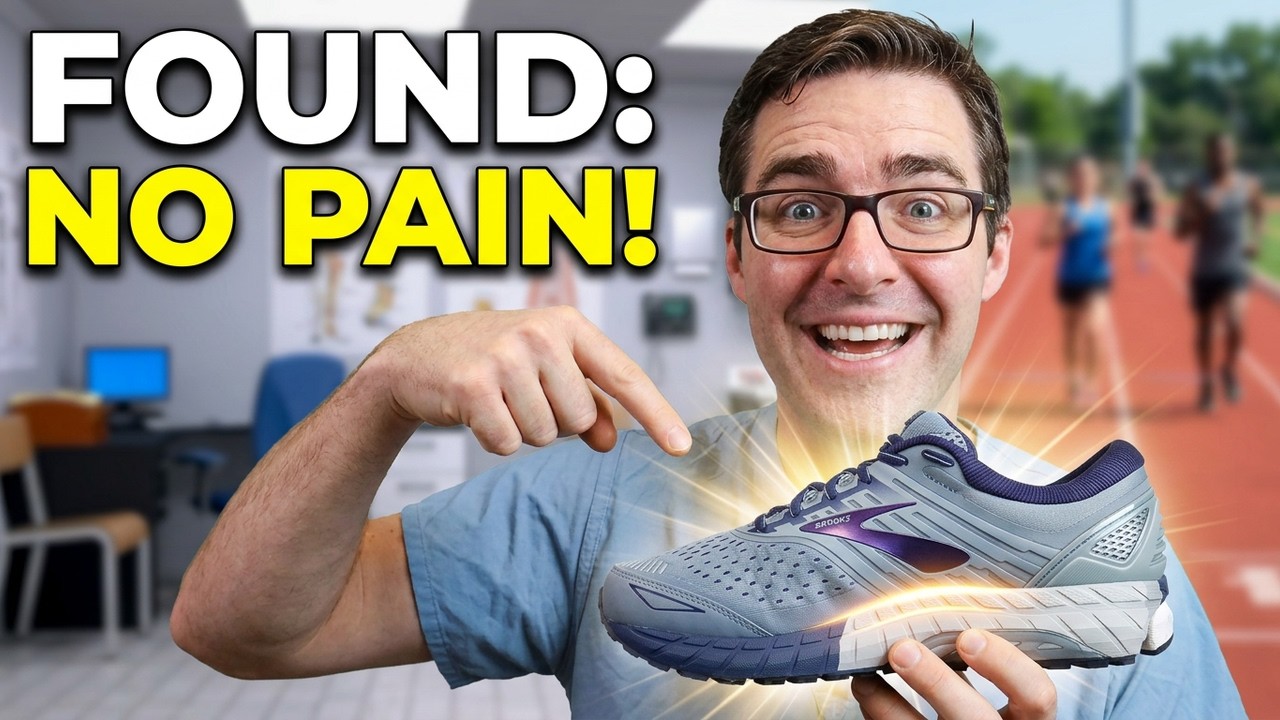
Brooks Adrenaline GTS 25 — The go-to stability shoe for overpronators with plantar fasciitis — GuideRails control excess motion without forcing your foot into an unnatural posture.
| HOKA Model | vs. | Brooks Model | Verdict |
|---|---|---|---|
| HOKA Bondi 9 — flagship maximalist; 40mm stack; 4mm drop; best cushion; daily trainer | vs. | Brooks Adrenaline GTS 25 — flagship stability; GuideRails; 28mm stack; 10mm drop; daily trainer | Apples to oranges — Bondi 9 for neutral gait + maximum cushion; Adrenaline for overpronation + motion control. Cannot be directly substituted. |
| HOKA Clifton 10 — lightweight maximalist; 35mm stack; 5mm drop; most versatile HOKA | vs. | Brooks Ghost 16 — balanced cushion; DNA Loft v3; 30mm stack; 12mm drop; best durability | Most comparable head-to-head: Clifton for lower impact feel and rocker geometry; Ghost for higher drop (better Achilles protection) and more miles per pair. For PF without significant gait deviation: Clifton 10 or Ghost 16 is the typical choice. |
| HOKA Arahi — stability HOKA; J-Frame support; motion control with cushion | vs. | Brooks Adrenaline GTS 25 — more proven motion control; 10mm drop advantage for Achilles | Brooks Adrenaline wins for motion control effectiveness; HOKA Arahi wins on cushion; for combined overpronation + PF needing maximum cushion, the Arahi is a reasonable compromise. |
| HOKA Gaviota 6 — maximum stability HOKA; for severe overpronators; widest fit in line | vs. | Brooks Beast GTS / Ariel GTS — maximum stability Brooks; GuideRails on a wider, firmer platform than the Adrenaline; for severe overpronation | Both appropriate for severe flat feet; the Brooks Beast GTS / Ariel GTS has the longer clinical evidence base; HOKA Gaviota provides more cushion. Podiatrist preference varies — try both if available. |
HOKA vs. Brooks: Condition-by-Condition Verdict
HOKA Bondi 9 (Women’s) — My #1 maximum-cushion pick for plantar fasciitis — its maximalist heel stack drops impact load on the fascia better than anything else in this price range.
| Condition | Choose HOKA | Choose Brooks | Why |
|---|---|---|---|
| Plantar fasciitis (neutral gait) | ✅ Bondi 9 or Clifton 10 | ✅ Ghost 16 | Both excellent; HOKA offers more cushion; Brooks more durable; neutral gait patients can succeed with either |
| Plantar fasciitis + overpronation | ⚠️ Arahi only | ✅ Adrenaline GTS 25 | Brooks GuideRails is the clinical gold standard for correcting the overpronation that drives most PF; Arahi acceptable if added cushion is the priority |
| Achilles tendonitis / tendinopathy | ⚠️ Caution — low drop increases Achilles load | ✅ Adrenaline (10mm) or Ghost (12mm) | Higher heel drop critically reduces Achilles excursion; HOKA’s 4-5mm drop is insufficient for active Achilles tendonitis; Brooks is clearly preferred |
| Hallux rigidus (stiff big toe) | ✅ Any HOKA (meta-rocker) | ❌ Not recommended | HOKA’s meta-rocker geometry reduces the dorsiflexion required at the 1st MTP joint with each step — directly addressing the functional deficit of hallux rigidus; no other mainstream brand provides this |
| Metatarsalgia (ball of foot pain) | ✅ Bondi 9 (maximum forefoot cushion) | ⚠️ Ghost or Adrenaline (adequate, not optimal) | HOKA’s maximalist forefoot significantly reduces MT head loading; the best single shoe for metatarsalgia-dominant patients |
| Flat feet + knee pain | ⚠️ Arahi (motion control) | ✅ Adrenaline GTS 25 | Overpronation-driven knee pain requires medial arch support and heel control — Brooks GuideRails better addresses this biomechanics chain than any HOKA model |
| Osteoarthritis (hip/knee/ankle) | ✅ Bondi 9 (maximum impact absorption) | ⚠️ Ghost (adequate) | Arthritis patients benefit most from reduced joint impact; HOKA’s maximalist cushion provides the greatest impact attenuation of any mainstream shoe; clinical preference for OA management |
Comparing specific models? See Hoka against Brooks, spec for spec on Podiatrist Tested, where each spec is published with its source.
Related Conditions
Brooks Adrenaline GTS 25 — The go-to stability shoe for overpronators with plantar fasciitis — GuideRails control excess motion without forcing your foot into an unnatural posture.
An updated, numbers-first version of this comparison — HOKA vs Brooks by measured stack, drop and toe-box width — lives on Podiatrist Tested, Dr. Biernacki’s independent shoe-review site, which also collects every HOKA review and every Brooks review in one place, for when the brand is settled and the question is which model.
In-Office Treatment at Balance Foot & Ankle
HOKA Bondi 9 (Women’s) — My #1 maximum-cushion pick for plantar fasciitis — its maximalist heel stack drops impact load on the fascia better than anything else in this price range.
When home care and proper footwear aren’t resolving foot pain while running or shoe shopping, our team at Balance Foot & Ankle provides hands-on exam plus imaging when needed and treatment in Howell and Bloomfield Township.
Podiatrist’s Top Picks: Dr. Tom Biernacki’s Final Recommendations
After 15+ years treating plantar fasciitis, heel pain, and overuse injuries at Balance Foot & Ankle in Howell and Bloomfield Township, here are the specific products I recommend most often. Every link below is to the exact model on Amazon — same product I’d hand you in clinic.
Brooks — My Picks
Brooks Ghost 16 — The neutral workhorse I recommend for normal arches — DNA Loft v3 foam is plush without being mushy, and the durability is excellent for daily wear.
Brooks Adrenaline GTS 25 — The go-to stability shoe for overpronators with plantar fasciitis — GuideRails control excess motion without forcing your foot into an unnatural posture.
HOKA — My Picks
HOKA Bondi 9 (Women’s) — My #1 maximum-cushion pick for plantar fasciitis — its maximalist heel stack drops impact load on the fascia better than anything else in this price range.
HOKA Bondi 9 (Men’s) — Same maximalist cushion in a men’s last — patients with heel pain or ‘standing all day’ jobs report relief within the first week.
HOKA Clifton 10 — The everyday neutral pick when the Bondi is overkill — lighter, still well-cushioned, holds up at ~400 miles before the foam packs out.
HOKA Arahi 8 — If you overpronate but still want HOKA cushion, this is the J-Frame stability shoe I recommend — gentle guidance without the brick-like feel of older motion-control shoes.
Affiliate disclosure: Some links above are Amazon affiliate links. If you buy through them, Balance Foot & Ankle earns a small commission at no extra cost to you. These are the same products we recommend in clinic — the commission does not influence the recommendation.
Worth saying plainly: a shoe supports the treatment, it is not the treatment. If the pain under your heel is at its worst on the first few steps in the morning, the shoe is one part of a plan — what actually treats plantar fasciitis walks through the loading work that does the rest.
Still torn between the two? Order one of each and send the loser back. This is the comparison reading cannot settle. A Bondi and a Ghost feel nothing alike underfoot, and which one your foot prefers is not predictable from a spec sheet or from anything I can write here. Zappos carries both brands across the full width run, ships free and takes returns free both ways, so running the experiment costs you a week and nothing else: Brooks Ghost 16 · Brooks Adrenaline GTS 25 · Brooks Beast GTS · HOKA Bondi 9 · HOKA Clifton 10. The Amazon links above stay the faster route if you already know which brand your foot gets on with.
The Zappos links in this box are affiliate links, as the Amazon links above are. Balance Foot & Ankle may earn a small commission if you buy through them, at no extra cost to you, and it does not change which shoes are recommended here.
Those go to Zappos, not Amazon. Balance Foot & Ankle may earn a small commission if you buy through them, at no extra cost to you, and it does not change what is recommended here.
Frequently Asked Questions: Hoka vs Brooks for Foot Pain
Are Hoka or Brooks shoes better for plantar fasciitis?
Both Hoka and Brooks offer excellent options for plantar fasciitis, but they suit different foot types. Hoka shoes (Clifton, Bondi) feature maximum cushioning and a rocker bottom that reduces plantar fascia load with each step — ideal for high-impact activities and heavier runners. Brooks Adrenaline GTS and Ghost offer firmer, more responsive support with stability features for overpronators. Podiatrists often recommend Hoka for acute plantar fasciitis and Brooks for long-term daily wear and mild-to-moderate arch support needs.
Deciding between the current Brooks models? Dr. Tom’s spec-by-spec reviews of the Brooks Adrenaline GTS 25 (the stability pick) and the Brooks Ghost Max 4 (the max-cushion neutral pick) are on Podiatrist Tested, our shoe-review site.
Do podiatrists recommend Hoka One One shoes?
Yes — many podiatrists recommend Hoka shoes, particularly the Clifton and Bondi models, for patients with plantar fasciitis, heel pain, and general foot fatigue. The thick cushioned midsole and early-stage Meta-Rocker geometry offload the heel and forefoot during gait. Hoka shoes are not ideal for every condition — patients needing firm motion control or with flat feet requiring high stability may do better with Brooks Adrenaline or New Balance stability models.
Is Brooks or Hoka better for flat feet?
For flat feet with overpronation, Brooks Adrenaline GTS or the Brooks Beast GTS / Ariel GTS (maximum stability) typically provides better motion control than Hoka. Hoka does offer stability models (Arahi, Gaviota) that combine maximum cushioning with medial support — these are worth considering if you want the Hoka platform with anti-pronation features. Your specific foot structure and gait pattern should guide the choice — a podiatrist or certified fit specialist can assess which platform is most appropriate.
How long do Hoka and Brooks running shoes last?
Both Hoka and Brooks running shoes typically last 400-500 miles (640-800 km) under normal running conditions. Hoka’s thick midsole may compress faster with heavier runners. Brooks shoes often maintain structural integrity slightly longer due to firmer foam. Regardless of brand, replace shoes when: the midsole feels flat or unresponsive, the outsole shows significant wear, or foot pain returns after previously being controlled by the shoe.
Ready to Get Relief?
Same-day appointments available in Howell & Bloomfield Township, MI
4.9★ | 1,123+ Reviews | 3,000+ Surgeries
Or call: (810) 206-1402
For a complete clinical overview: Our Podiatrist-Recommended Shoes Guide — covers podiatrist-approved footwear for every foot condition, with current top picks by category.
Podiatrist Pairing — Best Insole for This Shoe Category
Whether you pick HOKA or Brooks, the insole inside it determines half of the foot-pain outcome. It also has to fit: our sister review site Podiatrist Tested explains how to judge whether a shoe has room for an orthotic once the factory insole comes out, and collects the published stack, drop and weight figures for both brands in its shoe spec database. Both shoe lines accept aftermarket insoles after removing the factory liner. Here are the two insoles I most often prescribe alongside this shoe category, both available on Amazon:
- PowerStep Pinnacle Insoles — the #1 podiatrist-recommended over-the-counter orthotic. Full-length with built-in arch support and a deep heel cradle. Fits inside most shoes after removing the stock insole.
- Currex RunPro Insoles — gait-engineered insole with shock absorption and dynamic support. Three arch profiles (low / med / high) so it matches your actual foot.
Both of these route through our podiatrist-affiliate program, which supports the practice at no extra cost to you.
Both HOKA and Brooks footwear lines have earned the APMA Seal of Acceptance from the American Podiatric Medical Association for promoting good foot health.
📋 Dr. Tom Biernacki, DPM, FACFAS answers:
Both Hoka and Brooks make excellent footwear, but they serve different foot types. Hoka’s thick maximalist stack is ideal for patients who need extreme cushioning — stress fractures, metatarsalgia, older patients. Brooks (especially the Adrenaline GTS and Ghost) offers superior motion control and structured support, making it my top pick for overpronation, flat feet, and plantar fasciitis. For most patients I see clinically, Brooks edges Hoka in stability; for high-arched runners or those needing pure cushion, Hoka wins. The best shoe is always the one that fits your specific foot mechanics.
Choosing between brands is only half the decision; the other half is choosing between models inside one. Two Hoka questions come up constantly here – the Bondi compared with the Bondi SR, and the Bondi compared with the Arahi, where cushioning and stability pull in different directions.
Brooks against Hoka is not the only pairing worth putting side by side. Hoka draws its own set of comparisons: against Asics, where the trade-off is cushioning versus structure; Gaviota against Arahi within the Hoka line itself, which comes down to how much support the foot actually needs; and against Dansko for nurses, where the day is spent standing rather than moving.

Dr. Tom Biernacki, DPM is a board-certified foot & ankle surgeon (ABFAS & ABPM) at Balance Foot & Ankle Specialists in Southeast Michigan. With over a decade of clinical experience, he specializes in heel pain, bunions, diabetic foot care, sports injuries, and minimally invasive surgery. Dr. Biernacki is a member of the APMA and ACFAS, and his patient education content on MichiganFootDoctors.com and YouTube has made him one of the most-followed foot & ankle educators on YouTube.
More questions patients ask
Are HOKA or Brooks shoes better for foot pain?
Both are excellent, but they excel in different areas. HOKA's maximal cushioning and rocker geometry are ideal for metatarsalgia, plantar fasciitis, and post-surgical patients who need impact absorption. Brooks offers firmer support and motion control options that work better for overpronation, flat feet, and runners seeking biomechanical correction.
Do podiatrists recommend HOKA shoes?
Yes—many podiatrists recommend HOKA for patients with heel pain, arthritis, and metatarsalgia because of their thick cushioning and built-in rocker sole, which reduces forefoot pressure. The Bondi and Clifton models are particularly popular for patients with plantar fasciitis and post-operative recovery.
Which is better for plantar fasciitis—HOKA or Brooks?
Both are strong choices. HOKA's rocker geometry offloads the plantar fascia more aggressively, while Brooks Adrenaline GTS and Beast offer motion control that addresses the overpronation often underlying plantar fasciitis. A podiatrist can evaluate your gait and arch type to recommend the better fit.
Should I choose Hoka or Brooks running shoes for foot problems?
Both Hoka and Brooks make excellent running shoes, and the better choice depends on your specific foot type, condition, and running style. Balance Foot & Ankle generally finds Hoka's maximum cushioning beneficial for heel pain and metatarsalgia patients, while Brooks' stability options are often preferred for overpronators. The best shoe for you requires individual evaluation — call (810) 206-1402 for a recommendation.
Is Hoka good for plantar fasciitis?
Hoka's maximum cushioning is frequently recommended by Balance Foot & Ankle for plantar fasciitis because the thick EVA midsole reduces impact stress on the heel. The Hoka Bondi and Clifton models are popular with our plantar fasciitis patients. However, individual response varies — some patients prefer the support structure of Brooks over Hoka's pure cushioning. Combined with custom orthotics, either brand can work well.
Is Brooks good for flat feet?
Yes. Brooks offers excellent stability and motion control options for flat-footed patients. The Brooks Beast and Adrenaline models provide significant overpronation control. Balance Foot & Ankle frequently recommends Brooks stability shoes for patients with moderate to severe flat feet. Combined with custom orthotics from our office, Brooks motion control shoes offer comprehensive flat foot management.
Can I use custom orthotics in Hoka and Brooks shoes?
Both Hoka and Brooks shoes generally accommodate custom orthotics from Balance Foot & Ankle. Hoka's thick midsole provides excellent volume for orthotics. Brooks shoes typically have removable insoles that can be replaced with custom orthotics. Our doctors verify orthotic compatibility with your specific shoe models. Orthotics add biomechanical correction on top of the shoe's cushioning and support.
What other running shoe brands does Balance Foot & Ankle recommend?
Beyond Hoka and Brooks, Balance Foot & Ankle frequently recommends New Balance (excellent width options, very orthotic-friendly), ASICS (good biomechanical control options), Saucony (excellent cushioning and stability), and On Running (for appropriate patients). The best brand and model depends on your foot type, biomechanics, and running goals. Schedule a gait analysis at (810) 206-1402.
Hoka vs Brooks for foot pain: which wins?
Both excellent — choice depends on your specific need. HOKA wins for: maximum cushioning, severe plantar fasciitis, ball-of-foot pain, recovery wear. Brooks wins for: stability needs, motion control, durable runners, varied foot shapes. Most patients trial both — fit varies dramatically. We recommend visiting a specialty running store for gait analysis and trying both brands.
Are HOKAs more cushioned than Brooks?
Yes — HOKA shoes use thicker (35-45mm stack height) maximalist midsoles, vs Brooks (28-36mm). HOKA models like Bondi 8 deliver the most cushioning of mainstream running shoes. Brooks Glycerin is the most cushioned Brooks model but still less plush than HOKA Bondi. Choose HOKA for max softness, Brooks for slightly firmer responsiveness.
Which lasts longer: HOKA or Brooks?
Brooks shoes generally last 350-500 miles. HOKAs typically last 300-400 miles (the soft cushion compresses faster). Brooks Adrenaline GTS and Beast have particularly long-lasting outsoles. Both brands replace at compression of midsole or asymmetric outsole wear. Heavier users see faster wear in both. Track mileage to know when to replace.
Is Hoka or Brooks better for plantar fasciitis?
For plantar fasciitis, Hoka wins on shock absorption — the Bondi 9's 39mm stack and rocker geometry offloads heel impact better than any Brooks model. However, if your plantar fasciitis is driven by overpronation, Brooks Adrenaline GTS addresses the biomechanical root cause. In our clinic, we see both brands succeed depending on the patient's arch type and gait pattern.
Which is more stable — Hoka or Brooks?
Brooks is engineered for stability. The Adrenaline GTS and Beast lines feature GuideRails technology that controls excess motion without overriding natural gait. Hoka's stability options (Arahi, Gaviota) use a wider base platform rather than a medial post. For significant overpronation, Brooks provides more predictable biomechanical correction.
Are Hoka shoes good for overpronation?
Hoka's stability models (Arahi, Gaviota) can help mild overpronators via their wider base geometry. For moderate-to-severe overpronation, Brooks GuideRails shoes (Adrenaline GTS, Trace 3) typically provide more targeted support. In either case, adding custom orthotics from a podiatrist significantly improves correction outcomes.
Which is better for long-distance running — Hoka or Brooks?
For distances over 10 miles, Hoka's maximalist cushioning reduces cumulative impact on joints and reduces injury risk for runners with existing conditions like arthritis or plantar fasciitis. Brooks Ghost and Glycerin are excellent all-day trainers for runners without significant pathology. The right choice depends on your injury history and gait analysis.
When should I see a podiatrist about running shoe pain?
See a podiatrist if new shoes haven't resolved your pain within 4–6 weeks, if you have heel pain first thing in the morning, joint swelling after runs, or numbness and tingling. Balance Foot & Ankle offers same-day appointments in Howell and Bloomfield Township, MI. Call (810) 206-1402 to book.
Does insurance cover running gait analysis in Michigan?
Gait analysis performed as part of a podiatric evaluation is typically covered by insurance when medically necessary (e.g., for plantar fasciitis, flat feet, shin splints). Standalone biomechanical assessments at running stores are not covered. Call Balance Foot & Ankle at (810) 206-1402 to verify your benefits before your appointment.
Still have a question about coverage or cost? Book online and we will check your benefits before your visit: Book in Howell · Book in Bloomfield Township. Prefer to talk it through first? Call (810) 206-1402.