
Balance Foot & Ankle — Bloomfield Township Office
43494 Woodward Ave #208, Bloomfield Township, MI 48302Quick answer
Toenail fungus rarely clears on its own, and over-the-counter products seldom reach deep enough under the nail to cure it. The treatment with the best evidence is a 12-week course of the prescription pill terbinafine; prescription topicals and laser are options when pills aren’t right for you. At our Bloomfield Township office we first confirm it’s really fungus — many thick, discolored nails aren’t — then match the treatment to your nails, your health and your budget. Expect 12 to 18 months for a big toenail to grow out clear.
I’m Dr. Tom Biernacki. Fungal toenails are one of the most common problems we see at our office on Woodward Avenue, and one of the most often mistreated at home. Below is how I confirm the diagnosis, what each treatment can realistically do, and how to keep the fungus from coming back.
Is it really toenail fungus?
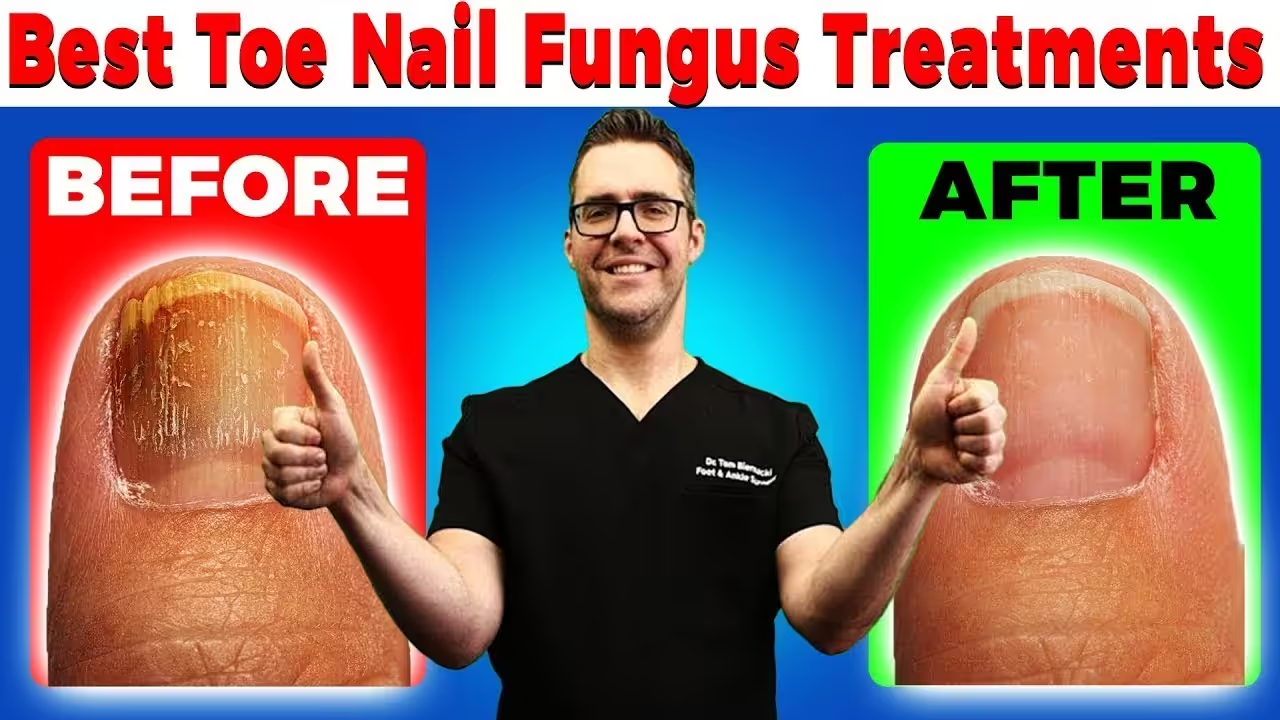
Fungus usually starts at the tip or sides of the nail and works its way back. The nail turns yellow, brown or white, thickens, and crumbles under the edge, and there’s often athlete’s foot on the skin nearby. But injury from shoes or sports, psoriasis, and the normal thickening of older nails can look almost the same — and antifungal pills won’t help any of those. That’s why I test before I treat:
- A small clipping or scraping of the nail goes to a lab to confirm fungus before you start a prescription.
- If it isn’t fungus, we treat the real cause instead. See discolored toenails that aren’t fungus and nail psoriasis vs. fungus.
- A dark streak or a black nail you can’t explain needs a closer look, not antifungal treatment. See black toenail causes.
Treatment options, from strongest evidence to weakest
Prescription pills (terbinafine)
Terbinafine taken once a day for 12 weeks is the treatment I recommend most when it’s safe for you. A Cochrane review of 48 trials with 10,200 people found high-quality evidence that it clears toenail fungus far more often than placebo, and that it probably works better than azole pills such as itraconazole; side effects such as stomach upset and headache were not clearly more common than with placebo (Kreijkamp-Kaspers et al., 2017). A baseline liver blood test is recommended before you start, and I’ll check your other medicines for interactions. It’s a generic drug and usually covered by insurance. More on oral treatment for toenail fungus.
Prescription topicals
If pills aren’t a good fit — you take medicines that interact, have liver disease, or would rather avoid them — a prescription solution brushed on every day is the next choice. Efinaconazole and tavaborole have the best evidence among topicals (Foley et al., 2020), but cure rates are lower than with pills and treatment takes about a year. Some plans don’t cover them, so we check the cost with you first.
Laser treatment
Laser is available at our Bloomfield Township office for people who can’t take pills or want to add it to a topical. There’s no cutting and no anesthesia; most people feel only warmth. I’ll be straight with you about the evidence: the best-controlled studies haven’t shown that laser reliably clears the fungus on its own (Foley et al., 2020), so I usually pair it with a topical and regular nail care. Laser for fungus is usually not covered by insurance, and we’ll give you the price before you start. Here’s how laser toenail treatment works.
Thinning thick nails
Thick fungal nails can press on the toe and hurt in shoes. Trimming and thinning them in the office relieves that pressure right away and helps topical medicine get in. If you have diabetes or poor circulation, this is safer done by us than at home or in a salon. See our medical pedicure and diabetic nail care.
What rarely works
Vinegar soaks, tea tree oil, menthol rubs and over-the-counter creams rarely cure nail fungus, though they’re unlikely to hurt. Drugstore nail polishes don’t reach the fungus under the nail. If you’ve spent months on home remedies without clear nail growing in, it’s time for a prescription option.

What to expect, month by month
| When | What happens |
|---|---|
| First visit | Exam, a nail sample for the lab, and a plan. Thick nails can be thinned the same day. |
| Weeks 1–12 | Daily pills, or a daily topical that continues for about a year. A follow-up visit to check progress. |
| Months 3–6 | Clear, healthy nail starts growing in from the base. |
| Months 12–18 | A big toenail has fully grown out. The old nail doesn’t turn clear — it’s trimmed away as the new nail grows. |
Keeping it from coming back
Nail fungus can come back, especially if athlete’s foot keeps reinfecting the nail. These habits lower the odds:
- Treat athlete’s foot at the first sign of itching or peeling skin. See athlete’s foot treatment.
- Use an antifungal powder or spray in your shoes for a few months after treatment.
- Wear sandals in locker rooms, on pool decks and in hotel showers.
- Rotate your shoes so they dry out, and treat or replace shoes you wore while the infection was active.
- Don’t share nail clippers, and clean yours after each use.
- Choose salons that sterilize their instruments, or skip salon pedicures while you’re being treated.
Your first toenail fungus visit in Bloomfield Township
At your first visit, one of our doctors examines your nails and skin, takes a nail sample if it’s needed, and talks through which treatment fits your health, your other medicines and your budget. If your nails are thick or painful, we can thin them that day.
We’re in network with most major Michigan plans, including Blue Cross Blue Shield of Michigan, Blue Care Network, Medicare and Medicare Advantage, Aetna, Cigna, UnitedHealthcare, HAP, Priority Health and Humana, and we check your benefits before you come in. The visit and lab testing are billed to your insurance; laser is typically self-pay. No insurance, or we’re not in your network? Self-pay care is $200 for your first visit and $100 for each follow-up. The exam, X-rays, orthotics, and therapy are all included when they are medically necessary, and only surgery and diabetic shoes are priced separately.
Who treats toenail fungus at our Bloomfield Township office
All three of our doctors treat fungal nails: Dr. Tom Biernacki, Dr. Carl Jay and Dr. Daria Gutkin.

Patients come to our office at 43494 Woodward Ave from Bloomfield Hills, Birmingham, Troy, West Bloomfield, Rochester Hills, Royal Oak and Pontiac. If Livingston County is closer, see toenail fungus treatment at our Howell office at 4330 E Grand River Ave.
Related care at this office: professional toenail care and thick toenail treatment. For the full background, read my toenail fungus guide, or visit our Bloomfield Township office page.
Book a toenail fungus visit in Bloomfield Township
Pick a time online, day or night. Choose New patient, then the first open day.
New-patient times are released a few weeks ahead, so today may show none — use the calendar to jump to the first green day, or call (810) 206-1402. Closer to Livingston County? Book at our Howell office.
Frequently asked questions
How long does toenail fungus treatment take?
Pills are taken for 12 weeks and prescription topicals for about a year, but a big toenail takes 12 to 18 months to grow out clear. If treatment is working, you’ll see clear nail growing in from the base within a few months.
Is laser better than pills for toenail fungus?
No. Terbinafine pills have much stronger evidence. Laser is an option if you can’t take pills, and it works best combined with a topical medicine and regular nail care.
Does insurance cover toenail fungus treatment?
The visit and lab testing are usually covered, and generic terbinafine is usually inexpensive with insurance. Some prescription topicals aren’t covered, and laser is typically self-pay. We’ll tell you the cost before you start.
Can toenail fungus come back after treatment?
Yes. Treating athlete’s foot early, using antifungal powder in your shoes, wearing sandals in locker rooms and not sharing clippers all lower the chance.
Should I see a podiatrist if I have diabetes and toenail fungus?
Yes. Thick fungal nails can press into the skin and cause sores, and cutting them at home is riskier with diabetes or poor circulation. We can thin them safely and treat the infection.
References
- Kreijkamp-Kaspers S, Hawke K, Guo L, et al. Oral antifungal medication for toenail onychomycosis. Cochrane Database Syst Rev. 2017;7(7):CD010031. Read the review.
- Foley K, Gupta AK, Versteeg S, Mays R, Villanueva E, John D. Topical and device-based treatments for fungal infections of the toenails. Cochrane Database Syst Rev. 2020;1(1):CD012093. Read the review.
Last updated September 2026. This page is general information, not a diagnosis; call (810) 206-1402 or book a visit to have your nails checked.