
Dr. Tom’s Top Insole & Orthotic Picks
Medically reviewed by Dr. Tom Biernacki, DPM
Board-certified podiatric surgeon | Balance Foot & Ankle
Last reviewed: May 2026
Affiliate disclosure: As an Amazon Associate, Balance Foot & Ankle earns from qualifying purchases.
Dr. Tom’s Top Pain Relief Picks — Dr. Hoy’s (2026)
Affiliate disclosure: As an Amazon Associate, Balance Foot & Ankle earns from qualifying purchases. I personally use Dr. Hoy’s in my practice for patients who need topical relief.
| Product | Best For | Dr. Tom’s Take | Get It |
|---|---|---|---|
| Dr. Hoy’s Natural Pain Relief Gel 3.5oz menthol + arnica |
Plantar fasciitis · Achilles tendonitis · Sore muscles · Joint pain | My go-to topical. Cooling-then-warming sensation. No greasy residue. Non-NSAID alternative. | Buy Now |
| Dr. Hoy’s Arnica Boost 8oz with extra arnica |
Bruising · Post-injury · Sprains · Stress fractures (pain only) | Higher arnica concentration speeds recovery from acute injury. Use 4x daily for first 7 days. | Buy Now |
| Dr. Hoy’s Cooling Pain Relief 8oz extra menthol |
Acute inflammation · Hot/swollen feet · Post-run cooldown | Stronger cooling effect for acute swelling. Pair with ice for first 48 hours after injury. | Buy Now |
| Dr. Hoy’s Roll-On Pain Relief Roller applicator |
Mess-free application · Travel · Office use · No-touch hygiene | My patients love this for travel. Glides on without hand contact — cleanest application available. | Buy Now |
| Dr. Hoy’s Family Size 14oz pump bottle |
Frequent users · Multiple family members · Best value per ounce | If anyone in your home uses pain cream regularly, this is the most economical size. Same formula. | Buy Now |
Why I recommend Dr. Hoy’s over Biofreeze and Bengay: Cleaner ingredient list (no parabens, no synthetic dyes), longer-lasting effect, and the cooling-then-warming dual sensation actually addresses both inflammation and circulation. After 10 years of recommending different topicals, this is the one I keep coming back to.
Related Conditions
Medically reviewed by Dr. Tom Biernacki, DPM · Board-Certified Podiatric Surgeon · Last reviewed: April 2026 · Editorial Policy
Medically reviewed by Dr. Tom Biernacki, DPM — Board-certified foot & ankle surgeon, 3,000+ surgeries performed. Updated April 2026 with current clinical evidence. This article reflects real practice experience from Balance Foot & Ankle Specialists in Howell and Bloomfield Township, Michigan.
Quick Answer
Most foot and ankle problems respond to conservative care — proper footwear, supportive inserts, activity modification, and targeted stretching — within 4-8 weeks. Persistent pain beyond that window, or any symptom that prevents walking, warrants a podiatric evaluation to rule out fracture, tendon tear, or systemic cause.
Watch: Dr. Tom Biernacki, DPM

✅ Medically reviewed by Dr. Tom Biernacki, DPM — Board-Certified Podiatrist · Last updated April 6, 2026
Ice vs. Heat for Foot Pain — When to Use Each and How
Home Ice and Heat Therapy for Foot Pain
Ice and heat are two of the most accessible and widely used home therapies for foot pain — and two of the most commonly misapplied. The simple question of which to use, when, and for how long is frequently answered incorrectly, leading people to apply heat to acute inflammation (which worsens it) or ice to chronic stiffness (which tightens rather than loosens tissue). A clear understanding of the physiology behind each modality allows you to use them effectively as part of a home foot care toolkit.
Ice — The Anti-Inflammatory Tool
Cold therapy (cryotherapy) works by reducing local blood flow through vasoconstriction, which limits the inflammation response following acute injury. It also reduces nerve conduction velocity, providing local analgesic effects — the numbing sensation that makes ice feel like immediate relief. Ice is appropriate in the first 24 to 72 hours after an acute injury (ankle sprain, acute plantar fasciitis flare, post-activity metatarsal soreness), after exercise that has stressed a recovering injury, and for managing the inflammatory component of chronic conditions like plantar fasciitis and tendinopathy during symptomatic flares.
Correct Ice Application Technique
Never apply ice directly to skin — always use a cloth or paper towel barrier between the ice pack and skin to prevent ice burns (frostbite injury). Apply for 15 to 20 minutes maximum per session, allowing at least 60 minutes between applications before reapplying. Frozen peas or a dedicated gel ice pack conform better to foot anatomy than solid ice blocks. For plantar fasciitis specifically, rolling a frozen water bottle under the arch for 10 minutes combines cold therapy with plantar fascia massage — a particularly effective combination for morning pain management.
Heat — The Muscle Relaxation Tool
Heat therapy (thermotherapy) works by increasing local blood flow through vasodilation, promoting tissue extensibility, reducing muscle spasm, and improving joint range of motion. Heat is appropriate for chronic conditions involving stiffness and muscle tightness rather than active inflammation — muscle cramps, chronic arthritis stiffness, tight calves before stretching, morning stiffness from chronic plantar fasciitis (after the acute morning pain phase has passed), and general foot fatigue. Warm foot soaks serve the dual purpose of heat therapy and skin softening.
The Ice vs. Heat Decision Rule
A practical rule for the ice vs. heat decision: if the area is swollen, hot, or red — it needs ice, not heat. If the area is stiff, achy, and not acutely inflamed — heat is appropriate. For plantar fasciitis, ice after activity and heat before stretching (to improve tissue extensibility) can both be used strategically on the same day. Never apply heat to an area that is visibly swollen or warm to touch — this amplifies inflammation and can worsen acute injuries significantly. When uncertain about whether a condition is acute or chronic, default to ice rather than heat.
Contrast Therapy — Alternating Cold and Heat
Contrast therapy alternates between cold and heat exposure to create a pumping effect on local circulation. A typical protocol involves 1 minute cold (10-15 degrees Celsius) followed by 3 to 4 minutes warm (38-42 degrees Celsius), repeated 3 to 5 cycles, ending with cold. This approach is popular in athletic recovery contexts and has some evidence for reducing post-exercise soreness and swelling. For foot applications, alternating between an ice pack and a warm footbath achieves the same effect. Contrast therapy is most appropriate for chronic overuse injuries and post-training recovery rather than acute injuries.
Commercial Products Worth Considering
Several commercial products improve the convenience of home ice and heat therapy for the foot. Gel ice pack sleeves designed for foot anatomy allow hands-free cold application during rest. Heated slippers or foot wraps provide consistent, even warmth for morning stiffness relief. The frozen water bottle (simply freeze a standard plastic water bottle) is the most cost-effective and anatomically appropriate ice therapy tool for plantar fasciitis. Microwaveable grain-filled heat packs conform to the foot and retain heat for 20 to 30 minutes. No commercial product outperforms these simple, inexpensive options for standard home foot pain management.
Contrast Therapy: Alternating Cold and Heat
Contrast therapy — alternating cold and heat applications — is used by some physical therapists and sports medicine practitioners as a recovery tool for subacute musculoskeletal conditions, particularly tendinopathy in its later stages. The proposed mechanism is a “vascular pumping” effect: cold causes vasoconstriction; heat causes vasodilation; alternating between them creates successive contraction and dilation of blood vessels, theoretically improving circulation and reducing chronic edema in the tissue. Standard protocols alternate 1 minute of cold exposure (cold water foot bath or ice pack) with 3–4 minutes of heat (warm water bath), repeated 3–4 cycles, ending with cold.
The evidence for contrast therapy is more limited than for either ice or heat applied alone for specific indications, but patient-reported outcomes are favorable, and it is safe when performed correctly. Contrast therapy is most appropriate for subacute conditions (2–6 weeks duration) where acute inflammation has resolved but chronic congestion and aching persist — the late-stage Achilles tendinopathy that aches constantly without the acute warmth of early injury, or the post-surgical foot that swells daily despite resolved wound healing. It is not appropriate for acute injuries (first 48 hours) where heat application would increase bleeding and inflammation, and should not be used in patients with significantly impaired sensation (peripheral neuropathy) who cannot reliably distinguish safe from injurious temperature exposure. At Balance Foot & Ankle in Howell and Bloomfield Township, we provide specific modality guidance for each patient’s condition and stage to optimize home treatment protocols.
Related Treatment Guides
- Plantar Fasciitis & Heel Pain Treatment
- Custom 3D Orthotics
- Sports Foot & Ankle Injury Treatment
- Bunion Treatment
Michigan patients experiencing foot or ankle problems can schedule an appointment at Balance Foot & Ankle — with locations in Howell (4330 E Grand River) and Bloomfield Township (43494 Woodward Ave #208). Call (810) 206-1402 for same-week availability.
For Journalists and Medical Writers
Want to cite this article or request an expert comment from Dr. Tom Biernacki, DPM? Dr. Biernacki is available for podcast appearances, media quotes, and expert interviews on podiatric medicine topics. Contact us at michiganfootdoctors.com/contact-us/ or call (810) 206-1402.
Share this guide: Share on X/Twitter | Share on Facebook
Best Ice & Heat Products for Foot Pain — Dr. Tom’s Picks 2026
Disclosure: This post contains affiliate links. As an Amazon Associate, Dr. Tom Biernacki earns a small commission on qualifying purchases at no extra cost to you. Products are selected based on clinical effectiveness and patient outcomes.
🏆 Reusable Gel Ice Pack (Foot/Ankle Size) — Best for Acute Foot Pain
Why Dr. Tom recommends it: Gel ice packs that conform to the heel and plantar surface achieve contact with the plantar fascia that rigid ice cubes or frozen peas simply cannot. Effective cryotherapy for foot conditions requires the cold to reach 1–2cm below skin surface — that requires 12–15 minutes with good tissue contact. This flexible gel pack contours around the heel and arch, and stays pliable even at freezer temperatures for consistent contact throughout the application window.
★★★★★ Clinical Grade — First-choice ice therapy tool for acute plantar fasciitis, heel pain, and post-injury swelling
✅ Best for: Acute heel pain, plantar fasciitis flare-ups, post-workout soreness, and first 72 hours of any foot injury
⚠️ Not ideal for: Patients with Raynaud’s syndrome, cold urticaria, or peripheral artery disease — cryotherapy is contraindicated; heat is preferred for these conditions
📍 Located in Michigan?
Our board-certified podiatrists treat this condition at two convenient locations. Most new patients are seen the same week.
💡 Pro tip: Wrap the ice pack in a single layer of damp cloth before applying — the moisture creates better thermal conduction than dry fabric and ensures more even cooling
🔥 Microwavable Moist Heat Pad — Best for Chronic Stiffness
Why Dr. Tom recommends it: Moist heat penetrates tissue more effectively than dry electric heating pads — water molecules conduct thermal energy deeper into the muscle and tendon layers where chronic Achilles tendinopathy and plantar fascia tightness originate. The grain filling in these pads retains moist heat for 20–25 minutes — the minimum therapeutic window. We recommend moist heat specifically for morning stiffness routines: 10 minutes of heat before the first steps, then gentle stretching, reduces the inflammatory cascade that causes that characteristic first-step pain.
★★★★★ Clinical Grade — Recommended for chronic stiffness, Achilles tendonitis, and morning plantar fascia preparation
✅ Best for: Chronic heel pain, Achilles tendonitis, morning stiffness, and pre-activity muscle preparation in athletes over 40
⚠️ Not ideal for: Acute injuries in the first 72 hours (heat increases inflammatory mediator release and swelling); diabetic patients with neuropathy (cannot accurately sense burn risk)
💡 Pro tip: Microwave for 90 seconds, then test temperature on your inner wrist before applying to your foot — the foot has less acute thermal sensitivity and burns are more common than patients realize
💊 Doctor Hoy’s Natural Pain Relief Gel — Best Topical Alternative
Why Dr. Tom recommends it: Doctor Hoy’s Natural Pain Relief Gel uses menthol-based counter-irritation (the gate control theory of pain modulation) to reduce pain signals from the affected tissue without thermal risk. When a patient cannot safely use ice (Raynaud’s, PAD) or heat (acute inflammation, neuropathy), Doctor Hoy’s Natural Pain Relief Gel provides clinically meaningful analgesia that we recommend as a bridge therapy. In the plantar fascia specifically, applying Doctor Hoy’s Natural Pain Relief Gel directly to the heel before the morning stretch routine reduces the pain enough to allow proper form — which is the limiting factor in home treatment compliance.
★★★★★ Clinical Grade — Recommended as topical pain adjunct for patients who cannot use ice or heat
✅ Best for: Patients contraindicated for ice or heat; pre-stretch pain management; quick pain relief before activity for athletes managing chronic heel pain
⚠️ Not ideal for: Open wounds, broken skin, or patients with menthol sensitivity; do not apply under heat wraps or occlusive dressings as the concentration effect causes chemical burn
💡 Pro tip: Apply 10–15 minutes before your stretching routine rather than after — the analgesic window peaks at 15 minutes and allows pain-free stretching form, which produces better tissue response
When home therapy isn’t enough: If ice or heat has been your primary treatment for more than 6 weeks without meaningful improvement, the underlying structural issue isn’t resolving on its own. In clinic, we can identify the specific tissue affected and determine whether MLS laser therapy, EPAT shockwave, or a custom orthotic will resolve it faster than continued home care.
Related Guides
Plantar Fasciitis Treatment → | Heel Pain Treatment → | Achilles Tendinopathy Treatment → | Foot Pain at Night →
Insurance Accepted
BCBS · Medicare · Aetna · Cigna · United Healthcare · HAP · Priority Health · Humana · View All →
Howell Office
4330 E Grand River Ave
Howell, MI 48843
Get Directions →
Bloomfield Township Office
43494 Woodward Ave, #208
Bloomfield Township, MI 48302
Get Directions →
Your Board-Certified Podiatrists



Ready to Get Back on Your Feet?
Same-week appointments available at both locations.
In-Office Treatment at Balance Foot & Ankle
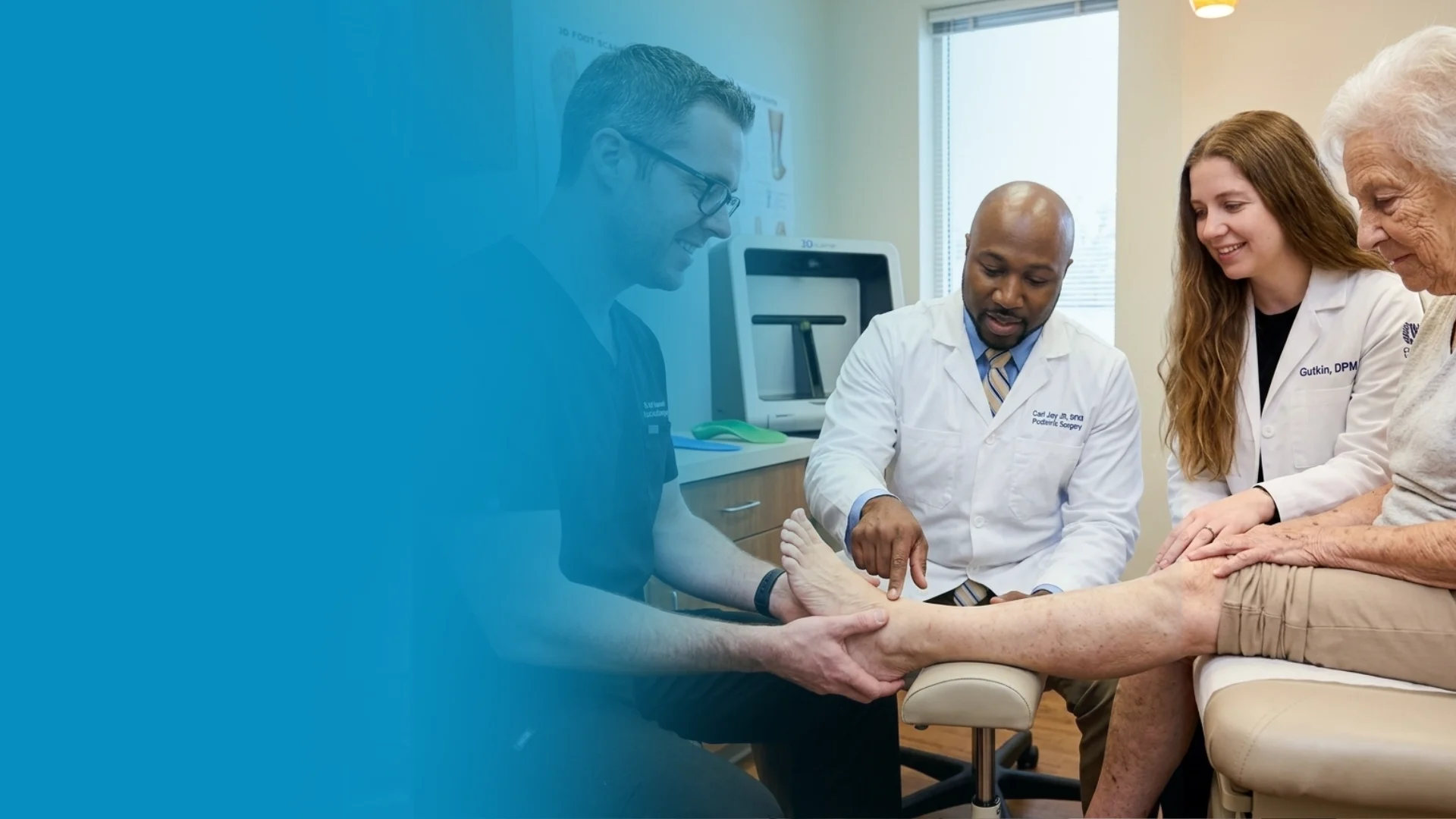
If home care isn’t resolving your your foot or ankle concern, a visit with a board-certified podiatrist is the fastest path to accurate diagnosis and a personalized plan. At Balance Foot & Ankle Specialists, Dr. Tom Biernacki, Dr. Carl Jay, and Dr. Daria Gutkin offer same-week appointments at both our Howell and Bloomfield Township offices. We perform on-site diagnostic ultrasound, digital X-ray, conservative care, advanced regenerative treatments, and minimally invasive surgery when indicated.
Call (810) 206-1402 or request an appointment online. Most insurance plans accepted, including Medicare, Blue Cross Blue Shield, Aetna, Cigna, and United Healthcare.
Most Common Mistake We See
The most common mistake we see is: Waiting too long before seeking care. Fix: any foot pain lasting more than 4 weeks, or any sudden severe symptom, deserves a professional evaluation rather than more rest.
Warning Signs That Need Same-Day Care
Seek immediate evaluation at Balance Foot & Ankle if you experience any of the following:
- Unable to bear weight
- Severe swelling with skin colour change
- Fever with foot pain (possible infection)
- Diabetes plus any new foot symptom
Call (810) 206-1402 — same-week appointments at our Howell and Bloomfield Township offices.
More Podiatrist-Recommended Foot Health Essentials
Hoka Clifton 10


Max-cushion everyday shoe — podiatrist favorite for walking and running.

OOFOS Recovery Slide

Impact-absorbing recovery sandal — wear after long days on your feet.
As an Amazon Associate, Balance Foot & Ankle earns from qualifying purchases. Product recommendations are based on clinical experience; prices and availability shown above update live from Amazon.

When to See a Podiatrist
If foot or ankle pain has been bothering you for more than a few weeks, home care alone may not be enough. Balance Foot & Ankle offers same-week appointments at our Howell and Bloomfield Township clinics — no referral needed in most cases. Bring your current shoes and a short list of symptoms and we’ll build you a treatment plan in one visit.
Call Balance Foot & Ankle: (810) 206-1402 · Book online · Offices in Howell & Bloomfield Township
Pros & Cons of Conservative Care for foot care
Advantages
- ✓ Conservative care first
- ✓ Same-week appointments
- ✓ Multiple insurance accepted
Considerations
- ✗ Self-treatment can mask issues
- ✗ See a podiatrist if pain >2 weeks
In This Article
Dr. Tom’s Recommended Products for foot care
Affiliate disclosure: As an Amazon Associate, Balance Foot & Ankle earns from qualifying purchases. We only recommend products we use with patients.
Footnanny Heel Cream Dr. Tom’s Pick
Best for: Daily moisturizer for cracked heels
Ready to Get Back on Your Feet?
Same-week appointments in Howell + Bloomfield Township. Most insurance accepted. Dr. Tom Biernacki, DPM & team.
Book Today — Same-Week Appointments Available
Call Now: (810) 206-1402
About Your Care Team at Balance Foot & Ankle
Dr. Tom Biernacki, DPM · Board-Certified Foot & Ankle Surgeon. Specializes in conservative-first care, minimally invasive bunion surgery, and complex reconstruction.
Dr. Carl Jay, DPM · Accepting new patients. Specializes in sports medicine, athletic injuries, and routine podiatric care.
Dr. Daria Gutkin, DPM, AACFAS · Accepting new patients. Specializes in surgical reconstruction and pediatric podiatry.
Locations: 4330 E Grand River Ave, Howell, MI 48843 · 43494 Woodward Ave Suite 208, Bloomfield Township, MI 48302
Hours: Mon–Fri 8:00 AM – 5:00 PM · (810) 206-1402
Same-Week Appointments in Howell & Bloomfield Township
Three board-certified podiatric surgeons. 1,123+ five-star reviews. Most insurance accepted.
