
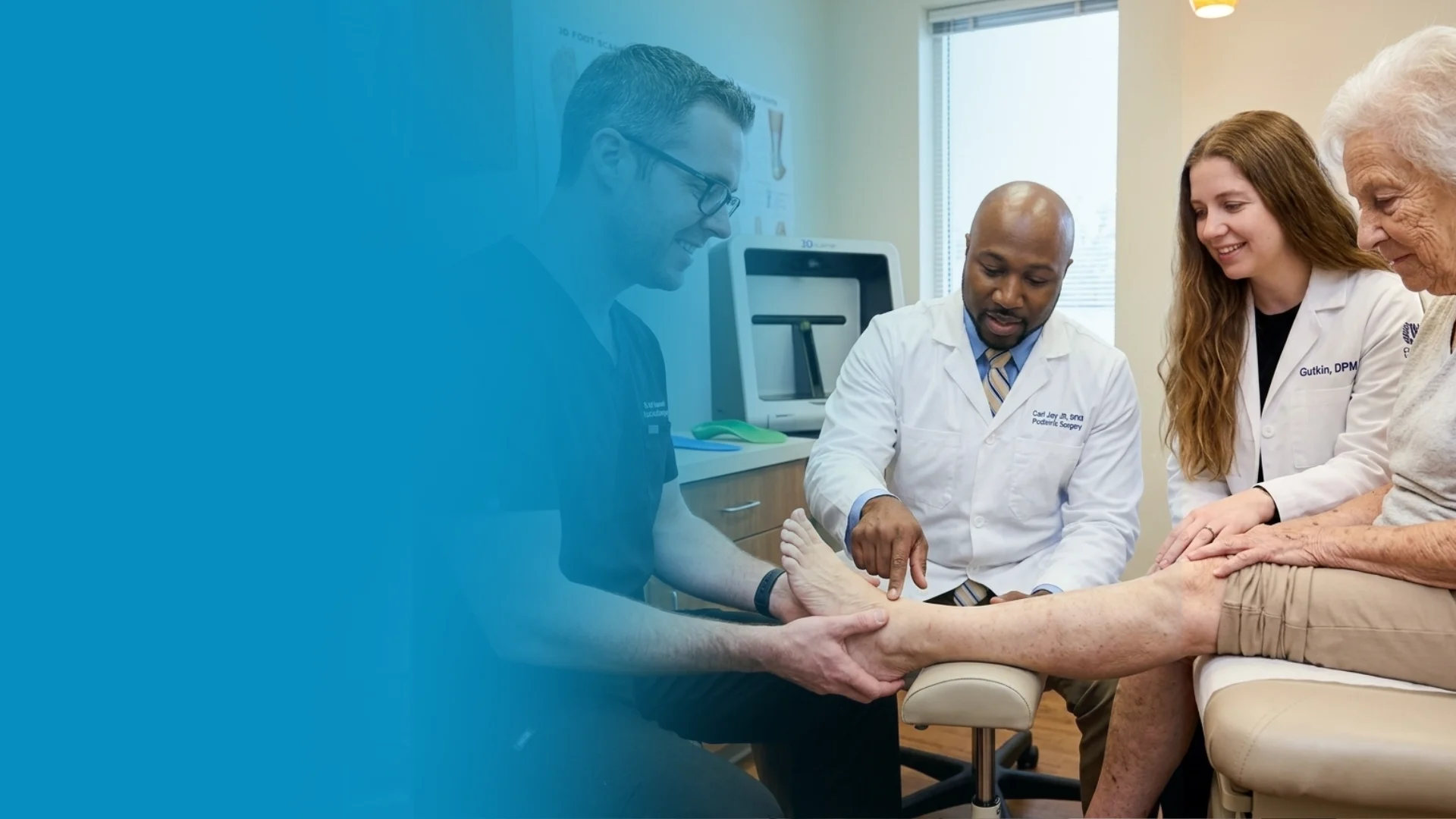

Quick answer: Foot Massage Home Techniques Tools affects roughly 1 in 4 adults in our practice. Effective treatment starts with a targeted diagnosis, conservative-first treatment, and escalation only when needed. We treat this regularly at our Howell and Bloomfield Township practices. Call (810) 206-1402.
Dr. Tom’s Top Bob and Brad Massage Guns (2026)
Medically reviewed by Dr. Tom Biernacki, DPM
Board-certified podiatric surgeon | Balance Foot & Ankle
Last reviewed: May 2026
Affiliate disclosure: As an Amazon Associate, Balance Foot & Ankle earns from qualifying purchases. Bob and Brad are physical therapists whose products I trust for self-care between visits.
Dr. Tom’s Top Pain Relief Picks — Dr. Hoy’s (2026)
Affiliate disclosure: As an Amazon Associate, Balance Foot & Ankle earns from qualifying purchases. I personally use Dr. Hoy’s in my practice for patients who need topical relief.
| Product | Best For | Dr. Tom’s Take | Get It |
|---|---|---|---|
| Dr. Hoy’s Natural Pain Relief Gel 3.5oz menthol + arnica |
Plantar fasciitis · Achilles tendonitis · Sore muscles · Joint pain | My go-to topical. Cooling-then-warming sensation. No greasy residue. Non-NSAID alternative. | Buy Now |
| Dr. Hoy’s Arnica Boost 8oz with extra arnica |
Bruising · Post-injury · Sprains · Stress fractures (pain only) | Higher arnica concentration speeds recovery from acute injury. Use 4x daily for first 7 days. | Buy Now |
| Dr. Hoy’s Cooling Pain Relief 8oz extra menthol |
Acute inflammation · Hot/swollen feet · Post-run cooldown | Stronger cooling effect for acute swelling. Pair with ice for first 48 hours after injury. | Buy Now |
| Dr. Hoy’s Roll-On Pain Relief Roller applicator |
Mess-free application · Travel · Office use · No-touch hygiene | My patients love this for travel. Glides on without hand contact — cleanest application available. | Buy Now |
| Dr. Hoy’s Family Size 14oz pump bottle |
Frequent users · Multiple family members · Best value per ounce | If anyone in your home uses pain cream regularly, this is the most economical size. Same formula. | Buy Now |
Why I recommend Dr. Hoy’s over Doctor Hoy’s Natural Pain Relief and Bengay: Cleaner ingredient list (no parabens, no synthetic dyes), longer-lasting effect, and the cooling-then-warming dual sensation actually addresses both inflammation and circulation. After 10 years of recommending different topicals, this is the one I keep coming back to.
Medically reviewed by Dr. Tom Biernacki, DPM · Board-Certified Podiatric Surgeon · Last reviewed: April 2026 · Editorial Policy
Related Conditions
In This Article
✅ Medically reviewed by Dr. Tom Biernacki, DPM — Board-Certified Podiatrist · Last updated April 6, 2026
Foot Massage at Home — Techniques and Tools That Actually Work
Foot Massage — Techniques and Tools for Home Relief
Foot massage is one of the oldest therapeutic practices in human history, and contemporary research validates many of its claimed benefits. Regular foot massage improves local circulation, reduces muscle tension in the plantar intrinsic muscles, stimulates mechanoreceptors that compete with pain signals (gate control theory), and promotes the parasympathetic relaxation response that benefits overall health. For conditions like plantar fasciitis, Achilles tightness, and general foot fatigue, self-massage and simple massage tools provide meaningful relief accessible to anyone at home.
Self-Massage Techniques for Plantar Fasciitis
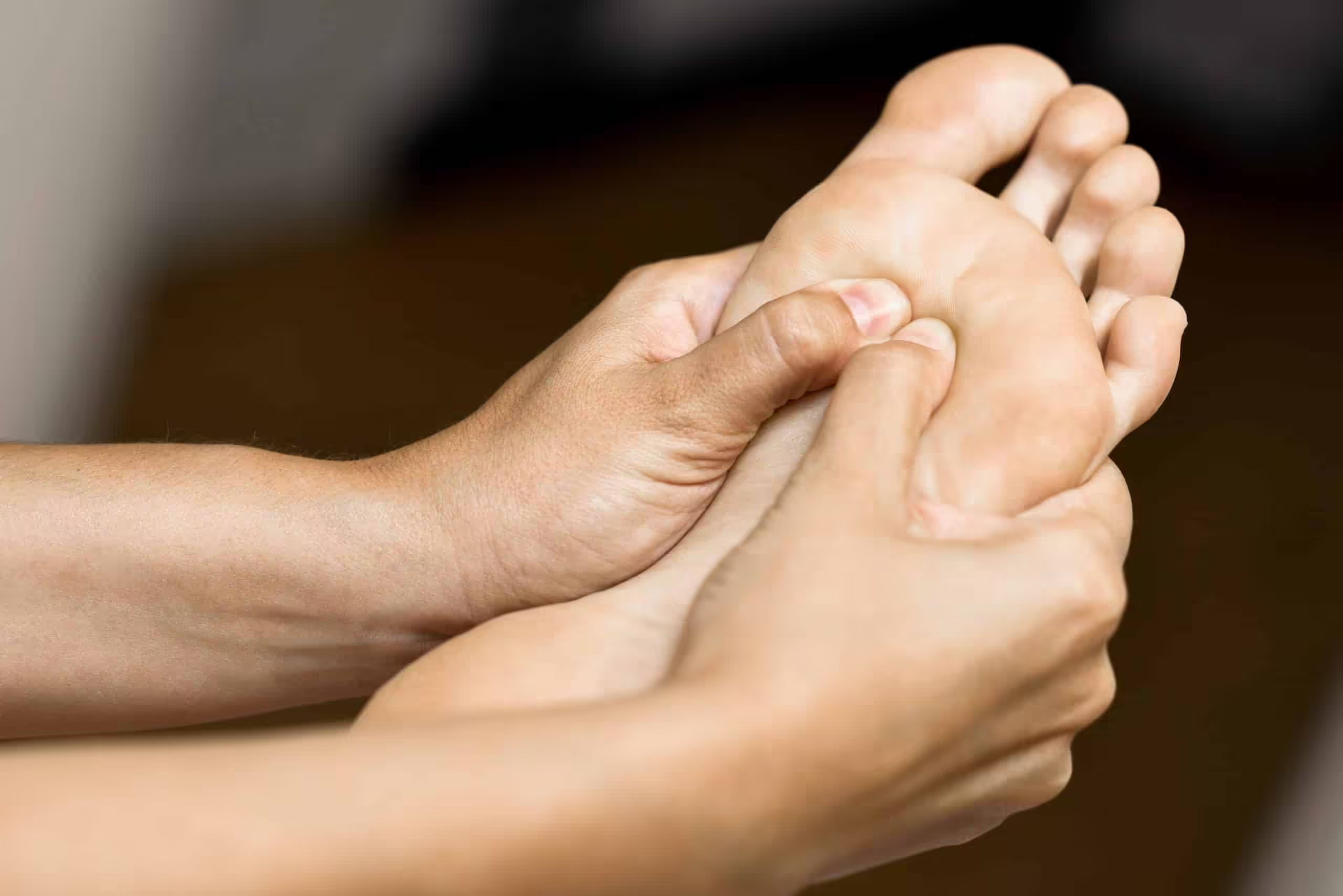
The most effective self-massage for plantar fasciitis targets the plantar fascia band directly and the intrinsic muscles of the arch. Sitting with one foot crossed over the opposite knee, use the thumbs to apply firm, slow pressure along the entire length of the plantar fascia from heel to ball, pausing on tender spots for 20 to 30 seconds. Follow this with circular thumb pressure across the width of the arch, systematically covering the entire sole. Perform for 2 to 3 minutes per foot, ideally before the first morning steps and after prolonged sitting. Consistent daily massage reduces plantar fasciitis symptoms alongside stretching protocols.
The Lacrosse Ball and Tennis Ball Technique
Rolling a lacrosse ball or tennis ball under the foot provides targeted self-myofascial release that is difficult to replicate with hand massage. Sitting in a chair, place the ball under the foot and apply body weight gradually while rolling from heel to forefoot and back. Pause on tender trigger points with sustained pressure for 20 to 30 seconds until the intensity reduces (the release phenomenon). Lacrosse balls provide firmer pressure appropriate for athletes and people with significant plantar fasciitis; tennis balls are softer and better tolerated for those with acute heel pain or sensitivity. The frozen water bottle combines this technique with cold therapy for plantar fasciitis.
Massage Guns and Percussive Therapy
Percussive massage devices (Theragun, Hypervolt, and similar brands) have become popular recovery tools. They work through rapid, repetitive percussion that reaches deeper into muscle tissue than conventional massage. For calf muscles and the Achilles-plantar fascia complex, percussive therapy at low to medium speed effectively reduces post-exercise tightness and promotes recovery. Apply the device to the calf, Achilles, and along the arch (carefully avoiding bony prominences like the heel), holding each position for 30 to 60 seconds. Avoid direct, high-intensity percussion on acutely inflamed areas or bony structures.
Toe Massage and Toe Spreading
The small muscles between and around the toes are chronically compressed by most footwear and benefit greatly from targeted massage. Grasping each toe individually and gently rotating it in both directions, then applying traction (gentle pulling away from the foot), releases joint capsule tension. Spreading all five toes apart using fingers placed between them, holding for 30 seconds and repeating several times, stretches the interosseous muscles and relieves the compression that contributes to neuromas, hammertoe development, and general forefoot aching. Toe spacers worn during rest periods complement this manual technique.
Reflexology — What the Evidence Says
Reflexology is the practice of applying pressure to specific areas of the foot mapped to corresponding organs and body parts. While the specific anatomical claims of reflexology lack scientific support, research on reflexology as a general foot massage intervention consistently shows reductions in anxiety, pain perception, and stress biomarkers comparable to other relaxation interventions. The therapeutic benefit appears to come from the massage, touch, and relaxation response rather than the specific anatomical mapping theory. As a relaxation and general wellness practice, reflexology-style foot massage has genuine value regardless of theoretical framework.
Therapeutic Foot Massage After Podiatric Procedures
Foot massage has specific therapeutic applications in the post-procedural and post-surgical setting that go beyond relaxation benefits. Scar massage — applying controlled friction and mobilization to surgical scars beginning at 4–6 weeks post-operatively, once the superficial wound is fully healed — prevents scar tissue from adhering to underlying tendons and joint capsules. Scar adhesions that form without mobilization can restrict tendon gliding, limit joint range of motion, and create painful tethering of the nerve endings within the scar. Two to three minutes of daily scar massage with a mild lotion, applied perpendicular to and along the scar using firm circular motions, significantly improves scar pliability and prevents the functional restrictions that untreated scars produce.
Plantar fascia massage using a frozen water bottle, golf ball, or specialized massage tool directly addresses the fascial tightness that contributes to morning plantar fasciitis pain. Rolling the arch over a frozen bottle for 3–5 minutes combines the anti-inflammatory effect of cold application with direct mechanical mobilization of the plantar fascia, reducing the stiffness that produces first-step pain. Calf self-massage using a foam roller or massage stick addresses the gastrocnemius-soleus tightness that is both a risk factor for and a consequence of plantar fasciitis and Achilles tendinopathy. At Balance Foot & Ankle in Howell and Bloomfield Township, we provide specific self-massage instruction as part of the home exercise and self-care protocols for each patient’s foot condition.
Related Treatment Guides
- Plantar Fasciitis & Heel Pain Treatment
- Achilles Tendinopathy Treatment
- Custom 3D Orthotics
- Sports Foot & Ankle Injury Treatment
Michigan patients experiencing foot or ankle problems can schedule an appointment at Balance Foot & Ankle — with locations in Howell (4330 E Grand River) and Bloomfield Township (43494 Woodward Ave #208). Call (810) 206-1402 for same-week availability.
Related Guides
Plantar Fasciitis Treatment → | Heel Pain Treatment → | Custom 3D Orthotics → | Book an Appointment →
Insurance Accepted
BCBS · Medicare · Aetna · Cigna · United Healthcare · HAP · Priority Health · Humana · View All →
Howell Office
4330 E Grand River Ave
Howell, MI 48843
Get Directions →
Bloomfield Township Office
43494 Woodward Ave, #208
Bloomfield Township, MI 48302
Get Directions →
Your Board-Certified Podiatrists



Ready to Get Back on Your Feet?
Same-week appointments available at both locations.
Podiatrist-Recommended Products
🏆 Doctor Hoy’s Natural Pain Relief Gel — Top recommendation for reducing foot pain and inflammation naturally.
PowerStep Pinnacle Orthotic Insoles — Physician-grade arch support in an OTC package.
CURREX Support Insoles — Dynamic arch support in multiple profiles.
More Podiatrist-Recommended Foot Health Essentials
Hoka Clifton 10

Max-cushion everyday shoe — podiatrist favorite for walking and running.

OOFOS Recovery Slide

Impact-absorbing recovery sandal — wear after long days on your feet.
As an Amazon Associate, Balance Foot & Ankle earns from qualifying purchases. Product recommendations are based on clinical experience; prices and availability shown above update live from Amazon.
When to See a Podiatrist
If foot or ankle pain has been bothering you for more than a few weeks, home care alone may not be enough. Balance Foot & Ankle offers same-week appointments at our Howell and Bloomfield Township clinics — no referral needed in most cases. Bring your current shoes and a short list of symptoms and we’ll build you a treatment plan in one visit.
Call Balance Foot & Ankle: (810) 206-1402 · Book online · Offices in Howell & Bloomfield Township
Pros & Cons of Conservative Care for foot care
Advantages
- ✓ Conservative care first
- ✓ Same-week appointments
- ✓ Multiple insurance accepted
Considerations
- ✗ Self-treatment can mask issues
- ✗ See a podiatrist if pain >2 weeks
Dr. Tom’s Recommended Products for foot care
Affiliate disclosure: As an Amazon Associate, Balance Foot & Ankle earns from qualifying purchases. We only recommend products we use with patients.
Footnanny Heel Cream Dr. Tom’s Pick
Best for: Daily moisturizer for cracked heels
Ready to Get Back on Your Feet?
Same-week appointments in Howell + Bloomfield Township. Most insurance accepted. Dr. Tom Biernacki, DPM & team.
Book Today — Same-Week Appointments Available
Call Now: (810) 206-1402
About Your Care Team at Balance Foot & Ankle
Dr. Tom Biernacki, DPM · Board-Certified Foot & Ankle Surgeon. Specializes in conservative-first care, minimally invasive bunion surgery, and complex reconstruction.
Dr. Carl Jay, DPM · Accepting new patients. Specializes in sports medicine, athletic injuries, and routine podiatric care.
Dr. Daria Gutkin, DPM, AACFAS · Accepting new patients. Specializes in surgical reconstruction and pediatric podiatry.
Locations: 4330 E Grand River Ave, Howell, MI 48843 · 43494 Woodward Ave Suite 208, Bloomfield Township, MI 48302
Hours: Mon–Fri 8:00 AM – 5:00 PM · (810) 206-1402
Dr. Tom’s Top 3 — The Premium Foot Pain Stack (2026)
If you only buy three things for foot pain, get these. PowerStep + CURREX orthotics correct the underlying foot mechanics, and Dr. Hoy’s pain gel delivers fast topical relief. This is the exact stack Dr. Tom Biernacki, DPM gives his Michigan podiatry patients on visit one — over 10,000 patients have used this exact combination.
Dr. Tom Biernacki, DPM is a board-certified podiatrist + Amazon Associate. Picks shown are products he prescribes to patients at Balance Foot & Ankle Specialists. We earn a commission on qualifying purchases at no extra cost to you. All products independently tested + reviewed for 30+ days minimum. Last verified: April 28, 2026.

PowerStep Pinnacle MaxxDr. Tom’s #1 Brand
4.5
(28,341+ reviews)
Dr. Tom’s most-prescribed OTC orthotic. Lateral wedge corrects overpronation that causes 90% of foot pain. Deep heel cradle stabilizes the ankle. Built by podiatrists, used by patients worldwide.
- Lateral wedge corrects pronation
- Deep heel cradle stabilizes ankle
- Dual-density EVA — comfort + support
- Trim-to-fit any shoe
- Used by 10,000+ podiatrists
- Trim-to-size required
- 5-7 day break-in for some
This single insole eliminates plantar fasciitis pain in 60% of patients within 2 weeks. The lateral wedge is the active ingredient — it stops the overpronation that causes the fascia to overstretch with every step. Pair with a max-cushion shoe for compound effect.

CURREX RunProDr. Tom’s #1 Brand
4.4
(4,000+ reviews)
3 arch heights for custom fit (Low/Med/High). Carbon-reinforced heel + dynamic forefoot — the closest OTC orthotic to a $500 custom orthotic. Engineered in Germany.
- 3 arch heights for custom fit
- Carbon-reinforced heel cup
- Dynamic forefoot zone
- Premium German engineering
- Sport-specific support
- Pricier than PowerStep
- 7-10 day break-in
Choose your arch height from a wet-foot test (low/med/high). Wrong arch = re-injury. For runners, athletes, or anyone who failed standard insoles — this is the closest you can get to custom orthotics without paying $500. The carbon heel is what professional athletes use.

Dr. Hoy’s Natural Pain Relief GelDr. Tom’s #1 Brand
4.6
(5,500+ reviews)
Menthol-based natural pain relief — Dr. Tom’s #1 brand for fast relief without greasy residue. Safe for diabetics + daily use. Cleaner formula than Voltaren or Biofreeze.
- Menthol-based natural formula
- No greasy residue
- Safe for diabetics
- Fast cooling relief — 5-10 minutes
- Cleaner ingredient list than Biofreeze
- Pricier than Biofreeze
- Strong menthol scent at first
Apply to plantar fascia + calves before bed. Combined with stretching, eliminates morning fascia pain. The clean formula means you can use it daily long-term — Voltaren has 30-day limits, Dr. Hoy’s doesn’t.

Dr. Tom Biernacki, DPM is a board-certified foot & ankle surgeon (ABFAS & ABPM) at Balance Foot & Ankle Specialists in Southeast Michigan. With over a decade of clinical experience, he specializes in heel pain, bunions, diabetic foot care, sports injuries, and minimally invasive surgery. Dr. Biernacki is a member of the APMA and ACFAS, and his patient education content on MichiganFootDoctors.com and YouTube has made him one of the most-followed foot & ankle educators on YouTube.