
Types of Ingrown Toenail Surgery
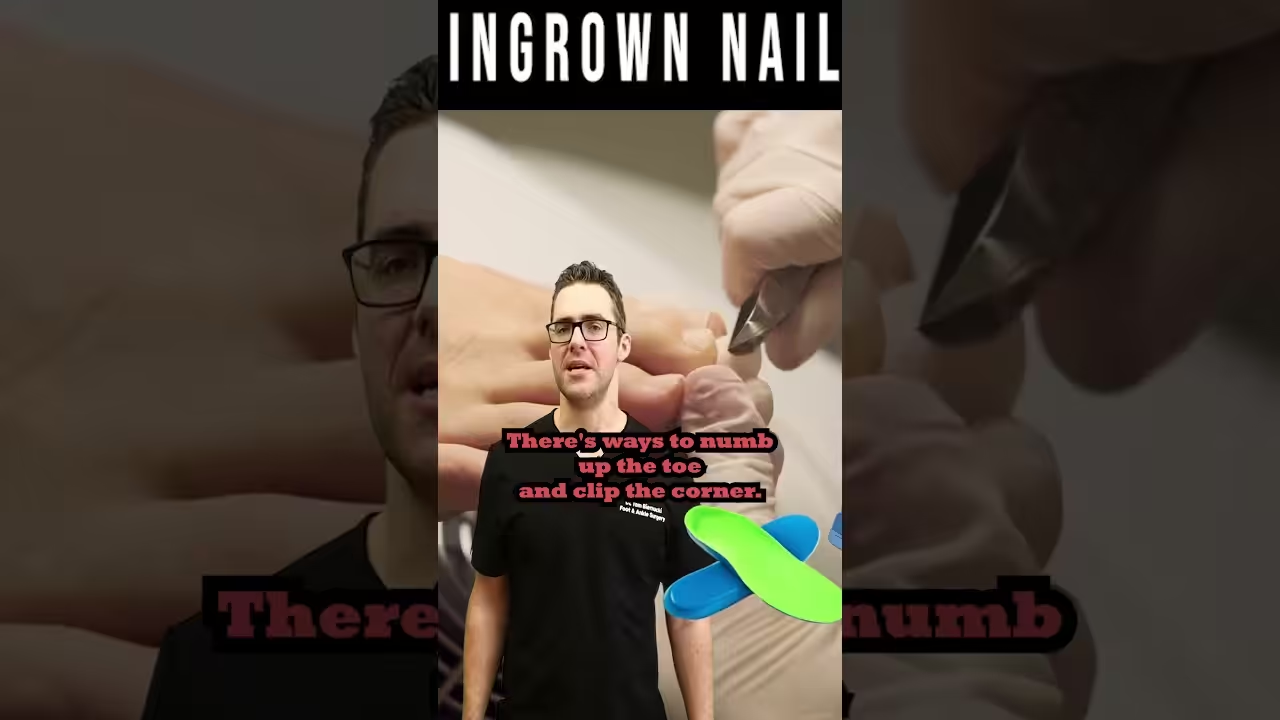
Ingrown toenail surgery (nail avulsion) is one of the most commonly performed minor surgical procedures in podiatry. The most frequently performed procedure is a partial nail avulsion with chemical matrixectomy—removal of the ingrown nail border (typically 1–3mm of the nail edge) down to the root (nail matrix), followed by application of phenol to chemically destroy that portion of the nail matrix to prevent regrowth. The goal is to permanently narrow the nail so it no longer curves into the surrounding skin, eliminating the recurrence that plagues conservative treatment alone.
In cases of severe nail deformity, complete nail avulsion with total matrixectomy permanently removes the entire nail—performed when the whole nail is involved, severely thickened, or causing recurrent problems. Surgical incision and drainage is sometimes required for associated abscess before or instead of nail surgery when active deep infection is present. Understanding which procedure was performed helps set appropriate recovery expectations.
Immediately After the Procedure
Ingrown toenail surgery is performed under local anesthesia (a digital block—injection at the base of the toe). The anesthetic typically lasts 2–4 hours after the procedure. As it wears off, mild-to-moderate throbbing pain is expected—typically a 4–6 on a 10-point scale for the first evening. Over-the-counter ibuprofen or acetaminophen taken before the anesthetic wears off manages this effectively for most patients. Elevate the foot above heart level for the first 12–24 hours to reduce swelling and throbbing.
A surgical dressing is applied by the podiatrist. Some drainage through the dressing is normal—the phenol application creates a chemical burn of the nail matrix that produces a yellowish or pink fluid discharge for 1–2 weeks. This is normal and not a sign of infection. Change the dressing as instructed—typically daily with a clean gauze pad and a small amount of antibiotic ointment (Neosporin or bacitracin).
The Healing Timeline
Days 1–7: Initial Healing
Most patients can walk the day of surgery in a comfortable, open-toed shoe or post-op sandal—avoiding tight-toed shoes for the first 1–2 weeks. Soreness with direct pressure is expected; the surgical site is tender. Drainage continues for the first several days. Keep the dressing dry during showers (a plastic bag over the foot works well). Pain should progressively improve each day—if pain is worsening significantly after the first 48 hours, contact the office, as this can indicate infection.
Weeks 2–4: Wound Closure
The surgical site forms granulation tissue (healthy healing tissue) that gradually fills the space left by the removed nail border. The drainage typically stops by 10–14 days. The site should look progressively smaller and pinker as healing progresses. Most patients return to normal footwear by 2–3 weeks. The nail groove area where the border was removed will eventually be covered by healthy skin over 3–6 months as skin regrows into the area.
Signs of Infection to Watch For
Some redness and warmth around the surgical site is expected in the first week from normal healing inflammation. Signs that suggest infection rather than normal healing: worsening redness spreading beyond the immediate surgical site, increasing pain after the first 48 hours, pus (thick white or green discharge rather than thin yellowish phenol drainage), red streaks extending up the toe, fever, or swollen lymph nodes. Contact the podiatrist promptly if any of these occur—post-procedure infection is uncommon but treatable with antibiotics when caught early.
Preventing Recurrence
After matrixectomy, the regrowth rate for the treated nail border is less than 5% in most series—far superior to conservative treatment alone. The factors that influence long-term success: proper nail cutting technique (cut straight across, not curved or with rounded corners, and not too short), avoiding footwear with excessive pressure on the toenails (pointed-toe shoes, excessively tight athletic shoes), and promptly treating any trauma to the nail. If the nail appears to be growing back in along the treated border, early follow-up allows the podiatrist to address it before it becomes ingrown again.
Frequently Asked Questions
How long does it take for an ingrown toenail surgery to heal?
The surgical wound from a partial nail avulsion with phenol matrixectomy typically closes and stops draining within 2–4 weeks. The site looks fully healed from a distance within 4–6 weeks, though the tissue texture in the former nail groove continues to normalize over 3–6 months. Most patients return to normal shoes and activities within 2–3 weeks. The toe does not look exactly like it did before—the nail is permanently narrower—but this is the intended outcome. Some residual skin sensitivity in the surgical area may persist for several months as nerve endings in the skin remodel following the procedure.
Can I shower after ingrown toenail surgery?
Most podiatrists recommend keeping the toe dry for the first 24–48 hours after surgery. After that, brief showering with a waterproof covering over the toe (a plastic bag secured with a rubber band) is usually acceptable. After about one week, some providers allow gentle soaking of the toe in warm water for a few minutes daily to keep the wound clean and soft, followed by dressing change. Avoid prolonged water exposure (swimming pools, hot tubs, or prolonged bathing) until the wound is fully closed—typically 3–4 weeks. Follow your specific provider’s instructions, as protocols vary.
Will the toenail grow back after surgery?
After a partial nail avulsion with chemical matrixectomy (phenol application), the treated nail border does not grow back in approximately 95% of cases. The nail that remains grows normally—just narrower—and looks cosmetically acceptable after healing. After a total nail avulsion with complete matrixectomy, no nail grows back. If no matrixectomy was performed (simple avulsion without phenol), the nail border grows back normally within 4–6 months, and the ingrown toenail typically recurs. The chemical destruction of the nail matrix cells is what makes the partial matrixectomy procedure definitively treat the ingrown nail, rather than just temporarily removing it.
Medical References & Sources
- PubMed Research — Partial Nail Avulsion and Phenol Matrixectomy Outcomes
- PubMed Research — Ingrown Toenail Surgery and Recurrence Rates
- American Podiatric Medical Association — Ingrown Toenails
Dr. Tom Biernacki, DPM is a board-certified podiatric surgeon at Balance Foot & Ankle in Howell and Bloomfield Hills, Michigan. He performs ingrown toenail surgery including partial and total nail avulsion with chemical matrixectomy, and provides comprehensive post-procedural care and follow-up.
Dr. Tom’s Recommended Products for Ingrown Toenails
📍 Located in Michigan?
Our board-certified podiatrists treat this condition at two convenient locations. Same-day appointments often available.
These are products I personally use and recommend to my patients at Balance Foot & Ankle.
- Dr. Scholl’s Ingrown Toenail Pain Reliever — Sodium sulfide solution softens nail edge for painless removal — reduces redness and swelling within 24 hours
- Onyfix Nail Correction System — Composite strip guides nail growth away from skin — non-invasive correction without any cutting
- Proper Nail File and Nipper Set — Professional-grade stainless steel nippers and sapphire file — correct nail trimming prevents future ingrowth
📧 Get Dr. Tom’s Free Lab Test Guide
Discover the 5 lab tests every person over 35 should ask their doctor about — explained in plain English by a board-certified physician.
Affiliate disclosure: As an Amazon Associate, Balance Foot & Ankle earns from qualifying purchases. We only recommend products we trust for our own patients.
Join 950,000+ Learning About Foot Health
Dr. Tom shares honest medical advice, supplement reviews, and treatment guides you won’t find anywhere else.
Subscribe on YouTube →
Dr. Tom Biernacki, DPM is a double board-certified podiatrist and foot & ankle surgeon at Balance Foot & Ankle Specialists in Southeast Michigan. With over a decade of clinical experience, he specializes in heel pain, bunions, diabetic foot care, sports injuries, and minimally invasive surgery. Dr. Biernacki is a member of the APMA and ACFAS, and his patient education content on MichiganFootDoctors.com and YouTube has reached over one million views.