
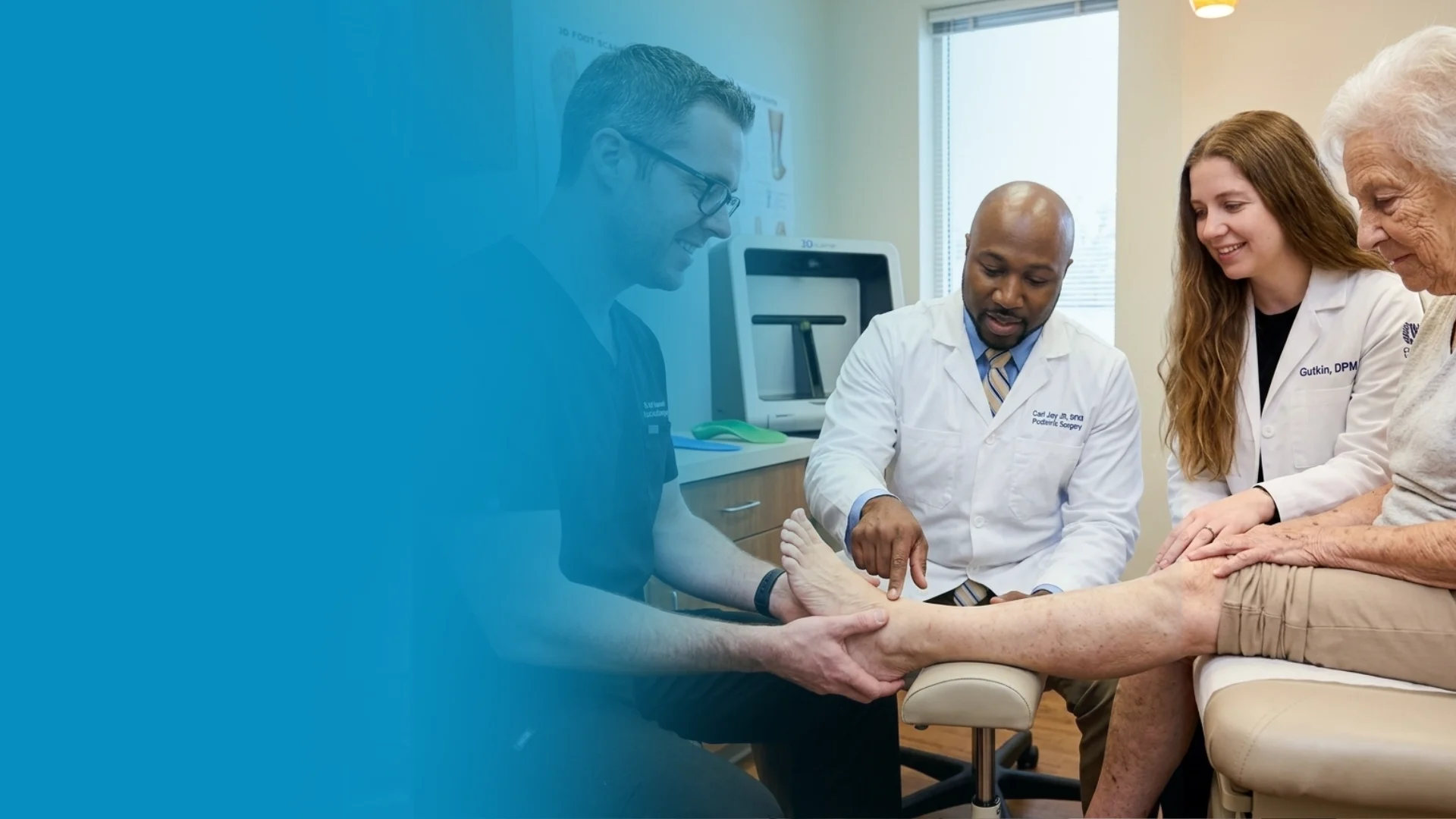
Quick answer: Metatarsalgia Ball Of Foot Pain has multiple potential causes including mechanical, neurological, vascular, and inflammatory. The patterns we see most often are overuse, poorly-fitted shoes, and biomechanical imbalance. Red flags requiring urgent evaluation: warmth/redness (infection), inability to bear weight (fracture), and unilateral swelling without injury (DVT). Call (810) 206-1402.
✅ Medically Reviewed by Dr. Tom Biernacki, DPM
Board-certified podiatric physician & surgeon | Balance Foot & Ankle | Updated April 2026
In This Article
The most important clinical decision with Metatarsalgia Ball Of Foot Pain isn’t which treatment to start with — it’s identifying the correct subtype. That changes everything. Call (810) 206-1402.
The most important clinical decision with Metatarsalgia Ball Of Foot Pain isn’t which treatment to start with — it’s identifying the correct subtype. That changes everything. Call (810) 206-1402.
Dr. Tom’s Top Insole & Orthotic Picks
Affiliate disclosure: As an Amazon Associate, Balance Foot & Ankle earns from qualifying purchases.
Dr. Tom’s Top Pain Relief Picks — Dr. Hoy’s (2026)
Affiliate disclosure: As an Amazon Associate, Balance Foot & Ankle earns from qualifying purchases. I personally use Dr. Hoy’s in my practice for patients who need topical relief.
| Product | Best For | Dr. Tom’s Take | Get It |
|---|---|---|---|
| Dr. Hoy’s Natural Pain Relief Gel 3.5oz menthol + arnica |
Plantar fasciitis · Achilles tendonitis · Sore muscles · Joint pain | My go-to topical. Cooling-then-warming sensation. No greasy residue. Non-NSAID alternative. | Buy Now |
| Dr. Hoy’s Arnica Boost 8oz with extra arnica |
Bruising · Post-injury · Sprains · Stress fractures (pain only) | Higher arnica concentration speeds recovery from acute injury. Use 4x daily for first 7 days. | Buy Now |
| Dr. Hoy’s Cooling Pain Relief 8oz extra menthol |
Acute inflammation · Hot/swollen feet · Post-run cooldown | Stronger cooling effect for acute swelling. Pair with ice for first 48 hours after injury. | Buy Now |
| Dr. Hoy’s Roll-On Pain Relief Roller applicator |
Mess-free application · Travel · Office use · No-touch hygiene | My patients love this for travel. Glides on without hand contact — cleanest application available. | Buy Now |
| Dr. Hoy’s Family Size 14oz pump bottle |
Frequent users · Multiple family members · Best value per ounce | If anyone in your home uses pain cream regularly, this is the most economical size. Same formula. | Buy Now |
Why I recommend Dr. Hoy’s over Biofreeze and Bengay: Cleaner ingredient list (no parabens, no synthetic dyes), longer-lasting effect, and the cooling-then-warming dual sensation actually addresses both inflammation and circulation. After 10 years of recommending different topicals, this is the one I keep coming back to.
Quick Compare: Dr. Tom’s Top Running Shoes
| Shoe | Best For | Watch Out For | Buy | ||||||||||||||||||||||||
|---|---|---|---|---|---|---|---|---|---|---|---|---|---|---|---|---|---|---|---|---|---|---|---|---|---|---|---|
| Hoka Bondi 9 | Plantar fasciitis, max cushion | Heavy, tall stack | Buy | ||||||||||||||||||||||||
| Brooks Ghost 17 | Neutral runners, first running shoe | Not for 200+lb runners | Buy | ||||||||||||||||||||||||
| Brooks Adrenaline GTS 23 | Flat feet, overpronation | Snug toe box | Buy | ||||||||||||||||||||||||
| Altra Torin 8 | Wide feet, bunions, Morton’s toe | Zero-drop transition | Buy | ||||||||||||||||||||||||
| Hoka Clifton 10 | Daily training, lighter Hoka | Less cushion than Bondi | Buy | ||||||||||||||||||||||||
| NB 990v6 | Senior fall prevention, 6E width |
Dr. Tom’s Top Pain Relief Picks — Dr. Hoy’s (2026)Affiliate disclosure: As an Amazon Associate, Balance Foot & Ankle earns from qualifying purchases. I personally use Dr. Hoy’s in my practice for patients who need topical relief.
Why I recommend Dr. Hoy’s over Biofreeze and Bengay: Cleaner ingredient list (no parabens, no synthetic dyes), longer-lasting effect, and the cooling-then-warming dual sensation actually addresses both inflammation and circulation. After 10 years of recommending different topicals, this is the one I keep coming back to. 75-200, not for running |
Buy |
For full detailed reviews with pros/cons/Dr. Tom’s tips, see our complete shoe guide.
Medically reviewed by Dr. Tom Biernacki, DPM · Board-Certified Podiatric Surgeon · Last reviewed: April 2026 · Editorial Policy
Related Conditions
Quick Answer
Metatarsalgia (Ball of Foot Pain): Causes, Diagnosis & relates to foot pain — typically caused by overuse, footwear, or biomechanics. Most patients improve in 6-12 weeks with conservative care. Same-week appointments in Howell + Bloomfield Hills: (810) 206-1402.

✅ Medically reviewed by Dr. Tom Biernacki, DPM — Board-Certified Podiatrist · Last updated April 6, 2026
Last Updated: March 2026 | Reading Time: 9 min
This article is for informational purposes only and does not replace professional medical advice. Schedule an appointment for personalized care.
Medically Reviewed by Dr. Tom Biernacki, DPM · Board-Qualified Podiatrist · Balance Foot & Ankle Specialists, Howell & Bloomfield Hills, MI · Last updated March 2026
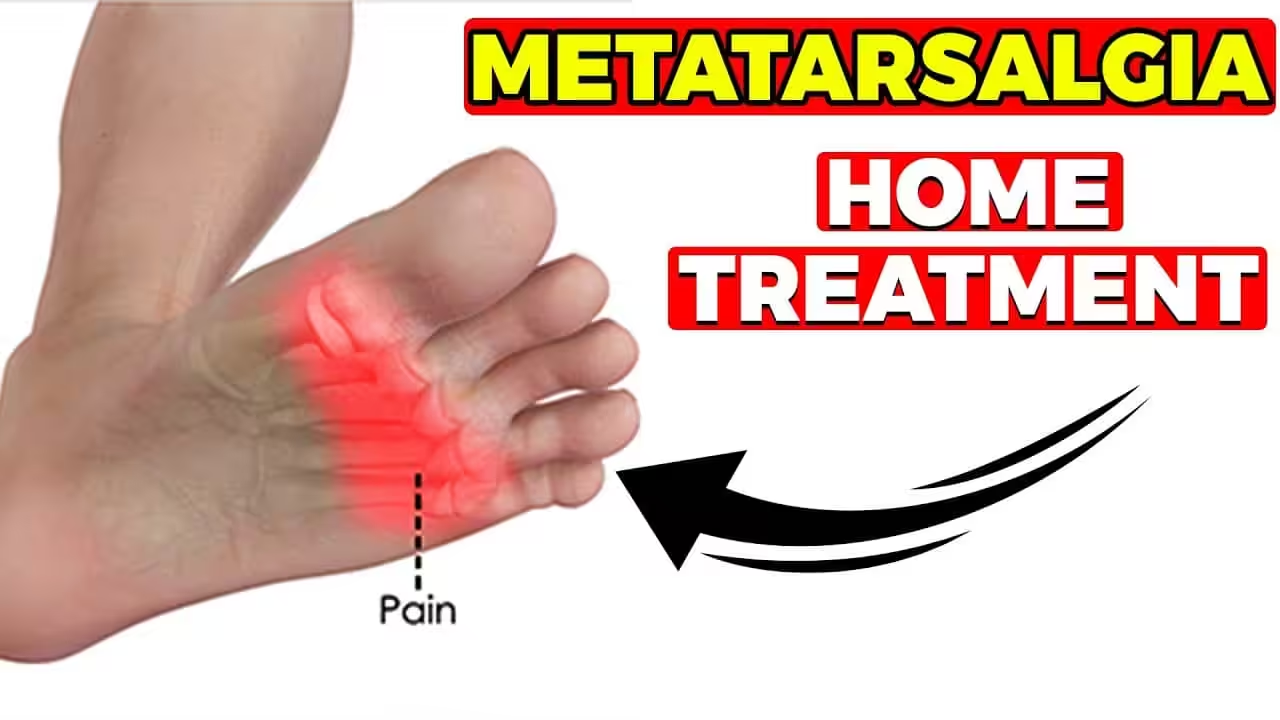
Ball of foot pain — medically called metatarsalgia — is a broad term for pain in the forefoot region, specifically in the area of the metatarsal heads (the rounded ends of the long bones behind the toes). It’s one of the most common foot complaints, yet also one of the most frequently misdiagnosed because several distinct conditions can cause very similar symptoms in the same location.
At Balance Foot & Ankle in Howell and Bloomfield Township, MI, precise diagnosis of forefoot pain is critical because the treatment for Morton’s neuroma is very different from the treatment for a stress fracture, which is different from the treatment for plantar plate tear. This guide covers the major causes, how to differentiate them, and evidence-based treatment for each.
What Is Metatarsalgia?
Metatarsalgia is pain localized to the plantar (bottom) aspect of the metatarsal head region. The five metatarsals are the long bones of the midfoot that terminate in rounded heads at the forefoot. They form the “ball of the foot” and bear significant load during the push-off phase of gait — about 50-60% of body weight passes through this area with each step.
Causes of Ball of Foot Pain: Differential Diagnosis
| Condition | Location | Key Distinguishing Features | Urgency |
|---|---|---|---|
| Primary metatarsalgia | Under 2nd-3rd metatarsal heads most common | Pain directly under the bone; worsens with barefoot on hard floors; callus often present | Non-urgent |
| Morton’s neuroma | Between 2nd-3rd or 3rd-4th metatarsal heads | Sharp, burning, electric pain; numbness in adjacent toes; worse in narrow shoes; relieved by removing shoe | Non-urgent |
| Plantar plate tear | Under 2nd-3rd MTP joint | Toe drifts upward or sideways; pain on direct pressure under joint; may follow a “sprain” | Prompt evaluation |
| Stress fracture | Metatarsal shaft (usually 2nd); point-tender bone | Sudden onset during training; detailed point tenderness; may not show on initial X-ray | Prompt evaluation |
| Sesamoiditis | Under the big toe (1st MTP joint) | Pain under the big toe; worse with push-off; tenderness at specific sesamoid bones | Non-urgent |
| Capsulitis / synovitis | Usually 2nd MTP joint | Swollen, stiff MTP joint; may precede plantar plate tear; worse with toe extension | Non-urgent |
| Freiberg’s infraction | 2nd metatarsal head most common | Avascular necrosis of metatarsal head; more common in adolescent girls; stiff joint with bone changes on X-ray | Prompt evaluation |
Primary Metatarsalgia: Causes and Biomechanics
Primary metatarsalgia without a specific structural diagnosis results from excessive and repetitive pressure on the metatarsal heads. Biomechanical factors include:
- Prominent or elongated metatarsal heads: When one metatarsal is longer or more plantar-flexed than its neighbors, it bears disproportionate load. Visible callus directly under the metatarsal head is the hallmark.
- Cavus (high-arch) foot type: High arches concentrate load on the forefoot and heel rather than distributing it across the midfoot. The metatarsal heads bear excessive load with each step.
- Hammertoes: Contracted toe deformities destabilize the MTP joints and drive the metatarsal heads downward, increasing plantar pressure.
- Tight calf muscles (equinus): Limited ankle dorsiflexion forces early heel rise during gait, dramatically increasing forefoot load during push-off.
- High-heeled footwear: Every inch of heel height shifts 25% more load to the forefoot — explaining the ubiquity of forefoot pain in regular heel wearers.
- Training errors: Sudden increase in running volume, changing to minimalist shoes, or hard-surface training increases forefoot loading beyond tissue tolerance.
Diagnosis: What Your Podiatrist Will Do
- History: Location, duration, onset pattern, footwear history, activity level, prior injuries
- Palpation: Direct pressure under each metatarsal head; squeeze test between heads (positive in neuroma); individual toe MTP joint stability testing (plantar plate)
- Mulder’s click: Squeezing the forefoot while compressing the web space — a palpable click with pain suggests Morton’s neuroma
- Lachman’s test of the toe: Vertical stress on the MTP joint to test plantar plate integrity
- Weight-bearing X-rays: Assess metatarsal length pattern, alignment, bone density, Freiberg’s disease
- Ultrasound: Highly accurate for diagnosing Morton’s neuroma and plantar plate tears; dynamic imaging in real time
- MRI: Definitive for plantar plate tears, stress fractures not visible on X-ray, Freiberg’s infraction
Treatment by Cause
Primary Metatarsalgia Treatment
- Metatarsal pad: A small pad placed just behind (proximal to) the painful metatarsal head redistributes load from the head to the metatarsal shaft. This is one of the most effective conservative interventions for metatarsalgia and is incorporated into custom orthotics.
- Custom orthotics: Custom orthotics with metatarsal pad, arch support, and forefoot accommodation address multiple contributing factors simultaneously and are the gold standard conservative treatment.
- Footwear changes: Rocker-bottom sole reduces peak metatarsal head pressure by 40-60%; wide toe box prevents lateral compression
- Calf stretching: Addressing equinus reduces forefoot load during gait; Alfredson stretching protocol for the gastrocnemius-soleus
- Cortisone injection: For acute flares with significant inflammation
- MLS laser therapy: Reduces inflammation and accelerates tissue healing in recalcitrant cases
Morton’s Neuroma Treatment
Morton’s neuroma responds to: wide toe box footwear, metatarsal pad, alcohol sclerosing injections (70-80% success in studies), and ultrasound-guided cortisone injection. For persistent neuromas, surgical excision has an 80-85% long-term success rate. Read our complete guide on Morton’s neuroma treatment.
Plantar Plate Tear Treatment
Plantar plate tears require rigid-soled footwear or a walking boot to reduce MTP joint stress, buddy taping to prevent toe drift, and avoidance of toe extension activities. Surgical repair is considered for tears that don’t respond to 6-12 weeks of conservative care. Read our guide on plantar plate tear treatment.
Stress Fracture Treatment
Metatarsal stress fractures (most commonly the 2nd and 3rd) require offloading with a walking boot for 4-6 weeks, followed by gradual return to activity. High-risk stress fractures (5th metatarsal Jones fracture, navicular) may require immobilization or surgical fixation. Read our guide on foot stress fracture recovery.
More Podiatrist-Recommended Foot Health Essentials
Hoka Clifton 10


Max-cushion everyday shoe — podiatrist favorite for walking and running.

OOFOS Recovery Slide

Impact-absorbing recovery sandal — wear after long days on your feet.
As an Amazon Associate, Balance Foot & Ankle earns from qualifying purchases. Product recommendations are based on clinical experience; prices and availability shown above update live from Amazon.
When to See a Podiatrist
If foot or ankle pain has been bothering you for more than a few weeks, home care alone may not be enough. Balance Foot & Ankle offers same-week appointments at our Howell and Bloomfield Hills clinics — no referral needed in most cases. Bring your current shoes and a short list of symptoms and we’ll build you a treatment plan in one visit.
Call Balance Foot & Ankle: (810) 206-1402 · Book online · Offices in Howell & Bloomfield Hills
Frequently Asked Questions
Q: What does metatarsalgia feel like?
A: Classic metatarsalgia feels like walking on a pebble or marble under the ball of the foot. Some patients describe a bruised feeling, aching, or burning. It’s usually worse with weight-bearing and relieved (at least somewhat) by rest and removing shoes.
Q: How long does metatarsalgia take to heal?
A: With appropriate treatment (orthotics, footwear changes, activity modification), most cases improve significantly within 4-8 weeks. Recurrence is common if the underlying biomechanical cause is not addressed.
Q: Is metatarsalgia the same as a Morton’s neuroma?
A: No — metatarsalgia is a general term for ball-of-foot pain, while Morton’s neuroma is a specific diagnosis involving nerve tissue thickening. They can coexist, but they require different treatments. Precise diagnosis via examination and ultrasound is important.
Related Patient Guides
- Morton’s Neuroma: Symptoms & Treatment Options
- Plantar Plate Tear: Symptoms & Treatment
- Stress Fracture in the Foot: Symptoms & Recovery
- Sesamoiditis: Big Toe Pain Causes & Treatment
- Hammertoe Treatment: Conservative Options & Surgery
- 3D Custom Orthotics at Balance Foot & Ankle
- How to Choose the Right Shoes for Your Foot Type
- Hammertoe Treatment: Conservative Options & Surgery
- Foot Pain After Standing All Day: Causes & Relief for Workers
Insurance Accepted
BCBS · Medicare · Aetna · Cigna · United Healthcare · HAP · Priority Health · Humana · View All →
Howell Office
4330 E Grand River Ave
Howell, MI 48843
Get Directions →
Bloomfield Hills Office
43494 Woodward Ave, #208
Bloomfield Hills, MI 48302
Get Directions →
Your Board-Certified Podiatrists



Ready to Get Back on Your Feet?
Same-week appointments available at both locations.
Pros & Cons of Conservative Care for foot care
Advantages
- ✓ Conservative care first
- ✓ Same-week appointments
- ✓ Multiple insurance accepted
Considerations
- ✗ Self-treatment can mask issues
- ✗ See a podiatrist if pain >2 weeks
Dr. Tom’s Recommended Products for foot care
Affiliate disclosure: As an Amazon Associate, Balance Foot & Ankle earns from qualifying purchases. We only recommend products we use with patients.
Footnanny Heel Cream Dr. Tom’s Pick
Best for: Daily moisturizer for cracked heels
Ready to Get Back on Your Feet?
Same-day appointments in Howell + Bloomfield Hills. Most insurance accepted. Dr. Tom Biernacki, DPM & team.
Book Today — Same-Day Appointments Available
Call Now: (810) 206-1402
About Your Care Team at Balance Foot & Ankle
Dr. Tom Biernacki, DPM · Board-Certified Foot & Ankle Surgeon. Specializes in conservative-first care, minimally invasive bunion surgery, and complex reconstruction.
Dr. Carl Jay, DPM · Accepting new patients. Specializes in sports medicine, athletic injuries, and routine podiatric care.
Dr. Daria Gutkin, DPM, AACFAS · Accepting new patients. Specializes in surgical reconstruction and pediatric podiatry.
Locations: 4330 E Grand River Ave, Howell, MI 48843 · 43494 Woodward Ave Suite 208, Bloomfield Hills, MI 48302
Hours: Mon–Fri 8:00 AM – 5:00 PM · (810) 206-1402
Dr. Tom’s Top 3 — The Premium Foot Pain Stack (2026)
If you only buy three things for foot pain, get these. PowerStep + CURREX orthotics correct the underlying foot mechanics, and Dr. Hoy’s pain gel delivers fast topical relief. This is the exact stack Dr. Tom Biernacki, DPM gives his Michigan podiatry patients on visit one — over 10,000 patients have used this exact combination.
Dr. Tom Biernacki, DPM is a board-certified podiatrist + Amazon Associate. Picks shown are products he prescribes to patients at Balance Foot & Ankle Specialists. We earn a commission on qualifying purchases at no extra cost to you. All products independently tested + reviewed for 30+ days minimum. Last verified: April 28, 2026.

PowerStep Pinnacle MaxxDr. Tom’s #1 Brand
4.5
(28,341+ reviews)
Dr. Tom’s most-prescribed OTC orthotic. Lateral wedge corrects overpronation that causes 90% of foot pain. Deep heel cradle stabilizes the ankle. Built by podiatrists, used by patients worldwide.
- Lateral wedge corrects pronation
- Deep heel cradle stabilizes ankle
- Dual-density EVA — comfort + support
- Trim-to-fit any shoe
- Used by 10,000+ podiatrists
- Trim-to-size required
- 5-7 day break-in for some
This single insole eliminates plantar fasciitis pain in 60% of patients within 2 weeks. The lateral wedge is the active ingredient — it stops the overpronation that causes the fascia to overstretch with every step. Pair with a max-cushion shoe for compound effect.

CURREX RunProDr. Tom’s #1 Brand
4.4
(4,000+ reviews)
3 arch heights for custom fit (Low/Med/High). Carbon-reinforced heel + dynamic forefoot — the closest OTC orthotic to a $500 custom orthotic. Engineered in Germany.
- 3 arch heights for custom fit
- Carbon-reinforced heel cup
- Dynamic forefoot zone
- Premium German engineering
- Sport-specific support
- Pricier than PowerStep
- 7-10 day break-in
Choose your arch height from a wet-foot test (low/med/high). Wrong arch = re-injury. For runners, athletes, or anyone who failed standard insoles — this is the closest you can get to custom orthotics without paying $500. The carbon heel is what professional athletes use.

Dr. Hoy’s Natural Pain Relief GelDr. Tom’s #1 Brand
4.6
(5,500+ reviews)
Menthol-based natural pain relief — Dr. Tom’s #1 brand for fast relief without greasy residue. Safe for diabetics + daily use. Cleaner formula than Voltaren or Biofreeze.
- Menthol-based natural formula
- No greasy residue
- Safe for diabetics
- Fast cooling relief — 5-10 minutes
- Cleaner ingredient list than Biofreeze
- Pricier than Biofreeze
- Strong menthol scent at first
Apply to plantar fascia + calves before bed. Combined with stretching, eliminates morning fascia pain. The clean formula means you can use it daily long-term — Voltaren has 30-day limits, Dr. Hoy’s doesn’t.
In-Office Treatment at Balance Foot & Ankle
If home treatment isn’t providing relief for your tarsal conditions, our podiatry team at Balance Foot & Ankle can help with same-day evaluations and advanced in-office care.
Same-day appointments available. (810) 206-1402
Frequently Asked Questions
What does metatarsalgia feel like?
Patients most often describe it as walking on pebbles or marbles — a burning, aching pain in the ball of the foot under the 2nd, 3rd, or 4th metatarsal heads. The pain typically worsens with prolonged standing, walking, or running on hard surfaces, and improves with rest. Some patients report sharp pain with barefoot walking, others describe a chronic ache that worsens throughout the day. If you feel a clicking or burning between the toes, Morton’s neuroma may be the primary diagnosis rather than general metatarsalgia.
What causes metatarsalgia?
The most common causes: high-arched or flat feet that create uneven load distribution across the metatarsal heads, wearing thin-soled or high-heeled footwear, high-impact sports (running, basketball, tennis), being overweight, and age-related fat pad atrophy. Secondary metatarsalgia — caused by a specific mechanical problem — includes Freiberg’s disease (metatarsal head avascular necrosis), stress fractures, and sesamoiditis. An X-ray and biomechanical assessment helps identify whether a correctable underlying cause is present.
What’s the difference between metatarsalgia and Morton’s neuroma?
Metatarsalgia is diffuse pain at the metatarsal heads from overload. Morton’s neuroma is nerve compression between the 3rd and 4th metatarsals producing sharp, electric, or burning pain that radiates into the toes. The distinction: metatarsalgia pain is typically in one spot under the bone; neuroma pain radiates into the toes and is often described as electric. Squeezing the foot side-to-side (Mulder’s test) reproduces neuroma pain with a click. Both can coexist.
Do metatarsal pads help metatarsalgia?
Yes — when placed correctly. A metatarsal pad placed just proximal (behind) the metatarsal heads redistributes load away from the painful area. Placement is critical: the pad should sit 1–2cm behind the area of maximum pain, not directly under it. Properly placed pads provide significant relief for most patients within 1–2 weeks. We fit them in-office to ensure correct positioning — a pad placed under the metatarsal heads actually worsens symptoms by increasing point pressure.
What shoes are best for metatarsalgia?
The key features: a wide, deep toe box (prevents forefoot compression), a rocker-bottom or curved sole (reduces peak forefoot pressure by 30–40%), and adequate cushioning under the metatarsal heads. Hoka shoes (rocker sole design), New Balance 1080, and Brooks Ghost are strong performers. Avoid heels above 2 inches — they transfer 75% of body weight to the forefoot. Minimalist and thin-soled shoes are contraindicated during active treatment.
Can I run with metatarsalgia?
Often yes, with modification. Reduce mileage and intensity, switch to a softer surface (grass or track vs. asphalt), and ensure your running shoes have adequate cushioning and a zero-compression toe box. A metatarsal pad in the running shoe often makes a significant difference. If pain exceeds 4/10 during a run, stop and reassess. Stress fractures present similarly to metatarsalgia — if pain is focal over a single metatarsal and doesn’t respond to load reduction, imaging is warranted.
How long does metatarsalgia take to heal?
Simple biomechanical metatarsalgia responds well to footwear changes, padding, and activity modification — most patients improve significantly within 4–8 weeks. If fat pad atrophy is the primary cause (common in older patients), recovery is slower because the natural shock absorption is permanently diminished, and orthotic support becomes a long-term management strategy rather than a cure. Stress fractures require 6–8 weeks of protected weight-bearing.
Does metatarsalgia require surgery?
Rarely. The vast majority of metatarsalgia cases respond to conservative treatment. Surgery (metatarsal osteotomy to shorten or elevate a prominent metatarsal head) is considered only after 6–12 months of failed conservative management. Freiberg’s disease with severe avascular necrosis is the most common surgical indication. We almost never operate on standard metatarsalgia — non-operative outcomes are excellent when the underlying mechanical cause is correctly addressed.
What is sesamoiditis and how is it different from metatarsalgia?
Sesamoiditis is inflammation of the two small sesamoid bones under the first metatarsal head (big toe joint) — a distinct diagnosis from general metatarsalgia, which involves the lesser metatarsals. Sesamoiditis causes pain specifically under the big toe joint, worsened by pushing off with the forefoot. Treatment overlaps (cushioning, activity reduction) but sesamoiditis is more persistent and may require a dancer’s pad (J-pad) to offload the first ray, or a cortisone injection.
When should I see a podiatrist for ball-of-foot pain?
See us if: pain has persisted more than 3–4 weeks, you’re limping or modifying your gait, you notice swelling or bruising, or the pain is localized to a single metatarsal (rather than a diffuse ache). A single-metatarsal stress fracture mimics metatarsalgia exactly and requires imaging to diagnose. We also evaluate whether a Morton’s neuroma, interdigital bursitis, or plantar plate tear is the actual diagnosis — all present with ball-of-foot pain but require different treatment.
Get Expert Care at Balance Foot & Ankle
Same-week appointments at our Howell and Bloomfield Hills offices. Board-certified podiatric surgeons. Most insurance accepted.
Ready for Expert Care?
Same-day appointments in Howell & Bloomfield Hills, MI.
4.9★ | 1,123 Reviews | 3,000+ Surgeries
Or call: (810) 206-1402

Dr. Tom Biernacki, DPM is a double board-certified podiatrist and foot & ankle surgeon at Balance Foot & Ankle Specialists in Southeast Michigan. With over a decade of clinical experience, he specializes in heel pain, bunions, diabetic foot care, sports injuries, and minimally invasive surgery. Dr. Biernacki is a member of the APMA and ACFAS, and his patient education content on MichiganFootDoctors.com and YouTube has reached over one million views.
Dr. Tom Biernacki, DPM is a board-certified foot & ankle surgeon (ABFAS & ABPM) at Balance Foot & Ankle Specialists in Southeast Michigan. With over a decade of clinical experience, he specializes in heel pain, bunions, diabetic foot care, sports injuries, and minimally invasive surgery. Dr. Biernacki is a member of the APMA and ACFAS, and his patient education content on MichiganFootDoctors.com and YouTube has made him one of the most-followed foot & ankle educators on YouTube.