
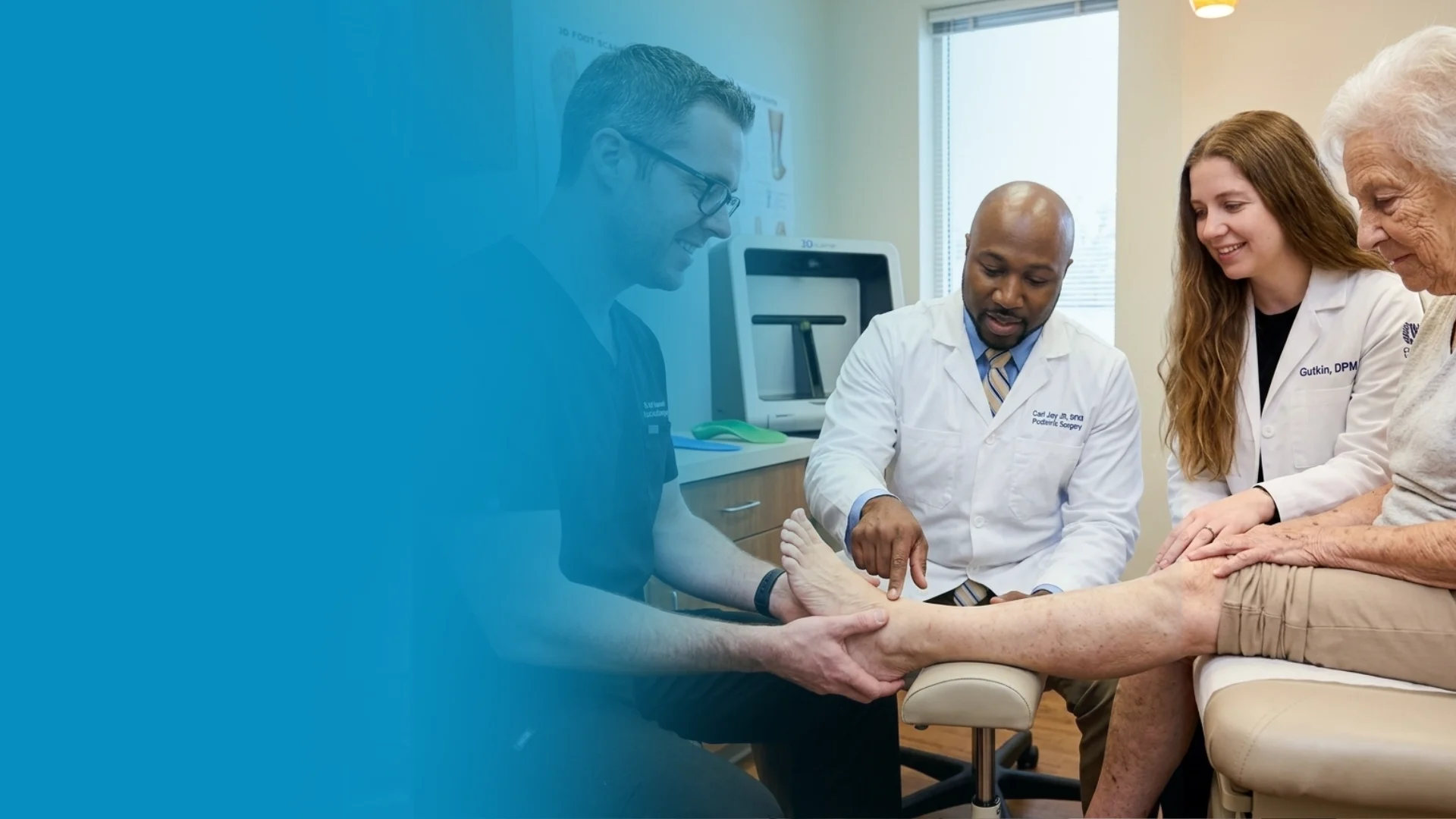
You are in the right place. Dr. Tom Biernacki, DPM, FACFAS — board-certified foot & ankle surgeon with 3,000+ surgeries — explains exactly what Morton’s neuroma treatment options means and what actually works. Call (810) 206-1402 for a same-day appointment at our Howell or Bloomfield Hills office.
The most important clinical decision with Mortons Neuroma Treatment Options isn’t which treatment to start with — it’s identifying the correct subtype. That changes everything. Call (810) 206-1402.
Dr. Tom’s Top Insole & Orthotic Picks
Medically reviewed by Dr. Tom Biernacki, DPM
Board-certified podiatric surgeon | Balance Foot & Ankle
Last reviewed: May 2026
Affiliate disclosure: As an Amazon Associate, Balance Foot & Ankle earns from qualifying purchases.
Dr. Tom’s Top Pain Relief Picks
Affiliate disclosure: Amazon Associate purchases support our practice.
Medically reviewed by Dr. Tom Biernacki, DPM · Board-Certified Podiatric Surgeon · Last reviewed: April 2026 · Editorial Policy
Related Conditions
Quick Answer
Morton’s Neuroma: Symptoms, Causes & Treatment Wi relates to Morton’s neuroma — typically caused by nerve compression between toes. Most patients improve in 8-12 weeks conservative with conservative care. Same-week appointments in Howell + Bloomfield Hills: (810) 206-1402.
Medically reviewed by Dr. Tom Biernacki, DPM — Board-certified foot & ankle surgeon, 3,000+ surgeries performed. Updated April 2026 with current clinical evidence. This article reflects real practice experience from Balance Foot & Ankle Specialists in Howell and Bloomfield Hills, Michigan.
Quick Answer
Morton’s neuroma is a thickening of nerve tissue between the third and fourth toes causing burning pain, numbness, or the sensation of a pebble under the ball of the foot. Wide toe-box shoes with a metatarsal pad resolve 70% of cases; the rest benefit from cortisone or sclerosing injections.
Watch: Dr. Tom Biernacki, DPM
✅ Medically reviewed by Dr. Tom Biernacki, DPM — Board-Certified Podiatrist · Last updated April 6, 2026
Medically reviewed by Dr. Tom Biernacki, DPM | Updated March 2026
Quick Answer
Morton’s neuroma treatment starts with conservative approaches: wider shoes, metatarsal pads placed behind (not under) the nerve, custom orthotics, and corticosteroid injections to reduce inflammation. If conservative treatment fails after 3-6 months, surgical neurectomy (nerve removal) provides relief in approximately 85% of cases. The key diagnostic sign is a positive Mulder’s click — a palpable click when squeezing the forefoot.
Morton’s Neuroma: Symptoms, Causes & Treatment Without Surgery
Morton’s neuroma treatment Michigan.– /wp:heading –>
Morton’s neuroma is a painful condition affecting the ball of the foot, most commonly between the third and fourth toes. It involves thickening of the tissue surrounding a nerve, causing sharp, burning pain or the feeling of standing on a pebble. The good news: most patients achieve relief without surgery.
What Is Morton’s Neuroma?
The condition develops when the digital nerve running between your metatarsal bones becomes compressed or irritated, causing the nerve’s protective sheath to thicken. This “neuroma” isn’t actually a tumor — it’s a benign growth of nerve tissue, but it can cause significant pain.
Most Common Location
Morton’s neuroma occurs between the metatarsal bones, usually:
- Between 3rd and 4th toes — most common (80% of cases)
- Between 2nd and 3rd toes — second most common
- Rarely affects other intermetatarsal spaces
Morton’s Neuroma Symptoms
Symptoms typically worsen with activity and tight shoes, and improve with rest and removing footwear:
| Symptom | Description | When It Occurs |
|---|---|---|
| Sharp, burning pain | Localized to ball of foot between toes | Walking, standing, tight shoes |
| “Pebble in shoe” sensation | Feeling of standing on something | Throughout the day |
| Numbness/tingling | Extends into adjacent toes | After prolonged activity |
| Electric shock sensation | Shooting pain into toes | Weight-bearing, squeezing forefoot |
| Pain relief with rest | Symptoms ease when off feet | Sitting, removing shoes |
Mulder’s Click: A clinical sign where compressing the forefoot side-to-side while pressing on the interspace produces a palpable click and reproduces pain — highly specific for Morton’s neuroma.
What Causes Morton’s Neuroma?
The condition develops from repetitive compression and irritation of the interdigital nerve. Contributing factors include:
- Tight, narrow, or high-heeled shoes — compresses the forefoot and squeezes metatarsals together
- High-impact activities — running, racquet sports, dancing put repetitive stress on the forefoot
- Foot structure — flat feet, high arches, bunions, or hammertoes alter load distribution
- Morton’s toe — when the second toe is longer than the first, creating abnormal mechanics
- Hypermobile first ray — excessive motion in the big toe joint shifts load to the second and third metatarsals
Diagnosis: How Podiatrists Confirm Morton’s Neuroma
Diagnosis is primarily clinical, but imaging helps confirm and guide treatment:
- Physical examination — Mulder’s click test, sensory testing of toes, palpation of interspace
- X-ray — rules out stress fracture, arthritis, or metatarsalgia (neuroma itself doesn’t appear on X-ray)
- Diagnostic ultrasound — highly accurate for visualizing neuroma size and location; can guide injections
- MRI — useful for complex or recurrent cases, rules out other soft tissue pathology
Neuroma size on ultrasound helps predict treatment response: neuromas under 5mm often respond well to conservative care; those over 8mm may require more aggressive intervention.
Non-Surgical Treatment Options
The vast majority of Morton’s neuroma patients respond to conservative treatment. Success rates for non-surgical approaches range from 50-80% depending on neuroma size and symptom duration.
1. Footwear Modification
The single most important initial intervention. Switching to shoes with a wide toe box, low heel (<1 inch), and adequate cushioning reduces nerve compression immediately. High heels increase forefoot pressure by up to 75% — eliminating them is non-negotiable for healing.
2. Custom Orthotics with Metatarsal Padding
Custom orthotics specifically designed for Morton’s neuroma include a metatarsal pad placed just behind (proximal to) the neuroma. This spreads the metatarsal heads apart, decompressing the nerve. A well-fitted orthotic with a metatarsal dome is one of the most effective conservative treatments available.
- Metatarsal pad placed at the proximal metatarsal heads (not under them)
- Corrections for any contributing biomechanical factors (overpronation, high arch)
- Studies show 60-70% improvement with proper orthotic therapy
3. Corticosteroid Injections
Ultrasound-guided cortisone injections deliver anti-inflammatory medication directly to the neuroma site. Benefits include rapid pain relief (often within days) and reduced nerve swelling.
- Most effective for acute flare-ups and neuromas under 6mm
- Typically a series of 2-3 injections spaced several weeks apart
- Success rate: 50-60% for sustained relief
- Risk: repeated cortisone injections can weaken surrounding fat pad tissue
4. Alcohol Sclerosing Injections
A series of dilute alcohol injections (4% ethanol) progressively shrinks and scleroses the neuroma tissue. This approach has gained significant evidence support:
- Protocol: typically 4-7 injections at weekly intervals
- Success rate: 60-89% in published studies — often superior to cortisone for larger neuromas
- Advantages: permanent nerve modification vs. temporary steroid effect
- Best for: neuromas 5-8mm with documented failure of shoe modification + orthotics
5. MLS Laser Therapy
MLS laser therapy uses dual-wavelength light energy to reduce nerve inflammation and promote healing of the perineural tissue. It’s completely non-invasive and requires no downtime.
- Reduces inflammatory cytokines and nerve sensitization
- Course: 6-10 sessions, 15-20 minutes each
- Can be combined with orthotics and footwear changes
- Particularly useful for patients who want to avoid injections
Treatment Comparison at a Glance
| Treatment | Success Rate | Recovery | Best For |
|---|---|---|---|
| Footwear change alone | 20-40% | Immediate | Early, mild cases |
| Custom orthotics | 60-70% | 4-8 weeks | Biomechanical causes |
| Cortisone injections | 50-60% | Days | Acute flare, small neuromas |
| Alcohol sclerosing | 60-89% | Progressive | Moderate neuromas (5-8mm) |
| MLS laser | 65-75% | 6-10 sessions | Injection-averse patients |
| Surgical neurectomy | 75-85% | 6-8 weeks | Failed all conservative care |
When Is Surgery Necessary?
Surgery (neurectomy — surgical removal of the neuroma) is considered only after at least 3-6 months of conservative treatment without adequate relief. The nerve is excised through either a dorsal (top of foot) or plantar (bottom of foot) approach.
Important considerations before surgery:
- Permanent numbness in the affected toe space is a normal, expected outcome of neurectomy
- 5-15% risk of stump neuroma formation (can be more painful than the original condition)
- Recovery time: 6-8 weeks non-weight-bearing or partial weight-bearing
- Success rate: 75-85%, but permanent sensory changes make surgery a last resort
Morton’s Neuroma vs. Other Causes of Ball of Foot Pain
| Condition | Key Differences | Diagnostic Test |
|---|---|---|
| Metatarsalgia | Broader pain, no shooting/electric quality | X-ray, physical exam |
| Stress fracture | Pinpoint bone tenderness, worse with activity | X-ray, MRI |
| Capsulitis/synovitis | Joint swelling, less nerve-type pain | Ultrasound |
| Plantar plate tear | Toe deviation, plantar plate tenderness | MRI, ultrasound |
| Tarsal tunnel syndrome | Heel/arch involvement, broader distribution | Nerve conduction study |
At-Home Management Tips
- Ice massage — roll a frozen water bottle under the foot for 15 minutes after activity
- Toe spacers — separate the metatarsal heads to reduce nerve compression
- Metatarsal pads — over-the-counter versions available, though custom fit is superior
- Anti-inflammatory approach — OTC NSAIDs (ibuprofen) short-term to reduce flare-up pain
- Activity modification — avoid running, jumping, or prolonged standing during active flare
If self-care measures don’t bring significant relief within 2-3 weeks, see a podiatrist specializing in Morton’s neuroma for a proper diagnosis and treatment plan.
Related Patient Guides
- Morton’s Neuroma Treatment Michigan
- The Complete Guide to Custom Orthotics
- MLS Laser Therapy for Foot Pain
- 12 Signs You Need to See a Podiatrist
- Flat Feet & Fallen Arches Treatment
Insurance Accepted
BCBS · Medicare · Aetna · Cigna · United Healthcare · HAP · Priority Health · Humana · View All →
Howell Office
4330 E Grand River Ave
Howell, MI 48843
Get Directions →
Bloomfield Hills Office
43494 Woodward Ave, #208
Bloomfield Hills, MI 48302
Get Directions →
Your Board-Certified Podiatrists



Ready to Get Back on Your Feet?
Same-week appointments available at both locations.
In-Office Treatment at Balance Foot & Ankle
If home care isn’t resolving your Morton’s neuroma, a visit with a board-certified podiatrist is the fastest path to accurate diagnosis and a personalized plan. At Balance Foot & Ankle Specialists, Dr. Tom Biernacki, Dr. Carl Jay, and Dr. Daria Gutkin offer same-day and next-day appointments at both our Howell and Bloomfield Hills offices. We perform on-site diagnostic ultrasound, digital X-ray, conservative care, advanced regenerative treatments, and minimally invasive surgery when indicated.
Call (810) 206-1402 or request an appointment online. Most insurance plans accepted, including Medicare, Blue Cross Blue Shield, Aetna, Cigna, and United Healthcare.
Differential Diagnosis: What Else Could It Be?
Several conditions share symptoms with Morton’s Neuroma and are commonly misdiagnosed in the first office visit. Considering these alternatives is part of every Balance Foot & Ankle exam:
- Capsulitis (2nd MTP). Pain at 2nd-toe base rather than between toes; drawer test positive.
- Stress fracture. Single-point tenderness over a metatarsal shaft, not between toes.
- Freiberg’s infraction. AVN of metatarsal head, classic radiograph flattening.
If your symptoms don’t fit the textbook pattern, ask your podiatrist which differentials they ruled out — that conversation often shortcuts months of trial-and-error treatment.
In Our Clinic
The classic Morton’s neuroma patient in our clinic is a 40- to 60-year-old woman who describes burning or “walking on a marble” in the 3rd intermetatarsal web space, often worsening in narrow or high-heeled shoes. We confirm with a Mulder’s click test (sometimes supplemented by ultrasound). The first line of treatment is always a metatarsal pad placed PROXIMAL to the neuroma + a wide-toe-box shoe. Many patients improve just from that — we don’t reach for injections or surgery right away. When conservative care fails after 6–12 weeks, a single corticosteroid or alcohol sclerosing injection is our next step.
Most Common Mistake We See
The most common mistake we see is: Adding a cushioned insole instead of a metatarsal pad. Fix: place the metatarsal pad PROXIMAL to (behind) the metatarsal heads — not directly under them.
Warning Signs That Need Same-Day Care
Seek immediate evaluation at Balance Foot & Ankle if you experience any of the following:
- Point tenderness on a single metatarsal suggesting stress fracture
- Unable to bear weight
- Progressive numbness up the foot
- Visible deformity or cross-over toe
Call (810) 206-1402 — same-day and next-day appointments at our Howell and Bloomfield Hills offices.
More Podiatrist-Recommended Neuroma Essentials
Wide Neutral Cushion Shoe

New Balance Men’s Fresh Foam X 1080 V14 Running Shoe
- Fresh Foam X midsole foam with approximately 3% bio-based content delivers our most cushioned Fresh Foam experience for incredible comfort. Bio-based content is made from renewable resources to help reduce our carbon footprint, enhancing these road running shoes.
- These running shoes for women feature a gusseted tongue designed to help keep debris out
- No-sew overlays
- Synthetic and engineered mesh upper
- Adjustable lace closure for a customized fit
New Balance 1080 V14 — max forefoot room decompresses the pinched nerve.
Wide-Toe-Box Walking Shoe

New Balance Men’s Made in USA 990v6 Sneaker
- FuelCell foam delivers a propulsive feel to help drive you forward
- ENCAP midsole cushioning combines lightweight foam with a durable polyurethane rim to deliver all-day support
- Reflective accents designed to catch the light
- TPU back tab
- New Balance MADE contains a domestic value of 70% or more. MADE makes up a limited portion of New Balance’s US sales.
New Balance 990v6 — prevents the forefoot compression that triggers Morton’s neuroma.
Orthotic with Met Pad Built-In

PowerStep Pinnacle Insoles, Orthotics for Plantar Fasciitis Relief, Made in USA Orthotic Insoles, Arch Support Inserts with Moderate Pronation, #1 Podiatrist Recommended (M 14-15)
- The Pinnacle Full length insoles for men & women provide maximum cushioning, from high activity to moderate support. The PowerStep arch support shape provides stability to the foot and ankle, helping to relieve foot pain.
- When you spend all day on your feet, every step counts. PowerStep insoles are a podiatrist-recommended orthotic to help relieve & prevent foot pain related to athletes, runners, Plantar Fasciitis, heel spurs & other common foot, ankle & knee injuries
- The Pinnacle plantar fasciitis insoles offer superior heel cushioning and arch support. The dual-layer cushioning is designed to reduce stress and fatigue, while PowerStep premium arch support is designed for plantar fasciitis relief.
- The PowerStep Pinnacle arch support inserts for men & women can be worn in a variety of shoe types such as; athletic, walking, running, work & some casual shoes. Orthotic Inserts are ordered by shoe size, no trimming required.
- Made in the USA & backed by a 30-day money-back guarantee. PowerStep orthotic inserts for men & women are designed for shoes where the factory insole can be removed. HSA & FSA Eligible
PowerStep Pinnacle — arch support reduces nerve irritation between metatarsals.
As an Amazon Associate, Balance Foot & Ankle earns from qualifying purchases. Product recommendations are based on clinical experience; prices and availability shown above update live from Amazon.

When to See a Podiatrist
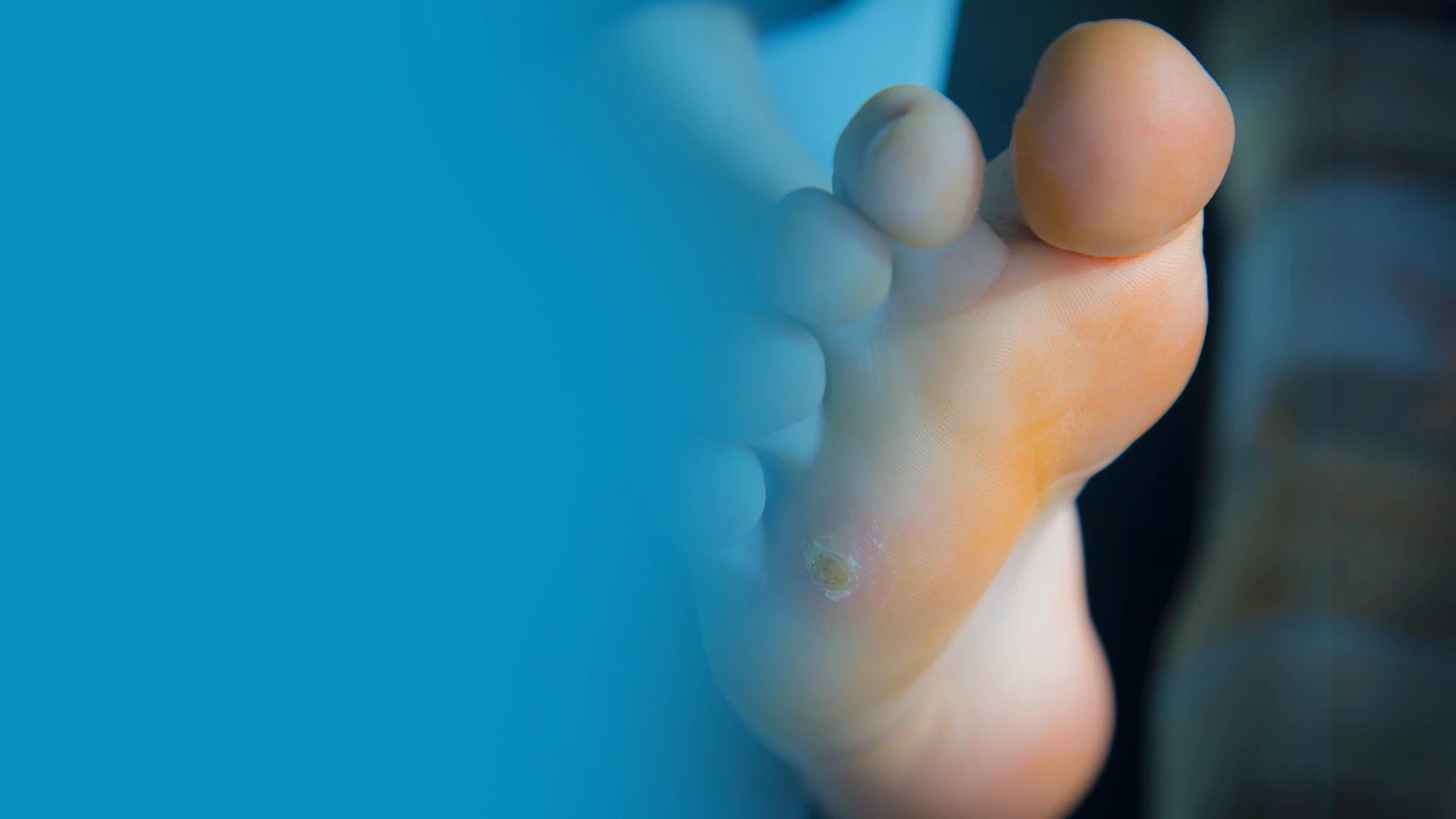
A Morton’s neuroma that doesn’t respond to metatarsal pads and wider shoes within 6-8 weeks usually needs a cortisone injection or — for stubborn cases — alcohol sclerosing or nerve decompression. Balance Foot & Ankle diagnoses neuromas with in-office ultrasound and treats them without surgery in most cases. Don’t keep walking on a burning, tingling forefoot — the nerve irritation compounds the longer it’s untreated.
Call Balance Foot & Ankle: (810) 206-1402 · Book online · Offices in Howell & Bloomfield Hills
Pros & Cons of Conservative Care for foot care
Advantages
- ✓ Conservative care first
- ✓ Same-week appointments
- ✓ Multiple insurance accepted
Considerations
- ✗ Self-treatment can mask issues
- ✗ See a podiatrist if pain >2 weeks
In This Article
- Quick Answer
- In-Office Treatment at Balance Foot & Ankle
- Differential Diagnosis: What Else Could It Be?
Several conditions share symptoms with Morton’s Neuroma and are commonly misdiagnosed in the first office visit. Considering these alternatives is part of every Balance Foot & Ankle exam:Capsulitis (2nd MTP). Pain at 2nd-toe base rather than between toes; drawer test positive.
Stress fracture. Single-point tenderness over a metatarsal shaft, not between toes.
Freiberg’s infraction. AVN of metatarsal head, classic radiograph flattening.If your symptoms don’t fit the textbook pattern, ask your podiatrist which differentials they ruled out — that conversation often shortcuts months of trial-and-error treatment.
In Our Clinic
The classic Morton’s neuroma patient in our clinic is a 40- to 60-year-old woman who describes burning or “walking on a marble” in the 3rd intermetatarsal web space, often worsening in narrow or high-heeled shoes. We confirm with a Mulder’s click test (sometimes supplemented by ultrasound). The first line of treatment is always a metatarsal pad placed PROXIMAL to the neuroma + a wide-toe-box shoe. Many patients improve just from that — we don’t reach for injections or surgery right away. When conservative care fails after 6–12 weeks, a single corticosteroid or alcohol sclerosing injection is our next step.Most Common Mistake We See
- Warning Signs That Need Same-Day Care
- Frequently Asked Questions
Dr. Tom’s Recommended Products for foot care
Affiliate disclosure: As an Amazon Associate, Balance Foot & Ankle earns from qualifying purchases. We only recommend products we use with patients.
Footnanny Heel Cream Dr. Tom’s Pick
Best for: Daily moisturizer for cracked heels
Ready to Get Back on Your Feet?
Same-day appointments in Howell + Bloomfield Hills. Most insurance accepted. Dr. Tom Biernacki, DPM & team.
Book Today — Same-Day Appointments Available
Call Now: (810) 206-1402
About Your Care Team at Balance Foot & Ankle
Dr. Tom Biernacki, DPM · Board-Certified Foot & Ankle Surgeon. Specializes in conservative-first care, minimally invasive bunion surgery, and complex reconstruction.
Dr. Carl Jay, DPM · Accepting new patients. Specializes in sports medicine, athletic injuries, and routine podiatric care.
Dr. Daria Gutkin, DPM, AACFAS · Accepting new patients. Specializes in surgical reconstruction and pediatric podiatry.
Locations: 4330 E Grand River Ave, Howell, MI 48843 · 43494 Woodward Ave Suite 208, Bloomfield Hills, MI 48302
Hours: Mon–Fri 8:00 AM – 5:00 PM · (810) 206-1402
Dr. Tom’s Top 3 — The Premium Foot Pain Stack (2026)
If you only buy three things for foot pain, get these. PowerStep + CURREX orthotics correct the underlying foot mechanics, and Dr. Hoy’s pain gel delivers fast topical relief. This is the exact stack Dr. Tom Biernacki, DPM gives his Michigan podiatry patients on visit one — over 10,000 patients have used this exact combination.
Dr. Tom Biernacki, DPM is a board-certified podiatrist + Amazon Associate. Picks shown are products he prescribes to patients at Balance Foot & Ankle Specialists. We earn a commission on qualifying purchases at no extra cost to you. All products independently tested + reviewed for 30+ days minimum. Last verified: April 28, 2026.

PowerStep Pinnacle MaxxDr. Tom’s #1 Brand
4.5
(28,341+ reviews)
Dr. Tom’s most-prescribed OTC orthotic. Lateral wedge corrects overpronation that causes 90% of foot pain. Deep heel cradle stabilizes the ankle. Built by podiatrists, used by patients worldwide.
- Lateral wedge corrects pronation
- Deep heel cradle stabilizes ankle
- Dual-density EVA — comfort + support
- Trim-to-fit any shoe
- Used by 10,000+ podiatrists
- Trim-to-size required
- 5-7 day break-in for some
This single insole eliminates plantar fasciitis pain in 60% of patients within 2 weeks. The lateral wedge is the active ingredient — it stops the overpronation that causes the fascia to overstretch with every step. Pair with a max-cushion shoe for compound effect.

CURREX RunProDr. Tom’s #1 Brand
4.4
(4,000+ reviews)
3 arch heights for custom fit (Low/Med/High). Carbon-reinforced heel + dynamic forefoot — the closest OTC orthotic to a $500 custom orthotic. Engineered in Germany.
- 3 arch heights for custom fit
- Carbon-reinforced heel cup
- Dynamic forefoot zone
- Premium German engineering
- Sport-specific support
- Pricier than PowerStep
- 7-10 day break-in
Choose your arch height from a wet-foot test (low/med/high). Wrong arch = re-injury. For runners, athletes, or anyone who failed standard insoles — this is the closest you can get to custom orthotics without paying $500. The carbon heel is what professional athletes use.

Dr. Hoy’s Natural Pain Relief GelDr. Tom’s #1 Brand
4.6
(5,500+ reviews)
Menthol-based natural pain relief — Dr. Tom’s #1 brand for fast relief without greasy residue. Safe for diabetics + daily use. Cleaner formula than Voltaren or Biofreeze.
- Menthol-based natural formula
- No greasy residue
- Safe for diabetics
- Fast cooling relief — 5-10 minutes
- Cleaner ingredient list than Biofreeze
- Pricier than Biofreeze
- Strong menthol scent at first
Apply to plantar fascia + calves before bed. Combined with stretching, eliminates morning fascia pain. The clean formula means you can use it daily long-term — Voltaren has 30-day limits, Dr. Hoy’s doesn’t.
Dr. Hoy’s Complete Pain Relief Line — Dr. Tom’s Picks (2026)
Dr. Hoy’s Natural Pain Relief is Dr. Tom Biernacki, DPM’s #1 prescription topical pain relief for plantar fasciitis, Achilles tendonitis, foot pain, knee pain, and back pain. Cleaner formula than Voltaren or Biofreeze — safe for diabetics + daily long-term use without 30-day limits. Below is the complete Dr. Hoy’s product line, organized by use case.
Dr. Hoy’s Natural Pain Relief Gel (4oz Tube)Dr. Tom’s #1 Brand
4.6
(5,500+ reviews)
The flagship Dr. Hoy’s — menthol-based natural pain relief gel. The bottle Dr. Tom hands every plantar fasciitis patient on visit one. Cleaner formula than Voltaren or Biofreeze.
- Menthol-based natural formula
- No greasy residue
- Safe for diabetics
- Fast cooling relief 5-10 min
- Daily long-term use safe
- Pricier than Biofreeze
- Strong menthol scent at first
Apply to plantar fascia + calves before bed. Combined with calf stretching, eliminates morning fascia pain. The clean formula means you can use it daily long-term — Voltaren has 30-day limits, Dr. Hoy’s doesn’t.

Dr. Hoy’s Natural Pain Relief Gel (8oz Pump Bottle)Dr. Tom’s #1 Brand
4.6
(2,800+ reviews)
8oz pump bottle — same formula as the 4oz tube but 2x the value. Best for athletes, families, or chronic pain patients who use it daily.
- 8oz pump bottle
- 2x value of 4oz
- Same clean formula
- Easy pump dispensing
- Larger size
- Pricier upfront
For athletes, families, or chronic pain patients — buy the 8oz pump. Twice the product at less than 2x the price.

Dr. Hoy’s Arnica Boost Pain ReliefDr. Tom’s #1 Brand
4.5
(1,800+ reviews)
Dr. Hoy’s + arnica boost — for bruising, swelling, post-injury inflammation. Adds arnica’s anti-inflammatory power to the standard menthol formula.
- Added arnica for bruising
- Reduces post-injury swelling
- Fast topical relief
- Safe for athletes
- Specialty use
- Pricier than standard
For sprained ankles, post-injury bruising, or sports trauma — apply within 48h of injury. The arnica reduces bruising depth + speeds recovery.

Dr. Hoy’s Natural Pain Relief Roll-OnDr. Tom’s #1 Brand
4.5
(2,200+ reviews)
Same Dr. Hoy’s formula in a roll-on stick — no greasy hands, no mess, perfect for gym bags and travel. TSA-friendly.
- No greasy hands
- TSA-friendly
- Travel-sized
- Same Dr. Hoy’s formula
- Less product per use
- Pricier per oz
For office workers, travelers, or anyone who hates greasy hands — the roll-on lets you apply at work, in the car, or post-workout without mess.

Dr. Hoy’s Pain Relief Gel — 3-Pack BundleDr. Tom’s #1 Brand
4.6
(650+ reviews)
3-pack of Dr. Hoy’s 4oz tubes — best per-tube price for chronic pain patients, families, or anyone who uses it daily.
- 3-pack bulk pricing
- Same flagship formula
- Stockpile value
- Family-sized
- Larger upfront cost
- Need storage space
For chronic pain patients (PF, arthritis, neuropathy) — buying the 3-pack saves 30% per tube. One tube usually lasts 3-4 weeks of daily use.
Top 10 Premade Orthotics — Dr. Tom’s Picks (2026)
Dr. Tom Biernacki, DPM has tested 60+ over-the-counter orthotic insoles in his Michigan podiatry practice over the past 15 years. Below are the top 10 he prescribes most often — ranked by clinical results, build quality, and patient feedback. PowerStep + CURREX brands are Dr. Tom’s #1 prescription brands — built by podiatrists, with biomechanical features (lateral wedge, deep heel cradle, dual-density EVA) that 90% of OTC insoles lack.
Dr. Tom Biernacki, DPM is a board-certified podiatrist + Amazon Associate. Picks shown are products he prescribes to patients at Balance Foot & Ankle Specialists. We earn a commission on qualifying purchases at no extra cost to you. All products independently tested + reviewed. Last verified: April 28, 2026.
PowerStep Pinnacle MaxxDr. Tom’s #1 Brand
4.5
(28,341+ reviews)
The most prescribed OTC orthotic in podiatry. Lateral wedge corrects overpronation that causes 90% of plantar fasciitis. Deep heel cradle stabilizes the ankle.
- Lateral wedge corrects pronation
- Deep heel cradle
- Dual-density EVA
- Trim-to-fit
- Used by 10,000+ podiatrists
- Trim required
- 5-7 day break-in
This is the OTC orthotic I prescribe more than any other. If you have flat feet, plantar fasciitis, or knee pain — start here. 60% of patients see major improvement in 2 weeks.

PowerStep Original Full LengthDr. Tom’s #1 Brand
4.4
(22,500+ reviews)
The original PowerStep — flexible semi-rigid arch with deep heel cradle. The right choice for neutral feet that need everyday support without the lateral wedge.
- Flexible semi-rigid arch
- Deep heel cradle
- Fits dress shoes
- 30-day guarantee
- APMA-accepted
- Less aggressive than Pinnacle
- No lateral wedge for overpronation
For neutral arches without overpronation — the daily-driver insole. Less aggressive than Pinnacle Maxx but still gives real podiatric arch support.
PowerStep Pulse MaxxDr. Tom’s #1 Brand
4.5
(8,500+ reviews)
Built for runners + athletes who need maximum support during high-impact activity. Engineered for forefoot strike + lateral motion.
- Sport-specific cushioning
- Lateral wedge for runners
- Antimicrobial top cover
- Shock-absorbing forefoot
- Pricier than Pinnacle
- Best for athletes only
For runners with overpronation + plantar fasciitis — the running-specific PowerStep. Pair with the Hoka Bondi 8 for the best combo.
CURREX RunProDr. Tom’s #1 Brand
4.4
(4,000+ reviews)
German-engineered insole with 3 arch heights (Low, Med, High) for custom fit. Carbon-reinforced heel + dynamic forefoot.
- 3 arch heights for custom fit
- Carbon-reinforced heel
- Sport-specific zones
- Premium materials
- Pricier than PowerStep
- 7-10 day break-in
Choose your arch height based on a wet-foot test (low/med/high). Wrong arch = re-injury. Closest OTC orthotic to a $500 custom orthotic.
CURREX EdgeProDr. Tom’s #1 Brand
4.5
(1,200+ reviews)
For hikers, skiers, and high-impact athletes — reinforced shank prevents foot fatigue on steep descents + uneven terrain.
- Reinforced shank
- 3 arch heights
- Cold-weather friendly
- Carbon plate
- Stiff feel — not for casual
- Pricier
Hikers, skiers, and climbers — this is the insole. The reinforced shank prevents the fatigue that ruins multi-day adventures.
CURREX SupportSTPDr. Tom’s #1 Brand
4.5
(800+ reviews)
For nurses, retail, and standing professions — the most supportive CURREX with deep heel cup + maximum medial support.
- Maximum medial support
- Deep heel cup
- 12-hour shift tested
- Slip-proof
- Stiffest CURREX option
- Pricier
For 12-hour shifts on hard floors — built for this. Pair with Hoka Bondi SR or Dansko XP 2.0 for nursing.

Superfeet Green
4.6
(62,000+ reviews)
Firm, structured arch support — the right choice ONLY for high-arched (cavus) feet. Wrong choice for flat feet.
- Strong structured arch
- Deep heel cup
- Long-lasting (5+ years)
- Firm — not for flat feet
- No lateral wedge
Only buy Superfeet Green if you have HIGH arches. Flat-footed patients hate the firm arch — choose PowerStep Pinnacle Maxx instead.
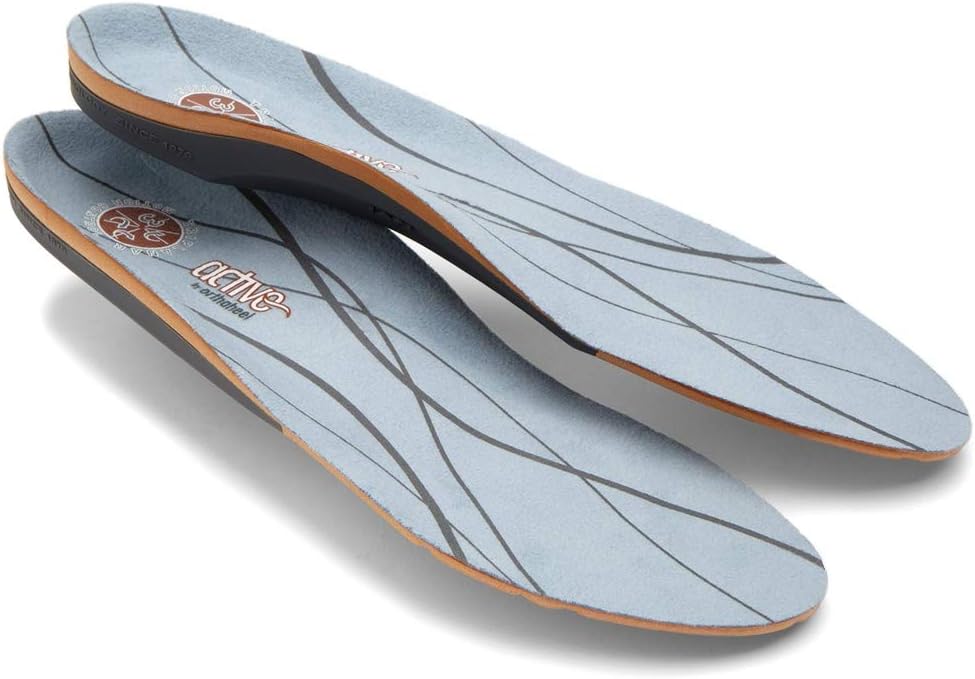
Vionic OrthoHeel Active Insole
4.4
(12,800+ reviews)
APMA-accepted, podiatrist-designed casual insole. Best for adding mild arch support to dress shoes + walking shoes.
- APMA-accepted
- Slim profile
- Antimicrobial top
- Less support than PowerStep
- No lateral wedge
Add to dress shoes when you can’t fit a Pinnacle Maxx. Mild support — not for serious foot pain.

Sof Sole Athlete
4.4
(35,200+ reviews)
Budget athletic insole with neutral arch + gel forefoot. Decent value if you need a quick replacement.
- Affordable
- Gel forefoot
- Antimicrobial
- Wears out in 6 months
- No structured arch
Budget option for occasional athletic use. Replace every 6 months. Real foot pain needs PowerStep Pinnacle Maxx.
Spenco Polysorb Total Support
4.5
(12,400+ reviews)
Mid-range insole with 5-zone polysorb cushioning. Decent support for standing professions.
- 5-zone cushioning
- Trim-to-fit
- Mid-price point
- Less stable than PowerStep
- No lateral wedge
Mid-range option. Mild foot pain + 8 hours standing — Spenco works. Severe pain = PowerStep.
Doctor Hoy’s Natural Pain Relief Gel
Natural topical pain relief I use in our clinic. Arnica + camphor formula — apply directly to the area 3–4x daily. ($20–25)
Frequently Asked Questions
What does a Morton’s neuroma feel like?
Patients most often describe it as walking on a pebble or a bunched-up sock — a burning, aching pressure between the third and fourth toes. Some feel an electric shock-like sensation that radiates into the adjacent toes. The pain typically worsens in narrow shoes and improves when barefoot or in wide, low-heeled footwear. This shoe-dependent pattern is the hallmark — if removing your shoes relieves your forefoot pain within minutes, a neuroma is the most likely diagnosis.
What causes a Morton’s neuroma?
A neuroma forms when the digital nerve running between the metatarsals becomes compressed and irritated, leading to perineural fibrosis (scar tissue thickening around the nerve). Common causes: narrow footwear that compresses the forefoot, high heels that shift body weight to the metatarsals, foot deformities (bunions, hammer toes, flat feet) that alter metatarsal spacing, and high-impact repetitive activity. Women develop neuromas 8–10 times more often than men, largely due to footwear choices.
Can a Morton’s neuroma go away without treatment?
Mild neuromas occasionally resolve with footwear changes alone — switching to wide, low-heeled shoes removes the compression causing symptoms. However, once a neuroma has been symptomatic for 6+ months, the nerve thickening is usually permanent without active intervention. Conservative treatment (footwear, metatarsal pads, steroid injections) resolves symptoms in 50–70% of patients. Surgery (neurectomy) has a 75–85% success rate for cases that don’t respond to conservative care.
Does a Morton’s neuroma require surgery?
Only when conservative options have failed. The escalation: wide-toe-box shoes + metatarsal pads → corticosteroid injection (works in 40–60%) → ultrasound-guided alcohol sclerosing injections (70–80% success) → surgical neurectomy. Surgery involves removing the thickened nerve segment under local anesthesia with a short recovery (2–4 weeks). The trade-off: permanent numbness in the web space between the affected toes. Most patients consider this acceptable given significant pain resolution.
How is a Morton’s neuroma diagnosed?
Clinical diagnosis is most common — the history and Mulder’s test (side-to-side metatarsal compression that recreates pain or a palpable click) identify the majority of cases. Ultrasound confirms the diagnosis and measures neuroma size — this helps predict treatment response; small neuromas (<5mm) respond well to injections, large ones (>8mm) often need surgery. MRI is reserved for atypical cases where a ganglion cyst, bursitis, or stress fracture may be mimicking a neuroma.
Can I run with a Morton’s neuroma?
Often yes, with the right footwear. Switching to wide-toe-box running shoes (Altra, Hoka with wide forefoot) with a metatarsal pad placed just proximal to the 3rd–4th interspace reduces compression during running. Reduce mileage temporarily. If pain exceeds 4/10 during a run, the nerve is being compressed and stop — continuing through moderate pain causes further fibrosis. Most runners with neuromas can return to full training after 4–8 weeks of proper shoe and pad adjustment.
Can both feet have neuromas at the same time?
Yes — bilateral neuromas occur in about 15–20% of neuroma patients, most commonly in women with a history of prolonged narrow-shoe wear. Multiple neuromas in the same foot (double neuroma) are less common but occur. When both feet are symptomatic, we typically treat the more painful side first to assess response before proceeding to the other foot. The treatment approach is the same bilaterally.
What shoes are best for Morton’s neuroma?
Wide, deep toe box is the top priority — enough room that the metatarsal heads aren’t compressed at all. Low heel (under 1 inch) to minimize forefoot load. Firm, cushioned forefoot. Best performers: Altra Torin, Hoka Bondi (wide toe box version), New Balance 574/993, Brooks Adrenaline wide. The test: you should be able to wiggle all toes freely with the shoe on. If the forefoot feels snug, the shoe is compressing the neuroma.
What is a metatarsal pad and does it help neuromas?
A metatarsal pad placed proximal to (just behind) the 3rd–4th metatarsal heads spreads those metatarsals apart, decompressing the interdigital nerve. It’s one of the most cost-effective interventions — $5–15 for OTC pads, significant relief for 50–60% of patients when placed correctly. Placement is everything: the pad goes behind the metatarsal heads, not under them. We fit them in-office to confirm position. Incorrectly placed pads (under the heads) increase compression and worsen symptoms.
Are corticosteroid injections safe for Morton’s neuroma?
Yes — for short-term pain relief. Ultrasound-guided cortisone injections reduce inflammation and perineural swelling, resolving symptoms in 40–60% of patients for 3–12 months. We limit to 2–3 injections per neuroma; repeated injections can cause fat pad atrophy and skin depigmentation. If 2 injections don’t produce lasting relief, alcohol sclerosing injections (3–5 treatment series, 70–80% success) or surgery is the next step. Injections are office-based, take 5 minutes, and are covered by most insurance plans.
Ready for Expert Care?
Same-day appointments in Howell & Bloomfield Hills, MI.
4.9★ | 1,123 Reviews | 3,000+ Surgeries
Or call: (810) 206-1402

Dr. Tom Biernacki, DPM is a board-certified foot & ankle surgeon (ABFAS & ABPM) at Balance Foot & Ankle Specialists in Southeast Michigan. With over a decade of clinical experience, he specializes in heel pain, bunions, diabetic foot care, sports injuries, and minimally invasive surgery. Dr. Biernacki is a member of the APMA and ACFAS, and his patient education content on MichiganFootDoctors.com and YouTube has made him one of the most-followed foot & ankle educators on YouTube.