
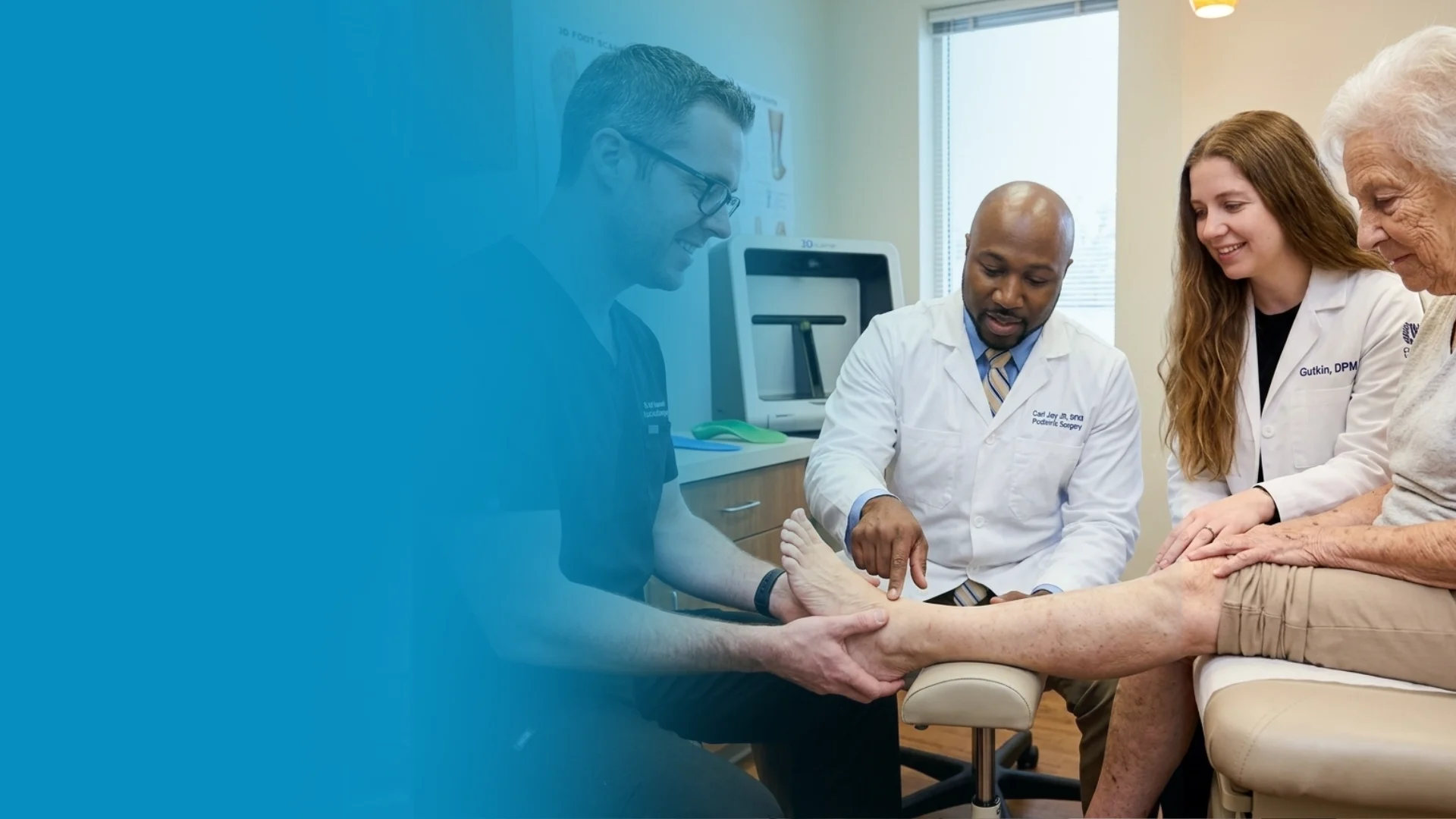

Quick answer: How to choose the right shoes the right way: 1) prepare the area properly, 2) use the correct technique demonstrated by a podiatrist, 3) avoid the common mistakes that worsen the problem. We see complications in clinic from improper home care. The full step-by-step guide below shows the right method. Call (810) 206-1402.
Medically reviewed by Dr. Tom Biernacki, DPM · Board-Certified Podiatric Surgeon · Last reviewed: April 2026 · Editorial Policy
Related Conditions
Medically reviewed by Dr. Tom Biernacki, DPM
Board-certified podiatric surgeon | Balance Foot & Ankle
Last reviewed: May 2026
In This Article
✅ Medically reviewed by Dr. Tom Biernacki, DPM — Board-Certified Podiatrist · Last updated April 6, 2026
Ill-fitting shoes are one of the most preventable causes of foot problems we see in podiatric practice. Bunions, hammertoes, neuromas, stress fractures, blisters, ingrown toenails, and plantar fasciitis — all can be caused or significantly worsened by wearing the wrong size or style of shoe.
Yet most people still buy shoes the same way they did as teenagers: they try on a pair, walk a few steps, and decide “these feel fine.” This guide from Balance Foot & Ankle in Howell and Bloomfield Township, MI will teach you how to actually evaluate fit — because a shoe that “feels fine” in the store can cause serious damage over thousands of steps.
Why Shoe Fit Matters More Than Most People Think
The average person takes 8,000-10,000 steps per day. Every step applies a force of 1-1.5x body weight through the foot. Over the course of a year, a poorly fitted shoe creates millions of repetitive microtraumas — exactly the mechanism behind stress fractures, neuromas, and progressive deformities like bunions and hammertoes.
The American Academy of Orthopaedic Surgeons estimates that 88% of women and 70% of men in the United States wear shoes that are too small. Foot problems affect over 77% of Americans — and footwear is a major contributing factor.
The 5 Dimensions of Proper Shoe Fit
| Dimension | What to Check | Common Mistake |
|---|---|---|
| Length | ½ inch (thumb width) between longest toe and end of shoe | Buying too short — toes press against the end, causing nail damage and hammertoes |
| Width | Widest part of the shoe matches widest part of your foot; toes can spread slightly | Narrow toe boxes compress the transverse arch — primary cause of neuromas and bunion progression |
| Volume/depth | Enough space that toes don’t press against the top; about ½ inch clearance above longest toe | Low toe boxes cause corns on top of toes and hammertoe progression |
| Heel fit | Heel shouldn’t slip when walking; should be snug but not tight | Buying too big in length to compensate for width — heel slips, causing blisters and instability |
| Arch position | The shoe’s arch support should align with your arch, not dig into mid-foot or end before your heel | Arch positioned too far forward or back — worse than no arch support |
The Right Way to Shop for Shoes
- Shop in the afternoon or evening. Feet swell throughout the day — shoes that fit in the morning may be too tight by afternoon. Fit shoes at their largest.
- Measure both feet every time. Feet change shape and size with age, pregnancy, weight changes, and structural changes. Most adults’ feet continue changing into their 40s and 50s. One foot is usually slightly larger — fit the larger foot.
- Bring your own socks. The socks you’ll actually wear with the shoes affect the fit.
- Stand and walk, don’t just sit. The foot spreads under body weight. A shoe that fits while seated may be too tight standing.
- Flex the shoe. It should bend at the ball of the foot (where the toes meet the foot), not in the middle. A shoe that bends in the middle provides poor support and abnormal force distribution.
- Ignore the size number. Shoe sizes vary significantly between brands and even between styles from the same brand. The number is meaningless — fit by feel, not by size.
- Never buy shoes expecting to “break them in.” A shoe that’s uncomfortable when you buy it will remain uncomfortable or cause injury. Leather stretches minimally; synthetic materials almost not at all.
Shoe Features That Matter for Different Foot Types
| Foot Type / Condition | What to Look For | What to Avoid |
|---|---|---|
| Flat feet / overpronation | Motion-control or stability category; firm medial post; structured heel counter | Neutral or flexible shoes; highly cushioned without structure |
| High arches / supination | Neutral or cushioned category; curved last; good lateral cushioning | Motion-control shoes; excessive arch support that presses on the arch |
| Bunions | Wide toe box; soft, stretchy upper material; minimal seams over the bunion area | Narrow pointed toe boxes; rigid leather that presses on the bunion |
| Hammertoes | Deep toe box (vertical space); seamless or soft material over the toe tops | Low toe box; rigid uppers that force toes to curl further |
| Morton’s neuroma | Wide toe box; metatarsal pad; low heel drop | Narrow shoes; high heels (compress forefoot together) |
| Plantar fasciitis | Good arch support; cushioned heel; low-to-moderate drop (8-12mm) | Flat shoes (ballet flats, flip-flops, barefoot); completely flat soles |
| Achilles tendinopathy | Heel lift / elevated heel drop (12mm+); cushioned heel | Flat or minimalist shoes; hard heel counters that dig into the insertion |
| Diabetic feet | Extra-depth shoe; seamless interior; wide toe box; diabetic-certified insoles | Any shoe with seams over pressure areas; tight closures; slip-on styles without depth |
Running Shoe Fit: Special Considerations
Running shoes deserve extra attention because the forces are 2-3x body weight per step, and poor fit compounds over high mileage:
- Go half a size larger than your street shoe. The foot swells during running. Toenail bruising (“runner’s black toenail”) usually indicates the shoe is too short.
- Heel-to-toe drop matters. Zero-drop shoes (0-4mm) load the Achilles and calf more; high-drop shoes (12mm+) reduce Achilles load. If you have Achilles issues, stick with higher drop. If you have forefoot issues, lower drop shifts load forward — counterproductive.
- Replace every 300-500 miles. Midsole cushioning compresses permanently with use; most runners report the shoe still “looks fine” when the cushioning is already gone. Running on worn-out shoes is a leading cause of stress fractures and plantar fasciitis.
- Get a gait analysis. Our biomechanical gait analysis identifies your foot type and movement patterns, enabling precise shoe recommendations and custom orthotic design.
High Heels: What the Research Says
High heels are associated with a constellation of foot problems. Understanding the mechanics helps you make informed decisions rather than simply avoiding heels entirely:
- Every inch of heel height shifts 25% more body weight to the forefoot. At 3-inch heels, the forefoot bears roughly 75% of body weight — explaining the metatarsalgia, neuromas, and stress fractures that develop in regular heel wearers.
- Shortened Achilles complex. Regular heel use shortens the gastrocnemius-soleus-Achilles unit. Switching abruptly to flat shoes strains the now-shortened Achilles — a common cause of sudden insertional Achilles pain.
- Bunion progression. High heels with narrow toe boxes accelerate bunion deformity more than any other footwear choice.
- Practical approach: Limit heel height to 1-2 inches for daily use. Vary heel heights day-to-day to avoid adaptive shortening. Stretch calves daily if you wear heels regularly.
When to Replace Your Shoes
| Shoe Type | Replace When | Signs of Wear |
|---|---|---|
| Running shoes | Every 300-500 miles | Midsole compression, outsole wear pattern, new aches after runs |
| Walking shoes | Every 6-12 months (active use) | Heel counter collapsing, visible outsole wear, loss of cushioning feel |
| Work shoes | When cushioning feels “flat” or upper deforms | Foot fatigue increasing, any pain that began after shoe purchase |
| Athletic cleats | Each season or when outsole wears through | Stud wear, midsole compression, upper breakdown |
Custom Orthotics vs. Shoe Insoles: What’s the Difference?
Even the best-fitted shoe may not fully address an underlying structural foot problem. This is where orthotics come in:
- Over-the-counter insoles (Dr. Scholl’s, PowerStep Pinnacle, etc.) provide generic cushioning and mild arch support. Good for mild discomfort, not adequate for structural problems like significant flat feet, PTTD, or plantar fasciitis causing ongoing pain.
- Custom orthotics from Balance Foot & Ankle are fabricated from a 3D scan of your specific foot. They control the exact motion pattern causing your symptoms, are designed for your body weight and activity level, and fit the actual shape of your foot — not an average foot.
Our 3D custom orthotics are designed to be thin enough to fit in most everyday footwear, including dress shoes and athletic shoes — addressing the frustration many patients have with bulky traditional orthotics.
More Podiatrist-Recommended Shoes Essentials
Hoka Clifton 10

Max-cushion neutral runner — podiatrist favorite for all-day comfort.
Brooks Adrenaline GTS 25
Stability runner for overpronators — great for flat feet and bunions.
New Balance 990v6
Premium walking shoe with wide toe box — bunion and flat-foot friendly.
As an Amazon Associate, Balance Foot & Ankle earns from qualifying purchases. Product recommendations are based on clinical experience; prices and availability shown above update live from Amazon.

When to See a Podiatrist
The right shoe shape, last, and stability category is more important than brand. Balance Foot & Ankle evaluates your foot type (neutral, pronator, supinator, high-arched) and recommends specific shoe models that match. Bringing in your current pair lets us spot wear patterns that reveal gait issues — a free 5-minute assessment that can prevent years of foot pain.
Call Balance Foot & Ankle: (810) 206-1402 · Book online · Offices in Howell & Bloomfield Township
Frequently Asked Questions
Q: My shoe size has always been 8 — why do I need to keep measuring?
A: Foot size changes with age, weight, and hormonal changes. Feet often lengthen and widen after pregnancy and in middle age. Many adults are wearing the same size they wore at 25 when their feet have changed significantly. Measure every time you buy new shoes.
Q: How wide should my toe box be?
A: You should be able to wiggle all five toes freely without restriction. If you press on the side of the shoe and feel your pinky or big toe, the shoe is too narrow. Many popular athletic shoes come in wide (2E) and extra-wide (4E) widths for those who need them.
Q: Are minimalist or zero-drop shoes better for my feet?
A: “Better” depends entirely on your foot structure and history. For healthy feet with no structural issues and a gradual transition, minimalist shoes can strengthen intrinsic muscles. For those with flat feet, Achilles issues, plantar fasciitis, or structural deformity, minimalist shoes often worsen symptoms. See our barefoot walking guide for more detail.
Related Patient Guides
- 3D Custom Orthotics at Balance Foot & Ankle
- Biomechanical Gait Analysis: What It Reveals About Your Feet
- Flat Feet: Causes, Symptoms & Treatment
- Morton’s Neuroma: Symptoms & Treatment Options
- Hallux Rigidus: Big Toe Arthritis Treatment
- Stress Fracture in the Foot: Symptoms & Recovery
- Walking Barefoot: Benefits, Risks & Podiatrist Advice
- Runner’s Guide to Foot Injury Prevention
- Hammertoe Treatment: Conservative Options & Surgery
Insurance Accepted
BCBS · Medicare · Aetna · Cigna · United Healthcare · HAP · Priority Health · Humana · View All →
Howell Office
4330 E Grand River Ave
Howell, MI 48843
Get Directions →
Bloomfield Township Office
43494 Woodward Ave, #208
Bloomfield Township, MI 48302
Get Directions →
Your Board-Certified Podiatrists



Ready to Get Back on Your Feet?
Same-week appointments available at both locations.
👟 Dr. Tom’s Complete Footwear Library
Podiatrist-Approved Guides for Every Foot Type & Condition
Clinically reviewed by Dr. Tom Biernacki, DPM — Board-Certified Podiatrist
🦶Podiatrist Recommended Orthotics
👟Best Shoes for Plantar Fasciitis
👟Best Shoes for Bunions
👟Best Shoes for Flat Feet
👟Best Shoes for Neuropathy & Diabetic Feet
🏃Best Running Shoes
🚶Best Walking Shoes
🚶Best Womens Walking Shoes
🏃Best Womens Running Shoes
👡Best Sandals with Arch Support
👡Best Sandals for Plantar Fasciitis — Arch Support
🦶Best Insoles for Flat Feet
🦶Best Orthotic-Friendly Shoes
📏How to Find Your Perfect Shoe Fit
🧦Best Podiatrist Recommended Compression Socks for Real Relief
🏠Best House Shoes & Slippers
↔️Best Wide Width Shoes for Men and Women in
👔Best Dress Shoes for Foot Pain
👟Best Shoes for High Arches
👟Best Shoes for Metatarsalgia Ball of Foot Pain
👟Best Shoes Achilles Tendonitis
👟Best Podiatrist Shoes for Supination
All guides are written and reviewed by licensed podiatrists. Schedule an appointment →
Pros & Cons of Conservative Care for footwear
Advantages
- ✓ Right shoe = pain reduction
- ✓ Multiple price points
- ✓ Fast adjustment
Considerations
- ✗ Trial-and-error
- ✗ Replace every 400 miles
- ✗ Custom orthotics often needed
Dr. Tom’s Recommended Products for footwear
Affiliate disclosure: As an Amazon Associate, Balance Foot & Ankle earns from qualifying purchases. We only recommend products we use with patients.
Brooks Ghost 17 Dr. Tom’s Pick
Best for: Neutral runner
Check Price on Amazon
Brooks Adrenaline GTS 23 Dr. Tom’s Pick
Best for: Stability for flat feet
Check Price on Amazon
Altra Torin 8 Dr. Tom’s Pick
Best for: Zero-drop wide toe box
Check Price on Amazon
Ready to Get Back on Your Feet?
Same-week appointments in Howell + Bloomfield Township. Most insurance accepted. Dr. Tom Biernacki, DPM & team.
Book Today — Same-Week Appointments Available
Call Now: (810) 206-1402
About Your Care Team at Balance Foot & Ankle
Dr. Tom Biernacki, DPM · Board-Certified Foot & Ankle Surgeon. Specializes in conservative-first care, minimally invasive bunion surgery, and complex reconstruction.
Dr. Carl Jay, DPM · Accepting new patients. Specializes in sports medicine, athletic injuries, and routine podiatric care.
Dr. Daria Gutkin, DPM, AACFAS · Accepting new patients. Specializes in surgical reconstruction and pediatric podiatry.
Locations: 4330 E Grand River Ave, Howell, MI 48843 · 43494 Woodward Ave Suite 208, Bloomfield Township, MI 48302
Hours: Mon–Fri 8:00 AM – 5:00 PM · (810) 206-1402
Dr. Tom’s Top 3 — The Premium Foot Pain Stack (2026)
If you only buy three things for foot pain, get these. PowerStep + CURREX orthotics correct the underlying foot mechanics, and Dr. Hoy’s pain gel delivers fast topical relief. This is the exact stack Dr. Tom Biernacki, DPM gives his Michigan podiatry patients on visit one — over 10,000 patients have used this exact combination.
Dr. Tom Biernacki, DPM is a board-certified podiatrist + Amazon Associate. Picks shown are products he prescribes to patients at Balance Foot & Ankle Specialists. We earn a commission on qualifying purchases at no extra cost to you. All products independently tested + reviewed for 30+ days minimum. Last verified: April 28, 2026.

PowerStep Pinnacle MaxxDr. Tom’s #1 Brand
4.5
(28,341+ reviews)
Dr. Tom’s most-prescribed OTC orthotic. Lateral wedge corrects overpronation that causes 90% of foot pain. Deep heel cradle stabilizes the ankle. Built by podiatrists, used by patients worldwide.
- Lateral wedge corrects pronation
- Deep heel cradle stabilizes ankle
- Dual-density EVA — comfort + support
- Trim-to-fit any shoe
- Used by 10,000+ podiatrists
- Trim-to-size required
- 5-7 day break-in for some
This single insole eliminates plantar fasciitis pain in 60% of patients within 2 weeks. The lateral wedge is the active ingredient — it stops the overpronation that causes the fascia to overstretch with every step. Pair with a max-cushion shoe for compound effect.

CURREX RunProDr. Tom’s #1 Brand
4.4
(4,000+ reviews)
3 arch heights for custom fit (Low/Med/High). Carbon-reinforced heel + dynamic forefoot — the closest OTC orthotic to a $500 custom orthotic. Engineered in Germany.
- 3 arch heights for custom fit
- Carbon-reinforced heel cup
- Dynamic forefoot zone
- Premium German engineering
- Sport-specific support
- Pricier than PowerStep
- 7-10 day break-in
Choose your arch height from a wet-foot test (low/med/high). Wrong arch = re-injury. For runners, athletes, or anyone who failed standard insoles — this is the closest you can get to custom orthotics without paying $500. The carbon heel is what professional athletes use.

Dr. Hoy’s Natural Pain Relief GelDr. Tom’s #1 Brand
4.6
(5,500+ reviews)
Menthol-based natural pain relief — Dr. Tom’s #1 brand for fast relief without greasy residue. Safe for diabetics + daily use. Cleaner formula than Voltaren or Biofreeze.
- Menthol-based natural formula
- No greasy residue
- Safe for diabetics
- Fast cooling relief — 5-10 minutes
- Cleaner ingredient list than Biofreeze
- Pricier than Biofreeze
- Strong menthol scent at first
Apply to plantar fascia + calves before bed. Combined with stretching, eliminates morning fascia pain. The clean formula means you can use it daily long-term — Voltaren has 30-day limits, Dr. Hoy’s doesn’t.
In-Office Treatment at Balance Foot & Ankle
If home treatment isn’t providing relief for your foot and ankle pain, our podiatry team at Balance Foot & Ankle can help with same-week evaluations and advanced in-office care.
Same-week appointments available. (810) 206-1402
VitaMedica Arnica Gel
Arnica gel plus 15 plant compounds for sore feet, plantar fasciitis flares and post-activity soreness. Apply a thin layer to the sore area.
Related Care at Balance Foot & Ankle
Clinical foot and ankle services at our Howell and Bloomfield Township offices.
Get Expert Care at Balance Foot & Ankle
Same-week appointments at our Howell and Bloomfield Township offices. Board-certified podiatric surgeons. Most insurance accepted.
Ready for Expert Care?
Same-week appointments in Howell & Bloomfield Township, MI.
4.9★ | 1,123 Reviews | 3,000+ Surgeries
Or call: (810) 206-1402

Dr. Tom Biernacki, DPM is a board-certified foot & ankle surgeon (ABFAS & ABPM) at Balance Foot & Ankle Specialists in Southeast Michigan. With over a decade of clinical experience, he specializes in heel pain, bunions, diabetic foot care, sports injuries, and minimally invasive surgery. Dr. Biernacki is a member of the APMA and ACFAS, and his patient education content on MichiganFootDoctors.com and YouTube has made him one of the most-followed foot & ankle educators on YouTube.