
Medically reviewed by Dr. Tom Biernacki, DPM
Board-certified podiatric surgeon | Balance Foot & Ankle
Last reviewed: May 2026

Quick answer: Muscle Pain Back Ankle has multiple potential causes including mechanical, neurological, vascular, and inflammatory. The patterns we see most often are overuse, poorly-fitted shoes, and biomechanical imbalance. Red flags requiring urgent evaluation: warmth/redness (infection), inability to bear weight (fracture), and unilateral swelling without injury (DVT). Call (810) 206-1402.
>
Muscle Pain in the Back of the Ankle [Best Achilles Tendonitis Treatment]
Do You Have Muscle Pain in the Back of the Ankle from Achilles Tendinitis? We show you the 100% best way to take care of this pain immediately!
What is Achilles Tendonitis:
- Achilles tendinitis is the most common cause of muscle pain around the back of the ankle and it is focused primarily in the region 2-6 cm above the back of the heel bone where it inserts.
- The Achilles tendon is the largest tendon in the body and it must be because it supports all of your body weight when it flexes; it must absorb all the stress of jumping and running, but it too can be overworked and fatigued.
- Tendinitis refers to the inflammation of the tendon which is the body’s response to injury and it is an attempt to remodel itself. Unfortunately this process leads to swelling, pain and constant irritation of the tissue that is involved.
Causes:
- Achilles tendinitis is not due to any specific injury or disease, but simply the results of repetitive overworking of the tendon.
- Overworking can drastically be increased by poor biomechanics induced by previous injury or from a factor such as being overweight.
Factors that put you at risk:
- Put stress on your body that it is not used to: this is the weekend warrior or someone who exercises really hard after sitting on the couch for the last 4 months.
- Having very tight calf muscles: If you have trouble getting anywhere near your toes this may be you!
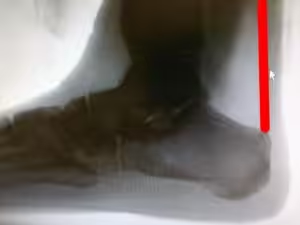
- Calcification of the the achilles tendon at the insertion: can you feel some unusually bone formation at the back of your heel?

Similar Injuries which are possible:
1) Achilles Tendon Rupture:
- If there is a palpable gap or swollen area in the back of your heel after a high impact injury such as a basketball fall or falling off a ladder, you should consider a partial rupture or a full rupture of the achilles tendon rather than just a fall.

2) Haglund’s Deformity or “Bone Bump” at the Back of the Heel:
- If the pain appears more quickly and you can physically feel a bump on the back of your foot then suspect that you have:

3) Plantar Fasciitis:
- It is also possible that you may have a condition known as plantar fasciitis if the pain is present more in your foot and underneath your heel rather than at the back of your heel.

4) Neurologic, Traumatic or Other Pain:
- These would need a podiatrist to evaluate them.

Achilles Tendonitis Symptoms:
- Long lasting pain.
- Pain that onsets gradually over weeks or months rather then immediately (otherwise consider one of the other conditions).
- Pain at the back of your heel especially wearing shoes.
- No pain while wearing comfortable shoes at the back of her heel.
- Inflamed red hot and swollen area.
- Elevated boney eminence.
X-ray:
- Erosions or spurring at the achilles tendon insertion
- Calcification within the tendon
- Increase in soft tissue density around the achilles tendon insertion
Related Treatment Guides
- Sports Foot & Ankle Injury Treatment
- Achilles Tendinopathy Treatment
- Plantar Fasciitis & Heel Pain Treatment
- Custom 3D Orthotics
Experiencing Muscle Pain Behind Your Ankle?
Pain at the back of the ankle can involve the Achilles tendon, peroneal tendons, or posterior tibial tendon. Our podiatrists identify the exact structure causing your pain and provide targeted treatment.
📞 Or call us directly: (810) 206-1402
Clinical References
- Schepsis AA, Jones H, Haas AL. Achilles tendon disorders in athletes. American Journal of Sports Medicine. 2002;30(2):287-305.
- Ross MH, Smith MD, Mellor R, Vicenzino B. Exercise for posterior tibial tendon dysfunction: a systematic review of randomised clinical trials and clinical guidelines. BMJ Open Sport and Exercise Medicine. 2018;4(1):e000430.
- Heckman DS, Reddy S, Pedowitz D, et al. Operative treatment for peroneal tendon disorders. Journal of Bone and Joint Surgery. 2008;90(2):404-418.
Podiatrist-Recommended Products
🏆 Doctor Hoy’s Natural Pain Relief Gel — Our top recommendation for reducing foot pain and inflammation naturally.
PowerStep Pinnacle Orthotic Insoles — Reduces mechanical stress on foot structures. Physician-grade arch support.
CURREX Support Insoles — Dynamic arch support in low, medium, and high profiles.
In-Office Treatment at Balance Foot & Ankle
If home treatment isn’t providing relief for your foot and ankle conditions, our podiatry team at Balance Foot & Ankle can help with same-week evaluations and advanced in-office care.
Frequently Asked Questions
When should I see a doctor?
See a podiatrist if pain persists past 2 weeks, prevents normal activity, or is accompanied by red-flag symptoms (warmth, swelling, numbness, inability to bear weight).
Can I treat this at home?
Mild cases respond to RICE protocol (rest, ice, compression, elevation), supportive shoes, and OTC anti-inflammatories. Persistent symptoms need professional evaluation.
How long does it take to heal?
Most soft tissue injuries resolve in 2-6 weeks with appropriate care. Bone injuries take 6-12 weeks. Chronic conditions need longer-term management.

Dr. Tom Biernacki, DPM is a board-certified foot & ankle surgeon (ABFAS & ABPM) at Balance Foot & Ankle Specialists in Southeast Michigan. With over a decade of clinical experience, he specializes in heel pain, bunions, diabetic foot care, sports injuries, and minimally invasive surgery. Dr. Biernacki is a member of the APMA and ACFAS, and his patient education content on MichiganFootDoctors.com and YouTube has made him one of the most-followed foot & ankle educators on YouTube.
More questions patients ask
What causes muscle pain at the back of the ankle?
Muscle pain behind the ankle is typically caused by Achilles tendonitis, gastrocnemius or soleus muscle strain, posterior ankle impingement, or flexor hallucis longus tendonitis. Tight calf muscles and sudden increases in activity are the most common triggers.
How do I treat muscle pain behind my ankle?
RICE protocol (rest, ice, compression, elevation), gentle calf stretching, heel lifts, and anti-inflammatory medication. Doctor Hoy's Natural Pain Relief gel provides topical relief for the Achilles and calf area. Gradually return to activity once pain-free.
When should I worry about pain behind my ankle?
Seek immediate care if you feel a sudden pop followed by weakness (possible Achilles rupture), can't point your toes, or have significant swelling. See a podiatrist if chronic pain doesn't improve within 2 weeks of rest and home treatment.
Still have a question about coverage or cost? Book online and we will check your benefits before your visit: Book in Howell · Book in Bloomfield Township. Prefer to talk it through first? Call (810) 206-1402.