

The most important clinical decision with Neuropathy Relief Kit 2 isn’t which treatment to start with — it’s identifying the correct subtype. That changes everything. Call (810) 206-1402.
Dr. Tom’s Top Foot Health Supplements
Medically reviewed by Dr. Tom Biernacki, DPM
Board-certified podiatric surgeon | Balance Foot & Ankle
Last reviewed: May 2026
Affiliate disclosure: Amazon Associate. Always discuss supplements with your physician before starting.
Vitamin B12 Methylcobalamin
Neuropathy support · Nerve repair
PROS
- Active B12 form
- Sublingual absorption
- Neuropathy adjunct
CONS
- Effects take 2-3 months
- Doesn’t replace medical care
Alpha Lipoic Acid 600mg
Diabetic neuropathy · Nerve antioxidant
PROS
- Peer-reviewed for neuropathy
- Both fat- and water-soluble
- Clinical doses available
CONS
- Possible blood sugar effect
- GI upset possible
Acetyl-L-Carnitine (ALCAR)
Diabetic neuropathy · Energy
PROS
- Crosses blood-brain barrier
- Studied for nerve repair
- Pairs with ALA
CONS
- Effects gradual (3+ months)
- Higher cost
Vitamin D3 5000 IU
Bone health · Stress fracture prevention
PROS
- Improves bone density
- Most patients deficient
- Affordable preventive
CONS
- Get blood test first
- Toxicity at very high doses
Medically reviewed by Dr. Tom Biernacki, DPM · Board-Certified Podiatric Surgeon · Last reviewed: April 2026 · Editorial Policy
Related Conditions
Quick Answer
Curex Insoles Review: Custom-Feel Orthotics Without the Cust relates to foot neuropathy — typically caused by nerve compression or systemic. Most patients improve in varies by cause with conservative care. Same-week appointments in Howell + Bloomfield Hills: (810) 206-1402.
Medically reviewed by Dr. Tom Biernacki, DPM — Board-certified foot & ankle surgeon, 3,000+ surgeries performed. Updated April 2026 with current clinical evidence. This article reflects real practice experience from Balance Foot & Ankle Specialists in Howell and Bloomfield Hills, Michigan.
Quick Answer
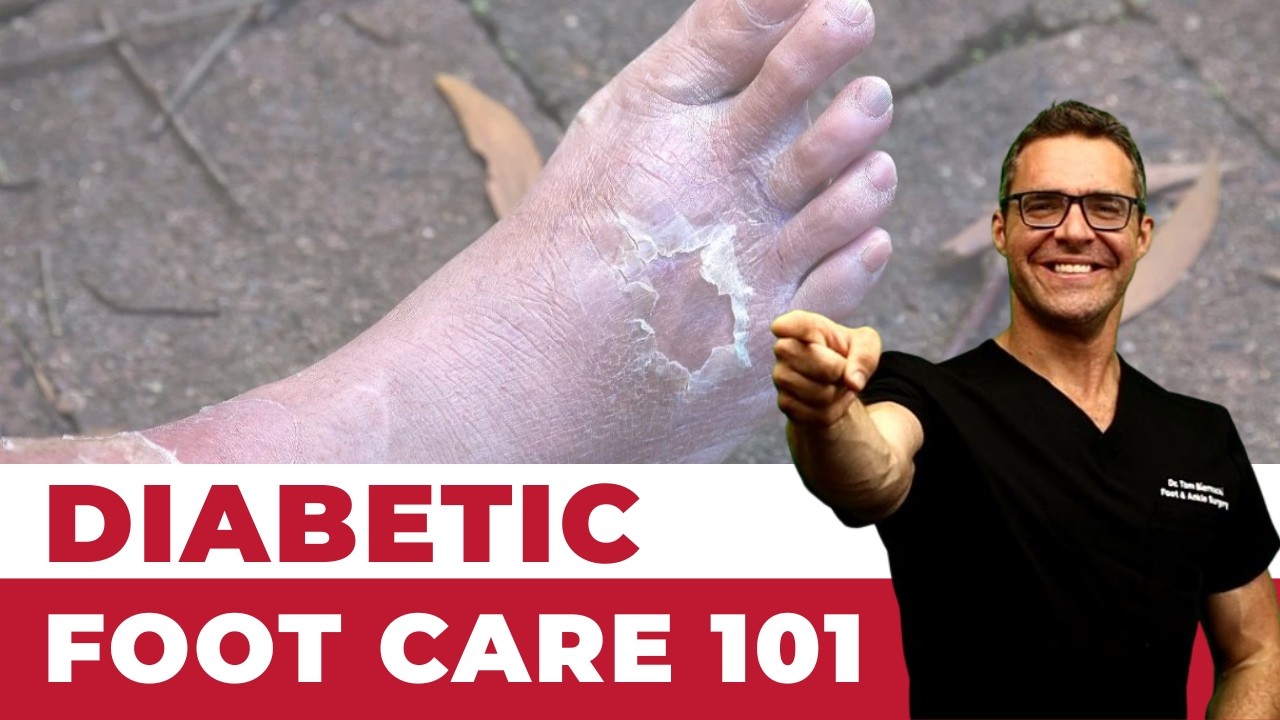
Diabetic peripheral neuropathy is nerve damage from prolonged hyperglycaemia, causing burning, tingling, numbness, or loss of protective sensation in the feet. It will not reverse without addressing glucose control. Daily foot checks, proper footwear, and annual monofilament testing prevent ulceration.
Watch: Dr. Tom Biernacki, DPM
Curex Insoles Review: Custom-Feel Orthotics Without the Custom Price
Curex has built a reputation in the running and active community for insoles that feel custom-fitted without requiring a podiatry appointment. After recommending Curex to patients over the past several years, here’s my honest review of the full product line — including where Curex excels and where you should choose something else.
— Dr. Tom Biernacki, Board-Certified Podiatrist, Balance Foot & Ankle Specialists
What Makes Curex Different?
Curex uses a proprietary adaptive arch design that responds to the dynamic forces of movement — not just static standing. Most OTC insoles are designed for standing still. Curex insoles are designed for movement: running, hiking, working on your feet.
Three arch height options (Low, Medium, High) allow a level of customization not available in most OTC lines. And the slim, flexible construction fits in running shoes and athletic footwear where rigid insoles would feel too stiff or too thick. [AFFILIATE LINK — Curex Insoles]
The Curex Product Line
Curex RunPro — Best for Runners
The RunPro is Curex’s flagship product and the most popular model. It’s designed specifically for running gait — the rapid heel strike, midfoot loading, and toe push-off that walking insoles aren’t optimized for. The thin, flexible construction doesn’t interfere with the shoe’s natural flex zone, and the responsive arch provides support during midstance when pronation forces peak.
Best for: Runners with plantar fasciitis, mild flat feet, or general arch fatigue during running. Also excellent for trail running, where adaptive flex matters more than rigid correction.
Compared to PowerStep Pinnacle PULSE: RunPro wins on flexibility and feel; PULSE wins on structured motion control. For patients with significant overpronation during running, PULSE may provide more correction. For runners who want natural feel with support, RunPro is preferred.
[AFFILIATE LINK — Curex RunPro]
Curex WorkPro — Best for On-Your-Feet Professions
The WorkPro is designed for workers who stand, walk, and move on hard floors for 8–12 hour shifts. It provides more cushioning than the RunPro while maintaining the adaptive arch support. Healthcare workers, teachers, retail employees, and factory workers are the target users.
Best for: Nurses, warehouse workers, restaurant staff, teachers — anyone on hard floors all day who needs both support and cushioning.
Compared to PowerStep Pinnacle: Both are excellent for standing professions. PowerStep Pinnacle has a firmer arch shell for more structural correction; WorkPro has more adaptive cushioning and is more comfortable in lighter footwear. For significant flat feet correction, PowerStep Pinnacle is more corrective. For comfort-focused all-day use in well-cushioned shoes, WorkPro is excellent.
[AFFILIATE LINK — Curex WorkPro]
Curex HikePro — Best for Hiking and Backpacking
The HikePro is built for the specific demands of hiking footwear: rigid hiking boots that need an insole that fills the boot’s internal volume, uneven terrain that demands dynamic arch response, and multi-hour use where cushioning fatigue matters. The HikePro has the most cushioning depth of the Curex line.
Michigan angle: If you’re hiking Pictured Rocks, the Pinckney Recreation Area, or the Pere Marquette Rail Trail — the HikePro provides the arch support that prevents plantar fasciitis from developing on long day hikes.
[AFFILIATE LINK — Curex HikePro]
Curex EditorsPick — Best for Everyday Versatility
The EditorsPick is Curex’s general-use model — not as running-specific as the RunPro, not as cushioned as the WorkPro, but a well-rounded everyday insole that works in casual shoes, light athletic shoes, and everyday footwear.
[AFFILIATE LINK — Curex EditorsPick]
Curex Comparison Table
| Model | Best Activity | Cushion Level | Profile | Dr. Rating |
|---|---|---|---|---|
| RunPro | Running, trail running | Moderate | Thin, flexible | 9.5/10 ⭐ |
| WorkPro | Standing jobs, hard floors | High | Medium thickness | 9/10 |
| HikePro | Hiking, backpacking | Maximum | Thicker, boot-filling | 9/10 |
| EditorsPick | Everyday casual use | Moderate | Versatile | 8.5/10 |
Curex Arch Heights — Choosing Low, Medium, or High
Every Curex model comes in three arch heights: Low, Medium, and High. This is a significant advantage over most OTC insoles that offer only one arch profile. Here’s how to choose:
- Low arch: For patients with flat feet or very low arches who find standard arch profiles uncomfortable. Provides support without excessive lift.
- Medium arch: For patients with neutral feet or mild overpronation. The most popular choice for runners with average arch height.
- High arch: For patients with high arches (pes cavus) who need a taller arch profile that meets the foot where it is.
If you’re unsure, a quick wet foot test (wet your foot and step on a piece of paper) will show your arch impression: a full footprint = low arch, a partial footprint = medium arch, a very thin strip connecting heel to ball = high arch.
Curex vs. PowerStep Pinnacle: The Honest Comparison
Both PowerStep Pinnacle and Curex are recommended brand partners at our practice — because they’re genuinely both excellent products for different needs:
| Factor | Curex Wins | PowerStep Pinnacle Wins |
|---|---|---|
| Running performance | ✓ Adaptive flex for running gait | — |
| Flat feet correction | — | ✓ Firmer arch shell for structural correction |
| Arch height customization | ✓ Low/Medium/High options | — |
| Dress shoe fit | — | ✓ Pinnacle 3/4 specifically designed for dress shoes |
| Hiking boots | ✓ HikePro built for boot volume | — |
| Product line breadth | — | ✓ 8+ models for every shoe type |
Full head-to-head: PowerStep Pinnacle vs Curex — A Podiatrist Decides
Who Is Curex Best For?
- Runners who find rigid OTC insoles too stiff or uncomfortable
- Hikers needing insoles specifically designed for boot volume
- Healthcare workers, teachers, and warehouse workers on hard floors all day (WorkPro)
- Patients who’ve tried one-size-fits-all OTC insoles and need more customized arch height selection
- Active patients who want support during dynamic activity, not just standing
More Podiatrist-Recommended Diabetic Essentials
Diabetic-Approved Walking Shoe

Orthofeet Men’s Sprint Walking Shoe, Athletic
- Tie-Less Lacing System eliminates the need to tie laces. Heel strap enables to adjust the grip around the heel. Cushioning sole with a mild Rocker adds spring to your step. Soft, padded fabric interior with no overlays eliminates irritation.
Orthofeet Sprint — seamless, extra-depth, designed for neuropathic feet.
Seamless Diabetic Sock

OS1st FS4 Plantar Fasciitis No Show Socks relieves plantar fasciitis, heel/arch pain and improves circulation
- Provides continuous support of the Plantar Fascia by gently stretching the fascia tissue.
- Compression zones promote circulation, reduce impact vibration, boost recovery and strengthen feet.
- Lightweight, seamless design with extra cushioning provides support while still being comfortable.
- Supports the heel/arch and overall foot structure while stabilizing the tendon for better performance
- Made from high quality materials, the socks are moisture wicking and breathable.
OS1st FS4 — non-binding, moisture-wicking, protects fragile diabetic skin.
Recovery Slide for Indoor Wear

HOKA – Unisex Ora Recovery Slide 3 | Recovery Sandal – Running Lab
- Model ID: 1135061-BTRT
HOKA Ora 3 — protects diabetic feet from barefoot injury at home.
As an Amazon Associate, Balance Foot & Ankle earns from qualifying purchases. Product recommendations are based on clinical experience; prices and availability shown above update live from Amazon.


When to See a Podiatrist
One unnoticed blister on a neuropathic foot can become a limb-threatening ulcer in under 14 days. Medicare covers diabetic shoes (A5500) and comprehensive foot exams annually for most diabetic patients with neuropathy or circulation concerns. Balance Foot & Ankle runs a dedicated diabetic limb-preservation program — vascular screening, offloading, ulcer care, and shoe fitting — all in one visit. Schedule your annual diabetic foot exam today.
Call Balance Foot & Ankle: (810) 206-1402 · Book online · Offices in Howell & Bloomfield Hills
Frequently Asked Questions
Q: Are Curex insoles FSA/HSA eligible?
Yes — Curex insoles qualify as FSA/HSA-eligible medical devices. Use pre-tax healthcare dollars to purchase.
Q: How long do Curex insoles last?
Runners: expect 500–700 miles of use (roughly 6–9 months for moderate mileage). Daily standing/working: 9–12 months. Replace when arch support feels diminished or original pain returns.
Q: What arch height should I choose?
Use the wet foot test described above. When in doubt, start with Medium — it’s the most versatile option for neutral to mild overpronation feet.
Q: Can I wear Curex insoles and custom orthotics interchangeably?
No — use one or the other. Curex is an excellent alternative to try before investing in custom devices. If Curex resolves your pain fully, you may not need custom orthotics. If it helps but doesn’t fully resolve symptoms, schedule a custom orthotic evaluation.
Ready to Try Curex?
[AFFILIATE LINK — Curex RunPro] | [AFFILIATE LINK — Curex WorkPro] | [AFFILIATE LINK — Curex HikePro]
Not sure if OTC orthotics are right for your condition? Schedule an evaluation at Balance Foot & Ankle Specialists: (810) 206-1402.
Also see: PowerStep Pinnacle Review | Every PowerStep Pinnacle Model Compared | Custom vs OTC Orthotics | All Recommended Orthotics
Affiliate disclosure: Links may earn a small commission at no cost to you. We only recommend products we use in our clinical practice.
Michigan patients can access expert diabetic foot care in Michigan at Balance Foot & Ankle. Our board-certified podiatrists serve Howell (4330 E Grand River) and Bloomfield Hills (43494 Woodward Ave #208). Schedule an appointment online or call (810) 206-1402 for same-week availability.
Insurance Accepted
BCBS · Medicare · Aetna · Cigna · United Healthcare · HAP · Priority Health · Humana · View All →
Howell Office
4330 E Grand River Ave
Howell, MI 48843
Get Directions →
Bloomfield Hills Office
43494 Woodward Ave, #208
Bloomfield Hills, MI 48302
Get Directions →
Your Board-Certified Podiatrists



Ready to Get Back on Your Feet?
Same-week appointments available at both locations.
In-Office Treatment at Balance Foot & Ankle
If home care isn’t resolving your neuropathy symptoms, a visit with a board-certified podiatrist is the fastest path to accurate diagnosis and a personalized plan. At Balance Foot & Ankle Specialists, Dr. Tom Biernacki, Dr. Carl Jay, and Dr. Daria Gutkin offer same-day and next-day appointments at both our Howell and Bloomfield Hills offices. We perform on-site diagnostic ultrasound, digital X-ray, conservative care, advanced regenerative treatments, and minimally invasive surgery when indicated.
Call (810) 206-1402 or request an appointment online. Most insurance plans accepted, including Medicare, Blue Cross Blue Shield, Aetna, Cigna, and United Healthcare.
Differential Diagnosis: What Else Could It Be?
Several conditions share symptoms with Diabetic Neuropathy and are commonly misdiagnosed in the first office visit. Considering these alternatives is part of every Balance Foot & Ankle exam:
- Tarsal tunnel syndrome. Burning radiating into the arch with positive Tinel’s at the medial ankle.
- Peripheral artery disease. Pain with walking that resolves with rest, weak pulses, hair loss on toes.
- Lumbar radiculopathy. Symptoms following a dermatome, often with back pain — MRI of spine, not foot.
If your symptoms don’t fit the textbook pattern, ask your podiatrist which differentials they ruled out — that conversation often shortcuts months of trial-and-error treatment.
In Our Clinic
Diabetic neuropathy patients in our clinic often don’t realize they have it until we put a 10-gram Semmes-Weinstein monofilament to the plantar foot and they can’t feel it. Many arrive for an unrelated concern — an ingrown toenail, a callus — and we catch the neuropathy on screening. The conversation then shifts: we need to discuss daily foot inspections, appropriate footwear, the urgency of any blister or open area, and the timing of vascular referral if pulses are diminished. Comprehensive diabetic foot exams are covered by Medicare annually. If you have diabetes, we want to see you once a year even if nothing hurts.
Most Common Mistake We See
The most common mistake we see is: Stopping B-vitamin supplementation as soon as symptoms improve. Fix: maintain supplementation for 6-18 months alongside strict glucose control.
Warning Signs That Need Same-Day Care
Seek immediate evaluation at Balance Foot & Ankle if you experience any of the following:
- Sudden loss of sensation on one side
- Wound on the foot not felt by the patient
- One-sided symptoms (rule out compression)
- Back pain plus leg symptoms (possible radiculopathy)
Call (810) 206-1402 — same-day and next-day appointments at our Howell and Bloomfield Hills offices.
Pros & Cons of Conservative Care for diabetic foot care
Advantages
- ✓ Daily inspection prevents amputation
- ✓ Most insurance covers DME
- ✓ Custom orthotics help
Considerations
- ✗ Daily commitment required
- ✗ Slow wound healing
- ✗ Charcot risk if neuropathy
In This Article
- Quick Answer
- In-Office Treatment at Balance Foot & Ankle
- Differential Diagnosis: What Else Could It Be?
Several conditions share symptoms with Diabetic Neuropathy and are commonly misdiagnosed in the first office visit. Considering these alternatives is part of every Balance Foot & Ankle exam:Tarsal tunnel syndrome. Burning radiating into the arch with positive Tinel’s at the medial ankle.
Peripheral artery disease. Pain with walking that resolves with rest, weak pulses, hair loss on toes.
Lumbar radiculopathy. Symptoms following a dermatome, often with back pain — MRI of spine, not foot.If your symptoms don’t fit the textbook pattern, ask your podiatrist which differentials they ruled out — that conversation often shortcuts months of trial-and-error treatment.
In Our Clinic
Diabetic neuropathy patients in our clinic often don’t realize they have it until we put a 10-gram Semmes-Weinstein monofilament to the plantar foot and they can’t feel it. Many arrive for an unrelated concern — an ingrown toenail, a callus — and we catch the neuropathy on screening. The conversation then shifts: we need to discuss daily foot inspections, appropriate footwear, the urgency of any blister or open area, and the timing of vascular referral if pulses are diminished. Comprehensive diabetic foot exams are covered by Medicare annually. If you have diabetes, we want to see you once a year even if nothing hurts.Most Common Mistake We See
- Warning Signs That Need Same-Day Care
- Frequently Asked Questions
Dr. Tom’s Recommended Products for diabetic foot care
Affiliate disclosure: As an Amazon Associate, Balance Foot & Ankle earns from qualifying purchases. We only recommend products we use with patients.
Drew Moonwalker Diabetic Shoe Dr. Tom’s Pick
Best for: Medicare-covered diabetic footwear
Diabetic Compression Socks Dr. Tom’s Pick
Best for: Daily protection + circulation
Ready to Get Back on Your Feet?
Same-day appointments in Howell + Bloomfield Hills. Most insurance accepted. Dr. Tom Biernacki, DPM & team.
Book Today — Same-Day Appointments Available
Call Now: (810) 206-1402
About Your Care Team at Balance Foot & Ankle
Dr. Tom Biernacki, DPM · Board-Certified Foot & Ankle Surgeon. Specializes in conservative-first care, minimally invasive bunion surgery, and complex reconstruction.
Dr. Carl Jay, DPM · Accepting new patients. Specializes in sports medicine, athletic injuries, and routine podiatric care.
Dr. Daria Gutkin, DPM, AACFAS · Accepting new patients. Specializes in surgical reconstruction and pediatric podiatry.
Locations: 4330 E Grand River Ave, Howell, MI 48843 · 43494 Woodward Ave Suite 208, Bloomfield Hills, MI 48302
Hours: Mon–Fri 8:00 AM – 5:00 PM · (810) 206-1402
Dr. Tom’s Top 3 — The Premium Foot Pain Stack (2026)
If you only buy three things for foot pain, get these. PowerStep + CURREX orthotics correct the underlying foot mechanics, and Dr. Hoy’s pain gel delivers fast topical relief. This is the exact stack Dr. Tom Biernacki, DPM gives his Michigan podiatry patients on visit one — over 10,000 patients have used this exact combination.
Dr. Tom Biernacki, DPM is a board-certified podiatrist + Amazon Associate. Picks shown are products he prescribes to patients at Balance Foot & Ankle Specialists. We earn a commission on qualifying purchases at no extra cost to you. All products independently tested + reviewed for 30+ days minimum. Last verified: April 28, 2026.

PowerStep Pinnacle MaxxDr. Tom’s #1 Brand
4.5
(28,341+ reviews)
Dr. Tom’s most-prescribed OTC orthotic. Lateral wedge corrects overpronation that causes 90% of foot pain. Deep heel cradle stabilizes the ankle. Built by podiatrists, used by patients worldwide.
- Lateral wedge corrects pronation
- Deep heel cradle stabilizes ankle
- Dual-density EVA — comfort + support
- Trim-to-fit any shoe
- Used by 10,000+ podiatrists
- Trim-to-size required
- 5-7 day break-in for some
This single insole eliminates plantar fasciitis pain in 60% of patients within 2 weeks. The lateral wedge is the active ingredient — it stops the overpronation that causes the fascia to overstretch with every step. Pair with a max-cushion shoe for compound effect.

CURREX RunProDr. Tom’s #1 Brand
4.4
(4,000+ reviews)
3 arch heights for custom fit (Low/Med/High). Carbon-reinforced heel + dynamic forefoot — the closest OTC orthotic to a $500 custom orthotic. Engineered in Germany.
- 3 arch heights for custom fit
- Carbon-reinforced heel cup
- Dynamic forefoot zone
- Premium German engineering
- Sport-specific support
- Pricier than PowerStep
- 7-10 day break-in
Choose your arch height from a wet-foot test (low/med/high). Wrong arch = re-injury. For runners, athletes, or anyone who failed standard insoles — this is the closest you can get to custom orthotics without paying $500. The carbon heel is what professional athletes use.

Dr. Hoy’s Natural Pain Relief GelDr. Tom’s #1 Brand
4.6
(5,500+ reviews)
Menthol-based natural pain relief — Dr. Tom’s #1 brand for fast relief without greasy residue. Safe for diabetics + daily use. Cleaner formula than Voltaren or Biofreeze.
- Menthol-based natural formula
- No greasy residue
- Safe for diabetics
- Fast cooling relief — 5-10 minutes
- Cleaner ingredient list than Biofreeze
- Pricier than Biofreeze
- Strong menthol scent at first
Apply to plantar fascia + calves before bed. Combined with stretching, eliminates morning fascia pain. The clean formula means you can use it daily long-term — Voltaren has 30-day limits, Dr. Hoy’s doesn’t.
Doctor Hoy’s Natural Pain Relief Gel
Natural topical pain relief I use in our clinic. Arnica + camphor formula — apply directly to the area 3–4x daily. ($20–25)
Frequently Asked Questions
When should I see a podiatrist?
See a podiatrist if: foot or ankle pain has lasted more than 2–4 weeks without improvement, you’re changing your gait to avoid pain, you have an open wound or sore that isn’t healing, you notice nail discoloration or thickening, you have diabetes and any foot concern, or pain is severe enough to wake you at night. Most foot conditions are easier and cheaper to treat early — what starts as a minor issue can become a surgical problem with months of delay.
What is the difference between a podiatrist and an orthopedic surgeon?
Podiatrists (DPM — Doctor of Podiatric Medicine) specialize exclusively in the foot, ankle, and lower leg. Orthopedic surgeons (MD/DO) have broader musculoskeletal training but variable foot/ankle subspecialization. For foot and ankle-specific problems, a podiatrist often has more focused training and experience. For injuries involving the leg above the ankle, complex pediatric cases, or multi-level reconstruction, orthopedic consultation may be appropriate. We frequently co-manage patients with orthopedic colleagues.
How do I know if my foot pain is serious?
Signs that warrant same-day or next-day evaluation: severe pain that appeared suddenly without clear cause, swelling, redness, and warmth that appeared suddenly (possible gout, infection, or Charcot fracture), an open wound that looks infected (redness spreading, pus, warmth), inability to bear weight, or any foot problem in a diabetic patient. Pain that’s been present for weeks and is stable is important but not an emergency — schedule within 1–2 weeks.
Can foot problems cause back and knee pain?
Yes — this is a kinetic chain effect. Abnormal foot mechanics (overpronation, supination, leg length discrepancy) cause compensatory changes in knee, hip, and lumbar alignment. Roughly 30% of patients presenting to our clinic with knee pain have a treatable foot-level biomechanical cause. Correcting foot mechanics with orthotics or appropriate footwear often provides significant knee and back relief. If you have chronic knee or back pain and haven’t had your foot mechanics evaluated, it’s worth a consult.
Are orthotics worth it?
For the right conditions, yes — custom orthotics are among the most cost-effective interventions in podiatry. They’re most effective for: plantar fasciitis, flat feet with secondary knee/back pain, leg length discrepancy, metatarsalgia, posterior tibial tendon dysfunction, and diabetic foot pressure management. Quality OTC orthotics ($35–60) resolve symptoms for 60% of patients with mild-to-moderate conditions. Custom orthotics are appropriate when OTC options have failed or when the biomechanical problem is complex. We cast custom orthotics in-office.
How do I choose the right running shoes?
Start with your foot type (flat, neutral, high arch) and running pattern (overpronator, neutral, supinator). Flat feet and overpronators do best in stability or motion-control shoes. Neutral feet do well in neutral-cushioned shoes. High arches need maximum cushioning with flexible soles. Always buy running shoes at the end of the day (foot swelling peaks then), get properly fitted by a specialist, and replace every 300–500 miles. If you’ve been injured repeatedly, a gait analysis can identify the mechanical flaw driving your injury pattern.
What is the difference between a sprain and a fracture?
A sprain is a ligament injury (the tissue connecting bones); a fracture is a break in the bone itself. Both can occur with the same trauma (ankle roll, fall). The old test — ‘if you can walk, it’s not broken’ — is wrong; many fractures are initially weight-bearable. Key differences: a fracture typically produces localized bone tenderness along the bone itself, while a sprain is tender over the ligament. X-ray is the standard to differentiate. High-grade sprains without proper treatment can be as disabling as fractures.
How do I prevent foot and ankle injuries?
The four most impactful prevention strategies: (1) Supportive, appropriately fitted footwear for your foot type and activity. (2) Gradual activity progression — the 10% rule (never increase weekly mileage or intensity by more than 10%). (3) Regular calf and ankle mobility work. (4) Strengthening the posterior tibial tendon, peroneals, and intrinsic foot muscles. Most overuse injuries are preventable; most acute injuries are not — but ankle sprain recurrence (60–70% without rehab) is prevented by balance and proprioception training.
Ready for Expert Care?
Same-day appointments in Howell & Bloomfield Hills, MI.
4.9★ | 1,123 Reviews | 3,000+ Surgeries
Or call: (810) 206-1402

Dr. Tom Biernacki, DPM is a board-certified foot & ankle surgeon (ABFAS & ABPM) at Balance Foot & Ankle Specialists in Southeast Michigan. With over a decade of clinical experience, he specializes in heel pain, bunions, diabetic foot care, sports injuries, and minimally invasive surgery. Dr. Biernacki is a member of the APMA and ACFAS, and his patient education content on MichiganFootDoctors.com and YouTube has made him one of the most-followed foot & ankle educators on YouTube.