
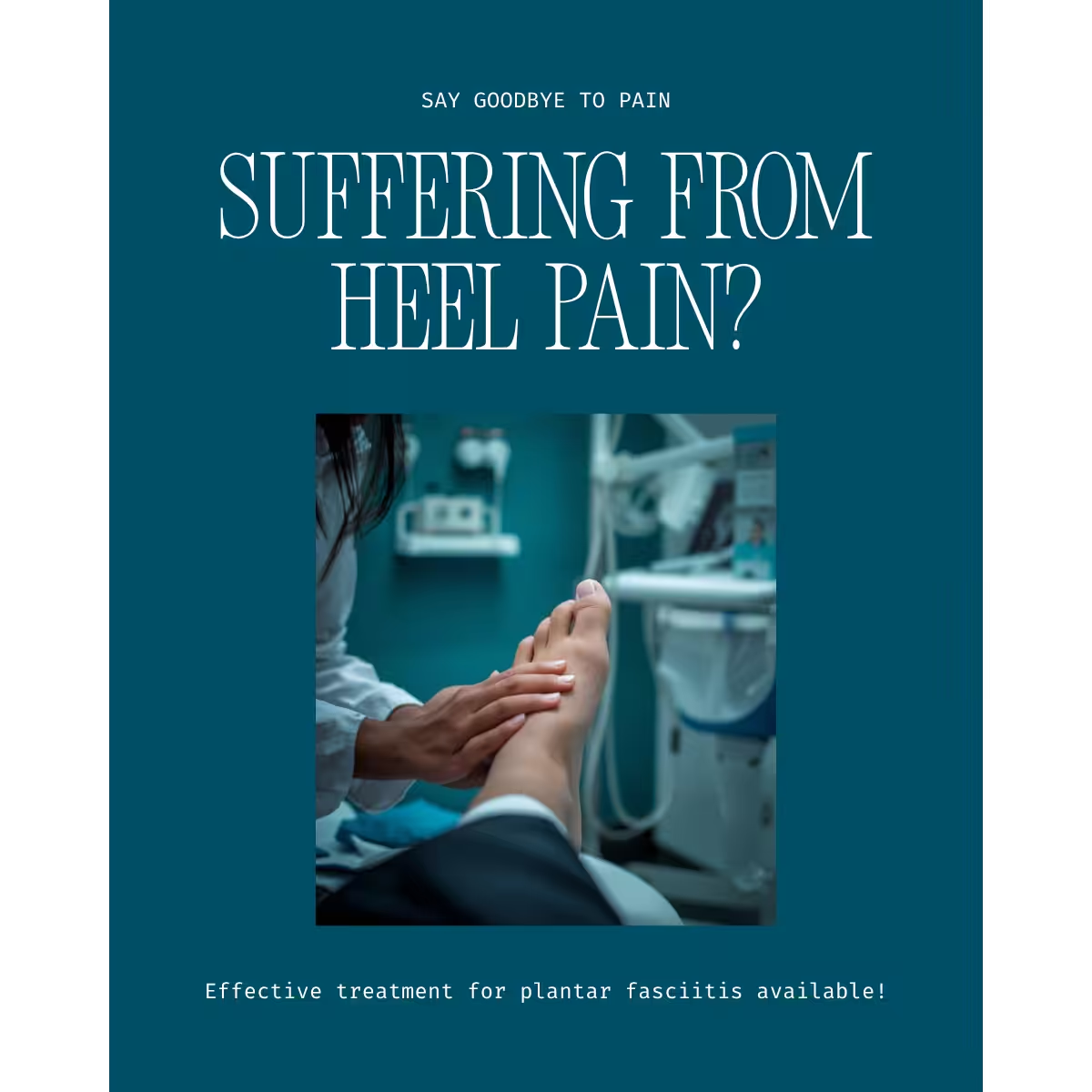
Sever’s Disease: Heel Pain in Children & Active Teenagers
If your child is between 8 and 14 years old and complaining of heel pain after sports practice, Sever’s disease is the most likely diagnosis. Despite the alarming name, Sever’s disease is not actually a disease — it’s a painful but self-limiting condition caused by inflammation at the calcaneal apophysis (the growth plate of the heel bone) during periods of rapid growth. It’s the most common cause of heel pain in children and teenagers, and it’s very treatable.
What Is Sever’s Disease?
During childhood and adolescence, bones grow from specialized cartilaginous areas called growth plates (physes). The heel bone (calcaneus) has a secondary growth plate — the apophysis — at the back of the heel, where the Achilles tendon and plantar fascia both attach. For specialized treatment, see our plantar fasciitis care Michigan.
During growth spurts, the heel bone often grows faster than the surrounding soft tissues. This creates relative tightness in the Achilles tendon and plantar fascia, which then pull repetitively on the still-developing, cartilaginous apophysis during running and jumping activities. The result is microtrauma, inflammation, and pain at the back and bottom of the heel.
The condition was described by James Warren Sever in 1912. It’s also called calcaneal apophysitis.
Who Gets Sever’s Disease?
- Age 8–14 — the window of highest growth plate vulnerability; rare before 8 or after 15 when the apophysis fuses to the calcaneus
- Peak ages: boys 10–14, girls 8–13 (girls enter growth spurts earlier)
- Active children and athletes — soccer, basketball, gymnastics, track, and distance running are associated sports
- Rapid growth spurts — symptoms often correlate with periods of fast height gain
- Flat feet or tight calves — increase tension on the Achilles and worsen apophyseal stress
- Overweight children — greater ground reaction forces at the heel
Symptoms
- Pain at the back and/or bottom of the heel, typically during or after athletic activity
- Pain that starts gradually and worsens over a season
- Child may limp after practice or games
- Tenderness when the heel is squeezed from the sides (medial-lateral compression test — highly sensitive for Sever’s)
- Stiffness in the morning or after prolonged rest
- Tight calf muscles
- May be bilateral (both heels) in 60% of cases
- Pain often improves significantly with rest; returns with activity resumption
Diagnosis
Sever’s disease is primarily a clinical diagnosis based on the characteristic history and examination:
- Age-appropriate patient (8–14) with activity-related heel pain
- Positive medial-lateral heel squeeze test — reproduces the pain; highly sensitive
- Tight Achilles tendon on passive dorsiflexion testing
- X-ray: not usually required for straightforward cases; may show fragmentation or sclerosis of the apophysis, but these changes are also seen in asymptomatic children and are considered normal variants
- X-ray IS indicated to rule out other diagnoses: calcaneal stress fracture, bone cyst, infection, or tumor, when the presentation is atypical
Treatment: Getting Your Child Back to Sports
1. Calf and Achilles Stretching — The Most Important Intervention
Stretching the gastrocnemius and soleus (calf muscles) reduces the tensile pull on the calcaneal apophysis and is the cornerstone of treatment. Do these stretches 3 times daily, especially before activity and after school:
- Standing calf stretch — stand arm’s length from a wall; back leg straight, heel flat; lean forward until stretch felt in the calf; hold 30 seconds × 3; then repeat with back knee bent (stretches soleus)
- Step stretch — stand on a step with heels hanging off; gently lower heels; hold 20–30 seconds; use both legs
- Towel or band stretch — seated with leg straight; loop a towel around the forefoot and gently pull toward you; hold 30 seconds
2. Heel Cups and Cushioning
Silicone heel cups placed inside shoes provide cushioning that absorbs impact at the heel and slightly elevates the heel, reducing Achilles tension. This is an inexpensive, immediately available intervention that most families can implement the day of diagnosis. Heel cups in both shoes, worn during all activities and school, provide consistent symptom management.
3. Activity Modification
Unlike some other sports injuries, complete rest is generally NOT required for Sever’s disease — and is usually impractical and unnecessary. The goal is reducing activity to a tolerable pain level (2/10 or less during activity) while maintaining conditioning. Practical guidance:
- Allow the child to participate in games and practice if pain is 3/10 or less and they’re not limping
- Reduce total weekly activity by 25–30% during the acute phase
- Avoid barefoot running on hard surfaces
- During very intense flare-ups: 1–2 weeks of rest with ice and heel cups, then gradual return
4. Icing Protocol
Ice for 15 minutes after every practice or game. A frozen water bottle works excellently — the child rolls the heel over it while seated, combining ice therapy with gentle myofascial release. Apply ice through a thin cloth, never directly on skin.
5. Footwear Evaluation
Sport-specific footwear with good heel cushioning and a slight heel raise (soccer cleats with thin plastic soles are one of the worst options for Sever’s). Recommend sport-specific shoes with adequate cushioning. Soccer players: thicker-soled training shoes for practice; reserve cleats for game days. Swimming and cycling are excellent off-season activities — neither loads the heel significantly.
6. Custom Orthotics for Severe or Recurrent Cases
For children with flat feet or tight calves who have severe or repeatedly recurring Sever’s disease, custom orthotics with heel lifts and arch support address the biomechanical contributors more precisely than OTC heel cups. Orthotics are particularly beneficial for children who continue experiencing symptoms despite weeks of stretching and heel cup use.
When Will My Child Get Better?
This is the question every parent asks — and the honest answer is that Sever’s disease resolves definitively when the calcaneal apophysis fuses to the calcaneus, which happens naturally between ages 13–17. Until then, symptoms may recur with growth spurts and increased activity.
With proper management, most children experience comfortable participation in sports within 2–8 weeks of starting treatment. Symptoms tend to come and go with growth spurts. Consistent stretching and heel cup use dramatically reduce severity and frequency of flare-ups.
Frequently Asked Questions
Should my child stop playing sports for Sever’s disease?
Complete cessation of sports is usually not necessary and may be counterproductive for a child’s physical and mental development. The goal is pain management, not elimination of all activity. Allow participation if pain is manageable (2–3/10 or less) and the child isn’t limping. During severe flare-ups, 1–2 weeks of rest allows acute inflammation to settle. Consistent stretching and heel cups reduce how often flare-ups occur.
Is Sever’s disease serious or permanent?
Sever’s disease is self-limiting and causes no permanent damage to the heel or Achilles tendon. Once the calcaneal growth plate fuses (typically by age 15–17), the condition resolves permanently and never recurs. There is no evidence that participating in sports with managed Sever’s disease causes long-term harm. The concern would be if symptoms were from a different diagnosis (stress fracture, infection) that was mistakenly attributed to Sever’s — this is why professional evaluation is recommended for atypical presentations.
Can adults get Sever’s disease?
No. Sever’s disease specifically affects the unfused calcaneal apophysis, which is only present in children. Once the growth plate fuses in adolescence, Sever’s disease cannot occur. Adults with similar heel pain have other diagnoses — most commonly plantar fasciitis or Achilles insertional tendinopathy. If an adult is diagnosed with “Sever’s disease,” this is an error requiring re-evaluation.
How many times can Sever’s disease recur?
Sever’s disease often recurs multiple times throughout the growth years, particularly with each growth spurt and at the start of each new sports season when training load increases rapidly. Children who have had one episode should maintain calf stretching and heel cup use proactively, particularly at the beginning of sports seasons, to minimize recurrence frequency and severity.
If your child or teenager in Southeast Michigan is experiencing heel pain during sports, Balance Foot & Ankle in Howell and Bloomfield Hills provides expert diagnosis and treatment for Sever’s disease and other pediatric foot conditions. Dr. Tom Biernacki DPM will confirm the diagnosis, rule out more serious conditions, and develop a practical management plan that keeps your child active. Request an appointment today.
Medical References & Sources
- American Podiatric Medical Association — Heel Pain
- Journal of Foot and Ankle Research
- PubMed Research — Heel Pain Treatment
Dr. Tom’s Recommended Products for Plantar Fasciitis & Heel Pain
📍 Located in Michigan?
Our board-certified podiatrists treat this condition at two convenient locations. Same-day appointments often available.
These are products I personally use and recommend to my patients at Balance Foot & Ankle.
- PowerStep Pinnacle Insoles — Firm arch support with dual-layer cushioning — the #1 podiatrist-recommended OTC insole for plantar fasciitis
- PowerStep Pinnacle Insoles — High-profile biomechanical stabilizer cap controls overpronation and reduces fascia tension at the insertion
- Brooks Adrenaline GTS 24 — GuidRails support system with 12mm heel drop — the most-prescribed running shoe for plantar fasciitis in our practice
Affiliate disclosure: As an Amazon Associate, Balance Foot & Ankle earns from qualifying purchases. We only recommend products we trust for our own patients.
Dr. Tom’s Pick: Women’s Shoe Comfort Inserts
For women who want comfort without giving up their shoes — Foot Petals cushions work in heels, flats, and sandals.
- Foot Petals Heavenly Heelz — Cushioned heel insert for pumps and heels — eliminates slipping and ball-of-foot pain in dress shoes.
- Foot Petals Tip Toes — Metatarsal cushion for the toe box — stops forefoot pain in heels and narrow shoes.
📧 Get Dr. Tom’s Free Lab Test Guide
Discover the 5 lab tests every person over 35 should ask their doctor about — explained in plain English by a board-certified physician.
Affiliate disclosure: As an Amazon Associate, Balance Foot & Ankle earns from qualifying purchases.
Join 950,000+ Learning About Foot Health
Dr. Tom shares honest medical advice, supplement reviews, and treatment guides you won’t find anywhere else.
Subscribe on YouTube →
Dr. Tom Biernacki, DPM is a double board-certified podiatrist and foot & ankle surgeon at Balance Foot & Ankle Specialists in Southeast Michigan. With over a decade of clinical experience, he specializes in heel pain, bunions, diabetic foot care, sports injuries, and minimally invasive surgery. Dr. Biernacki is a member of the APMA and ACFAS, and his patient education content on MichiganFootDoctors.com and YouTube has reached over one million views.