

The most important clinical decision with Diabetic Foot Ulcer Treatment Prevention isn’t which treatment to start with — it’s identifying the correct subtype. That changes everything. Book online in about a minute — or call (810) 206-1402.
Dr. Tom’s Top Foot Health Supplements
Medically reviewed by Dr. Tom Biernacki, DPM
Board-certified podiatric surgeon | Balance Foot & Ankle
Last reviewed: May 2026
Affiliate disclosure: Amazon Associate. Always discuss supplements with your physician before starting.
Vitamin B12 Methylcobalamin
Neuropathy support · Nerve repair
PROS
- Active B12 form
- Sublingual absorption
- Neuropathy adjunct
CONS
- Effects take 2-3 months
- Doesn’t replace medical care
Alpha Lipoic Acid 600mg
Diabetic neuropathy · Nerve antioxidant
PROS
- Peer-reviewed for neuropathy
- Both fat- and water-soluble
- Clinical doses available
CONS
- Possible blood sugar effect
- GI upset possible
Acetyl-L-Carnitine (ALCAR)
Diabetic neuropathy · Energy
PROS
- Crosses blood-brain barrier
- Studied for nerve repair
- Pairs with ALA
CONS
- Effects gradual (3+ months)
- Higher cost
Vitamin D3 5000 IU
Bone health · Stress fracture prevention
PROS
- Improves bone density
- Most patients deficient
- Affordable preventive
CONS
- Get blood test first
- Toxicity at very high doses
Dr. Tom’s Diabetic Foot Care Kit
Always under podiatric supervision for diabetic patients.
Dr. Tom’s Wound Care Kit
Related Conditions
Quick Answer
Diabetic foot ulcers need prompt professional care. Go to the emergency room for fever, spreading redness, foul drainage, black tissue or sudden severe pain in the foot. Same-week appointments in Howell + Bloomfield Township: (810) 206-1402.

Quick Answer
Diabetic peripheral neuropathy is nerve damage from prolonged hyperglycaemia, causing burning, tingling, numbness, or loss of protective sensation in the feet. It will not reverse without addressing glucose control. Daily foot checks, proper footwear, and annual monofilament testing prevent ulceration.
Watch: Dr. Tom Biernacki, DPM
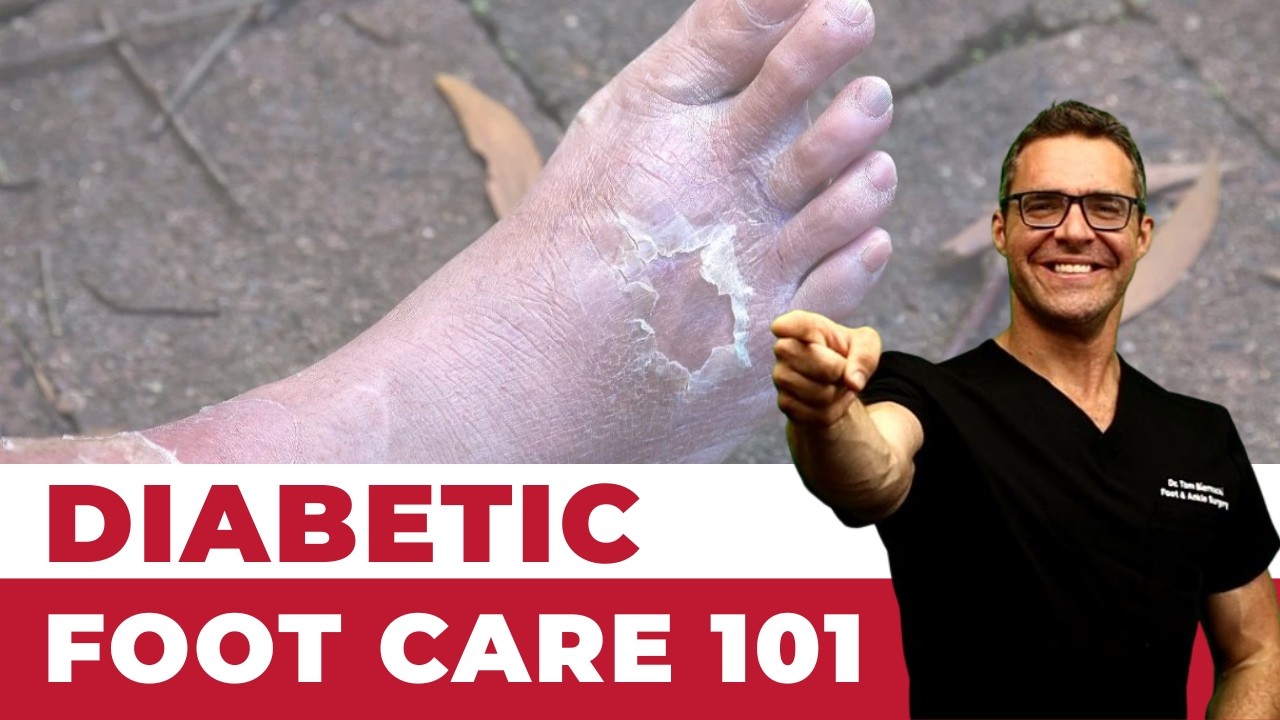
✅ Medically reviewed by Dr. Tom Biernacki, DPM — Board-certified podiatrist specializing in foot & ankle surgery. View credentials.
Diabetic Foot Ulcers: Treatment, Prevention & When to Go to the ER
diabetic ulcer treatment Howell MI.– /wp:heading –>
Diabetic foot ulcers are open wounds on the feet that develop in people with diabetes — and they represent one of the most serious complications of the disease. Every year in the United States, approximately 73,000 lower-limb amputations are performed in patients with diabetes. The overwhelming majority of these amputations are preceded by a foot ulcer. The critical message: most diabetic foot ulcers are preventable, and when they do occur, early, aggressive treatment prevents progression to amputation.
Why Diabetic Patients Develop Foot Ulcers
Three factors — often present simultaneously — create the conditions for diabetic foot ulcers:
1. Peripheral Neuropathy (Loss of Protective Sensation)
Diabetic peripheral neuropathy affects approximately 50% of people with type 2 diabetes of more than 10 years duration. When protective sensation is lost, patients cannot feel friction, pressure, heat, or injury. A callus developing into an ulcer, a blister from a new shoe, or a foreign body in the shoe may go completely unnoticed for days to weeks. Pain — the body’s normal alarm system for injury — is absent.
2. Peripheral Arterial Disease (Impaired Circulation)
Diabetes accelerates atherosclerosis in the arteries of the lower extremities. Reduced blood flow means:
- Wounds receive fewer oxygen, nutrients, and white blood cells
- Healing is dramatically slowed
- Minor wounds that would heal quickly in a healthy person can persist and enlarge for months
- Infections are harder to control without adequate blood supply delivering antibiotics and immune cells
3. Immunosuppression
Elevated blood glucose impairs neutrophil and macrophage function — the white blood cells that fight infection. Diabetic patients develop more severe infections more quickly and respond more slowly to treatment than non-diabetic patients with equivalent wounds.
Where Diabetic Ulcers Typically Form
- Under the metatarsal heads (ball of the foot) — the most common location; calluses develop under pressure points and break down into ulcers
- Great toe tip — from shoe pressure in patients with claw toes or hallux limitus
- Heel — particularly in bedbound patients with heel pressure necrosis
- Medial great toe joint (bunion area) — shoe friction in patients with bunions
- Between toes — interdigital moisture and fungal maceration leading to skin breakdown
- Dorsum of toes — from hammertoe rubbing on shoe uppers
Diabetic Wound Classification: Why Staging Matters
Wound classification guides treatment aggressiveness. The Wagner Classification is widely used:
- Grade 0 — pre-ulcer: callus, skin breakdown risk; aggressive prevention
- Grade 1 — superficial ulcer not extending to tendon, capsule, or bone; local wound care + offloading
- Grade 2 — deeper ulcer penetrating to tendon, capsule, or bone surface; IV antibiotics + aggressive local care
- Grade 3 — deep ulcer with osteomyelitis (bone infection) or abscess; hospitalization often required; surgical debridement
- Grade 4 — partial foot gangrene; vascular assessment + limited amputation
- Grade 5 — whole foot gangrene; major amputation required
Treatment: What Happens at Each Stage
Offloading — The Most Critical Treatment Element
No wound on the plantar foot will heal if weight continues to be borne on it. Offloading removes the mechanical trauma that created the wound and allows healing to occur. Methods in order of effectiveness:
- Total contact cast (TCC) — the gold standard; a custom plaster cast distributes load across the entire plantar surface; best healing rates; requires weekly cast changes
- Removable cast walker (RCW) — boot that is removable; less effective than TCC because patients remove it (intentionally or not); used when daily wound monitoring is needed
- Felted foam padding — temporary offloading pad placed in existing shoe around (not over) the wound; used between dressing changes
Wound Debridement
Sharp surgical debridement — removing necrotic (dead) and callused tissue from and around the wound edge — is essential. Dead tissue harbors bacteria and prevents healthy granulation tissue from forming. A podiatrist performs sharp debridement at each wound care visit, which should be at least weekly for Grade 1–2 wounds. The wound should appear red and bleeding after proper debridement — this confirms removal of all devitalized tissue.
Wound Dressings
Modern wound dressings are selected based on wound characteristics:
- Hydrogel — for dry wounds; maintains moisture to support cell migration
- Foam dressings — for moderately exudating wounds; absorbs drainage
- Silver-containing dressings — for infected or high-bioburden wounds; antimicrobial
- Negative pressure wound therapy (wound VAC) — mechanical suction removes exudate, increases blood flow, and accelerates granulation for deep wounds
- Bioengineered skin substitutes (e.g., Apligraf, Dermagraft) — living cellular grafts that deliver growth factors to stalled wounds; FDA-cleared for diabetic foot ulcers
Infection Management
All diabetic foot ulcers are colonized with bacteria, but not all are infected. Signs of clinically significant infection requiring antibiotic treatment:
- Warmth, erythema, and swelling extending more than 2cm from wound edge (cellulitis)
- Purulent (pus) drainage
- Probe-to-bone test positive (a metal probe can be inserted to bone) — strongly suggests osteomyelitis
- Fever, elevated white blood cell count, or elevated inflammatory markers
Mild-to-moderate infections are treated with oral antibiotics (amoxicillin-clavulanate or trimethoprim-sulfamethoxazole depending on suspected organisms). Severe infections require hospitalization, IV antibiotics, and urgent surgical debridement.
Vascular Assessment
Any wound that is not progressing toward healing within 4 weeks requires vascular assessment. Ankle-brachial index (ABI), toe pressures, and vascular imaging evaluate arterial blood flow. Wounds in ischemic limbs cannot heal without revascularization — a vascular surgery referral is needed.
Emergency Signs: When to Go to the ER Immediately
The following require emergency evaluation, not a scheduled office visit:
- Spreading redness, warmth, and swelling rapidly extending up the foot and leg (rapidly spreading cellulitis)
- Red streaks extending from the wound (lymphangitis — infection spreading through lymph channels)
- Black, blue, or gray skin around the wound (necrosis/gangrene)
- Fever above 101°F with a foot wound
- Foul odor with discolored drainage (signs of deep or spreading infection)
- Loss of feeling in previously sensate areas (new nerve damage)
- Inability to bear weight due to worsening pain
Prevention: Stopping Ulcers Before They Start
- Daily foot inspection — examine every surface of both feet; use a mirror for the sole; look for blisters, cuts, redness, swelling, or any skin breakdown
- Control blood glucose — HbA1c under 7.5% dramatically reduces neuropathy progression and wound healing impairment
- Regular podiatric care — quarterly professional nail care, callus management, and foot exams catch pre-ulcer lesions before they progress
- Therapeutic footwear — Medicare Part B covers diabetic shoes and custom insoles for qualifying patients; reduces plantar pressure by 30–40%
- Never go barefoot — always wear footwear, including inside the house
- No heat applications — never use heating pads or soak feet in hot water; neuropathic patients cannot detect excessive heat
- Smoking cessation — smoking further impairs peripheral circulation in already-compromised diabetic vessels
Frequently Asked Questions
How long does a diabetic foot ulcer take to heal?
The average diabetic foot ulcer takes 12 weeks to heal with appropriate management. Grade 1 (superficial) ulcers in patients with good circulation and glucose control can heal in 4–8 weeks. Deeper ulcers, ischemic wounds, or infected ulcers can take 6 months or longer. Approximately 15–20% of diabetic ulcers never fully heal and require amputation — which is why early, aggressive treatment matters so much.
Can a diabetic foot ulcer heal on its own?
No. Diabetic foot ulcers do not heal on their own. The combination of neuropathy (continued trauma without pain signal), impaired circulation, and immunosuppression means the normal healing cascade is disrupted. Without active wound care, offloading, infection control, and management of contributing factors, diabetic ulcers enlarge, deepen, and become infected. Prompt professional care is mandatory — not optional.
What is the best thing to put on a diabetic foot ulcer?
The best dressing depends on the wound stage and characteristics — there is no one-size-fits-all answer. For a clean, shallow wound with minimal drainage: a non-adherent primary dressing with a foam secondary dressing works well. For an infected wound: silver-containing dressings. For a stalled wound not progressing: advanced wound care products like collagen dressings or bioengineered skin substitutes. A podiatrist selects the appropriate dressing based on wound assessment at each visit. Never use hydrogen peroxide or betadine (iodine) on a healing wound — both kill the healthy cells trying to repair the tissue.
Does Medicare cover diabetic foot care?
Yes. Medicare Part B covers: diabetic therapeutic shoe benefits (one pair of diabetic shoes + three pairs of custom insoles per year for qualifying patients); podiatric nail and callus care for patients with documented diabetic neuropathy or PAD every 61 days; and wound care visits when medically necessary. Prior authorization or documentation of diabetic complications is required for shoe benefits. Dr. Biernacki’s office can assist with Medicare diabetic shoe prescriptions.
Diabetic foot care in Southeast Michigan requires a specialist who understands the unique challenges of diabetes-related foot complications. Balance Foot & Ankle in Howell and Bloomfield Township provides comprehensive diabetic foot exams, wound care, offloading, custom diabetic footwear, and urgent evaluation for concerning wounds. Dr. Tom Biernacki DPM is experienced in all aspects of diabetic limb preservation. Schedule an appointment or call if you have an urgent concern today.
Medical References & Sources
- American Diabetes Association — Foot Complications
- PubMed Research — Diabetic Foot Care
- American Podiatric Medical Association — Diabetic Foot
Insurance Accepted
BCBS · Medicare · Aetna · Cigna · United Healthcare · HAP · Priority Health · Humana · View All →
Howell Office
4330 E Grand River Ave
Howell, MI 48843
Get Directions →
Bloomfield Township Office
43494 Woodward Ave, #208
Bloomfield Township, MI 48302
Get Directions →
Your Board-Certified Podiatrists



Ready to Get Back on Your Feet?
Same-week appointments available at both locations.
In-Office Treatment at Balance Foot & Ankle
If home care isn’t resolving your diabetic foot concern, a visit with a board-certified podiatrist is the fastest path to accurate diagnosis and a personalized plan. At Balance Foot & Ankle Specialists, Dr. Tom Biernacki, Dr. Carl Jay, and Dr. Daria Gutkin offer same-day and next-day appointments at both our Howell and Bloomfield Township offices. We perform on-site diagnostic ultrasound, digital X-ray, conservative care, advanced regenerative treatments, and minimally invasive surgery when indicated.
Call (810) 206-1402 or request an appointment online. Most insurance plans accepted, including Medicare, Blue Cross Blue Shield, Aetna, Cigna, and United Healthcare.
Differential Diagnosis: What Else Could It Be?
Several conditions share symptoms with Diabetic Neuropathy and are commonly misdiagnosed in the first office visit. Considering these alternatives is part of every Balance Foot & Ankle exam:
- Tarsal tunnel syndrome. Burning radiating into the arch with positive Tinel’s at the medial ankle.
- Peripheral artery disease. Pain with walking that resolves with rest, weak pulses, hair loss on toes.
- Lumbar radiculopathy. Symptoms following a dermatome, often with back pain — MRI of spine, not foot.
If your symptoms don’t fit the textbook pattern, ask your podiatrist which differentials they ruled out — that conversation often shortcuts months of trial-and-error treatment.
In Our Clinic
Diabetic neuropathy patients in our clinic often don’t realize they have it until we put a 10-gram Semmes-Weinstein monofilament to the plantar foot and they can’t feel it. Many arrive for an unrelated concern — an ingrown toenail, a callus — and we catch the neuropathy on screening. The conversation then shifts: we need to discuss daily foot inspections, appropriate footwear, the urgency of any blister or open area, and the timing of vascular referral if pulses are diminished. Comprehensive diabetic foot exams are covered by Medicare annually. If you have diabetes, we want to see you once a year even if nothing hurts.
Most Common Mistake We See
The most common mistake we see is: Stopping B-vitamin supplementation as soon as symptoms improve. Fix: maintain supplementation for 6-18 months alongside strict glucose control.
Warning Signs That Need Same-Day Care
Seek immediate evaluation at Balance Foot & Ankle if you experience any of the following:
- Sudden loss of sensation on one side
- Wound on the foot not felt by the patient
- One-sided symptoms (rule out compression)
- Back pain plus leg symptoms (possible radiculopathy)
Call (810) 206-1402 — same-day and next-day appointments at our Howell and Bloomfield Township offices.
Pros & Cons of Conservative Care for diabetic foot care
Advantages
- ✓ Daily inspection prevents amputation
- ✓ Most insurance covers DME
- ✓ Custom orthotics help
Considerations
- ✗ Daily commitment required
- ✗ Slow wound healing
- ✗ Charcot risk if neuropathy
In This Article
- Quick Answer
- In-Office Treatment at Balance Foot & Ankle
- Differential Diagnosis: What Else Could It Be?
Several conditions share symptoms with Diabetic Neuropathy and are commonly misdiagnosed in the first office visit. Considering these alternatives is part of every Balance Foot & Ankle exam:Tarsal tunnel syndrome. Burning radiating into the arch with positive Tinel’s at the medial ankle.
Peripheral artery disease. Pain with walking that resolves with rest, weak pulses, hair loss on toes.
Lumbar radiculopathy. Symptoms following a dermatome, often with back pain — MRI of spine, not foot.If your symptoms don’t fit the textbook pattern, ask your podiatrist which differentials they ruled out — that conversation often shortcuts months of trial-and-error treatment.
In Our Clinic
Diabetic neuropathy patients in our clinic often don’t realize they have it until we put a 10-gram Semmes-Weinstein monofilament to the plantar foot and they can’t feel it. Many arrive for an unrelated concern — an ingrown toenail, a callus — and we catch the neuropathy on screening. The conversation then shifts: we need to discuss daily foot inspections, appropriate footwear, the urgency of any blister or open area, and the timing of vascular referral if pulses are diminished. Comprehensive diabetic foot exams are covered by Medicare annually. If you have diabetes, we want to see you once a year even if nothing hurts.Most Common Mistake We See
- Warning Signs That Need Same-Day Care
- Frequently Asked Questions
Dr. Tom’s Recommended Products for diabetic foot care
Affiliate disclosure: As an Amazon Associate, Balance Foot & Ankle earns from qualifying purchases. We only recommend products we use with patients.
Drew Moonwalker Diabetic Shoe Dr. Tom’s Pick
Best for: Medicare-covered diabetic footwear
Diabetic Compression Socks Dr. Tom’s Pick
Best for: Daily protection + circulation
Ready to Get Back on Your Feet?
Same-day appointments in Howell + Bloomfield Township. Most insurance accepted. Dr. Tom Biernacki, DPM & team.
Book Today — Same-Day Appointments Available
Call Now: (810) 206-1402
About Your Care Team at Balance Foot & Ankle
Dr. Tom Biernacki, DPM · Board-Certified Foot & Ankle Surgeon. Specializes in conservative-first care, minimally invasive bunion surgery, and complex reconstruction.
Dr. Carl Jay, DPM · Accepting new patients. Specializes in sports medicine, athletic injuries, and routine podiatric care.
Dr. Daria Gutkin, DPM, AACFAS · Accepting new patients. Specializes in surgical reconstruction and pediatric podiatry.
Locations: 4330 E Grand River Ave, Howell, MI 48843 · 43494 Woodward Ave Suite 208, Bloomfield Township, MI 48302
Hours: Mon–Fri 8:00 AM – 5:00 PM · (810) 206-1402

Dr. Tom Biernacki, DPM is a board-certified foot & ankle surgeon (ABFAS & ABPM) at Balance Foot & Ankle Specialists in Southeast Michigan. With over a decade of clinical experience, he specializes in heel pain, bunions, diabetic foot care, sports injuries, and minimally invasive surgery. Dr. Biernacki is a member of the APMA and ACFAS, and his patient education content on MichiganFootDoctors.com and YouTube has made him one of the most-followed foot & ankle educators on YouTube.
More questions patients ask
How often should diabetics check their feet?
Diabetic patients should perform daily self-examinations of both feet, checking for cuts, blisters, redness, swelling, calluses, and temperature changes. Professional diabetic foot exams should occur at least annually, or every 3-6 months for patients with neuropathy, peripheral artery disease, or history of foot ulcers. Dr. Biernacki provides comprehensive diabetic foot care programs.
Why do diabetics have foot problems?
Diabetes causes peripheral neuropathy (nerve damage reducing sensation), peripheral artery disease (reduced blood flow), and impaired immune function. This combination means injuries go unnoticed, heal slowly, and are prone to infection. Approximately 15% of diabetics will develop a foot ulcer, and diabetic foot complications are the leading cause of non-traumatic amputation. Prevention through regular podiatric care is essential.
What are the signs of diabetic neuropathy in feet?
Early signs include tingling, burning, or numbness starting in the toes and progressing upward. Other symptoms include sensitivity to touch, muscle weakness, balance problems, and loss of reflexes. If you experience any of these symptoms, schedule an evaluation with Dr. Biernacki at 810-206-1402 for nerve conduction testing and a comprehensive neuropathy management plan.
Still have a question about coverage or cost? Book online and we will check your benefits before your visit: Book in Howell · Book in Bloomfield Township. Prefer to talk it through first? Call (810) 206-1402.