
![Numbness or Tingling in the Feet or Toes? [Morton’s Neuroma Treatment]](https://www.michiganfootdoctors.com/wp-content/cache/flying-press/dcc27fa5747c30ef03ffe66b861c9f90.jpg)
Watch: Numbness or Tingling in the Feet or Toes? [Morton’s Neuroma Treatment] — MichiganFootDoctors YouTube

Medically Reviewed by Dr. Tom Biernacki, DPM, FACFAS — Board-certified podiatrist & foot surgeon | Balance Foot & Ankle | Last updated: May 2026
Foot numbness and hot spots during spinning and indoor cycling are caused by nerve compression from tight shoes, cleat position too far forward, or excessive forefoot pressure on the pedal. Fix sequence: loosen shoes mid-ride, move cleat rearward toward the arch, add a metatarsal pad under the ball of the foot, and ensure shoe width matches foot width. Persistent numbness after these adjustments warrants evaluation for Morton’s neuroma or tarsal tunnel syndrome.
Why Spinning Causes Foot Numbness — the Biomechanics
During a 45–60 minute spin class, your foot contacts the pedal in a relatively fixed position for 6,000–8,000 pedal strokes. Unlike running where the foot rolls through a full contact-to-propulsion cycle, cycling loads the forefoot continuously against a firm platform. This sustained compression affects the interdigital nerves between the 2nd–3rd and 3rd–4th metatarsal heads — the same nerves involved in Morton’s neuroma. Narrow shoes, SPD cleats positioned too far forward, and high cadence work all amplify this nerve loading.
Cause-by-Cause Troubleshooting Guide
| Symptom Pattern | Most Likely Cause | Fix |
|---|---|---|
| Numbness in 3rd–4th toes during ride | Morton’s neuroma or nerve compression | Move cleat back, add metatarsal pad, wider shoe |
| Burning under ball of foot after 20 min | Metatarsal head pressure (hot foot) | Cleat rearward, metatarsal pad, loosen top strap |
| Whole foot goes numb | Shoe too tight or narrow | Loosen BOA/straps mid-ride; size up or go wider |
| Big toe goes numb | Cleat too far inward (toe-in position) | Rotate cleat outward to neutral float |
| Arch cramps mid-ride | Flat shoe + high cadence with no arch support | Cycling-specific insole with arch support |
| Heel pain after spin class | Plantar fascia overload from flat shoe | Cycling orthotic or arch-support insole |
Cleat Position: The Most Impactful Adjustment
Standard cleat installation places the cleat under the 1st metatarsal head — essentially at the ball of the foot. For most recreational cyclists, moving the cleat 2–5mm rearward toward the mid-arch is the single most effective change for reducing forefoot numbness and hot spots. A rearward cleat position distributes pedal force across a broader metatarsal surface, reduces forefoot pressure peaks, and allows the calf muscles to work slightly differently — reducing Achilles and plantar fascia stress simultaneously. Most SPD and SPD-SL cleats allow +/- 3mm of fore/aft adjustment without hardware changes.
Cycling-Specific Footwear Considerations
- Width: Many cyclists use running shoe sizing; cycling shoes run narrower. If numbness resolves when you loosen your shoes mid-ride, width is the primary issue. Consider a half-size larger or wide-width cycling shoe.
- Stiffness: Higher carbon-sole stiffness (index 9–12) distributes pedal forces across more of the foot — better for power transfer and foot comfort on long rides. Lower stiffness (index 5–8) allows some flex, which recreational and spin riders often find more comfortable.
- Insoles: Standard cycling shoe insoles are flat. Replacing with a cycling-specific insole (Specialized BG, Sidas Cycling, or a custom orthotic) adds arch support and metatarsal offloading that significantly reduces forefoot symptoms.
Watch: Does Plantar Fasciitis from Cycling Go Away?
Dr. Tom Biernacki addresses the foot pain conditions that commonly develop in cyclists — including plantar fasciitis and how long recovery takes when you’re still active:
The most common mistake cyclists make with foot numbness is loosening all the straps uniformly — when the real fix is usually targeted. Loosening the forefoot strap while keeping the heel and midfoot straps snug is usually more effective than loosening everything, which then causes the foot to move on the pedal and creates hot spots from friction. Systematically address one variable at a time: cleat position first, then shoe width, then strap tension, then insole. This diagnostic approach identifies the actual cause rather than masking symptoms temporarily.
Frequently Asked Questions
Why do my feet go numb in spin class but not outdoor cycling?
Indoor cycling (spin class) involves sustained high-cadence pedaling in a fixed position for the entire class — there’s no coasting, terrain variation, or position change that would give foot nerves intermittent relief. Outdoor cycling involves natural variation in cadence, standing on climbs, and coasting on descents. This variety unloads the forefoot periodically, preventing the nerve compression that accumulates during a continuous 45-minute spin class. If you’re doing both and only experiencing symptoms indoors, the fix is adding more positional variety — standing climbs, periodic pedal float — to your spin class routine.
Is foot numbness in cycling dangerous?
Occasional numbness during cycling that resolves immediately after the ride is common and usually not dangerous. Numbness that persists for hours after riding, occurs with tingling or burning extending up the ankle, or is accompanied by weakness warrants evaluation — these patterns can indicate nerve damage rather than simple compression. Diabetic cyclists with neuropathy should monitor foot numbness carefully, as reduced sensation may mask developing pressure injuries from shoe fit issues.
Can I ride through Morton’s neuroma pain?
Mild Morton’s neuroma symptoms can often be managed through cycling with appropriate modifications (cleat position, wider shoe, metatarsal pad). However, continuing to cycle through moderate-to-severe neuroma pain without modification typically worsens the condition over weeks to months. If the problem recurs despite equipment adjustments, a podiatric evaluation — including ultrasound assessment — can determine neuroma size and guide whether conservative care, cortisone injection, or surgical excision is the appropriate next step.
Do custom orthotics work in cycling shoes?
Yes — cycling-specific custom orthotics are increasingly common for serious cyclists and triathletes. They are thinner than walking orthotics to fit in the lower-volume cycling shoe environment, and are designed around the fixed-ankle pedaling position rather than the heel-strike-to-toe-off gait cycle. At Balance Foot & Ankle, we can fabricate cycling-specific orthotics when standard insoles and cleat adjustments don’t resolve symptoms. These are often dramatically effective for cyclists who have struggled with persistent hot spots, numbness, or arch cramping.
When should I see a podiatrist for cycling foot pain?
See a podiatrist when: numbness persists more than 30 minutes after riding; you’ve made equipment adjustments without improvement; pain is present off the bike as well as on it; or you notice a palpable lump or swelling between the metatarsal heads. Balance Foot & Ankle offers online booking 24/7 at Howell and Bloomfield Township. Bring your cycling shoes to the appointment — examining shoe fit and wear pattern is part of the clinical assessment.
Foot Pain or Numbness During Cycling? We Can Fix It.
Appointments at Howell and Bloomfield Township, MI. Cycling-specific orthotics, neuroma assessment, and expert biomechanical evaluation. Dr. Tom Biernacki DPM — most insurances accepted.
Book a Visit Online (810) 206-1402Related Articles
- Morton’s Neuroma: Causes & Treatment
- Metatarsalgia: Ball of Foot Pain
- Custom Orthotics in Michigan
- Plantar Fasciitis Treatment
- Podiatrist-Recommended Shoes
In-Office Treatment at Balance Foot & Ankle
If home treatment isn’t providing relief for your foot and ankle conditions, our podiatry team at Balance Foot & Ankle can help with expert evaluations and advanced in-office care.
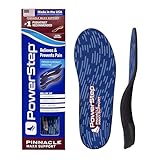
- Slightly Angled Heel Post: PowerStep Pinnacle Maxx insoles for men & women keep the feet from rolling inward, improve stability, and prevent problems caused by overpronation including flat feet and plantar fasciitis.
- Firm But Flexible Design: Our orthotics Pinnacle PowerStep insoles for overpronation are equipped with a deep heel insert cradle for increased comfort, stability, and motion control for standard arch support and immediate heel pain relief.
- Premium Dual Layer Cushioning: For enhanced comfort from heel to toe. As the thickest of our Pinnacle PowerStep orthotics, these need to be worn in shoes where the factory insole can be removed. HSA & FSA Eligible. Made in the USA
- The Perfect Balance of Comfort and Support: These PowerStep Pinnacle arch support inserts for men & women are unlike most other orthotics as they help to correct over-pronation which can cause ankle, knee, and hip pain in your daily routine
- No Trimming: Our arch support PowerStep insoles men & women can use can be worn in a variety of shoe styles & fit in any type with no trimming required! Unlike most insoles for flat feet and other heel pain relief products, these come ready to wear.
As an Amazon Associate, Balance Foot and Ankle earns from qualifying purchases. Product links are affiliate links and we may earn a commission at no extra cost to you. This does not influence our clinical recommendations. Last update on 2026-10-18 / Images from Amazon Product Advertising API
Book online 24/7. (810) 206-1402
VitaMedica Arnica Gel
Arnica gel plus 15 plant compounds for sore feet, plantar fasciitis flares and post-activity soreness. Apply a thin layer to the sore area.
Shop VitaMedica Arnica Gel →Frequently Asked Questions


Dr. Tom Biernacki, DPM is a board-certified foot & ankle surgeon (ABFAS & ABPM) at Balance Foot & Ankle Specialists in Southeast Michigan. With over a decade of clinical experience, he specializes in heel pain, bunions, diabetic foot care, sports injuries, and minimally invasive surgery. Dr. Biernacki is a member of the APMA and ACFAS, and his patient education content on MichiganFootDoctors.com and YouTube has made him one of the most-followed foot & ankle educators on YouTube.
More questions patients ask
Why do my feet go numb only during spinning but not outdoor cycling?
Indoor cycling maintains constant, unchanging pressure on the same foot area for the entire ride. Outdoor cycling naturally varies forefoot loading through terrain changes, standing climbs, and coasting. Indoor classes also occur in heated environments causing greater foot swelling, and the fixed pedal position does not allow subtle foot adjustments that outdoor pedals permit.
Are wider cycling shoes better for preventing numbness?
Wider cycling shoes can significantly help if your current shoes compress the forefoot laterally. A wider toe box allows metatarsal heads to maintain natural spacing, keeping intermetatarsal tunnels open. However, wider shoes alone don't solve numbness from vertical compression against the rigid pedal — you also need proper arch-support insoles, metatarsal pads, and correct cleat positioning.
How long should foot numbness last after cycling?
Normal post-ride numbness from mechanical compression should resolve within 5 to 15 minutes of removing cycling shoes and walking normally. Numbness persisting longer than 30 minutes indicates more severe nerve compression (neuropraxia). Numbness lasting more than 24 hours warrants medical evaluation as it may indicate underlying nerve damage or Morton's neuroma.
Can insoles really help with cycling shoe numbness?
Yes, replacing flat factory insoles with contoured arch-support insoles is one of the most effective modifications for cycling numbness. Factory cycling shoe insoles provide virtually no arch support, allowing the foot to collapse and concentrate pressure on metatarsal heads. Quality insoles distribute pedaling forces more evenly and prevent forefoot splay that compresses digital nerves.
Should I see a doctor for cycling foot numbness?
See a podiatrist if numbness persists despite optimizing cycling shoes, cleat position, and riding technique, if numbness occurs during activities other than cycling, if one foot is significantly more affected, or if you experience persistent burning pain or weakness. These patterns may indicate Morton's neuroma, tarsal tunnel syndrome, or peripheral neuropathy requiring specific treatment.
Still have a question about coverage or cost? Book online and we will check your benefits before your visit: Book in Howell · Book in Bloomfield Township. Prefer to talk it through first? Call (810) 206-1402.