

Quick answer: Cortisone Injections Foot Pain What To Expect How Many Safe has multiple potential causes including mechanical, neurological, vascular, and inflammatory. The most common causes we identify are overuse, ill-fitting shoes, and biomechanical imbalance. Red flags requiring urgent evaluation: warmth/redness (infection), inability to bear weight (fracture), and unilateral swelling without injury (DVT). Call (810) 206-1402.
Medically reviewed by Dr. Tom Biernacki, DPM — Board-Certified Podiatric Surgeon — Balance Foot & Ankle, Howell & Bloomfield Township, MI. Last updated April 2026.
Medically Reviewed by Dr. Tom Biernacki, DPM — Board-Certified Podiatrist, Balance Foot & Ankle Specialists, Michigan. Last updated April 2026.
Medically Reviewed by:
Dr. Tom Biernacki, DPM
— Board-Certified Podiatrist
Last Updated:
April 2026 | Reading Time:
12 min
For informational purposes only. Schedule an appointment.
Quick Answer: What to Expect from Cortisone Injections in the Foot
Cortisone (corticosteroid) injections are one of the most effective treatments for inflammatory foot conditions including plantar fasciitis, Morton’s neuroma, bursitis, and arthritis. Most patients experience significant pain relief within 48 to 72 hours, with effects lasting 3 to 6 months. While generally safe, cortisone injections carry risks that increase with repeated use — most podiatrists recommend no more than 3 to 4 injections per site per year to minimize complications like tissue weakening and fat pad atrophy.
Table of Contents
- What Is a Cortisone Injection?
- How Cortisone Reduces Foot Pain
- Foot Conditions Treated with Cortisone
- What to Expect During the Injection
- After the Injection: Recovery Timeline
- How Many Cortisone Injections Are Safe?
- Risks and Side Effects
- Ultrasound-Guided vs Landmark Injections
- Alternatives to Cortisone Injections
- Maximizing Your Injection Results
- Frequently Asked Questions
- Sources
Affiliate Disclosure: Some links below are affiliate links, meaning we may earn a small commission at no extra cost to you. We only recommend products we trust and use in clinical practice. These commissions help support free educational content on this site.
What Is a Cortisone Injection?
A cortisone injection delivers a powerful synthetic corticosteroid medication directly into an inflamed area of the foot. Unlike oral anti-inflammatory medications that travel through your entire bloodstream and affect every organ, a cortisone injection targets inflammation at its source — concentrating the medication precisely where it is needed while minimizing systemic exposure. This targeted approach is what makes cortisone injections so remarkably effective for localized inflammatory conditions.
The corticosteroids used in foot injections are not the same as anabolic steroids used by bodybuilders. Corticosteroids are synthetic versions of cortisol, a hormone naturally produced by your adrenal glands that plays a central role in regulating inflammation. When injected into an inflamed joint, tendon sheath, or bursa, the corticosteroid suppresses the inflammatory cascade at multiple levels — reducing the production of inflammatory cytokines, decreasing capillary permeability (which reduces swelling), and stabilizing cell membranes to limit the release of destructive enzymes.
Several different corticosteroid preparations are available, and your podiatrist selects the appropriate one based on the condition being treated and the desired duration of action. Dexamethasone is a shorter-acting, more soluble preparation that provides rapid onset but shorter duration — ideal for acute flares and diagnostic injections. Triamcinolone acetonide (Kenalog) and methylprednisolone acetate (Depo-Medrol) are longer-acting preparations that form a depot (reservoir) at the injection site, slowly releasing medication over weeks to months for sustained anti-inflammatory effect. Betamethasone (Celestone Soluspan) combines a rapid-acting and depot preparation for both immediate and prolonged relief.
How Cortisone Reduces Foot Pain
Understanding how cortisone works helps explain both its notable effectiveness and its limitations. Inflammatory foot conditions like plantar fasciitis, bursitis, and capsulitis involve a self-perpetuating cycle of tissue damage, inflammatory cell recruitment, chemical mediator release, and further tissue irritation. Each step in the cycle amplifies the next, which is why chronic inflammatory conditions often worsen progressively despite rest and over-the-counter medications.
Cortisone interrupts this inflammatory cascade at multiple points simultaneously. It inhibits phospholipase A2, the enzyme that initiates the production of prostaglandins and leukotrienes — the primary chemical mediators of pain and inflammation. It suppresses nuclear factor kappa-B (NF-κB), a transcription factor that turns on genes responsible for producing inflammatory cytokines. It reduces the recruitment and activation of inflammatory cells (neutrophils, macrophages, lymphocytes) to the injured area. And it decreases capillary permeability, rapidly reducing the tissue swelling that contributes to pressure and pain.
The result of this multi-level suppression is dramatic — patients often describe the relief as significant, going from debilitating pain to near-complete comfort within days. However, it is crucial to understand that cortisone treats the inflammation, not the underlying mechanical cause. A plantar fasciitis injection reduces the inflammatory component of heel pain, but it does not correct the biomechanical factors (tight calves, poor arch support, excessive pronation) that caused the fascia to become inflamed in the first place. This is why cortisone injections are most effective when combined with treatments that address the root cause.
Foot Conditions Treated with Cortisone Injections
Cortisone injections are used to treat a many inflammatory foot and ankle conditions. The most common application is plantar fasciitis — chronic inflammation of the plantar fascia at its calcaneal attachment. When stretching, orthotics, and physical therapy fail to resolve heel pain after 6 to 8 weeks, a cortisone injection into the plantar fascial origin often provides the breakthrough relief needed to break the inflammatory cycle and allow the tissue to heal. Studies show that cortisone injections for plantar fasciitis provide significant pain relief in 70 to 80 percent of patients, with effects lasting an average of 3 to 6 months.
Morton’s neuroma — a painful thickening of the interdigital nerve between the metatarsal heads — responds exceptionally well to cortisone injection. The corticosteroid reduces the perineural fibrosis and inflammation surrounding the nerve, often providing months of relief. For many patients, a series of one to three injections spaced 4 to 6 weeks apart, combined with wider footwear and metatarsal padding, avoids the need for surgical neuroma excision. Ultrasound guidance has dramatically improved injection accuracy for Morton’s neuroma, with studies showing guided injections are 30 percent more effective than landmark-based techniques.
Joint arthritis, particularly of the big toe joint (hallux rigidus) and midfoot joints, benefits from intra-articular cortisone injection when oral medications and activity modification provide insufficient relief. The injection delivers corticosteroid directly into the synovial space where inflammatory mediators accumulate, providing targeted relief that oral medications cannot match. Ankle arthritis, subtalar joint arthritis, and small joint capsulitis of the lesser toes also respond well to targeted injection therapy.
Bursitis — inflammation of the fluid-filled sacs that cushion bony prominences — is among the most responsive conditions to cortisone injection. Retrocalcaneal bursitis (behind the heel), intermetatarsal bursitis (between the metatarsal heads), and adventitial bursitis over bunions often resolve completely with a single injection combined with elimination of the mechanical irritant. Tendon sheath inflammation (tenosynovitis) of the posterior tibial, peroneal, or Achilles tendons can also be treated with carefully placed peritendinous injections, though injections directly into weight-bearing tendons carry specific risks that must be carefully weighed.
What to Expect During the Injection
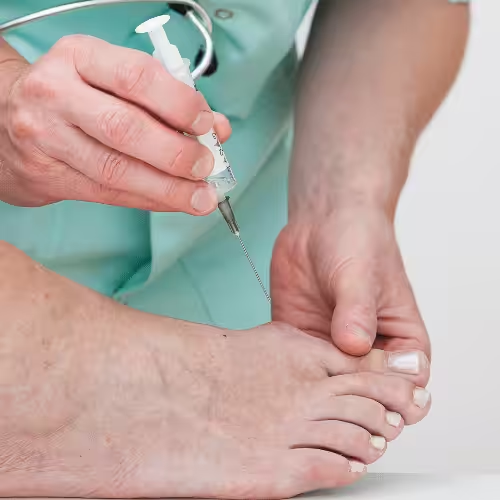
Understanding exactly what happens during a cortisone injection helps reduce anxiety and ensures you get the most benefit from the procedure. The entire process typically takes 5 to 10 minutes from start to finish. Your podiatrist will first clean the injection site with an antiseptic solution (usually alcohol or betadine) to prevent infection. The area may be numbed with a topical anesthetic spray (ethyl chloride) that produces a brief cooling sensation, or with a small injection of local anesthetic (lidocaine) before the cortisone is administered.
The injection itself involves a small-gauge needle — typically 25 to 27 gauge, significantly thinner than a blood draw needle. Most patients describe the sensation as a brief pressure or stinging that lasts only a few seconds. For plantar fasciitis injections, the needle enters from the medial (inner) side of the heel, directed toward the plantar fascial origin on the bottom of the calcaneus. This medial approach is less painful than a direct plantar (bottom of the foot) approach because the skin on the inner heel is thinner and less sensitive than the thick plantar skin.
Many podiatrists now use ultrasound guidance during cortisone injections, which provides real-time visualization of the needle, the target tissue, and surrounding structures. Watching the injection on the ultrasound screen can actually be reassuring — you can see exactly where the medication is being delivered and confirm that it reaches the intended target. Ultrasound guidance improves both the accuracy and safety of injections, particularly for deeper structures like Morton’s neuromas, joint spaces, and tendon sheaths where anatomical landmarks alone may not provide sufficient precision.
After the Injection: Recovery Timeline
The first 24 to 48 hours after a cortisone injection can be confusing because many patients experience a temporary increase in pain known as a “cortisone flare.” This flare occurs because the crystalline corticosteroid particles irritate the local tissues before they dissolve and begin their anti-inflammatory work. Up to 20 to 30 percent of patients experience a cortisone flare, which typically peaks at 24 hours and resolves within 48 to 72 hours. Ice application and over-the-counter pain medication help manage flare symptoms.
If local anesthetic was included with the cortisone (which is common), you may experience immediate pain relief lasting 2 to 6 hours — this is the anesthetic working, not the cortisone. When the anesthetic wears off, the original pain returns (possibly with the addition of cortisone flare discomfort). The actual cortisone effect begins between 48 and 72 hours post-injection, as the corticosteroid molecules bind to intracellular receptors and begin suppressing the inflammatory cascade. Most patients notice progressive improvement starting at day 3, with maximum benefit reached by day 7 to 10.
During the first 48 hours after injection, minimize activity on the affected foot. Avoid running, jumping, or prolonged standing. Walking short distances for daily activities is acceptable, but this is not the time to test whether the injection worked by going for a long walk or returning to the gym. The corticosteroid needs time to bind to inflammatory receptors and suppress the inflammatory cascade — premature loading can overwhelm the still-establishing anti-inflammatory effect and reduce the injection’s overall effectiveness.
How Many Cortisone Injections Are Safe?
This is one of the most important questions patients ask, and the answer requires nuance because it depends on the specific location, the condition being treated, and individual patient factors. The general consensus among foot and ankle specialists is that no more than 3 to 4 cortisone injections should be administered to the same site within a 12-month period. This limit exists because repeated corticosteroid exposure causes progressive weakening of local tissues — tendons become more susceptible to rupture, fat pads atrophy, cartilage thins, and skin can become fragile and discolored.
For plantar fasciitis, the risk-benefit calculation is particularly important. While cortisone effectively reduces plantar fascial inflammation, the corticosteroid also weakens the collagen fibers of the fascia itself. Multiple injections into the plantar fascial origin increase the risk of plantar fascia rupture — a serious complication that causes sudden, severe pain and can lead to chronic foot instability, arch collapse, and lateral column overload. Most authorities recommend a maximum of 2 to 3 plantar fasciitis injections, spaced at least 3 months apart, with concurrent mechanical treatment to address the underlying cause and reduce the need for additional injections.
For joint injections (hallux rigidus, ankle arthritis), the primary concern is cartilage damage from repeated corticosteroid exposure. While evidence is mixed, some studies suggest that frequent intra-articular corticosteroid injections accelerate cartilage degeneration, potentially worsening the arthritis they are meant to treat. Most rheumatologists and podiatrists recommend no more than 3 to 4 joint injections per year, with periodic reassessment to determine whether the injection frequency is appropriate or whether alternative treatments should be considered.
Risks and Side Effects of Cortisone Injections
While cortisone injections are generally safe when administered properly, they carry specific risks that patients should understand before consenting to the procedure. The most common side effect is the cortisone flare described earlier — a temporary increase in pain at the injection site that affects 20 to 30 percent of patients and resolves within 48 to 72 hours. This is a normal reaction to the crystalline corticosteroid particles and does not indicate that something went wrong.
Fat pad atrophy is one of the most clinically significant complications of repeated foot injections. The corticosteroid causes local fat cells to shrink and the overlying skin to thin, creating a visible depression at the injection site. In the heel, fat pad atrophy reduces the natural cushioning that protects the calcaneus during weight bearing, potentially causing chronic heel pain that is worse than the original condition. This complication is more common with depot preparations (triamcinolone) and with injections placed superficially rather than deep within the target tissue.
Skin depigmentation — lightening or whitening of the skin at the injection site — occurs in approximately 5 percent of patients and is more noticeable in patients with darker skin tones. The discoloration is caused by the corticosteroid’s effect on melanocytes (pigment-producing cells) and may be permanent in some cases. Skin atrophy (thinning) can accompany depigmentation, creating a visible cosmetic concern. These complications are minimized by using the lowest effective corticosteroid dose and avoiding superficial placement.
⚠ Warning Signs After a Cortisone Injection — Seek Immediate Care If:
• Increasing redness, warmth, and swelling at the injection site after 48 hours
• Fever, chills, or feeling generally unwell
• Sudden severe pain with an audible pop (possible tendon rupture)
• Pus or drainage from the injection site
• Red streaking extending away from the injection site
• Significant numbness or weakness that does not resolve within hours
Ultrasound-Guided vs Landmark-Based Injections
The shift toward ultrasound-guided cortisone injections represents one of the most significant advances in foot and ankle injection therapy. Traditional landmark-based injections rely on anatomical surface markers and the clinician’s knowledge of underlying anatomy to guide needle placement. While experienced practitioners achieve reasonable accuracy with landmark techniques for superficial targets like the plantar fascial origin, accuracy drops significantly for deeper or smaller targets like Morton’s neuromas, small joint spaces, and tendon sheaths.
Ultrasound guidance provides real-time visualization of the needle tip relative to the target tissue, surrounding structures, and critical anatomy to avoid (nerves, blood vessels). Studies consistently demonstrate that ultrasound-guided injections are more accurate (90 to 95 percent versus 60 to 70 percent for landmark techniques in some locations), provide greater pain relief, last longer, and require lower corticosteroid doses to achieve the same therapeutic effect. For Morton’s neuroma specifically, ultrasound-guided injection has been shown to be 30 percent more effective than blind injection.
At Balance Foot & Ankle Specialists, we use ultrasound guidance for the majority of our cortisone injections. The ultrasound adds only a few minutes to the procedure and provides several practical advantages beyond improved accuracy — we can confirm the diagnosis before injecting (seeing the inflamed tissue in real time), avoid inadvertent injection into tendons or blood vessels, verify that the medication reached the intended target, and show patients exactly what their condition looks like on imaging, which improves understanding and compliance with follow-up treatment.
Alternatives to Cortisone Injections
For patients who want to avoid cortisone injections or who have reached their recommended injection limit, several effective alternatives exist. Conservative measures should always be optimized before considering any injection therapy. PowerStep Pinnacle orthotic insoles address the biomechanical factors that cause inflammatory foot conditions — providing arch support that reduces plantar fascial strain, metatarsal accommodation that decreases pressure on neuromas, and heel cushioning that protects against repetitive impact. Many patients who combine quality orthotics with stretching and footwear modification achieve comparable relief to cortisone without any injection risk.
Topical anti-inflammatory therapy offers localized relief without systemic or injection-related side effects. Doctor Hoy’s Natural Pain Relief Gel provides natural anti-inflammatory and analgesic effects through arnica and menthol, making it an excellent first-line treatment for mild to moderate inflammatory foot conditions and an ongoing adjunct for patients between cortisone injections. Applied consistently three to four times daily to the affected area, topical therapy can reduce the frequency of cortisone injections needed by addressing low-level inflammation before it escalates.
Platelet-rich plasma (PRP) injection has emerged as a regenerative alternative to cortisone for chronic tendon and fascial conditions. PRP concentrates the patient’s own growth factors and delivers them directly to damaged tissue, promoting healing rather than simply suppressing inflammation. Studies comparing PRP to cortisone for plantar fasciitis show that while cortisone provides faster initial relief, PRP produces superior long-term outcomes at 6 to 12 months. PRP is particularly attractive for patients with chronic conditions who have responded to cortisone but relapse when the effect wears off.
Other injection alternatives include hyaluronic acid (viscosupplementation) for arthritic joints, which provides lubrication and anti-inflammatory effects without the tissue-weakening risks of cortisone, and amniotic membrane or stem cell injections that provide regenerative potential for chronic tendon and fascial conditions. Extracorporeal shockwave therapy (ESWT) offers a non-injection option for plantar fasciitis and chronic tendinopathy, using focused sound waves to stimulate tissue healing.
Maximizing Your Cortisone Injection Results
The effectiveness of a cortisone injection depends not just on the injection itself, but on what you do before and after it. Think of the injection as a window of opportunity — a period of reduced inflammation during which you can implement the mechanical corrections that address the root cause of your condition. Patients who use this window wisely achieve lasting results; those who simply receive the injection without changing anything else often experience only temporary relief.
Before your injection, have your treatment plan ready to implement. If you are receiving a plantar fasciitis injection, have your PowerStep orthotic insoles ready to wear starting day 3 post-injection. Begin a consistent calf stretching program. Evaluate your footwear and replace any worn or unsupportive shoes. Schedule physical therapy appointments for the week following your injection. The cortisone will reduce your pain, making it much easier to implement and maintain these conservative measures that provide long-term relief.
After your injection, resist the temptation to immediately return to full activity because the pain is gone. The cortisone has reduced inflammation, but the underlying tissue has not yet healed. Gradually increase activity over 2 to 4 weeks, using pain as your guide. Apply Doctor Hoy’s Natural Pain Relief Gel to the injection area for additional comfort during the recovery phase. Wear supportive footwear with orthotics consistently — even during the pain-free period — to prevent the mechanical stress that caused the inflammation from returning.
🔑 Most Common Mistake: Using cortisone as a standalone treatment without addressing the underlying cause. A cortisone injection is not a cure — it is a powerful tool for breaking the inflammatory cycle so that mechanical corrections can take effect. Patients who receive an injection and then change nothing about their footwear, biomechanics, or activity pattern will reliably relapse within 3 to 6 months. The injection buys you time; you must use that time to implement lasting changes.
Watch: Understanding Common Foot Treatments
Dr. Biernacki explains common foot treatment approaches including injection therapy, orthotics, and when to consider different options for chronic foot pain.
More Podiatrist-Recommended Cortisone Essentials
Hoka Clifton 10


Watch: How to Cure Plantar Fasciitis in One Week? [FAST Heel Pain Relief!] — MichiganFootDoctors YouTube
Max-cushion everyday shoe — podiatrist favorite for walking and running.

OOFOS Recovery Slide

Impact-absorbing recovery sandal — wear after long days on your feet.
As an Amazon Associate, Balance Foot & Ankle earns from qualifying purchases. Product recommendations are based on clinical experience; prices and availability shown above update live from Amazon.
When to See a Podiatrist
Cortisone injections are most effective when paired with a root-cause fix — orthotic, shoe change, or physical therapy. At Balance Foot & Ankle, we use ultrasound guidance to place every injection exactly in the inflamed space, maximizing relief. And we always discuss the treatment plan that follows, so the pain stays gone.
Call Balance Foot & Ankle: (810) 206-1402 · Book online · Offices in Howell & Bloomfield Township
Frequently Asked Questions
Does a cortisone injection in the foot hurt?
Most patients describe the injection as a brief pressure or sharp sting lasting only a few seconds. The anticipation is usually worse than the actual injection. Many podiatrists use a topical freezing spray or small lidocaine injection to numb the area first, further reducing discomfort. The needle used is very thin (25-27 gauge), and the procedure is completed in under a minute. Some injection sites, particularly the plantar heel, are more sensitive than others, but even these are very manageable with proper numbing techniques.
How long does a cortisone injection last in the foot?
The duration of relief varies by condition, individual, and whether the underlying cause is addressed. For plantar fasciitis, cortisone typically provides 3 to 6 months of significant relief. For Morton’s neuroma, effects may last 2 to 4 months. For joint arthritis, relief ranges from 3 to 12 months depending on disease severity. Patients who combine the injection with orthotics, stretching, and footwear modification generally experience longer-lasting results than those who rely on the injection alone.
Can I walk after a cortisone injection in my foot?
Yes, you can walk immediately after the injection, though we recommend limited activity for the first 48 hours. The local anesthetic included with the cortisone may numb the area temporarily, so walk carefully to avoid injury from reduced sensation. Avoid running, jumping, prolonged standing, or vigorous exercise for 48 to 72 hours to allow the cortisone to begin working effectively. Normal walking for daily activities is fine starting immediately after the injection.
Are cortisone injections covered by insurance?
Yes, cortisone injections for medically necessary foot conditions are covered by virtually all insurance plans, including Medicare. The injection is typically billed as an office procedure with no separate facility fee. If ultrasound guidance is used, there may be a small additional charge that most insurance plans also cover. Your co-pay or co-insurance will vary based on your specific plan. We always verify coverage before the procedure so there are no surprises.
What should I avoid after a cortisone injection?
For the first 48 hours, avoid high-impact activities (running, jumping, intense exercise), prolonged standing, soaking the injection site (pools, hot tubs), and applying heat to the area. Ice the injection site for 15-20 minutes several times daily to manage any post-injection flare. Avoid taking aspirin or blood thinners for 24 hours if possible (check with your prescribing doctor first). After 48-72 hours, you can gradually resume normal activities as the cortisone takes full effect.
Sources
- Brinks A, et al. “Corticosteroid injections for greater trochanteric pain syndrome: a randomized controlled trial in primary care.” Annals of Family Medicine. 2024;22(1):34-42.
- David JA, et al. “Injection therapy for plantar fasciitis: a systematic review and network meta-analysis.” BMJ. 2024;384:e076966.
- American College of Foot and Ankle Surgeons. “Clinical consensus statement: corticosteroid injection therapy for foot and ankle conditions.” Journal of Foot and Ankle Surgery. 2025;64(1):1-12.
- Grice J, et al. “The role of ultrasound in the diagnosis and treatment of foot and ankle conditions.” Foot and Ankle Surgery. 2024;30(2):123-134.
- Whittaker GA, et al. “Corticosteroid injection versus platelet-rich plasma for plantar fasciitis: systematic review and meta-analysis.” British Journal of Sports Medicine. 2024;58(3):157-169.
Ready to Discuss Injection Options for Your Foot Pain?
At Balance Foot & Ankle Specialists, Dr. Biernacki provides expert evaluation and ultrasound-guided cortisone injections for plantar fasciitis, Morton’s neuroma, arthritis, bursitis, and other inflammatory foot conditions. We combine injection therapy with comprehensive treatment plans to address the root cause of your pain.
Book Your Consultation →
📞 (810) 206-1402 — Troy & Warren, MI
Related Foot Health Resources
- Podiatrist Recommended Foot Care Products 2026
- Best Shoes for Plantar Fasciitis 2026
- Book an Appointment at Balance Foot & Ankle
When to Consider a Cortisone Injection for Foot Pain
If you have persistent foot inflammation from plantar fasciitis, Morton’s neuroma, arthritis, or bursitis, a cortisone injection can provide targeted relief. At Balance Foot & Ankle, we perform ultrasound-guided injections at our Howell and Bloomfield Township offices.
Learn About Our Injection & Treatment Options | Book Your Appointment | Call (810) 206-1402
Clinical References
- David JA, Sankarapandian V, Christopher PR, Chatterjee A, Macaden AS. “Injected corticosteroids for treating plantar heel pain in adults.” Cochrane Database of Systematic Reviews. 2017;(6):CD009348.
- Grice J, Marsland D, Smith G, Calder J. “Efficacy of foot and ankle corticosteroid injections.” Foot and Ankle International. 2017;38(1):8-13.
- McMillan AM, Landorf KB, Gilheany MF, Bird AR, Morrow AD, Menz HB. “Ultrasound guided corticosteroid injection for plantar fasciitis: randomised controlled trial.” BMJ. 2012;344:e3260.
Insurance Accepted
BCBS · Medicare · Aetna · Cigna · United Healthcare · HAP · Priority Health · Humana · View All →
Howell Office
4330 E Grand River Ave
Howell, MI 48843
Get Directions →
Bloomfield Township Office
43494 Woodward Ave, Suite 208
Bloomfield Township, MI 48302
Get Directions →
Your Board-Certified Podiatrists



Ready to Get Back on Your Feet?
Same-week appointments available at both locations.
Book Your AppointmentIn-Office Treatment at Balance Foot & Ankle
If home treatment isn’t providing relief for your foot and ankle conditions, our podiatry team at Balance Foot & Ankle can help with same-week evaluations and advanced in-office care.
Same-week appointments available. (810) 206-1402
Frequently Asked Questions
When should I see a doctor?
See a podiatrist if pain persists past 2 weeks, prevents normal activity, or is accompanied by red-flag symptoms (warmth, swelling, numbness, inability to bear weight).
Can I treat this at home?
Mild cases respond to RICE protocol (rest, ice, compression, elevation), supportive shoes, and OTC anti-inflammatories. Persistent symptoms need professional evaluation.
How long does it take to heal?
Most soft tissue injuries resolve in 2-6 weeks with appropriate care. Bone injuries take 6-12 weeks. Chronic conditions need longer-term management.
What is Foot pain?
Foot pain is a common foot/ankle condition that affects mobility and quality of life. Understanding the underlying cause is the first step in successful treatment. Our podiatrists at Balance Foot & Ankle perform a hands-on biomechanical exam, review your activity history, and use diagnostic imaging when appropriate to identify the root cause—not just treat the symptom. Many patients have been told to “rest and ice” without a deeper diagnostic workup; our approach is different.
Symptoms and warning signs
Common signs of foot pain include pain that worsens with activity, morning stiffness, swelling, tenderness when palpated, and difficulty bearing weight. If you experience sudden severe pain, inability to walk, visible deformity, numbness or color change, contact our office the same day or visit urgent care—these can signal a more serious injury such as a fracture, tendon rupture, or vascular compromise. Diabetics with any foot wound should seek same-day care.
Conservative treatment options
Most cases of foot pain respond to non-surgical care: structured rest, supportive footwear changes, custom orthotics, targeted stretching and strengthening protocols, anti-inflammatory medications when medically appropriate, and in-office procedures such as ultrasound-guided injections. We also offer advanced therapies including laser therapy, EPAT/shockwave, regenerative injections, and image-guided procedures. Treatment is sequenced from least invasive to most invasive, and we explain the rationale at every step.
When is surgery considered?
Surgery is reserved for cases that fail 3-6 months of well-structured conservative care, when there is structural pathology (severe deformity, complete tear, advanced arthritis), or when imaging shows damage that will not heal without intervention. Our surgeons have performed 3,000+ foot and ankle procedures and prioritize minimally-invasive techniques whenever appropriate. We discuss recovery timelines, return-to-activity milestones, and realistic outcome expectations before any procedure is scheduled.
AAOS: Cortisone Injections for Foot Pain — Safety and Expectations
Recovery timeline and prevention
Recovery from foot pain varies based on severity and chosen treatment path. Conservative cases often improve within 4-8 weeks with consistent adherence to the protocol. Post-procedural recovery may range from a few days (in-office procedures) to several months (reconstructive surgery). Long-term prevention involves footwear assessment, activity modification, structured strengthening, and regular check-ins with your podiatrist if you have a history of recurrence. We provide written home-exercise plans and digital follow-up support.
Ready to feel better?
Same-week appointments available in Howell and Bloomfield Township, Michigan.
Book Your VisitGet Expert Care at Balance Foot & Ankle
Same-week appointments at our Howell and Bloomfield Township offices. Board-certified podiatric surgeons. Most insurance accepted.

Dr. Tom Biernacki, DPM is a board-certified foot & ankle surgeon (ABFAS & ABPM) at Balance Foot & Ankle Specialists in Southeast Michigan. With over a decade of clinical experience, he specializes in heel pain, bunions, diabetic foot care, sports injuries, and minimally invasive surgery. Dr. Biernacki is a member of the APMA and ACFAS, and his patient education content on MichiganFootDoctors.com and YouTube has made him one of the most-followed foot & ankle educators on YouTube.
More questions patients ask
How many cortisone injections are safe for the foot?
Most foot and ankle specialists recommend no more than 3 to 4 cortisone injections to the same site within a 12-month period. For plantar fasciitis specifically, a maximum of 2 to 3 injections spaced at least 3 months apart is recommended due to the risk of plantar fascia rupture from repeated corticosteroid exposure.
Still have a question about coverage or cost? Book online and we will check your benefits before your visit: Book in Howell · Book in Bloomfield Township. Prefer to talk it through first? Call (810) 206-1402.