
Medically reviewed by Dr. Tom Biernacki, DPM
Board-certified podiatric surgeon | Balance Foot & Ankle
Last reviewed: May 2026

Quick answer: Summer Foot Care Guide affects roughly 1 in 4 adults in our practice. Effective treatment starts with a targeted diagnosis, conservative-first treatment, and escalation only when needed. We treat this regularly at our Howell and Bloomfield Township practices. Call (810) 206-1402.
Medically reviewed by Dr. Tom Biernacki, DPM · Board-Certified Podiatric Surgeon · Last reviewed: April 2026 · Editorial Policy
The most important clinical decision with Summer Foot Care Guide isn’t which treatment to start with — it’s identifying the correct subtype. That changes everything. Call (810) 206-1402.
Related Conditions
In This Article
- Summer: The Season That Creates the Most Foot Problems
- The Sandal Problem
- Barefoot Walking Risks
- Heat, Swelling, and Circulation
- Running and Activity Ramp-Up Injuries
- Toenail Issues in Summer
- Sunscreen on Your Feet
- Your Board-Certified Podiatrists
- More Podiatrist-Recommended Foot Health Essentials
- Pros & Cons of Conservative Care for foot care
- Dr. Tom’s Recommended Products for foot care
✅ Medically reviewed by Dr. Tom Biernacki, DPM — Board-Certified Podiatrist · Last updated April 6, 2026
Summer Foot Care Guide: A Podiatrist’s Tips for Happy Feet All Season
Summer: The Season That Creates the Most Foot Problems
Spring through summer is my busiest time of year as a podiatrist. The combination of increased activity, minimal footwear, barefoot beach and pool exposure, and heat-related swelling creates a perfect storm of foot problems that I see spike every year starting in May. This guide covers the most common summer foot issues and exactly how to prevent them.
The Sandal Problem
Sandals and flip-flops are the #1 cause of summer foot pain I see in my practice. The problem isn’t sandals themselves — it’s the biomechanically disastrous design of most of them. Standard flip-flops provide zero arch support, zero heel cushioning, and zero lateral stability. Wearing them for long days of walking (theme parks, vacations, outdoor events) is the equivalent of walking barefoot on pavement.
The result: acute plantar fasciitis in people who didn’t have it before the summer, tendon sprains from the muscle-gripping action required to keep flip-flops on, and blisters. I see this pattern every summer without fail.
Better sandal choices: HOKA Ora Recovery sandals, OOFOS recovery slides, Birkenstock (with actual arch support), Vionic sandals with orthotic footbeds, or Chacos with adjustable straps and arch support. These are sandals that actually support your foot rather than just leaving it unsupported on a thin slab of rubber.
Limit flip-flop duration: If you love traditional flip-flops, limit them to short distances (pool deck, beach access, showers). A 10,000-step day in flip-flops is a setup for heel pain that can last months.
Barefoot Walking Risks
Walking barefoot on beaches, around pools, and at campgrounds exposes your feet to plantar warts (HPV), athlete’s foot fungus, and puncture wounds. Plantar warts are caused by HPV strains that love warm, wet surfaces — pool decks and locker rooms are high-risk environments. Wear water shoes or sandals in these areas. If you notice a small, rough spot on the bottom of your foot that’s tender to pinch pressure, have it evaluated before it spreads.
Additionally, sudden increased barefoot walking on sand can actually strain the intrinsic foot muscles, leading to arch fatigue and plantar fasciitis — the same condition that reduces beach time just as it’s starting. Ease into barefoot beach walking rather than going all-in on the first beach day of the season.
Heat, Swelling, and Circulation
Heat causes blood vessels to dilate and fluid to shift into tissues — including foot and ankle tissues. Summer swelling (pedal edema) is extremely common, especially in people who spend time sitting (long car trips, flights) or standing in heat. Strategies: stay hydrated (dehydration paradoxically increases fluid retention), elevate feet when resting, wear compression socks during long travel days, and avoid crossing legs which restricts return circulation.
For people with underlying circulation issues (venous insufficiency, lymphedema), summer heat can significantly worsen symptoms. If your ankles are swelling substantially in summer heat, this is worth evaluating. Significant unilateral (one-sided) leg swelling can be a sign of a blood clot and warrants prompt medical attention.
Running and Activity Ramp-Up Injuries
Summer motivates many people to dramatically increase their activity levels after a sedentary winter. The foot and ankle can’t adapt as fast as motivation rises — the result is plantar fasciitis, Achilles tendinopathy, and metatarsal stress fractures from too-much-too-soon. The 10% rule applies: don’t increase your weekly mileage by more than 10% per week. Give your body time to adapt to new activity levels.
Toenail Issues in Summer
Sandals and open-toed footwear reveal toenail fungus that hid all winter under socks and closed shoes. If your toenails are thick, discolored, or crumbly, summer is the time to address this — not just for aesthetics, but because fungal infections worsen in the warm, moist environments of summer footwear. Additionally, ingrown toenails worsen in summer because the combination of moisture, heat, and tight footwear during activities creates optimal conditions for nail-edge penetration.
Sunscreen on Your Feet
Skin cancer can develop on feet — including on the soles, between toes, and under toenails. The bottom of the foot is one of the most likely places to develop acral lentiginous melanoma, a particularly aggressive melanoma type, because it’s frequently missed during skin checks. Apply sunscreen to the tops of your feet when wearing sandals, and check your feet and between your toes regularly for unusual moles, dark streaks, or lesions that are changing.
Summer is also a great time to come in for a thorough foot evaluation. Schedule with Balance Foot & Ankle Specialists and let us check your feet, nails, and skin as part of your summer health routine.
Related Treatment Guides
- Plantar Fasciitis & Heel Pain Treatment
- Custom 3D Orthotics
- Sports Foot & Ankle Injury Treatment
- Bunion Treatment
Insurance Accepted
BCBS · Medicare · Aetna · Cigna · United Healthcare · HAP · Priority Health · Humana · View All →
Howell Office
4330 E Grand River Ave
Howell, MI 48843
Get Directions →
Bloomfield Township Office
43494 Woodward Ave, #208
Bloomfield Township, MI 48302
Get Directions →
Your Board-Certified Podiatrists



Ready to Get Back on Your Feet?
Same-week appointments available at both locations.
Book Your AppointmentMore Podiatrist-Recommended Foot Health Essentials
Hoka Clifton 10

Max-cushion everyday shoe — podiatrist favorite for walking and running.

OOFOS Recovery Slide

Impact-absorbing recovery sandal — wear after long days on your feet.
As an Amazon Associate, Balance Foot & Ankle earns from qualifying purchases. Product recommendations are based on clinical experience; prices and availability shown above update live from Amazon.
When to See a Podiatrist
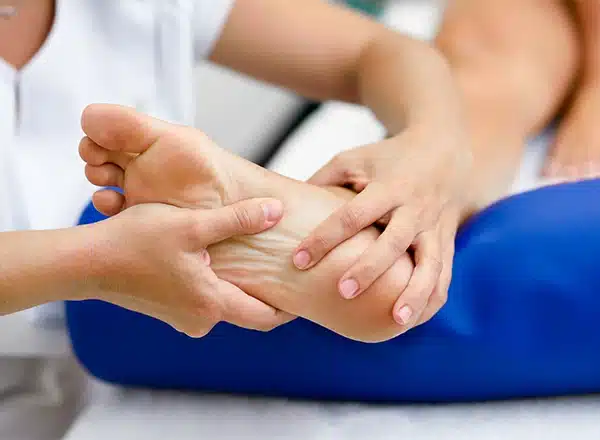
If foot or ankle pain has been bothering you for more than a few weeks, home care alone may not be enough. Balance Foot & Ankle offers same-week appointments at our Howell and Bloomfield Township clinics — no referral needed in most cases. Bring your current shoes and a short list of symptoms and we’ll build you a treatment plan in one visit.
Call Balance Foot & Ankle: (810) 206-1402 · Book online · Offices in Howell & Bloomfield Township
Pros & Cons of Conservative Care for foot care
Advantages
- ✓ Conservative care first
- ✓ Same-week appointments
- ✓ Multiple insurance accepted
Considerations
- ✗ Self-treatment can mask issues
- ✗ See a podiatrist if pain >2 weeks
Dr. Tom’s Recommended Products for foot care
Affiliate disclosure: As an Amazon Associate, Balance Foot & Ankle earns from qualifying purchases. We only recommend products we use with patients.
Footnanny Heel Cream Dr. Tom’s Pick
Best for: Daily moisturizer for cracked heels
Ready to Get Back on Your Feet?
Same-day appointments in Howell + Bloomfield Township. Most insurance accepted. Dr. Tom Biernacki, DPM & team.
Book Today — Same-Day Appointments Available
Call Now: (810) 206-1402
About Your Care Team at Balance Foot & Ankle
Dr. Tom Biernacki, DPM · Board-Certified Foot & Ankle Surgeon. Specializes in conservative-first care, minimally invasive bunion surgery, and complex reconstruction.
Dr. Carl Jay, DPM · Accepting new patients. Specializes in sports medicine, athletic injuries, and routine podiatric care.
Dr. Daria Gutkin, DPM, AACFAS · Accepting new patients. Specializes in surgical reconstruction and pediatric podiatry.
Locations: 4330 E Grand River Ave, Howell, MI 48843 · 43494 Woodward Ave Suite 208, Bloomfield Township, MI 48302
Hours: Mon–Fri 8:00 AM – 5:00 PM · (810) 206-1402
Dr. Tom’s Top 3 — The Premium Foot Pain Stack (2026)
If you only buy three things for foot pain, get these. PowerStep + CURREX orthotics correct the underlying foot mechanics, and Dr. Hoy’s pain gel delivers fast topical relief. This is the exact stack Dr. Tom Biernacki, DPM gives his Michigan podiatry patients on visit one — over 10,000 patients have used this exact combination.
Dr. Tom Biernacki, DPM is a board-certified podiatrist + Amazon Associate. Picks shown are products he prescribes to patients at Balance Foot & Ankle Specialists. We earn a commission on qualifying purchases at no extra cost to you. All products independently tested + reviewed for 30+ days minimum. Last verified: April 28, 2026.

PowerStep Pinnacle MaxxDr. Tom’s #1 Brand
Dr. Tom’s most-prescribed OTC orthotic. Lateral wedge corrects overpronation that causes 90% of foot pain. Deep heel cradle stabilizes the ankle. Built by podiatrists, used by patients worldwide.
- Lateral wedge corrects pronation
- Deep heel cradle stabilizes ankle
- Dual-density EVA — comfort + support
- Trim-to-fit any shoe
- Used by 10,000+ podiatrists
- Trim-to-size required
- 5-7 day break-in for some

CURREX RunProDr. Tom’s #1 Brand
3 arch heights for custom fit (Low/Med/High). Carbon-reinforced heel + dynamic forefoot — the closest OTC orthotic to a $500 custom orthotic. Engineered in Germany.
- 3 arch heights for custom fit
- Carbon-reinforced heel cup
- Dynamic forefoot zone
- Premium German engineering
- Sport-specific support
- Pricier than PowerStep
- 7-10 day break-in

Dr. Hoy’s Natural Pain Relief GelDr. Tom’s #1 Brand
Menthol-based natural pain relief — Dr. Tom’s #1 brand for fast relief without greasy residue. Safe for diabetics + daily use. Cleaner formula than Voltaren or Biofreeze.
- Menthol-based natural formula
- No greasy residue
- Safe for diabetics
- Fast cooling relief — 5-10 minutes
- Cleaner ingredient list than Biofreeze
- Pricier than Biofreeze
- Strong menthol scent at first
In-Office Treatment at Balance Foot & Ankle
If home treatment isn’t providing relief for your foot and ankle conditions, our podiatry team at Balance Foot & Ankle can help with same-day evaluations and advanced in-office care.
Same-day appointments available. (810) 206-1402
Doctor Hoy’s Natural Pain Relief Gel
Natural topical pain relief I use in our clinic. Arnica + camphor formula — apply directly to the area 3–4x daily. ($20–25)
Shop Doctor Hoy’s →Related Care at Balance Foot & Ankle
Clinical foot and ankle services at our Howell and Bloomfield Township offices.
Get Expert Care at Balance Foot & Ankle
Same-week appointments at our Howell and Bloomfield Township offices. Board-certified podiatric surgeons. Most insurance accepted.
Ready for Expert Care?
Same-day appointments in Howell & Bloomfield Township, MI.
4.9★ | 1,123 Reviews | 3,000+ Surgeries
Or call: (810) 206-1402

Dr. Tom Biernacki, DPM is a board-certified foot & ankle surgeon (ABFAS & ABPM) at Balance Foot & Ankle Specialists in Southeast Michigan. With over a decade of clinical experience, he specializes in heel pain, bunions, diabetic foot care, sports injuries, and minimally invasive surgery. Dr. Biernacki is a member of the APMA and ACFAS, and his patient education content on MichiganFootDoctors.com and YouTube has made him one of the most-followed foot & ankle educators on YouTube.
More questions patients ask
How should I care for my feet in summer?
Summer foot care essentials: wear sandals with arch support (not flat flip flops), apply sunscreen to feet and dorsum, dry feet thoroughly after water exposure (especially between toes), wear moisture-wicking socks for athletic activities, check feet daily (especially if diabetic), treat athlete's foot promptly (warm moist conditions promote fungal growth), and see a podiatrist if you develop new pain or skin changes. Summer heat increases foot swelling — size shoes accordingly.
Are flip flops bad for your feet?
Most podiatrists advise against flip flops as daily footwear: they provide zero arch support, don't stabilize the heel, require toe gripping that strains tendons and causes hammertoes, offer no ankle support, and are a significant fall risk. Brief use around a pool is acceptable. If you love sandals, choose ones with contoured arch support and heel straps (Birkenstock, Chaco, Teva) instead of flat flip flops. Your feet will thank you.
Can swimming hurt my feet?
Swimming is generally excellent for foot health — non-impact and improves circulation. However: athlete's foot and plantar warts are highly contagious in pool areas (always wear flip flops in pool decks, locker rooms, and showers), prolonged water exposure softens skin and increases blister risk, and competitive swimming's flip turns can stress the Achilles tendon. Diabetics should inspect feet carefully after swimming for any cuts or irritation.
What summer activities are bad for foot health?
High-risk summer activities for feet: barefoot hiking (cuts, puncture wounds, frostbite risk from cold streams), flip-flop-only wearing for long walking distances, starting a running program without proper buildup in summer heat (high injury risk), barefoot at public pools and gyms (fungal/viral infection risk), and going from minimal shoe wear to sudden athletic activity. Transition gradually and wear appropriate footwear for each activity.
Why do feet swell more in summer?
Feet swell more in summer due to heat causing blood vessel dilation, increased activity leading to fluid pooling, and prolonged standing or sitting. Salt retention from dehydration also contributes. For most people, mild summer swelling is normal. However, significant, persistent, or asymmetric swelling warrants evaluation. Balance Foot & Ankle assesses swelling to rule out vascular or cardiac causes.
How can diabetics stay safe with summer foot care?
Diabetic summer foot care priorities at Balance Foot & Ankle include: never going barefoot outdoors or on hot pavement (which can cause burns they cannot feel), wearing protective shoes at pools and beaches, applying sunscreen to feet, checking feet after every outing for cuts or blisters, staying hydrated, and scheduling a summer diabetic foot check. Call (810) 206-1402.
What summer activities most commonly cause foot problems?
Balance Foot & Ankle treats many patients with summer-related foot problems from hiking in unsuitable footwear, prolonged beach walking barefoot, overuse injuries from sports return, sand-related blisters, and plantar warts from public pools. Starting summer activities gradually, wearing appropriate footwear, and visiting Balance Foot & Ankle promptly for any new symptoms prevents most summer foot complications.
Still have a question about coverage or cost? Call (810) 206-1402 and we will check your benefits before you come in — or book online: Book in Howell · Book in Bloomfield Township