


Turf toe (first MTP sprain) classification and return-to-sport timeline depend on grade — Grade I in 1-2 weeks with buddy taping, Grade III often needs 6-12 weeks plus a stiff carbon plate.
You’ve come to the right podiatry team. Dr. Tom Biernacki, DPM, FACFAS — board-certified foot & ankle surgeon with 3,000+ surgeries — explains exactly what turf toe in athletes means and what works. Call (810) 206-1402 for same-day appointment at Howell or Bloomfield Hills.
Quick answer: Treatment for turf toe first mtp sprain diagnosis treatment athletes follows a stepwise approach: 1) conservative care first (rest, ice, supportive footwear, OTC anti-inflammatories), 2) physical therapy and targeted exercises, 3) in-office treatments (injections, custom orthotics) if conservative fails at 4-6 weeks, 4) surgery for refractory cases. Most patients resolve at step 1 or 2. Call (810) 206-1402.
Medically reviewed by Dr. Tom Biernacki, DPM · Board-Certified Podiatric Surgeon · Last reviewed: April 2026 · Editorial Policy
The most important clinical decision with Turf Toe First Mtp Sprain Diagnosis Treatment Athletes isn’t which treatment to start with — it’s identifying the correct subtype. That changes everything. Call (810) 206-1402.
Quick Answer
Turf Toe: First MTP Sprain in Athletes — Diagnosis, Gr relates to foot/ankle injury — typically caused by trauma or twist. Most patients improve in 4-8 weeks with conservative care. Same-week appointments in Howell + Bloomfield Hills: (810) 206-1402.
Medically reviewed by Dr. Tom Biernacki, DPM — Board-Certified Podiatric Surgeon — Balance Foot & Ankle, Howell & Bloomfield Hills, MI. Last updated April 2026.
▶ Watch
Medically Reviewed by Dr. Tom Biernacki, DPM — Board-Certified Podiatrist, Balance Foot & Ankle Specialists, Michigan. Last updated April 2026.
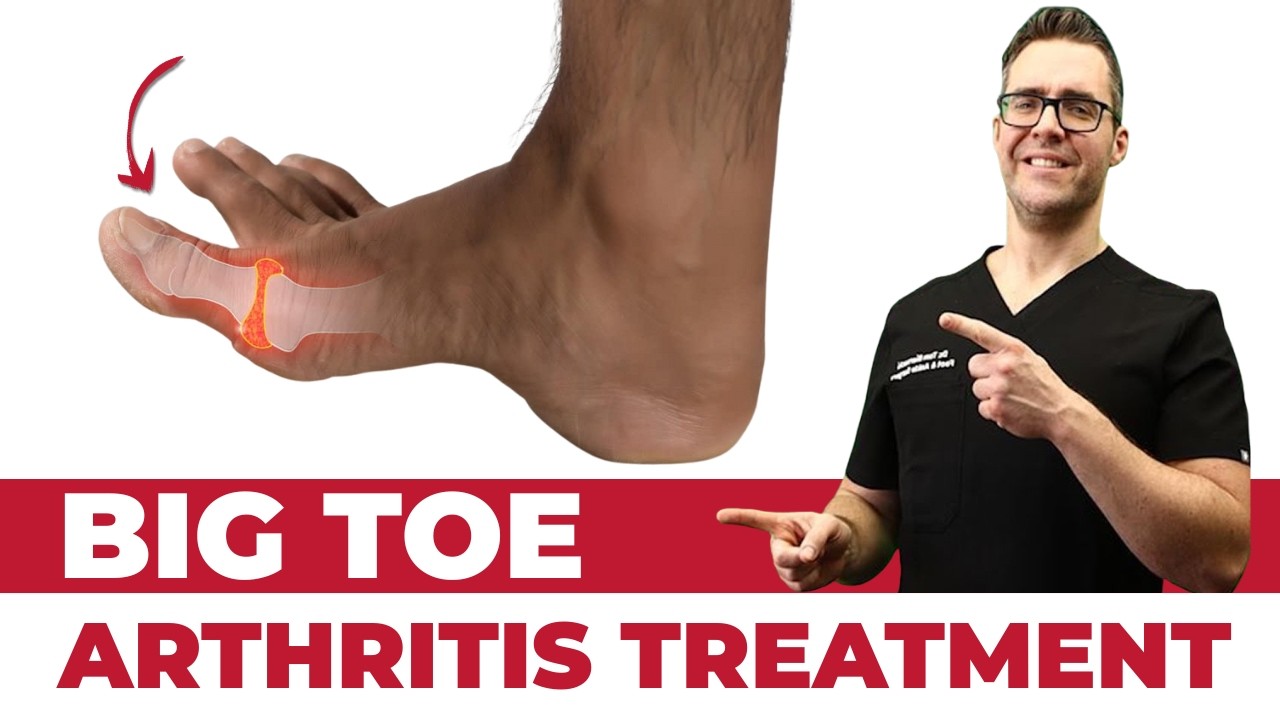
Turf toe is a sprain of the plantar capsular-ligamentous complex at the first metatarsophalangeal (MTP) joint — the result of a forced dorsiflexion (hyperextension) injury of the great toe. Originally described in American football players playing on artificial turf (which provides less give than natural grass), turf toe occurs across multiple sports including soccer, basketball, gymnastics, and martial arts. Despite its simple-sounding name, severe turf toe is a significant athletic injury capable of causing prolonged disability and, if inadequately treated, chronic instability and hallux rigidus (first MTP arthritis) years later.
Anatomy and Mechanism
The plantar aspect of the first MTP joint is stabilized by the plantar plate (fibrocartilaginous structure), the collateral ligaments, the flexor hallucis brevis tendons (which insert into the sesamoids), and the joint capsule itself. This complex is called the “capsuloligamentous complex.”
Turf toe occurs when the great toe is forced into hyperextension — classically: a lineman plants his toe while his body weight is driven forward over a fixed foot, or a gymnast lands with the toe caught on the floor in extension. The plantar capsuloligamentous complex is stretched or torn, the sesamoids may fracture, and in severe cases, osteochondral damage to the first metatarsal head occurs.
Grading: Why It Matters
The Anderson classification grades turf toe by injury severity, and this grading directly dictates management:
- Grade 1: Stretching of the capsuloligamentous complex. Localized tenderness, minimal swelling, no functional loss. Can usually continue playing with protective taping. Recovery: days.
- Grade 2: Partial tear of the capsuloligamentous complex. Diffuse tenderness, moderate swelling and ecchymosis, loss of full motion, pain with passive extension. Protected weight bearing for 3–14 days. Recovery: weeks.
- Grade 3: Complete tear of the capsuloligamentous complex, often with sesamoid fracture, osteochondral injury, or sesamoid retraction. Severe pain and swelling, significant motion loss, inability to toe off. Non-weight bearing initially, possible surgical repair. Recovery: months.
Imaging
Weight-bearing foot X-rays are the first-line study — three views (AP, lateral, sesamoid axial). X-ray findings: sesamoid fracture (acute vs. bipartite sesamoid), sesamoid displacement (proximal migration indicates plantar plate disruption), and first metatarsal head osteochondral damage in severe cases.
MRI is indicated for Grade 2–3 injuries and any athlete with significant swelling, inability to weight bear, or when surgical management is being considered. MRI characterizes: plantar plate tear extent, sesamoid bone marrow edema, osteochondral lesions, and flexor hallucis brevis involvement.
Treatment by Grade
- Grade 1: Taping (dorsiflexion-limiting rigid tape under the toe) and functional rehabilitation. Playing through with appropriate protection is generally acceptable.
- Grade 2: Walking boot or stiff-soled shoe for 1–2 weeks. Custom orthotic with Morton’s extension (rigid carbon fiber plate extending under the hallux) limits dorsiflexion and protects the healing capsuloligamentous complex on return to sport. Progressive rehabilitation over 2–4 weeks.
- Grade 3: Non-weight bearing for 2–4 weeks. MRI to assess full injury extent. Surgical consultation for: complete plantar plate disruption, sesamoid fracture with displacement, osteochondral lesion, or injury failing conservative management. Return to sport: 8–12 weeks minimum; 3–6 months if surgery required.
Long-Term Considerations
Inadequately treated Grade 3 turf toe is a significant injury with long-term consequences. Untreated plantar plate disruption leads to hallux cock-up deformity (loss of flexion stability). Untreated sesamoid injury can progress to avascular necrosis. The first MTP joint subjected to repeated instability develops progressive arthritis (hallux rigidus) — a consequence seen in former football players at significantly higher rates than the general population. Early, appropriate management prevents these long-term sequelae.
Big Toe Injury After a Forced Extension? Get Evaluated.
Dr. Biernacki grades turf toe injuries with on-site X-ray and MRI coordination, and provides custom orthotics for return to sport. Same-week appointments at Bloomfield Hills and Howell.
📞 (810) 206-1402 | Book an Appointment →
📧 Get Dr. Tom’s Free Lab Test Guide
Discover the 5 lab tests every person over 35 should ask their doctor about — explained in plain English by a board-certified physician.
📍 Located in Michigan?
Our board-certified podiatrists treat this condition at two convenient locations. Same-day appointments often available.

Insurance Accepted
BCBS · Medicare · Aetna · Cigna · United Healthcare · HAP · Priority Health · Humana · View All →
Howell Office
4330 E Grand River Ave
Howell, MI 48843
Get Directions →
Bloomfield Hills Office
43494 Woodward Ave, #208
Bloomfield Hills, MI 48302
Get Directions →
Your Board-Certified Podiatrists



Ready to Get Back on Your Feet?
Same-week appointments available at both locations.
Book Your AppointmentDifferential Diagnosis: What Else Could It Be?
Not every case of turf toe / first mtp sprain is straightforward. In our clinic we routinely rule out three look-alike conditions before confirming the diagnosis. If your symptoms don’t match the classic presentation, one of these may explain the pain — which is why physical exam matters more than self-diagnosis.
| Condition | How It Differs |
|---|---|
| Hallux rigidus | Chronic progressive stiffness, not a single hyperextension event; dorsal osteophyte on X-ray. |
| Sesamoiditis | Pain under the joint (at the sesamoid bones), not on top; worse with push-off. |
| Gout | Warm, erythematous, crystal-driven flare; elevated uric acid and crystal arthrocentesis. |
Red Flags — When to See a Podiatrist Now
Seek same-day evaluation at Balance Foot & Ankle if you notice any of the following:
- Inability to push off big toe
- Swelling and bruising across entire joint
- Grade 3 injury on MRI (complete plantar plate tear)
- Progressive hallux valgus after injury
Call (810) 206-1402 or request an appointment. Our Howell and Bloomfield Hills offices reserve same-day slots for urgent foot and ankle issues.
In Our Clinic: What We See
Clinical perspective from Dr. Tom Biernacki, DPM — Balance Foot & Ankle, Howell & Bloomfield Hills, MI:
Turf toe is the injury everyone remembers — a football cleat stuck in the turf, a yoga pose that forced the toe too far back, or a misstep off a curb. In our clinic we grade 1, 2, or 3. Grade 1 is taping, a stiff-soled shoe, and return to play in a week. Grade 2 frequently takes 4-6 weeks and may need a carbon-fiber plate inside the shoe. Grade 3 plantar-plate tears need imaging and often surgical repair. We have patients keep a photo of the toe in neutral so we can track swelling and bruising across follow-ups. Return-to-sport is earned, not timed.
More Podiatrist-Recommended Ankle Sprain Essentials
Stability Walking/Running Shoe
Brooks Adrenaline GTS 25 — lateral support during recovery walking.
KT Tape for Ankle Support
KT Tape — proprioceptive support for athletic return-to-play.
Supportive Insole

![#1 Big Toe Joint Pain Cure [Arthritis? Sesamoiditis? Turf Toe? Gout?]](https://www.michiganfootdoctors.com/wp-content/cache/flying-press/307076f00c306b5df44c95d32ca0514e.jpg)
Watch: #1 Big Toe Joint Pain Cure [Arthritis? Sesamoiditis? Turf Toe? Gout?] — MichiganFootDoctors YouTube
PowerStep Pinnacle — arch support reduces re-injury risk during recovery.
As an Amazon Associate, Balance Foot & Ankle earns from qualifying purchases. Product recommendations are based on clinical experience; prices and availability shown above update live from Amazon.

When to See a Podiatrist
A sprain that hasn’t fully recovered after 6 weeks often has residual ligament laxity or occult fracture that keeps the ankle unstable. Balance Foot & Ankle X-rays and stress-tests every lingering sprain — if the ligament is torn, we offer bracing, PRP, and (for chronic instability) minimally-invasive repair. Don’t keep re-rolling the same ankle; let us stabilize it properly.
Call Balance Foot & Ankle: (810) 206-1402 · Book online · Offices in Howell & Bloomfield Hills
Pros & Cons of Conservative Care for foot care
Advantages
- ✓ Conservative care first
- ✓ Same-week appointments
- ✓ Multiple insurance accepted
Considerations
- ✗ Self-treatment can mask issues
- ✗ See a podiatrist if pain >2 weeks
Dr. Tom’s Recommended Products for foot care
Affiliate disclosure: As an Amazon Associate, Balance Foot & Ankle earns from qualifying purchases. We only recommend products we use with patients.
Footnanny Heel Cream Dr. Tom’s Pick
Best for: Daily moisturizer for cracked heels
Ready to Get Back on Your Feet?
Same-day appointments in Howell + Bloomfield Hills. Most insurance accepted. Dr. Tom Biernacki, DPM & team.
Book Today — Same-Day Appointments Available
Call Now: (810) 206-1402
About Your Care Team at Balance Foot & Ankle
Dr. Tom Biernacki, DPM · Board-Certified Foot & Ankle Surgeon. Specializes in conservative-first care, minimally invasive bunion surgery, and complex reconstruction.
Dr. Carl Jay, DPM · Accepting new patients. Specializes in sports medicine, athletic injuries, and routine podiatric care.
Dr. Daria Gutkin, DPM, AACFAS · Accepting new patients. Specializes in surgical reconstruction and pediatric podiatry.
Locations: 4330 E Grand River Ave, Howell, MI 48843 · 43494 Woodward Ave Suite 208, Bloomfield Hills, MI 48302
Hours: Mon–Fri 8:00 AM – 5:00 PM · (810) 206-1402
Frequently Asked Questions
How long does treatment take to work?
Most patients see improvement in 4-8 weeks with consistent conservative care. Persistent symptoms after 8 weeks need imaging and escalation.
When is surgery needed?
Surgery is reserved for cases that fail 3-6 months of conservative care, structural deformities, or fractures requiring stabilization.
Is this covered by insurance?
Most diagnostic visits and conservative treatments are covered by Medicare and major insurers. Custom orthotics often require diabetic or post-surgical justification.
In-Office Treatment at Balance Foot & Ankle
If home treatment isn’t providing relief for your foot and ankle conditions, our podiatry team at Balance Foot & Ankle can help with same-day evaluations and advanced in-office care.
Same-day appointments available. (810) 206-1402
Doctor Hoy’s Natural Pain Relief Gel
Natural topical pain relief I use in our clinic. Arnica + camphor formula — apply directly to the area 3–4x daily. ($20–25)
Shop Doctor Hoy’s →Ready for Expert Care?
Same-day appointments in Howell & Bloomfield Hills, MI.
4.9★ | 1,123 Reviews | 3,000+ Surgeries
Or call: (810) 206-1402

Dr. Tom Biernacki, DPM is a board-certified foot & ankle surgeon (ABFAS & ABPM) at Balance Foot & Ankle Specialists in Southeast Michigan. With over a decade of clinical experience, he specializes in heel pain, bunions, diabetic foot care, sports injuries, and minimally invasive surgery. Dr. Biernacki is a member of the APMA and ACFAS, and his patient education content on MichiganFootDoctors.com and YouTube has made him one of the most-followed foot & ankle educators on YouTube.