


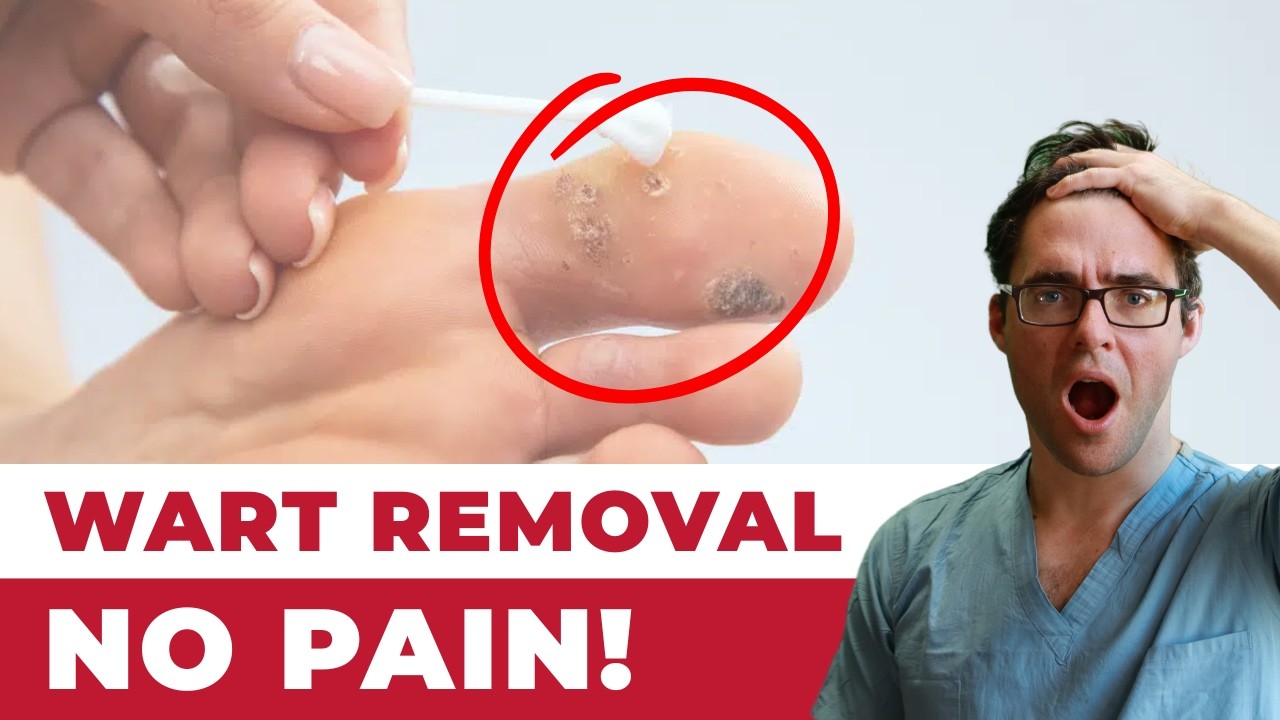
Watch: Plantar Wart Removal: How to Get Rid of a Foot Wart with No PAIN! — MichiganFootDoctors YouTube
Foot pain isn't resolving?
Same-week appointments at Howell & Bloomfield Hills
Table of Contents
- What Is a Plantar Wart
- What Causes a Wart on the Bottom of Your Foot
- How to Tell If It Is a Plantar Wart
- Plantar Wart vs Corn vs Callus
- Home Treatments That Work
- In-Office Treatments
- Products for Plantar Wart Relief
- Red Flags: When to See a Podiatrist
- Most Common Wart Treatment Mistake
- Frequently Asked Questions
- Sources
You noticed a hard, painful spot on the bottom of your foot — maybe on the heel, the ball of the foot, or under a toe. When you look closely, you see tiny black dots in a circular pattern and the normal fingerprint lines of your skin seem to disappear around it. That is a plantar wart. In our clinic, we treat dozens of plantar warts each month — it is one of the most common podiatric complaints in adults and children alike, and one of the most frustrating when home remedies fail to clear it.
What Is a Plantar Wart
A plantar wart is a benign skin growth on the plantar surface (sole) of the foot caused by infection with human papillomavirus (HPV), most commonly strains HPV-1, HPV-2, HPV-4, and HPV-63. Unlike warts on the hands that grow outward, plantar warts are forced inward by the pressure of body weight. This inward growth drives the wart deep into the dermis, surrounding it with a thick callus layer that protects it — and makes treatment more difficult. The characteristic “black dots” visible in a plantar wart are thrombosed capillaries, small blood vessels the wart has recruited to sustain itself. Their presence is a reliable diagnostic sign distinguishing a wart from a simple callus.
Plantar warts can occur singly (solitary wart) or cluster together into a mosaic pattern covering a large area of the heel or ball of the foot. Mosaic warts are particularly treatment-resistant because the viral load is higher and the interconnected root system is more difficult to eliminate. Children and young adults are most susceptible because their immune systems have not yet developed HPV-specific immunity, but we see plantar warts in patients of all ages — especially those with immunosuppression from diabetes, chemotherapy, or HIV.
What Causes a Wart on the Bottom of Your Foot
Plantar warts are caused by direct contact with HPV from a contaminated surface, followed by viral entry through a micro-break in the skin. The virus thrives in warm, moist environments — which is why transmission most commonly occurs in communal shower facilities, swimming pool decks, locker rooms, and yoga studios. You do not need to have a visible wound for the virus to enter: HPV can penetrate through dry, cracked skin, minor abrasions, or areas softened by prolonged moisture.
Key risk factors include walking barefoot in public spaces, excessive foot sweating (hyperhidrosis creates microfissures in skin), a history of prior plantar warts (suggests reduced local immunity), immunosuppression, and direct skin-to-skin contact with an infected person. The virus can survive on surfaces for months under the right conditions, which is why a single exposure in a gym shower can result in infection even weeks later. Wearing flip-flops or water shoes in communal facilities is the most effective prevention strategy.
How to Tell If It Is a Plantar Wart
The hallmark of a plantar wart is the combination of interrupted skin lines and visible black dots. Normal skin on the sole has continuous friction ridge lines (similar to fingerprints). A plantar wart interrupts these lines because it replaces normal skin architecture with viral-infected tissue. Looking carefully at a suspected wart, you will notice the normal skin lines bend around the wart rather than passing through it. The black dots (thrombosed capillaries) may not be visible until the overlying callus is pared away — this is one of the first things a podiatrist does during examination.
Pain pattern is also diagnostic. Plantar warts hurt most with lateral (side-to-side) compression — if you squeeze the lesion from the sides between your thumb and forefinger, a wart will be more painful than pressing directly on it. A callus is the opposite: direct pressure hurts most, and lateral squeezing produces little pain. This squeeze test is one of the fastest clinical differentiators. Additionally, plantar warts tend to be focal — one distinct spot — whereas callus tends to distribute diffusely across a weight-bearing area.
Plantar Wart vs Corn vs Callus
Three conditions commonly cause hard, painful spots on the bottom of the foot — and confusing them leads to ineffective self-treatment. Here is how to differentiate them:
| Feature | Plantar Wart | Corn (Heloma Durum) | Callus |
|---|---|---|---|
| Cause | HPV viral infection | Bony pressure / friction point | Diffuse friction / shear |
| Skin lines | Interrupted (lines bend around lesion) | Intact (lines pass through) | Intact (lines pass through) |
| Black dots | Present (thrombosed capillaries) | Absent — central translucent core | Absent |
| Borders | Discrete, circular | Discrete, central core | Diffuse, no sharp border |
| Squeeze test | Lateral compression = more pain | Direct pressure = more pain | Minimal pain with either |
| Most common location | Heel, ball of foot, under toes | 5th toe lateral, between toes | Ball of foot, heel |
| Treatment | Antiviral / destructive (salicylic acid, cryo, cantharidin) | Debridement + offloading pad | Debridement + shoe change |
Home Treatments That Work
Over-the-counter treatments work for small, superficial, recently acquired plantar warts in immunocompetent adults. They require consistency over 8–12 weeks and paring of dead skin before each application. Most OTC failures occur because patients apply the medication to callus-covered wart tissue that blocks absorption, stop treatment after a few weeks when they see no visible change, or use the wrong formulation for a deep plantar wart. Here is what actually works:
Salicylic Acid (17–40%)
Salicylic acid is the most evidence-backed OTC option. It works by keratolysis — dissolving the protein in the wart tissue — and by stimulating an immune response to the HPV virus. The protocol matters: soak the foot in warm water for 5 minutes to soften the skin, use a pumice stone or emery board to gently file the dead skin off the top of the wart (this is critical — DO NOT skip this step), apply salicylic acid liquid or patch, cover with a bandage, and repeat daily. Higher concentrations (40%) are more effective for plantar warts than standard 17% hand wart preparations. Wart removal pads pre-medicated with 40% salicylic acid are the most convenient format for the sole of the foot.
Duct Tape Occlusion
Duct tape occlusion theory proposes that covering a wart with silver duct tape for 6 days, removing it, filing the wart, leaving it exposed overnight, and repeating the cycle triggers an immune response to the underlying HPV. Initial studies showed promising results, though larger RCTs have been less conclusive. The mechanism is thought to involve local hypoxia and skin irritation that alerts the immune system. It is a reasonable adjunct therapy alongside salicylic acid and causes no harm. Use medical-grade adhesive tape if duct tape irritates the skin.
When OTC Treatment Is Failing
If you have used salicylic acid consistently for 8–12 weeks and the wart has not visibly shrunk, or if the wart is large (>1 cm), clustered (mosaic), painful enough to affect gait, or located under a weight-bearing callus, it is time to see a podiatrist. In-office treatments have significantly higher success rates for persistent plantar warts than continued home treatment.
In-Office Treatments for Plantar Warts
In-office treatment offers substantially higher cure rates than OTC approaches, especially for deep, mosaic, or resistant plantar warts. The choice of treatment depends on wart size, location, depth, number of prior treatments, and patient age. At Balance Foot & Ankle, we tailor the approach to each patient after clinical examination and debridement.
Cantharidin (“Beetle Juice”)
Cantharidin is a vesicant (blister-inducing) compound derived from blister beetles, applied topically in office under a waterproof bandage. It causes a blister to form under the wart within 24 hours, lifting the wart away from normal tissue. The blister is debrided at a follow-up visit, and the process is repeated as needed. Cantharidin is painless at application (making it particularly well-tolerated in children), highly effective for plantar warts, and leaves no scar. We use it frequently as a first-line in-office treatment for pediatric and adult plantar warts. Patients should be counseled that the blister can be uncomfortable during the 24–48 hours after application.
Cryotherapy (Liquid Nitrogen)
Cryotherapy destroys wart tissue by applying liquid nitrogen at −196°C, causing ice crystal formation inside viral cells that ruptures them and triggers an immune response. A single freeze-thaw cycle lasts 10–20 seconds per wart. Most plantar warts require 2–6 in-office cryotherapy sessions spaced 2–4 weeks apart for complete resolution. Plantar warts are harder to freeze effectively than hand warts because of the overlying callus — thorough paring before cryotherapy is essential. Mild discomfort during and after freezing is expected, and a small blister or dark eschar may form at the treated site. Cure rates for plantar warts with cryotherapy alone are approximately 50–70%, improving significantly when combined with salicylic acid home treatment between sessions.
Intralesional Immunotherapy (Candida Antigen or Bleomycin)
For resistant plantar warts, intralesional injection of Candida antigen or dilute bleomycin can stimulate a robust local immune response that eliminates the wart. Candida antigen injection uses the fact that most adults have pre-existing Candida immunity; injecting the antigen directly into the wart triggers a delayed hypersensitivity reaction that destroys the HPV-infected tissue. Studies report clearance rates of 70–85% for resistant warts with intralesional Candida antigen. Bleomycin injection destroys dividing cells and is reserved for large or particularly resistant warts unresponsive to other treatments.
Laser Treatment
Pulsed dye laser targets the small blood vessels feeding the wart, cutting off its blood supply. It is particularly useful for large mosaic warts or warts unresponsive to chemical and cryotherapy approaches. CO2 laser ablation physically vaporizes wart tissue. Laser treatment is more expensive and may require local anesthesia, but offers high success rates for recalcitrant cases. Healing time is 1–2 weeks for pulsed dye laser and 2–4 weeks for CO2 ablation.
Products for Plantar Wart Pain Relief
PowerStep Pinnacle Insoles — Cushion While Treating
Walking on a plantar wart is painful because every step drives pressure into the lesion. PowerStep Pinnacle’s dual-layer cushioning redistributes pressure away from focal points on the ball of the foot and heel — the two most common plantar wart locations. Using a cushioned insole during wart treatment reduces daily pain, prevents compensation (limping that leads to hip and knee strain), and makes it easier to stay active while completing a multi-week treatment course.
Best for: Reducing step-by-step pain over a wart on the heel or ball of foot; daily use during OTC or in-office treatment course; athletic patients who need to stay active.
Not Ideal For: Warts between the toes (metatarsal pad would be more targeted); does not treat the wart itself — only provides comfort during healing; will not work if the shoe itself is too tight.
Doctor Hoy’s Natural Pain Relief Gel — Topical Comfort
While Doctor Hoy’s does not treat HPV directly, its arnica and camphor formula reduces the local inflammation and soreness that surrounds a plantar wart — particularly during cryotherapy recovery or after aggressive paring. Apply to the skin around (not directly on) an open or blistered wart to soothe peri-lesional irritation. It is a natural alternative to OTC ibuprofen gel for patients managing wart-associated foot pain.
Best for: Peri-lesional soreness after cryotherapy or cantharidin treatment; inflammation-related aching around a deep plantar wart; patients avoiding oral NSAIDs.
Not Ideal For: Application directly on open wart blisters or broken skin; does not kill HPV; not a substitute for definitive wart treatment.
⚠ Red Flags: See a Podiatrist Now
- You are diabetic — plantar warts can mask or trigger ulceration in patients with peripheral neuropathy; do not attempt OTC treatment
- The lesion is bleeding, growing rapidly, or has irregular borders — rare but important to rule out amelanotic melanoma or other skin malignancy that can mimic a wart
- Wart has not improved after 12 weeks of consistent OTC treatment — continuing to self-treat a resistant wart delays effective care
- Wart is causing you to alter your gait — compensatory limping causes secondary knee, hip, and back pain that compounds the problem
- Multiple warts spreading rapidly — may indicate significant immune suppression warranting medical evaluation
- Wart involves the area under a toenail — subungual warts require specialty treatment and may cause nail deformity if untreated
Most Common Plantar Wart Treatment Mistake
The most common mistake we see is using salicylic acid without first removing the overlying callus. Plantar warts build up a thick layer of dead skin on their surface — this is not the wart itself, but a protective callus that blocks topical treatment from reaching the HPV-infected tissue underneath. Applying salicylic acid directly to an unpared wart is like painting over a wall without sanding it: the product sits on top and has minimal penetration to where it needs to work. The second most common mistake is stopping treatment when the wart “looks better” — warts require treatment until the black dots disappear and normal skin lines return through the previously affected area. Stopping early, even when the surface looks clear, leaves residual viral tissue that will regrow.
Plantar Wart Treatment at Balance Foot & Ankle
Dr. Tom Biernacki offers cantharidin, cryotherapy, and intralesional immunotherapy for plantar warts at our Howell and Bloomfield Hills offices. Most warts clear in 2–4 visits. Same-day appointments available.
Book Appointment (810) 206-1402Frequently Asked Questions
Will a plantar wart go away on its own?
In children, plantar warts sometimes resolve spontaneously over 1–2 years as the immune system develops HPV-specific immunity. In adults, spontaneous resolution is less common and often takes several years if it occurs at all. Given the pain and potential for spread, we recommend active treatment rather than watchful waiting for adults — especially if the wart is painful, growing, or affecting normal walking.
How do I know if my plantar wart is gone?
A plantar wart is fully resolved when: (1) the black dots (thrombosed capillaries) are completely gone, (2) normal skin friction ridge lines (fingerprint-like lines) return across the previously affected area, and (3) the spot is no longer painful with lateral squeezing. If you par the area and only see normal skin texture with no black dots and no interruption of skin lines, the wart is cleared. Continuing treatment after this point is unnecessary.
Are plantar warts contagious?
Yes — plantar warts are caused by HPV and can spread to other people through contaminated surfaces or direct contact, and can also autoinoculate to other areas of your own foot. To minimize spread: wear flip-flops in shared showers and pool decks, do not pick or shave the wart (spreading viral particles), keep the wart covered with a bandage, and do not share towels, socks, or shoes with others during active infection. Household members should wear sandals in shared bathrooms.
When should I see a podiatrist for a wart on the bottom of my foot?
See a podiatrist if: the wart is painful enough to affect your walking, you have multiple warts spreading, OTC treatment hasn’t worked after 8–12 weeks, you are diabetic or immunosuppressed, the lesion has unusual features (irregular border, bleeding, rapid growth), or the wart is in an area that makes OTC self-application difficult. Earlier professional treatment typically results in fewer total office visits and faster resolution than delaying after failed home treatment.
Does insurance cover plantar wart treatment?
Yes — plantar wart treatment by a podiatrist is typically covered by Medicare Part B and most private insurance as a medically necessary service when warts cause pain or functional limitation. A co-pay or co-insurance usually applies. Cosmetic removal (i.e., warts causing no pain or functional problem) may not be covered. Call (810) 206-1402 and we’ll verify your benefits before your visit.
Sources
- Kwok CS, Gibbs S, Bennett C, Holland R, Abbott R. “Topical treatments for cutaneous warts.” Cochrane Database of Systematic Reviews. 2012;9:CD001781.
- Lipke MM. “An armamentarium of wart treatments.” Clinical Medicine & Research. 2006;4(4):273–293.
- Muñoz-Santos C, Guilabert A, Moreno N, Mascaró JM Jr. “Intralesional immunotherapy with Candida antigen for plantar warts.” Actas Dermosifiliograficas. 2009;100(10):905–7.
- Bruggink SC, Gussekloo J, Berger MY, et al. “Cryotherapy with liquid nitrogen versus topical salicylic acid application for cutaneous warts in primary care.” CMAJ. 2010;182(15):1624–30.
- Micali G, Dall’Oglio F, Nasca MR, Schwartz RA. “Management of cutaneous warts: an evidence-based approach.” American Journal of Clinical Dermatology. 2004;5(5):311–7.
Frequently Asked Questions
When should I see a podiatrist?
See a podiatrist if: foot or ankle pain has lasted more than 2–4 weeks without improvement, you’re changing your gait to avoid pain, you have an open wound or sore that isn’t healing, you notice nail discoloration or thickening, you have diabetes and any foot concern, or pain is severe enough to wake you at night. Most foot conditions are easier and cheaper to treat early — what starts as a minor issue can become a surgical problem with months of delay.
What is the difference between a podiatrist and an orthopedic surgeon?
Podiatrists (DPM — Doctor of Podiatric Medicine) specialize exclusively in the foot, ankle, and lower leg. Orthopedic surgeons (MD/DO) have broader musculoskeletal training but variable foot/ankle subspecialization. For foot and ankle-specific problems, a podiatrist often has more focused training and experience. For injuries involving the leg above the ankle, complex pediatric cases, or multi-level reconstruction, orthopedic consultation may be appropriate. We frequently co-manage patients with orthopedic colleagues.
How do I know if my foot pain is serious?
Signs that warrant same-day or next-day evaluation: severe pain that appeared suddenly without clear cause, swelling, redness, and warmth that appeared suddenly (possible gout, infection, or Charcot fracture), an open wound that looks infected (redness spreading, pus, warmth), inability to bear weight, or any foot problem in a diabetic patient. Pain that’s been present for weeks and is stable is important but not an emergency — schedule within 1–2 weeks.
Can foot problems cause back and knee pain?
Yes — this is a kinetic chain effect. Abnormal foot mechanics (overpronation, supination, leg length discrepancy) cause compensatory changes in knee, hip, and lumbar alignment. Roughly 30% of patients presenting to our clinic with knee pain have a treatable foot-level biomechanical cause. Correcting foot mechanics with orthotics or appropriate footwear often provides significant knee and back relief. If you have chronic knee or back pain and haven’t had your foot mechanics evaluated, it’s worth a consult.
Are orthotics worth it?
For the right conditions, yes — custom orthotics are among the most cost-effective interventions in podiatry. They’re most effective for: plantar fasciitis, flat feet with secondary knee/back pain, leg length discrepancy, metatarsalgia, posterior tibial tendon dysfunction, and diabetic foot pressure management. Quality OTC orthotics ($35–60) resolve symptoms for 60% of patients with mild-to-moderate conditions. Custom orthotics are appropriate when OTC options have failed or when the biomechanical problem is complex. We cast custom orthotics in-office.
How do I choose the right running shoes?
Start with your foot type (flat, neutral, high arch) and running pattern (overpronator, neutral, supinator). Flat feet and overpronators do best in stability or motion-control shoes. Neutral feet do well in neutral-cushioned shoes. High arches need maximum cushioning with flexible soles. Always buy running shoes at the end of the day (foot swelling peaks then), get properly fitted by a specialist, and replace every 300–500 miles. If you’ve been injured repeatedly, a gait analysis can identify the mechanical flaw driving your injury pattern.
What is the difference between a sprain and a fracture?
A sprain is a ligament injury (the tissue connecting bones); a fracture is a break in the bone itself. Both can occur with the same trauma (ankle roll, fall). The old test — ‘if you can walk, it’s not broken’ — is wrong; many fractures are initially weight-bearable. Key differences: a fracture typically produces localized bone tenderness along the bone itself, while a sprain is tender over the ligament. X-ray is the standard to differentiate. High-grade sprains without proper treatment can be as disabling as fractures.
How do I prevent foot and ankle injuries?
The four most impactful prevention strategies: (1) Supportive, appropriately fitted footwear for your foot type and activity. (2) Gradual activity progression — the 10% rule (never increase weekly mileage or intensity by more than 10%). (3) Regular calf and ankle mobility work. (4) Strengthening the posterior tibial tendon, peroneals, and intrinsic foot muscles. Most overuse injuries are preventable; most acute injuries are not — but ankle sprain recurrence (60–70% without rehab) is prevented by balance and proprioception training.
Same-Week Appointments in Howell & Bloomfield Hills
Three board-certified podiatric surgeons. 1,123+ five-star reviews. Most insurance accepted.
📋 Dr. Tom Biernacki, DPM, FACFAS answers:
A plantar wart on the bottom of the foot typically feels like a small, hard, grainy bump with a rough surface — similar to stepping on a pebble. Unlike other growths, plantar warts interrupt the skin lines (dermatoglyphics) and often show small black dots in the center, which are clotted capillaries. They are painful when squeezed from the sides rather than directly. Mosaic warts spread across a larger area and may be less painful. If you are unsure whether a growth is a wart, callus, corn, or something else, a podiatric evaluation is recommended — treatment varies significantly by diagnosis.

Dr. Tom Biernacki, DPM is a board-certified foot & ankle surgeon (ABFAS & ABPM) at Balance Foot & Ankle Specialists in Southeast Michigan. With over a decade of clinical experience, he specializes in heel pain, bunions, diabetic foot care, sports injuries, and minimally invasive surgery. Dr. Biernacki is a member of the APMA and ACFAS, and his patient education content on MichiganFootDoctors.com and YouTube has made him one of the most-followed foot & ankle educators on YouTube.