

Quick answer: What Causes Numbness In Feet affects roughly 1 in 4 adults in our practice. Effective treatment starts with a targeted diagnosis, conservative-first treatment, and escalation only when needed. We treat this regularly at our Howell and Bloomfield Township practices. Call (810) 206-1402.
✅ Medically Reviewed by Dr. Tom Biernacki, DPM
Board-certified podiatric physician & surgeon | Balance Foot & Ankle | Updated April 2026
Medically reviewed by Dr. Tom Biernacki, DPM · Board-Certified Podiatric Surgeon · Last reviewed: April 2026 · Editorial Policy
The most important clinical decision with What Causes Numbness In Feet isn’t which treatment to start with — it’s identifying the correct subtype. That changes everything. Call (810) 206-1402.
Quick Answer
What Causes Numbness in Feet? 2026: Diagnosis Guide Podiatr relates to foot neuropathy — typically caused by nerve compression or systemic. Most patients improve in varies by cause with conservative care. Same-week appointments in Howell + Bloomfield Township: (810) 206-1402.
✅ Medically reviewed by Dr. Tom Biernacki, DPM — Board-Certified Podiatrist · Last updated April 6, 2026
Numb Feet Aren’t Just Annoying
What Causes Numbness in Feet: Numbness in the Bottom of Feet & Legs
Do you have numbness in the bottom of your feet? Numbness in the legs and feet or toes? We show the BEST treatment for numbness in the feet!
BOOK A CONSULTATION https://youtu.be/rr0sG8moSHQ
What Causes Numbness in the Feet? Understanding the Warning Signs
Numbness in the feet can feel like tingling, pins and needles, or complete loss of sensation. It often indicates a problem with nerve function and can stem from a range of conditions—from poor circulation to peripheral neuropathy, diabetes, nerve compression, or even vitamin deficiencies. In some cases, numbness may be temporary due to sitting awkwardly or wearing tight shoes, but chronic or recurring numbness should never be ignored. Proper diagnosis by a podiatrist or neurologist is key to identifying the root cause and beginning effective treatment before complications arise.
Concerned About Numb Feet? Let a Specialist Help.
If you’re experiencing numbness in your feet, don’t wait to find out why. At Balance Foot & Ankle Specialists in Michigan, our expert podiatrists use advanced diagnostics to get to the root of your symptoms and provide relief. Schedule your appointment today and start walking with confidence again. BOOK NOW
Numbness in Bottom of Feet, Balls of Feet & Toes Treatment Video
Treatment for Numbness in Legs, Feet & Toes Video Summary
Do you have nerve pain or neuropathic pain that WON’T GET BETTER? We go over the BEST peripheral neuropathy treatment for nerve damage in the feet! How bad can peripheral neuropathy get? It can get pretty bad, but eventually, it does level off with good peripheral neuropathy treatment. If you have tingling in the feet, numbness in the feet, or nerve damage in the feet, this may be something called peripheral neuropathy. NOTE: To be clear peripheral neuropathy has many different causes & can be not curable. 0:00 Foot neuropathy and nerve damage in the foot is called peripheral neuropathy 0:59 What is neuropathy in feet and hands & Peripheral neuropathy causes 2:05 See a podiatrist for peripheral neuropathy 3:37 Back injury is called radiculopathy 5:55 Tarsal tunnel syndrome nerve damage 6:32 Morton’s neuroma peripheral neuropathy in the toes and foot 7:24 Peripheral Neuropathy Symptoms 7:40 Diabetic peripheral neuropathy foot pain 8:25 Alcoholic neuropathy pain in feet 11:05 Peripheral nerve damage due to overpronation of the foot 11:47 Best Shoes for peripheral neuropathy 12:03 Best insoles for peripheral neuropathy 12:40 Best ankle and foot braces for peripheral neuropathy 13:41 Causes of neuropathy in feet 14:12 Home remedies for neuropathy in feet 14:46 Peripheral neuropathy in feet massage and stretches 15:31 Best creams for peripheral neuropathy in feet 15:46 Injections for nerve damage and peripheral neuropathy 17:13 Peripheral neuropathy and blood flow problems 18:40 Compression devices of nerve pain 19:32 Nerve damage from sitting 20:00 Neuropathy and burning pain in feet at night 22:36 Best vitamins for peripheral neuropathy in feet 25:02 Peripheral neuropathy medications 27:16 Acupuncture for peripheral neuropathy 27:40 Surgery for peripheral neuropathy 29:30 Exercises for peripheral neuropathy 30:11 Stretches for peripheral neuropathy 30:54 Best products for peripheral neuropathy

Podiatrist Care in Michigan for Numbness in the Feet: If you are in Michigan, come see us for your foot numbness, podiatrists can help!
What Causes Numbness in the Feet?
Foot numbness, also known as peripheral neuropathy, is a problem that we frequently see as podiatrists.
- Numbness may occur in the hands, the bottom of the feet, the top, balls, toes, or legs.
- There are many causes for numbness in the legs, the bottom of the feet, balls of the feet, and toes.
- Foot numbness may be painful, but it may present only as an annoying sensation or absence of feeling in some cases.
Numbness and Tingling in Feet Symptoms:
Patients with peripheral neuropathy, or foot & toe numbness, may describe the sensation as a feeling of leather or cardboard on the bottom of their feet. Some compare the foot numbness to the tingling and swollen sensation we feel after a Lidocaine or Novocaine injection during a dentist procedure. Some patients may also experience
- Burning
- Numbness.
- Freezing sensations.
- Tingling.
- Extreme tightness.
- Itching.
- Ants are crawling on the skin.
- Weakness
- Muscle cramping (especially of the arch or calf muscles) combined with numbness in the legs, feet, and toes.
All of these complaints may suggest peripheral neuropathy and warrant further evaluation by your podiatrist.
Diagnosis of Numb Tingling Feet:
Your podiatrist may pursue diagnoses such as:
- Sensation testing in the physical exam.
- Laboratory studies.
- Detailed history and physical.
- Nerve conduction studies.
- Nerve fiber density testing.
- Quantitative sensory testing.
- Consultation with a neurologist if warranted.
What Can Cause Numbness In The Feet?
The most common cause of peripheral neuropathy or foot numbness in the United States is diabetes mellitus. Secondary causes of numbness in the feet or legs may include:
- Alcoholism.
- Poor overall health.
- Cancer & chemotherapy.
- Older age.
- Agent orange.
- Certain medications.
- Nerve compression.
- Traumatic injury may mimic nerve pain.
- Nerve compression entrapment at the spinal cord level may result in numbness in the legs, feet, or toes.
- Tarsal tunnel syndrome can cause numbness.
- Chronic exertional compartment syndrome.
- Sitting for long periods.
- Pregnancy can cause nerve compression.
- Vascular disease can be a major cause of weakness and numbness.
- Low blood pressure and heart problems can really contribute to numbness in the leg and feet.
Compression or Trauma-induced Nerve Damage:
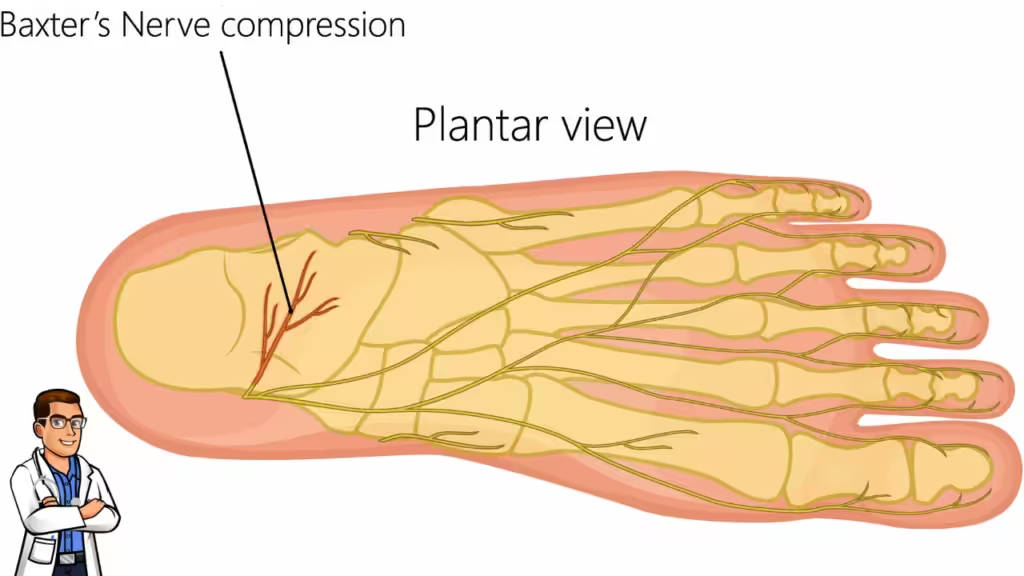
Trauma or entrapment to the peripheral nerves beyond the spine level may also result in foot numbness. Plantar calcaneus nerve compression: this can cause the bottom of the heel pain while standing all day. This is also known as Baxter’s nerve compression or Baxter’s nerve entrapment. Tarsal tunnel syndrome, or posterior tibial nerve entrapment, causes numbness or pain in the bottom of the foot. Biomechanical causes usually induce this. Common peroneal nerve entrapment results in numbness, pain or weakness on the leg or ankle, or numbness in the top of the foot. We frequently see this in people who rest their legs against the side of a car door or truck driver. Superficial peroneal nerve entrapment causes numbness only on the top of the foot and toes. This can be associated with tight shoes and tight shoelaces to the top of the foot. Deep peroneal nerve entrapment causes numbness only in the toes. This can result in not only leg numbness and foot numbness but also a condition called foot drop. This can lead to difficulty walking and moving around.
Treatment for Numbness in Feet
Numbness in the feet, whether in the legs, top or bottom of the foot, or the toes, may be treated with certain types of exercises, stretching. We see excellent results in people using good supportive shoes to keep their legs and feet straight. Getting a good supportive pair of orthotics and insoles can also make a big difference in improving foot & ankle biomechanics. This means less pressure on the important large nerves in your foot. This can greatly relieve foot pain. Addressing a condition called overpronation can help relieve nerve pressure through the foot. This works well for conditions such as tarsal tunnel syndrome, Baxter’s nerve entrapment, heel pain, and chronic exertional compartment syndrome. In people with diabetes, working to improve their medication control and getting into better shape can genuinely help in the short term. Controlling your vascular disease and heart disease can be critical in improving foot numbness. Supplementation of B6 vitamins & B12 vitamins can be beneficial and may also improve foot numbness. Alpha-lipoic acid has also shown some benefits to assist with peripheral neuropathy. If nerve entrapment is known to cause numbness in the foot, legs, or toes, then surgical decompression of the nerve either at the spinal cord level or in the leg or foot itself may provide relief. This can be in tarsal tunnel surgery, Baxter’s nerve entrapment surgery & common peroneal nerve surgery.

What Causes Numbness In The Legs and Feet?
- The most common cause of numbness in the legs and feet is called peripheral neuropathy.
- Peripheral neuropathy is most common in older people with numerous health diseases.
- It is widespread in diabetes, arterial disease, heart issues, and other systemic issues.
- It is widespread in younger, healthier people to have compression problems such as tarsal tunnel, sciatica, or chronic is exertional compartment syndrome from swelling.
- This is most common in people who sit for long periods of time, stand for long periods of time, or are long-distance runners.
How Do You Get Rid of Numbness In Your Feet?
- We frequently hear the question of how to get rid of numbness in your feet?
- The answer to this question is to get a proper diagnosis.
- At the beginning of this video, we go into great depth about taking care of numbness in the feet and legs, especially in people with health issues or athletes with compression syndromes.
How To Get Rid of Numbness In Your Feet?
- The #1 option to get rid of numbness in the feet is to get the proper diagnosis.
- The most common problem we see is people that do not get a proper diagnosis of their disorder.
- Even with peripheral neuropathy, it is possible to take precautions to relieve the pressure on her feet.
- This means wearing good shoes, good orthotics, good ankle braces, and controlling your health as much as possible.
How To Treat Numbness In Feet?
- And another question we hear is “how to treat numbness in feet?”
- The answer to this question is to get the proper diagnosis of your foot problem and then take pressure off her feet.
- In younger patients, this is usually a combination of compression of the nerves and swelling.
- This can be improved through exercises, stretches, good orthotics, good shoes, and good orthotics.
- In older, less healthy people, the key is to understand health conditions that can cause numbness and then work very hard on controlling these health problems.
- Specifically thyroid problems, alcoholism, diabetes, cancer chemotherapy, and vascular disease caused by high cholesterol and smoking.
Does Low Blood Pressure Cause Numbness in Hands and Feet?
We hear the question, “Does low blood pressure cause numbness in hands and feet?” The answer is yes. This can cause numbness in the hands and feet. This can be related to a weak heart or low blood pressure. A common cause is an orthostatic hypotension, which is the body not adjusting quickly from getting out of bed or out of a chair or couch. This means that it takes the body a few minutes to get used to standing up and moving around. This means that there is not enough blood flow to the feet and legs, leading to temporary numbness.
How To Cure Numbness In Your Feet and Toes?
Another question is, “How to cure numbness in your feet and toes?” We answer this question in the video above detailing how to cure numbness in the feet and toes. In most young and healthy people, it is possible almost completely to resolve numbness in the feet. This may be a more difficult process for older people with health conditions as the numbness is related more to overall health than just compression or irritation of the nerves.
What Is Numbness In Feet Called?
Numbness in the feet is generally called peripheral neuropathy. Technically it is important to remember that this is not always peripheral neuropathy. We believe that peripheral neuropathy gets too much credit for numbness in the feet, although it is likely the #1 overall cause. Compression of nerves usually does contribute and can help out in many cases of resistant peripheral neuropathy. We explain this in further detail in the videos above.
Can Being Overweight Cause Numbness in the Feet?
Another question is, “Can be overweight cause numbness in feet?” The answer is yes. Generally, we see people with lighter feet have less numbness in their feet, balls of the feet, the bottom of the feet, and legs. This means that more weight can cause more pressure on your nerves. This pressure can nerve compression and potentially contribute to the chronic exertional syndrome. On the other hand, skinny people have less fat pad cushion and can develop foot pain from fat pad atrophy.
Can Stress Cause Numbness and Tingling in Hands and Feet?
Yes, stress can cause numbness and tingle in the hands and feet. Stress can also your blood pressure as well as release chronic adrenal and stress hormones. These hormones can alter your body weight, your blood sugars and may be related to your thyroid. Some people with stress may even drink more alcohol or perform substance abuse. These factors can all increase the risk of numbness in the feet and legs.
Can Toenail Fungus Cause Numbness in Feet?
We occasionally hear, “Can toenail fungus cause numbness in feet?” Yes, there is a large correlation between diabetes, peripheral neuropathy, and toenail fungus. While not a direct cause, both numbness, peripheral neuropathy, and numerous health conditions are related.
How To Get Rid of Numbness in Your Hands and Feet?
Another question is, “How to get rid of numbness in hands and feet?” It is possible in some cases where there is not a severe underlying health problem. We go into specific detail in the video above about getting rid of numbness in hands and feet!
How To Treat Numbness In Legs And Feet?
We also hear, “How to treat numbness in legs and feet?” The best way to do this is to watch the numbness in the feet and legs treatment video above!
What Causes Numbness and Tingling In The Lower Legs and Feet?
For the questions “What causes numbness and tingling in lower legs and feet?” In the video above, we detail all the specific causes! The real causes are peripheral neuropathy, compression, exertional compartment syndrome, and more.
Can Alcohol Cause Numbness In Hands And Feet?
Concerning alcoholic neuropathy, we hear the question, “Can alcohol cause numbness in hands and feet?” Yes, alcohol is one of the most common causes of alcoholic neuropathy. One or two beers at a party will likely not cause a problem, but regular alcoholism is strongly associated with numbness in the hands and feet. why do i have numbness in my hands and feet can arthritis cause numbness in legs and feet can high blood pressure cause numbness in hands and feet can low blood sugar cause numbness in hands and feet can swelling in feet cause numbness does sciatica cause numbness in feet can sciatic nerve pain cause numbness in feet can sciatica cause numbness in hands and feet does anxiety cause numbness in feet does smoking cause numbness in hands and feet what causes numbness in feet and ankles what causes numbness in hands and feet at night
Book Your Appointment Today—Relief Starts with One Call
Fast, Friendly, and Professional Treatment You Can Trust
(810) 206-1402 BOOK A SCHEDULE
Frequently Asked Questions About Foot Numbness
Can sciatic nerve pain cause numbness in feet? The question “Can sciatic nerve pain cause numbness in feet?” is a YES. Sciatica is the compression and irritation of the sciatic nerve that runs down the back of the hip and hamstring. This can easily become compressed and cause foot and leg numbness. Can sciatica cause numbness in hands and feet? Sciatica can cause numbness in the feet and legs, but not the hands. The sciatic nerve runs behind your butt, hips, and hamstrings. It is a leg nerve. Does anxiety cause numbness in the feet? As mentioned above, anxiety can contribute to numbness in the feet and the legs by raising risk factors for other issues. Does smoking cause numbness in hands and feet? Yes, smoking can cause numbness in the hands and feet. Smoking can lead to numerous health issues, poor blood flow, and narrowing of the blood vessels. This can lead to vascular disease and decrease blood flow to the small nerves and blood vessels. In general, it is a good idea to decrease smoking for most of your body’s health problems. What causes numbness in feet and ankles? There are many different causes for numbness in the feet and ankles. We detail the majority of them in-depth above! What causes numbness in hands and feet at night? The brain can focus more on numbness in the hands and feet at night. This means when there is less to focus on, people notice the numbness more. Another cause can be compression, depending on the sleeping position. Why do I have numbness in my hands and feet? The answer to this question is detailed in the videos and the descriptions above! Can arthritis cause numbness in the legs and feet? Yes, arthritis can cause numbness in the legs and feet. Generally, arthritis can increase inflammation and swelling. This can lead to increased stress and pressure on the nerves. This can eventually lead to increased nerve damage and problems. Arthritis is usually associated with other health issues in older patients, and this means there is a higher likelihood of developing more health issues. Can high blood pressure cause numbness in hands and feet? Yes, high blood pressure can cause numbness in the hands and feet. This means there is a high correlation between heart and blood flow problems and numbness. The more normally your heart and blood flow is working, the healthier your nerve function is. In general, there is a high correlation between blood pressure and numbness in the hands and feet. Can low blood sugar cause numbness in hands and feet? In general low blood sugar and high blood, sugar changes are related to numbness in the hands and feet. Low blood sugar itself is less of a problem than high blood sugar. Hypoglycemia can make the body not work properly. This can cause the body to feel numbness and not work properly until the blood sugar can reset to a normal level. Can swelling in feet cause numbness? Yes, Swelling in the feet can cause numbness in the feet and legs. This is a condition called a chronic exertional syndrome. This means that constant swelling in your toes, feet, and legs can pressure the nerves, causing them not to work properly. Does sciatica cause numbness in the feet? Yes, sciatica can cause numbness in the feet and legs due to compressing the sciatic nerve in the gluteal region and hamstrings. Can numbness in feet be cured? The difficult question is, “Can numbness in feet be cured?” The answer is sometimes. The most important question to answer is, “what is the real cause of the numbness in the feet and legs?” The numbness can generally be cured if the answer is a temporary irritation such as compression or exertional compartment syndrome. On the other hand, it may be more difficult to cure the underlying health problems causing the numbness of very unhealthy people. For example, if a patient has diabetes, heart problems, severe obesity, or severe damage to their back, this may be the true underlying problem that needs to be corrected. With all that said, numbness in the feet can be significantly improved with biomechanical analysis and treatment by a podiatrist, custom orthotics, great shoes, ankle braces, and pain treatment. Can prednisone cause numbness in the feet? Yes, prednisone can cause numbness in the feet, especially in people with diabetes with peripheral neuropathy. Prednisone is a powerful medication that can raise blood sugars worsening diabetes. This means that diabetic peripheral neuropathy may further cause peripheral neuropathy foot pain. What can cause numbness in the feet?
- The most common cause of numbness in the feet is peripheral neuropathy.
- It can also be caused by compression and health issues such as a weak heart or poor blood flow.
- Any unhealthy papal compression is the most common cause.
- In less healthy people, peripheral neuropathy is the most common cause.
Can sciatica cause numbness in the feet? Yes, sciatica can cause numbness in the feet. This is especially common in people who sit on computer chairs for long periods of time. The sciatic nerve comes through the back of your hip and hamstring region and, when compressed, can cause tenderness and numbness through your feet, numbness in the bottom of your feet, and numbness in the legs. What causes numbness in hands and feet? The most common cause of numbness in the hands and feet is called peripheral neuropathy. For everything you need to know about peripheral neuropathy, please watch the video at the beginning of this article.
Related Treatment Guides

- Diabetic Foot Care & Neuropathy
- Plantar Fasciitis & Heel Pain Treatment
- Custom 3D Orthotics
- Sports Foot & Ankle Injury Treatment
In-Office Treatment at Balance Foot & Ankle
If home treatment isn’t providing relief for your foot and ankle conditions, our podiatry team at Balance Foot & Ankle can help with same-day evaluations and advanced in-office care.
Same-day appointments available. (810) 206-1402
Doctor Hoy’s Natural Pain Relief Gel
Natural topical pain relief I use in our clinic. Arnica + camphor formula — apply directly to the area 3–4x daily. ($20–25)
Shop Doctor Hoy’s →Medical References & Sources
- American Podiatric Medical Association — Patient Education
- American Orthopaedic Foot & Ankle Society — Foot Conditions
Insurance Accepted
BCBS · Medicare · Aetna · Cigna · United Healthcare · HAP · Priority Health · Humana · View All →
Howell Office
4330 E Grand River Ave
Howell, MI 48843
Get Directions →
Bloomfield Township Office
43494 Woodward Ave, #208
Bloomfield Township, MI 48302
Get Directions →
Your Board-Certified Podiatrists



Ready to Get Back on Your Feet?
Same-week appointments available at both locations.
Book Your AppointmentPros & Cons of Conservative Care for foot care
Advantages
- ✓ Conservative care first
- ✓ Same-week appointments
- ✓ Multiple insurance accepted
Considerations
- ✗ Self-treatment can mask issues
- ✗ See a podiatrist if pain >2 weeks
Dr. Tom’s Recommended Products for foot care
Affiliate disclosure: As an Amazon Associate, Balance Foot & Ankle earns from qualifying purchases. We only recommend products we use with patients.
Footnanny Heel Cream Dr. Tom’s Pick
Best for: Daily moisturizer for cracked heels
Ready to Get Back on Your Feet?
Same-day appointments in Howell + Bloomfield Township. Most insurance accepted. Dr. Tom Biernacki, DPM & team.
Book Today — Same-Day Appointments Available
Call Now: (810) 206-1402
About Your Care Team at Balance Foot & Ankle
Dr. Tom Biernacki, DPM · Board-Certified Foot & Ankle Surgeon. Specializes in conservative-first care, minimally invasive bunion surgery, and complex reconstruction.
Dr. Carl Jay, DPM · Accepting new patients. Specializes in sports medicine, athletic injuries, and routine podiatric care.
Dr. Daria Gutkin, DPM, AACFAS · Accepting new patients. Specializes in surgical reconstruction and pediatric podiatry.
Locations: 4330 E Grand River Ave, Howell, MI 48843 · 43494 Woodward Ave Suite 208, Bloomfield Township, MI 48302
Hours: Mon–Fri 8:00 AM – 5:00 PM · (810) 206-1402

Dr. Tom Biernacki, DPM is a board-certified foot & ankle surgeon (ABFAS & ABPM) at Balance Foot & Ankle Specialists in Southeast Michigan. With over a decade of clinical experience, he specializes in heel pain, bunions, diabetic foot care, sports injuries, and minimally invasive surgery. Dr. Biernacki is a member of the APMA and ACFAS, and his patient education content on MichiganFootDoctors.com and YouTube has made him one of the most-followed foot & ankle educators on YouTube.
More questions patients ask
What are the most common medical causes of foot numbness?
Medical causes of foot numbness in order of frequency: (1) Diabetic peripheral neuropathy — affects 50% of long-term diabetics; most common overall cause; begins in toes and advances proximally in 'stocking' distribution; (2) B12 deficiency neuropathy — common in elderly, vegans, and metformin users; highly reversible if caught early; (3) Lumbar disc herniation (L4-S1) — sciatica-type numbness often extends into the foot; (4) Peripheral arterial disease — ischemic numbness in the foot from poor circulation; (5) Tarsal tunnel syndrome — tibial nerve compression at the medial ankle; (6) Hypothyroidism — systemic neuropathy; (7) Alcohol neuropathy; (8) Kidney disease; (9) Rheumatoid arthritis; (10) Multiple sclerosis; (11) Chemotherapy-induced neuropathy. At Balance Foot & Ankle in Howell (4330 E Grand River) and Bloomfield Township (43494 Woodward Ave #208), we comprehensively evaluate foot numbness causes — call (810) 206-1402.
What does diabetic foot numbness feel like in early versus late stages?
Diabetic neuropathy numbness progression: Early stage (hyperalgesia) — paradoxically, early neuropathy often causes increased sensitivity (burning, electric pain, extreme sensitivity to touch or cold) rather than numbness; this reflects the initial firing of damaged nerve fibers; Middle stage — burning pain subsides and numbness begins, starting at the toes; patients describe reduced sensation of touch, temperature, and vibration; the foot begins to lose protective sensation; Advanced stage — significant numbness and loss of protective sensation; the patient cannot feel injuries, pressure points, heat, or cold; proprioception is lost (difficulty sensing foot position); intrinsic muscle weakness causes toe deformities; may progress above the ankle. Loss of protective sensation (LOPS) is the critical threshold — at this stage, foot ulcers can develop without the patient feeling them. Balance Foot & Ankle screens for LOPS — call (810) 206-1402.
What is the monofilament test for foot numbness?
The Semmes-Weinstein monofilament test is the standard clinical screening for loss of protective sensation in the feet: a standardized 5.07 (10-gram) monofilament filament is pressed against specific plantar foot sites until the filament buckles (delivering a standardized 10 grams of force); the patient (with eyes closed) says 'yes' when they feel the filament; inability to feel the monofilament at one or more sites indicates loss of protective sensation (LOPS). Sites tested: plantar surface of the great toe, 1st, 3rd, and 5th metatarsal heads, and heel. The monofilament test predicts foot ulcer risk better than most other clinical tests. Normal sensation: feel all 10-gram sites. Abnormal: miss one or more sites — indicates need for enhanced foot care and protective footwear. Balance Foot & Ankle performs monofilament testing at every diabetic foot evaluation — call (810) 206-1402.
Can foot numbness be treated effectively?
Treatment effectiveness for foot numbness depends on the cause and duration: B12 deficiency — highly effective treatment (B12 supplementation reverses numbness if started before permanent axon loss); blood glucose control in early diabetic neuropathy — slows progression, may modestly improve early numbness; tarsal tunnel syndrome — 70–80% improve with conservative care (orthotics, injection) or surgical decompression; Morton's neuroma — numbness between toes often resolves with footwear modification, cortisone, or surgical excision; lumbar radiculopathy — most cases improve with physical therapy or surgery; established diabetic neuropathy — medications (gabapentin, duloxetine, pregabalin) reduce pain but don't restore sensation; alpha-lipoic acid supplements show modest benefit in clinical trials. The single most effective intervention for diabetic neuropathy is prevention — controlling blood sugar before neuropathy develops. Balance Foot & Ankle evaluates and manages foot numbness — call (810) 206-1402.
How does foot numbness increase the risk of foot injuries?
Loss of protective sensation in the feet dramatically increases injury risk because: the foot lacks its normal warning system — pain that normally prompts people to shift weight, remove tight shoes, or seek care; hot surfaces, sharp objects, and repetitive pressure accumulate undetected; patients step on foreign objects without feeling them; tight shoes create sores and blisters that go unfelt; post-injury inflammation and infection are not noticed until severe; and activities that should be painful (long walks, tight shoes) continue without consequence until significant tissue damage has occurred. Studies show: patients with foot numbness have a 7x higher lifetime risk of foot ulceration, a 15x higher risk of amputating a toe or foot, and a dramatically higher rate of emergency hospitalizations for foot infections. Daily foot inspection compensates for lost sensation. Balance Foot & Ankle in Howell (4330 E Grand River) and Bloomfield Township (43494 Woodward Ave #208) — call (810) 206-1402.
Still have a question about coverage or cost? Book online and we will check your benefits before your visit: Book in Howell · Book in Bloomfield Township. Prefer to talk it through first? Call (810) 206-1402.