

Quick answer: Tarsal tunnel syndrome is a nerve compression injury — the tibial nerve gets squeezed as it passes through a narrow channel on the inside of your ankle. It causes burning, tingling, numbness, or shooting pain along the arch, heel, and sole, often worse with activity or at night. Many cases improve with orthotics, bracing, anti-inflammatory treatment, and addressing the underlying cause; when the nerve stays compressed, a release procedure can relieve it. It is essentially “carpal tunnel of the foot.”
Ready to be seen? Book a real appointment time online, 24/7 — Howell or Bloomfield Township. Takes about a minute, 24/7.
Medically reviewed by Dr. Tom Biernacki, DPM, FACFAS — Balance Foot & Ankle, Howell & Bloomfield Township, MI. Same-week appointments: book online, or call (810) 206-1402.

What Is Tarsal Tunnel Syndrome?
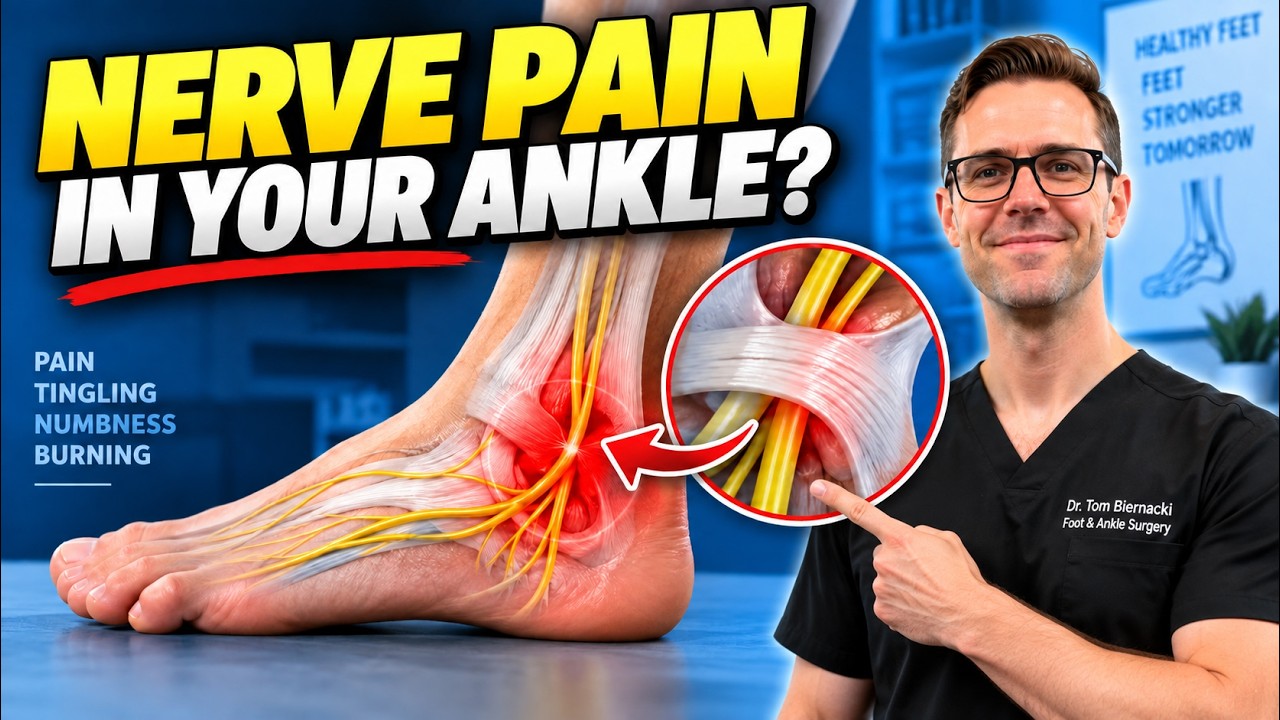
The tarsal tunnel is a narrow passage on the inner side of your ankle, just below the bony bump (the medial malleolus). The posterior tibial nerve runs through it alongside tendons and blood vessels, covered by a band of tissue. When anything crowds that space, the nerve gets compressed — and because nerves don’t tolerate pressure well, the result is the burning, electric, or numb sensations that define this condition. It’s the foot-and-ankle equivalent of carpal tunnel syndrome in the wrist.
Symptoms: What Tarsal Tunnel Feels Like
Tarsal tunnel syndrome usually causes symptoms along the inside of the ankle and the bottom of the foot rather than pinpoint joint pain. Common signs include:
- Burning, tingling, or a “pins and needles” feeling in the arch, heel, or toes
- Sharp, shooting, or electric-shock pain that can radiate into the sole
- Numbness across the bottom of the foot
- Symptoms that worsen with standing, walking, or exercise — and often flare at night
- A tingle or shock that travels up or down when the inside of the ankle is tapped (Tinel’s sign)
Because these symptoms overlap with plantar fasciitis, peripheral neuropathy, and pinched nerves in the back, tarsal tunnel is frequently misdiagnosed. Getting the diagnosis right is what makes treatment work — the wrong label wastes months.
What Causes Tarsal Tunnel Syndrome?
Anything that reduces space in the tunnel or increases pressure on the nerve can trigger it. The most common contributors we see are flat feet or fallen arches (which stretch and compress the nerve), a prior ankle sprain or fracture that changed the local anatomy, swelling from arthritis or tendon problems, a cyst or varicose vein inside the tunnel, and systemic conditions like diabetes that make nerves more vulnerable to pressure. Sometimes no single cause is found, but flat-footed mechanics are the pattern we identify most often.
How We Diagnose It at Balance Foot & Ankle
Diagnosis starts with a focused exam: mapping exactly where the numbness and tingling fall, checking for Tinel’s sign over the tunnel, and evaluating your arch and gait for the mechanics that compress the nerve. When we need to confirm the diagnosis or rule out look-alikes, we may use a nerve conduction study (NCV/EMG) to measure how well the tibial nerve is firing, an ultrasound or MRI to look for a cyst, swelling, or mass inside the tunnel, and X-rays if a prior injury or bone spur is suspected. Pinpointing the true source — nerve, not fascia, not back — is the entire game with this condition.
Treatment Options
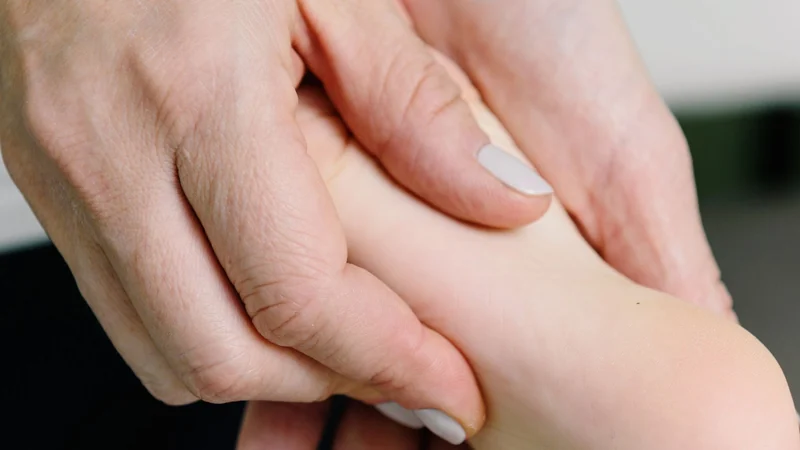
Most patients start with non-surgical treatment, and many improve without ever needing a procedure:
- Custom orthotics: when flat feet are compressing the nerve, a supportive custom orthotic that restores the arch is often the single most effective treatment.
- Bracing or immobilization: a short course in a brace or boot can calm an irritated nerve.
- Anti-inflammatory treatment: oral medication or a targeted cortisone injection to reduce swelling around the nerve.
- Physical therapy and nerve gliding: exercises that reduce tension on the tibial nerve.
- Treating the underlying cause: managing diabetes, removing a cyst, or correcting the mechanical problem driving the compression.
When symptoms persist despite a fair trial of conservative care — or when imaging shows a cyst or mass squeezing the nerve — a tarsal tunnel release surgically opens the tunnel and takes pressure off the nerve. As a board-certified foot and ankle surgical practice, we handle both the conservative and surgical ends of this condition under one roof, so your care never gets handed off midstream.
When to See a Podiatrist
Don’t wait out nerve symptoms — a compressed nerve can develop lasting damage if it’s ignored. Book an evaluation if you have burning, tingling, or numbness in your arch or sole that lasts more than a week or two, symptoms that keep you up at night, foot numbness alongside diabetes, or arch pain that hasn’t responded to treatment aimed at plantar fasciitis. Same-week appointments are available at our Howell and Bloomfield Township offices — call (810) 206-1402.
Is It Really Tarsal Tunnel? The Three Conditions It Gets Confused With
Tarsal tunnel syndrome is both over-diagnosed and under-diagnosed, which sounds contradictory until you see how often burning foot pain gets labelled without the distinguishing features being checked. Getting this right matters, because the treatments barely overlap.
The nerve that most often mimics it is Baxter’s. Heel Guide explains burning heel pain that builds the longer you stand and how it differs from fascia pain.
Versus plantar fasciitis
The most common mix-up, because both cause heel pain. The pattern separates them cleanly:
- Plantar fasciitis is a sharp, localised pain at the inside front of the heel, worst on the first few steps in the morning or after sitting, easing as you walk.
- Tarsal tunnel is burning, tingling or numbness rather than sharp pain, spreads across the arch and sole rather than sitting in one spot, and typically gets worse as the day goes on and worse with prolonged standing. Many patients find it wakes them at night.
If heel pain has been treated as plantar fasciitis for months without improvement — particularly if there is any burning or numbness — the diagnosis deserves revisiting rather than the treatment intensifying.
Versus peripheral neuropathy
Both burn. The distinguishing question is distribution. Peripheral neuropathy from diabetes or another systemic cause is almost always symmetrical, affects both feet, and starts in the toes in a stocking pattern working upward. Tarsal tunnel is usually one foot, and follows the territory of a single nerve — the sole and arch, sparing the top of the foot.
One-sided burning in a person with diabetes is not automatically neuropathy, and that assumption is where compressive causes get missed.
Versus a pinched nerve in the back
An S1 radiculopathy can refer pain into the sole. Back pain, symptoms extending above the ankle, or a history of sciatica all point upstream. Tarsal tunnel symptoms generally stop at the ankle, though tapping the nerve at the ankle can occasionally send sensation up the leg as well as down — a finding that confuses people but is well recognised.
Why the Nerve Is Being Compressed — and Why It Changes the Plan
Tarsal tunnel is not one disease. It is a nerve being squeezed, and what is doing the squeezing determines both the treatment and how well it works.
- A space-occupying lesion — a ganglion cyst, a lipoma, enlarged veins, or an accessory muscle sitting in the tunnel. This group has the clearest path: find it and remove it.
- Flatfoot and hindfoot valgus. When the heel drifts outward and the arch collapses, the nerve is stretched around the inside of the ankle with every step. This is traction rather than compression, and it is the group most likely to improve with an orthotic that repositions the heel — no surgery needed.
- After trauma — an ankle fracture, a bad sprain, or scarring from previous surgery narrowing the tunnel.
- Swelling from systemic causes — inflammatory arthritis, thyroid disease, pregnancy, or tenosynovitis of the tendons running alongside the nerve.
- Idiopathic — no cause identified. This is the group with the least predictable surgical outcome, and being told that honestly beforehand matters.
The Examination and Imaging That Actually Settle It
- Tinel’s sign — tapping over the nerve behind the inside ankle bone reproduces the tingling into the foot. Simple, and one of the more useful findings.
- The dorsiflexion-eversion test — holding the foot pulled up and outward for a period narrows the tunnel and reproduces symptoms.
- MRI is the key test when a space-occupying lesion is suspected, because it finds the cyst, lipoma or accessory muscle that changes the whole plan.
- Nerve conduction studies and EMG can support the diagnosis — but a normal study does not rule tarsal tunnel out. This is worth knowing, because patients are sometimes told their nerve test was normal and therefore nothing is wrong. The clinical picture carries real weight here.
- Weight-bearing assessment of hindfoot alignment, because a collapsing arch is both a cause and a treatment target.
Treatment, in the Order It Should Be Tried
Most people improve without surgery, and the non-surgical measures are more effective here than their reputation suggests — provided the right one is chosen for the right cause.
- Orthotic control of the hindfoot is the highest-yield intervention when flatfoot or heel valgus is driving it. Correcting the alignment takes the traction off the nerve.
- A period of immobilisation in a boot to settle acute inflammation.
- Anti-inflammatories, and where the pain is genuinely neuropathic, medications aimed at nerve pain rather than ordinary analgesics.
- A corticosteroid injection into the tunnel — both therapeutic and diagnostically informative, since a good response supports the diagnosis.
- Nerve gliding exercises and calf flexibility work in physical therapy.
Surgical release is considered when several months of appropriate non-surgical care have failed. The honest framing is this: outcomes are substantially better when a specific compressive lesion has been identified and can be removed. For idiopathic cases, results are less predictable, and that is a conversation to have before surgery rather than after.
If you have burning or numbness across the sole of one foot that is worse at the end of the day, and plantar fasciitis treatment has not helped, it is worth having the nerve assessed properly. Balance Foot & Ankle sees patients in Howell (4330 E Grand River Ave, Howell, MI 48843) and Bloomfield (43494 Woodward Ave #208, Bloomfield Township, MI 48302). Call (810) 206-1402.
When it comes to footwear, the measured shortlist lives on our review site: Best Shoes for Tarsal Tunnel Syndrome gives the stack height, heel-to-toe drop and weight for each pick, every figure attributed.
Frequently Asked Questions
Is tarsal tunnel syndrome the same as plantar fasciitis?
No — and this is the most important distinction. Plantar fasciitis is inflammation of a ligament and typically causes sharp heel pain with your first steps. Tarsal tunnel is a nerve problem that causes burning, tingling, or numbness along the arch and sole. They’re treated differently, so an accurate diagnosis matters. Some patients have both.
Can tarsal tunnel syndrome go away on its own?
Mild cases triggered by a temporary issue (a bout of swelling, a new shoe, an overuse flare) can settle down with rest and support. But when there’s an ongoing cause like flat feet, a cyst, or diabetes, the compression continues until that cause is addressed. Because untreated nerve compression can cause permanent damage, it’s worth getting evaluated rather than waiting indefinitely.
Do orthotics help tarsal tunnel syndrome?
Very often, yes. When flat feet or fallen arches are compressing the tibial nerve, a properly made custom orthotic that supports the arch relieves the pressure and can dramatically reduce symptoms. It’s one of the first treatments we try for the flat-footed pattern.
Do you treat tarsal tunnel syndrome near me?
Yes — Balance Foot & Ankle diagnoses and treats tarsal tunnel syndrome at 4330 E Grand River Ave, Howell, MI 48843 and 43494 Woodward Ave #208, Bloomfield Township, MI 48302, serving Livingston and Oakland County. We offer both conservative treatment and surgical release when needed.
Get to the Root of Your Foot Nerve Pain
Burning, tingling, and numbness in your foot deserve a real diagnosis — not another round of heel-pain treatment that doesn’t fit. We’ll find out whether it’s your nerve and build a plan that actually addresses it. Book online at our Howell or Bloomfield Township office, or call (810) 206-1402. 4.9★ from 1,123+ patient reviews on Google.