

Quick answer: Yoga Barefoot Exercise Foot Health Intrinsic Muscles Overuse is a common foot/ankle topic that affects many patients. The 2026 evidence-based approach combines proper diagnosis, conservative-first treatment, and escalation only when needed. We treat this regularly at our Howell and Bloomfield Hills practices. Call (810) 206-1402.
Medically Reviewed by Dr. Tom Biernacki, DPM, FACFAS — Board-certified podiatrist & foot surgeon | Balance Foot & Ankle | Last updated: May 2026
Yoga and barefoot exercise strengthen intrinsic foot muscles and improve proprioception — but transitioning too quickly causes plantar fasciitis, metatarsal stress fractures, and Achilles overload. The rule: if you currently wear supportive footwear daily, transition to barefoot exercise over 8–12 weeks, not days. Patients with flat feet, plantar fasciitis, bunions, or diabetic neuropathy should consult a podiatrist before beginning barefoot training.
The Science of Barefoot Exercise and Foot Strength
The intrinsic foot muscles — the abductor hallucis, flexor digitorum brevis, lumbricals, and interossei — are responsible for toe purchase, arch stabilization, and proprioceptive feedback during movement. When feet are consistently supported by modern footwear with thick, rigid soles, these muscles become relatively underactivated. Yoga and barefoot training specifically challenge these muscles through unstable surface loading, toe spreading, and multi-planar balance demands. Research shows measurable increases in foot muscle cross-sectional area with consistent barefoot or minimalist shoe training over 8–16 weeks.
Benefits vs. Risks: What Podiatrists Actually See
| Benefit (Evidence-Based) | Risk (Clinically Common) | Who Is at Highest Risk |
|---|---|---|
| Stronger intrinsic foot muscles | Plantar fasciitis flare | Anyone with flat feet or existing PF |
| Improved proprioception + balance | 2nd/3rd metatarsal stress fracture | Transitioning too fast from cushioned shoes |
| Better toe alignment over time | Achilles tendinopathy | Tight calves + sudden forefoot loading |
| Reduced knee and hip compensations | Sesamoid stress injury | High-arch foot types |
| Arch strengthening (long-term) | Worsened arch collapse short-term | Stage 2+ posterior tibial tendon dysfunction |
Yoga Poses That Load the Foot — and How to Modify Them Safely
- Downward Dog: Loads the plantar fascia significantly through heel-to-toe tension. If you have plantar fasciitis, bend the knees slightly and reduce time in the pose; never force heels to the floor if it causes pain.
- Warrior series (I, II, III): Single-leg balance with forefoot loading. High-arch patients are at risk for sesamoid overload. Spread toes actively and maintain weight distributed across all five metatarsal heads.
- Tree pose: Excellent for proprioception. Safe for most foot types. Patients with ankle instability should start near a wall.
- Chair pose (Utkatasana): Significant Achilles and plantar fascia load. If Achilles pain begins, exit the pose and stretch the calf before re-entering.
- Hero pose (Virasana): Kneeling with feet plantarflexed. Can cause metatarsal compression and plantar plate stress. Use a folded blanket under the shins if forefoot pain occurs.
The 8-Week Barefoot Transition Protocol
If you are transitioning from standard footwear to barefoot or minimalist exercise, a gradual adaptation prevents the majority of overuse injuries. The principle is progressive load increase — adding approximately 10% more barefoot activity per week:
- Weeks 1–2: 15 minutes barefoot on carpet or grass per day — short foot exercises, toe spreads, single-leg balance
- Weeks 3–4: Add 20–30 minutes of barefoot yoga on a mat; no high-impact movements
- Weeks 5–6: Transition footwear for walking — minimalist shoes with <4mm drop for 30 minutes/day
- Weeks 7–8: Add bodyweight exercises barefoot; introduce short barefoot runs on grass if no pain
- Ongoing: Full barefoot or minimalist training; supportive footwear for long-distance runs or high-load sports
Watch: Are Barefoot Shoes Actually Good for Your Feet?
Dr. Tom Biernacki gives the clinical verdict on barefoot shoes and barefoot exercise — who benefits, who is at risk, and what the podiatric evidence actually shows:
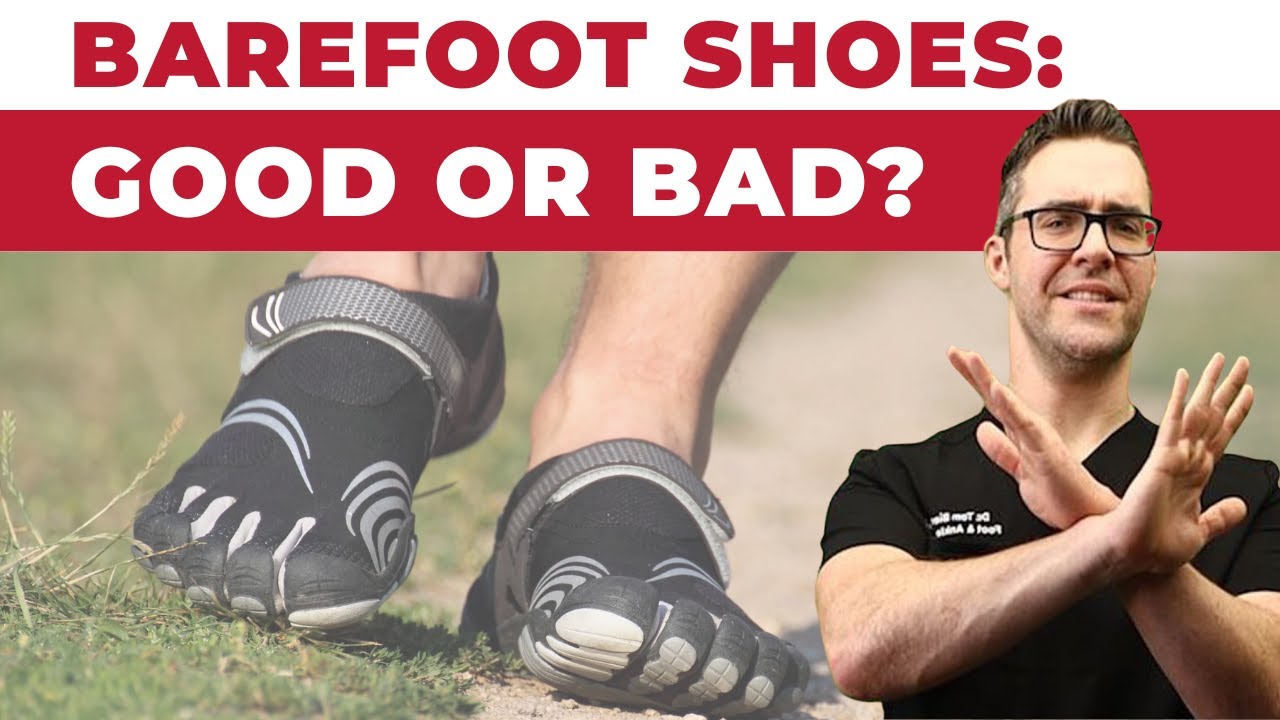
The most common mistake with barefoot and yoga exercise is transitioning too fast — going from structured athletic shoes directly to barefoot yoga or minimalist footwear without an adaptation period. The intrinsic foot muscles, plantar fascia, and Achilles tendon are not conditioned for sudden high loads. In our clinic, we see a predictable spike in 2nd and 3rd metatarsal stress fractures, acute plantar fasciitis, and Achilles tendinopathy in the 4–8 weeks following sudden transitions to barefoot training. The research is clear: the benefits of barefoot exercise are real, but they require an 8–12 week adaptation window to access them without injury.
Frequently Asked Questions
Is yoga good or bad for plantar fasciitis?
Yoga is generally beneficial for plantar fasciitis when practiced with modifications, but can worsen it when practiced without them. The key modifications are: avoid forcing heels to the floor in Downward Dog; bend knees slightly to reduce plantar fascia tension; skip Warrior III and single-leg balances on the affected side during acute flares; prioritize calf stretching before and after practice. Restorative and Yin yoga styles are safest during acute flare periods. Once the fascia has had 6–8 weeks of conservative treatment, a full yoga practice is typically appropriate.
Can barefoot walking fix flat feet?
Barefoot walking can strengthen the intrinsic muscles that support the arch and, over months to years, may modestly improve functional arch height in mild flexible flat feet. However, it cannot correct structural flat feet — cases with bony malalignment, posterior tibial tendon dysfunction, or coalitions require orthotics or surgical intervention. For most patients, a combination of targeted foot strengthening exercises and supportive orthotics is more effective than barefoot walking alone, and significantly safer in the short term.
Should diabetic patients do barefoot yoga?
Diabetic patients with peripheral neuropathy should not practice yoga barefoot without podiatric evaluation first. Neuropathy reduces the ability to detect pain signals, meaning that tissue damage, blisters, and wounds can occur without sensation. Diabetic patients with intact sensation and no active foot wounds can generally practice yoga with thin-soled socks or yoga shoes. Any diabetic patient with calluses, prior ulcers, or confirmed neuropathy should consult their podiatrist before beginning any barefoot exercise program.
How do I know if I’m ready to transition to minimalist shoes?
You’re ready to transition to minimalist footwear when: you can perform single-leg balance on a firm surface for 30+ seconds without compensation; you can do 20 single-leg calf raises without pain; you have no active foot or ankle pain; and you have spent at least 4 weeks doing barefoot strengthening exercises. If any of these criteria are not met, build the foundation first. A podiatric biomechanical assessment can identify specific weaknesses that need addressing before the transition.
Do I need orthotics if I practice yoga regularly?
Yoga practice does not eliminate the need for orthotics if a structural condition drives your symptoms. Custom orthotics address bony alignment problems — flat feet, overpronation, leg length discrepancy — that strengthening exercises cannot fully correct. Many patients use custom orthotics in everyday footwear and practice yoga barefoot, gaining the benefits of both approaches. Your podiatrist can advise whether your specific condition responds to strengthening alone or requires orthotic support.
Foot Pain from Yoga or Barefoot Training? Let’s Fix It.
Same-day biomechanical assessment at Howell and Bloomfield Hills, MI. Dr. Tom Biernacki DPM — board-certified podiatrist. We’ll tell you exactly what your foot structure can handle — and how to train safely.
Book a Same-Day Visit (810) 206-1402Related Articles
- Plantar Fasciitis: Causes, Symptoms & Treatment
- Custom Orthotics in Michigan
- Podiatrist-Recommended Shoes
- Flat Feet Treatment in Michigan
- Achilles Tendinopathy Treatment

What is Foot pain?
Foot pain is a common foot/ankle condition that affects mobility and quality of life. Understanding the underlying cause is the first step in successful treatment. Our podiatrists at Balance Foot & Ankle perform a hands-on biomechanical exam, review your activity history, and use diagnostic imaging when appropriate to identify the root cause—not just treat the symptom. Many patients have been told to “rest and ice” without a deeper diagnostic workup; our approach is different.
Symptoms and warning signs
Common signs of foot pain include pain that worsens with activity, morning stiffness, swelling, tenderness when palpated, and difficulty bearing weight. If you experience sudden severe pain, inability to walk, visible deformity, numbness or color change, contact our office the same day or visit urgent care—these can signal a more serious injury such as a fracture, tendon rupture, or vascular compromise. Diabetics with any foot wound should seek same-day care.
Conservative treatment options
Most cases of foot pain respond to non-surgical care: structured rest, supportive footwear changes, custom orthotics, targeted stretching and strengthening protocols, anti-inflammatory medications when medically appropriate, and in-office procedures such as ultrasound-guided injections. We also offer advanced therapies including MLS laser therapy, EPAT/shockwave, regenerative injections, and image-guided procedures. Treatment is sequenced from least invasive to most invasive, and we explain the rationale at every step.
No products found.
When is surgery considered?
Surgery is reserved for cases that fail 3-6 months of well-structured conservative care, when there is structural pathology (severe deformity, complete tear, advanced arthritis), or when imaging shows damage that will not heal without intervention. Our surgeons have performed 3,000+ foot and ankle procedures and prioritize minimally-invasive techniques whenever appropriate. We discuss recovery timelines, return-to-activity milestones, and realistic outcome expectations before any procedure is scheduled.
Recovery timeline and prevention
Recovery from foot pain varies based on severity and chosen treatment path. Conservative cases often improve within 4-8 weeks with consistent adherence to the protocol. Post-procedural recovery may range from a few days (in-office procedures) to several months (reconstructive surgery). Long-term prevention involves footwear assessment, activity modification, structured strengthening, and regular check-ins with your podiatrist if you have a history of recurrence. We provide written home-exercise plans and digital follow-up support.
Ready to feel better?
Same-week appointments available in Howell and Bloomfield Hills, Michigan.
Book Your VisitAPMA: Barefoot Exercise and Intrinsic Foot Muscle Health
In-Office Treatment at Balance Foot & Ankle
If home treatment isn’t providing relief for your foot and ankle conditions, our podiatry team at Balance Foot & Ankle can help with same-day evaluations and advanced in-office care.
Same-day appointments available. (810) 206-1402
Doctor Hoy’s Natural Pain Relief Gel
Natural topical pain relief I use in our clinic. Arnica + camphor formula — apply directly to the area 3–4x daily. ($20–25)
Shop Doctor Hoy’s →
Dr. Tom Biernacki, DPM is a board-certified foot & ankle surgeon (ABFAS & ABPM) at Balance Foot & Ankle Specialists in Southeast Michigan. With over a decade of clinical experience, he specializes in heel pain, bunions, diabetic foot care, sports injuries, and minimally invasive surgery. Dr. Biernacki is a member of the APMA and ACFAS, and his patient education content on MichiganFootDoctors.com and YouTube has made him one of the most-followed foot & ankle educators on YouTube.