Expert Foot & Ankle Treatment from Michigan’s #1 Podiatrist - Balance Foot & Ankle Specialist
Board Certified Podiatrists
Expert Foot & Ankle Care
Expert Foot & Ankle Treatment from Michigan’s #1 Podiatrist - Balance Foot & Ankle Specialist
Expert Foot & Ankle Care


Expert diagnosis and treatment to restore ankle strength, stability, and confidence in every step.
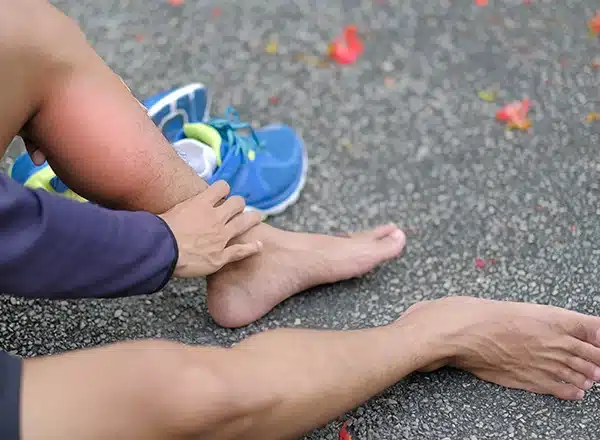
An ankle sprain or ongoing ankle instability can make walking, working, or staying active difficult and painful. At Balance Foot & Ankle Specialist, we provide expert evaluation and treatment for ankle sprains and chronic instability to help restore strength, balance, and confidence with every step.
Whether your injury is recent or you’ve experienced repeated ankle rolling or weakness, our podiatry team offers personalized, evidence-based care designed to prevent future injuries and long-term joint damage.
We proudly serve patients in Howell and Bloomfield Hills, offering advanced care in a professional medical setting for athletes, workers, seniors, and active individuals.
Ankle treatment may be needed if you experience:
Ignoring ankle instability can increase the risk of chronic pain, arthritis, and recurrent injuries.


For severe ligament damage or chronic instability that doesn’t improve with conservative care, minimally invasive surgical options may be recommended to restore ankle stability and function.







Mild sprains may heal in a few weeks, while more severe injuries or instability can take longer without proper treatment.
Repeated sprains can weaken ligaments, leading to chronic ankle instability that requires professional care.
Bracing is often recommended to provide support and prevent re-injury during healing and activity.
Yes. Custom orthotics improve alignment and balance, reducing stress on ankle ligaments.
Surgery is only considered if conservative treatments fail and instability continues to interfere with daily life.
Yes. Untreated instability increases wear on the joint and can lead to early ankle arthritis.
Expert ankle sprain and instability treatment to help you move with confidence again.
If you cannot bear any weight on the ankle at all, suspect a fracture (pain over bone rather than ligament, visible deformity), or your symptoms are severe, the ER is appropriate for immediate X-ray and stabilization. For painful but weight-bearing ankle sprains without obvious fracture signs, a same-day or next-day podiatry appointment offers more comprehensive evaluation and a rehabilitation plan. Our offices have on-site X-ray capability.
Recurrent ankle sprains indicate a condition called chronic ankle instability (CAI). After a significant first sprain, stretched or torn lateral ligaments may not heal with adequate strength, leaving the ankle vulnerable to future sprains. Each recurrence causes additional damage. Proper rehabilitation — particularly proprioceptive (balance) training and peroneal muscle strengthening — dramatically reduces recurrence risk. If you've had more than two sprains, evaluation for instability is strongly recommended.
Complete rest is rarely recommended — appropriate early movement speeds healing. For Grade 1-2 sprains, protected weight-bearing in a lace-up brace usually begins immediately. The RICE protocol (rest, ice, compression, elevation) controls swelling in the first 48-72 hours. Return to normal activities is gradual: walking in 1-2 weeks, sports in 3-8 weeks depending on severity. Grade 3 sprains may require immobilization in a boot for 2-4 weeks before rehabilitation begins.
Grade 1 (stretched) ligaments typically heal fully. Grade 2 (partial tear) ligaments usually heal with good function but may leave some laxity. Grade 3 (complete tears) heal with scar tissue that is often less mechanically strong than the original ligament — which is why rehabilitation focusing on strength and proprioception is critical. Surgery for acute ankle sprains is rarely needed, but some patients with chronic instability benefit from ligament reconstruction.
The fastest recovery combines: immediate RICE for the first 48 hours, early protected weight-bearing, bracing with a lace-up ankle brace, physical therapy with progressive exercises starting within days of injury, and avoiding activities that provoke pain while gradually increasing load. Patients who follow a structured rehabilitation program recover significantly faster than those who simply rest and wait. Our podiatrists provide a week-by-week recovery protocol based on your specific grade of sprain.
Choose Your Location
✅ Same-day appointments available · No referral needed
🔒 Your information is private and HIPAA-protected