
Quick answer: Ankle Brace Types Comparison Lace Up Rigid Afo Guide is a common foot/ankle topic that affects many patients. Effective treatment starts with a targeted diagnosis, conservative-first treatment, and escalation only when needed. We treat this regularly at our Howell and Bloomfield Township practices. Call (810) 206-1402.
Medically reviewed by Dr. Tom Biernacki, DPM · Board-Certified Podiatric Surgeon · Last reviewed: April 2026 · Editorial Policy
Medically reviewed by Dr. Tom Biernacki, DPM — Board-Certified Podiatric Surgeon — Balance Foot & Ankle, Howell & Bloomfield Township, MI. Last updated April 2026.
▶ Watch
Medically Reviewed by Dr. Tom Biernacki, DPM — Board-Certified Podiatrist, Balance Foot & Ankle Specialists, Michigan. Last updated April 2026.
The ankle brace market is enormous — walk into any sporting goods store and you’ll find dozens of options from $15 sleeve supports to $150 rigid braces. The challenge: different ankle conditions require fundamentally different bracing strategies, and choosing the wrong brace can provide false reassurance without meaningful protection, or restrict motion unnecessarily. This guide helps patients understand the categories and match them to their needs.
The most important clinical decision with Ankle Brace Types Comparison Lace Up Rigid Afo Guide isn’t which treatment to start with — it’s identifying the correct subtype. That changes everything. Call (810) 206-1402.
Sleeve/Compression Supports
Neoprene or knit compression sleeves provide mild compression and warmth but minimal structural support. They do not meaningfully restrict ankle inversion/eversion or anterior drawer. Evidence for ankle sprain prevention: minimal. Best applications: mild ankle swelling management, general proprioceptive awareness for low-risk activities, and post-rehabilitation confidence building. Not appropriate for: significant ankle instability, moderate-severe ankle sprains, or return-to-sport in high-risk activities.
Lace-Up Ankle Braces
The most commonly prescribed braces for ankle sprain prevention and mild-to-moderate lateral ankle instability. Examples include ASO (Ankle Stabilizing Orthosis), McDavid lace-up braces, and similar designs. Key features: medial and lateral straps crossing in a figure-8 pattern that limits inversion, adjustable fit via laces, and relatively thin profile that fits most athletic shoes.
Evidence: multiple high-quality randomized trials demonstrate 50–60% reduction in ankle sprain incidence compared to no bracing in high-risk sports (basketball, soccer, volleyball). Most effective for individuals with prior ankle sprain history. Equivalent protection to athletic tape at significantly lower per-use cost. Best for: ankle sprain prevention in sport, mild lateral ankle instability, return-to-sport rehabilitation.
Semi-Rigid Braces (Stirrup/Air Cast Type)
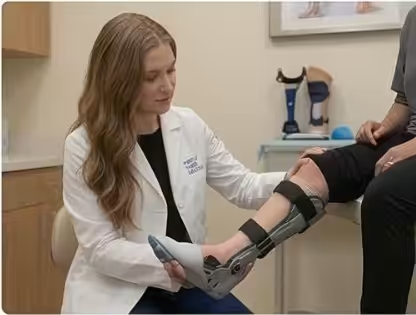
Stirrup-style braces (examples: Aircast Air-Stirrup, Donjoy Stabilizing Aircast) use rigid medial and lateral plastic shells with inflatable air bladders or foam padding. They restrict inversion and eversion more firmly than lace-up braces while allowing plantar/dorsiflexion for natural walking mechanics.
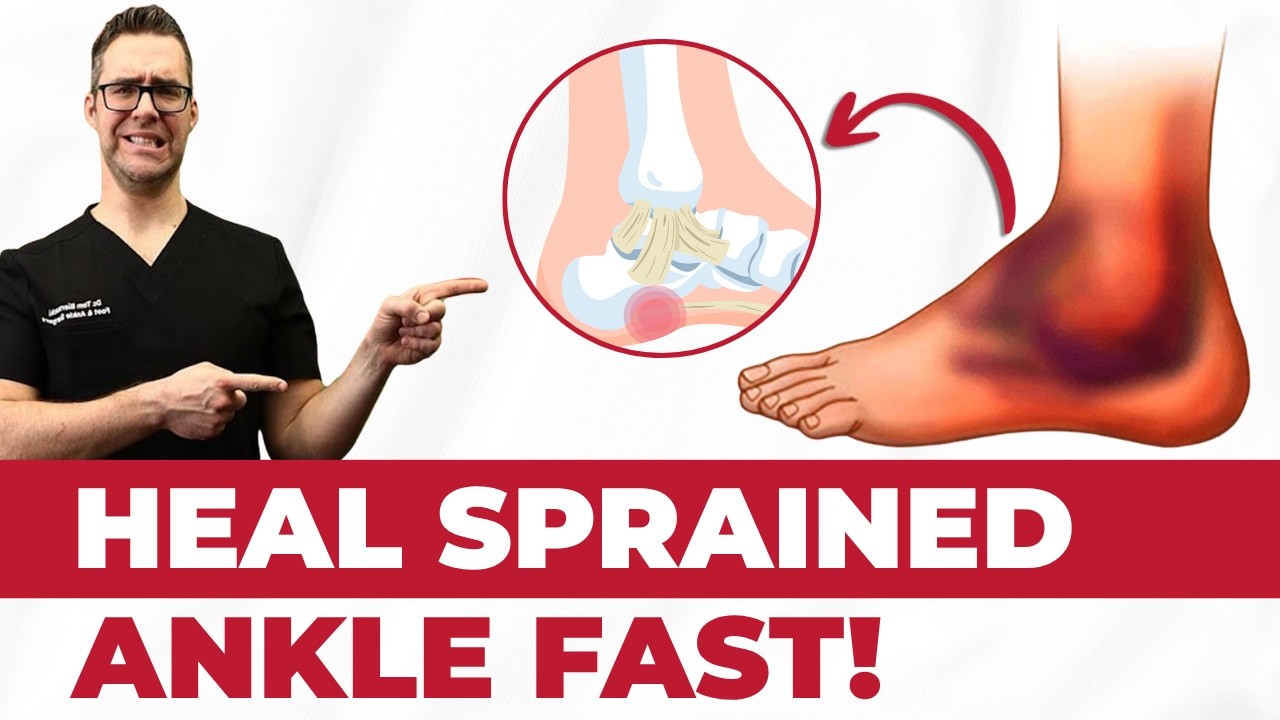
Best applications: acute lateral ankle sprains (grade II–III), early post-sprain rehabilitation, stress fracture offloading. The functional rehabilitation of acute ankle sprains in semi-rigid braces has equivalent outcomes to casting in multiple studies while allowing earlier return to activity. Often the appropriate transition from a walking boot back to footwear after acute sprain management.
Rigid Ankle Braces (Maximum Support)
Rigid plastic hinged braces (examples: Donjoy Velocity, Breg Levitate) provide maximum lateral ankle support with a rigid shell and hinge mechanism allowing plantar/dorsiflexion while blocking inversion/eversion. Bulkier than lace-up designs; require larger shoes or specialized footwear.
Best for: chronic ankle instability with frequent giving way, post-operative ankle reconstruction rehabilitation, and high-demand athletes with significant instability who have exhausted conservative management options.
Walking Boots (CAM Boots)
Controlled ankle motion (CAM) boots are not ankle “braces” in the traditional sense — they are immobilization devices for post-injury and post-operative recovery. They restrict all ankle motion, provide offloading of specific structures, and are used for: acute fractures (stable fibula fractures, stress fractures), acute tendon injuries (Achilles rupture conservative management), post-operative recovery after ankle and foot surgery.
Ankle-Foot Orthoses (AFO)
Custom or prefabricated orthotic devices that extend from the foot up the leg to control both ankle and foot alignment. Several types serve different purposes:
- Rigid AFO: Controls foot drop (peroneal nerve palsy, CMT disease, post-stroke weakness). Holds the ankle in neutral to prevent toe catch during swing phase of gait.
- Articulated/hinged AFO: Allows plantar/dorsiflexion while controlling inversion/eversion. Used for posterior tibial tendon dysfunction, spastic hemiplegia, and complex ankle instability.
- UCBL (University of California Berkeley Laboratory) insert: A deep-heel-cup orthosis that controls hindfoot valgus in adult-acquired flat foot and pediatric flexible flat foot. Less restrictive than a traditional AFO.
- Arizona/gauntlet AFO: Custom-fabricated leather and metal brace for severe chronic ankle/subtalar instability and arthritis — controls all planes of motion while allowing ambulation.
Custom AFO fabrication requires a podiatrist or orthotist assessment, cast or scan of the foot and ankle, and prescription based on diagnosis and functional goals.
Need a Brace or Custom AFO?
Dr. Biernacki assesses ankle stability and prescribes appropriate bracing or custom AFO for your specific condition. Bloomfield Township and Howell locations.
📞 (810) 206-1402 | Book an Appointment →
📧 Get Dr. Tom’s Free Lab Test Guide
Discover the 5 lab tests every person over 35 should ask their doctor about — explained in plain English by a board-certified physician.
📍 Located in Michigan?
Our board-certified podiatrists treat this condition at two convenient locations. Same-day appointments often available.
Insurance Accepted
BCBS · Medicare · Aetna · Cigna · United Healthcare · HAP · Priority Health · Humana · View All →
Howell Office
4330 E Grand River Ave
Howell, MI 48843
Get Directions →
Bloomfield Township Office
43494 Woodward Ave, #208
Bloomfield Township, MI 48302
Get Directions →
Your Board-Certified Podiatrists



Ready to Get Back on Your Feet?
Same-week appointments available at both locations.
Book Your AppointmentMore Podiatrist-Recommended Foot Health Essentials
Hoka Clifton 10


Max-cushion everyday shoe — podiatrist favorite for walking and running.

OOFOS Recovery Slide

Impact-absorbing recovery sandal — wear after long days on your feet.
As an Amazon Associate, Balance Foot & Ankle earns from qualifying purchases. Product recommendations are based on clinical experience; prices and availability shown above update live from Amazon.

When to See a Podiatrist
If foot or ankle pain has been bothering you for more than a few weeks, home care alone may not be enough. Balance Foot & Ankle offers same-week appointments at our Howell and Bloomfield Township clinics — no referral needed in most cases. Bring your current shoes and a short list of symptoms and we’ll build you a treatment plan in one visit.
Call Balance Foot & Ankle: (810) 206-1402 · Book online · Offices in Howell & Bloomfield Township
Watch: Dr. Tom explains
Podiatrist-recommended products
As an Amazon Associate, Dr. Tom earns from qualifying purchases.
Acute immobilization before braced rehab.
View on Amazon →Arch support pairs with every brace type.
View on Amazon →Ice the ankle after each rehab session.
View on Amazon →Topical relief for chronic lateral ankle soreness.
View on Amazon →Related resources
Ready to solve this? Book today.
Same-week appointments · Howell & Bloomfield Township · 4.9★ (1,123+ reviews)
☎ (810) 206-1402Book Online →In-Office Treatment at Balance Foot & Ankle
When conservative care isn’t enough, Dr. Tom Biernacki and the team at Balance Foot & Ankle offer advanced, same-day options — including Foot Bracing Howell at our Howell and Bloomfield Township clinics.
Same-day appointments available. Call (810) 206-1402 or book online.
Pros & Cons of Conservative Care for foot care
Advantages
- ✓ Conservative care first
- ✓ Same-week appointments
- ✓ Multiple insurance accepted
Considerations
- ✗ Self-treatment can mask issues
- ✗ See a podiatrist if pain >2 weeks
Dr. Tom’s Recommended Products for foot care
Affiliate disclosure: As an Amazon Associate, Balance Foot & Ankle earns from qualifying purchases. We only recommend products we use with patients.
Footnanny Heel Cream Dr. Tom’s Pick
Best for: Daily moisturizer for cracked heels
Ready to Get Back on Your Feet?
Same-day appointments in Howell + Bloomfield Township. Most insurance accepted. Dr. Tom Biernacki, DPM & team.
Book Today — Same-Day Appointments Available
Call Now: (810) 206-1402
About Your Care Team at Balance Foot & Ankle
Dr. Tom Biernacki, DPM · Board-Certified Foot & Ankle Surgeon. Specializes in conservative-first care, minimally invasive bunion surgery, and complex reconstruction.
Dr. Carl Jay, DPM · Accepting new patients. Specializes in sports medicine, athletic injuries, and routine podiatric care.
Dr. Daria Gutkin, DPM, AACFAS · Accepting new patients. Specializes in surgical reconstruction and pediatric podiatry.
Locations: 4330 E Grand River Ave, Howell, MI 48843 · 43494 Woodward Ave Suite 208, Bloomfield Township, MI 48302
Hours: Mon–Fri 8:00 AM – 5:00 PM · (810) 206-1402
Pair Your Ankle Brace with These Recovery Products
- Doctor Hoy’s Natural Pain Relief Gel — Pain inside or around your ankle brace: arnica + camphor gel applied to the malleolar region and Achilles before brace application reduces brace-related irritation.
- DASS Medical Compression Socks — Ankle swelling inside a lace-up or rigid brace: graduated compression worn when the brace is removed at night maintains edema control 24 hours.
- PowerStep Pinnacle — Transition from AFO to regular shoe: PowerStep Pinnacle inside your shoe during brace weaning provides the arch support your weakened peroneal muscles need.
Ankle instability requiring a brace for more than 3 months? Ligament reconstruction evaluation may be indicated. Balance Foot & Ankle → (810) 206-1402
In-Office Treatment at Balance Foot & Ankle
If home treatment isn’t providing relief for your foot and ankle conditions, our podiatry team at Balance Foot & Ankle can help with same-day evaluations and advanced in-office care.
Same-day appointments available. (810) 206-1402
Frequently Asked Questions
When should I see a podiatrist?
If symptoms persist past 2 weeks, affect your normal activity, or are accompanied by red-flag symptoms (warmth, redness, swelling, inability to bear weight).
What does treatment cost?
Most diagnostic visits and conservative treatments are covered by Medicare and major insurers. Out-of-pocket costs vary by your specific plan.
How quickly can I get an appointment?
Most non-urgent cases see us within 5 business days. Urgent cases (sudden pain, possible fracture) typically same or next business day.

Dr. Tom Biernacki, DPM is a board-certified foot & ankle surgeon (ABFAS & ABPM) at Balance Foot & Ankle Specialists in Southeast Michigan. With over a decade of clinical experience, he specializes in heel pain, bunions, diabetic foot care, sports injuries, and minimally invasive surgery. Dr. Biernacki is a member of the APMA and ACFAS, and his patient education content on MichiganFootDoctors.com and YouTube has made him one of the most-followed foot & ankle educators on YouTube.