
Quick answer: Running Form Foot Strike Injury Prevention Guide is a common foot/ankle topic that affects many patients. Effective treatment starts with a targeted diagnosis, conservative-first treatment, and escalation only when needed. We treat this regularly at our Howell and Bloomfield Township practices. Call (810) 206-1402.
Medically reviewed by Dr. Tom Biernacki, DPM · Board-Certified Podiatric Surgeon · Last reviewed: April 2026 · Editorial Policy
The most important clinical decision with Running Form Foot Strike Injury Prevention Guide isn’t which treatment to start with — it’s identifying the correct subtype. That changes everything. Call (810) 206-1402.
Quick Answer
Running Form and Foot Strike: What Podiatrists Know About In relates to foot pain — typically caused by overuse, footwear, or biomechanics. Most patients improve in 6-12 weeks with conservative care. Same-week appointments in Howell + Bloomfield Township: (810) 206-1402.
Medically reviewed by Dr. Tom Biernacki, DPM — Board-Certified Podiatric Surgeon — Balance Foot & Ankle, Howell & Bloomfield Township, MI. Last updated April 2026.
▶ Watch
Medically Reviewed by Dr. Tom Biernacki, DPM — Board-Certified Podiatrist, Balance Foot & Ankle Specialists, Michigan. Last updated April 2026.
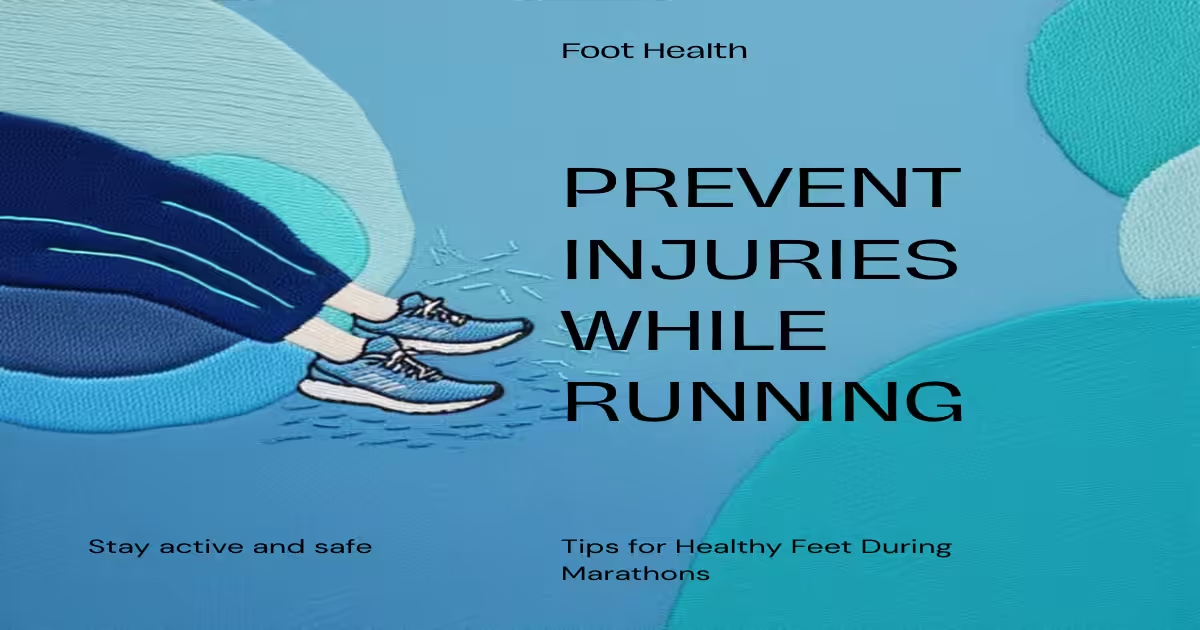
The debate over running form — heel striking vs. forefoot striking, barefoot vs. cushioned shoes, minimalist vs. maximalist — has generated more heat than light in the running community. The evidence is more nuanced than any single ideology suggests, and the podiatric perspective is grounded in biomechanics rather than philosophy. Here’s what the research actually shows about running form, foot strike, and injury prevention.
Foot Strike Patterns: The Three Types
Three primary foot strike patterns describe where the foot first contacts the ground:
- Rearfoot strike (RFS): The heel contacts the ground first. Used by approximately 75–80% of recreational distance runners. The heel absorbs the initial impact, and loading progresses forward through the foot.
- Midfoot strike (MFS): The heel and forefoot contact the ground simultaneously or nearly so. More common in faster runners and elite middle-distance athletes.
- Forefoot strike (FFS): The ball of the foot contacts the ground before the heel. Associated with sprinting and barefoot running; less common in recreational distance runners.
Does Foot Strike Pattern Determine Injury Risk?
The short answer: less than advocates of any particular strike pattern claim. The evidence is genuinely mixed:
- RFS and impact loading: Heel striking produces a distinct impact transient — a sharp spike in vertical ground reaction force at initial contact. This impact transient is absent in forefoot striking. Early studies suggested this spike correlated with stress fracture risk, particularly tibial and femoral stress fractures.
- FFS and distal loading: Forefoot striking eliminates the impact transient but dramatically increases loading on the Achilles tendon, calf musculature, and metatarsals. Studies have documented higher rates of Achilles tendinopathy, calf strain, and metatarsal stress fractures in forefoot strikers.
- Overall injury rates: Multiple prospective cohort studies have found no significant difference in overall injury rates between habitual heel strikers and forefoot strikers at equivalent training volumes. Injuries shift in pattern, not in frequency.
The conclusion from best evidence: changing foot strike pattern shifts injury risk from one anatomical region to another rather than reducing it. Abrupt transitions to forefoot striking in heel-strike-adapted runners frequently cause Achilles tendinopathy, calf strain, and metatarsal stress fractures — particularly concerning because many runners make this transition too rapidly.
What Actually Reduces Running Injury Risk
The factors with strongest evidence for injury prevention:
- Training load management: The majority of running injuries result from doing too much too soon. The 10% rule (increase weekly mileage by no more than 10% per week) is a reasonable guideline, though recent research suggests absolute load changes are more predictive than percentage changes.
- Cadence optimization: Running cadence (steps per minute) has genuine evidence for reducing injury risk. Increasing cadence by 5–10% (typically to 170–180 steps/minute for most runners) reduces ground contact time, vertical oscillation, and peak loading rates — associated with reduced stress fracture risk across multiple studies. This is achievable without wholesale gait overhaul.
- Strength training: Hip abductor, gluteal, and calf strengthening programs reduce running injury rates in prospective studies. Weak hip abductors are a consistent finding in runners with IT band syndrome, patellofemoral pain, and stress fractures.
- Appropriate footwear: Running in shoes appropriate for your foot type, gait, and training surface. Custom orthotics for runners with biomechanical dysfunction (excessive pronation, high arches, leg length discrepancy) reduce injury recurrence.
- Adequate recovery: Sleep, nutrition (adequate caloric intake and calcium/vitamin D), and planned rest days support bone and soft tissue recovery.
When to See a Podiatrist as a Runner
Gait analysis, video running assessment, and custom orthotic fabrication are appropriate for runners with: recurrent injuries despite training modifications, bilateral or asymmetric symptoms, a history of stress fractures, significant flat feet or high arches affecting gait, or leg length discrepancy. Dr. Biernacki combines clinical biomechanical assessment with on-site imaging for runners with persistent injuries.
Running Injuries in Michigan? Get Expert Evaluation.
Dr. Biernacki provides biomechanical assessment, custom orthotics for runners, and targeted treatment at both our Bloomfield Township and Howell locations.
📞 (810) 206-1402 | Book an Appointment →
📧 Get Dr. Tom’s Free Lab Test Guide
Discover the 5 lab tests every person over 35 should ask their doctor about — explained in plain English by a board-certified physician.
📍 Located in Michigan?
Our board-certified podiatrists treat this condition at two convenient locations. Same-day appointments often available.
Insurance Accepted
BCBS · Medicare · Aetna · Cigna · United Healthcare · HAP · Priority Health · Humana · View All →
Howell Office
4330 E Grand River Ave
Howell, MI 48843
Get Directions →
Bloomfield Township Office
43494 Woodward Ave, #208
Bloomfield Township, MI 48302
Get Directions →
Your Board-Certified Podiatrists



Ready to Get Back on Your Feet?
Same-week appointments available at both locations.
Book Your AppointmentMore Podiatrist-Recommended Sports Essentials
Hoka Clifton 10


Max-cushion everyday shoe — podiatrist favorite for walking and running.

OOFOS Recovery Slide

Impact-absorbing recovery sandal — wear after long days on your feet.
As an Amazon Associate, Balance Foot & Ankle earns from qualifying purchases. Product recommendations are based on clinical experience; prices and availability shown above update live from Amazon.
When to See a Podiatrist
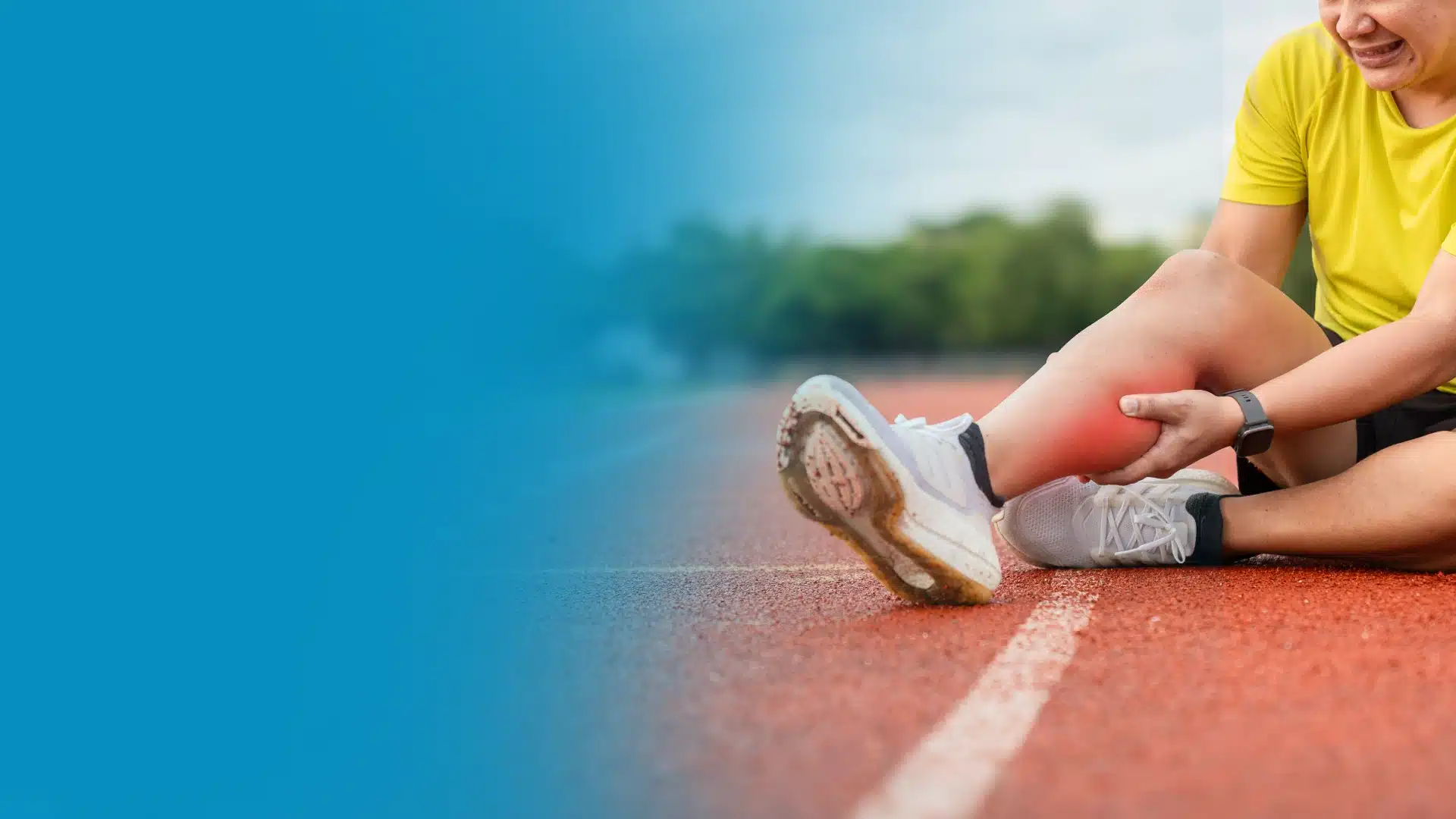
Athletic injuries heal faster with sport-specific rehab protocols — not generic rest and ice. Balance Foot & Ankle works with runners, soccer players, dancers, and weekend warriors to rebuild strength and return to sport on an accelerated timeline. Don’t let a foot injury keep you sidelined longer than necessary.
Call Balance Foot & Ankle: (810) 206-1402 · Book online · Offices in Howell & Bloomfield Township
Watch: Dr. Tom explains
Podiatrist-recommended products
As an Amazon Associate, Dr. Tom earns from qualifying purchases.
Proper arch support corrects foot-strike biomechanics.
View on Amazon →Forefoot cushioning for forefoot-strike runners.
View on Amazon →Post-run cryotherapy for injury prevention.
View on Amazon →Topical relief after long training runs.
View on Amazon →Related resources
Ready to solve this? Book today.
Same-week appointments · Howell & Bloomfield Township · 4.9★ (1,123+ reviews)
☎ (810) 206-1402Book Online →Pros & Cons of Conservative Care for foot care
Advantages
- ✓ Conservative care first
- ✓ Same-week appointments
- ✓ Multiple insurance accepted
Considerations
- ✗ Self-treatment can mask issues
- ✗ See a podiatrist if pain >2 weeks
Dr. Tom’s Recommended Products for foot care
Affiliate disclosure: As an Amazon Associate, Balance Foot & Ankle earns from qualifying purchases. We only recommend products we use with patients.
Footnanny Heel Cream Dr. Tom’s Pick
Best for: Daily moisturizer for cracked heels
Ready to Get Back on Your Feet?
Same-day appointments in Howell + Bloomfield Township. Most insurance accepted. Dr. Tom Biernacki, DPM & team.
Book Today — Same-Day Appointments Available
Call Now: (810) 206-1402
About Your Care Team at Balance Foot & Ankle
Dr. Tom Biernacki, DPM · Board-Certified Foot & Ankle Surgeon. Specializes in conservative-first care, minimally invasive bunion surgery, and complex reconstruction.
Dr. Carl Jay, DPM · Accepting new patients. Specializes in sports medicine, athletic injuries, and routine podiatric care.
Dr. Daria Gutkin, DPM, AACFAS · Accepting new patients. Specializes in surgical reconstruction and pediatric podiatry.
Locations: 4330 E Grand River Ave, Howell, MI 48843 · 43494 Woodward Ave Suite 208, Bloomfield Township, MI 48302
Hours: Mon–Fri 8:00 AM – 5:00 PM · (810) 206-1402
In-Office Treatment at Balance Foot & Ankle
If home treatment isn’t providing relief for your foot pain, our podiatry team at Balance Foot & Ankle can help with same-day evaluations and advanced in-office care.
Same-day appointments available. (810) 206-1402
Ready for Expert Care?
Same-day appointments in Howell & Bloomfield Township, MI.
4.9★ | 1,123 Reviews | 3,000+ Surgeries
Or call: (810) 206-1402

Dr. Tom Biernacki, DPM is a board-certified foot & ankle surgeon (ABFAS & ABPM) at Balance Foot & Ankle Specialists in Southeast Michigan. With over a decade of clinical experience, he specializes in heel pain, bunions, diabetic foot care, sports injuries, and minimally invasive surgery. Dr. Biernacki is a member of the APMA and ACFAS, and his patient education content on MichiganFootDoctors.com and YouTube has made him one of the most-followed foot & ankle educators on YouTube.