
Medically reviewed by Dr. Tom Biernacki, DPM
Board-certified podiatric surgeon | Balance Foot & Ankle, Howell & Bloomfield Township, MI
Last reviewed: May 2026

Why Does My Ankle Crack: Quick Answer
Ankle cracking when you rotate it is most often caused by gas bubbles releasing from the synovial fluid (cavitation — exactly the same as knuckle cracking, harmless), tendon snapping over a bony prominence (peroneal tendon snapping at the lateral malleolus), or accumulated synovial fluid moving in the joint. Cracking WITHOUT pain is universally benign — it doesn’t cause arthritis, doesn’t weaken the joint, and doesn’t need treatment. Cracking WITH pain may indicate cartilage damage, posterior ankle impingement (os trigonum syndrome), peroneal tendon subluxation, or osteochondral lesion. Painless cracking can continue forever without consequences; painful cracking warrants evaluation with X-ray and possibly MRI.
Why Does the Ankle Crack? (3 Main Mechanisms)
Mechanism 1: Cavitation (most common, harmless). Synovial fluid in the ankle joint contains dissolved gases (mostly nitrogen). When the joint is suddenly stretched, the pressure drops and gas comes out of solution as bubbles, producing the audible “crack.” This is exactly the same mechanism as cracking your knuckles. The bubble dissolves back into the fluid over 15-30 minutes — that’s why you can’t crack the same joint twice in a row.
Mechanism 2: Tendon snapping. The peroneal tendons (peroneus longus and brevis) run behind the lateral malleolus. They can snap over the bony prominence with certain motions, producing an audible snap or pop. Painless snapping is usually benign; painful snapping with subluxation (the tendon visibly slipping in front of the malleolus) is a problem requiring evaluation.
Mechanism 3: Synovial fluid movement. Accumulated joint fluid moving through tight spaces during motion can produce a soft squelching or popping sound. Common after sitting for prolonged periods, then standing.
Is Cracking Bad for Your Ankles?
Painless cracking: NO, not harmful. Multiple studies have looked at habitual joint crackers (especially knuckle crackers) and found NO increased risk of arthritis, decreased grip strength, or joint damage. Same applies to ankles. The “fact” that cracking causes arthritis is a myth.
Painful cracking: maybe a problem. If cracking is associated with pain, swelling, or instability, it may indicate cartilage damage, peroneal tendon subluxation, osteochondral lesion of the talus, or posterior ankle impingement. These conditions warrant evaluation.
Important note: Crepitus (a fine grating sensation) is different from “cracking.” Crepitus often indicates cartilage degeneration. If you feel a fine grinding rather than a clean pop, see a podiatrist.
When Cracking IS a Problem (Red Flags)
See a podiatrist if cracking is associated with: Pain at the time of cracking; swelling that develops after cracking; recurrent ankle sprains; instability or “giving way” sensation; locking or catching of the joint; visible tendon subluxation (you can see the peroneal tendon slip in front of the lateral malleolus); morning stiffness; reduced range of motion.
Common pathologies behind painful cracking:
Peroneal tendon subluxation: The peroneal tendons normally sit behind the lateral malleolus. Damage to the superior peroneal retinaculum (often after ankle sprain) allows the tendons to subluxate forward over the malleolus during dorsiflexion. Treatment: bracing for mild cases, surgical reconstruction of the retinaculum for symptomatic cases.
Osteochondral lesion of the talus (OLT): Cartilage and underlying bone defect on the talus, often after old ankle sprain. Causes catching, locking, deep ankle pain, swelling. Diagnosed by MRI. Treatment: arthroscopic microfracture, OATS, or BMAC injection depending on severity.
Posterior ankle impingement / os trigonum syndrome: An accessory ossicle (os trigonum) at the back of the talus impinges during forced plantarflexion. Common in dancers en pointe. Treatment: cortisone injection or arthroscopic excision.
Anterior ankle impingement: Bony spurs on the anterior tibia and talus impinge during forced dorsiflexion. Common in soccer players and dancers. Treatment: cortisone injection, arthroscopic debridement.
Should You Stop Cracking Your Ankles?
If cracking is painless: no need to stop. The behavior itself doesn’t cause damage. Some people find it relieving (it does temporarily reduce joint stiffness by stretching the capsule). Others crack from habit.
If cracking is painful or associated with instability: yes, address the underlying cause. Continued painful cracking from peroneal subluxation, OLT, or impingement progresses these conditions over time.
Evaluation if you’re worried: A podiatrist can differentiate cavitation (benign) from tendon subluxation, crepitus, or pathological mechanical symptoms. On-site ultrasound is excellent for evaluating peroneal tendons in real-time.
How to Reduce Ankle Cracking (If You Want To)
Improve ankle flexibility: Daily ankle range-of-motion exercises (alphabet drawing with the foot, calf stretches, plantar flexion-dorsiflexion).
Strengthen surrounding muscles: Calf raises, resistance band exercises in all four directions (dorsiflexion, plantarflexion, inversion, eversion), single-leg balance.
Address tight calves: Tight calves limit ankle dorsiflexion and contribute to compensatory motions. See our tight calves stretching guide.
Wear supportive shoes: Stability shoes with proper arch support reduce excessive motion that can cause cracking.
Don’t force the cracking: Gentle range of motion is fine; aggressive forced cracking can occasionally cause minor injury.
When to See a Podiatrist
Appointment if: cracking is associated with pain or swelling; recurrent ankle sprains (suggest peroneal tendon involvement); instability or giving-way sensation; locking or catching of the joint; morning stiffness; visible tendon subluxation. Balance Foot & Ankle offers hands-on exam plus imaging when needed including dynamic ultrasound for tendon subluxation and MRI ordering for suspected osteochondral lesions.
When Shoes Aren’t Enough — Dr. Tom’s Top 9 Orthotics
About 30% of patients I see for foot pain need MORE than a great shoe — they need a structured insole. Below: my complete 2026 orthotic ranking with pros, cons, and the specific patient I’d give each one to.




In-Office Treatment at Balance Foot & Ankle
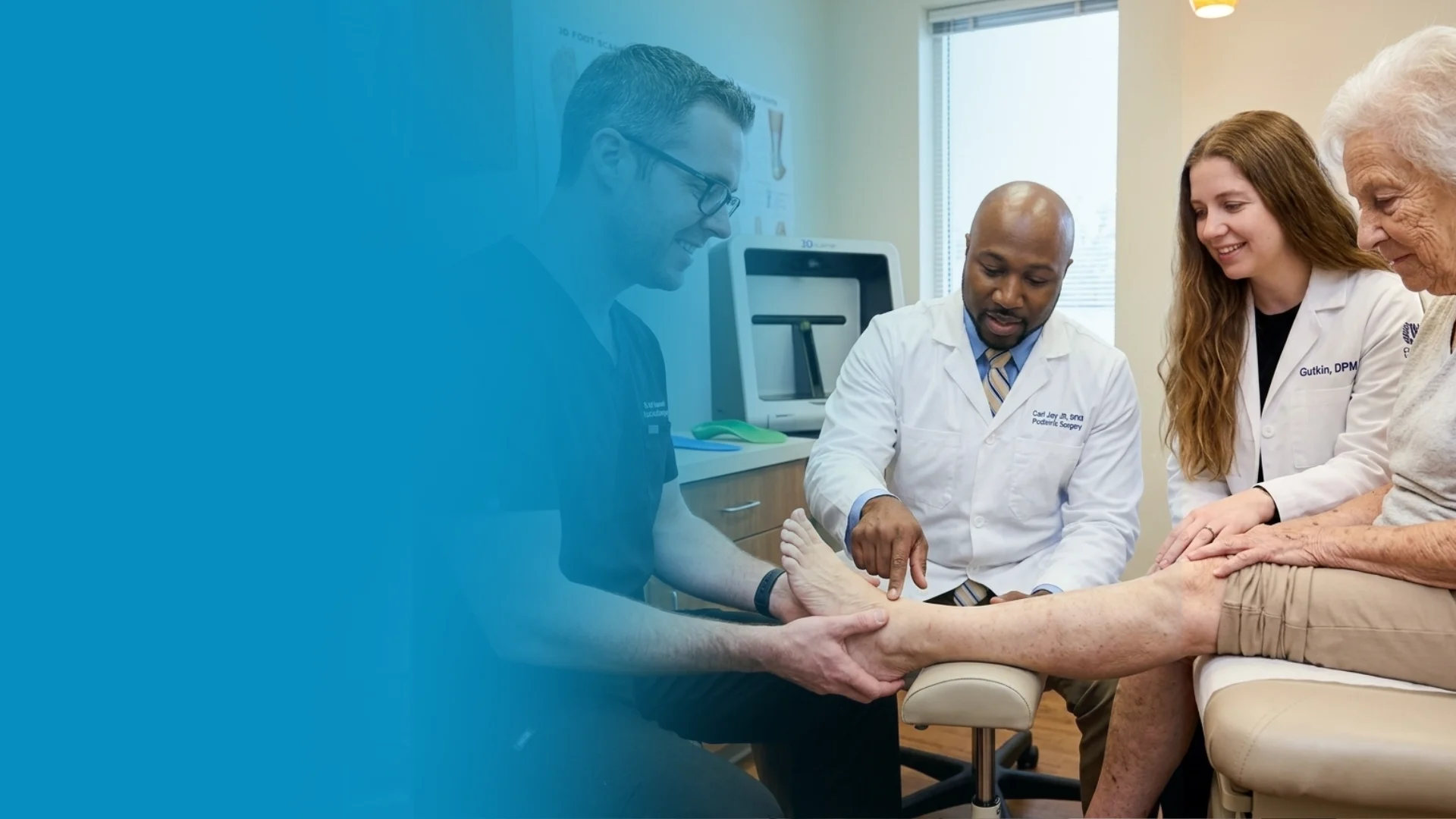
If home treatment isn’t providing relief for your foot and ankle conditions, our podiatry team at Balance Foot & Ankle can help with expert evaluations and advanced in-office care.
Frequently Asked Questions About Why Does My Ankle Crack
Why does my ankle crack when I rotate it?
Most commonly: gas bubbles releasing from synovial fluid (cavitation, harmless), tendon snapping over bony prominences, or accumulated joint fluid moving. Painless cracking is universally benign.
Is it bad to crack your ankles?
No — painless cracking does NOT cause arthritis, weaken joints, or cause damage. Multiple studies confirm this. The “cracking causes arthritis” claim is a myth.
Should I be worried if my ankle cracks all the time?
Painless cracking: no concern, no treatment needed. Painful cracking: see a podiatrist to rule out peroneal tendon subluxation, osteochondral lesion, or ankle impingement.
What is the popping sound when I move my ankle?
Three main causes: gas cavitation in synovial fluid (most common, harmless), peroneal tendon snapping behind the lateral malleolus, or fluid movement in tight joint spaces.
Can a cracking ankle indicate arthritis?
No — cracking is gas/tendon mechanical sounds, not joint damage. Crepitus (fine grating) is different and CAN indicate cartilage wear. If you feel grinding rather than clean popping, see a podiatrist.
How do I stop my ankle from cracking?
You don’t need to if it’s painless. If you want to: improve ankle flexibility (daily ROM exercises), strengthen surrounding muscles (calf raises, resistance band), stretch tight calves, wear supportive shoes.
Why does my ankle crack when I do calf raises?
Most commonly: peroneal tendons snapping behind the lateral malleolus during the up-down motion. If painless, this is benign. If painful or associated with visible tendon subluxation, see a podiatrist.
Related Resources from Balance Foot & Ankle
- Ankle Inversion Sprain
- Lateral Ankle Ligaments Anatomy
- Foot Tendons Anatomy
- Tight Calf Muscles
- Ankle Arthroscopy
- Chronic Ankle Instability

Dr. Tom Biernacki, DPM is a board-certified foot & ankle surgeon (ABFAS & ABPM) at Balance Foot & Ankle Specialists in Southeast Michigan. With over a decade of clinical experience, he specializes in heel pain, bunions, diabetic foot care, sports injuries, and minimally invasive surgery. Dr. Biernacki is a member of the APMA and ACFAS, and his patient education content on MichiganFootDoctors.com and YouTube has made him one of the most-followed foot & ankle educators on YouTube.