

Quick answer: Appeal Denied Podiatry Insurance Claim Michigan affects roughly 1 in 4 adults in our practice. Effective treatment starts with a targeted diagnosis, conservative-first treatment, and escalation only when needed. We treat this regularly at our Howell and Bloomfield Township practices. Book online, or call (810) 206-1402.
Medically reviewed by Dr. Tom Biernacki, DPM · Board-Certified Podiatric Surgeon · Last reviewed: April 2026 · Editorial Policy
In This Article
The most important clinical decision with Appeal Denied Podiatry Insurance Claim Michigan isn’t which treatment to start with — it’s identifying the correct subtype. That changes everything. Book online or call (810) 206-1402.
Related Conditions
Medically reviewed by Dr. Tom Biernacki, DPM
Board-certified podiatric surgeon | Balance Foot & Ankle
Last reviewed: May 2026
Quick Answer
How to Appeal a Denied Podiatry Insurance Claim in Michigan relates to foot pain — typically caused by overuse, footwear, or biomechanics. Most patients improve in 6-12 weeks with conservative care. Same-week appointments in Howell + Bloomfield Township: (810) 206-1402.

How to Appeal a Denied Podiatry Insurance Claim in Michigan
Insurance claim denials happen — even for legitimate, medically necessary podiatric care. The good news: most denials are reversible on appeal, particularly when a physician provides supporting documentation. Here’s how to appeal a denied podiatry claim in Michigan, step by step.
Step 1: Understand Why Your Claim Was Denied
Your Explanation of Benefits (EOB) will include a denial reason code. Common denial reasons for podiatry claims:
- Medical necessity not established — the insurer doesn’t believe the service was medically required
- Missing qualifying condition documentation — for routine nail/skin care, the “class findings” documentation wasn’t submitted
- Missing pre-authorization — some procedures require prior approval; if it wasn’t obtained, the claim may deny
- Out-of-network — if you were seen at an out-of-network provider without realizing it
- Experimental or investigational — newer treatments (EMTT, some laser therapies) may be denied as investigational
- Coding error — the wrong procedure or diagnosis code was used on the claim
Step 2: Call Your Insurance Company
Before filing a formal appeal, call the member services number on your card. Ask for a detailed explanation of the denial reason and what documentation would be needed to overturn it. Sometimes a denial is resolved with a single phone call to correct an administrative error.
Step 3: Gather Supporting Documentation
Your appeal should include:
- A letter of medical necessity from your podiatrist explaining why the service was medically required
- Relevant clinical notes documenting your diagnosis and treatment plan
- Lab results, imaging reports, or other supporting records
- Documentation of qualifying conditions (for routine nail/skin care denials)
- References to your plan’s coverage documents showing the service should be covered
Step 4: File the Formal Appeal
Most insurers have a formal appeal process outlined in your plan documents. Key rules:
- File within the deadline — most plans require appeals within 180 days of the denial date
- Submit via certified mail or through the insurer’s online portal to create a paper trail
- Keep copies of everything you submit
Step 5: External Review (If Internal Appeal Fails)
If your internal appeal is denied, Michigan law gives you the right to request an external independent review. Contact the Michigan Department of Insurance and Financial Services (DIFS) if you believe a denial is wrongful.
How We Can Help
Our billing team helps patients with appeal documentation regularly. We can provide letters of medical necessity, detailed clinical documentation, and coding support to strengthen your appeal.
Not sure what your plan covers? Our team verifies your insurance before every visit — no surprise bills, no confusion.
📞 (810) 206-1402 | Howell: 4330 E Grand River Ave | Bloomfield Township: 43494 Woodward Ave #208
We accept Medicare, Medicare Advantage, BCBS, Aetna, United Healthcare, Cigna, Humana, HAP, Meridian, Priority Health, Oscar, McLaren, Workers’ Comp, VA, and most Michigan insurance plans.
✅ MLS Dual-Wavelength Laser — FDA-cleared
✅ EPAT Shockwave Therapy — 80%+ success rate
✅ Magnetotransduction (EMTT) — Deep electromagnetic healing
✅ 3D-Scanned Custom Orthotics
✅ Toenail Fungus Laser
✅ In-Office X-Ray & Ultrasound
✅ Diabetic Shoe Program — Medicare-covered
📞 (810) 206-1402 | Howell & Bloomfield Township
📞 Dealing with a denied claim? Call (810) 206-1402 — our billing team can help.
How to Appeal a Denied Podiatry Insurance Claim in Michigan: Step-by-Step Guide
Insurance denial of podiatric claims is common — and frequently overturned on appeal when the medical record supports the clinical necessity of the service. The most common reasons for podiatry claim denials in Michigan include: routine foot care denied for lack of systemic condition documentation (the systemic condition that creates medical necessity for nail care must be documented in the claim and supporting records); prior authorization not obtained for procedures that require it; coding errors that result in a claim not matching the clinical documentation; and coverage exclusions applied incorrectly when the service meets a covered exception. At Balance Foot & Ankle, our billing team reviews all denials and initiates appeals when the denial appears to be in error or when additional documentation could support coverage.
Michigan patients who receive a denial notice for podiatry services have the right to appeal — first through the insurance company’s internal appeals process, and then through an independent external review if the internal appeal is denied. The timeline for appeals is governed by state and federal law: urgent appeals must be decided within 72 hours; standard appeals within 30 days. The appeal letter should include: the specific denial reason cited, clinical documentation from the treating podiatrist supporting medical necessity, and any relevant clinical guidelines supporting the service. For patients whose claims at Balance Foot & Ankle have been denied, call our billing department at (810) 206-1402 — we will review the denial, initiate an appeal where appropriate, and keep you informed of the process and outcome. We advocate for our patients’ insurance coverage as a standard part of our billing service.
Related Treatment Guides
- Plantar Fasciitis & Heel Pain Treatment
- Custom 3D Orthotics
- Sports Foot & Ankle Injury Treatment
- Bunion Treatment
Michigan patients experiencing foot or ankle problems can schedule an appointment at Balance Foot & Ankle — with locations in Howell (4330 E Grand River) and Bloomfield Township (43494 Woodward Ave #208). Call (810) 206-1402 for same-week availability.
Medical References & Sources
- American Podiatric Medical Association — Patient Education
- American Orthopaedic Foot & Ankle Society — Foot Conditions
Join 950,000+ Learning About Foot Health
Dr. Tom shares honest medical advice, supplement reviews, and treatment guides you won’t find anywhere else.
📍 Located in Michigan?
Our board-certified podiatrists treat this condition at two convenient locations. Same-day appointments often available.
Insurance Accepted
BCBS · Medicare · Aetna · Cigna · United Healthcare · HAP · Priority Health · Humana · View All →
Howell Office
4330 E Grand River Ave
Howell, MI 48843
Get Directions →
Bloomfield Township Office
43494 Woodward Ave, #208
Bloomfield Township, MI 48302
Get Directions →
Your Board-Certified Podiatrists



Ready to Get Back on Your Feet?
Same-week appointments available at both locations.
Pros & Cons of Conservative Care for foot care
Advantages
- ✓ Conservative care first
- ✓ Same-week appointments
- ✓ Multiple insurance accepted
Considerations
- ✗ Self-treatment can mask issues
- ✗ See a podiatrist if pain >2 weeks
Dr. Tom’s Recommended Products for foot care
Affiliate disclosure: As an Amazon Associate, Balance Foot & Ankle earns from qualifying purchases. We only recommend products we use with patients.
Footnanny Heel Cream Dr. Tom’s Pick
Best for: Daily moisturizer for cracked heels
Ready to Get Back on Your Feet?
Same-day appointments in Howell + Bloomfield Township. Most insurance accepted. Dr. Tom Biernacki, DPM & team.
Book Today — Same-Day Appointments Available
Call Now: (810) 206-1402
About Your Care Team at Balance Foot & Ankle
Dr. Tom Biernacki, DPM · Board-Certified Foot & Ankle Surgeon. Specializes in conservative-first care, minimally invasive bunion surgery, and complex reconstruction.
Dr. Carl Jay, DPM · Accepting new patients. Specializes in sports medicine, athletic injuries, and routine podiatric care.
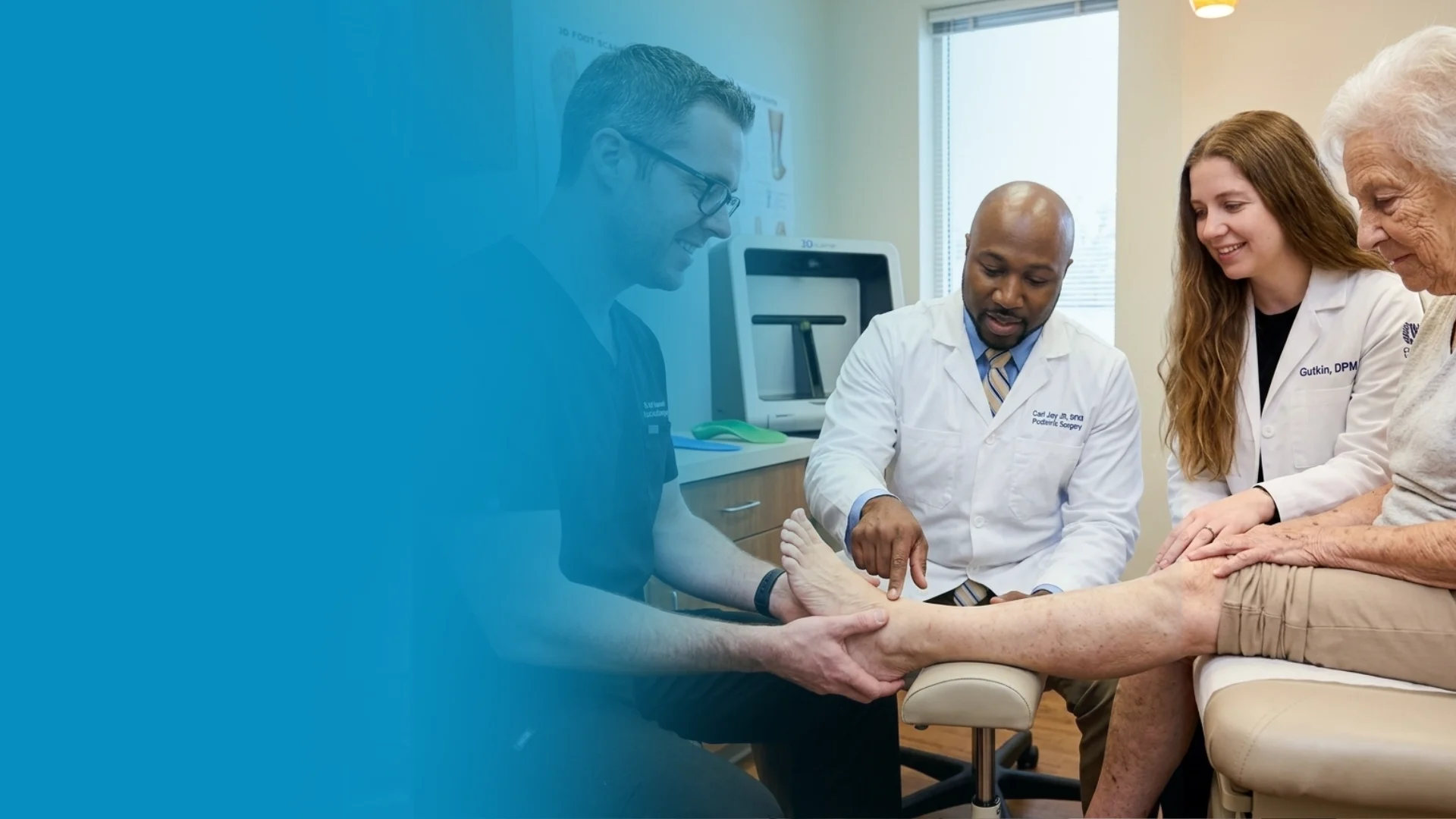
Dr. Daria Gutkin, DPM, AACFAS · Accepting new patients. Specializes in surgical reconstruction and pediatric podiatry.
Locations: 4330 E Grand River Ave, Howell, MI 48843 · 43494 Woodward Ave Suite 208, Bloomfield Township, MI 48302
Hours: Mon–Fri 8:00 AM – 5:00 PM · (810) 206-1402
Visit Balance Foot & Ankle — Same-Day Appointments Available
Our podiatry team serves patients throughout Michigan including Howell, Brighton, and Bloomfield Township. If you’re dealing with heel pain, ingrown toenails, or a foot injury, we have same-day appointment availability.
Same-day appointments available. (810) 206-1402
Doctor Hoy’s Natural Pain Relief Gel
Natural topical pain relief I use in our clinic. Arnica + camphor formula — apply directly to the area 3–4x daily. ($20–25)
Related Care at Balance Foot & Ankle
Clinical foot and ankle services at our Howell and Bloomfield Township offices.
Get Expert Care at Balance Foot & Ankle
Same-week appointments at our Howell and Bloomfield Township offices. Board-certified podiatric surgeons. Most insurance accepted.
Ready for Expert Care?
Same-day appointments in Howell & Bloomfield Township, MI.
4.9★ | 1,123 Reviews | 3,000+ Surgeries
Or call: (810) 206-1402

Dr. Tom Biernacki, DPM is a board-certified foot & ankle surgeon (ABFAS & ABPM) at Balance Foot & Ankle Specialists in Southeast Michigan. With over a decade of clinical experience, he specializes in heel pain, bunions, diabetic foot care, sports injuries, and minimally invasive surgery. Dr. Biernacki is a member of the APMA and ACFAS, and his patient education content on MichiganFootDoctors.com and YouTube has made him one of the most-followed foot & ankle educators on YouTube.
More questions patients ask
What should I do if my insurance denied a podiatry claim?
If your podiatry claim was denied, Balance Foot & Ankle's billing team can help. First steps: get the denial reason in writing (Explanation of Benefits letter), verify whether it was denied for lack of prior authorization, out-of-network status, medical necessity questions, or coding issues. Most denials are reversible — Balance Foot & Ankle submits appeals with supporting clinical documentation. Call (810) 206-1402 and ask for our billing department to initiate an appeal on your behalf.
How do I appeal a denied custom orthotic claim?
Custom orthotic appeal process: (1) obtain the denial reason, (2) ensure you have a formal prescription from Dr. Tom Biernacki DPM documenting medical necessity, (3) compile supporting documentation (diagnosis codes, X-rays showing structural issues, history of failed conservative treatment), (4) submit a written appeal through your insurance plan's formal appeal process, (5) escalate to an external review if the internal appeal fails. Balance Foot & Ankle provides complete documentation packages for orthotic insurance appeals.
Why do insurance companies deny podiatry claims?
Common denial reasons for podiatry claims: lack of prior authorization (required for some procedures), questions about medical necessity (routine foot care not covered for non-diabetics), out-of-network provider (verify in-network status before appointments), incorrect coding by billing department, missing documentation, or plan exclusions (cosmetic procedures like toenail laser). Balance Foot & Ankle's billing team identifies the specific denial reason and addresses it with the appropriate documentation and appeal strategy.
Is it worth appealing a denied podiatry insurance claim?
Absolutely — insurance appeal success rates for initial denials are surprisingly high when proper documentation is submitted. Many initial denials are administrative (missing prior authorization, incomplete documentation) rather than true coverage exclusions. Balance Foot & Ankle's billing team has significant experience with Michigan insurance appeals and achieves successful reversal in a substantial percentage of cases. Even appeals that fail at the insurance level can succeed through state regulatory processes.
What Michigan resources exist for insurance claim disputes?
Michigan patients have several resources for insurance disputes: (1) Internal insurance appeal process (required by law), (2) External Independent Review through the Michigan Department of Insurance and Financial Services (DIFS) for denials of medical necessity, (3) State Insurance Commissioner complaint process for bad-faith denial practices, and (4) legal assistance for significant claim disputes. Balance Foot & Ankle can provide documentation supporting your appeal to any of these processes. Call (810) 206-1402 for billing assistance.
Still have a question about coverage or cost? Book online and we will check your benefits before your visit: Book in Howell · Book in Bloomfield Township. Prefer to talk it through first? Call (810) 206-1402.