
✅ Medically reviewed by Dr. Thomas Biernacki, DPM — Board-Certified Podiatrist · Last updated April 6, 2026

Medically reviewed by
Dr. Carl Jay, DPM · Board-Certified Podiatric Surgeon
Fellowship-Trained in Foot & Ankle Surgery · Updated April 2026
⚡ Quick Answer
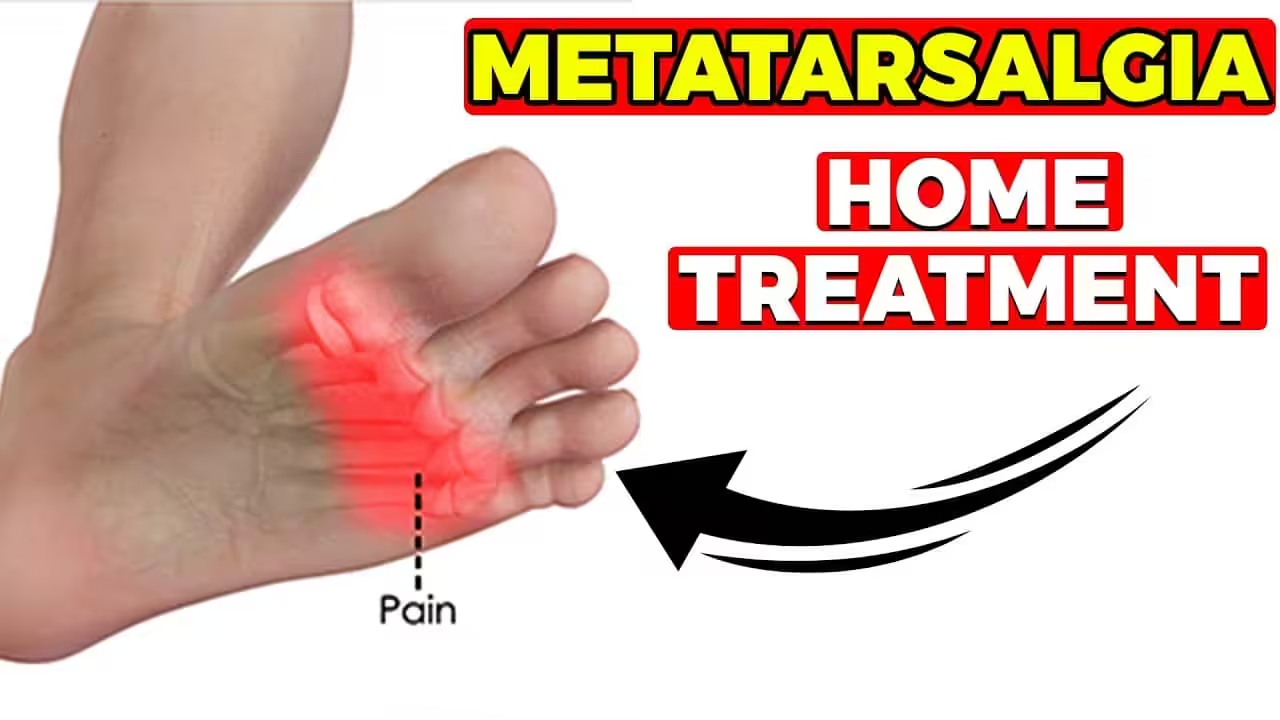
Metatarsalgia is pain in the ball of the foot, typically beneath the 2nd, 3rd, or 4th metatarsal heads. It feels like stepping on a pebble or a burning ache that worsens with standing and walking. The most common causes include overloaded metatarsals, Morton’s neuroma, capsulitis, and plantar plate tears. Treatment starts with metatarsal pads, supportive shoes, and activity modification — most patients improve within 6–8 weeks.
Table of Contents
- What Is Metatarsalgia?
- 5 Common Causes of Ball-of-Foot Pain
- Symptoms
- Diagnosis by Pain Location
- How We Diagnose It
- Treatment Options
- Best Pads, Shoes & Orthotics
- 3 Exercises for Ball-of-Foot Pain
- When Surgery Is Needed
- Warning Signs
- FAQ
- Sources
What Is Metatarsalgia?
If it feels like there’s a rock in your shoe when you walk — except there isn’t — you’re probably dealing with metatarsalgia. This broad term describes pain and inflammation in the ball of the foot, the padded area just behind your toes where the long metatarsal bones meet the toe joints. It’s one of the most common foot complaints we see at Balance Foot & Ankle, and it affects everyone from marathon runners to people who simply stand a lot at work.
The ball of the foot bears a tremendous amount of force — up to 275% of your body weight during running. Five metatarsal heads share this load, but when the distribution becomes uneven (due to foot structure, shoe choice, or changes in the fat pad), one or more metatarsal heads absorb disproportionate pressure. The result is inflammation of the surrounding joint capsule, fat pad, and soft tissues — producing that characteristic burning, aching pain that gets worse the longer you’re on your feet.
Important distinction: “metatarsalgia” is a symptom, not a specific diagnosis. It’s like saying “headache” — there are multiple distinct conditions that cause ball-of-foot pain, each with different treatments. Identifying the specific cause is the key to getting better.
5 Common Causes of Ball-of-Foot Pain
1. Mechanical Metatarsalgia (Overloaded Metatarsal)
The most common type. One metatarsal head sits lower than its neighbors (either naturally or due to a neighboring bunion, hammertoe, or previous surgery), causing it to absorb more than its fair share of ground-reaction force. You’ll typically see a callus under the overloaded metatarsal head — the callus is your body’s response to the excess pressure. The 2nd and 3rd metatarsals are most commonly affected.
2. Morton’s Neuroma
A thickening of the nerve between the metatarsal heads, most commonly between the 3rd and 4th toes. Morton’s neuroma causes burning pain, numbness, or tingling that radiates into the toes — often described as “walking on a marble” or feeling like your sock is bunched up. Tight shoes and high heels compress the metatarsal heads together, squeezing the nerve and worsening symptoms. See our complete Morton’s neuroma guide for detailed treatment information.
3. Capsulitis (Predislocation Syndrome)
Inflammation of the joint capsule surrounding a metatarsophalangeal (MTP) joint. The 2nd MTP joint is most commonly affected — the capsule becomes inflamed and weakened, causing pain directly under the joint and a sensation that the toe is “floating” or not gripping the ground properly. If untreated, capsulitis can progress to a plantar plate tear and eventually toe dislocation.
4. Plantar Plate Tear
The plantar plate is a thick ligament on the bottom of each MTP joint that prevents the toe from hyperextending. When this ligament tears — usually at the 2nd toe — the affected toe drifts upward and may eventually cross over the big toe. Pain is felt directly under the affected joint, and pressing upward on the toe from below reproduces the pain. This is essentially the next stage beyond capsulitis.
5. Fat Pad Atrophy
The natural fat pad under the ball of the foot thins with age, losing the cushioning that normally protects the metatarsal heads from direct ground contact. This is particularly common after age 50 and in patients who have received steroid injections in the forefoot. Without adequate fat padding, normal walking on hard surfaces produces pain because bone is essentially meeting ground with minimal shock absorption. See our detailed fat pad atrophy guide for more information.
Symptoms of Metatarsalgia
While the specific symptoms vary by cause, most patients describe one or more of the following: a sharp, aching, or burning pain in the ball of the foot that worsens with standing, walking, or running; the sensation of walking on a pebble or a bunched-up sock; pain that improves when you take off your shoes and rest; a callus or area of thickened skin beneath the painful metatarsal head; and numbness or tingling in the toes (which suggests nerve involvement, as in Morton’s neuroma).
The pain typically develops gradually over weeks rather than appearing suddenly (unless there was a specific injury). It’s often worst at the end of the day after prolonged weight-bearing and improves overnight with rest.
Diagnosis by Pain Location
| Pain Location | Most Likely Cause | Key Features |
|---|---|---|
| Under 2nd or 3rd metatarsal head (with callus) | Mechanical metatarsalgia | Callus visible; worsens with walking; often associated with bunion or hammertoe |
| Between 3rd & 4th toes (burning/tingling) | Morton’s neuroma | Numbness into toes; “marble” sensation; worse in tight shoes |
| Under 2nd MTP joint (toe drifting up) | Capsulitis / plantar plate tear | Toe feels unstable; pain with upward pressure on toe; toe crossing |
| Under 1st metatarsal (big toe area) | Sesamoiditis | Pain underneath big toe joint; worse pushing off |
| Diffuse ball-of-foot pain (age 50+) | Fat pad atrophy | Pain on hard surfaces; improved with thick cushioning; thin forefoot padding |
| Multiple metatarsal heads | Biomechanical overload / tight calf | Broad forefoot pain; often related to high arches or tight Achilles |
How We Diagnose Metatarsalgia
At Balance Foot & Ankle, we start by pressing on each individual metatarsal head from underneath the foot to identify exactly which one (or more) is producing pain. We check for calluses (indicating mechanical overload), assess toe alignment and stability (to detect capsulitis or plantar plate tears), and perform Mulder’s click test (squeezing the metatarsal heads together to detect a Morton’s neuroma).
We also evaluate the entire foot — arch height, calf flexibility, and the presence of bunions or hammertoes that may be transferring load to the metatarsal heads. Tight calf muscles are a frequently overlooked contributor: when the ankle can’t dorsiflex sufficiently, the body compensates by rolling over the forefoot earlier and harder during the gait cycle.
Imaging: Weight-bearing X-rays reveal metatarsal length patterns, stress fractures, and joint changes. Ultrasound is excellent for detecting Morton’s neuroma and assessing plantar plate integrity. MRI provides the most detailed view when the diagnosis remains unclear or when surgical planning is needed.
Treatment Options
The foundation of metatarsalgia treatment is redistributing pressure away from the overloaded area. This principle applies regardless of the specific underlying cause.
Metatarsal Pads
A metatarsal pad is the single most effective first-line treatment. This small, dome-shaped pad is placed just behind (proximal to) the metatarsal heads — not directly under them. The pad lifts and spreads the metatarsal shafts, causing the heads to splay apart and redistributing pressure across a wider area. Proper placement is critical: the pad should sit about a half-inch behind the most painful spot. Studies show metatarsal pads reduce peak plantar pressure under the metatarsal heads by 30–50%.
Footwear Changes
Switch to shoes with adequate forefoot cushioning, a wide toe box (to avoid compressing the metatarsal heads), and a slightly stiff or rocker sole (to reduce the bending forces at the MTP joints during push-off). Avoid high heels (which shift body weight directly onto the metatarsal heads), thin-soled shoes, and going barefoot on hard surfaces. Rocker-bottom shoes like the Hoka Bondi are particularly effective because they roll you through push-off without demanding metatarsal head loading.
Orthotics
Custom or over-the-counter orthotics with a built-in metatarsal pad provide consistent offloading with every step. For patients with high arches, the orthotic also improves overall force distribution across the foot. For patients with tight calves, a small heel lift in the orthotic can reduce the compensatory forefoot loading.
Activity Modification & Calf Stretching
Reduce high-impact activities temporarily (running, jumping) and substitute with cycling or swimming. Daily calf stretching (both straight-knee and bent-knee) improves ankle dorsiflexion and reduces the compensatory forefoot overload that drives many cases of metatarsalgia. This is one of the most underrated treatments — we frequently see patients improve significantly with consistent calf stretching alone.
Best Pads, Shoes & Orthotics for Metatarsalgia
🏆 #1 Pick: Metatarsal Pads
Adhesive felt or gel metatarsal pads that stick to your insole just behind the metatarsal heads. By spreading and lifting the metatarsal shafts, they reduce peak pressure under the ball of the foot by up to 50%. Inexpensive, easy to apply, and immediately effective — the single most important product for metatarsalgia relief.
Affiliate link · As an Amazon Associate we earn from qualifying purchases
Hoka Bondi 9
Maximum cushioning with a rocker sole geometry that reduces metatarsal head loading during push-off. The 35mm stack height acts like a shock absorber for the ball of the foot, and the wide toe box doesn’t compress the metatarsal heads together. Our top shoe recommendation for any cause of ball-of-foot pain.
Affiliate link · As an Amazon Associate we earn from qualifying purchases
PowerStep Pinnacle Maxx Orthotics
A structured orthotic with built-in metatarsal support and a deep heel cradle. The semi-rigid arch controls overpronation while the forefoot cushioning absorbs impact at the metatarsal heads. Fits easily in athletic and most casual shoes. An excellent over-the-counter option before investing in custom orthotics.
Affiliate link · As an Amazon Associate we earn from qualifying purchases
3 Exercises for Ball-of-Foot Pain
1. Calf Stretch (Gastrocnemius & Soleus)
Stand facing a wall with the affected leg behind you, heel on the ground. Lean forward until you feel a stretch in the upper calf. Hold 30 seconds, repeat 3 times. Then repeat with the back knee slightly bent to stretch the deeper soleus muscle. Tight calves force early forefoot loading during walking — improving ankle dorsiflexion by even 5 degrees can dramatically reduce metatarsal pressure. This is the most important exercise for metatarsalgia. Perform twice daily.
2. Towel Scrunches
Place a towel flat on the floor and use your toes to scrunch it toward you. This activates the intrinsic foot muscles that help control metatarsal head position and support the transverse arch of the forefoot. Stronger intrinsic muscles improve load distribution across all five metatarsal heads rather than concentrating it on one or two. Perform for 2 minutes, twice daily.
3. Marble Pickup
Place 10–15 marbles on the floor and pick them up one at a time with your toes, placing them in a small bowl. This develops fine motor control and strength in the toe flexors — muscles that help grip the ground and stabilize the MTP joints during walking. It’s particularly beneficial for capsulitis and plantar plate weakness, where the toes are losing their ability to grip effectively. Perform once daily.
When Surgery Is Needed
Most metatarsalgia responds to conservative treatment. Surgery is considered when symptoms persist despite 3–6 months of comprehensive conservative care, or when the underlying structural problem (hammertoe, plantar plate tear, neuroma) requires correction.
Common surgical procedures: Weil osteotomy (shortening an overlong metatarsal to relieve pressure), plantar plate repair (reattaching a torn plantar plate to stabilize the toe), neurectomy (removing a Morton’s neuroma), and hammertoe correction (straightening a contracted toe that’s transferring load to the metatarsal head). These procedures are often combined when multiple factors are contributing.
At Balance Foot & Ankle, we use minimally invasive techniques whenever possible. Most metatarsal surgery is outpatient and allows walking in a surgical shoe the same day.
⚠️ Warning Signs — See a Podiatrist Promptly
- A toe drifting upward or crossing over another toe — indicates plantar plate tear or capsulitis progressing toward dislocation
- Numbness or tingling radiating into the toes — suggests Morton’s neuroma or nerve compression requiring targeted treatment
- Pain with visible bruising under the ball of the foot — may indicate stress fracture of a metatarsal
- Ball-of-foot pain that persists more than 4 weeks despite rest, padding, and shoe changes
- An open wound or ulcer under a callus — particularly urgent for diabetic patients; requires immediate evaluation
- Sudden worsening of chronic ball-of-foot pain — suggests a new or progressing problem like a stress fracture or plantar plate tear
Frequently Asked Questions
Where exactly should I place a metatarsal pad?
This is the most common question we hear — and proper placement is critical. The pad goes just behind the metatarsal heads, not directly under the painful spot. Find the most painful area on the ball of your foot, then place the pad about a half-inch (1 cm) closer to your heel. The pad should sit under the metatarsal shafts, lifting and spreading them so the heads get relief. If the pad is directly under the metatarsal heads, it actually increases pressure and makes the pain worse. When in doubt, we can help position it correctly during your office visit.
Can metatarsalgia go away on its own?
Mild mechanical metatarsalgia can improve if the triggering activity stops (like reducing running mileage) and appropriate shoes are worn. However, most cases persist or recur without addressing the underlying cause — whether that’s a biomechanical imbalance, tight calves, improper footwear, or a structural problem like a hammertoe or neuroma. The good news is that simple interventions (metatarsal pad, calf stretching, shoe change) resolve the majority of cases without requiring more aggressive treatment.
Is ball-of-foot pain the same as Morton’s neuroma?
Not exactly. Morton’s neuroma is one specific cause of ball-of-foot pain — but metatarsalgia as a broader term encompasses multiple conditions including mechanical overload, capsulitis, plantar plate tears, sesamoiditis, and fat pad atrophy. Morton’s neuroma is distinguished by its characteristic burning/tingling that radiates into the toes and its location between (rather than under) the metatarsal heads, most commonly the 3rd and 4th toes. If your ball-of-foot pain includes numbness or tingling, Morton’s neuroma moves to the top of the differential.
What causes ball-of-foot pain when walking barefoot?
Barefoot walking eliminates all the cushioning and pressure distribution that shoes and orthotics provide. The metatarsal heads bear the full impact of each step directly against hard floors. Fat pad atrophy (thinning of the natural cushioning under the ball of the foot) makes this even worse — it’s like the shock absorber between your bones and the ground has worn out. Mechanical metatarsalgia from any cause is always worse barefoot on hard surfaces. This is why we recommend keeping a pair of supportive sandals or slippers near your bed.
Sources
- Espinosa N, Brodsky JW, Maceira E. Metatarsalgia. J Am Acad Orthop Surg. 2010;18(8):474-485.
- Koenig RD. Metatarsalgia and lesser metatarsal surgery. Clin Podiatr Med Surg. 2005;22(2):175-198.
- Besse JL. Metatarsalgia. Orthop Traumatol Surg Res. 2017;103(1):S29-S39.
- Hassouna H, Singh D. Morton’s metatarsalgia: pathogenesis, aetiology and current management. Acta Orthop Belg. 2005;71(6):646-655.
The Bottom Line
Ball-of-foot pain is incredibly common, but the word “metatarsalgia” is just the starting point — not the final diagnosis. The specific cause (mechanical overload, neuroma, capsulitis, plantar plate tear, or fat pad atrophy) determines the best treatment. The good news is that conservative treatment works for the majority of patients: a properly placed metatarsal pad, supportive cushioned shoes, calf stretching, and activity modification produce meaningful relief within 6–8 weeks. When these measures aren’t enough, targeted interventions including injections, custom orthotics, and minimally invasive surgery offer excellent outcomes.
Ball-of-Foot Pain Making Every Step Miserable?
Our board-certified podiatrists will identify the exact cause of your metatarsalgia and create a treatment plan that gets you walking comfortably again. Same-week appointments available.
Or call: (810) 206-1402 · Howell & Bloomfield Hills, MI
Ball of Foot Pain?
Our podiatrists diagnose and treat metatarsalgia with custom orthotics, padding, and targeted therapies for complete forefoot relief.
Clinical References
- Espinosa N, Brodsky JW, Maceira E. Metatarsalgia. J Am Acad Orthop Surg. 2010;18(8):474-485.
- Besse JL. Metatarsalgia. Orthop Traumatol Surg Res. 2017;103(1S):S29-S39.
- Rao S, Song J, Kraszewski A, et al. The effect of foot temperature on plantar pressure during barefoot walking. J Am Podiatr Med Assoc. 2011;101(1):51-57.

Dr. Tom Biernacki, DPM is a double board-certified podiatrist and foot & ankle surgeon at Balance Foot & Ankle Specialists in Southeast Michigan. With over a decade of clinical experience, he specializes in heel pain, bunions, diabetic foot care, sports injuries, and minimally invasive surgery. Dr. Biernacki is a member of the APMA and ACFAS, and his patient education content on MichiganFootDoctors.com and YouTube has reached over one million views.
Frequently Asked Questions
Why does the ball of my foot hurt when I walk?
When should I see a doctor for ball of foot pain?
- Diagnosis and Treatment of Plantar Fasciitis (PubMed / AAFP)
- Heel Pain (APMA)
- Hallux Valgus (Bunions): Evaluation and Management (PubMed)
- Bunions (Mayo Clinic)
Recommended Products from Dr. Tom