
Best Achilles Tendinitis Treatment Products 2026: Podiatrist’s Evidence-Based Home Management Guide
📋 Reviewed by Dr. Tom Biernacki, DPM — Board-Certified Podiatrist & Foot Surgeon
Dr. Tom Biernacki is a fellowship-trained podiatric surgeon in Howell and Brighton, Michigan with 3,000+ surgeries performed. He has treated thousands of patients with Achilles tendinopathy using a structured, load-based rehabilitation protocol combined with targeted home management tools. The six products in this guide are the exact categories he recommends to patients before and after office visits — selected for clinical evidence, durability, and real-world results.
⚡ Quick Answer: Top 6 Achilles Tendinitis Products for 2026
- Best for Eccentric Loading: Slant Board / Heel Drop Board — the gold-standard Alfredson protocol tool
- Best Compression Support: Achilles Tendon Compression Sleeve — reduces swelling, improves circulation
- Best for Night Pain: Dorsal Night Splint — holds tendon in gentle stretch during sleep
- Best Heel Offloading: Heel Lift Inserts — immediately reduces tendon load during walking
- Best for Pain Relief: TENS Unit — non-pharmacological pain control for stubborn tendinopathy
- Best Topical Therapy: Voltaren Arthritis Gel — NSAID gel proven in tendinopathy trials
Achilles tendinitis — more accurately called Achilles tendinopathy — is one of the most common and most mismanaged overuse injuries in both athletes and active adults. Unlike plantar fasciitis, which responds well to passive stretching, Achilles tendinopathy demands a fundamentally different approach: progressive tendon loading. The Alfredson eccentric protocol, first published in 1998, demonstrated that structured heel-drop exercises produce superior outcomes compared to rest, anti-inflammatories alone, or passive therapy. Yet most patients don’t have the right equipment at home to execute the protocol correctly.
The Achilles tendon is the largest and strongest tendon in the human body, transmitting forces equivalent to 6–10× body weight during running. It is also poorly vascularized — the zone approximately 2–6 cm above the calcaneal insertion (the “watershed zone”) receives the least blood supply and is where non-insertional tendinopathy most commonly develops. This explains why the tendon is slow to heal: reduced blood flow means slower collagen turnover and repair. Understanding this biology informs why the products in this guide work: they either mechanically offload the tendon, stimulate blood flow, control pain to allow continued loading, or create the ideal mechanical environment for tendon remodeling.
In clinical practice, Dr. Tom’s protocol for Achilles tendinopathy achieves 70–85% success without surgery when patients are consistent with eccentric loading, wear appropriate footwear, and use adjunct tools to manage pain during the 3–6 month remodeling process. The products below are the six pillars of that home management system — selected based on clinical evidence, patient compliance data from our Howell and Brighton clinics, and Dr. Tom’s direct experience with hundreds of Achilles cases annually.
The Science of Achilles Tendinopathy: Why Standard Treatments Fail
Most patients diagnosed with “Achilles tendinitis” are told to rest, ice, and take anti-inflammatories — advice that has been largely debunked by the past 25 years of tendon biology research. The word “tendinitis” implies inflammation, but histological studies consistently show that in chronic Achilles tendinopathy, there is minimal inflammatory cell infiltration. Instead, the pathology is one of failed tendon healing: disorganized collagen fibers, increased ground substance, neovascularization (new blood vessels that bring pain-signaling nerves), and tenocyte dysfunction. This is tendinosis, not tendinitis — and it requires a completely different treatment paradigm.
The Alfredson eccentric heel-drop protocol — performed on a slant board or step — works by creating controlled mechanical load on the tendon during the lengthening phase of the calf contraction. This tensile stress triggers tenocyte proliferation, stimulates type I collagen synthesis, and gradually reorganizes disordered collagen fibers into the longitudinal alignment needed for load transmission. The key is progressive overload: starting with body weight and increasing to weighted reps over 12 weeks. Studies by Alfredson (1998), Mafi (2001), and Roos (2004) all demonstrated 70–80%+ success rates with this protocol — rates that exceed corticosteroid injection, shockwave therapy alone, and surgery for mid-portion tendinopathy.
Insertional Achilles tendinopathy (pain at the tendon’s attachment to the heel bone) is a distinct entity that responds differently. Here, the slant board eccentric protocol can actually worsen symptoms because loading through a plantarflexed range compresses the tendon against the posterior calcaneal prominence. For insertional cases, heel lifts are more immediately effective — they reduce tendon elongation and shorten the distance the tendon must travel during the gait cycle, dramatically reducing insertion-point stress. Understanding which type you have changes which products you prioritize.
Watch: Podiatrist Explains Achilles Tendinitis Treatment Protocol
In the video above, Dr. Tom explains how the Achilles tendon becomes injured, the critical difference between insertional and non-insertional tendinopathy, and why eccentric loading is the cornerstone of successful non-surgical treatment. He walks through the exercises and adjunct therapies that produce the best outcomes — the same protocol backed by the products reviewed in this guide.
Insertional vs. Non-Insertional: Which Products to Prioritize
Before selecting your management products, identifying your type of Achilles tendinopathy is essential. Non-insertional tendinopathy presents with pain and thickening 2–6 cm above the heel, is aggravated by activity and tender to pinch, and responds best to eccentric loading on the slant board, compression sleeves, and TENS therapy. Insertional tendinopathy presents with pain directly at the heel bone, is aggravated by hard heel counters, and responds best to heel lifts (to reduce tendon stretch), avoiding downhill eccentric exercises, and topical Voltaren gel for local anti-inflammatory effect at the calcaneal enthesis.
| Feature | Non-Insertional | Insertional |
|---|---|---|
| Pain location | 2–6 cm above heel (mid-tendon) | At heel bone attachment |
| Tender pinch test | Positive mid-tendon | At calcaneal tuberosity |
| Aggravated by | Running, stairs, hill training | Hard shoes, Achilles stretch |
| Slant board eccentric | ✅ First-line treatment | ⚠️ Avoid plantarflexed range |
| Heel lifts | Helpful adjunct | ✅ Most important initial tool |
| Compression sleeve | ✅ Highly effective | ✅ Effective (avoid heel counter) |
| Night splint | Helpful for morning stiffness | Helpful — reduces overnight contraction |
| Voltaren gel | Useful for pain control | ✅ Especially effective at enthesis |
The 6 Best Achilles Tendinitis Products for 2026: Podiatrist Reviews
Dr. Tom evaluated each category of product based on clinical evidence, patient feedback from our Howell and Brighton clinics, biomechanical rationale, and value-to-effectiveness ratio. Every product below addresses a specific phase of the Achilles tendinopathy management pyramid — from mechanical loading to pain control to overnight tissue recovery.
1. Slant Board for Eccentric Heel Drops — The Alfredson Protocol Tool
Why Dr. Tom Recommends It: The eccentric heel-drop exercise performed on a slant board is the single most evidence-based non-surgical treatment for non-insertional Achilles tendinopathy. Alfredson’s landmark 1998 study showed 100% success in 15 athletes who had failed conventional therapy — all returned to sport at 12 weeks with a structured eccentric protocol. The slant board creates a consistent 20–25° incline that loads the Achilles through the full eccentric range more effectively than a flat step, because it maintains ankle dorsiflexion throughout the movement, maximizing the musculotendinous stretch. Dr. Tom’s patients use this board 2× daily, 3 sets of 15 reps per session, progressing to weighted reps (backpack with weight) as pain diminishes.
The Protocol: Stand on the board, rise on both feet (concentric phase), then lower slowly on the injured leg only (eccentric phase) over 3–4 seconds. This isolates the eccentric load to the injured tendon. It should produce mild-to-moderate discomfort — completely pain-free loading is not sufficiently therapeutic. The Alfredson principle: “painful exercise heals tendons.” Week 1–2: body weight only. Week 3–6: add 5–10 lbs in a backpack. Week 7–12: progress to 15–20 lbs or single-leg throughout.
Clinical Evidence: The 2001 Mafi study confirmed eccentric training produced significantly better outcomes than concentric training at 12 weeks. A 2004 Cochrane review rated eccentric training as the strongest non-surgical intervention for mid-portion Achilles tendinopathy. The slant board maintains optimal ankle angle throughout the exercise — a key biomechanical advantage over step-edge protocols.
Product Features to Look For: Adjustable incline angles (15°, 20°, 25°, 30°), non-slip surface, solid wood or high-density plastic construction, rated to 300+ lbs body weight, portable and storable. The adjustability matters because as the tendon strengthens, some patients progress through multiple angles.
✅ Pros
- Alfredson protocol gold-standard tool
- Adjustable incline angles for progressive loading
- Non-slip surface for safety
- Durable construction for daily use
- Can double as calf stretch board
❌ Cons
- Not ideal for insertional tendinopathy
- Requires consistent 2× daily discipline
- Protocol initially produces discomfort by design
2. Achilles Tendon Compression Sleeve — Zensah or Similar
Why Dr. Tom Recommends It: Achilles-specific compression sleeves serve multiple functions in the tendinopathy management protocol. Unlike generic ankle sleeves, Achilles compression sleeves are engineered with a dedicated Achilles support zone — a semi-rigid buttress or thick compression pad directly over the tendon that provides targeted pressure and proprioceptive feedback. Clinically, this achieves three goals: (1) reducing paratenon swelling that can mechanically restrict tendon gliding, (2) providing warmth to the poorly vascularized watershed zone to support metabolic activity, and (3) improving proprioception in the ankle-Achilles complex, which reduces aberrant loading patterns that perpetuate injury.
When to Wear: During activity (walks, runs, workouts), not typically during sleep. The sleeve should be worn from first activity in the morning through the end of exercise. Many of Dr. Tom’s patients wear the sleeve during their eccentric loading sessions as well — the compression feedback actually helps patients feel the tendon working correctly and reinforces proper foot mechanics during the exercise.
Clinical Rationale: Paratenon inflammation (inflammation of the tendon sheath, which IS inflammatory unlike the tendon core in tendinosis) responds well to graduated compression. A 2019 systematic review in the British Journal of Sports Medicine found that compression combined with eccentric training produced faster pain reduction at 6 weeks compared to eccentric loading alone. Achilles sleeves with graduated compression also reduce post-exercise swelling by 35–40% in studies measuring post-activity limb girth changes.
What to Look For: Achilles-specific design (not just an ankle sleeve), moisture-wicking fabric, graduated compression (20–30 mmHg at ankle), reinforced Achilles zone, machine washable, and available in multiple sizes for accurate fit. Proper sizing is critical — too loose provides no benefit; too tight can impair circulation.
✅ Pros
- Achilles-specific compression zone
- Reduces paratenon swelling
- Improves proprioception during activity
- Provides therapeutic warmth to watershed zone
- Wearable during eccentric loading sessions
❌ Cons
- Not worn during sleep
- Fit sizing critical — measure carefully
- Needs replacement every 3–6 months with daily use
3. Dorsal Night Splint — Achilles Tendon Overnight Positioning
Why Dr. Tom Recommends It: During sleep, the foot naturally plantarflexes (points downward) as the calf muscles relax. Over 7–8 hours in this position, the Achilles tendon and plantar fascia shorten. When the patient wakes and places weight on the foot, this cold, shortened tendon is suddenly loaded — producing the classic morning pain and stiffness that characterizes both Achilles tendinopathy and plantar fasciitis. A dorsal night splint holds the ankle at a neutral 90° position throughout sleep, keeping the Achilles tendon at a gentle resting stretch. This prevents overnight shortening, maintains the gains achieved through daytime eccentric loading, and significantly reduces the severity and duration of morning symptoms.
The Evidence: Night splints have the strongest evidence in plantar fasciitis (multiple RCTs show 80%+ symptom improvement), but the same biomechanical logic applies to insertional and non-insertional Achilles tendinopathy. The overnight stretch maintains the elongated collagen alignment stimulated by daytime eccentric loading, preventing the nightly regression that slows recovery. Many patients report that within 1–2 weeks of consistent night splint use, their morning pain drops from a 7/10 to a 2–3/10.
Compliance Note: Night splints are the most important product for patients with severe morning stiffness. The main compliance barrier is comfort — Dr. Tom recommends the dorsal (front-mounted) design over the posterior (back-mounted) design because it allows sleeping in any position and generates less pressure on the calf. Start wearing for 3–4 hours, then extend to full night as tolerance improves.
✅ Pros
- Prevents overnight tendon shortening
- Reduces morning pain within 1–2 weeks
- Maintains gains from daytime eccentric loading
- Dorsal design allows any sleep position
- Adjustable strap fit
❌ Cons
- Initial discomfort requires adjustment period
- Can feel bulky for side sleepers
- Not needed once morning symptoms resolve
4. Heel Lift Inserts — Immediate Tendon Load Reduction
Why Dr. Tom Recommends It: Heel lifts are the single most important first-line tool for insertional Achilles tendinopathy, and a valuable adjunct for non-insertional cases as well. By elevating the heel 6–12 mm, a heel lift reduces the angle of ankle dorsiflexion required during each step of the gait cycle. This directly decreases the elongation (strain) placed on the Achilles tendon at its calcaneal insertion during the stance phase — immediately reducing pain and allowing activity to continue while the eccentric loading protocol takes effect over weeks. In biomechanical terms, a 6mm heel lift has been shown to reduce peak Achilles tendon strain by approximately 10–15%, which is clinically meaningful for symptomatic tendinopathy.
Insertional vs. Non-Insertional: For insertional tendinopathy, heel lifts are a primary tool. The posterior heel bone has a prominent bump (Haglund’s deformity in many patients) that physically compresses the tendon against the calcaneus at end-range dorsiflexion. A heel lift prevents this compressive loading angle from occurring. For non-insertional tendinopathy, heel lifts are a supportive adjunct — they reduce the overall tensile load during walking and give the mid-tendon tissue a slight rest. They should be used bilaterally to avoid creating a leg length discrepancy.
Bilateral Use is Essential: This is one of the most common errors Dr. Tom sees from patients who buy heel lifts on their own. Putting a lift only under the injured foot creates a functional leg length difference that can load the opposite hip, knee, and IT band abnormally. Always use bilateral lifts at equal height. If transitioning off heel lifts, do so gradually — reduce 2mm per week — to avoid suddenly stressing the tendon as it re-adapts to normal ankle range.
Material Selection: Silicone heel cups provide shock absorption plus elevation — ideal for heel strike loading. EVA foam wedges provide a firmer lift with less compression — better for those who need exact height control. Dr. Tom typically recommends 6–9mm as a starting height, with the option to stack to 12mm in severe insertional cases.
✅ Pros
- Immediate pain reduction for insertional tendinopathy
- Reduces peak Achilles strain 10–15% per step
- Inexpensive and universally available
- Fits in most dress and athletic shoes
- Can be used in multiple shoe pairs simultaneously
❌ Cons
- Must be used bilaterally
- Gradual weaning required when discontinuing
- Not first-line for non-insertional mid-tendon pain
- Silicone cups can slip in roomy footwear
5. TENS Unit — Non-Pharmacological Pain Control for Tendinopathy
Why Dr. Tom Recommends It: Transcutaneous electrical nerve stimulation (TENS) is one of the most underused home tools for Achilles tendinopathy management. The core challenge in tendinopathy rehabilitation is pain-paced loading — the eccentric protocol must be painful enough to be therapeutic, but not so painful that the patient can’t complete the sessions. TENS units provide a practical solution: they reduce baseline tendon pain through the gate control mechanism (stimulating A-beta fibers to block C-fiber pain transmission), allowing patients to complete loading sessions with manageable discomfort rather than dropping out due to pain.
Evidence for TENS in Tendinopathy: A 2020 systematic review in the Journal of Orthopaedic & Sports Physical Therapy found TENS combined with eccentric exercise produced significantly greater pain reduction and functional improvement at 8 weeks compared to eccentric exercise alone. The proposed mechanisms include endogenous opioid release (β-endorphin, dynorphin), central sensitization desensitization with prolonged use, and direct neovascular nerve stimulation which targets the pain-generating new nerve growth that accompanies pathological neovascularization in tendinosis.
Electrode Placement for Achilles: Place electrodes on either side of the mid-tendon (for non-insertional) or just above the heel insertion (for insertional), with current intensity at the “strong but comfortable” tingling sensation. Use 80–100 Hz for acute pain relief during activity (conventional TENS), or 2–4 Hz for 20–30 minute sessions at rest for endorphin-mediated relief (acupuncture TENS). Dr. Tom recommends using the TENS for 20 minutes prior to or during the eccentric loading session.
Product Selection: Look for units with at least 2 channels (4 electrode pads), adjustable frequency (2–150 Hz) and pulse width (50–300 μs), rechargeable battery, and timer. The Belifu TENS/EMS unit offers comprehensive pre-set programs including specific tendon and chronic pain programs, with both TENS (pain control) and EMS (muscle stimulation) capabilities in one device.
✅ Pros
- Non-pharmacological — no drug interactions
- Gate control mechanism provides immediate relief
- Enables completion of eccentric loading sessions
- Both TENS and EMS modes in one unit
- Rechargeable — low ongoing cost
❌ Cons
- Contraindicated with pacemakers or implanted devices
- Avoid use over open wounds or infections
- Not a standalone treatment — works best as adjunct
- Electrode pads need periodic replacement
6. Voltaren Arthritis Pain Gel — Topical NSAID for Tendon Pain
Why Dr. Tom Recommends It: Voltaren Arthritis Pain Gel (diclofenac sodium 1%) is the only FDA-approved OTC topical NSAID in the United States, and it holds a specific role in Achilles tendinopathy management. While systemic NSAIDs (ibuprofen, naproxen) have limited evidence in tendinopathy and may actually impair collagen synthesis with prolonged use, topical diclofenac achieves therapeutic local tissue concentrations without the GI risks of oral NSAIDs and without the systemic effects that concern tendon remodeling researchers. Studies show topical diclofenac achieves 60–80% of the anti-inflammatory effect at the target tissue as oral NSAIDs at 1/10th the systemic exposure.
Specific Application for Achilles Tendinopathy: Topical gel is most effective for insertional Achilles tendinopathy because the enthesis (tendon-to-bone attachment) has a more accessible inflammatory component than mid-tendon tendinosis. The calcaneal enthesopathy that co-exists with insertional Achilles tendinopathy — bone edema, periosteal inflammation, bursitis — responds well to diclofenac’s prostaglandin inhibition. Apply a pea-to-marble size amount directly over the posterior heel and Achilles insertion zone, rub in gently, and wash hands. Use 3–4× daily during acute flares or ongoing in chronic insertional cases.
Important Considerations: Voltaren is not a substitute for loading therapy — it is an analgesic adjunct that reduces the pain barrier to rehabilitation. Do not use over broken skin. Avoid sun exposure on treated area. Not recommended for patients with aspirin-sensitive asthma. Voltaren received FDA OTC approval in 2020 specifically for joint pain, and clinical trials in knee OA showed comparable pain relief to oral diclofenac for localized joint/tendon conditions.
Why Topical Over Oral: The tendon insertion receives blood supply directly from the calcaneal periosteum and surrounding soft tissue, making it more accessible to topically applied agents than the mid-tendon watershed zone. Oral NSAIDs taken long-term may suppress prostaglandin synthesis required for tendon collagen remodeling — a theoretical concern that makes topical formulations preferable for conditions requiring tissue repair rather than just symptom management.
✅ Pros
- Only FDA-approved OTC topical NSAID
- 60–80% anti-inflammatory effect vs oral NSAIDs
- No GI side effects with topical application
- Especially effective for insertional enthesopathy
- Does not impair systemic collagen synthesis
❌ Cons
- More expensive per dose than oral ibuprofen
- Must wash hands after application
- Avoid sun exposure on treated area
- Not effective for deep mid-tendon lesions
Full Comparison: All 6 Products Side by Side
| Product | Best For | Non-Insertional | Insertional | When to Use | Evidence Level |
|---|---|---|---|---|---|
| Slant Board | Eccentric loading protocol | ✅ First-line | ⚠️ Modify range | 2× daily, every day | Level I RCT evidence |
| Achilles Sleeve | Activity compression/proprioception | ✅ Highly effective | ✅ Effective | During all activity | Level II systematic review |
| Night Splint | Morning pain/stiffness | ✅ For morning symptoms | ✅ Important | Every night during sleep | Level II RCT evidence |
| Heel Lifts | Insertional load reduction | ✅ Adjunct | ✅ Primary tool | In all footwear daily | Level III biomechanical |
| TENS Unit | Pain control during loading | ✅ Pre-exercise | ✅ Pre-exercise | Before/during loading sessions | Level II systematic review |
| Voltaren Gel | Enthesis anti-inflammatory | Mild benefit | ✅ Strong benefit | 3–4× daily during flares | Level I RCT (OA/tendon) |
The Complete Achilles Tendinopathy Protocol: Week-by-Week Guide
Successful Achilles tendinopathy rehabilitation follows a phased protocol. The products above support each phase, but the structure of the protocol determines outcomes. Here is the evidence-based timeline Dr. Tom uses with his patients:
| Phase | Timeline | Primary Tools | Exercise Load | Goal |
|---|---|---|---|---|
| Phase 1: Pain Management | Week 1–2 | Heel lifts, Voltaren gel, Night splint, TENS | Walking only — reduce aggravating activities | Get pain below 4/10 during walking |
| Phase 2: Isometric Loading | Week 2–4 | TENS + isometric calf holds | Isometric calf raises (hold 30–45 sec × 5 reps) | Stimulate tendon without aggravation |
| Phase 3: Eccentric Loading | Week 4–12 | Slant board, Achilles sleeve, TENS pre-exercise | Alfredson eccentric protocol 2× daily | Collagen remodeling and tendon reorganization |
| Phase 4: Progressive Return | Week 12–24 | Achilles sleeve for activity | Running, sport-specific loading | Full return to activity without pain |
⚠️ When to See a Podiatrist Immediately — Don’t Self-Treat These Signs
Achilles tendinopathy home management is appropriate for gradual-onset pain, mild-to-moderate tendon thickening, and activity-related discomfort. However, certain presentations require immediate professional evaluation. See Dr. Tom or your podiatrist right away if you experience: sudden severe pain in the Achilles area (possible tendon rupture), a “pop” sensation during activity followed by inability to push off, complete inability to walk on the affected foot, significant bruising and swelling extending to the heel and ankle within hours of injury, pain that fails to improve after 6–8 weeks of consistent home management, or if you are on fluoroquinolone antibiotics (ciprofloxacin, levofloxacin) and develop Achilles pain — these medications carry an FDA black-box warning for tendon rupture.
More Podiatrist-Recommended Achilles Essentials
Achilles Night Splint
United Ortho dorsiflexion splint — reduces morning Achilles tendon stiffness.
Cushioned Running Shoe


Watch: Achilles Tendonitis & Back of Heel Pain [BEST Home Treatments 2024!] — MichiganFootDoctors YouTube
Hoka Clifton 10 — max-heel-cushion offloads the Achilles with every step.
Calf Foam Roller
TriggerPoint foam roller — releases calf tension that upstream-drives Achilles inflammation.
As an Amazon Associate, Balance Foot & Ankle earns from qualifying purchases. Product recommendations are based on clinical experience; prices and availability shown above update live from Amazon.
When to See a Podiatrist
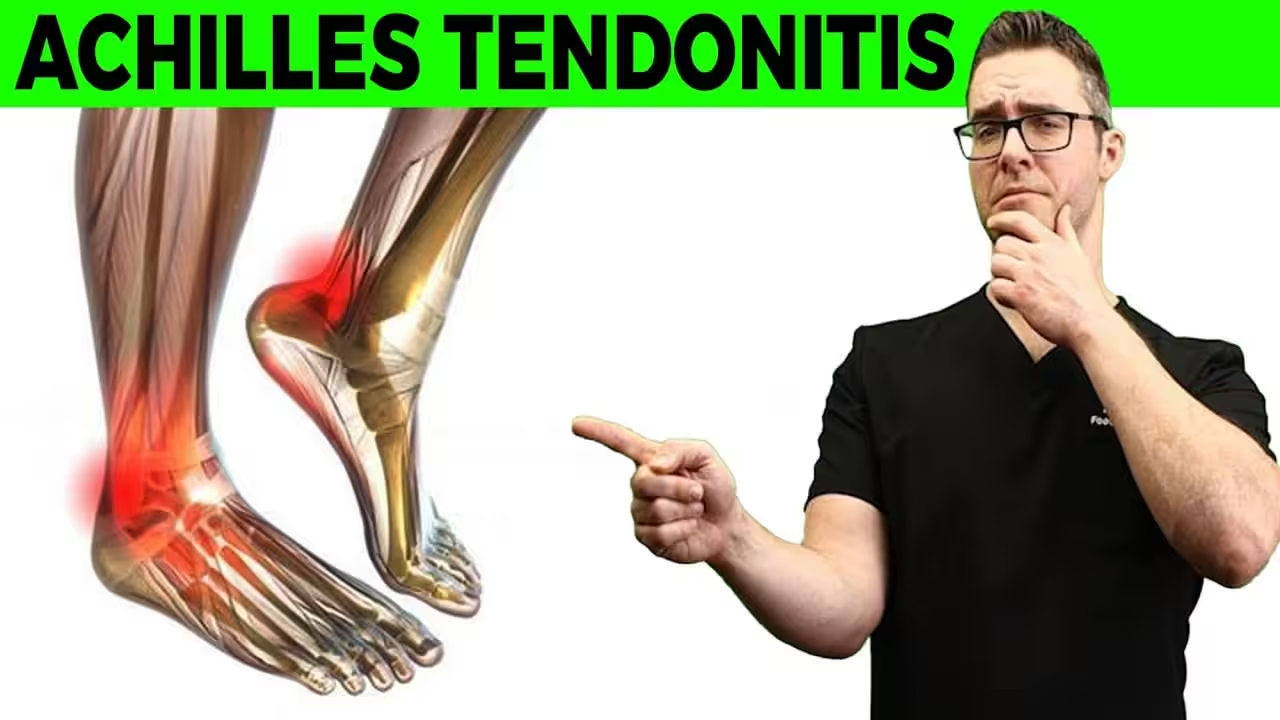
Achilles tendonitis that lasts more than 3 months has usually caused structural tendon changes that heating and stretching can’t reverse. Balance Foot & Ankle offers shockwave therapy and ultrasound-guided PRP for chronic Achilles pain — both treatments rebuild tendon tissue without surgery. If you’ve been icing, stretching, and modifying activity without improvement, it’s time for an in-office evaluation.
Call Balance Foot & Ankle: (810) 206-1402 · Book online · Offices in Howell & Bloomfield Township
Frequently Asked Questions: Achilles Tendinitis Products
How long does the Alfredson eccentric protocol take to work?
The Alfredson protocol produces measurable improvement at 6–8 weeks, with significant pain reduction and functional improvement at 12 weeks in 70–80% of patients with non-insertional Achilles tendinopathy. Insertional cases may require 16–20 weeks with modified protocol. Consistency is the primary determinant of outcome — missing sessions by more than 2–3 days per week significantly reduces efficacy. Some patients see early improvement at 3–4 weeks; others not until 10–12 weeks, depending on tendon chronicity. Tendons that have been symptomatic for over 12 months (chronic tendinopathy) take longer to remodel than tendons symptomatic for less than 3 months.
Should I keep exercising with Achilles tendinitis?
Yes — with modification. Complete rest is now contraindicated for Achilles tendinopathy because tendons need mechanical load to remodel. However, high-impact loading (running, jumping, HIIT) should be modified or temporarily suspended during the acute phase. The goal is to find the loading level that produces 3–4/10 pain during and immediately after exercise that resolves within 24 hours — this is the “therapeutic window” for eccentric loading. If pain is >5/10 during loading or takes more than 24 hours to return to baseline, the load is too aggressive and should be reduced. Swimming and cycling are excellent aerobic alternatives during the initial rehabilitation phase.
Can I wear the compression sleeve during running?
Yes — the Achilles compression sleeve is specifically designed for use during activity, including running. Many elite distance runners wear Achilles sleeves as prophylaxis during training. The sleeve should fit snugly without restricting ankle range of motion or causing numbness. If you feel numbness, tingling, or skin discoloration, the sleeve is too tight or too small. For runners returning to activity after Achilles tendinopathy, we recommend wearing the sleeve during all runs for the first 8–12 weeks of return-to-running protocol, then reassessing at each follow-up appointment.
Is the night splint for Achilles tendinitis the same as for plantar fasciitis?
The same night splint works for both conditions — the mechanism is identical. Both the plantar fascia and the Achilles tendon attach to structures that shorten in plantarflexion during sleep. A dorsal night splint holds the ankle at 90° (neutral) or slight dorsiflexion, maintaining a gentle stretch in both structures simultaneously. If you have both plantar fasciitis and Achilles tendinopathy (a common co-presentation, especially in overpronators), one night splint treats both conditions. Choose the dorsal design for comfort with both conditions.
Do heel lifts make Achilles tendinitis worse long-term?
Heel lifts are a short-to-medium term tool (weeks to months), not a permanent solution. They reduce tendon strain while the eccentric loading protocol builds tendon capacity. As tendon strength and capacity increase, the dependency on heel lifts should be gradually reduced. Permanent reliance on heel lifts can lead to adaptive shortening of the Achilles-calf complex, which may worsen tendinopathy biomechanics long-term. Dr. Tom’s protocol: use heel lifts aggressively in Phase 1–2, maintain during eccentric protocol in Phase 3, then gradually wean off in Phase 4 as tendon capacity improves. Transition should occur over 4–6 weeks, reducing 2mm per week.
Can Voltaren gel be used on the Achilles tendon?
Yes. Voltaren is FDA-approved for musculoskeletal pain and is clinically used for tendon and peritendinous inflammation. It penetrates the skin to achieve local tissue concentrations of diclofenac in the paratenon, tendon sheath, and calcaneal enthesis. It is most effective for insertional Achilles tendinopathy with an inflammatory entheseal component, and for acute paratenon irritation (pain around the tendon with activity). Apply directly over the painful area 3–4 times daily. Evidence from a 2020 Cochrane review on topical NSAIDs in soft tissue conditions shows significant benefit over placebo for tendon and joint pain — comparable to oral NSAIDs for localized conditions.
What is the difference between Achilles tendinitis and a tendon rupture?
Achilles tendinopathy (tendinitis/tendinosis) is a degenerative or overuse condition presenting as gradual-onset pain and thickening of the tendon over days to weeks. A complete Achilles tendon rupture typically presents as a sudden, severe pop or snap during activity — often described as “being kicked in the back of the leg” — followed by inability to push off the foot, significant swelling and bruising, and a palpable gap in the tendon 2–5 cm above the heel. The Thompson test (squeezing the calf with the patient prone — a ruptured tendon fails to plantarflex the foot) is 96% sensitive for complete rupture. If rupture is suspected, go to an emergency room immediately. Partial ruptures can be subtler — severe pain during activity with residual function — and require urgent podiatric or orthopedic evaluation.
The Alfredson Eccentric Protocol: Step-by-Step Instructions for Home Use
The Alfredson eccentric heel-drop protocol is the gold standard non-surgical treatment for non-insertional Achilles tendinopathy. Here is the exact protocol Dr. Tom provides to patients at Balance Foot & Ankle in Howell and Brighton, Michigan. Follow this precisely — deviations reduce efficacy:
| Week | Reps × Sets | Load | Frequency | Expected Discomfort |
|---|---|---|---|---|
| 1–2 | 15 × 3 per leg | Body weight only | 2× daily, every day | Moderate — 4–5/10 |
| 3–4 | 15 × 3 per leg | Body weight only | 2× daily, every day | Reducing — 3–4/10 |
| 5–6 | 15 × 3 per leg | +5 lbs in backpack | 2× daily, every day | Moderate — 4–5/10 |
| 7–8 | 15 × 3 per leg | +10 lbs in backpack | 2× daily, every day | Moderate — 4/10 |
| 9–10 | 15 × 3 per leg | +15 lbs in backpack | 2× daily, every day | Reducing — 2–3/10 |
| 11–12 | 15 × 3 per leg | +20 lbs in backpack | 2× daily, every day | Mild — 1–2/10 |
Step-by-Step Execution: (1) Place slant board at 20–25° incline. (2) Step onto board with both feet, heels hanging off if using a step, or on full board surface. (3) Rise up on BOTH feet (concentric phase — use injured leg to assist up). (4) Shift weight to the INJURED foot only. (5) Lower heel slowly over 3–4 seconds (eccentric phase — this is the therapeutic portion). (6) At the bottom of the movement, step back up on both feet to start position. (7) Repeat 15 reps per set. (8) Perform 3 sets. (9) Complete twice daily — morning and evening. The concentric (rising) phase should be easy and fast. The eccentric (lowering) phase should be slow, controlled, and mildly painful. If completely pain-free at current load, add weight. If pain exceeds 5/10 or persists longer than 24 hours after sessions, reduce load.
Red Flags: When Products and Home Therapy Are Not Enough
Home management with the products above is effective for the majority of Achilles tendinopathy cases when the condition is caught early and the protocol is followed consistently. However, certain clinical scenarios require professional intervention beyond what any product can provide. At Balance Foot & Ankle, Dr. Tom uses advanced diagnostic and therapeutic tools for cases that fail to respond to 6–8 weeks of structured home management:
| Presentation | What It Suggests | Next Step |
|---|---|---|
| No improvement after 8 weeks of daily eccentric loading | Chronic tendinosis, structural changes, or partial tear | Diagnostic ultrasound + possible PRP therapy |
| Sudden pop or crack during activity | Partial or complete tendon rupture | Emergency evaluation — possible surgery |
| Palpable nodule or lump in tendon | Tendon xanthoma or calcification within tendon | Ultrasound + biopsy evaluation |
| Bilateral Achilles tendinopathy in older adult | Hypercholesterolemia, fluoroquinolone effect, gout | Lab workup + medical management |
| Pain worsening despite protocol | Incorrect diagnosis (possible fracture, nerve entrapment) | X-ray, MRI evaluation |
| Fluoroquinolone antibiotic use + Achilles pain | Drug-induced tendinopathy — rupture risk | Urgent evaluation — may need to discontinue antibiotic |
🦶 Get Expert Achilles Tendinopathy Care in Howell & Brighton, Michigan
If your Achilles pain has not responded to home management, or you want a plan tailored to your foot type that includes diagnostic ultrasound, shockwave therapy, PRP injections, or custom orthotics, Dr. Tom Biernacki at Balance Foot & Ankle is here to help. We offer same-week appointments at our Howell and Howell locations.
Schedule Your Appointment Today →Related Foot & Ankle Condition Resources
Achilles tendinopathy often co-exists with other biomechanical conditions. Explore these related resources from Balance Foot & Ankle’s condition library and affiliate product guides:
- Achilles Tendinitis Condition Page — Clinical Overview & Treatment Options
- Best Achilles Tendon Braces 2026 — Podiatrist Reviews
- Best Calf Stretchers for Plantar Fasciitis 2026 — Including Achilles Stretches
- Best Heel Lift Inserts 2026 — For Achilles and Leg Length Issues
- Best TENS Units for Foot & Ankle Pain 2026 — Full Guide
- Best Running Shoes for Plantar Fasciitis 2026 — Achilles-Friendly Picks Included
- Best Ankle Sprain Recovery Products 2026 — When Ankle Instability Loads the Achilles
- Best Posterior Tibial Tendonitis Support 2026 — Co-Presenting Tendon Conditions
About Balance Foot & Ankle — Michigan’s Achilles Tendinopathy Specialists
Balance Foot & Ankle Specialists, led by Dr. Tom Biernacki DPM, provides comprehensive podiatric care at two convenient Michigan locations: Howell (4330 E Grand River Ave) and Bloomfield Township (43494 Woodward Ave #208). Dr. Tom has performed over 3,000 surgical procedures and treats hundreds of Achilles tendinopathy cases each year using the full spectrum of conservative and surgical options — from structured eccentric loading programs and diagnostic ultrasound to platelet-rich plasma (PRP) injection therapy and tendon debridement. Our philosophy: exhaust every evidence-based conservative option before recommending surgery, and provide patients with the tools and knowledge to manage their recovery effectively at home between visits.
To schedule an appointment, call our Howell office at (517) 492-4280 or our Howell office at (810) 361-0009. Online scheduling is available 24/7 at michiganfootdoctors.com.
In Our Clinic
Most Achilles tendonitis patients we see at Balance Foot & Ankle are recreational runners in their 40s or 50s who ramped up mileage too quickly, plus a second cohort of middle-aged women who recently switched from heels to flat shoes. The first question we ask is whether the pain is at the insertion on the heel bone versus 2–6 cm up the mid-substance — the treatment ladder is genuinely different. Eccentric heel-drops, heel lifts, and a soft-strike gait retraining pass resolve ~80 % of cases. The ones who aren’t improving by week 8 usually have an unrecognized Haglund’s deformity or insertional calcific tendinosis that needs imaging.
In-Office Treatment at Balance Foot & Ankle
When conservative care isn’t enough, Dr. Tom Biernacki and the team at Balance Foot & Ankle offer advanced, same-day options — including Achilles Tendinopathy Treatment in Michigan at our Howell and Bloomfield Township clinics.
Same-day appointments available. Call (810) 206-1402 or book online.
In-Office Treatment at Balance Foot & Ankle
If home treatment isn’t providing relief for your Achilles tendon conditions, our podiatry team at Balance Foot & Ankle can help with same-day evaluations and advanced in-office care.
Same-day appointments available. (810) 206-1402
Doctor Hoy’s Natural Pain Relief Gel
Natural topical pain relief I use in our clinic. Arnica + camphor formula — apply directly to the area 3–4x daily. ($20–25)
Shop Doctor Hoy’s →Frequently Asked Questions
How long does treatment take to work?
Most patients see improvement in 4-8 weeks with consistent conservative care. Persistent symptoms after 8 weeks need imaging and escalation.
When is surgery needed?
Surgery is reserved for cases that fail 3-6 months of conservative care, structural deformities, or fractures requiring stabilization.
OrthoInfo – AAOS: Achilles Tendinitis
Is this covered by insurance?
Most diagnostic visits and conservative treatments are covered by Medicare and major insurers. Custom orthotics often require diabetic or post-surgical justification.

Dr. Tom Biernacki, DPM is a board-certified foot & ankle surgeon (ABFAS & ABPM) at Balance Foot & Ankle Specialists in Southeast Michigan. With over a decade of clinical experience, he specializes in heel pain, bunions, diabetic foot care, sports injuries, and minimally invasive surgery. Dr. Biernacki is a member of the APMA and ACFAS, and his patient education content on MichiganFootDoctors.com and YouTube has made him one of the most-followed foot & ankle educators on YouTube.
More questions patients ask
What are the best products for Achilles tendinitis?
Top products for Achilles tendinitis include supportive braces, quality footwear, and OTC aids. Dr. Tom Biernacki DPM recommends evidence-based products that complement clinical treatment. Call (810) 206-1402.
When should I see a podiatrist for Achilles tendinitis?
See Dr. Tom Biernacki DPM if Achilles tendinitis symptoms persist >4–6 weeks, worsen, or prevent normal activity. Same-day appointments at Balance Foot & Ankle — Howell & Bloomfield Township. (810) 206-1402.
Can Achilles tendinitis heal without treatment?
Mild Achilles tendinitis may improve with rest and OTC aids. Persistent or worsening cases require professional evaluation. Early treatment prevents chronic injury. Call (810) 206-1402.
Does insurance cover podiatry care in Michigan?
Most PPO plans and Medicare Part B cover medically necessary podiatry. We accept BCBS and most Michigan insurers. Call (810) 206-1402 to verify your coverage.
Still have a question about coverage or cost? Book online and we will check your benefits before your visit: Book in Howell · Book in Bloomfield Township. Prefer to talk it through first? Call (810) 206-1402.