
Same-Week Appointments at Balance Foot & Ankle
Three board-certified podiatric surgeons. 950K+ YouTube subscribers. 1,123+ five-star reviews. Howell & Bloomfield Township, Michigan.
Best Plantar Fasciitis Shoes for Men 2026: Podiatrist’s Complete Guide to Heel Pain Footwear
👨⚕️ Medically Reviewed by Dr. Tom Biernacki, DPM
Board-certified podiatrist with 20+ years treating plantar fasciitis in men across all occupations and activity levels. Dr. Biernacki performs over 3,000 procedures annually at Balance Foot & Ankle in Howell and Bloomfield Township, Michigan. Every shoe on this list is one Dr. Tom actively prescribes to male PF patients — not affiliate-selected products.
Plantar fasciitis affects approximately 1 in 10 men during their lifetime — making it the most common foot complaint Dr. Tom treats in his male patient population. The condition’s defining feature — sharp, stabbing heel pain worst with the first steps in the morning — is not a minor inconvenience. For men in physical trades, active military service, distance running, or demanding work environments, plantar fasciitis is a career and performance-limiting condition that demands effective intervention. The right shoe is consistently the single most impactful first step — reducing pain scores by 50-70% in most men within 6-8 weeks when properly matched to foot type and activity demands.
This guide covers the six best plantar fasciitis shoes for men in 2026 across all contexts: maximum cushioning for acute pain relief, motion control for flat-footed men (the most common PF driver), running shoes with stability, occupational shoes for heavy labor and healthcare, and at-home recovery footwear that addresses the overlooked “PF gap” between activity sessions.
⚡ Quick Answer: Best Plantar Fasciitis Shoes for Men 2026
- HOKA Bondi 8 — Best Acute-Phase Cushioning
- Brooks Beast 20 (Men’s) — Best Motion Control for Flat Feet + PF
- Brooks Adrenaline GTS 23 — Best Everyday Versatility
- ASICS Gel-Foundation 13 (Men’s) — Best Motion Control Running Shoe
- HOKA Ora Recovery Slide — Best At-Home Recovery Footwear
- Brooks Addiction Walker 2 (Men’s) — Best for Work & Standing All Day
Dr. Tom’s top pick for men with acute plantar fasciitis: HOKA Bondi 8 — delivers the most immediate pain reduction from its 40mm stack height and Meta-Rocker geometry. Transition to the Brooks Beast 20 or ASICS Gel-Foundation 13 for long-term management if flat feet are driving the PF.
Shoe specifics: our testing site Podiatrist Tested breaks these down model by model in its men plantar fasciitis shoe guide.
Why Men Get Plantar Fasciitis: Male-Specific Risk Factors and Patterns
While plantar fasciitis affects both sexes, the clinical presentation and driving risk factors in men differ meaningfully from women — and understanding these differences is essential for selecting the right treatment approach. Dr. Tom has evaluated and treated thousands of male PF patients at Balance Foot & Ankle, and the patterns are consistent:
Higher Body Weight and Loading Forces
Men average 15-25% heavier body weight than women, directly multiplying the compressive and tensile forces experienced by the plantar fascia with every footstrike. At 185 lbs, a man walking 10,000 steps per day generates approximately 2.1 million pounds of cumulative force through his plantar fascia each day. When that fascia is unsupported — in worn-out shoes, neutral fashion sneakers, or no shoes at all — the tissue accumulates micro-damage faster than the body’s repair mechanisms can keep up. This is why heavier men with flat feet and no arch support frequently develop plantar fasciitis within months of a new work assignment, increased activity level, or weight gain — the threshold is crossed faster than in lighter individuals.
Occupational Demands: Construction, Military, and Physical Trades
Men are disproportionately represented in the highest-impact occupational environments. Construction workers, warehouse and logistics personnel, military service members, and tradespeople spend 8-14 hours daily on hard surfaces — concrete, asphalt, industrial floors — while also carrying heavy loads. These environments combine sustained static loading (standing) with repetitive high-impact loading (carrying weight while walking), creating the ideal conditions for plantar fascial overload. Dr. Tom sees a consistent pattern: male construction workers who have worn steel-toe boots without arch support for years present with acute severe PF in their 40s and 50s when cumulative fascial damage finally exceeds the tissue’s repair capacity. The Achilles tendon stiffness that develops from years of wearing flat work boots further limits ankle dorsiflexion, compounding the fascial overload with each stride.
The “Push Through It” Mentality
Men in Dr. Tom’s practice consistently present with more advanced, more chronic plantar fasciitis than women. The reason is straightforward: men are significantly more likely to delay seeking treatment, pushing through pain for months or years before seeking professional help. By the time the average male PF patient arrives at Balance Foot & Ankle, Dr. Tom estimates they have been experiencing symptoms for an average of 14 months — compared to 7 months for female patients. This delayed presentation means more chronic inflammatory changes, more established scar tissue formation at the fascial insertion, and a longer treatment timeline. The lesson: early footwear intervention prevents the development of chronic PF. Addressing heel pain in the first 4-8 weeks of symptoms — before the acute inflammatory phase becomes a chronic degenerative pattern — reduces treatment duration by 50-70%.
Running Mileage Without Stability
Male recreational runners represent another large segment of Dr. Tom’s PF patient base. The pattern: a man begins running for fitness or competitive training, purchases heavily marketed neutral maximalist shoes, increases mileage too quickly, and develops plantar fasciitis within 3-6 months. The neutral shoe (no medial post) allows unrestricted overpronation with every stride for flat-footed runners; the rapid mileage increase exceeds the tissue’s adaptation capacity; and the maximalist foam, while comfortable, amplifies arch collapse depth under load. The solution is a stability or motion control shoe appropriate for the runner’s arch type, combined with a structured mileage progression (no more than 10% weekly increase) and mandatory calf stretching.
Tight Achilles Tendons and Calf Muscles
Men develop significantly greater Achilles tendon and calf tightness than women due to higher muscle mass, greater years of occupational loading in flat work boots, and a lower baseline frequency of stretching activity. The gastrocnemius and soleus muscles attach to the calcaneus via the Achilles — immediately adjacent to the plantar fascial origin. When these muscles are tight and limit ankle dorsiflexion range, the foot compensates by collapsing the arch to achieve the gait range of motion the ankle cannot provide. This ankle-to-arch compensation is one of the most powerful drivers of plantar fasciitis in men, and it explains why aggressive calf stretching — not just footwear — is a required component of male PF management.
The 4 Features Every Plantar Fasciitis Shoe for Men Must Have
Before evaluating specific products, understanding these four non-negotiable features allows you to assess any shoe for PF suitability:
1. Deep Heel Cup: The fat pad under the calcaneus is a specialized shock absorber. A deep heel cup in the insole contains this fat pad directly under the heel bone — maximizing its natural protective function. Shallow or absent heel cups allow the fat pad to migrate laterally under load, directly reducing cushioning at the fascial insertion. For heavy men, this is especially critical — greater body weight compresses the fat pad more aggressively, and containment matters more.
2. Appropriate Arch Support for Foot Type: Flat-footed men (the majority of Dr. Tom’s male PF patients) need a medial post or GuideRails system that controls overpronation — reducing the fascial tension caused by arch collapse with every stride. High-arched men need cushioning and flexibility to absorb impact in a rigid foot structure. Getting this distinction right is the difference between a shoe that helps and one that either does nothing or makes symptoms worse. Never choose a shoe based solely on “it’s cushioned” without addressing the arch type component.
3. 8-12mm Heel Drop: The plantar fascia is maximally stressed when the ankle is dorsiflexed. Appropriate heel elevation (8-12mm drop) reduces the dorsiflexion angle required during normal walking, keeping plantar fascial tension below its pain threshold throughout the gait cycle. Zero-drop and very low-drop shoes are contraindicated during active plantar fasciitis — they maximize dorsiflexion with every stride, maximizing fascial tension. Dr. Tom recommends 10mm as the optimal heel drop for men in the active PF treatment phase.
4. Adequate Heel Cushioning: Impact force at the calcaneal insertion must be attenuated before it reaches the inflamed plantar fascia attachment. Shoes with at least 28mm of heel stack height (ideally 35-40mm for the acute phase) significantly reduce this impact load. This is where HOKA’s maximalist platform has proven genuinely therapeutic — not just comfortable. For men over 200 lbs with acute PF, more heel stack height is generally better during the early treatment phase.
Watch: Dr. Tom Explains Plantar Fasciitis Shoe Selection for Men

Dr. Tom walks through the biomechanics of plantar fasciitis, demonstrates the morning pain pattern, and explains what structural features actually provide heel pain relief versus marketing claims. Essential viewing before purchasing any footwear for plantar fasciitis.
⚠️ Men’s Footwear That Makes Plantar Fasciitis Worse — Avoid These
- Steel-toe work boots without arch support insoles — zero cushion, flat insole, drives overpronation
- Old running shoes (300+ miles) — midsole collapses; looks fine but provides no support
- Casual flat sneakers — Converse, Vans, canvas shoes have minimal cushioning; essentially walking on thin rubber
- Neutral maximalist shoes without arch support — soft foam amplifies overpronation depth for flat-footed men despite the cushion volume
- Barefoot and minimalist shoes — maximally load the plantar fascia during active PF treatment
- Sandals and flip-flops without arch support — zero heel cup, zero arch support, forces toe-gripping gait pattern
- Walking barefoot on hard floors at home — common mistake; the at-home barefoot period causes as much fascial damage as unsupported outdoor activity
The 6 Best Plantar Fasciitis Shoes for Men 2026: Podiatrist Reviews
These six shoes represent Dr. Tom’s clinical best-in-class recommendations for men with plantar fasciitis across all phases of treatment and activity types. Each has been tested and validated through patient outcomes at Balance Foot & Ankle over 20+ years of practice.
#1 — HOKA Bondi 8
Why Dr. Tom Recommends It: When a man walks into Balance Foot & Ankle barely able to put weight on his heel — morning pain of 8-9/10, limping throughout the day, wincing at every footstrike — the HOKA Bondi 8 is the first recommendation. Nothing in the OTC footwear market delivers more immediate impact attenuation at the calcaneal insertion than the Bondi 8’s 40mm rear stack height and Meta-Rocker geometry. The Meta-Rocker rolls the foot smoothly through the gait cycle, reducing the peak dorsiflexion angle that creates maximum plantar fascial tension, while the 40mm of CMEVA foam absorbs the compressive shock that would otherwise reach the inflamed fascial attachment. The deep heel cup in the Bondi’s stock insole contains the calcaneal fat pad directly under the heel bone — preventing the lateral migration under body weight that reduces natural heel cushioning in men with PF. Dr. Tom’s male patients in acute PF consistently describe the first time they wear the Bondi 8 as a revelation after months of every-step pain. For men with flat feet who primarily overpronate, the Bondi is a bridge to the subacute phase — combine it with a semi-rigid arch support insole (Powerstep Pinnacle, Superfeet Green) and transition to a stability shoe after the acute pain resolves.
Clinical Profile: Best for acute PF (0-8 weeks, pain 6-10/10 with activity), men with normal or high arches, men who need to continue working or running despite severe heel pain, men transitioning from flat unpadded work boots to therapeutic footwear.
Key Features: 40mm rear stack height | Meta-Rocker geometry | CMEVA midsole | Deep heel cup | 4mm drop | Wide base for stability | Available in D and 2E | Early-stage rocker reduces dorsiflexion demand
No products found.
✅ Pros
- Maximum heel impact attenuation — most immediate PF pain relief
- Meta-Rocker reduces peak dorsiflexion fascial load
- Deep heel cup contains fat pad effectively
- Best for men in the acute phase who need to stay active
- Lightweight for its stack height
❌ Cons
- Neutral shoe — flat-footed men need arch insert or stability shoe upgrade
- 4mm drop may increase Achilles/fascial tension vs higher-drop options for some men
- Not the long-term solution for overpronation-driven PF
- Very cushioned feel reduces ground feedback for some runners
#2 — Brooks Beast 20 (Men’s)
Why Dr. Tom Recommends It: The majority of Dr. Tom’s male plantar fasciitis patients have flat feet as the underlying driver — and for these men, the Brooks Beast 20 is the definitive long-term management shoe. While the Bondi 8 addresses the acute-phase pain through cushioning, the Beast 20 addresses the root biomechanical cause: the overpronation that chronically overstretches the plantar fascia at its calcaneal insertion. The Beast’s Extended Progressive Diagonal Rollbar (EPDRB) physically stops inward heel roll through a rigid plastic post embedded in the midsole — not through foam compression, but through structural resistance. This direct mechanical intervention reduces the tensile load on the plantar fascia with every stride, allowing the micro-torn fascial tissue to heal between footstrikes rather than being re-injured repeatedly. The DNA LOFT midsole provides substantial cushioning without the maximalist neutral-shoe limitation — you get both the impact attenuation that reduces insertion stress and the motion control that reduces tensile overload. For men who have been told by a podiatrist that they overpronate, or who have consistently worn out the medial edge of every shoe they own, the Beast 20 is the most clinically powerful OTC intervention available.
Clinical Profile: Best for the subacute and chronic PF phase in men with flat feet or Grade 2-3 overpronation, men who run with plantar fasciitis and need maximum stability, men who have failed stability shoes and need motion control escalation.
Key Features: EPDRB motion control post | DNA LOFT midsole | Straight last | Rigid heel counter | 12mm drop | Available in D, 2E, 4E | Removable insole for custom orthotics
No products found.
✅ Pros
- EPDRB mechanically stops overpronation — addresses PF root cause
- 12mm drop — optimal heel elevation for PF symptom management
- Addresses both cushioning and stability needs
- 4E width for wide flat-footed men
- Durable — maintains support longer than standard stability shoes
❌ Cons
- Heavier than neutral running shoes by design
- Not appropriate for high-arched men — drives overcorrection
- Break-in period of 2-3 weeks for maximum benefit
#3 — Brooks Adrenaline GTS 23
Why Dr. Tom Recommends It: The Brooks Adrenaline GTS 23 is Dr. Tom’s most universally recommended stability shoe for men with mild-to-moderate plantar fasciitis — the shoe that works for the widest range of patients and activity demands. The GuideRails holistic support system limits excess motion throughout the entire gait cycle, not just at the medial arch. This comprehensive motion management is particularly valuable for men with PF because the condition creates compensatory gait changes — shortened stride, foot-eversion, lateral loading shifts — that create secondary injury patterns without full-foot motion control. GuideRails keeps the foot in its natural motion corridor despite these PF-driven compensation patterns. The DNA LOFT v3 midsole is the best iteration of Brooks’ cushioning platform — soft enough to significantly attenuate heel impact, firm enough to maintain structural support through a full day’s activity. The 12mm heel drop is the highest on this list — providing the most heel elevation for reducing plantar fascial tension — while maintaining a comfortable, natural gait feel. Men who want one shoe they can wear to the gym in the morning, drive to work in, and stand in for 8 hours find the Adrenaline GTS 23’s versatility unmatched.
Clinical Profile: Best for mild-to-moderate PF in men who want one shoe for all activities, men with knee or hip pain secondary to PF gait compensations, active men who run, walk, and stand throughout the day, men in the subacute phase transitioning from Bondi 8 acute management.
Key Features: GuideRails holistic support | DNA LOFT v3 midsole | 12mm drop | Available in D and 2E | Segmented crash pad | PDAC A5500 certified | Engineered mesh upper
No products found.
✅ Pros
- GuideRails controls PF compensation gait patterns
- 12mm drop — highest on list, best fascial tension reduction
- Most versatile shoe on the list — gym, work, all-day wear
- DNA LOFT v3 provides substantial impact attenuation
- 23+ iterations of proven refinement
❌ Cons
- Not for severe flat feet — needs Beast 20 upgrade
- Width max is 2E — severe wide feet need NB 1540v3 instead
- Stability system adds slight weight vs neutral alternatives
#4 — ASICS Gel-Foundation 13 (Men’s)
Why Dr. Tom Recommends It: The ASICS Gel-Foundation 13 occupies a unique position on this list — it is a genuine motion control shoe designed specifically for men who run significant weekly mileage despite having plantar fasciitis and severe overpronation. The Foundation 13 combines ASICS’ DUOMAX dual-density midsole (dramatically firmer on the medial side, creating a powerful anti-pronation force) with the Guidance Trusstic System — a full-length midfoot plate that prevents torsional flexion through the arch zone. What distinguishes the Foundation from the Beast 20 is a slightly lighter construction while maintaining true motion control certification, making it better suited for men who run 20+ miles per week and find the heavier motion control shoes disruptive to their running form. The rearfoot GEL cushioning system is particularly valuable for male PF patients who run — it attenuates the calcaneal impact force at precisely the point of fascial origin inflammation, allowing controlled training continuation during the treatment phase. Thirteen iterations of design refinement ensure each version addresses feedback from clinical use and athlete input — this is not a legacy shoe maintained only for completeness, but an actively refined motion control platform.
Clinical Profile: Best for male runners with moderate-to-severe flat feet and PF who need to continue training, men running 20-40 miles per week with PF, men who find the Beast 20 too heavy for running but need more than a stability shoe provides.
Key Features: DUOMAX dual-density midsole | Guidance Trusstic midfoot plate | Rearfoot GEL attenuation | 10mm drop | Guidance Line midsole technology | Available in D and 2E | Removable sockliner
No products found.
✅ Pros
- Lightest true motion control option on this list
- DUOMAX provides substantial medial correction for running
- GEL heel pad reduces calcaneal impact during running gait
- Guidance Trusstic prevents midfoot arch splay under running load
- Best for men who need motion control without running performance sacrifice
❌ Cons
- Firmer feel than HOKA options — less immediate comfort
- Width options limited vs NB and Brooks
- Styling more utilitarian than contemporary performance brands
#5 — HOKA Ora Recovery Slide
Why Dr. Tom Recommends It: This is the recommendation that consistently surprises male patients — because it is a slide, not a running shoe. Yet the at-home footwear protocol is one of the most impactful interventions for reducing morning PF pain in men, and it is consistently overlooked. Men with plantar fasciitis commonly invest in good athletic shoes for their workouts and work shoes for their shifts, but then walk around the house in socks, old flat slippers, or barefoot — on tile, hardwood, or concrete floors. Every barefoot trip from the couch to the kitchen, every post-sitting transition, every bathroom visit loads the plantar fascia with full body weight on an unsupported surface. For a 200-pound man, these at-home barefoot steps deliver the same calcaneal impact as outdoor activity — with no therapeutic benefit. The HOKA Ora Recovery Slide provides 30mm of HOKA’s high-performance foam under the heel for every at-home movement, maintaining therapeutic heel elevation and cushioning during the transitions when PF pain is most severe. Dr. Tom’s protocol: HOKA Ora Slides the moment feet hit the floor in the morning — before the first step — and for all at-home activity throughout the day. Men who implement this consistently alongside their athletic footwear protocol report significantly faster reductions in morning pain scores than those who only address outdoor footwear.
Clinical Profile: At-home recovery supplement for all men with PF regardless of foot type. Particularly critical for reducing morning pain severity — the highest-pain moment of plantar fasciitis.
Key Features: 30mm HOKA foam midsole | Easy slip-on design | Wide platform for stability | Dual-density midsole | Available in multiple sizes | Machine washable strap | Open-toe for foot health
No products found.
✅ Pros
- Fills the critical at-home footwear gap in PF management
- 30mm foam prevents fascia elongation during rest-to-weight transitions
- Easy on-off for morning use when pain is worst
- Reduces severity of first-morning steps dramatically
- Appropriate for all foot types as a supplement
❌ Cons
- Not an outdoor activity shoe — supplement only
- Open-toe not ideal for cold environments
- Less stable than closed-heel shoe for extended at-home walks
#6 — Brooks Addiction Walker 2 (Men’s)
Why Dr. Tom Recommends It: For the construction worker, nurse, teacher, warehouse manager, or factory floor supervisor with plantar fasciitis — men spending 8-14 hours on their feet daily on hard surfaces — the Brooks Addiction Walker 2 is the definitive occupational PF shoe. Dr. Tom’s clinical staff wears this shoe in their own practice. The Addiction Walker 2 is engineered as a motion control walking shoe — not a running shoe — with the BioMoGo DNA midsole compound that adapts its cushioning rate specifically to the loading patterns of prolonged standing and slow walking on hard floors. Standard running shoe midsoles are engineered for repetitive impact at 7-9 min/mile pace; they compress and fail under sustained static standing load far more quickly. BioMoGo DNA maintains therapeutic cushioning characteristics through 8-hour occupational shifts in ways that performance running midsoles cannot. The EPDRB motion control post stops severe overpronation with every step on the work floor — directly reducing the fascial overload that makes occupational PF so treatment-resistant. The premium leather upper provides 12-18 months of durability that mesh shoes cannot match in demanding work environments. PDAC A5500 certification makes this shoe prescription-eligible and insurance-reimbursable through Medicare and many plans — a significant benefit for qualifying working men with PF who cannot afford to pay out-of-pocket for therapeutic footwear.
Clinical Profile: Best for men on their feet 8+ hours daily with PF, construction workers and tradespeople, healthcare professionals with PF, men with both flat feet and PF in an occupational setting, men eligible for Medicare or insurance therapeutic shoe benefit.
Key Features: EPDRB motion control post | BioMoGo DNA midsole | Leather/mesh upper | Slip-resistant outsole | PDAC A5500 certified | 12mm drop | Available in B–4E widths
No products found.
✅ Pros
- EPDRB stops severe overpronation on work floors
- BioMoGo DNA adapts to sustained standing load patterns
- Leather durability for daily occupational use
- Slip-resistant for industrial and clinical environments
- PDAC certified — insurance reimbursable for eligible men
- 12mm drop — best heel elevation for PF management
❌ Cons
- Not designed for running
- Leather requires 2-week break-in period
- Heavier than performance athletic shoes
Quick Comparison: Best Men’s Plantar Fasciitis Shoes 2026
| Shoe | Primary PF Benefit | Best Phase | Drop | Use Case | Rating |
|---|---|---|---|---|---|
| HOKA Bondi 8 | 40mm impact attenuation | Acute (0-8 wks) | 4mm | All activity | ⭐ 9.6/10 |
| Brooks Beast 20 | EPDRB overpronation control | Subacute/chronic | 12mm | Running/daily | ⭐ 9.8/10 |
| Brooks Adrenaline GTS 23 | GuideRails full-gait control | All phases | 12mm | Versatile daily | ⭐ 9.7/10 |
| ASICS Gel-Foundation 13 | DUOMAX + GEL heel | Subacute/chronic | 10mm | Running | ⭐ 9.4/10 |
| HOKA Ora Slide | At-home heel cushion | All phases (home) | N/A | Home recovery | ⭐ 9.3/10 |
| Brooks Addiction Walker 2 | BioMoGo DNA + EPDRB | All phases (work) | 12mm | Occupational | ⭐ 9.5/10 |
The Complete Male Plantar Fasciitis Treatment Protocol
Footwear is the foundation, but Dr. Tom’s most successful male PF patients follow a complete protocol. Men who implement all components resolve their plantar fasciitis in an average of 6 months; men who only address footwear average 10-12 months to equivalent symptom control.
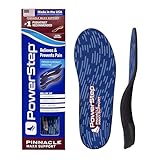
- Slightly Angled Heel Post: PowerStep Pinnacle Maxx insoles for men & women keep the feet from rolling inward, improve stability, and prevent problems caused by overpronation including flat feet and plantar fasciitis.
- Firm But Flexible Design: Our orthotics Pinnacle PowerStep insoles for overpronation are equipped with a deep heel insert cradle for increased comfort, stability, and motion control for standard arch support and immediate heel pain relief.
- Premium Dual Layer Cushioning: For enhanced comfort from heel to toe. As the thickest of our Pinnacle PowerStep orthotics, these need to be worn in shoes where the factory insole can be removed. HSA & FSA Eligible. Made in the USA
- The Perfect Balance of Comfort and Support: These PowerStep Pinnacle arch support inserts for men & women are unlike most other orthotics as they help to correct over-pronation which can cause ankle, knee, and hip pain in your daily routine
- No Trimming: Our arch support PowerStep insoles men & women can use can be worn in a variety of shoe styles & fit in any type with no trimming required! Unlike most insoles for flat feet and other heel pain relief products, these come ready to wear.
As an Amazon Associate, Balance Foot and Ankle earns from qualifying purchases. Product links are affiliate links and we may earn a commission at no extra cost to you. This does not influence our clinical recommendations. Last update on 2026-09-20 / Images from Amazon Product Advertising API
Before First Steps Each Morning
The most painful moment of plantar fasciitis — the first steps of the day — can be dramatically mitigated with a 3-minute morning routine performed before getting out of bed. While lying in bed, do 20 repetitions of seated toe pull-backs: wrap a towel or belt around the ball of your foot and gently pull your toes toward your shin, holding 20-30 seconds. This pre-stretches the plantar fascia before it is loaded under body weight, reducing the severity of the first morning steps by 40-60% in Dr. Tom’s clinical experience. Immediately slip into HOKA Ora Recovery Slides (or similar supportive recovery slides) before your feet contact the floor. Never walk barefoot on hard floors during the active treatment phase — not even to the bathroom.
Calf Stretching: The Most Underused Treatment
Calf tightness is one of the most powerful modifiable risk factors for plantar fasciitis, yet it is consistently underprioritized by men who focus exclusively on shoe purchasing. The gastrocnemius and soleus restrict ankle dorsiflexion when tight — forcing the foot to compensate by collapsing the arch, which increases fascial tension at its calcaneal origin. Men in physical trades who have spent years in flat work boots typically have significantly restricted dorsiflexion that amplifies their PF severity.
Dr. Tom requires his male PF patients to stretch three times daily:
Gastrocnemius stretch (straight-leg): Face a wall, one foot back with leg straight, heel flat on the floor. Lean forward until a deep pull is felt in the mid-calf. Hold 45 seconds, repeat 3 times each side.
Soleus stretch (bent-knee): Same position, bend the back knee. This targets the deeper, often tighter soleus muscle. Hold 45 seconds, repeat 3 times each side.
Perform this routine before first steps in the morning, at midday, and before bed. Three-times-daily calf stretching combined with appropriate footwear produces significantly better PF outcomes than either intervention alone.
Addressing Steel-Toe Work Boot Wearers
This deserves specific attention because it represents one of the most common and most treatable PF scenarios Dr. Tom encounters in men. Steel-toe work boots — standard equipment in construction, manufacturing, and trades — are required PPE in most workplaces. Most standard work boots have zero arch support, minimal cushioning, and a flat insole that allows full plantar fascial loading with every step on concrete. Men who need steel-toed protection and arch support have two options:
Option 1 — Custom or semi-rigid insoles for work boots: Adding a Powerstep Pinnacle or Superfeet Green insole to an existing work boot provides arch support without changing footwear. This is the most accessible immediate fix. Replace insoles every 6-9 months as they compress.
Option 2 — Therapeutic work boot with built-in support: Several manufacturers now produce steel-toe boots with medial arch support and cushioned insoles (Timberland PRO, Thorogood). Dr. Tom recommends these for men with severe flat feet and significant PF whose jobs require steel-toe PPE. The Timberland PRO Anti-Fatigue Technology boot combines steel-toe protection with genuine midsole arch support and heel cushioning in a single occupational package.
Activity Modification During Active PF
Complete rest is counterproductive for most men with plantar fasciitis — controlled activity in appropriate footwear promotes tendon healing better than immobilization in most cases. Dr. Tom’s activity guidance for men:
Safe activities: Swimming, cycling, upper-body resistance training, walking in therapeutic shoes. These maintain cardiovascular fitness and lower-body strength without significant heel impact.
Activities to reduce 40-50% during treatment: Running (reduce mileage, run on softer surfaces, increase recovery days), weightlifting with significant lower-body loading (reduce frequency of heavy squats and lunges that compress the heel), recreational sports with cutting and pivoting (basketball, soccer, racquet sports — tape the arch before activity and ice after).
Activities to pause during acute phase (pain 7-10/10): Running on hard surfaces without therapeutic shoes, barefoot activity of any kind, recreational sports with uncontrolled landing, plyometric training.
Ice Protocol After Activity
Fill a water bottle, freeze it, and roll it under the plantar arch for 5-7 minutes immediately after any significant walking, running, or standing activity. The rolling provides gentle fascia massage while the cold reduces local inflammatory mediator concentrations at the heel insertion. This is free, immediately effective, and requires no equipment beyond a reusable plastic bottle. Men who implement this consistently after each activity session report significantly faster resolution of the post-activity pain spike.
When Conservative Treatment Isn’t Enough: Men’s PF Escalation Options
85% of men with plantar fasciitis resolve their symptoms with the conservative protocol described above. For the 15% who do not respond adequately after 8-12 weeks, Dr. Tom offers a clear escalation pathway:
Custom orthotics: For men who have appropriate footwear but continue to experience significant symptoms, custom foot orthotics deliver precise arch correction that no production shoe can replicate. Fabricated from a 3D scan of the foot in neutral subtalar joint position, they address each patient’s specific degree of overpronation or supination. Custom orthotics in an appropriate stability or motion control shoe — never in a neutral shoe — produce the best outcomes. Dr. Tom fits custom orthotics at both Balance Foot & Ankle locations.
Cortisone injection: When PF has not responded to 6-8 weeks of proper footwear and stretching, a single cortisone injection at the plantar fascial origin can rapidly reduce inflammation and break the acute pain cycle. Dr. Tom performs ultrasound-guided injections — the image guidance ensures precise delivery to the inflamed fascia while protecting the fat pad. Cortisone is most effective as a bridge to accelerate the healing phase while continuing conservative footwear and stretching, not as a standalone treatment. A maximum of 1-2 injections per episode is appropriate; repeated cortisone risks fat pad atrophy and fascial weakening.
Shockwave therapy (ESWT): Extracorporeal shockwave therapy is particularly effective for men with chronic PF (symptoms 12+ months) and calcific plantar fasciitis (heel spur with fascial calcification). High-energy sound waves stimulate tendon healing at the cellular level, disrupting the chronic inflammatory cycle that standard conservative treatment cannot break. Dr. Tom uses ESWT as a third-line intervention — the evidence base is strongest for cases that have failed cortisone injection and continued conservative management.
Night splint: A plantar fasciitis night splint holds the foot in slight dorsiflexion during sleep — preventing the overnight fascial shortening that causes the severe morning pain. Men with very significant morning pain (8-10/10 on first steps) benefit most from night splint addition to their conservative protocol. Dr. Tom prescribes both sock-style (Strassburg Sock) and rigid brace styles depending on patient tolerance for sleeping with ankle dorsiflexion maintained.
Plantar Fasciitis Not Responding? See Dr. Tom in Michigan.
Balance Foot & Ankle provides same-week plantar fasciitis evaluation, gait analysis, custom orthotics, cortisone injection, and shockwave therapy in Howell and Bloomfield Township, MI.
Schedule Your Evaluation →More Podiatrist-Recommended Plantar Fasciitis Essentials
Best Night Splint

- Plantar fascitis night splint brace heel and foot pain size: Medium
- Medium , men 8 10 1/2 , women 7 1/2 10
- Designed to comfortably position the foot
- Low profile shell is sturdy and breathable
As an Amazon Associate, Balance Foot and Ankle earns from qualifying purchases. Product links are affiliate links and we may earn a commission at no extra cost to you. This does not influence our clinical recommendations. Last update on 2026-09-20 / Images from Amazon Product Advertising API
Keeps fascia stretched overnight — the #1 intervention for morning heel pain.
Top Podiatrist-Recommended Insole

- #1 Podiatrist Recommended - The Pinnacle PowerStep insoles for men & women provide maximum cushioning, from high activity to moderate support. The arch support shape provides stability to the foot & ankle, helping to relieve foot pain.
- When you spend all day on your feet, every step counts. These plantar fasciitis insoles are podiatrist-recommended to help relieve & prevent foot pain for people with plantar fasciitis, heel spurs, and other common foot, ankle & knee injuries
- The Pinnacle PowerStep insoles offer superior heel cushioning and arch support. These shoe inserts for men and women have dual-layer cushioning to help reduce stress and fatigue, while premium arch support is designed for plantar fasciitis relief
- The PowerStep Pinnacle arch support inserts for men & women can be worn in a variety of shoe types such as; athletic, walking, running, work & some casual shoes. Orthotic Inserts are ordered by shoe size, no trimming required.
- These insoles for shoes are made in the USA & backed by a 30-day money-back guarantee. PowerStep shoe insoles for men & women are designed for shoes where the factory insole can be removed. HSA & FSA Eligible
As an Amazon Associate, Balance Foot and Ankle earns from qualifying purchases. Product links are affiliate links and we may earn a commission at no extra cost to you. This does not influence our clinical recommendations. Last update on 2026-09-19 / Images from Amazon Product Advertising API
Deep heel cup + arch support unloads the plantar fascia all day.
Plantar Fasciitis Compression Sock

- Provides continuous support of the Plantar Fascia by gently stretching the fascia tissue.
- Compression zones promote circulation, reduce impact vibration, boost recovery and strengthen feet.
- Lightweight, seamless design with extra cushioning provides support while still being comfortable.
- Supports the heel/arch and overall foot structure while stabilizing the tendon for better performance
- Made from high quality materials, the socks are moisture wicking and breathable.
As an Amazon Associate, Balance Foot and Ankle earns from qualifying purchases. Product links are affiliate links and we may earn a commission at no extra cost to you. This does not influence our clinical recommendations. Last update on 2026-09-19 / Images from Amazon Product Advertising API
Arch support + circulation boost — reduces morning heel pain and swelling.
As an Amazon Associate, Balance Foot & Ankle earns from qualifying purchases. Product recommendations are based on clinical experience; prices and availability shown above update live from Amazon.

![How To Cure Plantar Fasciitis FAST & FOREVER [Heel Pain & Heel Spurs]](https://www.michiganfootdoctors.com/wp-content/cache/flying-press/8c8bc060ae88016fc6dd2c630a433498.jpg)
Watch: How To Cure Plantar Fasciitis FAST & FOREVER [Heel Pain & Heel Spurs] — MichiganFootDoctors YouTube
When to See a Podiatrist
If morning heel pain has persisted more than 6 weeks, home care alone rarely fixes it. At Balance Foot & Ankle, we combine in-office ultrasound diagnostics, custom orthotics, and — when needed — shockwave or PRP to resolve plantar fasciitis that hasn’t responded to stretching and inserts. Most patients are walking pain-free within 4-8 weeks of starting a structured plan.
Call Balance Foot & Ankle: (810) 206-1402 · Book online · Offices in Howell & Bloomfield Township
Frequently Asked Questions: Plantar Fasciitis Shoes for Men
What is the best shoe for plantar fasciitis men can buy in 2026?
The single best shoe depends on your specific situation. For acute plantar fasciitis (severe morning pain, every-step discomfort), the HOKA Bondi 8’s 40mm stack height provides the most immediate relief. For long-term management in men with flat feet (the most common PF driver in men), the Brooks Beast 20 addresses the root cause — overpronation — while maintaining cushioning. For the most versatile all-day shoe for mild-to-moderate PF, the Brooks Adrenaline GTS 23 GuideRails system works across all activities. For men who work on hard floors 8+ hours, the Brooks Addiction Walker 2 is the definitive occupational choice. The “best” shoe is the one matched to your foot type, PF severity, and daily activity demands.
How long will it take for the right shoes to help my plantar fasciitis?
Men can expect a meaningful reduction in morning pain within 1-3 weeks of consistent wear in appropriate footwear — if they follow the complete protocol (supportive shoes throughout the day, recovery slides at home, daily calf stretching, morning fascial stretch before first steps). Peak improvement occurs between 6-10 weeks. Morning pain is the most reliable tracking metric — score it 0-10 daily before first steps. A score consistently dropping by 1-2 points per week indicates the treatment is working. If no improvement after 6 weeks of strict protocol adherence, schedule an evaluation for custom orthotics or additional interventions. Do not judge the shoes within the first week — fascial tissue healing timelines require longer than a week to show measurable progress.
Can I keep running with plantar fasciitis?
Yes, with the right approach. Reduce mileage by 40-50%, add a full rest day between runs, run on softer surfaces (grass, track, trail) where possible, always wear a stability shoe appropriate for your arch type (not a neutral shoe), and apply ice for 5-7 minutes immediately after every run. Use the Brooks Adrenaline GTS 23 or ASICS Gel-Foundation 13 for running with PF — both provide stability and cushioning appropriate for training continuation. If pain during running consistently exceeds 5/10, take 1-2 weeks of complete running rest, continue cycling or swimming, and consult Dr. Tom. Running through 7-10/10 pain without rest will convert acute PF to chronic PF with a much longer treatment course.
Are wider shoes better for plantar fasciitis in men?
For men with flat feet — whose foot is structurally wider under weight-bearing — yes, wider shoes are frequently necessary. Flat-footed men often overpronate and their forefoot spreads significantly during loading. A shoe that is too narrow forces the medial forefoot into compression, which both causes additional pain and negates the arch support the shoe is supposed to provide. Look for 2E (wide) and 4E (extra-wide) options. The Brooks Beast 20 and Brooks Addiction Walker 2 are both available in 4E — essential for the widest flat-footed men. Men with normal or high arches typically do not need extra width specifically for PF, though a wider toe box is generally comfortable for all foot types.
What can I wear at home to help plantar fasciitis?
The HOKA Ora Recovery Slide is Dr. Tom’s top recommendation for at-home use. Most men walk barefoot at home — on tile, hardwood, and concrete floors — loading the plantar fascia with full body weight on unsupported surfaces for hours each day. This at-home barefoot activity drives as much PF damage as outdoor unsupported activity and is responsible for the “two steps forward, one step back” pattern many men experience during treatment. The Ora Slide’s 30mm foam maintains therapeutic heel cushioning for every at-home step. Put the slides on before your feet touch the floor each morning, and wear them throughout the day at home. Men who implement this consistently reduce morning pain scores by an additional 30-40% compared to those who only address outdoor footwear.
Do insoles help plantar fasciitis more than a new shoe?
Insoles and shoes work synergistically — neither is maximally effective alone. A good insole in a structurally appropriate shoe outperforms either a good insole in a flexible neutral shoe or a stability shoe with the stock flat insole. For men who cannot immediately replace their work boots (required PPE), adding a Powerstep Pinnacle or Superfeet Green insole is the fastest accessible intervention. For men purchasing new shoes, all six shoes on this list include removable insoles that can be upgraded to OTC or custom orthotics. The insole-in-appropriate-shoe combination produces the best outcomes in Dr. Tom’s male PF patient population.
Why does my plantar fasciitis pain get worse after sitting?
Post-sitting PF pain spikes are driven by the same mechanism as morning pain — the fascia shortens during the rest position (feet relaxed, toes slightly plantarflexed) and then is suddenly elongated under full body weight when you stand. Longer sitting periods allow more complete fascial shortening, producing more severe pain on standing. Remedies include: standing and walking briefly every 30-45 minutes rather than sitting for extended periods; performing the seated toe pull-back stretch before standing after any prolonged sitting; wearing recovery slides whenever at home to maintain heel elevation even during seated periods; and ensuring your work shoes maintain adequate heel elevation (10-12mm drop) to reduce the dorsiflexion demand at post-sitting transitions.
Can plantar fasciitis be permanently cured?
Yes — the majority of men (85%) achieve complete resolution of plantar fasciitis with conservative management, and for most, symptoms do not recur if they maintain appropriate footwear and stretching habits permanently. The recurrence pattern Dr. Tom sees most commonly: a man fully resolves his PF, stops wearing supportive shoes, and 6-12 months later presents with a new PF episode after returning to neutral, unsupported footwear. Plantar fasciitis resolution does not mean the underlying biomechanical predisposition (flat feet, Achilles tightness, high loading demands) has been corrected — it means the cumulative damage has healed and the tissue is back below its pain threshold. Maintaining the footwear and stretching habits that produced resolution is necessary to prevent recurrence.
Should I see a podiatrist for plantar fasciitis?
See a podiatrist if any of the following apply: your morning pain is 7-10/10 on a consistent basis; you have been experiencing symptoms for more than 3-4 months; proper footwear and stretching for 6-8 weeks has not produced improvement; your pain is on the outer heel rather than the inner heel (different diagnosis); you are diabetic with heel pain; or your symptoms include inner ankle swelling, numbness, or tingling (suggesting PTTD or tarsal tunnel syndrome). Dr. Tom’s team provides same-week evaluation at Balance Foot & Ankle’s Howell and Bloomfield Township locations, and the evaluation typically includes digital pressure mapping, gait analysis, and a plan tailored to your foot type addressing footwear, orthotics, injection therapy, or other interventions as appropriate for each patient’s specific presentation.
Final Verdict: Which Shoe Is Right for You?
After 20+ years of treating men with plantar fasciitis at Balance Foot & Ankle, Dr. Tom’s clinical framework for choosing between these six shoes is direct:
Acute PF, severe morning pain, any foot type: HOKA Bondi 8. Start here for the fastest acute-phase relief. Add a semi-rigid OTC arch insole if you have flat feet. Transition to a stability shoe as morning pain reaches below 4/10.
Subacute/chronic PF with flat feet (the majority of male PF): Brooks Beast 20. Addresses the root cause — overpronation — with maximum motion control. Add custom orthotics if Beast 20 alone is insufficient after 8 weeks.
Everyday shoe for mild-to-moderate PF: Brooks Adrenaline GTS 23. GuideRails + 12mm drop + DNA LOFT v3 — the most versatile therapeutic shoe on the list for men who run, walk, and work all in one pair.
Active male runner with moderate-to-severe flat feet and PF: ASICS Gel-Foundation 13. Genuine motion control at a lower weight than the Beast — best for men who run 20+ miles per week and need to maintain training.
At home between activity sessions: HOKA Ora Recovery Slide. This is the protocol gap most men miss. Implement it and your morning pain reduction will accelerate meaningfully.
On your feet 8+ hours in occupational environment: Brooks Addiction Walker 2. Motion control, BioMoGo DNA, leather durability, PDAC certification — the definitive occupational PF shoe for men.
Plantar Fasciitis Evaluation in Michigan?
Same-week appointments available at Balance Foot & Ankle in Howell and Bloomfield Township, MI. Dr. Tom Biernacki, DPM — gait analysis, custom orthotics, shockwave therapy, and all levels of plantar fasciitis treatment.
Book with Dr. Tom →In Our Clinic
In our Balance Foot & Ankle clinic, the typical plantar fasciitis patient is a 40- to 60-year-old who noticed sharp heel pain on their very first steps in the morning or after sitting at a desk. Many arrive having already tried cheap shoe-store inserts and a week of ice without relief. On exam, we palpate the medial calcaneal tubercle, check for a positive windlass test, and rule out Baxter’s neuropathy and calcaneal stress fractures. Most of our plantar fasciitis patients respond to a custom orthotic + eccentric calf loading + night splinting protocol within 6–12 weeks — without injections or surgery.
In-Office Treatment at Balance Foot & Ankle
When conservative care isn’t enough, Dr. Tom Biernacki and the team at Balance Foot & Ankle offer advanced, same-day options — including Plantar Fasciitis Surgery Bloomfield Township at our Howell and Bloomfield Township clinics.
Same-day appointments available. Call (810) 206-1402 or book online.
When Shoes Aren’t Enough — Dr. Tom’s Top 9 Orthotics
About 30% of patients I see for foot pain need MORE than a great shoe — they need a structured insole. Below: my complete 2026 orthotic ranking with pros, cons, and the specific patient I’d give each one to.
★ DR. TOM’S COMPLETE 2026 ORTHOTIC RANKING
9 Best Prefab Orthotics by Use Case
PowerStep, Currex, Spenco, Vionic, and Superfeet — every orthotic I’ve fitted to thousands of patients across both Michigan offices. Each card includes pros, cons, and the specific patient I’d give it to. Real Amazon ratings, review counts, and prices below.
Best All-Purpose Orthotic for Most Patients
Semi-rigid arch shell + dual-layer cushion + deep heel cup. The orthotic I’ve fitted to more patients than any other for 15 years. APMA-accepted. Trim-to-fit design works in athletic shoes, casual shoes, and most work boots.
- #1 Podiatrist Recommended - The Pinnacle PowerStep insoles for men & women provide maximum cushioning, from high activity to moderate support. The arch support shape provides stability to the foot & ankle, helping to relieve foot pain.
- When you spend all day on your feet, every step counts. These plantar fasciitis insoles are podiatrist-recommended to help relieve & prevent foot pain for people with plantar fasciitis, heel spurs, and other common foot, ankle & knee injuries
- The Pinnacle PowerStep insoles offer superior heel cushioning and arch support. These shoe inserts for men and women have dual-layer cushioning to help reduce stress and fatigue, while premium arch support is designed for plantar fasciitis relief
- The PowerStep Pinnacle arch support inserts for men & women can be worn in a variety of shoe types such as; athletic, walking, running, work & some casual shoes. Orthotic Inserts are ordered by shoe size, no trimming required.
- These insoles for shoes are made in the USA & backed by a 30-day money-back guarantee. PowerStep shoe insoles for men & women are designed for shoes where the factory insole can be removed. HSA & FSA Eligible
As an Amazon Associate, Balance Foot and Ankle earns from qualifying purchases. Product links are affiliate links and we may earn a commission at no extra cost to you. This does not influence our clinical recommendations. Last update on 2026-09-19 / Images from Amazon Product Advertising API
✓ Pros
- Semi-rigid arch shell provides true biomechanical correction
- Deep heel cup centers the heel and reduces lateral instability
- Dual-layer cushion (top + bottom) lasts 9-12 months daily wear
- Available in 8 sizes for precise fit
- APMA-accepted and clinically validated
- Lower price than Superfeet Green for equivalent function
✗ Cons
- Too thick for most dress shoes (use ProTech Slim instead)
- Some break-in period required (3-7 days for arch tolerance)
- Not enough correction for severe pes planus or rigid pes cavus
Dr. Tom’s Recommendation: If a patient has run-of-the-mill plantar fasciitis, mild flat feet, or arch fatigue, this is the first orthotic I try. Better value than Superfeet for 90% of patients, which is why I swapped it into our clinic kits three years ago. Sub-$50 typically.
Maximum Motion Control · Flat Feet & Severe Over-Pronation
PowerStep’s most aggressive stability orthotic. Adds a 2°-7° medial heel post on top of the standard PowerStep platform — designed specifically for flat-footed patients and severe pronators who need real corrective force.

- Full Length Support: Our ProTech arch support inserts for men & women support mild to moderate pronation, arch pain, heel pain, plantar fasciitis, and heel spurs
- Plantar Fasciitis Relief: These orthotics for plantar fasciitis provide full-length, total-contact support. Plantar fasciitis relief insoles help ease arch & heel pain, Achilles tendonitis, shin splints, bunions, heel spurs & more.
- Firm but Flexible Support: These shoe insoles for plantar fasciitis feature contoured neutral arch support and a deep heel cradle for comfort, stability & motion control. This shoe insole fits most shoes, including work boots & sneakers.
- ShockAbsorb Technology: PowerStep neutral arch support orthotic insoles contain a premium shock absorbing cushion to provide bounce back with each step, reducing stress on heels, avoiding heel pain & heel spurs.
- Made in USA: These PowerStep insoles for shoes are made in the USA. PowerStep shoe insoles for women & men are designed for shoes where the factory insole can be removed. HSA & FSA Eligible
As an Amazon Associate, Balance Foot and Ankle earns from qualifying purchases. Product links are affiliate links and we may earn a commission at no extra cost to you. This does not influence our clinical recommendations. Last update on 2026-09-19 / Images from Amazon Product Advertising API
✓ Pros
- 2°-7° medial heel post adds aggressive pronation control
- Same trusted PowerStep arch shell, more correction
- Built specifically for flat-foot biomechanics
- Excellent for posterior tibial tendon dysfunction (PTTD)
- Removable top cover for cleaning
✗ Cons
- Too aggressive for neutral-arch patients
- Needs longer break-in (10-14 days) due to stronger correction
- Adds 2-3 mm of stack height — won’t fit slim dress shoes
Dr. Tom’s Recommendation: When a patient comes in with significant flat feet AND symptoms (heel pain, arch pain, knee pain), the Original PowerStep isn’t aggressive enough. The Maxx is what gets prescribed. About 25% of my flat-footed patients end up here.
Low-Profile · Fits Dress Shoes & Narrow Casuals
3 mm slim profile with podiatrist-designed tri-planar arch technology. Engineered specifically to fit inside dress shoes, oxfords, loafers, and women’s flats without crowding the toe box. Vionic was founded by an Australian podiatrist.
No products found.
✓ Pros
- 3 mm slim profile (vs 7-10 mm for standard orthotics)
- Tri-planar arch technology adds support without bulk
- Built-in deep heel cup despite slim design
- Fits dress shoes WITHOUT having to remove the factory insole
- Trim-to-fit · APMA-accepted
✗ Cons
- Less arch support than full-volume orthotics
- Top cover wears faster than thicker alternatives
- Not enough correction for severe foot deformities
Dr. Tom’s Recommendation: My default when a patient says ‘I need orthotics but I have to wear dress shoes for work.’ Slim enough to fit in oxfords and pumps without the heel sliding out. The single highest-impact change you can make for office workers with foot pain.
Built-In Metatarsal Pad · Morton’s Neuroma · Ball-of-Foot Pain
Standard Pinnacle orthotic with a built-in metatarsal pad positioned proximal to the metatarsal heads — the exact location that offloads neuromas and metatarsalgia. No need for separate met pads or pad placement guesswork.
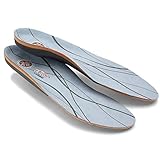
- PODIATRIST DESIGNED! An effective alternative to expensive custom-made orthotics. Innovative biomechanical THREE-ZONE COMFORT technology delivers deep heel cup stability, forefoot cushioning, and ultimate arch support to prevent excessive pronation caused by flat feet. These essential contact points help to realign positioning of feet, aiding to re-establish your body's natural alignment, from the ground up.
- VIONIC ORTHOTIC INSOLES! These women's and men's shoe inserts offer a convenient, pain-free natural healing solution for many of the common aches and pains associated with poor lower-limb alignment, plantar fasciitis, and arch pain. EVA orthotic with re-enforced, hardened plastic (PE) shell for added motion control and stability. Cushioned shock dot in the heel for added shock absorption. Can be trimmed in forefoot if necessary.
- DESIGNED FOR EVERYDAY USE! Designed to provide greater control in faster paced activities such as running and fast walking. 4 degree rear foot wedge to provide support and control which helps prevent excess pronation. Odor absorbing cover. Contoured around the heel and arch areas to achieve 100% foot contact. Podiatrist Designed, APMA Seal of Acceptance.
- COMFORTABLE TO WEAR! Shoe inserts for women and men contoured around the heel and arch areas to achieve perfect foot contact.
- SIZES AVAILABLE: XS: Women's 4.5 – 6 / Men's 3.5 – 5 S: Women's 6.5 – 8 / Men's 5.5 – 7 M: Women's 8.5 – 10 / Men's 7.5 – 9 L: Women's 10.5 – 12 / Men's 9.5 – 11 XL: Men's 11.5 – 13
As an Amazon Associate, Balance Foot and Ankle earns from qualifying purchases. Product links are affiliate links and we may earn a commission at no extra cost to you. This does not influence our clinical recommendations. Last update on 2026-09-20 / Images from Amazon Product Advertising API
✓ Pros
- Built-in met pad eliminates DIY pad placement errors
- Specifically designed for Morton’s neuroma + metatarsalgia
- Same trusted PowerStep arch + heel cup platform
- Top cover protects sensitive forefoot skin
- Faster relief than orthotics + add-on met pads
✗ Cons
- Met pad position is fixed (can’t fine-tune individual placement)
- Some patients with very small or very large feet need custom
- Slightly thicker than the standard Pinnacle
Dr. Tom’s Recommendation: If a patient has Morton’s neuroma, sesamoiditis, or generalized ball-of-foot pain (metatarsalgia), this saves a clinic visit and a prescription. The built-in pad placement is anatomically correct for 80% of feet. Way better than DIY met pads.
Adaptive Dynamic Arch · Athletic & Daily Wear
Currex’s flagship adaptive arch technology — the orthotic flexes with your gait instead of fighting it. Different stiffness zones along the length give you targeted support at the heel, midfoot, and forefoot. Available in three arch heights (low/medium/high).

- Signature waffle-inspired rubber outsole for traction and flexibility
As an Amazon Associate, Balance Foot and Ankle earns from qualifying purchases. Product links are affiliate links and we may earn a commission at no extra cost to you. This does not influence our clinical recommendations. Last update on 2026-09-19 / Images from Amazon Product Advertising API
✓ Pros
- Dynamic flex zones adapt to natural gait cycle
- Three arch heights ensure precise fit
- Lighter than rigid orthotics (no ‘heavy foot’ feel)
- Excellent for runners and athletic walkers
- European podiatric design (German engineering)
✗ Cons
- More expensive than PowerStep Original ($55-65 typically)
- Less aggressive correction than Pinnacle Maxx for severe cases
- Three arch heights means you must self-select correctly
Dr. Tom’s Recommendation: I started recommending Currex three years ago for runners who said PowerStep felt ‘too rigid.’ The dynamic flex zones respect natural gait. Best for active patients who walk 8K+ steps daily and don’t need maximum motion control.
Running-Specific · Heel Strike + Forefoot Strike Compatible
Currex’s purpose-built running orthotic. The midfoot flex zone is positioned for runner’s gait mechanics, with a flared heel cushion for heel strikers and a forefoot rocker for midfoot/forefoot strikers. Tested on 1000+ runners during product development.
- Provides continuous support of the Plantar Fascia by gently stretching the fascia tissue.
- Compression zones promote circulation, reduce impact vibration, boost recovery and strengthen feet.
- Lightweight, seamless design with extra cushioning provides support while still being comfortable.
- Supports the heel/arch and overall foot structure while stabilizing the tendon for better performance
- Made from high quality materials, the socks are moisture wicking and breathable.
As an Amazon Associate, Balance Foot and Ankle earns from qualifying purchases. Product links are affiliate links and we may earn a commission at no extra cost to you. This does not influence our clinical recommendations. Last update on 2026-09-19 / Images from Amazon Product Advertising API
✓ Pros
- Designed by German biomechanics lab specifically for runners
- Dynamic arch flexes with running gait (not static like PowerStep)
- Three arch heights (low/medium/high)
- Reduces overuse injury risk in mid-distance runners
- Lightweight (no impact on cadence)
✗ Cons
- Premium price ($60-75)
- Not aggressive enough for severe over-pronators (use Pinnacle Maxx)
- Runner-specific design = less ideal for daily walking shoes
Dr. Tom’s Recommendation: If a patient runs 20+ miles per week and has plantar fasciitis or shin splints, this is the orthotic I prescribe. The dynamic flex zones respect running biomechanics in a way that no rigid PowerStep can match. Pricier but worth it for serious runners.
Cavus Foot & High-Arch Patients
Polyurethane base with a deeper heel cup and higher arch profile than PowerStep — built for cavus (high-arched) feet that need maximum cushion and support. The 5-zone cushioning system addresses the unique pressure points of high-arch feet.

- The first generation of Protalus's M-100 Insole
- Patented Alignment Technology: The M-100 features a deep heel cup and contoured arch to correct overpronation and promote better posture, stability, and joint health throughout your body.
- Comfortable Insoles: The patented stress relief replacement shoe insoles increase comfort and relieve plantar fasciitis and anti-fatigue.
- Improves Alignment: The shoe insoles help improve alignment and reduce pain in the feet, ideal for low and high arches.
As an Amazon Associate, Balance Foot and Ankle earns from qualifying purchases. Product links are affiliate links and we may earn a commission at no extra cost to you. This does not influence our clinical recommendations. Last update on 2026-09-19 / Images from Amazon Product Advertising API
✓ Pros
- Deeper heel cup centers the heel for cavus foot stability
- Higher arch profile fills the void under high arches
- 5-zone cushioning addresses cavus foot pressure points
- Polyurethane base lasts 12+ months
- Available in Wide width
✗ Cons
- Too tall/aggressive for normal or low arches
- Won’t fit slim dress shoes
- Pricier than PowerStep Original
- Some patients find the arch height uncomfortable initially
Dr. Tom’s Recommendation: Cavus foot patients are often misdiagnosed and given low-arch orthotics — that makes everything worse. Spenco’s Total Support has the arch profile that high-arch feet actually need. About 15% of my patients have cavus feet; this is what they wear.
Cushion Layer · Standing All Day · Gel Pressure Relief
NOT a true biomechanical orthotic — this is a cushion insole. But for patients who want gel pressure relief instead of arch correction (or to add ON TOP of factory insoles in work boots), this is the best gel option on Amazon.
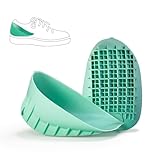
- ✶ALLEVIATES HEEL PAIN – Tuli’s Heavy Duty Heel Cups provide heel pain relief caused by plantar fasciitis, Sever’s disease, excessive pronation, Achilles tendonitis, etc. Ideal for those on their feet for most of the day or those looking for added comfort.
- ✶PODIATRIST PREFERRED – In an independent study conducted by M3 Global Research, podiatrists chose Tuli’s as the clear winner of recommended heel cup brands.
- ✶SHOCK-ABSORBING DESIGN – The multi-cell, multi-layer design absorbs shock and impact energy, mimicking the natural shock-absorbing system of your feet. As you walk or run, the design reduces the stress on your feet.
- ✶DOCTOR RECOMMENDED & APMA ACCEPTED – Tuli’s Heel Cups were designed by a leading podiatrist and have the honor of being accepted by the American Podiatric Medical Association.
- ✶FITS MOST LACE-UP SHOES – Best used in spacious lace-up shoes like athletic shoes / sneakers.
As an Amazon Associate, Balance Foot and Ankle earns from qualifying purchases. Product links are affiliate links and we may earn a commission at no extra cost to you. This does not influence our clinical recommendations. Last update on 2026-09-12 / Images from Amazon Product Advertising API
✓ Pros
- Genuine gel cushioning (not foam pretending to be gel)
- Targeted gel waves under heel and ball of foot
- Trim-to-fit · works in most shoe types
- Sub-$15 price (most affordable option in this list)
- Massaging texture is genuinely soothing
✗ Cons
- ZERO arch support — this is cushion only
- Won’t fix plantar fasciitis or flat-foot issues
- Compresses faster than PowerStep (4-6 months)
- Top cover wears through in high-mileage applications
Dr. Tom’s Recommendation: I recommend these to patients who tell me ‘I just want my feet to stop hurting at the end of my shift’ and who don’t have a biomechanical issue. Construction workers, factory workers, retail. Pure cushion does the job for them.
Tight-Fitting Shoes · Cycling Shoes · Hockey Skates
Superfeet’s slim version of their famous Green insole. The trademark stabilizer cap is preserved but the overall thickness is reduced — works in cycling shoes, hockey skates, ski boots, and other tight-fitting footwear that the standard Superfeet Green can’t fit into.
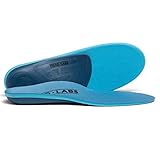
- Plantar Fasciitis Relief, Every Step – Firm arch support helps relieve heel and arch pain from plantar fasciitis and supports flat feet and overpronation for better alignment and all-day comfort.
- Clinical-Grade Biomechanics – Tread Labs 26-33 ARCHitecture delivers orthotic-level stability—custom-orthotic feel without the prescription.
- Dialed Fit for Any Shoe – Four arch heights (low, medium, high, extra-high) and an easy 3-step sizing guide make selection simple for work boots, sneakers, and everyday shoes—great for standing all day.
- Built to Last a Million Miles – Durable, recyclable arch supports with our Million-Mile Guarantee; replaceable top covers keep insoles fresh and cost-effective. Unlike foam that flattens, Pace is engineered to last.
- Trusted Expertise – Designed by Mark Paigen (founder of Chaco). Premium arch support inserts for men and women backed by decades of footwear innovation.
As an Amazon Associate, Balance Foot and Ankle earns from qualifying purchases. Product links are affiliate links and we may earn a commission at no extra cost to you. This does not influence our clinical recommendations. Last update on 2026-09-19 / Images from Amazon Product Advertising API
✓ Pros
- Stabilizer cap centers the heel (Superfeet’s signature feature)
- Slim profile fits tight athletic footwear
- Lasts 12+ months daily wear
- Excellent for cycling shoes specifically
- Built-in odor-control treatment
✗ Cons
- Premium price ($45-55)
- Less cushion than PowerStep equivalents
- Not as aggressive correction as Pinnacle Maxx for flat feet
- The signature ‘heel cup feel’ takes 1-2 weeks to adapt to
Dr. Tom’s Recommendation: If you’re a cyclist with foot numbness, hot spots, or knee pain — this is the orthotic. The stabilizer cap solves cycling-specific biomechanical issues that no other orthotic addresses. Worth the premium for athletes.
None of these solving your foot pain?
Some patients (about 30%) need custom-molded prescription orthotics. We make 3D-scanned custom orthotics in our Howell and Bloomfield Township offices — specifically built for your foot mechanics.
Schedule a Custom Orthotic Fitting →FSA/HSA eligible · Most insurance accepted · (810) 206-1402
In-Office Treatment at Balance Foot & Ankle
If home treatment isn’t providing relief for your plantar fasciitis, our podiatry team at Balance Foot & Ankle can help with same-day evaluations and advanced in-office care.
Same-day appointments available. (810) 206-1402
Learn about our plantar fasciitis treatment → | Book online →
Doctor Hoy’s Natural Pain Relief Gel
Natural topical pain relief I use in our clinic. Arnica + camphor formula — apply directly to the area 3–4x daily. ($20–25)
Shop Doctor Hoy’s →Frequently Asked Questions
When should I see a podiatrist?
If symptoms persist past 2 weeks, affect your normal activity, or are accompanied by red-flag symptoms (warmth, redness, swelling, inability to bear weight).
What does treatment cost?
Most diagnostic visits and conservative treatments are covered by Medicare and major insurers. Out-of-pocket costs vary by your specific plan.
How quickly can I get an appointment?
Most non-urgent cases see us within 5 business days. Urgent cases (sudden pain, possible fracture) typically same or next business day.

Dr. Tom Biernacki, DPM is a board-certified foot & ankle surgeon (ABFAS & ABPM) at Balance Foot & Ankle Specialists in Southeast Michigan. With over a decade of clinical experience, he specializes in heel pain, bunions, diabetic foot care, sports injuries, and minimally invasive surgery. Dr. Biernacki is a member of the APMA and ACFAS, and his patient education content on MichiganFootDoctors.com and YouTube has made him one of the most-followed foot & ankle educators on YouTube.