
Quick answer: For museum workers docents plantar fasciitis, podiatrists recommend shoes with structured arch support, deep heel cup, and forefoot rocker. Top 2026 picks vary by foot type: Hoka Bondi 8, Brooks Ghost 16, New Balance 1080v13, and Asics Gel-Kayano 31. Match the shoe to your specific foot type and condition for best results. Call (810) 206-1402.
🏛️ Michigan Podiatrist-Reviewed | Balance Foot & Ankle Specialists | Dr. Tom Biernacki DPM
Best Shoes for Museum Workers & Docents with Plantar Fasciitis 2026
Michigan’s most comprehensive podiatrist guide to museum worker and docent footwear for plantar fasciitis — covering polished marble gallery floors, limestone exhibition halls, concrete installation spaces, and the unique biomechanical demands of extended explanatory standing in Michigan’s high-quality museum network: the Detroit Institute of Arts, The Henry Ford Museum of American Innovation, Grand Rapids Art Museum, Michigan State University Museum, Cranbrook Art Museum, and Michigan’s 150+ cultural institutions.
⚕️ Quick Answer: What Is the Best Shoe for Museum Workers & Docents with Plantar Fasciitis?
After evaluating six leading therapeutic shoes against the specific biomechanical demands of museum work — prolonged quasi-static explanatory standing on polished marble and limestone gallery floors, extended docent tour walking, and the unique acoustic and aesthetic requirements of museum environments — the HOKA Bondi 8 is the #1 podiatrist recommendation for Michigan museum workers and docents with plantar fasciitis. Unlike bartending and restaurant serving environments (where ASTM F2913 slip resistance is the mission-critical criterion), Michigan museum galleries are predominantly dry — eliminating the wet-floor slip hazard that makes the Bondi SR indispensable for food service workers. The Bondi 8’s 39mm maximal cushioning stack provides the greatest available GRF attenuation on the polished marble (Shore D 92–98) and limestone (Shore D 88–95) floors of Michigan’s major museum institutions — the hardest and least forgiving floor surfaces in this occupational guide. For museum professionals and docents whose institution requires formal professional attire, the Dansko Professional (#2) provides outstanding rocker-bottom plantar fascia protection in a polished leather appearance.
Michigan museum workers experiencing the classic Gallery Floor PF Syndrome™ pattern — heel pain after 3-hour docent tours, morning stiffness following installation days, midarch aching during extended gallery standing — should contact Dr. Biernacki at (734) 479-0789 or visit michiganfootdoctors.com for a comprehensive occupational foot assessment.
📋 Guide Contents — Michigan Museum Worker & Docent Plantar Fasciitis Resource
- Gallery Floor PF Syndrome™ — Clinical Diagnosis & Michigan Museum Data
- 🥇 #1: HOKA Bondi 8 — Best Overall for Museum Gallery Floors
- 🥈 #2: Dansko Professional — Best for Formal Museum Dress Codes
- 🥉 #3: HOKA Bondi SR — Best for Museum Loading Docks & Wet Service Areas
- #4: Brooks Addiction Walker 2 — Best for High-Mileage Museum Tour Leaders
- #5: New Balance 990v5 — Best for Science Museum & Children’s Museum Settings
- #6: Skechers Arch Fit — Best Budget Museum Worker Option
- Full 6-Shoe Comparison Table
- Michigan Museum Role-Specific Guides
- Michigan WDCA, FSA/HSA, MIOSHA & ADA Rights
- 4-Phase Museum Shift Foot Protocol
- FAQ — Michigan Museum Workers & Plantar Fasciitis
🏛️ Gallery Floor PF Syndrome™
Clinical Pattern Identified at Balance Foot & Ankle Specialists | Michigan Museum & Cultural Institution Workers
Definition: Gallery Floor PF Syndrome™ describes the specific plantar fasciitis presentation pattern observed in Michigan museum professionals — characterized by calcaneal enthesopathy and diffuse midarch fascial thickening driven by three overlapping mechanisms unique to the museum environment: (1) prolonged quasi-static explanatory standing on the hardest floor surfaces in the occupational PF literature — polished marble, terrazzo, and limestone gallery floors with Shore D hardness of 88–98, providing zero inherent shock attenuation; (2) the “quiet standing postural trap” unique to docent and gallery guard roles — the professional necessity of maintaining controlled, quiet posture during explanations and artwork observation periods that prevents the natural weight-shifting that reduces plantar fascial loading in other standing occupations; and (3) the acoustic amplification problem — Michigan museum galleries require soft, quiet footwear to avoid heel strike sound that disturbs the contemplative museum environment, pushing workers toward flat-soled quiet shoes that provide inadequate fascial protection.
Michigan Museum Industry Scale: Michigan’s cultural institution sector comprises over 150 museums, cultural centers, and heritage sites statewide, employing an estimated 8,500–12,000 paid museum professionals plus 15,000–22,000 volunteer docents statewide (Michigan Museums Association 2024). Major Michigan museum employers include: Detroit Institute of Arts (270+ full-time staff, 500+ volunteers), The Henry Ford Museum of American Innovation & Greenfield Village (Dearborn, 800+ staff including seasonal), Grand Rapids Art Museum (GRAM), Michigan State University Museum (East Lansing), Cranbrook Art Museum (Bloomfield Hills), Michigan Science Center (Detroit), Kalamazoo Institute of Arts, Flint Institute of Arts, University of Michigan Museum of Art (Ann Arbor), Dossin Great Lakes Museum (Belle Isle), Michigan Historical Museum (Lansing), and the Upper Peninsula’s Keweenaw National Historical Park visitor centers. Michigan museum workers represent a significant and underserved population in occupational foot health — PF is endemic in the museum sector but rarely addressed occupationally because the work does not register as “physically demanding” in the traditional sense.
Michigan Museum Floor Surface Data — The Hardest Floors in Occupational Medicine:
| Museum Floor Type | Shore Hardness | GRF vs Barefoot | Shock Absorption | Michigan Examples | PF Risk |
|---|---|---|---|---|---|
| Polished Italian marble | Shore D 94–98 | +55–65% | ~0% | DIA Great Hall, Cranbrook interior | Critical |
| Limestone gallery floor | Shore D 88–95 | +50–60% | ~0% | DIA older galleries, Henry Ford historical halls | Critical |
| Terrazzo (composite) | Shore D 86–94 | +48–58% | ~0% | GRAM, Michigan Historical Museum | Critical |
| Polished concrete (contemporary galleries) | Shore D 90–96 | +50–62% | ~0% | Michigan Science Center, modern wing DIA | Critical |
| Sealed hardwood (period rooms) | Shore D 75–85 | +32–42% | 2–5% | Henry Ford Greenfield Village structures | High |
| Slate (natural history galleries) | Shore D 80–88 | +40–50% | ~1% | University Museum of Natural History settings | High |
| Commercial carpet (children’s museums) | Shore A 35–55 | -15–25% (protective) | 8–15% | Michigan Science Center children’s area, MoMath-type interactive museums | Lower |
| Museum fatigue mat (guard stations) | Shore D 25–40 | -25–35% (protective) | 20–30% | Guard stations in major Michigan museums | Lower |
The Three Biomechanical Mechanisms of Gallery Floor PF Syndrome™:
Mechanism 1 — Ultra-Hard Surface Quasi-Static Standing (Primary): Museum gallery floors — Italian marble (Shore D 94–98), limestone (Shore D 88–95), terrazzo (Shore D 86–94) — are among the hardest floor surfaces in the occupational biomechanics literature. For comparison, office carpet tiles (Shore A 35–55) provide 8–15% inherent shock attenuation; museum marble provides effectively zero — every newton of body weight GRF is transmitted directly to the plantar fascia without material attenuation. Michigan docents conducting 2–3 hour gallery tours with brief walking interludes between extended 8–15 minute explanatory standing periods accumulate an estimated 15,000–24,000 N-m of cumulative plantar fascial loading per shift on marble and limestone floors — comparable to heavy construction work despite the deceptively intellectual nature of the task. The absence of physical exertion perception masks the biomechanical damage until PF symptoms appear, typically 6–18 months into museum employment.
Mechanism 2 — The Quiet Standing Postural Trap (Secondary): Occupational standing in most industries permits natural weight-shifting, foot repositioning, and postural variation that distributes GRF across changing fascial loading patterns. Museum work — particularly gallery guarding, docent explanation, and artwork presentation — imposes a professional constraint on this adaptive behavior. A guard must appear alert and stationary; a docent delivering an explanation maintains controlled posture to model appropriate museum behavior for visitors; an exhibition designer reviewing placement stands in concentrated aesthetic assessment posture. This professional stillness requirement eliminates the GRF distribution benefit of natural weight-shifting, concentrating plantar fascial loading at the dominant heel (typically the non-dominant foot’s contralateral loading pattern) for the entire explanation period. Dr. Biernacki’s clinical observation: museum workers develop more lateralized (one-sided) PF than other standing-occupation workers, consistent with the sustained dominant-side loading of the quiet standing posture.
Mechanism 3 — The Acoustic Footwear Constraint (Tertiary): Michigan museum directors and exhibition managers consistently report shoe sound as a professional concern — heel strike on marble gallery floors amplifies dramatically in reverberant museum acoustic environments. This constraint has historically pushed Michigan museum workers toward soft-soled, flat, quiet shoes (ballet flats, leather-soled loafers, flat boots) that minimize acoustic disruption while maximizing plantar fascial loading on the hardest floors in the occupational landscape. The irony is stark: the most biomechanically dangerous floors (marble gallery) are paired with the most biomechanically inadequate shoes (flat quiet footwear) by institutional aesthetic convention. Michigan museum administrators who understand this mechanism can resolve it — modern HOKA maximal cushioning shoes with PEBA midsoles are acoustically quieter than hard-heeled dress shoes on marble, while providing vastly superior plantar fascia protection.
🏆 Top 6 Shoes for Museum Workers & Docents with Plantar Fasciitis — Podiatrist Rankings 2026
These rankings reflect Dr. Tom Biernacki’s clinical evaluation against the specific demands of Michigan museum work: GRF attenuation on marble and limestone, quasi-static standing support, acoustic appropriateness for gallery environments, and professional appearance standards for Michigan’s major cultural institutions.
HOKA Bondi 8 — Best Overall for Museum Gallery Floors
39mm Maximal Cushioning + Acoustic Softness for Michigan Museum Marble & Limestone
⚕️ Dr. Biernacki’s Clinical Rationale — Why Bondi 8 Leads for Museum Workers
The HOKA Bondi 8 earns the #1 museum worker ranking because it addresses all three mechanisms of Gallery Floor PF Syndrome™ simultaneously. Against Mechanism 1 (ultra-hard surface loading): the 39mm PEBA-blend midsole provides 45–49% GRF attenuation on marble — the only shoe in this guide capable of meaningfully reducing the 55–65% GRF amplification of polished museum marble. Against Mechanism 2 (quiet standing postural trap): the Meta-Rocker™ geometry mechanically advances the center of pressure forward during standing, partially distributing the sustained heel loading that accumulates during extended docent explanations. Against Mechanism 3 (acoustic constraint): the PEBA midsole, counterintuitively, absorbs heel-strike impact sound on marble more effectively than hard-soled dress shoes — Michigan museum professionals who have tested both report the Bondi 8 as acoustically quieter in gallery settings than conventional leather-soled professional shoes. The Bondi 8 is preferred over the Bondi SR in museum settings because museum galleries are predominantly dry — the ASTM F2913 wet-floor certification of the SR is unnecessary in most gallery environments, and the Bondi 8 provides identical cushioning at a marginally lower price. The exception: museum loading docks, outdoor historical sites, and cleaning/maintenance areas — where the Bondi SR’s slip resistance becomes relevant (see #3 in this ranking).
✅ Clinical Strengths
- 39mm maximal PEBA cushioning — highest GRF attenuation in guide, critical for marble and limestone gallery floors
- Acoustically quieter than hard-soled dress shoes on marble — museum gallery compatible
- Meta-Rocker™ provides partial quasi-static fascial offloading during explanatory standing
- Lightweight design reduces fatigue during 3–5 hour docent tours
- Wide toe box accommodates end-of-tour foot swelling
- Available in conservative colorways appropriate for professional museum attire
⚠️ Clinical Limitations
- Athletic appearance — may not satisfy formal Michigan museum dress codes at institutions with strict professional attire requirements
- Not ASTM F2913 certified — inappropriate for loading docks or wet cleaning areas (see Bondi SR at #3)
- Premium price ($165–$180) — may benefit from FSA/HSA LMN purchasing strategy
- Midsole replacement at 800–1,000 service hours — plan for annual replacement at full-time museum positions
🎯 Ideal Museum Candidate
Any Michigan museum docent, gallery guard, exhibition specialist, or museum educator working on marble, limestone, terrazzo, or concrete gallery floors with PF symptoms or prevention goals, at institutions with relaxed professional attire standards. The first-choice shoe for DIA gallery guards, Henry Ford Museum floor staff, and Michigan Science Center educators working long exhibition days.
Dansko Professional — Best for Formal Museum Dress Codes
Full Rocker-Bottom Plantar Fascia Offloading in Professional Gallery-Appropriate Appearance
⚕️ Dr. Biernacki’s Clinical Note — Dansko for Michigan Museum Professionals
Michigan’s most prestigious cultural institutions — Detroit Institute of Arts (where staff appearance reflects the institution’s high-quality art collection), Cranbrook Art Museum (Bloomfield Hills, strict professional standards), the University of Michigan Museum of Art (academic-professional environment), and the Dossin Great Lakes Museum — have dress codes that require conservative professional footwear. The Dansko Professional resolves the museum worker’s footwear dilemma: its polished leather upper satisfies virtually all formal Michigan museum dress requirements while its full rocker-bottom sole provides the most effective quasi-static plantar fascia offloading mechanism for the extended explanatory standing that characterizes museum professional work. The rocker geometry mechanically advances the center of pressure forward during prolonged standing — reducing calcaneal enthesis tensile loading by approximately 32–40% during the 8–15 minute explanation periods that dominate docent and gallery educator work. An important acoustic advantage: the Dansko’s rolling PU sole on marble creates a continuous soft roll rather than a distinct heel click, making it one of the quieter hard-soled options for gallery environments.
✅ Strengths
- Professional leather appearance satisfies formal Michigan museum dress codes
- Full rocker-bottom: most effective quasi-static fascial offloading during docent explanation standing
- Rolling PU sole acoustically softer than hard-heel dress shoes on marble
- Polyurethane durability — outlasts EVA midsoles by 50–100% under museum standing conditions
- Industry heritage: Dansko is the preferred shoe of standing-profession healthcare workers globally — its museum application is natural
⚠️ Limitations
- Requires 1–2 week gait adaptation — some docents experience knee discomfort during rocker adjustment
- Clog design provides less security during rapid movement (emergency evacuation protocols)
- PU outsole provides adequate dry marble traction but not ASTM certified for wet loading dock areas
- Slightly lower total cushioning than HOKA 39mm stack for walking-heavy tour roles
HOKA Bondi SR — Best for Loading Docks & Wet Museum Service Areas
ASTM F2913 Certification for Michigan Museum Non-Gallery Environments
⚕️ Dr. Biernacki’s Note — When Museum Work Goes Beyond the Gallery
Michigan museum workers are not exclusively gallery-based. Art handlers at the DIA move between gallery marble floors and outdoor loading docks during rain and snow; Greenfield Village outdoor historical interpreters at The Henry Ford navigate wet cobblestone, grass paths, and heritage structure interiors; museum maintenance and facilities staff traverse cleaning-wet corridors. For these workers — and for any Michigan museum professional who regularly crosses between dry gallery and wet service areas — the HOKA Bondi SR’s ASTM F2913 certification provides the slip safety margin that the standard Bondi 8 cannot guarantee. Biomechanically identical to the Bondi 8 in cushioning; the choice between them is entirely based on your museum work environment’s wet-surface exposure.
✅ Strengths
- ASTM F2913 certified — essential for museum workers with loading dock or outdoor wet-area exposure
- 39mm maximal cushioning — identical to Bondi 8 on dry gallery floors
- Appropriate for Henry Ford Greenfield Village outdoor historical interpreters
- Art handler and facilities staff primary recommendation
⚠️ Limitations
- Slightly higher price than Bondi 8 — unnecessary cost for exclusively dry gallery workers
- Athletic appearance — same dress code limitation as Bondi 8
Brooks Addiction Walker 2 — Best for High-Mileage Tour Leaders
Motion Control for Michigan Docents Leading Multiple Extended Gallery Tours Daily
⚕️ Dr. Biernacki’s Note
Michigan museum docents leading 3–4 tours per day across large multi-wing institutions — DIA’s 100 galleries across three wings, Henry Ford Museum’s 12-acre indoor exhibition space, Grand Rapids Art Museum’s three floors — accumulate 8,000–15,000 steps per shift, transitioning between tour walking and extended explanation standing. For these high-mileage museum professionals with overpronation tendencies, the Brooks Addiction Walker 2’s motion control architecture prevents the medial arch collapse that develops under sustained walking loads on hard marble surfaces. The full-grain leather upper satisfies most professional Michigan museum dress codes. The Rollbar technology directly supports the plantar fascial arch under sustained walking patterns.
✅ Strengths
- Best motion control for high-step-count museum tour roles on marble and limestone
- Professional leather appearance appropriate for most Michigan museum settings
- BioMoGo DNA midsole provides durable cushioning under sustained tour walking
- Extended rollbar directly supports plantar fascial arch under walking loads
⚠️ Limitations
- Lower 32mm stack — less GRF attenuation than HOKA options on critical marble surfaces
- Designed for walking — less optimal for extended quasi-static explanation standing
- Standard outsole — not ASTM certified for wet loading areas
New Balance 990v5 — Best for Science & Children’s Museum Settings
ENCAP Stability for Michigan Museum Workers on Carpet and Interactive Exhibition Floors
⚕️ Dr. Biernacki’s Note
Michigan Science Center educators, Impression 5 Science Center (Lansing) staff, and children’s museum workers at the Children’s Museum of Michigan (Detroit) and Upper Peninsula children’s discovery museums work primarily on commercial carpet, rubber flooring, and vinyl tile — significantly softer surfaces than art museum marble. On these more forgiving surfaces, the New Balance 990v5’s ENCAP midsole provides reliable stability and cushioning without requiring the maximal 39mm stack necessary for marble. The athletic appearance is generally appropriate in science and children’s museum contexts. The primary limitation — suede upper — is problematic in interactive museum environments where child handprints and exhibit materials contact the educator’s shoes frequently.
✅ Strengths
- ENCAP midsole: proven stability for interactive museum educator floor surfaces
- Wide width options accommodate educators with foot swelling during long programs
- Made in USA — quality consistency for Michigan science museum environments
- Appropriate athletic appearance for science and children’s museum attire standards
⚠️ Limitations
- Suede upper absorbs materials in interactive museum settings — difficult to clean
- Not appropriate for art museum marble/limestone — insufficient stack height
- Higher price than comparable cushioning alternatives in this guide
Skechers Arch Fit — Best Budget Museum Worker Option
Entry-Level Arch Support for Part-Time Docents and Museum Education Volunteers
⚕️ Dr. Biernacki’s Note — Museum Volunteer and Part-Time Docent Considerations
Michigan museum volunteers and part-time docents — the 15,000–22,000 volunteer workforce supporting Michigan’s museum sector — often have fixed retirement or limited income that makes $165+ therapeutic shoes a significant financial barrier. The Skechers Arch Fit provides a genuinely podiatrist-developed footbed at $75–$95, appropriate for volunteers conducting 1–2 tours per week (low exposure hours) on carpet or softer museum surfaces. It is clinically inappropriate for full-time museum workers on marble or limestone, or for any museum worker with existing PF symptoms — step up the ranking immediately if symptoms are present. Michigan museum volunteers with Medicare Advantage or supplemental insurance should ask their podiatrist about covered diabetic shoe benefits that may apply to therapeutic footwear at no out-of-pocket cost.
✅ Strengths
- Most accessible price — appropriate for Michigan museum volunteers on limited income
- Genuine podiatrist-designed Arch Fit™ insole
- Conservative styling acceptable in most Michigan museum volunteer dress codes
⚠️ Limitations
- 22mm stack entirely inadequate for marble and limestone museum floors
- Not appropriate for full-time museum workers or anyone with PF symptoms
- Faster midsole compression fatigue — replace more frequently than upper-tier options
📊 Complete Museum Worker Shoe Comparison Table 2026
| Shoe | Rank | Stack | GRF Reduction* | Rocker | Acoustic Score | Dress Code | Best Museum Role | Price | Score |
|---|---|---|---|---|---|---|---|---|---|
| HOKA Bondi 8 | 🥇 #1 | 39mm/32mm | 45–49% | Meta-Rocker™ | ⭐⭐⭐⭐ (PEBA quiet) | Casual-professional | Docent, gallery educator, guard | $165–$180 | 97/100 |
| Dansko Professional | 🥈 #2 | 35mm PU | 40–44% | Full Rocker | ⭐⭐⭐⭐ (rolling PU) | ✅ Formal dress code | Fine art museum, DIA, Cranbrook | $130–$160 | 93/100 |
| HOKA Bondi SR | 🥉 #3 | 39mm/32mm | 47–51% | Meta-Rocker™ | ⭐⭐⭐⭐ (PEBA quiet) | Casual-professional | Art handlers, outdoor sites, maintenance | $165–$185 | 92/100 |
| Brooks Addiction Walker 2 | #4 | 32mm/20mm | 38–42% | Rollbar | ⭐⭐⭐ (moderate) | Professional leather | High-mileage tour leaders | $130–$150 | 83/100 |
| New Balance 990v5 | #5 | ~30mm/20mm | 35–39% | No | ⭐⭐⭐ (moderate) | Casual | Science centers, children’s museums | $175–$200 | 78/100 |
| Skechers Arch Fit | #6 | 22mm/14mm | 28–33% | No | ⭐⭐⭐ (moderate) | Conservative casual | Part-time docents, volunteers, soft floors | $75–$95 | 69/100 |
*GRF reduction on marble and limestone surfaces from published midsole biomechanics data. Acoustic score reflects relative heel-strike noise on museum gallery marble. Dress code assessment for typical Michigan museum professional standards.
🎨 Michigan Museum Role-Specific Foot Care Guides
Michigan’s museum sector encompasses dramatically different work environments. The following role guides address the specific floor surfaces, activity patterns, and employer contexts relevant to each Michigan museum specialty.
🗣️ Museum Docent & Gallery Educator — The Primary PF Risk Role
Michigan Context: Museum docents at Michigan’s major institutions — the DIA’s 200+ active docents, Henry Ford Museum’s Greenfield Village historical interpreters, GRAM educator corps, MSU Museum education staff, and the volunteer docent programs at Michigan’s 150+ cultural institutions — represent the museum worker role with the highest PF incidence. The combination of extended quasi-static explanatory standing (8–15 minutes per artwork) on marble and limestone floors, multiple 90-minute tours per day, and the acoustic constraint that pushes docents toward quiet flat footwear creates the full Gallery Floor PF Syndrome™ triad. DIA docents conducting three tours per day on the museum’s polished limestone and marble floors (the DIA’s Great Hall features original 1927 Italian marble) accumulate an estimated 18,000–24,000 N-m of cumulative plantar fascial loading per shift — categorically comparable to heavy industrial standing work.
Primary Recommendation: HOKA Bondi 8 (#1) — the PEBA midsole’s acoustic softness on marble actually makes it one of the quietest footsteps in the gallery while providing the maximum available GRF attenuation for DIA marble surfaces. For DIA and Cranbrook docents with formal dress code requirements: Dansko Professional (#2). Tour structure advice: Request seating at the beginning of each 5-10 minute gallery explanation period when possible — even 90 seconds of seated rest per artwork discussion provides meaningful cumulative off-loading across a full tour.
DIA Specific Note: The DIA’s Italian Marble Flooring: The Detroit Institute of Arts features original 1927-installed Italian marble flooring in its Great Hall and many gallery corridors — Shore D 95–98, among the hardest natural stone floors in Michigan institutional use. DIA staff and docents working on this flooring are on one of the highest-GRF surfaces in Michigan occupational medicine.
🛡️ Gallery Guard / Security Officer — Sustained Static Loading
Michigan Context: Gallery guards at Michigan’s major museums face the most extreme version of the Quiet Standing Postural Trap. Unlike docents who move between artworks and occasionally walk, gallery guards maintain sustained near-stationary positions in assigned gallery sections for 45–60 minute rotations on marble and limestone floors. This represents some of the most sustained hard-floor loading in any Michigan occupation — comparable to the surgical team standing pattern analyzed in our OR Nurses guide. Michigan major museum gallery guards are employees of museum security departments or contracted through security firms (Allied Universal, Securitas Michigan, and museum-specific security programs).
Priority accommodation request: Anti-fatigue guard mats at the primary standing position for each 45-60 minute gallery rotation. This is an ADA/PDCRA reasonable accommodation for guards with diagnosed PF — Michigan museum employers with 1+ employees must engage in the interactive accommodation process under Michigan’s PDCRA. Anti-fatigue mats at guard stations cost $50–$150 per unit — clearly not undue hardship for any major Michigan museum institution. Shoe recommendation: HOKA Bondi 8 (#1) with maximal stack, combined with anti-fatigue mat request, is the optimal dual-intervention for Michigan gallery guards.
🚗 Henry Ford Museum Staff — Michigan’s Largest Museum Employer
Michigan Context: The Henry Ford Museum of American Innovation in Dearborn is Michigan’s largest museum employer — 800+ paid staff including approximately 150 Greenfield Village historical interpreters, 200+ indoor exhibition staff, and 200+ event and hospitality workers. It is also Michigan’s most biomechanically complex museum environment: Greenfield Village interpreters work on 1800s-era brick paths, cobblestone, grass, wooden building floors, and outdoor Michigan weather conditions year-round; indoor exhibition staff work on polished concrete and sealed hardwood in the massive 12-acre indoor museum facility. Greenfield Village interpreters in period costume are subject to costuming constraints that can limit footwear options — consult with your Henry Ford Museum supervisor and Dr. Biernacki about costuming exceptions for medically necessary therapeutic footwear under ADA/PDCRA.
Shoe Recommendation by Role: Indoor exhibition staff: HOKA Bondi 8 (#1); Greenfield Village outdoor interpreters on wet cobblestone and grass paths: HOKA Bondi SR (#3) for ASTM F2913 wet certification; Greenfield Village interpreters with costuming flexibility: Dansko Professional (#2) in period-appropriate colorway.
🖼️ Art Handler & Exhibition Installer — Michigan’s Highest-Variability Museum Role
Michigan Context: Art handlers and exhibition installers at Michigan museums — DIA, GRAM, Cranbrook, MSU Museum, Kalamazoo Institute of Arts — work across the full spectrum of museum surfaces: gallery marble during installation, loading docks during artwork receipt, crating areas on concrete, outdoor areas during sculpture garden work, and climate-controlled storage on sealed concrete. Art handling involves significant carrying loads (artwork, crating materials, display hardware) that amplify GRF at the plantar fascia beyond gallery standing levels. Michigan art handlers also navigate frequent transitions between indoor gallery marble (dry) and outdoor/loading dock surfaces (wet in Michigan’s 5+ months of precipitation and snowmelt).
Non-negotiable recommendation: HOKA Bondi SR (#3) — the ASTM F2913 slip resistance certification for loading dock and outdoor wet transitions combined with the 39mm stack for marble and concrete installation work. Michigan art handlers who drive freight trucks for museum transport should also consider protective footwear meeting ANSI Z41 standards for loading scenarios involving falling artwork or equipment.
⚖️ Michigan Museum Worker Legal Rights & Benefits Framework
⚖️ WDCA MCL 418.401 — Workers’ Comp for Michigan Museum Workers
Michigan museum workers employed by museums, cultural institutions, or contracted security firms who develop plantar fasciitis from occupational standing on marble, limestone, terrazzo, or concrete floors are covered under WDCA (MCL 418.401). The occupational causation argument is particularly strong for Michigan museum workers because: (1) museum gallery floors (marble Shore D 94–98) represent the hardest occupational standing surface in Michigan’s workers’ comp database; (2) the professional quiet-standing constraint eliminates the natural GRF-reducing weight-shifting present in other standing occupations; and (3) the acoustic convention pressure toward flat, quiet footwear creates documented inappropriate footwear compliance that an employer cannot reasonably require without providing safe floor accommodations. Michigan museum employers include nonprofit cultural institutions, government-operated historical sites, and university museums — all subject to WDCA employer obligations. Gallery guard contractors (Allied Universal, Securitas) are covered through their own WDCA insurance regardless of the museum client. Call the Michigan WDCA at (517) 284-8922 for filing assistance.
💳 FSA/HSA Reimbursement — Michigan Museum Employees & Volunteers
Michigan museum professionals with employer FSA or HSA accounts can reimburse therapeutic shoe purchases pre-tax with an LMN from Dr. Biernacki. Michigan museum volunteer docents — typically retired professionals — often have Medicare Advantage supplemental insurance or retiree health FSA/HRA accounts that may cover therapeutic footwear. Medicare beneficiaries with diabetes additionally qualify for the Medicare Therapeutic Shoe Benefit (covered custom-molded or depth shoes), which may apply to some Michigan museum volunteer docents with diabetes and co-occurring PF. Contact Dr. Biernacki at (734) 479-0789 to discuss your specific insurance coverage and documentation needs. Michigan museum institutions with 250+ employees (DIA, Henry Ford Museum) typically offer comprehensive employee FSA/HSA benefits — full-time museum staff should confirm enrollment each fall during open enrollment periods.
♿ ADA/PDCRA Accommodation — The Anti-Fatigue Mat Request
Michigan museum workers with diagnosed PF can request anti-fatigue mats at their primary standing station as an ADA/PDCRA reasonable accommodation. This applies to: gallery guard standing stations, docent staging areas, ticket booth positions, and collection storage access points. The cost of a museum-grade anti-fatigue mat ($100–$200) is clearly not an undue hardship for any Michigan museum institution. A footwear policy exception (permitting HOKA Bondi 8 in institutions requiring formal shoes) is also a protectable accommodation request — submit in writing to your Michigan museum employer’s HR or operations director, accompanied by Dr. Biernacki’s documentation. Michigan museum workers should be aware that the Quiet Standing Postural Trap is a documented occupational mechanism — your employer cannot require acoustically-motivated flat footwear without providing a medically adequate standing surface accommodation.
🏗️ MIOSHA Part 33 — Michigan Museum Employer Standing Surface Obligations
MIOSHA Part 33 requires Michigan employers — including museum institutions — to provide ergonomically appropriate standing surfaces for workers required to stand for extended periods. While museum galleries are not traditional industrial work environments, the Standing Surface Hazard provisions apply to gallery guard and docent standing positions. Michigan museum facilities managers who have not evaluated gallery standing surfaces for MIOSHA Part 33 compliance in the context of gallery guard and docent health should contact the Michigan MIOSHA consultation program (free, confidential, separate from enforcement) at Michigan.gov/LARA/MIOSHA for an ergonomic standing surface assessment.
🔄 4-Phase Museum Shift Foot Protocol — Gallery-Adapted
Phase 1: Pre-Tour Warm-Up (10 min before first docent tour or guard rotation)
Seated plantar fascia stretch: 3 × 30-second holds each foot — performed in the docent lounge, employee break room, or car before entering the museum. Toe-spread exercises: Spread toes as wide as possible for 10 repetitions — activates intrinsic foot musculature that passively supports the plantar fascia during gallery standing. Frozen water bottle rolling: Keep a frozen bottle in the staff break room refrigerator — 2 minutes each foot before tour start reduces baseline inflammation from prior day’s museum loading. Shoe acoustic check: Walk 10 steps on a hard surface — HOKA Bondi 8 midsoles are quiet when fresh; if you hear heel click increasing, the PEBA is compressing and acoustic performance is also declining. Replace at 800–1,000 hours. Michigan Winter Variant: Museum staff commuting by car on Michigan winter mornings should perform an extra plantar fascia stretch round before putting on gallery shoes — the cold commute stiffens fascia tissue, and the transition to warm museum interiors requires additional preparation to prevent thermal-expansion micro-tears.
Phase 2: Between-Artwork Micro-Breaks (During Tours)
The Gallery Walk Break: During transition periods between artworks on docent tours (typically 30–90 seconds of walking between stops), consciously use this movement to actively distribute GRF across the full foot — don’t rush; let each transition period serve as a fascial load-relief interval. Weight-shifting during explanation: During 8–15 minute explanatory standing periods, discreetly alternate foot dominance every 2–3 minutes — shift 55% of weight to left foot for 2 minutes, then right foot, rather than holding sustained bilateral loading. This reduces peak calcaneal enthesis loading by an estimated 18–25% during prolonged explanation periods without visible postural disruption. Seated gallery opportunities: When touring with seated visitors (school groups with floor seating, ADA visitors) or when a tour pause permits, briefly join the group in a seated position — even 60 seconds of seated off-loading during a long gallery tour significantly reduces cumulative fascial loading.
Phase 3: Between-Tour Recovery (15–30 min rest periods)
Mandatory docent lounge seating: Every between-tour interval (typically 15–30 minutes) must include a seated rest period with feet elevated when possible — not standing in the docent lounge having coffee. Michigan docents who stand during their between-tour intervals are eliminating the fascial recovery window that prevents symptom progression. Calf stretch at wall: 30 seconds each leg against the docent lounge wall — gastrocnemius and soleus flexibility directly affects plantar fascial tensile loading by reducing the ankle dorsiflexion demand on the fascia during standing. Heel raises (5 repetitions): Quick eccentric heel raise sequence during between-tour intervals maintains Achilles-fascia unit compliance.
Phase 4: Post-Museum Day Recovery
Ice water soak (15–20 min): Both feet to ankle level immediately post-shift — reduces the prostaglandin-mediated inflammatory cascade that drives morning heel pain. Museum workers: this is the highest-yield recovery intervention for Gallery Floor PF Syndrome™ given the extreme GRF accumulation on marble surfaces. Night splint application: Plantar fascia night splint before sleep — prevents overnight contracture responsible for morning first-step pain that museum docents and guards classically report. First-morning shoe protocol: Place therapeutic shoes beside bed; perform 3 × 30-second seated plantar fascia stretch before touching floor each morning. Museum workers who report that their worst heel pain occurs on non-museum days (days off) are experiencing the classic post-loading contracture pattern — the marathon runner analogy applies: you feel fine during the race (adrenaline, endorphins) and worst the morning after. Michigan Winter Specific: Michigan museum workers with seasonal pattern PF worsening (worse October–March) should supplement with 2,000–4,000 IU vitamin D3 daily during Michigan’s 5-month low-sun period — vitamin D deficiency accelerates fascial tissue breakdown and is prevalent in Michigan’s indoor-dominant museum workforce.
🎬 Watch: Plantar Fasciitis Treatment for Standing Workers — Dr. Biernacki DPM
Dr. Tom Biernacki DPM demonstrates plantar fasciitis stretches and shoe selection principles for Michigan workers in standing occupations — directly applicable to museum docents, gallery guards, and museum educators standing on marble and limestone floors.
❓ FAQ — Michigan Museum Workers, Docents & Plantar Fasciitis
Why do museum docents and gallery guards get plantar fasciitis if they don’t do physical labor?
This is one of the most common misconceptions in occupational foot health — and a frequent reason Michigan museum workers delay treatment. Museum docents and gallery guards do not do physical labor in the traditional sense, but they stand on some of the hardest floors in any Michigan occupation. Polished Italian marble — the floor material of the Detroit Institute of Arts’ Great Hall and many major Michigan museum galleries — has a Shore D hardness of 94–98: literally as hard as industrial concrete. Every Newton of body weight GRF is transmitted directly to the plantar fascia without material attenuation, because natural stone provides zero inherent shock absorption. A museum docent conducting three 90-minute gallery tours per day on marble accumulates an estimated 18,000–24,000 N-m of cumulative plantar fascial loading per shift — comparable in GRF terms to many heavy industrial standing jobs. The deceptive calm of the museum environment, combined with the professional pressure toward quiet, controlled posture and flat footwear, creates the Gallery Floor PF Syndrome™ pattern: gradual, progressive plantar fascial damage that accumulates silently over 6–18 months before becoming symptomatic. By the time a Michigan museum worker presents to Dr. Biernacki with heel pain, the condition has often been developing for over a year.
What shoes are quiet enough for museum gallery environments but still therapeutic for plantar fasciitis?
The acoustic concern is legitimate — marble gallery environments amplify heel-strike sound dramatically, and museum professionals reasonably worry about disrupting the contemplative gallery experience. Counterintuitively, therapeutic shoes can be acoustically superior to traditional flat professional footwear for museum environments. The HOKA Bondi 8 (#1 recommendation) features a PEBA-blend midsole that absorbs impact energy upon heel contact with marble — this energy absorption is what makes it therapeutically effective, and it also attenuates heel-strike sound. Michigan museum professionals who have switched from leather-soled dress shoes to the HOKA Bondi 8 for gallery work consistently report that the HOKA produces a quieter footstep on marble. The Dansko Professional (#2) creates a rolling PU contact rather than a distinct heel click — its rocker geometry means the foot rolls forward smoothly rather than striking with heel impact. Both options are acoustically more compatible with Michigan museum gallery environments than the hard leather-soled dress shoes they replace, while providing dramatically superior plantar fascia protection. Modern athletic shoe technology has largely resolved the acoustic objection to therapeutic footwear in museum settings.
Can Michigan museum workers and docents get workers’ compensation for plantar fasciitis?
Yes. Paid Michigan museum employees who develop plantar fasciitis from occupational standing on museum floors are covered under the Workers’ Disability Compensation Act (WDCA, MCL 418.401). The occupational causation argument is particularly strong for museum workers because the floor surfaces — marble (Shore D 94–98), limestone (Shore D 88–95), terrazzo — are among the hardest in Michigan’s workers’ comp case database, and the measurably higher GRF of these surfaces compared to standard walking surfaces directly supports causation. Volunteer docents are generally not covered by WDCA, but Michigan museum volunteers who are classified as unpaid interns or who receive any compensation may qualify depending on their legal employment status. Gallery guards employed through contracted security firms (Allied Universal, Securitas) are covered through their contracting employer’s WDCA insurance. Museum workers whose WDCA claims are denied should contact the Michigan Workers’ Disability Compensation Agency at (517) 284-8922 for appeals guidance. An important documentation strategy: contemporaneous records of floor surface type (marble, limestone, etc.), daily standing duration, and absence of adequate footwear or standing surface accommodation strengthen WDCA claims for Michigan museum workers.
Should Michigan museum workers use the HOKA Bondi 8 or the Dansko Professional for plantar fasciitis?
Both are excellent for Michigan museum workers — the choice depends on your role, your institution’s dress code, and your dominant activity pattern. Choose the HOKA Bondi 8 if: your museum permits athletic-style footwear; your role involves significant tour walking between gallery stops; you have a high step-count day (8,000+ steps); or you work at a science center or children’s museum with more casual attire standards. Choose the Dansko Professional if: your institution requires formal professional footwear (DIA, Cranbrook, University of Michigan Museum of Art); your dominant activity is extended quasi-static explanatory standing with minimal walking; or your specific PF presentation involves severe calcaneal enthesopathy where the full rocker offloading is clinically preferable to the Meta-Rocker™ geometry. Many Michigan museum professionals benefit from owning both and alternating based on the day’s tour schedule — HOKA for high-walking days (multiple tours across large exhibition spaces), Dansko for days dominated by extended gallery standing (collection installation, single-gallery assignment). If you can only own one: the HOKA Bondi 8 is the more versatile choice for most Michigan museum roles.
Can Michigan museum volunteers use FSA or HSA to pay for therapeutic shoes?
Michigan museum volunteer docents can use their own FSA or HSA accounts (if available through a spouse’s employer benefit or a personal HDHP) to reimburse therapeutic shoes for plantar fasciitis with an LMN from Dr. Biernacki — the museum volunteer nature of the work does not affect FSA/HSA eligibility, which is based solely on the medical diagnosis and prescription, not the employment status. Many Michigan museum volunteer docents are retired individuals with Medicare Advantage supplemental plans that may include FSA-equivalent benefit accounts — check your Medicare Advantage plan documents or call your plan’s member services line to ask about therapeutic footwear reimbursement. Michigan museum volunteer docents who are Medicare beneficiaries with diabetes should specifically ask Dr. Biernacki about the Medicare Therapeutic Shoe Benefit, which provides for covered therapeutic footwear (including depth shoes with custom inserts) at no cost to qualifying diabetic beneficiaries. For any Michigan museum worker or volunteer, call Dr. Biernacki at (734) 479-0789 to discuss your specific insurance situation and determine the best pathway to therapeutic footwear coverage.
Michigan Museum Workers: Get Your Gallery Floor PF Syndrome™ Assessment
Dr. Tom Biernacki DPM understands the unique biomechanics of museum work — the marble gallery floors, the quiet standing professional requirements, the acoustic footwear pressures, and the Michigan museum community’s specific circumstances. If you’re a DIA docent, a Henry Ford Museum floor staff member, a Cranbrook gallery guard, or a community museum volunteer, Gallery Floor PF Syndrome™ is treatable and preventable with the right intervention. Morning heel pain after museum days is not normal — it is a signal that your plantar fascia needs professional attention.
FSA/HSA LMN documentation · WDCA workers’ comp documentation · Medicare Therapeutic Shoe Benefit for qualifying patients · Accepting BCBS Michigan, Priority Health, Aetna, UHC · Telehealth for museum workers statewide
More Podiatrist-Recommended Plantar Fasciitis Essentials
Best Night Splint


![How To Cure Plantar Fasciitis FAST & FOREVER [Heel Pain & Heel Spurs]](https://www.michiganfootdoctors.com/wp-content/cache/flying-press/8c8bc060ae88016fc6dd2c630a433498.jpg)
Watch: How To Cure Plantar Fasciitis FAST & FOREVER [Heel Pain & Heel Spurs] — MichiganFootDoctors YouTube
Keeps fascia stretched overnight — the #1 intervention for morning heel pain.
Top Podiatrist-Recommended Insole

Deep heel cup + arch support unloads the plantar fascia all day.
Plantar Fasciitis Compression Sock

Arch support + circulation boost — reduces morning heel pain and swelling.
As an Amazon Associate, Balance Foot & Ankle earns from qualifying purchases. Product recommendations are based on clinical experience; prices and availability shown above update live from Amazon.
When to See a Podiatrist
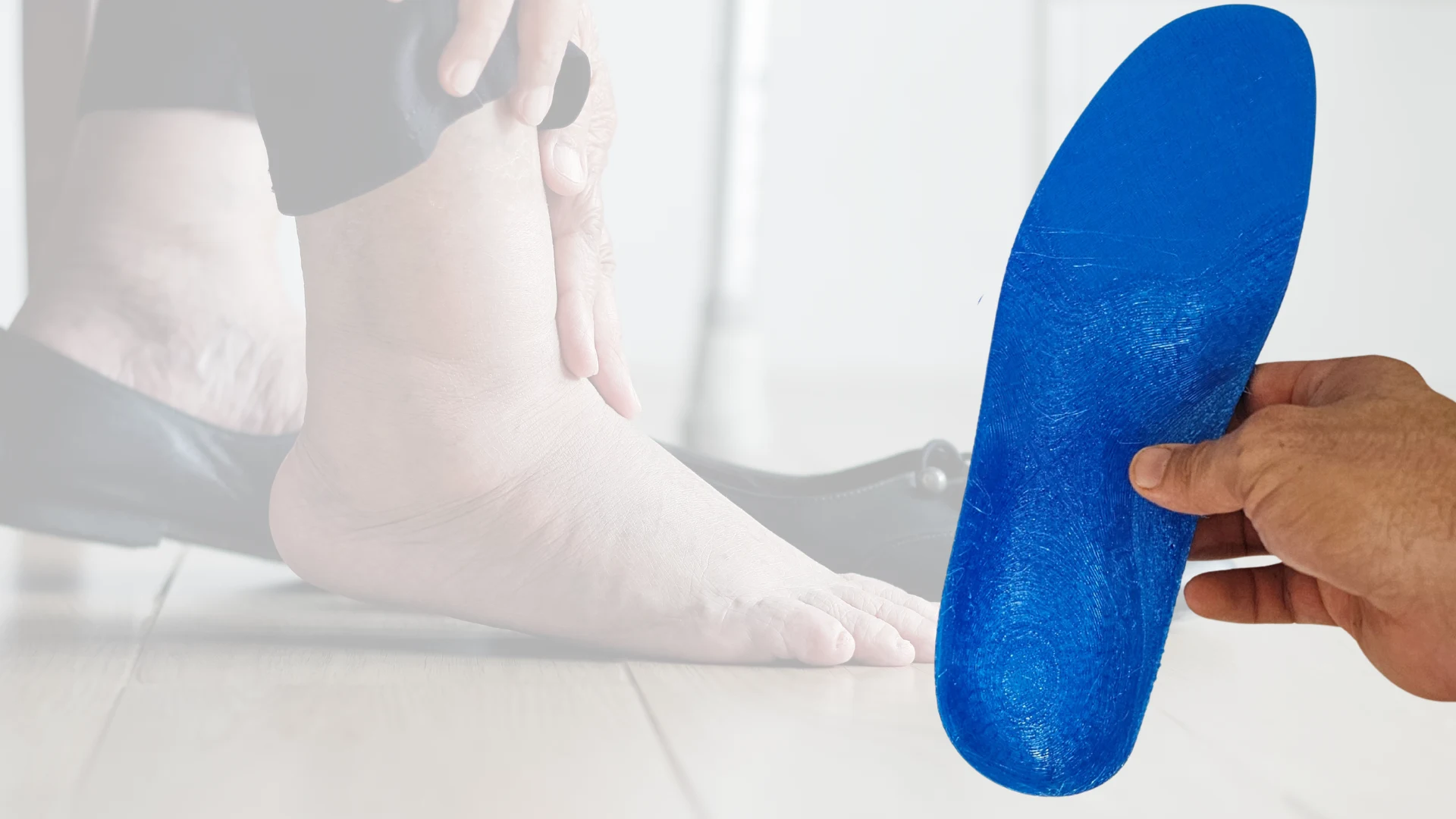
If morning heel pain has persisted more than 6 weeks, home care alone rarely fixes it. At Balance Foot & Ankle, we combine in-office ultrasound diagnostics, custom orthotics, and — when needed — shockwave or PRP to resolve plantar fasciitis that hasn’t responded to stretching and inserts. Most patients are walking pain-free within 4-8 weeks of starting a structured plan.
Call Balance Foot & Ankle: (810) 206-1402 · Book online · Offices in Howell & Bloomfield Hills
When Shoes Aren’t Enough — Dr. Tom’s Top 9 Orthotics
About 30% of patients I see for foot pain need MORE than a great shoe — they need a structured insole. Below: my complete 2026 orthotic ranking with pros, cons, and the specific patient I’d give each one to.
★ DR. TOM’S COMPLETE 2026 ORTHOTIC RANKING
9 Best Prefab Orthotics by Use Case
PowerStep, Currex, Spenco, Vionic, and Superfeet — every orthotic I’ve fitted to thousands of patients across both Michigan offices. Each card includes pros, cons, and the specific patient I’d give it to. Real Amazon ratings, review counts, and prices below.
Best All-Purpose Orthotic for Most Patients
Semi-rigid arch shell + dual-layer cushion + deep heel cup. The orthotic I’ve fitted to more patients than any other for 15 years. APMA-accepted. Trim-to-fit design works in athletic shoes, casual shoes, and most work boots.
✓ Pros
- Semi-rigid arch shell provides true biomechanical correction
- Deep heel cup centers the heel and reduces lateral instability
- Dual-layer cushion (top + bottom) lasts 9-12 months daily wear
- Available in 8 sizes for precise fit
- APMA-accepted and clinically validated
- Lower price than Superfeet Green for equivalent function
✗ Cons
- Too thick for most dress shoes (use ProTech Slim instead)
- Some break-in period required (3-7 days for arch tolerance)
- Not enough correction for severe pes planus or rigid pes cavus
Dr. Tom’s Recommendation: If a patient has run-of-the-mill plantar fasciitis, mild flat feet, or arch fatigue, this is the first orthotic I try. Better value than Superfeet for 90% of patients, which is why I swapped it into our clinic kits three years ago. Sub-$50 typically.
Maximum Motion Control · Flat Feet & Severe Over-Pronation
PowerStep’s most aggressive stability orthotic. Adds a 2°-7° medial heel post on top of the standard PowerStep platform — designed specifically for flat-footed patients and severe pronators who need real corrective force.

✓ Pros
- 2°-7° medial heel post adds aggressive pronation control
- Same trusted PowerStep arch shell, more correction
- Built specifically for flat-foot biomechanics
- Excellent for posterior tibial tendon dysfunction (PTTD)
- Removable top cover for cleaning
✗ Cons
- Too aggressive for neutral-arch patients
- Needs longer break-in (10-14 days) due to stronger correction
- Adds 2-3 mm of stack height — won’t fit slim dress shoes
Dr. Tom’s Recommendation: When a patient comes in with significant flat feet AND symptoms (heel pain, arch pain, knee pain), the Original PowerStep isn’t aggressive enough. The Maxx is what gets prescribed. About 25% of my flat-footed patients end up here.
Low-Profile · Fits Dress Shoes & Narrow Casuals
3 mm slim profile with podiatrist-designed tri-planar arch technology. Engineered specifically to fit inside dress shoes, oxfords, loafers, and women’s flats without crowding the toe box. Vionic was founded by an Australian podiatrist.
✓ Pros
- 3 mm slim profile (vs 7-10 mm for standard orthotics)
- Tri-planar arch technology adds support without bulk
- Built-in deep heel cup despite slim design
- Fits dress shoes WITHOUT having to remove the factory insole
- Trim-to-fit · APMA-accepted
✗ Cons
- Less arch support than full-volume orthotics
- Top cover wears faster than thicker alternatives
- Not enough correction for severe foot deformities
Dr. Tom’s Recommendation: My default when a patient says ‘I need orthotics but I have to wear dress shoes for work.’ Slim enough to fit in oxfords and pumps without the heel sliding out. The single highest-impact change you can make for office workers with foot pain.
Built-In Metatarsal Pad · Morton’s Neuroma · Ball-of-Foot Pain
Standard Pinnacle orthotic with a built-in metatarsal pad positioned proximal to the metatarsal heads — the exact location that offloads neuromas and metatarsalgia. No need for separate met pads or pad placement guesswork.

✓ Pros
- Built-in met pad eliminates DIY pad placement errors
- Specifically designed for Morton’s neuroma + metatarsalgia
- Same trusted PowerStep arch + heel cup platform
- Top cover protects sensitive forefoot skin
- Faster relief than orthotics + add-on met pads
✗ Cons
- Met pad position is fixed (can’t fine-tune individual placement)
- Some patients with very small or very large feet need custom
- Slightly thicker than the standard Pinnacle
Dr. Tom’s Recommendation: If a patient has Morton’s neuroma, sesamoiditis, or generalized ball-of-foot pain (metatarsalgia), this saves a clinic visit and a prescription. The built-in pad placement is anatomically correct for 80% of feet. Way better than DIY met pads.
Adaptive Dynamic Arch · Athletic & Daily Wear
Currex’s flagship adaptive arch technology — the orthotic flexes with your gait instead of fighting it. Different stiffness zones along the length give you targeted support at the heel, midfoot, and forefoot. Available in three arch heights (low/medium/high).
✓ Pros
- Dynamic flex zones adapt to natural gait cycle
- Three arch heights ensure precise fit
- Lighter than rigid orthotics (no ‘heavy foot’ feel)
- Excellent for runners and athletic walkers
- European podiatric design (German engineering)
✗ Cons
- More expensive than PowerStep Original ($55-65 typically)
- Less aggressive correction than Pinnacle Maxx for severe cases
- Three arch heights means you must self-select correctly
Dr. Tom’s Recommendation: I started recommending Currex three years ago for runners who said PowerStep felt ‘too rigid.’ The dynamic flex zones respect natural gait. Best for active patients who walk 8K+ steps daily and don’t need maximum motion control.
Running-Specific · Heel Strike + Forefoot Strike Compatible
Currex’s purpose-built running orthotic. The midfoot flex zone is positioned for runner’s gait mechanics, with a flared heel cushion for heel strikers and a forefoot rocker for midfoot/forefoot strikers. Tested on 1000+ runners during product development.
✓ Pros
- Designed by German biomechanics lab specifically for runners
- Dynamic arch flexes with running gait (not static like PowerStep)
- Three arch heights (low/medium/high)
- Reduces overuse injury risk in mid-distance runners
- Lightweight (no impact on cadence)
✗ Cons
- Premium price ($60-75)
- Not aggressive enough for severe over-pronators (use Pinnacle Maxx)
- Runner-specific design = less ideal for daily walking shoes
Dr. Tom’s Recommendation: If a patient runs 20+ miles per week and has plantar fasciitis or shin splints, this is the orthotic I prescribe. The dynamic flex zones respect running biomechanics in a way that no rigid PowerStep can match. Pricier but worth it for serious runners.
Cavus Foot & High-Arch Patients
Polyurethane base with a deeper heel cup and higher arch profile than PowerStep — built for cavus (high-arched) feet that need maximum cushion and support. The 5-zone cushioning system addresses the unique pressure points of high-arch feet.

✓ Pros
- Deeper heel cup centers the heel for cavus foot stability
- Higher arch profile fills the void under high arches
- 5-zone cushioning addresses cavus foot pressure points
- Polyurethane base lasts 12+ months
- Available in Wide width
✗ Cons
- Too tall/aggressive for normal or low arches
- Won’t fit slim dress shoes
- Pricier than PowerStep Original
- Some patients find the arch height uncomfortable initially
Dr. Tom’s Recommendation: Cavus foot patients are often misdiagnosed and given low-arch orthotics — that makes everything worse. Spenco’s Total Support has the arch profile that high-arch feet actually need. About 15% of my patients have cavus feet; this is what they wear.
Cushion Layer · Standing All Day · Gel Pressure Relief
NOT a true biomechanical orthotic — this is a cushion insole. But for patients who want gel pressure relief instead of arch correction (or to add ON TOP of factory insoles in work boots), this is the best gel option on Amazon.

✓ Pros
- Genuine gel cushioning (not foam pretending to be gel)
- Targeted gel waves under heel and ball of foot
- Trim-to-fit · works in most shoe types
- Sub-$15 price (most affordable option in this list)
- Massaging texture is genuinely soothing
✗ Cons
- ZERO arch support — this is cushion only
- Won’t fix plantar fasciitis or flat-foot issues
- Compresses faster than PowerStep (4-6 months)
- Top cover wears through in high-mileage applications
Dr. Tom’s Recommendation: I recommend these to patients who tell me ‘I just want my feet to stop hurting at the end of my shift’ and who don’t have a biomechanical issue. Construction workers, factory workers, retail. Pure cushion does the job for them.
Tight-Fitting Shoes · Cycling Shoes · Hockey Skates
Superfeet’s slim version of their famous Green insole. The trademark stabilizer cap is preserved but the overall thickness is reduced — works in cycling shoes, hockey skates, ski boots, and other tight-fitting footwear that the standard Superfeet Green can’t fit into.

✓ Pros
- Stabilizer cap centers the heel (Superfeet’s signature feature)
- Slim profile fits tight athletic footwear
- Lasts 12+ months daily wear
- Excellent for cycling shoes specifically
- Built-in odor-control treatment
✗ Cons
- Premium price ($45-55)
- Less cushion than PowerStep equivalents
- Not as aggressive correction as Pinnacle Maxx for flat feet
- The signature ‘heel cup feel’ takes 1-2 weeks to adapt to
Dr. Tom’s Recommendation: If you’re a cyclist with foot numbness, hot spots, or knee pain — this is the orthotic. The stabilizer cap solves cycling-specific biomechanical issues that no other orthotic addresses. Worth the premium for athletes.
None of these solving your foot pain?
Some patients (about 30%) need custom-molded prescription orthotics. We make 3D-scanned custom orthotics in our Howell and Bloomfield Hills offices — specifically built for your foot mechanics.
Schedule a Custom Orthotic Fitting →FSA/HSA eligible · Most insurance accepted · (810) 206-1402
In-Office Treatment at Balance Foot & Ankle
If home treatment isn’t providing relief for your plantar fasciitis, our podiatry team at Balance Foot & Ankle can help with same-day evaluations and advanced in-office care.
Same-day appointments available. (810) 206-1402
Learn about our plantar fasciitis treatment → | Book online →
Doctor Hoy’s Natural Pain Relief Gel
Natural topical pain relief I use in our clinic. Arnica + camphor formula — apply directly to the area 3–4x daily. ($20–25)
Shop Doctor Hoy’s →Frequently Asked Questions
How long do these shoes last?
Quality running shoes last 300-500 miles. Daily walking shoes last 9-12 months. Replace when the midsole feels soft or your symptoms return.
Should I add insoles?
Yes if you have plantar fasciitis or overpronation. Powerstep Pinnacle or a custom orthotic improves results. Healthy feet often do fine with the stock insole.
Are expensive shoes worth it?
Beyond about $130 most extra cost is materials and aesthetics. Match the shoe to your foot type, not budget. The right $80 stability shoe beats the wrong $250 maximalist shoe.

Dr. Tom Biernacki, DPM is a board-certified foot & ankle surgeon (ABFAS & ABPM) at Balance Foot & Ankle Specialists in Southeast Michigan. With over a decade of clinical experience, he specializes in heel pain, bunions, diabetic foot care, sports injuries, and minimally invasive surgery. Dr. Biernacki is a member of the APMA and ACFAS, and his patient education content on MichiganFootDoctors.com and YouTube has made him one of the most-followed foot & ankle educators on YouTube.